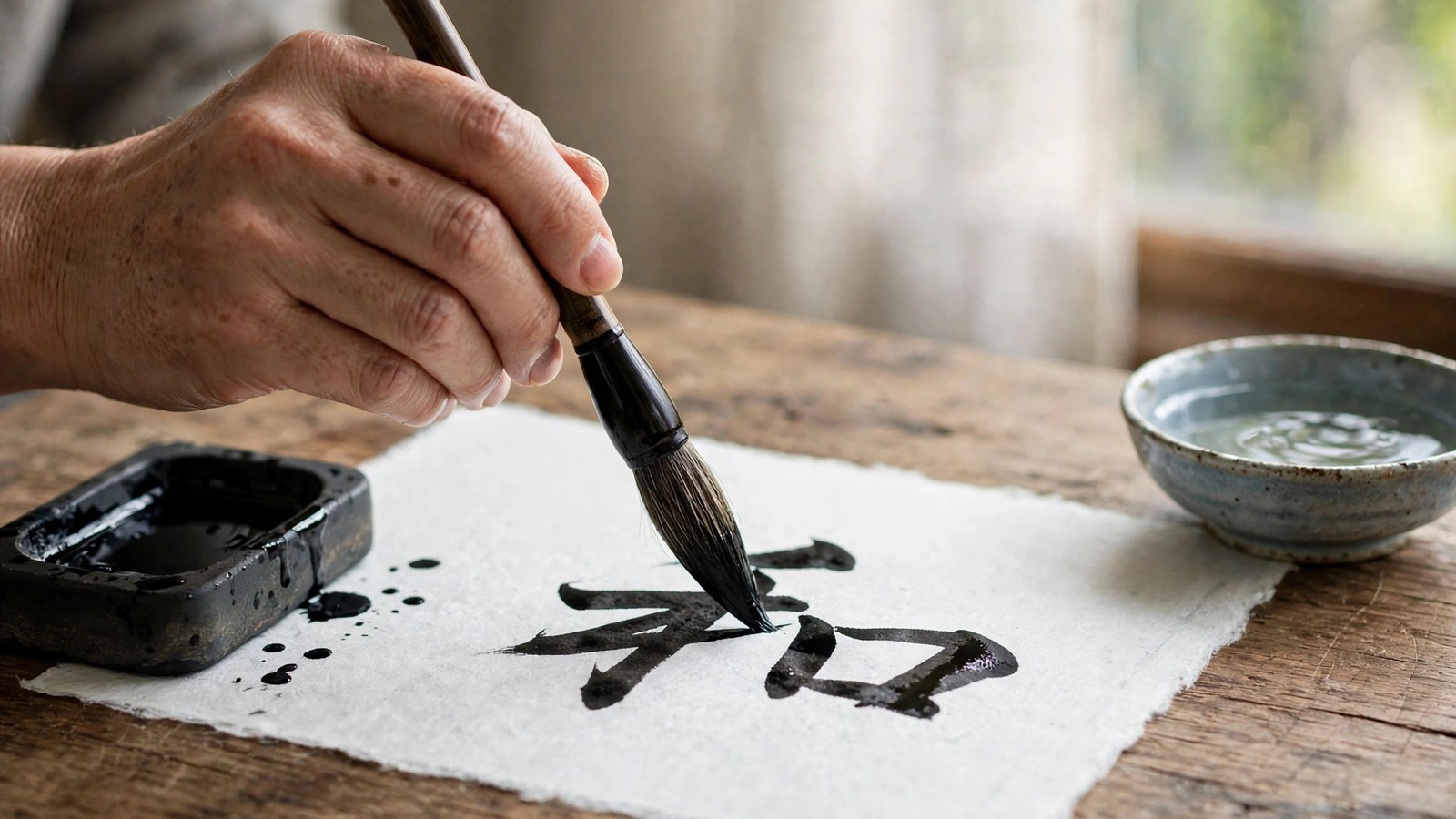
Short answer
- The Japanese word for strong is tsuyoi, written with the kanji 強, and the word for strength or power is chikara, written 力. Almost every genuine Japanese name meaning strong is built from a small group of strength kanji: 強 (strong, powerful), 剛 (sturdy, unyielding), 力 (power), 健 (healthy, strong), 毅 (resolute) and 豪 (robust, heroic). The clearest verified examples are Tsuyoshi (剛, 強, 毅 or 豪), Takeshi (武, martial, or 健, strong and healthy), Kenta (健太, healthy and great), Kengo (健吾 or 健剛, healthy and strong), Masaru (勝, to win or excel) and, on the courage side of strength, Isamu (勇, brave). Pride works differently. The word for pride is hokori (誇り), but hokori is a vocabulary word, not a common given name. Names linked with pride instead carry dignity, honor and achievement: Takashi (隆, noble and prosperous, among other writings), Yoshihiro (義弘, righteousness spread wide) and Masaru again, because excelling is something a person can honorably be proud of. No common Japanese surname translates word for word as strength, and the surname section shows why, with a worked example of a surname whose sound suggests strength but whose kanji mean something else.
The Japanese Words for Strong and Strength
Tsuyoi is the everyday adjective for strong. Dictionary entries built on the JMdict project, such as those on Jisho, gloss 強い (tsuyoi) as strong, potent, tough, brawny, powerful, healthy, rugged, durable, resilient and firm. One word covers a strong body, a strong will and a strong resistance to damage, and that breadth is why it anchors so many names. Its noun form, tsuyosa (強さ), is strength itself as a quality. Chikara, written 力, is the noun for strength, power, force and ability. Where tsuyoi describes, chikara names the thing itself. It appears in compounds such as chikarazuyoi (力強い), powerful, and kongoriki (金剛力), superhuman strength. Related words divide strength into kinds: tairyoku (体力) is physical stamina, kiryoku (気力) is willpower, and jitsuryoku (実力) is proven ability. Kenryoku (権力), authority, is a warning rather than a model: not every power kanji belongs in a name.
The Kanji of Strength
Kyo, go and tsuyo: the readings of 強
The kanji 強 has two Chinese derived readings used in compounds, kyo and go, alongside its native reading tsuyo. Readers meet kyo in saikyo (最強), the strongest, and in kyoryoku (強力), powerful. The kanji is sometimes described as read kyo or go as a name element, which is broadly right for compounds but incomplete for names: in Tsuyoshi, the character is read through its native tsuyo stem, not through either compound reading, and name references list name readings for 強 including tsuyo and tsuyoshi themselves.
Go, the sturdy kanji: 剛
If 強 is strength in general, 剛 is strength as hardness that does not bend. Jisho kanji material glosses 剛 with the compound reading go and the senses strength, toughness, bravery and boldness, and its name readings include tsuyo, tsuyoshi, take and go itself. Name references gloss the character itself as rigid, hard and sturdy. This writing is listed first among Tsuyoshi’s most common writings on JapaneseNames.info, and it sets the tone of the strong name family: not showy strength, but strength that holds.
The supporting strength characters
Four more characters complete the working set. 健 (ken in compounds, take in some name readings) means healthy, strong and robust, and it is the engine of Kenta and Kengo below. 毅 means resolute and strong willed, and it is a recorded writing of Tsuyoshi borne by, among others, a former prime minister of Japan, Inukai Tsuyoshi. 豪 means robust, heroic and excellent. 武 (bu in compounds, take in names) means military or martial, and it turns Takeshi into a warrior name. Finally 勝, read katsu as a verb and masaru as a name reading, means to win, to excel and to overcome. It anchors both Masaru and the girls name Katsuko.
How Strength Meanings Appear in Japanese Names
A Japanese given name is a sound plus a written form. Parents choose kanji whose meanings they want, fitted to a sound they like, and the chosen characters are what the name means. Change the kanji and the meaning changes while the spoken name stays the same. It is also why strength lists go wrong in a predictable way: a writer hears a syllable such as go, ken or yuki, assumes the strength character must be present, and prints a meaning the actual writing does not support. Three corrections in this article, covering Yuki, Kengo and a famous surname, are exactly that mistake in different costumes.
Strong Given Names
Tsuyoshi (剛, 強, 毅, 豪): the direct strong name
Tsuyoshi is the most direct strong name in Japanese, and name references describe it as a masculine given name whose writings consistently convey strength and resolve. JapaneseNames.info gives its most common writings as 剛 (strong and sturdy), 毅 (resolute and strong willed), 強 (strong and powerful) and 豪 (robust and heroic), and records dozens of further writings. Because so many different single characters carry the same shared meaning, the name functions, in that reference’s words, as a classic virtue style name expressing the wish for a strong minded son. Its bearers include a world champion boxer, Tsuyoshi Hamada. A parent or writer who wants a name that simply and verifiably means strong should start here.
Takeshi (武, 健): the warrior and the robust man
Takeshi is the classic strong name of the warrior register. Behind the Name gives its sources as 武 (takeshi), meaning military or martial, and 健 (takeshi), meaning strong and healthy, among other kanji with the same reading. In the first writing it belongs equally to the companion guide to Japanese names meaning warrior; in the second it is a health and robustness name, closer to Kenta below. The choice between its writings is a choice between two kinds of strength: the strength that fights, and the strength that endures in good health.
Kenta (健太): healthy and great
Kenta builds strength out of health. JapaneseNames.info gives its most common writings as 健太 (healthy and great), 賢太 (wise and great), 健大 (healthy and great) and 堅太 (solid and great), and describes the dominant 健太 writing, literally healthy plus great, as continuously popular since the 1970s as a parental wish for a robust, confident son. The closing character 太, great or bold, is a traditionally masculine ending, and the ken element does triple duty across its writings: healthy in 健, wise in 賢, solid in 堅. Every one of those first characters is a form of capability, and health, in this naming tradition, is strength in its everyday form.
Kengo (健吾, 健剛): healthy and strong, with a correction
Kengo is a firm, compact strong name for boys. Behind the Name’s submitted entries give it as 健 (ken), strong and healthy, 研 (ken), study or sharpen, or 賢 (ken), virtuous and wise, combined with 吾 (go), I or self, or 悟 (go), enlightenment. Other name references add 剛 (go), strong and sturdy, giving the doubly strong writing 健剛. Kengo is sometimes described as strong and healthy, or sword and strong, depending on kanji. The first half survives verification. The sword half does not: the character for sword, 剣, is also read ken, so a sword writing is conceivable on sound alone, but no reference opened for this article lists a sword writing among Kengo’s recorded forms. The sword claim has been removed, because a possible sound match is not a recorded name.
Masaru (勝): to win, to excel
Masaru is strength proved. The character 勝 means to win, to gain victory, to excel and to surpass, and its name reading masaru turns the whole verb into a personal name: the one who excels. Name lists record Masaru straightforwardly as victory, and the character’s dictionary material supports both the contest sense of winning and the character sense of excelling. That second sense is why Masaru appears twice in this article. As a strong name it suits a competitor. As a pride name, below, it carries the honorable satisfaction of having done something well.
Courage Names: Strength of Heart
Isamu (勇): brave
Isamu is the courage name in its purest form, a single character, 勇, meaning brave and courageous, read as a whole name. Reference after reference glosses it the same way, bravery or courage, and the underlying verb isamu means to be in high spirits, to be encouraged, to cheer up. That origin matters. The courage inside Isamu is not grim endurance. It is heartened courage, bravery with lifted spirits, which is why the character also opens the everyday word for courage itself, yuki (勇気), literally brave spirit. A reader choosing between Tsuyoshi and Isamu is choosing between the strength of the body and the will, and the strength of the heart that goes forward anyway.
Names built on yu, the courage reading
The same character, read yu in compounds, also builds courage names such as Yunosuke (勇之助, courage with a helper element) and Yuken (勇健, brave and healthy), recorded in Behind the Name’s submitted entries as cross checks. For fiercer material in the same neighborhood, see the companion guide to Japanese names meaning demon, where strength shades into the supernatural.
Strong Names for Girls: An Honest Picture
Katsuko (勝子): victorious child
The verified girls list for literal strength is short, and its strongest member is Katsuko. JapaneseNames.info gives its most common writing as 勝子, victory plus child, describing it as a distinctly Showa flavored girls name from the broad family of names ending in ko, literally child, which dominated feminine birth registers from the Meiji era through the 1970s. The same reference notes that the leading writing pairs 勝, victory and to win, with the standard ko suffix to evoke resilient strength, a register favored in the prewar and immediate postwar decades, and that an alternative writing with 活, lively and vigorous, gives a brighter sense of energy. Katsuko has receded sharply in recent decades as parents have moved away from ko endings, but it remains widely borne by accomplished women of earlier generations. It is a real, recorded, female strength name, with a period flavor a writer can use deliberately and a parent should choose knowingly.
Why the girls list is short
That shortness is a fact about the naming tradition, not a gap in this article’s research. The classic strength characters, 剛, 強, 武 and 勇, sit overwhelmingly in boys names in the references opened for this article, reflecting centuries in which martial strength was coded masculine. Parents who want strength for a daughter have historically reached for it by other roads: victory, as in Katsuko; vigor, as in its 活 writing; and resilience images from nature, such as pine, bamboo and plum, which bend or bloom under snow. The companion guide to Japanese names that mean hope shows the same pattern from the other side, since hope names are richly supplied for girls while strength names are not.
Names Often Listed by Mistake
Yuki: happiness, snow, hope, but not courage
Yuki is often listed as courage or happiness depending on kanji. The happiness half is real. The courage half could not be verified, and the verified picture is different. Behind the Name’s main entry for Yuki gives its standard writings as combinations built on 優 (excellence, superiority, gentleness) or 悠 (permanence) with 希 (hope), 輝 (brightness) or 生 (living), and the everyday name is at least as often the snow name, Yuki written 雪, or the happiness name written 幸. The courage character is 勇, read yu or isamu, and the word for courage is yuki only because 勇気 pairs that character with 気, spirit. No reference opened for this article records a standard courage writing for the given name Yuki. Yuki has been removed from the strength list. Readers who want the courage meaning should use Isamu or a yu initial name above, where the character is actually present.
Riki: a power reading, not a verified given name
Riki is often listed as power or strength, a short, direct strong name. The character half of that claim is real: 力 means power and strength, and its compound reading riki is heard inside words such as kongoriki, superhuman strength. What the references opened for this article do not support is Riki as a common standalone Japanese given name in that writing. It circulates in Western list sites and in fiction, and a writer may use it knowingly for a character. It does not belong on a list of recorded given names.
Surnames Meaning Strength: The Honest Position
Why surnames do not translate as single concepts
A surname meaning strength is best described as a surname with a strong character or a history linked with strength, not as a surname that translates word for word as strength. Japanese surnames are family names with histories tied overwhelmingly to places and landscapes. Surname references note that most surnames consist of two kanji, that many describe geographic or natural features, and that around a third contain the rice field character 田 alone: Tanaka (田中) is in the middle of the rice fields, and Yamamoto (山本) is at the base of the mountain. A family did not choose its surname the way parents choose a given name today. The description of where they lived settled into an inherited name, which is why concept surnames are not how the system works.
Goda: a worked example of the sound trap
The surname Goda shows the trap in its neatest form. Its first syllable sounds like go, the reading of both strength kanji in this article, 強 and 剛, and list sites have not been slow to call it a strength surname. Behind the Name’s submitted surname entries give the actual writing: Goda is 合田, from 合 (go), meaning connect or join, combined with 田 (ta), a rice field or paddy. Joined fields. The strength characters are not in the name at all. The same reference gives Gonda (権田) as right or authority plus field, which is as close as this corner of the surname system honestly gets to power, and it is a field name too. For a real family name claim, check a reliable surname source for the exact kanji before stating a meaning in print. The companion guide to Japanese names that mean protector explores the surname and given name boundary further.
The one genuine curiosity: Tsuyoshi as a surname
Name references note that Tsuyoshi, the strong given name above, is also used as a Japanese surname. That is a real strength character inside a real family name, and it is the most honest answer available to the search that brought many readers here, the search for a Japanese surname meaning strength. Even here, care is needed: its strength kanji describe the name’s writing, not a promise about the people who carry it. Presented that way, Tsuyoshi the surname is a legitimate entry. Presented as proof that Japanese surnames translate as concepts, it would be exactly the overstatement this section exists to prevent.
Names Linked With Pride
Hokori, jisonshin and jiman: three words for three kinds of pride
Pride needs its own note, because Japanese separates what English bundles together. Hokori (誇り) is pride in its honorable sense: the Cambridge Japanese English dictionary glosses it simply as pride, and as glory, a source of pride and fame, and example based references show it used for pride in family, in work well done and in tradition. Jisonshin (自尊心) is self respect, self esteem and dignity; Jisho based material glosses its core, jison (自尊), as self respect, esteem and pride. Jiman (自慢) is the cautionary third word: boasting, showing off, pride as performance. A modern loanword, puraido, borrowed directly from English pride, covers the self respect sense in everyday speech. The vocabulary itself draws the line between hokori and jisonshin on the honorable side and jiman on the other. One caution also survives verification in full: Hokori is a word and a theme, not a common given name. No name reference opened for this article records it as a standard given name, and it should not be presented as one, though a novelist may use it knowingly for a character.
Takashi (隆, 孝): noble, prosperous, dutiful
Takashi is the dignity name at the center of the pride list. Its best known writing, 隆, means noble and prosperous, and name references record that gloss consistently; another common writing, 孝, means filial piety, the dutiful respect a child owes a parent. Neither writing boasts. The first carries standing, and the second carries obligation, pride expressed as duty done properly. That combination is the healthy side of pride in a single name.
Yoshihiro (義弘): righteousness, spread wide
Yoshihiro extends the same idea outward. Name references give its characteristic writing as 義弘, from 義 (yoshi), justice or righteousness, and 弘 (hiro), wide, broad or vast, glossed in combination as just and vast, or righteousness spread widespread. Other writings shift the balance, toward good and broad in the 良浩 form, for example, so the righteousness claim belongs to the 義 writings specifically. In that form Yoshihiro is a name about a reputation earned properly and carried widely. It has been borne by samurai of the Sengoku period and by one of Japan’s best known manga artists.
Masaru revisited
Masaru (勝), the victory name from the strength section, belongs here too, because excelling is the most defensible ground for pride there is: pride in a result actually achieved is hokori rather than jiman. Together these names make the pride list’s real point: Japanese naming expresses pride through honor, righteousness, duty and achievement, not through any character that simply declares its bearer proud.
Pronunciation Guide
Japanese pronunciation is regular once a reader knows that each vowel keeps one sound: a as in father, i as in machine, u as in flute, e as in met, and o as in note, with long vowels held slightly longer. Tsuyoi is tsoo-yoy, and Tsuyoshi is tsoo-yoh-shee. Chikara is chee-kah-rah. Takeshi is tah-keh-shee, Kenta is ken-tah, and Kengo is ken-goh, with a hard g. Masaru is mah-sah-roo, Isamu is ee-sah-moo, and Hokori is hoh-koh-ree. Takashi is tah-kah-shee, Yoshihiro is yoh-shee-hee-roh, and Katsuko is kaht-soo-koh.
Strength and Pride in Japanese Naming Culture
Bushido and the martial ideal
The cultural weight behind strength naming is inseparable from the samurai past. Encyclopaedia Britannica describes Bushido as the code of conduct of the samurai, or bushi warrior, class of premodern Japan, whose name was not used until the 16th century but whose ideas developed during the Kamakura period (1192 to 1333). Its unchanging ideal, Britannica notes, was martial spirit, including athletic and military skills and fearlessness toward the enemy in battle, while frugal living, kindness, honesty and personal honor were also highly regarded, as was filial piety. During the Edo period the code absorbed Confucian ethics, and the samurai was taught to exemplify virtue as a perfect gentleman, with duty placed above all else. This article’s naming pattern is those virtues turned into names: Takeshi, Isamu, Takashi in its 孝 writing and Yoshihiro. A different kind of endurance appears in the companion guide to where Mount Fuji is in Japan.
Virtue wishes and the modern balance
Japanese given names are wishes. The Tsuyoshi reference quoted earlier calls that name a virtue style name expressing the wish for a strong minded son, and the same logic runs through the whole article: Kenta wishes robustness, Katsuko wished resilient victory for a daughter of the Showa decades, Takashi wishes standing with duty. Modern parents balance the wish against the child’s own life with the name, favoring sounds that travel well and writings that are not too heavy to carry, which is one reason the grand virtue names of the samurai register are less common in current baby name use than a century ago. The wish itself has not disappeared. It has softened its kanji.
Choosing a Strong or Pride Name
For a real child
Start with the writing, not the sound. Choose the kanji that carry the strength or dignity meaning you intend, then say the full name aloud with the family surname, in Japanese order and in Western order if the child will live in both worlds. Prefer names whose meaning survives their most standard writing, such as Tsuyoshi in 剛 or 強, Isamu in 勇, Kenta in 健太 or Takashi in 隆, over names whose claimed meaning depends on a rare or unattested writing. Check that the characters are on the permitted name kanji lists if the birth will be registered in Japan, since only the standard and name use kanji, roughly three thousand characters, may be used in a given name. Ask Japanese speakers how the name reads in real life.
For a character, and a short checklist
Fiction allows the whole vocabulary, including the words that are not given names. Hokori can name a proud house or a ship precisely because it is the pride word. Riki works as a power themed character name because its kanji is real, even though it is not a common given name. A surname built knowingly on 剛 or 強 can root a strong family in a story, as long as the author knows it is an invention in the Japanese system rather than a discovered fact. The fierce end of this naming world is covered in Japanese names meaning dragon. The checklist is the same in both worlds. First, write the name in kanji and confirm each character in a dictionary such as Jisho. Second, confirm the name itself, in that writing, in a name reference. Third, check the same sound for a more common non strength writing, as Yuki and Goda both require. Fourth, separate the pride words before using them: hokori for honorable pride, jisonshin for self respect, jiman for boasting.
Frequently Asked Questions
What is the Japanese word for strong?
Tsuyoi, written 強い. The same kanji, 強, is read kyo or go inside compounds such as saikyo, the strongest, and kyoryoku, powerful. The noun for strength or power is chikara, written 力.
What is a good Japanese boy name meaning strong?
Tsuyoshi, in writings such as 剛 (sturdy) and 強 (strong), is the most direct choice. Takeshi (武, martial, or 健, strong and healthy), Kenta (健太, healthy and great), Kengo (健吾 or 健剛) and Masaru (勝, to win or excel) are the other verified choices, and Isamu (勇, brave) adds courage.
What is a good Japanese girl name meaning strong?
Katsuko (勝子, victory and child) is the clearest verified example, a Showa era name evoking resilient strength. Literal strength names for girls are genuinely uncommon in the recorded tradition.
Is there a Japanese surname that means strength?
Not as a literal translation. Japanese surnames overwhelmingly describe places and landscapes. Goda, often claimed as a strength surname, is actually 合田, joined fields. Tsuyoshi, the strong given name, is also recorded as a surname.
What is a Japanese name that means pride?
No common given name translates word for word as pride, and hokori, the pride word, is not a standard given name. Takashi (隆, noble and prosperous), Yoshihiro (義弘, righteousness spread wide) and Masaru (勝, to excel) carry pride in its honorable forms: dignity, righteousness and achievement.
Does Yuki mean courage?
No. Yuki is recorded with writings meaning excellence and hope, brightness or living, and as the separate snow and happiness names. The word for courage, yuki (勇気), is a vocabulary word, not a writing of the given name Yuki.
How can I check a Japanese strong name claim myself?
Demand the kanji, then check each character in a dictionary such as Jisho and the full name in a name reference. If a strength kanji, 強, 剛, 力, 健, 毅, 豪, 武, 勝 or 勇, is not in the written form, the claim is not supported.
Sources & references
- Jisho.org, kanji search results for 強, 剛 and 勇, as surfaced in dictionary search results. 強い (tsuyoi) glossed as strong, potent, tough, powerful, healthy, rugged, durable and resilient; 強 read kyo and go in compounds including kyoka, strengthening; 剛 (go) glossed as strength, toughness, bravery and boldness, with name readings including tsuyo, tsuyoshi, take and go; 勇 (yu) glossed as bravery, courage and heroism, and 勇気 (yuki) as courage and bravery. Built on the JMdict, JMnedict and KANJIDIC projects.
- Jisho.org, word search results for self related terms. 自尊 (jison) glossed as self respect, esteem and pride, supporting the jisonshin discussion, and 金剛力 (kongoriki) glossed as superhuman or Herculean strength, supporting the chikara compounds.
- JapaneseNames.info, first name Tsuyoshi. The most common writings 剛 (strong and sturdy), 毅 (resolute and strong willed), 強 (strong and powerful) and 豪 (robust and heroic), the description of Tsuyoshi as a classic virtue style name expressing the wish for a strong minded son, its notable bearers, and the note that Tsuyoshi is also used as a surname.
- JapaneseNames.info, first name Kenta. The most common writings 健太 (healthy and great), 賢太 (wise and great), 健大 (healthy and great), 堅太 (solid and great) and 健泰 (healthy and peaceful), the gloss of 健 as healthy, strong and skilled, and the note that the 健太 writing has been continuously popular since the 1970s as a wish for a robust, confident son.
- JapaneseNames.info, first name Katsuko. The most common writing 勝子 (victory and child), the description of Katsuko as a Showa flavored girls name from the ko ending family that dominated feminine registers from the Meiji era through the 1970s, the resilient strength register of the 勝 writing, and the alternative 活子 writing with lively and vigorous.
- JapaneseNames.info, first names meaning victory, search results. 勝 as a victory kanji with its name uses, and the note that Japan allows only the joyo and jinmeiyo kanji, about three thousand characters, in a given name.
- Behind the Name, browse names, Japanese usage, page 2. Takeshi from 武 (takeshi), military or martial, or 健 (takeshi), strong and healthy, and the main entry for Yuki from 優 (excellence, superiority, gentleness) or 悠 (permanence) combined with 希 (hope), 輝 (brightness) or 生 (living).
- Behind the Name, submitted Japanese names, masculine K entries and related pages, used as cross checks only, as the site states that submitted names are user contributed and their accuracy cannot be guaranteed. Kengo from 健 (strong, healthy), 研 (study, sharpen) or 賢 (virtuous, wise) combined with 吾 (I, self) or 悟 (enlightenment); Yunosuke combining 勇 (bravery, courage) with 之助 or 之介; Yuken combining 勇 (brave) with 健 (healthy, strong).
- Behind the Name, submitted Japanese surnames, page 4, used as a cross check only on the same basis. Goda (合田) from 合 (go), connect or join, and 田 (ta), field or rice paddy, and Gonda (権田) from 権 (gon), right or authority, and 田 (ta), field.
- Encyclopaedia Britannica, Bushido. Bushido as the code of conduct of the samurai class of premodern Japan, its ideal of martial spirit including athletic and military skills and fearlessness toward the enemy, the high regard for frugal living, kindness, honesty, personal honor and filial piety, its Kamakura period development and its Edo period Confucian framing of the samurai as a perfect gentleman exemplifying virtue, with duty above all.
- Cambridge Dictionary, Japanese English entry for 誇り (hokori). Hokori glossed as pride, and as glory, a source of pride and fame.
- MyHeritage Wiki, Japanese American Surnames, used for surname structure only. Japanese surnames as almost always written in kanji and mostly composed of two kanji, the many surnames describing geographic or natural features, Tanaka (田中) as in the middle of rice fields and Yamamoto (山本) as at the base of the mountain, and the estimate that about thirty percent of surnames contain the character 田.
- NazukePON (en.pon-navi.net), kanji entry for 強. The character glossed as strong, vigorous and to force, its kun and on readings, and its name readings including tsuyo and tsuyoshi.


