Short answer
- For a first or only denim jacket, choose a classic, hip length fit in a dark or medium dark wash, in a medium weight denim. The jacket should sit at the hip, align at your natural shoulder line, end at the wrist bone, and button without pulling across the chest or shoulders, with room for a T-shirt or a light sweater underneath. Medium weight denim, around 13 to 14 ounces per square yard, usually holds its shape without feeling rigid or hot. A small amount of stretch adds comfort and movement, while rigid denim holds its shape and develops a more personal fade. Check even stitching, secure metal buttons, flat chest pockets, and neatly finished inside seams before judging any jacket by its label, its price, or a single feature such as selvedge.
Introduction
A denim jacket is one of the few pieces that can be worn for decades, across seasons, and with almost anything, provided the choice is right. The wrong one sits unworn: too stiff to move in, too boxy to layer, in a wash that goes with nothing, or in a fabric that fades unevenly after a few washes. Choosing well is therefore less about following a trend and more about understanding three decisions that determine whether a jacket will earn its place: wash, fit, and fabric.
Get those three right, and a denim jacket becomes a reliable layer for spring, summer, and fall, worn over dresses, with jeans, and under coats. This guide explains those decisions in detail, along with the practical details that are easy to overlook: buttons and hardware, pockets, lining, care, and how to tell a well made jacket from a poorly made one. It covers classic and modern styles and how to match a jacket to a wardrobe, a climate, and a daily routine, rather than to how it looks on a model in a photograph.
This is an informational guide only. It explains how to judge wash, fit, fabric, and construction so readers can make their own decision. It does not recommend a specific brand, seller, or product, and it contains no shopping links.
A Brief History, and Why the Classic Still Works
The denim jacket began as workwear, designed for durability, with a boxy shape, a button front, and chest pockets that could hold tools and essentials. That workwear origin explains many of its enduring features: sturdy denim, metal buttons, reinforced seams, and a shape that allows movement. Over time, the jacket moved from workwear to casual wear, to fashion, and back again, with variations in wash, fit, and detailing, but the classic design, a hip length jacket with a button front, two chest pockets, and adjustable waist tabs, has remained remarkably stable.
That stability is useful, because a classic jacket does not date quickly. A jacket chosen today in a classic cut and a versatile wash will still look current in five years, provided the fit is right and the fabric is good. Trendy variations, such as extreme oversizing, heavy distressing, or unusual colors, date faster and are harder to mix with a wardrobe. For a first or long term jacket, a classic cut in a versatile wash is the safest choice. A well made jacket has even stitching, secure buttons, pockets that lie flat, and a shape that holds up when worn, not just on a hanger.
Washes: From Light to Dark, and What Each One Does
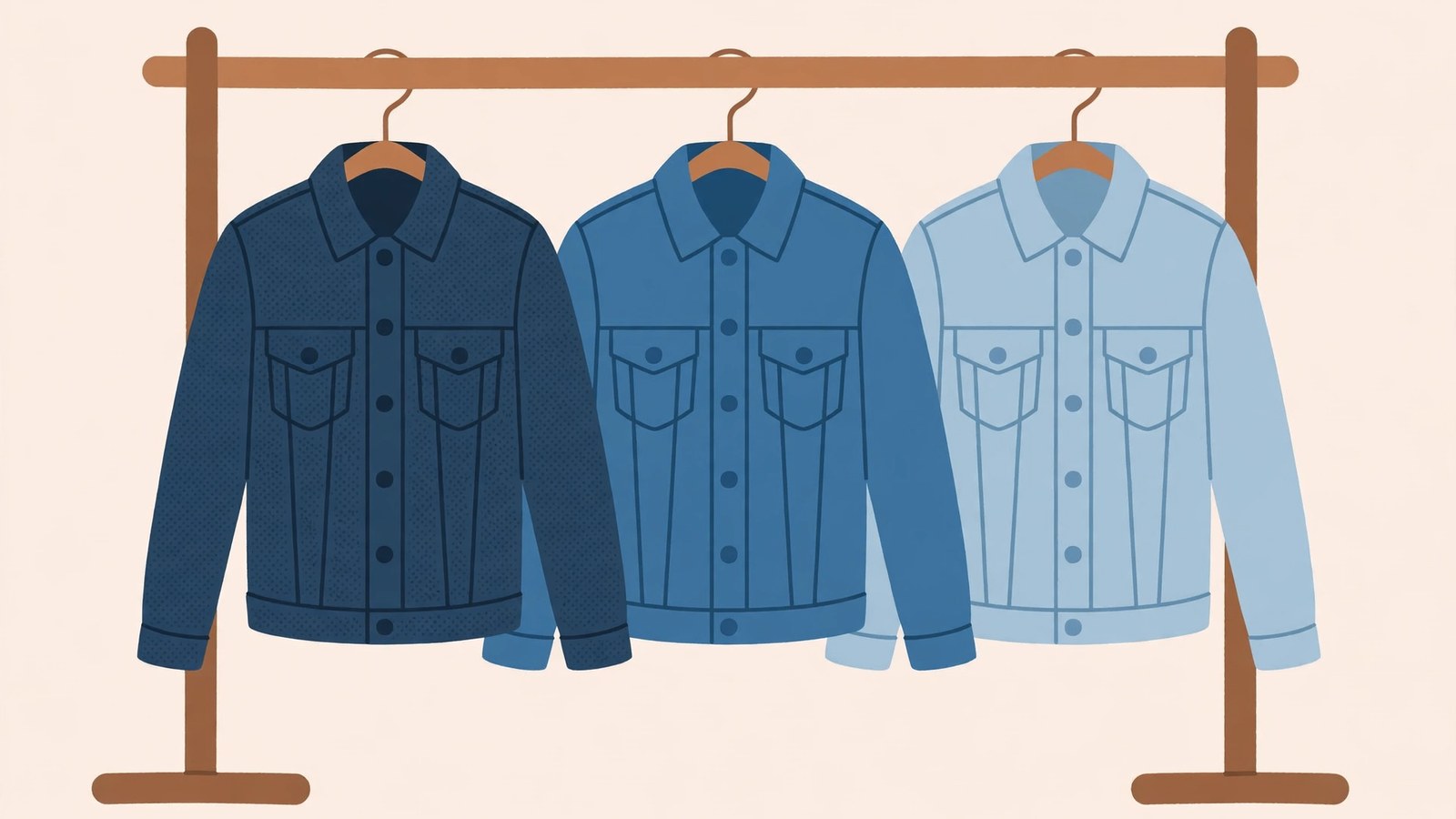
Wash refers to the color and fading of the denim, from raw, unwashed denim to very light, bleached denim, with many stages in between. Wash affects not only color but also softness, formality, and versatility, so it is worth choosing deliberately rather than by impulse.
Raw or unwashed denim is dark, stiff, and uniform in color. It softens and fades with wear, developing a pattern of fading unique to the wearer, which appeals to denim enthusiasts but requires patience. Raw denim jackets need a break in period, and they can transfer dye to light clothing when new, so they suit people who enjoy breaking in denim and who do not mind initial stiffness and dye transfer. For most people, a prewashed jacket is more practical.
Dark wash denim, in indigo or dark blue, is the most versatile wash. It looks polished enough for smarter casual outfits, goes with most colors, and does not show dirt as readily as light washes. A dark wash jacket can be worn with jeans in a different wash, with dresses, skirts, and trousers, and it works across seasons. If only one denim jacket is planned, a dark or medium dark wash is the most useful choice, because it balances casual and smart casual settings.
Medium wash denim, a classic blue, is the traditional jacket color and the most recognizably casual. It works well with white, cream, black, and bright colors, and it suits spring and summer outfits particularly well. A medium wash jacket can look a little more casual than a dark wash, which is fine for everyday wear but less ideal for a smarter casual occasion. It is a good second jacket after a dark wash, or a good first jacket if a wardrobe is mostly casual.
Light wash denim, pale blue or bleached, is the most casual and summery wash. It looks well with white, pastels, and bright summer colors, and it suits warm weather outfits, but it is less versatile for fall and winter, and it can show marks more readily. Light wash jackets also tend to look more casual and, in some settings, more dated, because light wash trends cycle more quickly than dark wash. A light wash jacket is a good seasonal addition, but it is rarely the best choice as a sole jacket.
Black denim, in black or faded black, offers a different kind of versatility. A black jacket looks smarter and more urban than a blue jacket, works well with black, gray, and jewel tones, and can be worn in settings where blue denim might feel too casual. However, black denim can fade to gray with washing, and it may not suit a wardrobe built around warm, earthy colors as well as blue denim does. A black jacket is a useful alternative or second jacket, especially for evening casual wear.
Other colors, such as white, pastel, or colored denim, are fashion pieces rather than staples. A white jacket can look fresh in summer, but it shows marks and goes with fewer outfits than a blue jacket. Colored jackets can suit a specific outfit but are rarely versatile enough as a first choice.
When choosing a wash, also consider how it will fade. Denim fades with washing and wear, especially at creases, pockets, and seams, which is part of its character. A jacket that starts dark will lighten over time, so choose a wash that will still be liked after fading, not just on the first wear.
Fit: The Difference Between Boxy, Classic, and Oversized
Fit is the most personal decision, because it determines comfort, layering ability, and how the jacket looks with the rest of an outfit. Denim jackets are traditionally boxy, with a straight body and a hip length hem, but modern fits range from slim to oversized, and the right fit depends on body shape, layering needs, and style.
A classic fit is the starting point: the jacket sits at the hip, allows room for a T-shirt or light sweater underneath, and does not pull across the chest or shoulders when buttoned. The shoulders should align with the natural shoulder line, not droop past it or pull inward, and the sleeves should end at the wrist bone when the arms are relaxed. A classic fit jacket can be worn buttoned or open, over a dress or with jeans, and it looks intentional rather than borrowed. If in doubt, start with a classic fit and adjust from there.
A slim fit is narrower through the body and sleeves, with a slightly shorter length, and it suits people who prefer a closer silhouette or who wear a jacket primarily over light tops rather than thick sweaters. A slim fit can look polished, but it limits layering: a thick sweater underneath a slim jacket will feel tight and restrict movement. Check that a slim fit does not pull across the bust or stomach when buttoned, and that the arms can be raised comfortably without the jacket riding up excessively.
An oversized fit is intentionally larger, with dropped shoulders, a longer body, and room for thick layers underneath. Oversized jackets suit a relaxed, casual style, and they work well over dresses, hoodies, and chunky knits, but they can overwhelm a smaller frame or look shapeless if the oversizing is too extreme. Balance helps: pair an oversized jacket with slimmer bottoms, such as straight jeans or a fitted skirt, and keep the rest of the outfit relatively simple so the jacket is the statement. A jacket that is simply too large, rather than intentionally oversized in design, will look ill fitting rather than fashionable, so check that the shoulders, sleeves, and length are proportionate, even in an oversized style.
Length matters too. A traditional jacket ends at the hip, which works with high waisted jeans, dresses, and skirts, because it shows the waistband and does not hide the outfit underneath. A cropped jacket, ending above the waist, suits high waisted bottoms and dresses, and it can lengthen the leg line visually, but it provides less coverage and warmth. A longer jacket, ending below the hip, provides more coverage and can work with leggings or longer tops, but it can also look boxy and hide the waist. For a first jacket, hip length is the most versatile, because it works with the widest range of outfits.
Try jackets on with the layers that will actually be worn: a T-shirt, a sweater, and, if relevant, a dress. Button the jacket and check for pulling, raise the arms, sit down, and walk around. A jacket that feels comfortable standing still but restricts movement when reaching or sitting will not be comfortable for a full day. Between sizes, let layering decide: a larger size suits thick sweaters underneath, while a smaller size suits mainly light tops in warm weather.
Fabric: Weight, Stretch, and Quality
Denim fabric varies in weight, stretch, and quality, and these differences affect comfort, durability, and appearance. Weight is measured in ounces per square yard, with lighter denim around 10 to 12 ounces, medium denim around 13 to 14 ounces, and heavier denim above that. For a jacket, medium weight denim is usually the most versatile: sturdy enough to hold its shape, but not so heavy that it feels stiff or hot in spring and summer. Very light denim can feel flimsy and may not hold the jacket structure, while very heavy denim can feel rigid and take a long time to break in.
Stretch denim contains a small percentage of elastane or a similar fiber, which gives comfort and ease of movement, especially for a fitted jacket. A jacket with a little stretch is more forgiving of fit differences and more comfortable on active days, but too much stretch can make the jacket lose shape, bag out, or look less structured than a rigid denim jacket. Rigid, non stretch denim holds its shape, develops a distinctive fade, and looks more classic, but it requires a more precise fit and a break in period. For most people, a jacket with a small amount of stretch, or a rigid jacket in a classic fit with room to move, are both sound choices, depending on preference.
Quality can be judged by several details. Look at the stitching: it should be even, with no loose threads, skipped stitches, or puckering, especially at seams, pockets, and buttonholes. Look at the buttons: they should be securely attached, made from metal rather than plastic for a classic jacket, and they should fasten and unfasten smoothly without catching. Look at the pockets: chest pockets should lie flat, be functional, and be placed symmetrically, and side pockets, if present, should not gape. Look at the seams inside the jacket: they should be finished neatly, not fraying or unraveling, and any lining should be smooth and well attached.
Selvedge denim, made on old style looms with a finished edge, is often described as higher quality, and it can be attractive, with a distinctive edge visible on a cuff or hem. However, selvedge does not automatically mean a better jacket for everyday wear, and it often comes at a higher price. A well made non selvedge jacket in good denim can be just as durable and attractive, so judge by overall construction, fit, and fabric feel rather than by the selvedge label alone.
Sustainability matters to many buyers. Denim production uses significant water and chemicals, and some makers now use organic cotton, recycled denim, laser fading, or ozone washing to reduce impact. Look for credible, specific information rather than vague claims. A jacket that lasts for years also replaces many shorter lived items.
Details That Matter: Buttons, Pockets, Collars, and Linings
Buttons and hardware affect both appearance and durability. Metal buttons, typically in brass, copper, or a matte finish, suit classic jackets and age well, developing a patina over time. Plastic buttons are less durable and can look cheap, especially on a jacket intended to last. Check that buttons are riveted or securely sewn, that they do not wobble, and that buttonholes are cleanly finished and not fraying. Adjustable waist tabs, small buttons at the waist that allow the jacket to be cinched slightly, are a useful feature for adjusting fit over different layers.
Pockets are both functional and stylistic. Classic jackets have two chest pockets with button flaps, which are useful for a phone, keys, or small essentials, though they are not large enough for much more. Some jackets also have side pockets, handwarmer pockets, or interior pockets, which add practicality but can also add bulk or change the silhouette. Check that pockets are placed at a comfortable height, that they lie flat when empty, and that they do not gape when the jacket is buttoned. A pocket that gaps or pulls indicates a fit or construction issue.
Collars come in several styles: a classic pointed collar, a shirt style collar, a shearling or faux fur collar for warmth, or a collarless style. A classic collar is the most versatile, working buttoned up for wind protection or open for a relaxed look. A shearling collar adds warmth and a distinctive look for fall and winter, but it also adds bulk and makes the jacket less versatile for spring and summer. A collarless jacket can look modern but provides less wind protection. Choose a collar that suits the climate and the seasons the jacket will be worn most.
Linings affect warmth and comfort. An unlined jacket is the most versatile for spring, summer, and fall, because it can be layered over a sweater in cooler weather and worn over a T-shirt in warm weather. A lined jacket, with a quilted, fleece, or shearling lining, is warmer and suits fall and winter, but it is less versatile on warmer days and it adds bulk that can affect fit. For year round use, unlined is usually better, with layering providing warmth when needed. For cold weather specifically, a lined version may suit better, but check that the lining does not make the jacket too tight over a sweater.
Styling a Denim Jacket
Versatility is the greatest strength of a denim jacket, and styling it well is largely about balance and contrast. The classic double denim look, a jacket with jeans, works when the washes contrast: a dark jacket with light jeans, or a light jacket with dark jeans, creates a deliberate look, while a jacket and jeans in the same wash can look like a matching suit, which is a specific style choice rather than a default. If double denim is worn in the same wash, breaking it up with a different colored top, shoes, or accessories avoids a uniform effect.
With dresses, a jacket adds a casual, approachable layer, making a dress suitable for daytime, walking, and casual occasions. A hip length jacket over a midi dress, with ankle boots or sneakers, is a classic spring outfit. With skirts, a jacket works similarly, especially with a midi skirt and a tucked top, where the hip length shows the waist. With trousers, a jacket works with chinos, black trousers, or linen trousers for a smart casual look, provided the wash and fit are polished enough for the occasion.
Layering a jacket under a coat is a useful fall and winter technique: a denim jacket over a sweater, under a wool coat or trench, adds warmth and texture without excessive bulk, provided the coat is roomy enough. Layering a jacket over a hoodie is a classic casual look, though it works best with a slightly oversized jacket to accommodate the bulk of the hoodie. A scarf draped over or under a jacket adds warmth and color for spring and fall.
Accessories can change the mood. A bright or silk scarf adds polish, jewelry can dress a jacket up for a smarter casual occasion, and a cap adds a relaxed feel. Sneakers and flats keep an outfit casual, ankle boots add a fall feel, and heeled shoes dress it up slightly, though a denim jacket remains a casual piece.
Care: Washing, Fading, and Making It Last
Denim jackets need less washing than many people assume, and washing less often preserves color, shape, and fabric. Wash a jacket only when it is actually dirty or smells, rather than after every wear, and spot clean small marks with a damp cloth and mild soap when possible. When washing is needed, follow the care label for that jacket. In general terms from the source material, turn it inside out, button it, wash in cold water on a gentle cycle with a mild detergent, and avoid fabric softener and bleach, which can damage denim and affect color.
Drying matters too. Air drying, hung on a sturdy hanger away from direct sunlight, preserves shape and color better than tumble drying, which can shrink denim, fade color, and stress seams. If tumble drying is used, a low heat setting and removing the jacket while slightly damp, then hanging it to finish drying, reduces that stress. Avoid hanging a wet jacket on a thin wire hanger, which can distort the shoulders; use a wide, sturdy hanger instead.
Fading is natural and can be slowed by washing in cold water, washing less often, and avoiding prolonged sun while drying. To preserve a dark wash, wash separately or with similar colors, because dye can transfer, especially when new. Store a clean, fully dry jacket in a dry, ventilated place. Repairs extend a jacket life. Loose buttons can be reattached or replaced, small tears can be patched from the inside for a subtle repair or from the outside for a visible, decorative patch, and worn cuffs can be reinforced. A tailor or a denim repair service can handle larger repairs, such as seam reinforcement or pocket replacement. A jacket repaired well can look better, not worse, because the repairs add character and history, and they keep a well fitting jacket in use for years longer.
Choosing Online, Second Hand, and on a Budget
Judging a jacket without trying it on requires attention to measurements, because fit varies by maker. Check the size information for chest, shoulder, sleeve length, and body length, and compare those numbers with a jacket already owned that fits well, rather than relying on a usual size alone. Read descriptions and any available reviews for comments on fit, especially whether the jacket runs small, large, or true to size, and whether it is stiff when new. Note the return terms in advance, because trying two sizes may be needed, and keep tags on until the jacket has been tried with usual layers.
Second hand jackets are a strong option, because denim softens with wear and a well made jacket can last for decades. Check fading, wear at cuffs and collar, button condition, seam integrity, and any smells from damp storage or smoke. Try it on with layers and check that it still holds its shape.
Budget does not have to mean poor quality, but it requires careful checking. Inexpensive jackets can have thin denim, plastic buttons, uneven stitching, and a shape that collapses after washing. Check the details above and feel the fabric weight. For a first jacket, prioritize fit and wash over brand or trend.
Common Mistakes to Avoid
The most common mistake is choosing a jacket that is too tight to layer, because it looks good over a T-shirt at first but cannot accommodate a sweater in fall. Always judge a jacket with the thickest layer planned for it. A second mistake is choosing a wash that goes with nothing in a wardrobe, often because it looked good in isolation. Hold the jacket against usual outfits, or photograph it with them, before committing.
A third mistake is ignoring fabric quality in favor of price or brand. A jacket in thin, flimsy denim with plastic buttons will not last, however fashionable it looks initially. Check stitching, buttons, and fabric weight. A fourth mistake is choosing a length that is wrong for usual bottoms: a jacket that hides the waistband of high waisted jeans, or a cropped jacket that leaves a gap with low rise trousers, can look unbalanced. Check length with usual outfits.
A fifth mistake is over washing a new jacket, which fades it quickly and can shrink it. Wash less often, in cold water, and air dry. Finally, many people set aside a jacket because it feels too stiff. A stiff jacket can be broken in by wearing it around the house and rolling the sleeves. A jacket that starts stiff often becomes very comfortable after breaking in, so give it time before deciding it is not suitable.
Frequently Asked Questions
What wash denim jacket should be chosen first?
A dark or medium dark wash is the most versatile first choice, because it works for casual and smarter casual outfits, goes with most colors, and does not show dirt as readily as light washes. A medium wash is a good second choice, and a light wash is best as a seasonal addition.
Should a denim jacket be tight or loose?
It should allow room for a light sweater underneath without pulling across the chest or shoulders, and it should not restrict arm movement. A classic fit, hip length, with shoulders aligned to the natural shoulder line, is the most versatile starting point. A larger size suits thick sweaters, and a fit so tight that buttoning pulls should be avoided.
Can a denim jacket be worn with jeans?
Yes, if the washes contrast. A dark jacket with light jeans, or a light jacket with dark jeans, looks intentional, while the same wash top and bottom can look like a matching set. Break up same wash double denim with a different colored top or accessories for a less uniform look.
How can fading be slowed?
Wash less often, wash in cold water on a gentle cycle, turn the jacket inside out, avoid bleach and fabric softener, and air dry away from direct sunlight. Fading over time is natural for denim, so choose a wash that will still be liked after it lightens.
Is a lined denim jacket worth choosing?
It depends on climate and use. An unlined jacket is more versatile for spring, summer, and fall, with layering providing warmth. A lined jacket, with fleece or shearling, is warmer for fall and winter but less versatile on warmer days and bulkier to layer. For year round use, unlined is usually better.
How can a well made denim jacket be recognized?
Check even stitching, secure metal buttons, pockets that lie flat, finished interior seams, and a fabric weight that holds its shape without feeling flimsy. A well made jacket should feel sturdy, button smoothly, and hold its shape when worn, not just on a hanger.
Sources & references
- This article gives general guidance only. No specific statistic, study result, or product claim is cited, and no brand, seller, or product is recommended. The package research record for this article, checked on 31 October 2026, states that status explicitly: general guidance only, with no statistic cited. Wash, fit, fabric weight, construction, styling, and care statements above are general explanations adapted from that source material, not verified measurements of any individual jacket. Always follow the care label on the specific jacket in hand, because fiber content and construction vary.


