Short answer
- The sacral chakra, or Svadhisthana, is traditionally described as the second chakra, placed in the subtle body in the lower belly below the navel and linked with the color orange, the water element, a six petaled lotus, the seed sound VAM, and themes of creativity, emotion, pleasure, warmth, and adaptability. The word chakra comes from Sanskrit for wheel or circle, and Svadhisthana is commonly broken into sva, meaning one's own or self, and adhisthana, meaning seat or dwelling place. Chakras are spiritual concepts from Hindu and Buddhist traditions, not proven physical structures, and chakra practices are not medical treatments. Simple practices linked with the sacral chakra in modern teaching include gentle hip movement and flowing yoga poses, a regular low pressure creative habit, a short meditation using breath, orange imagery, or the sound VAM as a focus, time near water used as a symbol of flow, and journaling about what you enjoy and what change you are resisting. If a difficulty with mood, relationships, pain, or health is persistent or distressing, practical and professional help matters more than any spiritual practice.
Introduction
Sacral chakra basics start with the same distinction that keeps the whole chakra topic honest. In chakra tradition, the sacral chakra is a spiritual concept, described as the second center in a system of centers imagined along the spine. Its Sanskrit name is Svadhisthana, often translated as one’s own dwelling place or one’s own abode. Tradition places it in the lower belly, below the navel, and links it with the color orange, the water element, creativity, emotion, pleasure, warmth, and the ability to move with change. None of that makes it an anatomical structure, a medical diagnosis, or a treatment. Cleveland Clinic makes the boundary plain in its overview of the seven chakras: chakras refer to seven points along the spine that some people believe are associated with specific physical, emotional, and spiritual functions, they are part of South Asian traditional systems, and they are not recognized by Western science, though some people find them a useful metaphor for balance.
This guide explains the tradition in plain language, shows how the sacral chakra fits into the larger system, and offers simple everyday practices you can try without buying anything and without believing anything first. The practices are reflective and wellness practices: gentle movement, a short protected time for making something, quiet meditation, journaling, and enjoying a sensory pleasure slowly. Their honest value is ordinary and practical. Movement is movement, making time is making time, and paying attention is paying attention, whether or not you use chakra language to frame them.
Chakra ideas come from Hindu and Buddhist traditions in India, especially their Tantric and yogic forms, and they have been adapted in many modern yoga, meditation, and wellness settings. Different texts, teachers, and lineages describe the system differently, with varying numbers of chakras, locations, colors, sounds, and associations. This article presents the most common modern version, the seven chakra model, while noting where that model came from and where it varies. If a teacher presents one version as the only true version, or promises healing, unblocking, or a creative breakthrough from chakra work, that is a reason to be cautious.
Where Chakra Ideas Come From
The Sanskrit term cakra, usually spelled chakra in English, literally means a circle, wheel, or discus, and it plays a key role in Hindu and Buddhist traditions, particularly in their more esoteric Tantric forms. Encyclopaedia Britannica describes a chakra as any of a number of psychic energy centers of the body, prominent in the practices of certain forms of Hinduism and Tantric Buddhism. In yogic practice, the term refers to spiritual centers believed to lie within the subtle body, the immaterial aspect of a person in yogic teaching, rather than the physical body studied by anatomy. Encyclopedia summaries stress that rough correspondence to physical organs is not the same as identity with them. The cakras are often imagined as wheels and also as lotus blossoms with varying numbers of petals.
The history explains why versions differ. The earliest known accounts of cakras as inner centers come from an eighth century Buddhist text, the Hevajra Tantra, which identifies four cakras at the navel, heart, throat, and head. A classic group of six cakras emerged slowly, appearing in identifiable form by about the ninth or tenth century. The familiar model of six centers plus a seventh at the crown, often described as six plus one, became standardized much later, helped by a 1919 translation of a relatively late text. Britannica notes the same broad shape: six major chakras along the spinal cord and another just above the crown of the skull are of principal importance, each associated with a color, shape, element, deity, and mantra. Other lineages count four, five, six, or more, and modern Western presentations added their own layer, including fixed rainbow colors for every center.
Variation is therefore not an error to be hidden. It is what the record shows. The modern chart on a poster, with seven colored circles in a row, is a simplified teaching tool that draws on older traditions and later interpretation. Cleveland Clinic places the concept in the same frame: the word chakra is based on the Sanskrit word for wheel or circle, the concept has origins in both the Hindu and Buddhist faiths, and the seven chakras are said to represent energy sources, each corresponding to a section of the body and to themes for reflection. Said is the important word. It reports what the tradition holds, without endorsing it as science.
What Svadhisthana Means, in the Tradition’s Own Terms
Svadhisthana is commonly explained as a compound of sva, meaning one’s own or self, and adhisthana, meaning seat, abode, or dwelling place. One’s own dwelling place and one’s own abode are therefore translations offered by modern teaching sources, not nicknames added for marketing. Some sources also give a looser rendering, sweetness. Because translations vary, the careful point is the parts of the word, not a single English phrase treated as exact.
In the common modern presentation, tradition places Svadhisthana in the lower belly below the navel, between the tailbone and the belly button in Cleveland Clinic’s wording, as the second of the seven main chakras: root, sacral, solar plexus, heart, throat, third eye, and crown. Tradition associates it with the color orange, the water element, a six petaled lotus, and the seed syllable VAM, repeated as a focus in some meditation practices. Some modern descriptions also place a white crescent moon inside the lotus as a symbol of the water element. Sources disagree on details beyond that core set, including which deity to name, so this article does not present a deity association as settled. All of those details belong to the subtle body framework. They describe how practitioners visualize the center in meditation. They do not describe a structure that a scan can find, a gland that a test can measure, or a blockage that a clinician can diagnose.
Practitioners often link the sacral chakra with creativity, emotion, pleasure, and ease with change. Creativity here is broad: drawing, writing, and music, and also cooking a new meal, rearranging a room, planting seeds, or solving a work problem in a new way. Emotion in this language means noticing feelings and expressing them in ways that do not harm others. Pleasure means ordinary sensory enjoyment, such as warm food, music, swimming, or time in nature, enjoyed without guilt and without excess. Adaptability means moving with a change in plans or in a season of life, rather than resisting every shift.
Read that language as metaphor, not as diagnosis. Feeling uninspired, numb, restless, or overwhelmed can have many causes, including tiredness, stress, grief, a health condition, or a demanding workload, and those causes deserve practical attention in their own right. No feeling or life problem proves that a chakra is blocked, and no chakra reading can rule out a medical or mental health cause. The metaphor can still be useful: asking what small thing would I enjoy making today can lead to a concrete answer, such as sketching for fifteen minutes or trying a recipe. The usefulness of the question does not turn the metaphor into a physical fact.
How the Sacral Chakra Fits Into the Larger System
Most modern chakra systems describe seven main chakras, running from the base of the spine to the crown of the head. The root chakra, Muladhara, is first, linked in tradition with grounding, safety, and stability. The sacral chakra is second. The solar plexus chakra, Manipura, is third, followed by the heart, throat, third eye, and crown chakras, each linked with different themes. Modern teaching often describes the sacral center as a bridge between the first two movements of that sequence: after grounding comes flow. Where the root is pictured as standing firm, the sacral is pictured as moving, feeling, and creating.
Any list that assigns a chakra to a specific organ, gland, or disease goes beyond what tradition needs and beyond what evidence supports, and this article does not use it. If you have pain or a health concern, treat it as a health concern.
Balance and Imbalance in Traditional Language
In chakra teaching, people often speak of a center as balanced or imbalanced. A balanced sacral chakra is traditionally described with easy emotional expression, comfort with pleasure, creative energy, flexibility, and warmth toward others. Cleveland Clinic uses a shorter version of the same picture: a balanced sacral chakra contributes to feelings of creativity and playfulness, while a lack of balance may bring feelings of powerlessness or low energy. In traditional language, a person in that state might find it easier to start a creative project, enjoy a meal without guilt, adapt when plans change, or say how they feel clearly and kindly.
Imbalance, in the same language, is described in two directions. One is described as blocked or low: creative blocks, emotional numbness, difficulty enjoying things, or a sense of flatness. The other is described as excess: overindulgence, emotional reactivity, restlessness, or difficulty with boundaries. These are traditional descriptions, not diagnoses, and they are not substitutes for professional support when someone is struggling with mood, relationships, or health. If a difficulty is persistent or distressing, speaking with a qualified professional is a better step than relying on a chakra practice alone.
Balance is also not a permanent achievement. A week of illness, a move, a loss, or a busy season at work can all make creativity feel harder to reach. The tradition treats practice as regular care rather than a one time fix: small, repeated habits that help a person notice how they feel and return to what supports them. A practice that promises a permanent state, a cured condition, or a guaranteed breakthrough is promising more than tradition or evidence can deliver.
Everyday Practice: Movement and the Body
Movement is the most common sacral practice in modern yoga teaching, and it fits the water element well. The emphasis is on fluid, gentle motion through the hips and pelvis rather than forceful stretching. Cleveland Clinic notes that each chakra aligns in practice with several yoga poses, and for the sacral chakra it points to wide leg and hip opening poses. Modern sacral sequences commonly include Bound Angle, where the soles of the feet come together and the knees fall open, Goddess pose, a wide standing squat, Low Lunge, which opens the front of the hips, and gentle flowing sequences that link breath with movement, such as circles in Cat and Cow or slow side to side hip movements. The point, in traditional teaching, is not to achieve a perfect shape but to move with attention and to notice sensation without judgment.
A short practice can be enough. Ten minutes of slow hip opening movement, done with steady breathing, is a reasonable starting point. The National Center for Complementary and Integrative Health gives the general safety frame: yoga is generally considered a safe form of physical activity for healthy people when performed properly, under the guidance of a qualified instructor, but injuries can occur, and the most common injuries are sprains and strains. Practice with a qualified instructor where you can, avoid extreme positions as a beginner, move gently, and adapt poses to your own body. Stop if anything hurts, and do not use yoga to postpone seeing a health care provider about a medical problem. Pregnant readers, older adults, and people with hip, knee, back, balance, or blood pressure concerns should talk with a health care provider and the instructor about modifications first.
Water itself is another traditional sacral cue. A warm bath, a swim, a walk beside a river, or drinking a glass of water with attention can be used as a reminder of the theme of flow. The tradition treats these as symbolic reminders rather than treatments: water moves around obstacles instead of pushing through them, and that image can be a useful thought when life feels rigid. Any calm after a bath or a walk is best explained in ordinary terms, by warmth, rest, movement, and a change of scene.
Everyday Practice: Creativity Without Pressure
Creativity is central to sacral teaching, and the advice that follows from it is refreshingly undemanding. The goal is not to produce a masterpiece but to make something regularly, without judging the result. That might mean keeping a sketchbook with no audience, cooking a new recipe once a week, rearranging a room, planting seeds, writing a few lines of a story, or learning a simple craft. The activity matters less than the attitude: curiosity, play, and permission to make something imperfect.
A useful starting habit is a short, protected creative time, such as fifteen minutes a day or an hour on a weekend, kept separate from work and chores. During that time, the only rule is to make rather than consume: draw instead of scrolling, write instead of rereading, cook instead of ordering. Many people find that a regular creative habit changes how the rest of the day feels, not because of any energy shift that can be measured, but because attention has been given to something enjoyable and self directed. That ordinary benefit is real, even though it is not evidence for a chakra mechanism. Protecting the time is most of the practice: a notebook left open, ingredients bought in advance, or a standing date with a friend to make things together all lower the friction that stops a small habit.
Creative blocks deserve a gentle approach. Instead of forcing inspiration, traditional advice often suggests changing the medium, moving the body, spending time near water, or doing something sensory and simple, such as kneading dough or arranging flowers. Sometimes a block is simply tiredness, and rest is the honest remedy. Sometimes it is fear of judgment, and making something deliberately small and private can loosen it. Sometimes it is a practical problem, such as no time or no materials, and solving that problem helps more than any reflection. The tradition encourages patience over pressure, and it never justifies promising that a practice will unlock talent, income, or recognition.
Everyday Practice: Meditation, Color, and Sound
For readers who enjoy quiet practice, the sacral tradition offers a simple meditation. Sit comfortably, breathe naturally, and bring attention to the lower belly. Some people picture the color orange there, warm and soft, or picture water moving gently. Others repeat the seed sound VAM softly, written as Vam in some sources and said like vum, or simply listen to their breath. Cleveland Clinic describes chakra meditation in the same basic shape: focus on a particular area of the body while you meditate, associate that area with the color related to that chakra, notice what you are feeling, and take a deep breath with the intention of letting go of tension. A few minutes is enough. There is no requirement to feel anything specific. Noticing warmth, restlessness, boredom, or calm are all ordinary experiences during meditation.
Color and objects are used by some practitioners as reminders rather than as tools with power of their own. Wearing orange, placing an orange cloth or flower where you work, or keeping a carnelian or orange calcite stone nearby are common examples. In modern teaching, carnelian is the stone most often linked with the sacral center. A stone does not create creativity or heal anything, and any benefit comes from the reminder and the attention a person gives to their intention. Buying an expensive stone is not necessary, and anyone selling one as a cure should be treated with caution.
Journaling pairs naturally with meditation here. After a few quiet minutes, writing a few lines about what you noticed, what you feel like making, or what change you are resisting can turn a vague mood into something clearer. Useful prompts include: what did I enjoy today, however small; what am I putting off making, and what is the smallest first step; and where did I adapt well this week. Over several weeks, the notes can show patterns in energy, mood, work, and rest that are practical to act on, whether or not you describe them in chakra language.
A Short Sacral Chakra Meditation for Beginners
A beginner meditation can be very short. Sit comfortably, feet on the floor if possible, back supported. Close your eyes if that feels comfortable, or soften your gaze toward the floor. Breathe normally. For a few minutes, notice your body: the weight of your hips on the chair, the movement of your lower belly as you breathe, and any sounds in the room. Cleveland Clinic’s general meditation guidance follows the same discipline: there is no single right way to meditate, each type has the same broad goal of calming the busy mind and helping a person be present, and a wandering mind is normal, with attention gently brought back without judgment. Avoid anything that insists there is only one correct method.
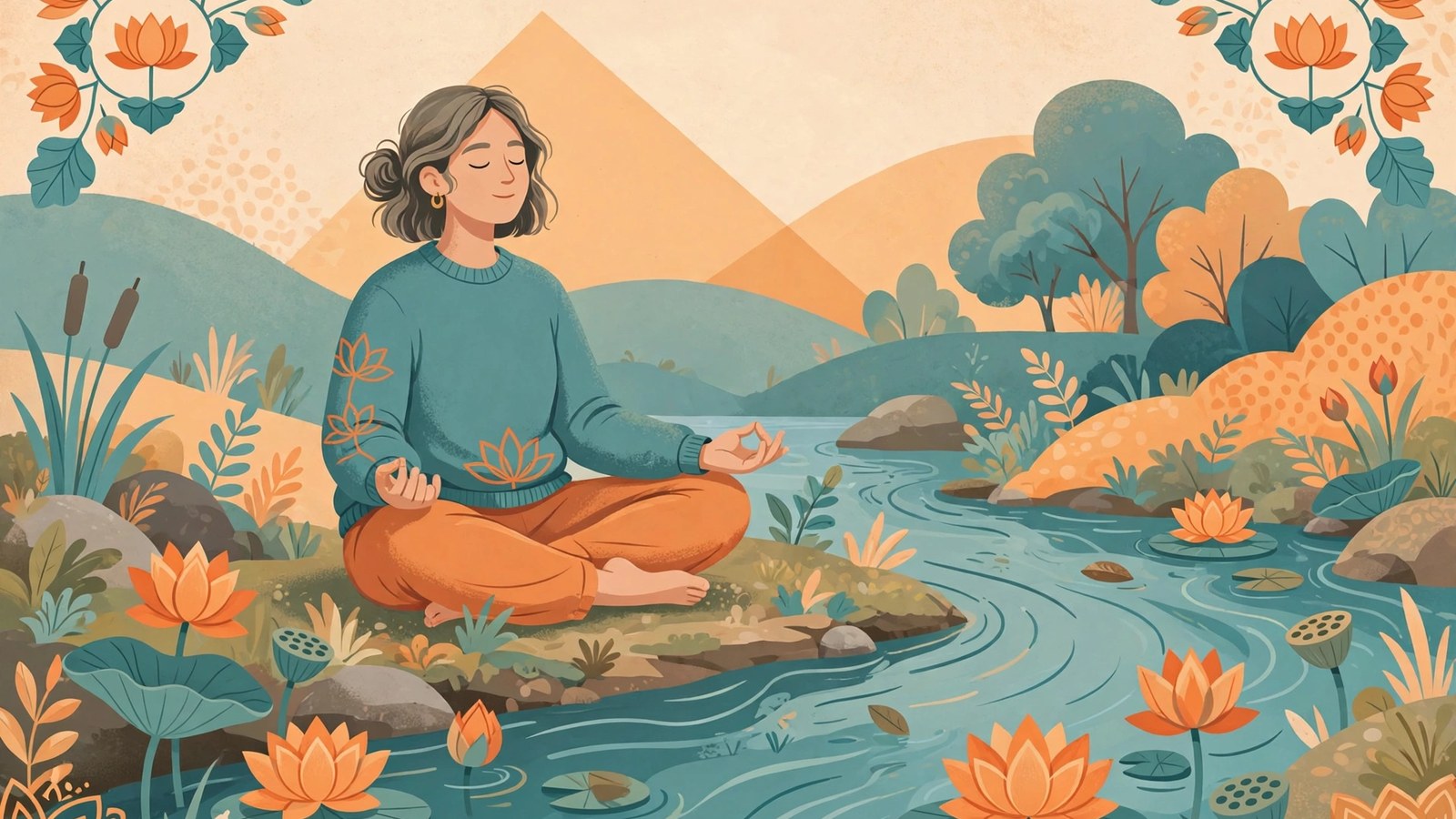
If you like traditional imagery, you might imagine a warm orange light in the lower belly, water moving slowly in a stream, or the sound VAM repeated softly with the out breath. If that imagery does not appeal to you, simply notice physical sensations and breathing. Both versions are the same exercise. The imagery is optional decoration, not the mechanism. End by opening your eyes, stretching, and noting how you feel, without judging the experience as success or failure.
Keep sessions short at first, perhaps five minutes, and lengthen gradually only if you enjoy them. The National Center for Complementary and Integrative Health notes that meditation and mindfulness practices are usually considered to have few risks, but some people do have negative experiences, most commonly anxiety or depression in the studies it reviewed. If meditation makes you anxious, dizzy, or distressed, stop and try a different activity, such as walking or talking with a friend. General research summarized by that center suggests mindfulness based practices may be helpful for anxiety and depression for some people and may reduce insomnia for some people, in general terms. That is not a chakra finding, and meditation is not a sole treatment for any health condition.
Warmth, Pleasure, and Relationships
The sacral tradition also speaks to everyday warmth: enjoying food, music, touch, and company without apology. Modern life often treats pleasure as a reward to be earned, and the sacral picture pushes gently against that habit. Enjoying a meal slowly, listening to music without multitasking, or spending unhurried time with a friend are all, in this tradition, legitimate parts of a balanced life rather than indulgences to be justified. Warmth here means a life that feels lived in and sensory, not only efficient.
In relationships, the sacral theme is connection with boundaries. The tradition links this center with the ability to be close to others while remaining oneself, to enjoy intimacy without losing independence, and to adapt when a relationship changes. Questions worth asking include: do I feel free to say what I enjoy and what I need; can I adapt when plans change without either collapsing or digging in; and do I make room for the other person’s feelings as well as my own. These are ordinary relationship questions, and the chakra framework simply gives them a shared language.
Be especially careful with one part of this tradition. Because the sacral center is linked with sensuality and sexuality, some sources make sweeping claims about desire or intimacy. Those claims are traditional and symbolic, not medical, and they do not override consent, comfort, or personal values. A practice that feels intrusive, pressured, or uncomfortable is not a good practice for that person, whatever a book says. No teacher, partner, or article can use chakra language to set aside a boundary.
You do not need to buy anything to explore this topic. No kit, crystal, course, or special clothing is required. Be cautious about high pressure sales, claims of curing disease or fixing relationships, promises to diagnose a blockage from a short conversation, or advice to stop medical treatment. A responsible teacher will encourage you to seek medical care when needed, will not diagnose you, and will present chakra work as spiritual or reflective practice, not as medicine.
Building a Simple Weekly Rhythm
A simple weekly rhythm can bring these threads together without turning life into a schedule of obligations. One possible pattern is: gentle hip movement on two or three days, a short creative session once or twice a week, a quiet meditation or journaling moment when it fits, and one sensory pleasure enjoyed slowly, such as a bath, a walk, or a favorite meal. That is enough to explore the tradition honestly. More is not necessarily better, and a practice that feels like a chore will rarely last.
Approaching the Tradition Respectfully
Chakra teaching is not a modern wellness invention, and it is not ownerless. It comes from Hindu and Buddhist religious and yogic traditions in India, developed over centuries in texts and lineages, and a respectful approach starts there. Learn the Sanskrit names as names, not as branding. Expect teachers from different lineages to disagree on details, because the historical record itself contains several systems. Avoid presenting a borrowed practice as your own discovery, and keep two registers separate in conversation: tradition says is an honest sentence, science shows is a different kind of sentence, and sacral chakra content belongs in the first.
A Balanced View
The sacral chakra tradition offers a vivid metaphor for flow: water, warmth, orange light, and making. That metaphor can support reflection, gentle movement, creative habits, and practical self care, and many people find it comforting and motivating. At the same time, chakras are not established physical structures, and chakra practices are not proven medical treatments. Holding both truths together, appreciating the tradition while staying honest about its limits, is the most respectful and useful approach.
Frequently Asked Questions
What is the sacral chakra in simple terms?
It is the second center in the chakra system as most modern teachers present it. Its Sanskrit name is Svadhisthana, commonly explained as one’s own dwelling place, and tradition places it in the lower belly below the navel in the subtle body and links it with orange, the water element, and themes of creativity, emotion, pleasure, warmth, and adaptability. It is a spiritual concept, not a physical organ or a medical term.
Is the sacral chakra a real part of the body?
No, not in the anatomical sense. Chakras belong to the subtle body described in Hindu and Buddhist yogic traditions, and Cleveland Clinic notes that chakras are not recognized by Western science and that there is no scientific evidence that chakra work works as a physical mechanism. People may still find the imagery useful as a metaphor for reflection, in the same way feeling stuck or in flow is useful everyday language.
What does a blocked sacral chakra mean?
In belief terms, teachers use blocked or imbalanced to describe feeling creatively flat, emotionally numb, or unable to enjoy things, and excess to describe overindulgence, reactivity, or weak boundaries. Those words are not diagnoses, they cannot be measured by a medical test, and the same feelings can have practical, medical, or mental health causes that deserve direct attention. Treat the language as a prompt for reflection.
What is the sacral chakra color, element, symbol, and sound?
In the common modern presentation, the sacral chakra is associated with the color orange, the water element, a six petaled lotus symbol, sometimes shown with a crescent moon, and the seed syllable VAM. Those associations come from traditional symbolism as modern teaching presents it, and details vary by text and lineage, including translations of the name and any deity association. A source that treats every correspondence as ancient, fixed, and factual is oversimplifying the history.
Do sacral chakra practices or crystals heal anything?
No healing claim is supported. Gentle movement, a regular creative habit, time near water, and focused breathing or meditation can help many people feel calmer, more present, or more motivated, as general wellness guidance describes, and that benefit does not need a chakra explanation. Crystals and stones have no proven healing powers. Enjoy them, if at all, as decorative or symbolic reminders, and never use them instead of medical care.
How do I start a sacral chakra practice as a beginner?
Start with the practices, not the purchases. Move gently through the hips for ten minutes, make something small for fifteen minutes without judging it, sit for five minutes and follow your breathing, with orange or water imagery only if you enjoy it, and enjoy one meal or walk slowly. Stop anything that causes pain or distress, and seek professional help for any health concern rather than treating it as a chakra problem.
Sources & references
- Encyclopaedia Britannica, Chakra. Used for chakra meaning wheel, for a chakra as any of a number of psychic energy centers prominent in certain forms of Hinduism and Tantric Buddhism, for six major chakras located roughly along the spinal cord and another just above the crown of the skull being of principal importance, and for each major chakra being associated with a specific color, shape, sense organ, natural element, deity, and mantra.
- Encyclopedia.com, Cakras. Used for the Sanskrit term cakra meaning a circle, wheel, or discus and its key role in Hindu and Buddhist traditions particularly in Tantric forms, for cakras as spiritual centers believed to lie within the subtle body rather than the physical body and corresponding only roughly to physical organs, for cakras imagined as wheels and as lotus blossoms with varying petal counts, for the earliest known accounts in the eighth century Buddhist Hevajra Tantra identifying four cakras at the navel, heart, throat, and head, for a classic six cakra system emerging by about the ninth or tenth century, for the sixfold system becoming standardized only after the 1919 translation of a relatively late text, for the sixfold list naming svadhisthana second with six petals, and for each cakra being identified with a particular color, shape, element, cosmic principle, sacred syllable, and deity.
- Cleveland Clinic, Health Essentials, The 7 Chakras and What They Mean. Used for chakras referring to seven points along the spine that some people believe are associated with specific physical, emotional, and spiritual functions, chakras being part of South Asian traditional systems, chakras not being recognized by Western science and there being no scientific evidence that they work, chakras possibly serving as a useful metaphor for balance, the word chakra being based on the Sanskrit word for wheel or circle, origins in both the Hindu and Buddhist faiths, the seven chakras being said to represent energy sources with each corresponding to a section of the body, a color, an element, and specific emotions, each chakra aligning in practice with yoga poses and affirmations thought to help bring balance, the sacral chakra listed by its Sanskrit name Svadhisthana with location between the tailbone and belly button, color orange, element water, affirmation about moving with the flow of life, a balanced sacral chakra contributing to feelings of creativity and playfulness and a lack of balance bringing feelings of powerlessness or low energy, sacral yoga poses being wide leg and hip opening poses, balance meaning fostering the positive emotions associated with each chakra by noticing what feels off, breathwork helping a person feel calmer and more present, and chakra meditation as focusing on a particular area of the body while meditating and associating that area with its related color.
- Cleveland Clinic, Health Essentials, How To Meditate Properly and Effectively. Used for meditation helping to calm the mind and develop the ability to stay in the present moment, there being no single right way to meditate, each type sharing the goal of calming the busy mind and helping a person be present and find balance, breath meditation as following the in breath and out breath, mindfulness meditation as using the senses to observe the present moment without judgment, moving meditation as meditation during another activity such as gentle movement, and the advice to avoid anything that insists there is only one right way to meditate and to return attention gently and without judgment when the mind drifts.
- National Center for Complementary and Integrative Health, Yoga: What You Need To Know. Used for yoga as an ancient and complex practice rooted in Indian philosophy that began as a spiritual practice, research suggesting yoga may help improve general wellness by relieving stress, supporting good health habits, and improving mental and emotional health, sleep, and balance in general terms, yoga being generally considered a safe form of physical activity for healthy people when performed properly under the guidance of a qualified instructor, injuries being possible with sprains and strains most common, beginners avoiding extreme practices, pregnant women, older adults, and people with health conditions talking with health care providers and the instructor about modifications including for preexisting hip or knee injuries, and the advice not to use yoga to postpone seeing a health care provider about a medical problem.
- National Center for Complementary and Integrative Health, 8 Things to Know About Meditation and Mindfulness. Used for mindfulness based practices possibly being helpful for anxiety and depression and possibly reducing insomnia and improving sleep quality in general terms, and for meditation and mindfulness practices usually being considered to have few risks while some people have negative experiences, with about 8 percent of participants in an analysis of studies on more than 6,000 people reporting negative effects, most commonly anxiety or depression.
- SomaAxis, Sacral Chakra Yoga: Svadhisthana Poses and Practices. Used only for modern teaching statements: the sacral chakra as the second of the seven chakras pictured in the lower belly, the name Svadhisthana often translated as one's own place, traditional texts linking it with water and picturing it as a lotus with six petals, its color in modern practice being orange, its seed sound Vam, modern teaching linking it with creativity, pleasure, emotion, and ease with change, its key poses including Bound Angle, Goddess, and Low Lunge with flowing hip movement and circles in Cat and Cow, and its off the mat suggestions of making something small with no goal and spending a few minutes near water.
- Yoga Basics, Sacral Chakra (Svadhisthana): Meaning, Colors and How to Balance It. Used only for modern teaching statements: Svadhisthana located at the lower abdomen between the belly button and pubic bone, symbolized by orange and a lotus with six petals, its meaning as one's own abode from sva, meaning self or one's own, and adhisthana, meaning seat or dwelling place, its element as water, its bija mantra as Vam, a six petaled orange lotus with a white crescent moon inside it as a traditional symbol of the water element, carnelian and orange calcite as traditional stones for this chakra, hip opening poses and fluid movement and time near water as common modern practices, and there being no scientific evidence that chakras are physical structures.


