Short answer
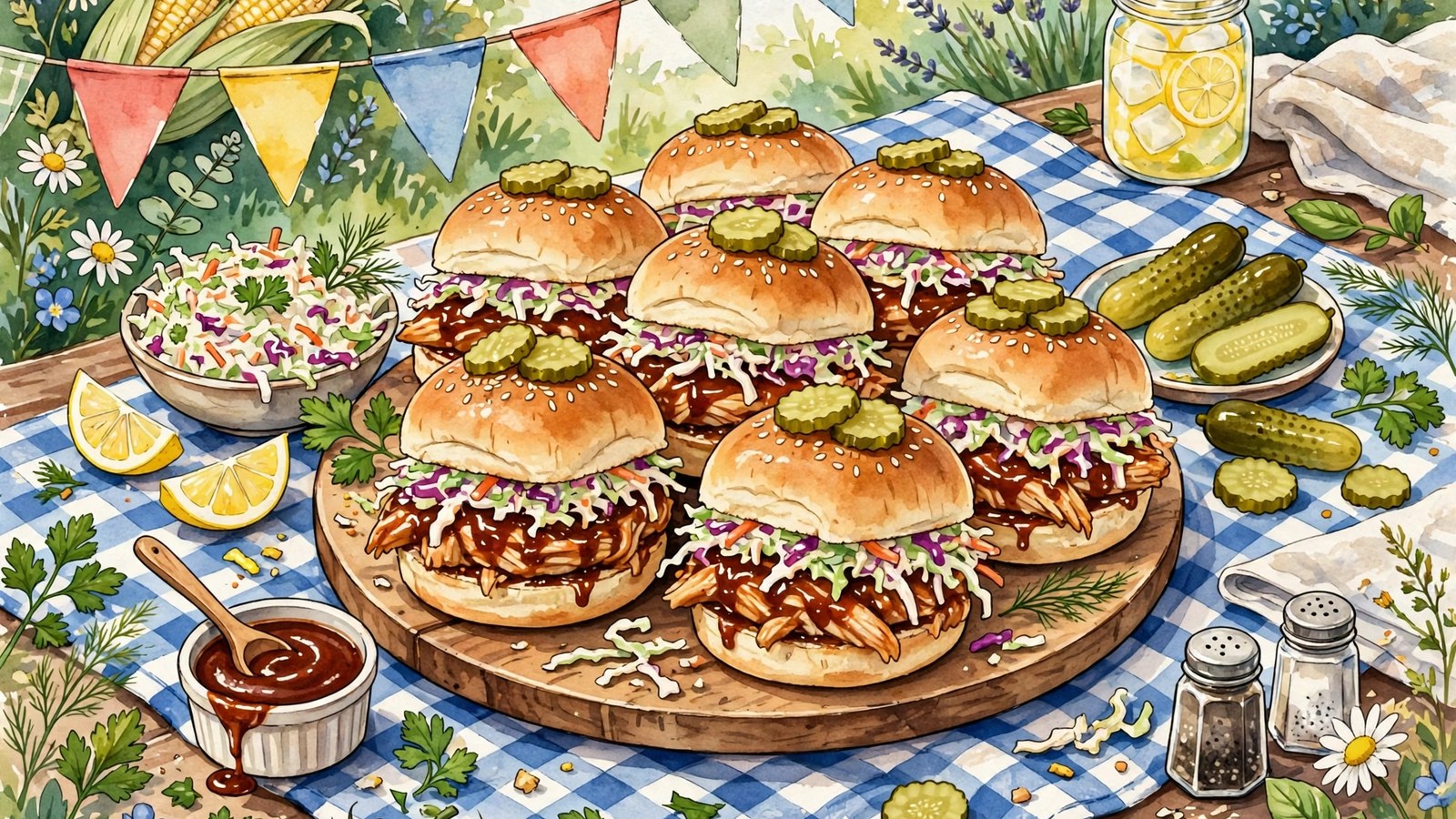
- Season 2 pounds of boneless, skinless chicken thighs, place them in a slow cooker with broth, vinegar, and seasonings, and cook on low for 3 to 4 hours or on high for 2 to 2 and a half hours until a food thermometer reads 165 degrees Fahrenheit in the thickest part of several pieces. Shred the warm chicken with two forks, return it to the cooker with 1 cup of barbecue sauce plus a little cooking liquid until moist but not swimming, and warm through for 15 to 20 minutes. Spoon onto toasted slider buns, top with coleslaw and dill pickles, and serve at once. Outdoors, keep hot chicken at 140 degrees Fahrenheit or above and cold coleslaw at 40 degrees Fahrenheit or below, and refrigerate perishable food within 2 hours, or within 1 hour above 90 degrees Fahrenheit.
Introduction
Fourth of July cooking asks a lot from one dish. It has to feed people who arrive at different times, work outdoors in summer heat, and be easy to eat standing up. BBQ pulled chicken sliders meet those demands well. A small soft bun holds shredded chicken in barbecue sauce, crunchy coleslaw, and pickle slices. The result is portable, satisfying, and simple to scale from a family cookout to a larger gathering.
Pulled chicken has practical advantages over pulled pork for a same day cookout. It cooks in hours rather than most of a day, shreds easily, and takes on barbecue sauce readily. The slow cooker method below is the main method because it cooks gently with little attention and can keep the chicken warm for serving. Stovetop and oven methods are also given.
This article gives the full recipe and the reasoning behind each choice, and covers food safety outdoors in July heat. The temperature and storage guidance was checked against FoodSafety.gov and the United States Department of Agriculture Food Safety and Inspection Service on 31 October 2026, including the 165 degrees Fahrenheit standard for poultry and the rule for perishable food outdoors.
Why Pulled Chicken Works for a Fourth of July Cookout
A slider format solves several cookout problems. Portions are small, so guests can take one slider and return for another. Children manage a slider more easily than a full size sandwich. Quantities are also flexible: 12 sliders serve about 6 to 8 people as part of a meal with sides, or about 4 to 6 people as the main course.
Chicken suits the timetable. A pork shoulder commonly needs a long cook started early or the day before. Chicken thighs reach tenderness in 3 to 4 hours on low, so a late morning start still serves an afternoon party. Dark meat stays moist through shredding and saucing, so small timing differences do not ruin the batch. That forgiveness has limits: chicken must still be cooked to temperature, held hot or chilled promptly, and protected from cross contact with raw juices.
Choosing Chicken, Sauce, and Buns
Boneless, skinless chicken thighs are the best choice. Thighs contain more fat and connective tissue than breasts, so they stay moist during slow cooking and shred into tender strands. Breasts can be used, but they dry out more easily. If you use breasts, check them at the earlier end of the range, do not cook them past tender, and toss them generously with sauce and cooking liquid after shredding. A mixture of thighs and breasts is a reasonable compromise.
Bone in, skin on thighs give strong flavor, but bones and skin must be removed before shredding, which adds work on a busy day. Boneless thighs keep shredding fast.
Chicken should be fresh or fully thawed before it goes into a slow cooker. The Food Safety and Inspection Service advises cooks to always thaw meat or poultry before putting it into a slow cooker. Thaw frozen chicken in the refrigerator, never on the counter. FoodSafety.gov gives the same rule: never thaw or marinate foods on the counter, and the safest way to thaw meat, poultry, and seafood is in the refrigerator.
Barbecue sauce shapes the whole slider. A Kansas City style sauce is sweet, thick, and tomato based, and pairs well with coleslaw and pickles. A Carolina vinegar sauce is tangier and thinner. A mustard based sauce is golden and pungent. Store bought sauce is a sound choice. Choose one you enjoy on its own, because shredding spreads it through every bite. For a homemade sauce, a simmered mixture of tomato sauce or ketchup, vinegar, brown sugar, mustard, garlic powder, and smoked paprika gives a reliable result. Read the label for allergens and for gluten if that matters for your guests, because sauces vary widely.
Slider buns should be soft and slightly sweet, but sturdy enough for saucy chicken. Hawaiian style rolls are popular but soften quickly. Brioche slider buns are richer and hold up well. Plain white dinner rolls work too and are often the most economical choice for a large crowd. Toast the cut sides lightly before filling: toasting adds flavor and structure and slows soaking.
Ingredients
This recipe makes 12 sliders.
For the pulled chicken:
- 2 pounds boneless, skinless chicken thighs, trimmed of excess fat
- 1 teaspoon kosher salt
- 1/2 teaspoon black pepper
- 1 teaspoon smoked paprika
- 1 teaspoon garlic powder
- 1/2 teaspoon onion powder
- 1 cup barbecue sauce, plus more for serving
- 1/2 cup low sodium chicken broth or water
- 1 tablespoon apple cider vinegar
- 1 tablespoon brown sugar, optional, depending on sauce sweetness
- 1 tablespoon Worcestershire sauce, optional
For the coleslaw:
- 4 cups shredded green cabbage, or 1 bag coleslaw mix
- 1 large carrot, grated
- 1/2 cup mayonnaise
- 1 tablespoon apple cider vinegar
- 1 teaspoon sugar
- 1/2 teaspoon celery seed, optional
- Salt and black pepper, to taste
To build the sliders:
- 12 slider buns, toasted
- Dill pickle slices
- Extra barbecue sauce
- Sliced red onion, optional
- Pickled jalapenos, optional, for heat
- Fresh cilantro or parsley, optional
If doubling the recipe, use a larger slow cooker or two slow cookers rather than packing one cooker tightly. Overfilling slows heating and makes even cooking harder to judge.
Equipment
You need a slow cooker, or a large pot with a lid for the stovetop method, two forks for shredding, tongs, a knife, a cutting board, and a food thermometer. A 4 quart or larger slow cooker suits this quantity.
The thermometer is essential. FoodSafety.gov lists all poultry, including breasts, legs, thighs, and wings, at 165 degrees Fahrenheit, and advises cooks to always use a food thermometer, placed in the thickest part of the food, to check whether food has reached a safe temperature. Check several pieces, including pieces from the center of the cooker.
A baking sheet helps toast buns in one batch, and a large bowl is needed for the coleslaw. For outdoor serving you will also need a cooler or bowls of ice for cold foods and covered containers to protect food from insects and sun.
Method: Slow Cooker, Step by Step
Step 1: Season and arrange the chicken
Pat the thighs dry with paper towels. Mix the salt, pepper, smoked paprika, garlic powder, and onion powder and sprinkle evenly over the chicken. Place the chicken in the slow cooker in a single layer as much as possible, overlapping only slightly. Pour the broth or water around the chicken rather than over it, so seasoning stays on the meat. Add the vinegar, brown sugar if using, and Worcestershire sauce if using to the liquid.
Step 2: Cook low and slow
Cover and cook on low for 3 to 4 hours or on high for 2 to 2 and a half hours, until tender and at 165 degrees Fahrenheit in the thickest part. Keep the lid in place, removing it only to check doneness or stir. The Food Safety and Inspection Service gives the same advice for slow cookers: keep the lid in place, removing only to stir the food or check for doneness. Start checking at the earlier end of the range, because thighs can still dry out if cooked far beyond tender. The chicken is ready when it shreds easily and the thermometer reads 165 degrees Fahrenheit in several pieces.
Step 3: Shred the chicken
Remove the chicken to a large bowl or board, leaving the liquid behind. Shred with two forks, pulling along the grain. Discard large pieces of fat or gristle. Shred while warm, because warm chicken pulls apart much more easily than cold chicken. If pieces feel tough, return them to the cooker for 20 to 30 minutes and check again. Toughness usually means connective tissue needs more time.
Step 4: Sauce the chicken
Skim fat from the cooking liquid and strain it if needed. Return the shredded chicken to the cooker, add 1 cup of barbecue sauce, and stir to coat. Add cooking liquid a few tablespoons at a time until moist and saucy but not swimming. Adding too much is the most common cause of soggy sliders. Taste and adjust: more sauce for sweetness, more vinegar for tang, or a pinch more salt if flat. Cover and cook on low for 15 to 20 minutes so the sauce warms through.
Step 5: Make the coleslaw
Whisk the mayonnaise, vinegar, sugar, celery seed if using, salt, and pepper in a large bowl. Add cabbage and carrot and toss until coated. The slaw should be creamy and tangy, with a little sweetness to balance the sauce. Make it at least 30 minutes ahead and refrigerate it, so the cabbage softens slightly but stays crunchy. For a vinegar slaw, omit the mayonnaise and increase the vinegar to 1/4 cup with 2 tablespoons of oil. Vinegar slaw holds up better in summer heat, although it still needs to be kept cold within the same safe window as any perishable food.
Step 6: Toast the buns and build the sliders
Toast the buns cut side down in a dry skillet, on a baking sheet under the broiler, or on the grill, watching closely because they burn easily. Toasting is not optional for saucy sliders: it keeps the bun from disintegrating. Spoon chicken onto the bottom bun, add coleslaw, pickle slices, and any optional toppings, and finish with the top bun. Serve extra sauce on the side rather than over saucing every slider in advance. Serve promptly, while the chicken is hot and the buns are crisp.
Stovetop and Oven Variations
For the stovetop method, place the seasoned chicken in a large pot or Dutch oven with the broth, vinegar, and seasonings, bring to a gentle simmer, cover, and cook over low heat for 25 to 35 minutes, until it reaches 165 degrees Fahrenheit and shreds easily. Shred, return to the pot with barbecue sauce, and simmer uncovered for about 10 minutes, stirring, until saucy.
For the oven method, place the seasoned chicken and liquid in a covered baking dish and bake at 325 degrees Fahrenheit for 35 to 45 minutes, until tender and at temperature, then shred and sauce as above. Both methods need more attention than the slow cooker but take less total time.
A grill finish adds smoky flavor. Spread the sauced chicken on a grill safe pan or heavy foil on a medium grill for a few minutes, stirring once, until edges caramelize slightly. Do not place sauced chicken directly on grates, where it will stick and burn. This finish is best for smaller batches.
Timing at a Glance
Total slow cooker time is about 3 and a half to 4 and a half hours on low, including shredding, saucing, and coleslaw, but hands on time is only about 20 minutes. On high, total time drops to about 2 and a half to 3 hours. Stovetop time is about 50 to 60 minutes in total. For a party, start the cooker in the late morning for an afternoon cookout, or in the early afternoon for an evening gathering, and time coleslaw and bun toasting for the last 30 minutes. Cooked food held in a slow cooker for serving should stay at least 140 degrees Fahrenheit, measured with a food thermometer. The Food Safety and Inspection Service also notes that reheating leftovers in a slow cooker is not recommended.
Variations
For a spicy slider, use a spicy sauce, add pickled jalapenos and a dash of hot sauce, and top with pepper jack cheese. For a Hawaiian inspired slider, add a slice of grilled pineapple and cilantro, keeping extra liquid moderate because it softens buns faster. For a smoky bacon slider, add crumbled crisp bacon, drained well so it stays crunchy. For a lighter slider, use vinegar based coleslaw, extra pickles and red onion, and a less sweet sauce.
Cheese is optional: cheddar, pepper jack, or provolone melted onto the hot chicken adds richness. Keep cheese cold until serving and separate and labeled for guests who need a dairy free option. For a vegetarian table, offer a separate option such as pulled barbecue jackfruit or grilled portobello sliders, cooked and served with clean utensils. For a gluten free table, use certified gluten free buns and check the barbecue sauce, Worcestershire sauce, and coleslaw ingredients, because labels differ by brand and can change.
Serving Suggestions for a Cookout
For a crowd, set up a slider bar: a slow cooker of pulled chicken kept warm, coleslaw on ice, toasted buns, pickles, onions, jalapenos, cheese, and extra sauce, and let guests build their own. This accommodates different tastes and keeps buns from getting soggy. Place the bar in the shade, keep cold items on ice, and replenish in small batches rather than putting out a large quantity that sits in the heat.
Classic sides pair naturally: corn on the cob, potato salad, baked beans, watermelon, and lemonade. Cold perishable sides follow the same outdoor rule as coleslaw. Offer water generously, because July heat and salty food increase thirst. For children, make smaller sliders with less sauce and milder toppings. Label spicy and mild batches clearly when both are on the table.
Food Safety in Summer Heat
FoodSafety.gov organizes home food safety into four steps: clean, separate, cook, and chill. Each step has a direct use at a cookout.
Clean: wash hands with plain soap and water for at least 20 seconds before, during, and after preparing food, and after handling raw meat, poultry, seafood, or their juices. Wash boards, dishes, utensils, and countertops with hot, soapy water, especially after they have held raw chicken. Do not wash the chicken itself, because washing meat and poultry can spread harmful germs around the kitchen.
Separate: use separate cutting boards and plates for produce and for raw meat and poultry, and separate plates and utensils for cooked and raw foods. Do not reuse a plate or utensils that held raw chicken for cooked chicken without washing them first. Use different tongs for raw and cooked items on the grill.
Cook: chicken must reach 165 degrees Fahrenheit throughout, measured in the thickest part. Color and ease of shredding show tenderness, but they do not replace a temperature check.
Chill and hold: bacteria that cause food poisoning multiply quickest between 40 degrees Fahrenheit and 140 degrees Fahrenheit. Keep the refrigerator at 40 degrees Fahrenheit or below and the freezer at 0 degrees Fahrenheit or below. Keep hot food hot at 140 degrees Fahrenheit or above in a slow cooker or other heat source, and cold food cold at 40 degrees Fahrenheit or below by nesting dishes in bowls of ice.
The outdoor timing rule is the one most likely to be missed. FoodSafety.gov states: never leave perishable foods out of refrigeration for more than 2 hours, and if the food is exposed to temperatures above 90 degrees Fahrenheit, such as at a summer picnic, refrigerate it within 1 hour. The Food Safety and Inspection Service gives the same rule for leftovers and for cold perishable food at a buffet, including at an outdoor picnic during summer. On the Fourth of July the shorter window will often apply.
Apply it to both parts of the slider. Keep chicken hot above 140 degrees Fahrenheit on warm, or serve it promptly and refrigerate it. Keep coleslaw refrigerated or on ice until serving, serve it in a bowl set over ice if possible, and return it to refrigeration promptly. Vinegar slaw is still perishable and follows the same rule. Buns are safe at room temperature, but pickles and cheese should be kept cool until serving.
Refrigerate leftovers within the safe window in shallow covered containers that allow quick cooling. The Food Safety and Inspection Service advises dividing large amounts of food into shallow containers, covering and sealing leftovers, and keeping them in the refrigerator for 3 to 4 days or frozen for 3 to 4 months, with some loss of moisture and flavor over longer freezer storage. Reheat leftovers to 165 degrees Fahrenheit, measured with a food thermometer, and cover them during reheating. Throw away food that has sat out beyond the safe window even if it looks and smells normal. Thaw frozen leftovers in the refrigerator, in cold water in a leak proof package, or in the microwave, never on the counter. After refrigerator thawing, use the food within 3 to 4 days.
Troubleshooting
If the chicken is dry, it was likely overcooked or made from breasts cooked too long. Use thighs next time, check temperature at the earlier end of the range, and toss generously with sauce and a little cooking liquid. If the chicken is tough or will not shred, return it to the cooker for about 30 more minutes. Thighs need time for connective tissue to break down.
If the sauce is watery, too much cooking liquid was added back or the sauce was thin. Add liquid gradually and simmer the sauced chicken uncovered for a few minutes to thicken. If the sauce is too sweet, add vinegar or lemon juice in small amounts. If sliders are soggy, the buns were not toasted, the chicken was over sauced, or sliders sat too long. Toast well, sauce moderately, and build just before eating. If coleslaw is watery, drain excess liquid, or keep dressing and cabbage separate until about 30 minutes before the meal.
Pulled Chicken Versus Pulled Pork
Pulled pork has a richer, fattier flavor and a longer cooking time. Pulled chicken is faster and easier to manage for a same day cookout, but it is less forgiving of overcooking and needs sauce to stay moist. For a Fourth of July gathering where time is limited, pulled chicken is the practical choice. If you offer both, keep them in separate, labeled slow cookers with separate serving utensils, to avoid mixing and to help guests choose clearly.
Allergen and Dietary Notes
This section is factual information for planning and serving, not medical advice. As written, this recipe contains egg, in the mayonnaise in the coleslaw. Depending on brands, it may also contain wheat, soy, milk, and other ingredients, most often through the buns, barbecue sauce, Worcestershire sauce, and any cheese you add. Read labels and keep ingredient lists available for guests who ask.
The Food and Drug Administration lists nine foods, and ingredients containing their proteins, as major food allergens: milk, egg, fish, crustacean shellfish, tree nuts, wheat, peanuts, soybeans, and sesame. Sesame became the ninth major food allergen under the Food Allergy Safety, Treatment, Education, and Research Act, with labeling required from 1 January 2023. The Administration advises reading the entire ingredient list every time a product is bought, because a product recipe can change at any time.
For a gluten free table, use certified gluten free buns and sauces and check Worcestershire sauce carefully. Wheat is a major allergen, but gluten free status is a separate label claim, so do not assume a sauce is gluten free from its style alone. For an egg free coleslaw, use vinegar based slaw without mayonnaise. For a dairy free table, this recipe is dairy free as written unless cheese is added: keep cheese separate and labeled. Do not assume removing a topping makes a shared dish safe for an allergic guest when it cooked or sat in contact with the rest of the food. Cook a separate dish with clean utensils and a clean cooker or pot when cross contact matters.
Frequently Asked Questions
Can I use chicken breasts?
Yes, but they dry out more easily. Check them at the earlier end of the cooking time, do not overcook them, and toss them generously with sauce and cooking liquid after shredding. Thighs are recommended for the juiciest result.
Can I cook frozen chicken in the slow cooker?
No. The Food Safety and Inspection Service advises cooks to always thaw meat or poultry before putting it into a slow cooker. Thaw chicken fully in the refrigerator before slow cooking.
Can I make the pulled chicken ahead?
Yes. Refrigerate the sauced chicken promptly in a covered, shallow container and use it within 3 to 4 days. Reheat it to 165 degrees Fahrenheit throughout, measured with a food thermometer, and make fresh coleslaw and toast fresh buns on the day of serving.
How many sliders does this serve?
About 12 sliders, which serves 6 to 8 people as part of a cookout with sides, or 4 to 6 people as a main course. For a larger crowd, double the recipe in a larger slow cooker or use two slow cookers rather than overfilling one.
Can I freeze pulled chicken?
Yes. Cool it rapidly, divide it into shallow covered containers or airtight freezer portions, and freeze it. Federal leftover guidance keeps frozen leftovers for 3 to 4 months at best quality. Thaw overnight in the refrigerator and reheat to 165 degrees Fahrenheit, adding a splash of sauce or broth if it seems dry.
Why are my buns falling apart?
The buns were probably not toasted, the chicken was over sauced, or the sliders sat too long before eating. Toast the cut sides well, sauce moderately, and build just before eating. Brioche buns also hold up better than very soft rolls.
Can I make this without a slow cooker?
Yes, use the stovetop or oven method described above. Both give excellent results, with slightly more attention required but a shorter total time.
Is vinegar slaw better than mayonnaise slaw for a cookout?
For outdoor heat, vinegar slaw holds up better in texture, though it still must be kept cold at 40 degrees Fahrenheit or below and refrigerated within 2 hours, or within 1 hour above 90 degrees Fahrenheit. Mayonnaise slaw is creamier and works well indoors or with a shaded, iced setup. Choose based on serving conditions and guest preferences.
Sources & references
- FoodSafety.gov, Cook to a Safe Minimum Internal Temperature. Used for the safe minimum internal temperature chart, last updated 21 November 2024: all chicken, turkey, and other poultry at 165 degrees Fahrenheit, leftovers of any type reheated to 165 degrees Fahrenheit, and the instruction to always use a food thermometer to check whether food has reached a safe minimum internal temperature.
- FoodSafety.gov, 4 Steps to Food Safety. Used for the four steps clean, separate, cook, and chill, washing hands with plain soap and water for at least 20 seconds, washing surfaces and utensils with hot soapy water after raw meat and poultry, using separate cutting boards and plates for produce and for raw meat, poultry, and seafood and separate plates and utensils for cooked and raw foods, not washing meat, poultry, eggs, or seafood, cooking with a food thermometer placed in the thickest part of the food, keeping food hot at 140 degrees Fahrenheit or above after cooking, bacteria multiplying quickest between 40 degrees Fahrenheit and 140 degrees Fahrenheit, keeping a refrigerator at 40 degrees Fahrenheit or below and a freezer at 0 degrees Fahrenheit or below, refrigerating perishable food within 2 hours or within 1 hour above 90 degrees Fahrenheit, placing leftovers in shallow containers and refrigerating promptly, and thawing or marinating meat, poultry, and seafood in the refrigerator rather than on the counter.
- United States Department of Agriculture, Food Safety and Inspection Service, Leftovers and Food Safety. Used for bacteria growing rapidly between 40 degrees Fahrenheit and 140 degrees Fahrenheit, keeping hot food hot at 140 degrees Fahrenheit or warmer, refrigerating leftovers within 2 hours of cooking or 1 hour if the temperature is over 90 degrees Fahrenheit such as at an outdoor picnic during summer, keeping cold perishable food at 40 degrees Fahrenheit or below and keeping buffet food cold by nesting dishes in bowls of ice or using small serving trays, cooling food rapidly in shallow containers, covering and sealing leftovers, keeping leftovers in the refrigerator for 3 to 4 days or frozen for 3 to 4 months, safe thawing in the refrigerator, cold water, or the microwave, and reheating leftovers to 165 degrees Fahrenheit as measured with a food thermometer, with leftovers covered during reheating.
- United States Department of Agriculture, Food Safety and Inspection Service, Slow Cookers and Food Safety. Used for always thawing meat or poultry before putting it into a slow cooker, keeping perishable foods refrigerated until preparation time, keeping the lid in place and removing it only to stir food or check for doneness, storing leftovers in shallow covered containers and refrigerating within two hours after cooking is finished, not reheating leftovers in a slow cooker, and keeping hot food placed in a preheated slow cooker for serving at least 140 degrees Fahrenheit as measured with a food thermometer.
- Food and Drug Administration, Have Food Allergies? Read the Label. Used for the nine major food allergens: milk, egg, fish, crustacean shellfish, tree nuts, wheat, peanuts, soybeans, and sesame, for sesame becoming the ninth major food allergen under the Food Allergy Safety, Treatment, Education, and Research Act with labeling required from 1 January 2023, and for the advice to read the entire ingredient list every time a product is bought because ingredients can change at any time.


