Short answer
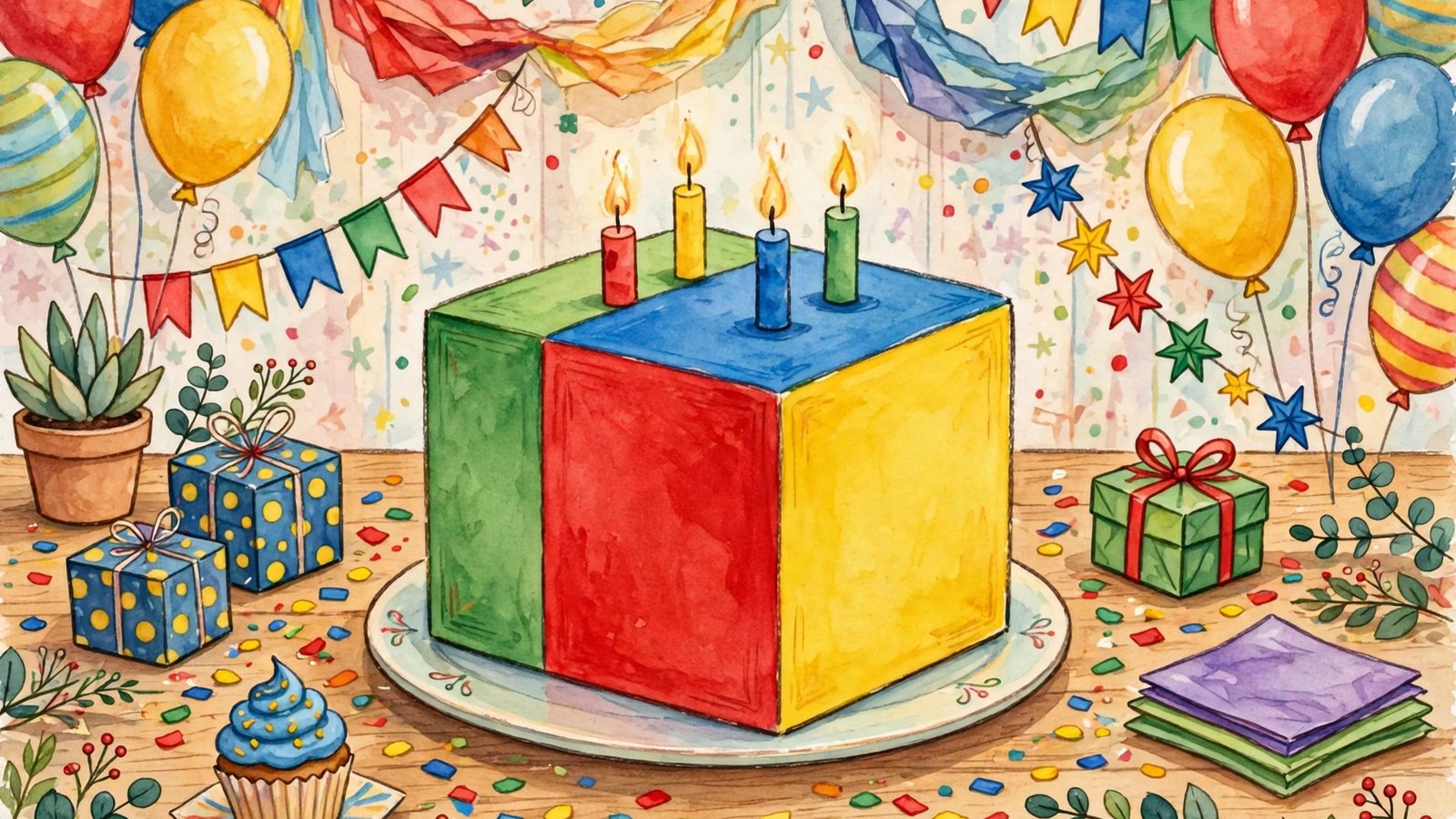
- A Rubik's Cube birthday party is a birthday built around the six colors and the cube shape of the classic puzzle: white, red, blue, orange, green, and yellow, repeated across invitations, decorations, food, and a square cube cake with a three by three grid of colored squares on each face. You do not need to be able to solve a cube to host one, and guests do not need to solve anything to enjoy it. To plan one, pick the six colors as your palette, send square or cube shaped invitations, decorate with color blocked paper, balloons, and a photo backdrop, and choose your cake route early: bake and decorate a square cake at home, order one from a baker with a clear written brief, or arrange cupcakes in a grid instead. Plan two or three organized games using a few shared cubes, add one themed favor such as a mini cube, and work to a timeline that starts about four weeks out.
Introduction
A Rubik’s Cube birthday party is one of those themes that works for almost any age. The colors are instantly recognizable, the decorations are easy to make from paper and balloons, and the activities practically plan themselves because the puzzle at the center of the theme is already a game. Whether the birthday guest is a seven year old who has just solved a first cube or an adult who grew up twisting one in the 1980s, this theme gives you a strong visual identity without needing a large budget or specialist suppliers.
This guide covers the whole party in one place: invitations, decorations, food and drink in cube colors, the all important cube cake with a method for making one at home and a brief for ordering one, games for different ages, party favors, budget tips, and a realistic planning timeline. A small party at home and a larger party in a rented room can both use the same color palette, the same cake idea, and the same handful of games.
Why a Rubik’s Cube Theme Works
The theme works because it is built around a simple, bold visual idea: six colors on a cube. That gives you an instant color palette, a shape you can repeat everywhere, and a ready made set of activities. Most themes need you to invent games that fit. This one starts with a puzzle guests can pick up, twist, race with, and learn from, so the entertainment is built in.
It also suits a wide age range. Younger children enjoy the colors and the puzzle element without needing to solve anything. Older children and teenagers can race each other, time their solves, or learn a solving method. Adults often enjoy the nostalgia. If your guest list spans ages, that flexibility is a real advantage.
A short piece of history adds a nice touch to a display table. Ernő Rubik, a Hungarian design teacher, assembled his first cube puzzle in 1974 and called it the Magic Cube. After the puzzle was renamed Rubik’s Cube, it began appearing in stores in 1980. Each small cube, or cubie, carried one of six colors, and a solved cube shows one solid color on each face, with nine squares per face. A did you know card with the 1974 and 1980 dates is an easy conversation starter.
One point of care on the name: Rubik’s Cube is a trademarked product name. This guide refers to it descriptively, as the theme of a private party, and it is not endorsed by or affiliated with the trademark owner. Do not print trademarked logos onto decorations or favors either. A color grid you draw yourself gives the same effect. If you ever plan to sell cube themed items, the rules for commercial use are stricter, so get advice before you use the name or any logo on anything you sell.
Invitations
A cube shaped or square invitation sets the tone immediately. The simplest version is a square card with a grid of colored squares on the front and the party details on the back. If you like basic craft, fold a cube shaped card from card stock so the invitation itself is a small cube guests can unfold. Keep the grid to nine squares per face, in the six classic colors.
Keep the wording clear and include the essentials: the birthday guest’s name, the date, the start and end time, the address, whether food is provided, and anything guests should bring. Add a reply contact and deadline, because cake size, food quantities, and favor count all depend on the final guest number. A line such as dress in your brightest colors helps guests join in with the theme.
Digital invitations work just as well. Use a photo of a puzzle cube or a simple colored grid graphic as the header image, keep the text short, and include the address in text as well as in any map link. The timeline below suggests sending invitations about four weeks before the party.
Decorations
The color blocked cube is your best friend here. You can build almost all the decor from colored paper, card stock, and balloons, which keeps costs low and avoids buying licensed character products you will use once and discard.
Balloon cubes and color blocks are the fastest way to fill a room. Cluster balloons in the six cube colors, grouping each color together rather than mixing them at random, or build a balloon arch in solid color blocks. The blocked arrangement is what makes plain balloons read as a cube theme rather than as a generic rainbow party.
Paper cube garlands are simple to make ahead. Cut squares of colored card stock, arrange them in three by three grids on string, and hang the garlands across a wall, a doorway, or the front of the food table.
Table centers can be very simple. Stack a few inexpensive puzzle cubes in the middle of the table, or place a single cube on a colored tablecloth square. Small cube shaped boxes also work and can double as favor containers. Keep centerpieces low and stable.
A photo backdrop is one of the highest impact decorations for the least money. Tape large colored squares to a wall or a board in a cube pattern, leaving a clear space in front for guests to stand. It makes a dedicated spot for photos and gives you a consistent background for the birthday photos.
Color blocked tableware ties the room together. Use plain plates, cups, and napkins in the six colors rather than printed themed tableware. It usually looks smarter, it is often cheaper, and leftovers are easier to reuse.
For a bigger statement piece, a large cube made from cardboard boxes wrapped in colored paper works well as an entrance feature or photo prop. Build it low and wide, weight the base so it is stable, and place it where it cannot topple onto small children or block a doorway.
Food and Drink in Cube Colors
Party food does not need to copy the cake. Serve familiar food and let color and shape do the theming. Square sandwiches, cheese and cracker squares arranged in grids on a board, and fruit pieces sorted by color into separate bowls all read as cube themed with no special cooking. A grid on a rectangular platter, with each block a different color, echoes a cube face.
Drinks can follow the same idea. Offer water plus one or two colored drinks, and label each drink clearly. What matters more than color is clarity: label ingredients for guests with allergies or dietary requirements, and keep water available throughout. Plan quantities from your confirmed guest number, not your invited number, and plan separately for adults, who are easy to undercount at a children’s party. Serve food at a set point rather than leaving everything out from the start, and keep perishable food chilled until serving. If a guest has a serious allergy, ask the family in advance what that guest can safely eat and keep that food separate.
The Cube Cake: How to Make or Order One
The cube cake is the centerpiece of this party, and it is more achievable than it looks. There are two routes: make it yourself, or order it from a baker. Decide at the start of your planning, because the decision affects your timeline, your budget, and your shopping list.
Making a Cube Cake at Home
A cube cake starts with a square cake. Bake your chosen cake in a square pan, in layers if your recipe needs the height, then trim the cooled layers so the sides are as straight as possible and the stacked height is close to the width. A dense cake, such as a pound cake or a chocolate fudge cake, holds its shape better than a very light sponge and is easier to trim and stack. Cool the layers completely before you trim or ice them. Warm cake tears, and icing on warm cake melts and slides.
The color block icing approach is the simplest way to get the cube look. Cover the stacked cake with a thin crumb coat of buttercream, then chill it until firm and add a smooth final layer. White or pale buttercream gives the cleanest background for the colored squares.
Next, plan the grid before you add any color. Each visible face gets a three by three grid, nine squares per face. Mark the grid lightly with a ruler or score it gently with a toothpick. Measuring first is what makes the finished cake look like a cube rather than a square cake with random patches of color, so do not skip it.
Then add the colored squares. Cut small squares from colored fondant, or pipe squares of colored buttercream inside your marked grid. Fondant gives the sharpest finish. Buttercream is more forgiving to make, but its edges are less crisp. Use the six classic colors: white, red, blue, orange, green, and yellow, and leave a thin line of the pale base showing between squares.
Keep the arrangement slightly unsolved. Mixed colors look more fun than a perfectly solved cube, and a mixed arrangement is more forgiving, because no guest can point out that a face is wrong. Keep each face to nine squares so the cake still reads as a cube.
Finish by neatening the corners with a small offset spatula. Chill the cake briefly so the surface firms, and present it on a plain board, away from direct sun and heat. If you are short on time, cover a square cake in white icing and press small squares of colored icing or square candies onto the top and sides in a grid pattern instead. It still reads clearly as a cube cake.
Ordering a Cube Cake From a Baker
If you would rather order, give the baker a clear written brief: a square, cube shaped cake with a three by three colored grid on each visible face, in the six classic colors, with a mixed, unsolved arrangement. Send a reference photo of a puzzle cube. Your own photo of a cube you own is ideal. State the servings, flavors, dietary requirements, and collection or delivery date.
Ask to see a sketch or a photo of a previous novelty cake if the baker has made one before, and confirm what the quoted price includes and whether the cake needs refrigeration. Order early. As general planning guidance, allow at least two weeks for a specialist novelty cake, and longer around busy periods such as school holidays. Confirm the order in writing, and check the finished cake against your brief before you accept it.
Cake Alternatives
Not every party needs one large cake. Cupcakes arranged in a grid on a board, so the colored tops form a cube pattern, are a good alternative. They portion themselves, and a guest with dietary needs can be given a clearly separate matching cupcake. Small square brownies topped with colored icing squares work the same way and are easier for younger children to hold.
Games and Activities
The best party games for this theme use the cube itself, so borrow or pick up a few inexpensive puzzle cubes before the day. You do not need one per guest. A handful is enough for most games if you run activities in small groups and rotate guests through stations. Check the cubes for loose or damaged pieces before the party.
A cube race is the simplest game. Two or more players race to complete one face of a cube, meaning one side in a single solid color. For younger children, use a simpler two by two cube, or set the goal as finding a named color on a face. Keep the goal reachable in a few minutes, so the game feels exciting rather than frustrating.
A fastest solve contest suits older children or adults who can already solve a cube. Time each solve, keep the atmosphere friendly, and give a small prize for the fastest time and a separate prize for best effort. Keep this as one feature among several, so guests who cannot solve a cube are not left watching other people compete.
A learn to solve station handles that balance well. Set up a quiet corner with a simple printed beginner guide and a few cubes, and ask a confident older child or adult to act as teacher for guests who want to try. Keep the station optional and drop in rather than scheduled, so nobody feels put on the spot.
A cube hunt works for a wide age range and burns energy. Hide small colored squares or mini cubes around the party space and give guests a checklist of colors to find. Set clear boundaries for the search area, and count small items back in afterward.
A color match relay suits a larger space. Teams race to collect colored beanbags, balls, or cards and arrange them into a three by three grid on the floor. It includes guests who do not want to handle a puzzle. Use soft items indoors.
Decorate your own mini cube gives younger children something to make and keep. Plain white cube shaped boxes or foam cubes, plus colored stickers in the six colors, let each child build a personal pattern. Put names on the boxes at the start.
Cube bingo or a short quiz works as a calm activity between high energy games. Bingo cards with colors and cube related pictures suit younger guests. A short quiz about colors, puzzles, and the cube history in this guide, including the 1974 and 1980 dates, suits older children and adults. Keep either version to about ten minutes.
Keep the schedule loose. Two or three organized games, plus free play and food, is plenty for a two hour children’s party. For adults, a solve race and a quiz are usually enough. Keep a quiet option available at all times, such as the learn to solve corner or a coloring table.
Party Favors
Favors that fit the theme are easy to assemble and do not need to cost much. Mini puzzle cubes or keyring cubes are the natural choice. Other fitting options include small bags of candy sorted in the six cube colors, cube shaped boxes filled with stickers, a printed how to solve one face card, and coloring sheets with a cube design for younger guests.
One good favor beats a bag of small plastic items that break or are discarded on the way home. Assemble favors in advance, label any favor that contains food with its ingredients, and keep food favors separate from toy favors for guests with allergies. Hand favors out at the door as guests leave.
Budget Tips
A cube theme is naturally budget friendly because the decor is based on color rather than licensed characters. As general planning guidance, the largest costs for most parties of this kind are usually the venue, the food, and the cake, in that order, while decor and favors can stay small if you make garlands and backdrops yourself. Treat any budget split as planning context only, not as a price promise, because venue, food, and bakery prices vary widely by area and date.
Save money in specific ways: make garlands and the backdrop yourself, use plain colored tableware rather than themed sets, bake the cake yourself or choose the cupcake grid alternative, and provide shared cubes for games rather than one per guest, unless the cube itself is the planned favor. Set a total budget first, then allocate it across venue, food, cake, decor, and favors. If one area runs over, trim another rather than adding to the total.
Planning Timeline and Party Day Flow
A simple timeline keeps this party calm. Four weeks before, book the venue if you need one, send invitations, and order the cake if you are not baking. Two weeks before, buy decorations, cubes, and favor supplies, and confirm numbers with the baker if you are using one. One week before, prepare game materials such as hunt checklists and quiz questions, and buy nonperishable food and drinks. If you are baking, you can bake and freeze the plain layers that week if your recipe freezes well. The day before, decorate if you have access to the space, assemble favor bags, and chill drinks. On the day, ice the cake or collect the ordered cake, set out the games, and leave at least 30 minutes of buffer before guests arrive.
On the day itself, a loose flow works better than a strict schedule. Welcome guests into free play and the photo backdrop while everyone arrives, run your first game once most guests are present, and serve food at a natural pause. Then bring out the cube cake, the visual peak of the party. Follow it with a calmer activity, such as the quiz, and end with favors at the door.
Adapting the Party for Different Ages and Spaces
For very young children, shorten the party and favor making and finding over racing and solving. A two by two cube, a short hunt with obvious hiding places, and a decorate your own cube activity will hold attention better than a timed contest. Serve food earlier, because young children do not wait well.
For teenagers, lean into skill and friendly competition: a timed solve, a one face race with standard three by three cubes, and a quiz with harder questions. Teenagers who volunteer can help run the learn to solve station. For adults, treat the cube mainly as decor, nostalgia, and a conversation piece. Good food, the cake reveal, a short quiz, and an optional solve race are enough.
For a small space, swap running games for table games: the hunt becomes a search in a single room, and the relay becomes a seated pattern building race with cards. For an outdoor party, weight paper decorations against wind and keep icing out of direct sun. In every setting, keep walkways and the cake table clear, and supervise small cube pieces around very young children.
Frequently Asked Questions
What age is a Rubik’s Cube birthday party best for?
It suits a wide range, because guests do not need to solve a cube to take part. Younger children can enjoy the colors, a cube hunt, coloring, and decorating a foam cube. Older children and teenagers can race, time solves, and try a beginner solving method. Adults can enjoy the theme as nostalgia, with a quiz and an optional solve race alongside food. Adapt the games to the youngest guests you invite.
What colors do I need for the decorations and the cake?
Use the six colors of the classic cube: white, red, blue, orange, green, and yellow. Repeat them in balloons, garlands, tableware, food, and the cake grid. A solved cube shows one solid color per face, but a party cake looks better with the colors mixed across each face, as if the cube were scrambled. Keep nine squares per face so the cake still reads as a cube.
How do I make a cube cake without fondant?
Cover a square cake with pale buttercream over a chilled crumb coat, mark a three by three grid on each visible face, and pipe colored buttercream squares inside the grid in the six classic colors. Chill the cake briefly between colors if the squares start to blur. A simpler option is to press small colored icing squares or square candies onto a white iced cake in a grid pattern.
How far in advance should I order a cube cake?
Order as early as you can once your date and servings are set. As general planning guidance, allow at least two weeks for a specialist novelty cake, and longer around busy periods such as school holidays. Give the baker a written brief with the design, the six colors, servings, flavors, dietary requirements, and the collection or delivery date.
How many puzzle cubes do I need for the games?
A handful is enough for most parties. Races, a fastest solve contest, and a learn to solve station can share the same small set if you run them at different times or in small groups. You only need one cube per guest if the cube itself is the party favor. Include at least one simpler two by two cube for younger children.
Can I throw this party on a small budget?
Yes. The theme is based on color and shape, not licensed products, so the main decorations can be made from colored paper, card stock, and balloons. Plain tableware, a homemade backdrop, digital invitations, shared game cubes, and a homemade cake or cupcake grid all keep costs down. Set a total budget first, and trim one area if another runs over, rather than increasing the total.
What can I serve if guests do not want a big cake?
Arrange cupcakes in a grid on a board so their colored tops form a cube pattern, or serve small square brownies topped with colored icing squares. Both portion themselves, suit younger children, and let you provide a clearly separate matching piece for a guest with dietary requirements.
Do I need to be able to solve a cube to host this party?
No. Hosting requires planning, not solving skill. Set up a learn to solve corner with a printed beginner guide and a few cubes, and invite a confident guest to help there if one volunteers. Keep solving optional for everyone. Races to complete one face, a cube hunt, a relay, bingo, and a quiz all work without anyone completing a full solve.
Keep reading: Cool Things to Draw: Ideas by Difficulty, Theme and Mood
Sources & references
- The Strong National Museum of Play, Rubik's Cube, National Toy Hall of Fame. Supports the points that Erno Rubik assembled his first cube puzzle in 1974 and called it the Magic Cube, that the renamed Rubik's Cube began appearing in stores in 1980, and that each cubie carried one of six colors. Listed in the package sources file with the page recorded as opened on 29 October 2026, and rechecked against search records on 29 October 2026 for this adaptation.
- Wikipedia, Rubik's Cube. Supports the points that the puzzle was invented in 1974 by Hungarian sculptor and professor of architecture Ernő Rubik, that it was originally called the Magic Cube and released internationally in 1980, and that the six face colors are white, red, blue, orange, green, and yellow. Listed in the package sources file as verified on 29 October 2026.
- Smithsonian National Postal Museum, Puzzle, Rubik's Cube, object record for an early cube purchased about 1980. Supports the points that the puzzle is a three by three by three cube, that each face shows nine squares, that the squares are white, blue, red, yellow, green, and orange, and that a solved cube shows one color on each face. Checked against search records on 29 October 2026 for this adaptation.


