Short answer
- A drone is an aircraft that flies without a pilot, crew, or passengers on board. It is controlled remotely by a person on the ground, or it flies on its own using onboard computers, sensors, and preplanned instructions. The formal terms are unmanned aerial vehicle (UAV) for the aircraft itself and unmanned aircraft system (UAS) for the aircraft plus its controller, software, and communications link. In everyday speech, most people use the single word drone for the whole setup. Drones range from tiny indoor toys to large aircraft used for surveying, farming, inspection, and scientific work. What they share is simple: nobody sits inside them while they fly.
What a Drone Is, in Plain Terms
Imagine a small aircraft that you launch from the ground, steer from a handheld controller or a phone, and land back beside you. That is the basic idea behind most drones people meet in everyday life. The pilot stays on the ground. The aircraft carries the motors, the battery, the sensors, and often a camera. A radio link connects the two, so commands travel up to the aircraft and video or telemetry data travel back down.
The word drone is a nickname, not a precise technical class. Engineers and regulators tend to use UAV for the flying machine and UAS for the complete system. That distinction matters when you read rules or product descriptions, because a rule may apply to the aircraft, to the pilot, or to the system as a whole. For general conversation, though, drone works well, and this article uses it in that broad sense.
It also helps to separate the aircraft from its job. A drone is a platform. It can carry a camera, a sensor that measures plant health, a parcel, or scientific instruments. Changing the payload changes what the drone can do, even when the airframe stays the same. This is one reason drones have spread quickly across different industries.
People sometimes ask whether a drone is the same thing as a remote control airplane or helicopter. There is overlap, but the terms are not identical. A traditional remote control model is flown by a person for recreation, usually within sight and often at a flying field. A drone is a broader category that also includes aircraft that follow a planned route on their own and aircraft used for paid work.
A Short History of Drones
Unmanned aircraft are not as new as they may seem. Early experiments with pilotless aircraft go back to the early twentieth century. For many decades, the main users were military organizations. Unmanned aircraft were useful for training, for observation, and later for missions that were dull, dirty, or dangerous for a human crew. These early machines were often large, expensive, and operated by specialist teams.
The picture changed as electronics became smaller, cheaper, and more capable. GPS receivers, compact cameras, lightweight batteries, and small but powerful processors all improved at roughly the same time. That combination made it possible to build a stable, easy to fly quadcopter that an ordinary person could afford and operate. By the 2010s, camera drones had become a familiar sight at weddings, on holiday trips, and in news footage.
A striking example of how far the technology has traveled is the Ingenuity helicopter on Mars. Ingenuity was a small rotorcraft carried to Mars attached to the Perseverance rover. On 19 April 2021, it became the first aircraft to make a powered, controlled flight on another planet. It flew on its own, because signals between Earth and Mars take too long for joystick control in real time. Ingenuity shows the same core idea as a consumer drone, adapted for an extremely thin atmosphere: a small aircraft, guided by onboard systems, flying without a pilot on board.
The Main Types of Drone
Drones are usually grouped by how they stay in the air. The design shapes almost everything else: how long they can fly, how fast they can travel, how much they can carry, and where they can take off and land.
Multi-rotor drones
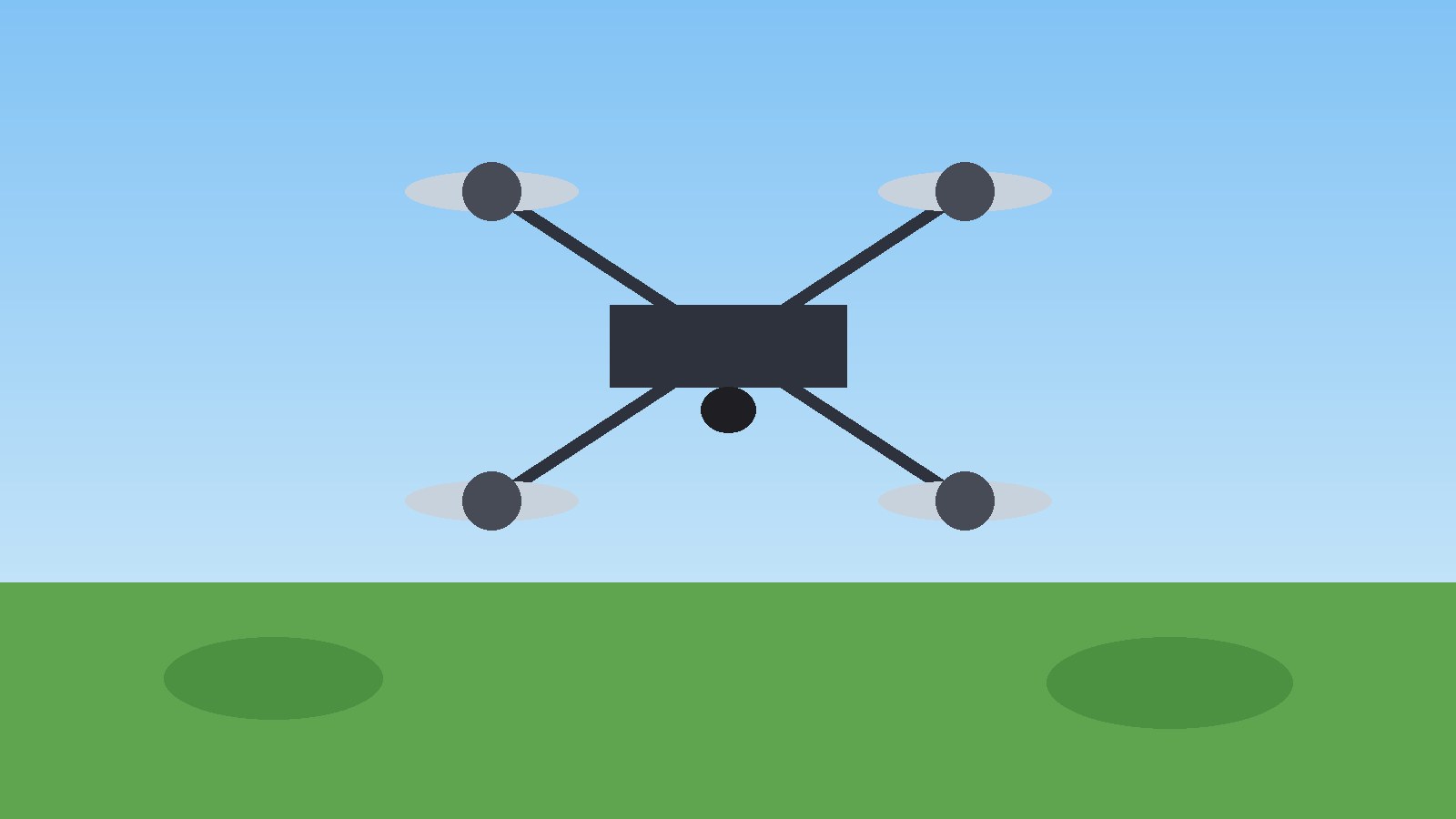
Multi-rotor drones use several spinning rotors to lift straight up, hover in place, and move in any direction. The best known version is the quadcopter, which has four rotors. Larger versions use six or eight rotors for extra lift and redundancy. Multi-rotor drones are popular because they are easy to launch and land, they can hover steadily, and they are very maneuverable at low speed. That makes them well suited to photography, video, close inspection work, and short survey flights. Their main limits are flight time and range. Hovering with spinning rotors uses a lot of energy, so most small multi-rotor drones fly for well under an hour on one battery. They are also more affected by strong wind than a fixed-wing aircraft of similar size.
Fixed-wing drones
Fixed-wing drones look more like small airplanes. They have wings that generate lift as the aircraft moves forward, and a propeller or similar system that pushes them along. They cannot hover, and they usually need a runway, a launcher, or open space to take off and land. In return, they are efficient. They can cover large areas, fly for longer, and travel farther on the same amount of energy. That efficiency makes fixed-wing drones common in mapping, agriculture, and environmental monitoring, where the job is to fly a planned pattern over fields, coastlines, forests, or pipelines. The trade-off is flexibility. A fixed-wing drone cannot stop in midair to stare at one spot in the way a quadcopter can, and landing in a tight space is harder.
Single-rotor drones
Single-rotor drones resemble small helicopters. They use one large main rotor for lift, plus a smaller tail rotor or another system to keep the aircraft stable and pointed in the right direction. They can hover like a multi-rotor drone, and they can be efficient enough to carry heavier payloads. They are less common among casual users because they are mechanically more complex and can be harder to fly. They appear more often in specialist or industrial work where lifting capacity matters.
Hybrid VTOL drones
Hybrid VTOL drones combine ideas from both families. VTOL stands for vertical takeoff and landing. These aircraft lift off vertically like a multi-rotor drone, then transition to forward flight on wings like a fixed-wing aircraft. The goal is to get the best of both designs: easy takeoff and landing in a small space, plus efficient long distance flight. Hybrid designs are used in mapping, delivery trials, and other work that needs both range and flexible landing options. They tend to be more complex and more expensive than a simple quadcopter, so they are mainly a professional tool for now.
Size and use also matter. Consumer drones are made for recreation and casual photography. Commercial drones are built for paid work such as inspection, surveying, or agriculture. Toy drones are small and light, made mainly for indoor or garden fun. Size also affects regulation, including in the United States, where weight thresholds help decide whether registration applies. Always check the weight of your own aircraft, including battery and any attached camera, rather than guessing from its appearance.
How a Drone Flies
A drone stays in the air by balancing four forces: lift, weight, thrust, and drag. Lift pushes the aircraft up. Weight pulls it down. Thrust pushes it forward. Drag resists that forward motion. A drone climbs when lift is greater than weight, descends when weight is greater than lift, and hovers when the two are balanced. The pilot, or the onboard flight system, manages that balance by changing rotor speed, wing angle, or motor power.
In a multi-rotor drone, each rotor is a small spinning wing. Spinning faster creates more lift on that side of the aircraft. To tilt forward, the rear rotors spin a little faster than the front rotors, so the aircraft leans forward and moves ahead. To turn, the flight system changes the speed of rotors on opposite sides. The onboard flight controller makes hundreds of tiny adjustments per second, far faster than a human could manage by hand. That is why a modern quadcopter can hover steadily even in a light breeze.
In a fixed-wing drone, the wings do most of the lifting work once the aircraft is moving forward fast enough. The propeller provides thrust. Control surfaces on the wings and tail steer the aircraft by changing airflow, much like a piloted airplane. Takeoff needs enough speed for the wings to generate lift, which is why fixed-wing drones need room to accelerate or a launcher. Weather matters for every design: wind can push a light drone off course and drain its battery faster, rain can damage electronics, and cold can reduce battery performance.
How Drones Are Controlled
There are three broad ways to control a drone: direct remote control, assisted flight, and autonomous flight. Most modern drones blend all three.
In direct remote control, the pilot moves sticks on a controller or taps a screen, and the aircraft responds. The pilot decides the direction, speed, and altitude moment by moment. This is how most beginners start, and it is also how many photographers frame a shot.
In assisted flight, the onboard computer helps. GPS hold keeps the drone in one place when the pilot lets go of the sticks. Return to home brings the aircraft back to its takeoff point at the press of a button, or automatically if the signal is lost or the battery runs low. Obstacle sensors can warn the pilot, slow the aircraft, or stop it before it hits a tree or wall. Altitude hold keeps the drone at a steady height. These features make flying easier and safer, but they do not remove the pilot’s responsibility. Sensors can miss thin wires, glass, or small branches, and GPS can be weak near tall buildings or under tree cover.
In autonomous flight, the drone follows a plan without constant input. The operator sets waypoints on a map, chooses a flight height and speed, and the aircraft flies the route, takes photos at set points, and returns. This is common in mapping and agriculture, where the same pattern must be repeated precisely. Autonomy still needs a human in charge. Someone must plan a safe route, check the airspace, monitor the flight, and be ready to take over or land if something goes wrong.
The link between pilot and aircraft is usually a radio connection, sometimes combined with a video link that shows the camera view in real time. Some pilots fly by first-person view, watching a screen or goggles that show what the camera sees. That view can be useful, but it does not replace keeping the aircraft in sight where the rules require it. Key onboard systems include the flight controller; the GPS receiver; the inertial sensors, which sense tilt, rotation, and acceleration; the compass; and the battery. Preflight checks matter every time: battery charge, propeller condition, compass and GPS status, and a clear takeoff area.
Common Uses of Drones
Photography and video are the uses most people know first. A drone can capture a coastline, a wedding venue, a sports field, or a city skyline from angles that were once possible only from a helicopter. Real estate agents, filmmakers, journalists, and travel creators use aerial images to show scale, layout, and surroundings.
Mapping and surveying use drones to build accurate pictures of land. By flying a planned grid and taking overlapping photos, software can stitch the images into a map or a three-dimensional model. Surveyors, construction teams, and planners use these outputs to measure sites, track progress, and plan work. Because the aircraft can cover ground quickly and revisit the same route, changes over time become easier to spot.
In agriculture, drones help farmers look at crops from above. Cameras and sensors can reveal patches of stress, uneven watering, or pest damage before they are obvious from the ground. Some agricultural drones also spray or spread material over fields, though that work is specialist and regulated, not a casual hobby activity. The goal in most farm use is better information: knowing where to look, where to treat, and where to leave alone.
Inspection work is another growing area. Drones can examine bridges, roofs, power lines, wind turbines, and industrial sites without sending a person up a ladder or onto a roof. Close-up photos and video let engineers spot cracks, corrosion, or loose fittings from a safe distance. This does not remove the need for expert judgment, but it often makes the first look faster and safer.
Delivery trials have attracted a lot of attention. Several companies and research programs have tested drones that carry small parcels, medical supplies, or food over short distances. These trials are still limited compared with everyday postal delivery, because they face strict airspace, safety, and range limits. Readers should treat delivery drone headlines as trials or limited services unless a specific, established service is clearly described.
Emergency and public safety teams use drones for searching, fire monitoring, flood assessment, and incident overviews. A drone can scan a large area quickly and help locate a missing person or a hazard. Trained teams operate under their own procedures and permissions, which differ from recreational flying. Recreation is a major use: learning to control an aircraft, racing with friends, practicing photography, or exploring a local park from a new angle.
Scientific and environmental work rounds out the picture. Researchers use drones to monitor wildlife, map coastlines, track forest change, and survey habitats that are hard to reach on foot. Because a drone can repeat the same flight path, it is useful for comparing conditions over months or years.
Recreational Rules in the United States: General Information
This section is general information only, not legal advice. It summarizes the recreational picture in the United States as understood in October 2026. Rules can change, and local restrictions can add to national rules, so check the current Federal Aviation Administration (FAA) guidance before every flight. If your flight is for work, for a business, or for any non-recreational purpose, different rules apply, and you should check the FAA rules for that kind of operation separately.
The FAA is the national aviation authority in the United States. Recreational flying falls under an exception for limited recreational operations, set out in federal law. To fly under that exception, a recreational flyer is expected to fly only for fun or personal enjoyment, follow the safety guidelines of an FAA-recognized community-based organization, and meet the other conditions below. Flying that serves a business purpose, even without direct payment, is generally not recreational flying.
Registration is a common first question. As a general rule, a recreational drone that weighs 0.55 pounds (250 grams) or more must be registered with the FAA, marked with its registration number, and the operator should carry proof of registration. Drones below that weight that are flown only for recreation are generally exempt from registration, but all other safety rules still apply. Published FAA summaries describe a small fee and a multi-year validity period for recreational registration. Confirm the current fee, validity, and marking instructions on the FAA site before registering, because these details can change.
Recreational flyers must also pass The Recreational UAS Safety Test, known as TRUST. TRUST is a free online safety test offered through FAA-approved administrators. It covers basic safety and airspace knowledge. Flyers should carry proof of passing TRUST when they fly and be able to show it if asked by the FAA or law enforcement. TRUST is required even for very small drones flown for recreation, and it is separate from registration.
During flight, the core safety rules are straightforward to state and important to follow. Keep the drone within your visual line of sight, so you can see it with your own eyes without binoculars or a screen alone. In uncontrolled airspace, known as Class G airspace, stay at or below 400 feet above ground level. In controlled airspace near airports, get authorization before flying, often through the FAA system known as LAANC or through DroneZone. Give way to all crewed aircraft and never interfere with them. Never fly in a careless or reckless way, and never endanger the national airspace system.
Most registered drones must also comply with Remote ID rules, which mean the drone broadcasts identification and location information during flight. The main exception described in FAA summaries is flying within an FAA-Recognized Identification Area, known as a FRIA, under the applicable conditions. Many newer drones have Remote ID built in. Older drones may need an add-on broadcast module. Check whether your aircraft is compliant before flying, and do not assume an older model is exempt.
There are places and times where flying is restricted or prohibited even if the general rules are met, including many areas around airports, military sites, emergency response scenes, and temporary flight restrictions set for events or incidents. Weather, daylight, and local park rules can add further limits. A quick airspace check before takeoff, using an FAA-approved tool or service, is a sensible habit. National rules are only one layer: state and local laws, park rules, and property rules can also restrict takeoff, landing, or flying in a particular place.
Safety, Privacy, and Good Practice
Good drone flying is about more than following the letter of the rules. Plan before you launch: check the airspace, the weather, the battery level, and the takeoff area, and look for people, animals, roads, power lines, and trees.
Respect people on the ground. Avoid flying over crowds or uninvolved people unless the rules for your flight clearly allow it and you have good reason. Keep a sensible distance from people, vehicles, and buildings. Do not use a drone to peer into windows, gardens, or other private spaces. Even when a photo is technically possible, taking it can breach privacy expectations and, in some places, the law.
Respect wildlife and quiet places. Drones can disturb nesting birds, livestock, and other animals, so keep distance and follow local guidance for nature reserves and parks. Look after your equipment and data: keep batteries in good condition, store them as the manufacturer directs, and retire damaged batteries safely. Use strong passwords for any account linked to your drone or its app, and check what photos, flight logs, and location data the app stores or shares before posting.
Learn in stages. Start in an open, quiet area, practice hovering and gentle turns, and build up to more complex flights. A local flying club can help, because experienced flyers can explain local rules and good flying sites.
Limits, Risks, and What Drones Cannot Do Yet
Drones are impressive, but they have real limits. Battery life is the most obvious. Most small drones fly for tens of minutes, not hours, and cold, wind, or heavy payloads shorten that time further. Range is limited by the radio link, by battery, and by the requirement in many kinds of flight to keep the aircraft in sight. Payload is limited too: a small drone cannot lift a heavy camera, a large parcel, or scientific equipment beyond its rated capacity.
Automation also has limits. GPS can be inaccurate or unavailable indoors, in deep valleys, or among tall buildings. Cameras and sensors can be fooled by glare, rain, or low light. Obstacle avoidance can miss thin obstacles. Software can fail. That is why the human operator remains central: planning, monitoring, and deciding when to land are not optional extras, even on a highly automated aircraft.
There are also social and regulatory limits. Airspace is shared with crewed aircraft, emergency services, and other drone operators. Privacy, noise, and safety concerns mean that some places will stay off limits, and some uses will stay tightly controlled. Delivery and long distance autonomous flights face harder safety questions than a short photography flight. Cost and skill are practical limits as well: a capable drone, spare batteries, and time to learn all add up, and crashes happen, especially while learning.
Frequently Asked Questions
What is a drone in simple terms?
A drone is an aircraft without a pilot on board. It is flown remotely by a person on the ground, or it flies a planned route on its own using onboard computers and sensors. Most everyday drones are small quadcopters with cameras, but the term also covers fixed-wing survey aircraft, agricultural drones, and large specialist systems.
Is a drone the same as a UAV?
The terms overlap closely. UAV means unmanned aerial vehicle, which is the aircraft itself. UAS means unmanned aircraft system, which is the aircraft plus its controller, software, and communications link. Drone is the everyday word most people use for either, and often for the whole setup.
How does a drone stay in the air?
A multi-rotor drone spins its rotors to create lift, and its flight controller adjusts rotor speeds many times per second to hover, climb, descend, or move. A fixed-wing drone uses forward motion and its wings to create lift, like a small airplane. In both cases, the pilot or the flight plan manages the balance between lift, weight, thrust, and drag.
Do I need a license to fly a drone for fun in the United States?
For purely recreational flying in the United States, you generally do not need a commercial pilot certificate, but you must meet the recreational requirements summarized in this article, including passing TRUST and registering your drone if it weighs 0.55 pounds (250 grams) or more. This is general information as of October 2026, not legal advice, so check the current FAA recreational flyer guidance before flying. Any flight for business or work purposes is covered by different rules.
How high can a recreational drone fly in the United States?
In uncontrolled Class G airspace, recreational flyers are generally expected to stay at or below 400 feet above ground level. Controlled airspace near airports requires authorization, and the authorized altitude may be lower. Always check the airspace for your specific location before takeoff, because local restrictions can apply.
Can a drone fly on its own?
Yes, many drones can follow a planned route using GPS waypoints, hold position, return home, and avoid some obstacles. Autonomy still needs a responsible operator to plan a safe route, check the airspace, monitor the flight, and take over or land if needed. Sensors and GPS are not perfect, and the operator remains in charge.
What is the difference between a multi-rotor drone and a fixed-wing drone?
A multi-rotor drone can take off vertically, hover, and maneuver slowly in tight spaces, which suits photography and inspection. A fixed-wing drone cannot hover, but it flies more efficiently over long distances, which suits mapping, agriculture, and environmental surveys. Hybrid VTOL drones try to combine vertical takeoff with efficient winged flight.
Are drones allowed everywhere?
No. Airspace restrictions, airport zones, emergency scenes, temporary flight restrictions, park rules, and property rules can all limit where you can take off, fly, and land. Always check the airspace and local rules for your location, and do not fly where flying is restricted or where you do not have permission to take off and land.
Can drones deliver parcels?
Delivery by drone is being tested and used in limited services, mainly for small loads over short distances. It is not yet a general replacement for everyday parcel delivery. Range, payload, airspace, and safety rules limit what delivery drones can do today, so treat broad delivery claims as trials or limited programs unless a specific established service is described.
What should a beginner do before a first flight?
Read the manual fully, check the battery and propellers, confirm GPS and compass status, and choose an open, quiet, legal flying spot. Pass TRUST if you are flying recreationally in the United States, register your drone if required, and check the airspace and weather. Start with gentle hovering and slow turns, and build skill gradually.
Sources & references
- Federal Aviation Administration, Chapter 11, Unmanned Aircraft Systems (UAS), Section 1, General. Accessed and verified 26 October 2026. https://www.faa.gov/Air_traffic/publications/atpubs/aim_html/chap11_section_1.html
- NASA Jet Propulsion Laboratory, Ingenuity Mars Helicopter mission page. Accessed and verified 26 October 2026. https://www.jpl.nasa.gov/missions/ingenuity/
- NASA Jet Propulsion Laboratory, NASA's Ingenuity Mars Helicopter Succeeds in Historic First Flight. Accessed and verified 26 October 2026. https://www.jpl.nasa.gov/news/nasas-ingenuity-mars-helicopter-succeeds-in-historic-first-flight/


