Short answer
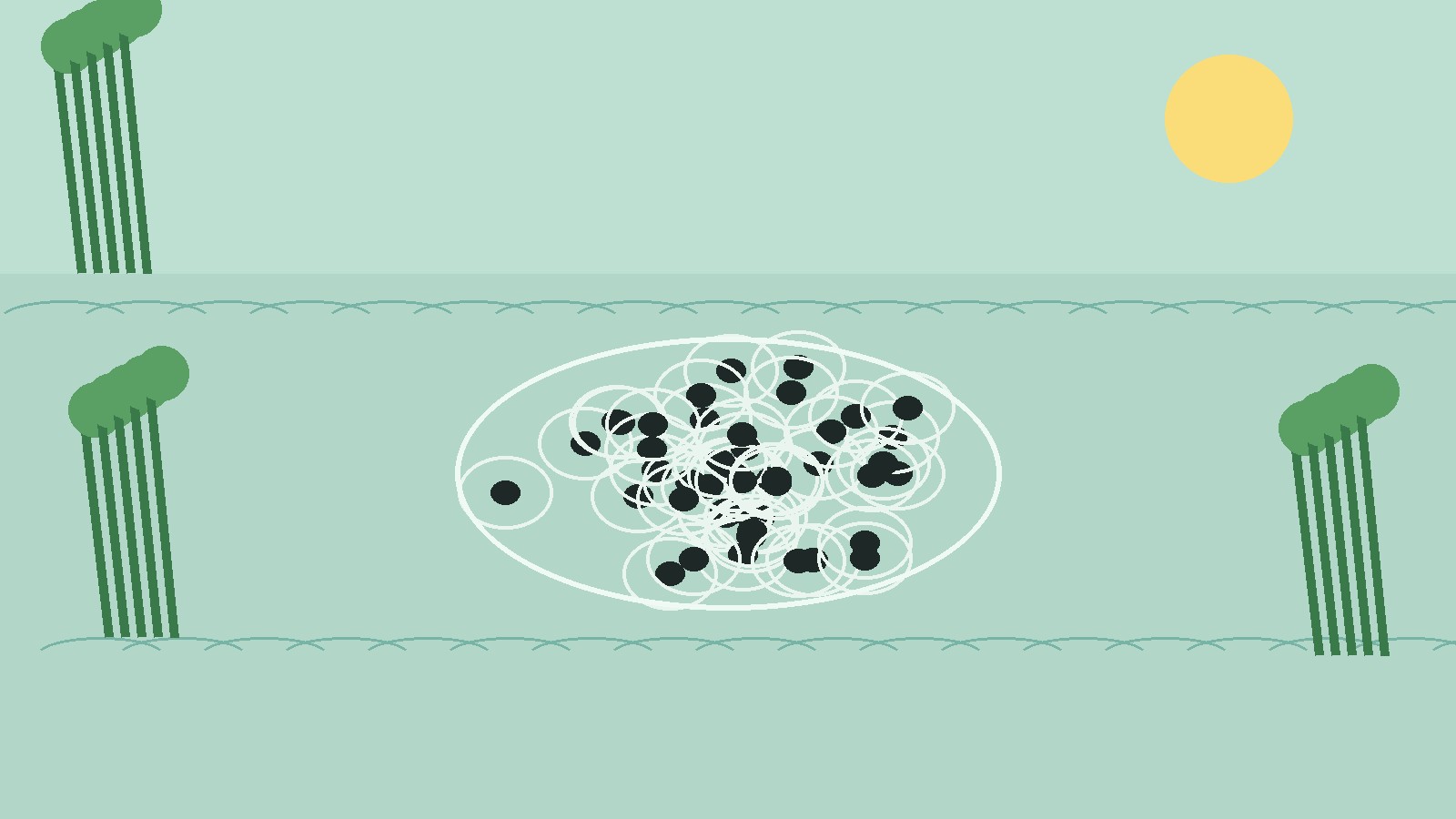
- The eggs of the frog are small, jelly coated eggs, usually laid in water or on a surface just above water. In the most familiar case, the common frog lays them in a large clump of clear jelly called frogspawn, and each dark dot inside the jelly is one developing embryo. The jelly swells in water, holds the eggs together, lets oxygen pass through, and helps keep the eggs moist and warm in sunlight. After fertilization, the embryo divides, forms a body plan, grows a tail and gills, and then hatches as a tadpole. How long that takes depends strongly on species and water temperature: about two weeks for the Vietnamese mossy frog kept at the Smithsonian's National Zoo, and a few weeks to months for common frog spawn in a cool spring pond. Most frog eggs are left to develop without parental feeding, and most do not survive to adulthood, which is one reason many species lay thousands at a time.
By Emma Hudson
What people mean by the eggs of the frog
The phrase “eggs of the frog” sounds simple, but it covers a wide range of real animals. There are thousands of frog species, and they do not all lay the same kind of egg in the same place. Some lay huge jelly clumps in ponds. Some lay single eggs one at a time on leaves or bark above water. Some guard their eggs, and a few carry tadpoles to water after hatching. What the eggs share is the basic frog pattern: no hard shell, a jelly coating instead, development in or near water for most species, and a larval tadpole stage before the adult frog form.
That variety matters for anyone trying to identify eggs in the wild. A jelly clump in a pond is not automatically frogspawn, and a small clutch on a leaf is not automatically something else. Toads, for example, lay their eggs in long strings rather than in clumps, a difference that helps separate frogspawn from toadspawn in ponds where both occur.
The word frogspawn itself is worth defining early. Frogspawn is not a separate kind of egg. It is the common name for a mass of frog eggs in jelly, most often the large clump laid by the common frog, Rana temporaria. When this article says frogspawn, it means that jelly mass. When it says a clutch, it means one laying event by one female, whether that clutch holds six eggs or several thousand.
What frog eggs look like
Fresh common frog spawn looks like a clear, quivering jelly mass floating at or near the surface of shallow water. The Canal and River Trust describes it as a clear jelly-like spawn with black dots, and notes that the black dot at the center of each egg is the developing tadpole. At first, each egg is a small dark sphere inside its own jelly capsule, and the capsules stick together into a clump that can look like a floating raft. As the jelly absorbs water, the mass swells, softens, and rises in the water.
Look closer, and the structure is more orderly than it first appears. Each embryo sits inside a jelly capsule, and the capsules are joined into a mass rather than floating free. The dark part is the embryo itself, rich in pigment on its upper side. As development proceeds, the dark dot lengthens, then takes on an eel-like shape, then shows a distinct tail, head, and gill region. The Canal and River Trust describes this change plainly: the dots get longer, take on an eel-like appearance, and turn into a true tadpole.
Size is harder to pin down than many guides suggest, because it varies by species and by stage. A newly laid common frog egg, jelly included, is only a few millimeters across, and the embryo inside is smaller still. The jelly swells after laying, so the same clutch looks larger a day later than it did at laying. That swelling is not growth of the embryo. It is water uptake by the jelly.
Color also varies, and color alone should not be used to name a species. Most pond frog eggs look dark brown to black in the center with clear jelly around them. Some tree frog eggs are paler or more translucent, and the embryo may be clearly visible through the jelly. Eggs that turn white, gray, or opaque and never change shape are usually unfertilized or dead, and they often become cloudy as fungus grows on them. That is a general field observation rather than a diagnosis for any single clutch, and a mixed clutch can hold both healthy and failed eggs side by side.
Inside one egg: jelly, yolk, and embryo
A frog egg is built for a short, exposed life in water. It has no hard shell like a bird egg, and it has no amniotic sac. Instead, it has layers that do several jobs at once. The outer jelly coating holds water around the embryo, keeps the egg moist, cushions it against bumps, and lets gases pass through. Oxygen must reach the embryo through the jelly, and carbon dioxide must leave the same way. That exchange is why still, stagnant, or polluted water is dangerous for eggs even when the jelly looks intact.
Inside the jelly sits the embryo and its yolk. The yolk is the food store for early development. A frog embryo does not feed from outside while it is still inside the egg. It builds its first tissues from the yolk and from materials already placed in the egg by the mother. That is why egg size and yolk amount differ between species with different strategies. Species that lay many small eggs give each embryo a small yolk store and rely on numbers. Species that lay few large eggs give each embryo a larger store and often add parental care, because each egg represents a bigger share of the mother’s effort.
The dark and pale halves of the egg are also functional, not decorative. The dark upper side absorbs sunlight and helps warm the egg, while the pale yolky side sits lower. In pond spawn, the warming effect is real enough to matter in early spring, when the water is still cool and development would otherwise be slow. That does not make frog eggs safe from cold. A late frost can still damage spawn at the surface, and a clump stranded by falling water can dry out.
How frog eggs are made and fertilized
Frog reproduction starts on land or at the water’s edge, not inside the egg. In spring, or in the rainy season for tropical species, males call to attract females, and breeding adults gather at ponds, streams, or other still water. When a female is ready, the male grasps her from behind in a hold called amplexus. Fertilization happens outside both parents’ bodies, at the moment of laying.
The details of amplexus vary. In pond frogs, the male grips the female around the body in the water while she releases eggs, and he releases sperm over them at the same time. In leaf laying tree frogs, the pair may be on a leaf over water, and the eggs are fertilized as they are placed on the leaf. In both cases, the jelly coating is already present as the eggs leave the female, and it swells on contact with water. The male’s grip is helped in many species by nuptial pads, thickened patches on the male’s front feet or thumbs that improve his hold during breeding. The Wildlife Trusts notes nuptial pads on the front feet of male common frogs, and the National Zoo notes a nuptial pad on the inside of the thumb in male mossy frogs.
Many pond frogs breed once a year in a defined season, but the season itself shifts with climate and place. Common frogs in Britain breed in spring, and the Wildlife Trusts notes they can spawn as early as December or as late as April depending on the weather. Tropical frogs may breed with the rains, and the National Zoo notes that mossy frog breeding in the wild takes place in the wet season, triggered by storms and by changes in temperature, humidity, and air pressure.
Where frogs lay their eggs
Pond clumps are the best known pattern, but they are only one of several. The differences are worth learning, because where eggs are laid predicts how they hatch and what dangers they face. In the pond pattern, the female lays a large mass in shallow still water near the edge of a pond, and tadpoles hatch directly into the water they will live in.
The leaf over water pattern belongs to tree frogs such as the lemur leaf frog. The National Zoo reports that female lemur leaf frogs deposit their eggs only on leaves or branches over water, preferably on a smooth, hidden surface such as the underside of a leaf. When the embryos are ready, they wiggle out of the jelly-like egg and fall into the water below. The leaf keeps the eggs out of the pond, away from many aquatic predators, while still delivering the tadpoles to water at hatching. The trade is exposure to air: the eggs must stay moist, and the leaf must stay over water until hatching.
The single egg pattern belongs to frogs such as the Vietnamese mossy frog. The National Zoo reports that mossy frog females lay eggs one at a time, with a jelly-like coating that makes them stick to surfaces, and that its females prefer tubes, cork bark, or rocks just above the water surface, so that hatching tadpoles fall straight in. Laying singly spreads risk: one predator or one dry patch does not take the whole clutch at once. It also makes the eggs harder to spot, which is an advantage for a camouflaged frog and a frustration for a human observer.
Parental care patterns go further. Most pond frogs leave their eggs after laying, and the National Zoo is explicit that a mossy frog mother’s work is done once she has laid her eggs. The lemur leaf frog mother may stay on the leaf for a day or two and then leaves them on their own. At the other end of the scale, the strawberry dart frog lays only about six eggs in a moist place, the male tends them, and the female later carries each tadpole on her back to its own small pool of water. That contrast shows the central trade in frog reproduction: many eggs with no care, or few eggs with much care.
How many eggs, and why so many
Clutch size varies more than any other feature of frog eggs, and the numbers from different sources show why a single figure for “frogs” would be misleading. The Canal and River Trust says female common frogs can lay up to 2,000 eggs in a clump, while the Wildlife Trusts puts the figure for the same species at up to 4,000 eggs in one spring. The difference is not an error in either source. It reflects different populations, different years, and the fact that a large female in good condition lays more than a small or young female.
At the small end, the National Zoo’s lemur leaf frog pairs laid 16 eggs and 14 eggs in two documented breedings, with 13 and 12 hatching. The strawberry dart frog lays about six eggs at a time. Those small clutches make sense only alongside care or protection: a leaf over water, a guarded moist site, or a parent that carries tadpoles one by one. At the large end, pond frogs lay thousands because most eggs and tadpoles will not survive. The Canal and River Trust states this directly for common frogs: females can lay up to 2,000 eggs in a clump, although few survive. Predators, drying, frost, disease, and starvation take most of them before metamorphosis.
That high loss rate is normal, not a sign that something has gone wrong in a particular pond. A female that lays 2,000 eggs needs only two offspring to survive to breeding age to replace herself and her mate. The rest are food for other animals, or fail for reasons that have nothing to do with human interference. Conservation concern starts when breeding sites disappear, when water quality falls, or when adult survival drops, not when a single clutch loses most of its eggs.
What happens inside the egg, day by day
Once fertilized, a frog egg begins a rapid and orderly transformation. The best documented timeline comes from laboratory frogs studied as model animals, and it should be read as a typical pattern at a stated temperature, not as a promise for every wild clutch. The University of New South Wales Embryology resource gives a typical frog development timeline at 18 degrees Celsius from the fertilized egg. In that timeline, fertilization is hour zero, a gray crescent forms by pigment movement within the first hour, early cleavage begins by 3.5 hours, and the blastula stage is reached by 4.5 hours. Gastrulation, the rearrangement that sets up the body plan, is under way by 26 hours. Neurulation, the formation of the early nervous system, follows by 50 hours. A tail bud stage appears by 84 hours, an early heartbeat and gill buds by 118 hours, and hatching with gill circulation by about 140 hours, roughly six days.
Those hours will shift with temperature and species. Warmer water speeds development, colder water slows it, and a wild common frog clutch in a cool pond will not follow a laboratory timeline hour by hour. The sequence, however, is the same in outline: one cell divides into many, the ball of cells rearranges into layers, a neural tube forms, a tail bud grows, gills and a heartbeat appear, and the embryo becomes a swimming tadpole still inside its jelly. A reader watching a pond clutch can follow the visible part of that sequence without any equipment: the round dark dot lengthens, a tail shape appears, the body becomes distinct from the tail, and finally the tadpole wriggles free.
Two ideas from that timeline are worth keeping. First, the egg stage is short compared with the tadpole stage. The embryo spends days, not months, inside the egg, and then spends weeks as a tadpole. Second, the egg is not a resting stage. It is a period of intense construction, powered by yolk, in which the whole body plan is laid down before the animal ever feeds.
Hatching: from egg to tadpole
Hatching is not a single moment for a whole clutch. Embryos in one clump hatch over hours or days, not all at once, and the first tadpoles may already be swimming while their siblings are still inside jelly. In leaf laying species, the pattern is easier to see: the National Zoo describes lemur leaf frog embryos wiggling and pushing out of the jelly-like egg and falling off the leaf into the water below.
What a newly hatched tadpole can do is limited. It has external gills at first, a tail for swimming, and a mouth that soon opens for feeding. The University of New South Wales timeline places mouth opening at about 162 hours in the laboratory pattern, after hatching at about 140 hours, which shows that hatching does not mean the tadpole is finished. It means the tadpole has left the egg and can now live, feed, and grow in water.
How long hatching takes in the wild is best answered with ranges, not single numbers. The National Zoo reports that mossy frog tadpoles hatch about two weeks after the mother lays her eggs. Common frog spawn in a cool spring pond takes a few weeks to months from laying to hatching, with warmer water shortening the wait and colder water lengthening it. The Canal and River Trust allows anywhere from a few weeks to months for the dots in a clump to lengthen and become a true tadpole, a wide range that reflects different ponds, depths, and weather.
Frog eggs compared with toad eggs and other amphibian eggs
The most useful comparison for a pond observer is frogspawn against toadspawn. Frogs lay eggs in clumps. Toads lay eggs in long strings, often wrapped around water plants in slightly deeper water. That single difference separates most pond clutches at a glance, even when the adults are nowhere to be seen.
Other amphibians differ more. Newts and salamanders generally lay eggs singly, and many fold each egg into a leaf for protection. Their eggs are smaller, fewer, and harder to find than a frog clump. A few frogs depart even further from the pond pattern by laying eggs on land with direct development, meaning the egg hatches as a tiny froglet with no free swimming tadpole stage at all.
There is also a difference between frog eggs and fish eggs that confuses some pond owners. Fish eggs in a garden pond are usually laid in smaller numbers, often attached singly or in small groups to plants, and they lack the large shared jelly mass of frogspawn. When in doubt, the combination of a large jelly clump, dark centers, shallow still water, and spring timing points strongly to frogs.
Threats to frog eggs
Frog eggs are vulnerable precisely because they cannot move. An adult frog can hop away from danger, hide, or dive. An egg can only sit in its jelly and wait. The threats fall into four groups: weather, water, predators, and disease, with habitat loss behind all of them.
Weather threats are the most visible. A clump at the surface can be damaged by overnight frost, and a clump in a shallow pool can dry out if the water level falls before hatching. The jelly holds some water and buys time, but it cannot replace a pond.
Water quality threats are quieter. Frog eggs need clean, oxygen rich water, and they suffer when runoff carries fertilizer, pesticide, or road salt into breeding ponds. The National Zoo makes the same point for adult frogs and their breeding wetlands: runoff from lawn fertilizer and winter ice melt reaches the wetlands where amphibians live, harms water quality, and can affect breeding success. Eggs cannot leave the water to escape it.
Predators take eggs and tadpoles in large numbers. Fish, newts, diving beetles, dragonfly larvae, birds, and even other tadpoles eat frog eggs or newly hatched tadpoles. The jelly deters some small predators, but it does not stop a determined predator from picking eggs from the edge of a clump. That predation is natural and expected, and it is part of why pond frogs lay thousands of eggs. A pond with fish will usually hold far fewer tadpoles than a fish free pond.
Disease and habitat loss act over longer timescales. The chytrid fungus Batrachochytrium dendrobatidis infects amphibian skin and has been implicated in the extinction of over 90 amphibian species in the past 50 years, according to the Natural History Museum in London. Chytrid is mainly a disease of skin in adults and of mouthparts in tadpoles, rather than a direct egg disease, but it reduces adult populations and therefore reduces the number of eggs laid in future seasons. Habitat loss works the same way from another direction: the Canal and River Trust names the loss of breeding habitats, as small ponds are filled in and development cuts off routes to water, as the main threat to frogs.
Watching frog eggs without harming them
Frog eggs reward patient watching, and they are best watched where they are. The safest approach is to look, photograph, and return regularly, without lifting, moving, or handling the spawn. Lifting spawn out of water, even briefly, can damage the jelly, expose embryos to air, and break the clump apart. Moving spawn between ponds is worse, because it can carry disease, non native plants, and invasive animals from one water body to another.
If spawn appears in a garden pond, the most helpful actions are passive: keep the water clean, avoid chemical treatments near the pond during breeding season, leave some shallow, vegetated margins where spawn can rest, and keep fish numbers low or absent in a pond meant for amphibians. Do not add spawn from elsewhere to “help” a pond, and do not remove spawn because it looks messy. The jelly mass will break down naturally after hatching, and the tadpoles that remain will disperse on their own.
Frequently asked questions
What are the eggs of the frog called?
They are called frog eggs, and a mass of them in jelly is called frogspawn. A single laying event by one female is called a clutch, whether it holds six eggs or several thousand.
What do frog eggs look like?
In a pond, they look like a clear jelly mass with small dark dots inside, floating in shallow water. Each dark dot is one embryo. As development proceeds, the dots lengthen, grow tails, and become tadpoles inside the jelly before hatching.
How long do frog eggs take to hatch?
It depends on species and temperature. Mossy frog eggs at the Smithsonian’s National Zoo hatch about two weeks after laying. Common frog spawn in a cool spring pond takes a few weeks to months. Warmer water speeds hatching, colder water slows it, so a single number without a species and a temperature is not meaningful.
Are frog eggs the same as toad eggs?
No. Frogs lay eggs in clumps of jelly, while toads lay eggs in long strings, often wrapped around plants. That arrangement is the most reliable way to tell frogspawn from toadspawn in a pond.
Do frogs look after their eggs?
Most pond frogs do not. They lay their eggs and leave them to develop alone. Some tree frogs stay nearby for a day or two, and a few species, such as the strawberry dart frog, guard eggs and carry tadpoles to water.
How many eggs does a frog lay?
It varies greatly. Common frogs lay up to 2,000 eggs in a clump according to the Canal and River Trust, and up to 4,000 in one spring according to the Wildlife Trusts, with the difference reflecting different populations and female sizes. Lemur leaf frogs lay only about a dozen to 16 eggs, and strawberry dart frogs lay about six.
Why do frog eggs have jelly instead of a shell?
The jelly holds water around the embryo, keeps it moist, cushions it, lets oxygen in and carbon dioxide out, and helps warm the mass in sunlight. A hard shell would suit a land egg, but a frog egg develops in or near water, where jelly does the same protective jobs while still allowing gas exchange.
Can frog eggs survive out of water?
Only briefly, and only if they stay moist. Pond spawn dries out and dies if stranded, and leaf clutches depend on humidity and on staying over water until hatching. The jelly buys some time against drying, but it is not a substitute for water.
What eats frog eggs?
Fish, newts, diving beetles, dragonfly larvae, birds, and other tadpoles all eat frog eggs or newly hatched tadpoles. The jelly deters some small predators, but it does not make a clutch safe. Heavy predation is normal, and it is one reason pond frogs lay thousands of eggs.
Do frog eggs need sunlight?
Sunlight helps by warming a shallow clutch and speeding development, which is why spawn is often found in sunlit shallow water. Sunlight is not strictly required, and too much heat or drying in a shallow pool can harm eggs. Clean, shallow, vegetated, still water matters more than direct sun alone.
Sources & references
- Smithsonian's National Zoo and Conservation Biology Institute. Meet Mossy Frogs, Masters of Camouflage. https://nationalzoo.si.edu/animals/news/meet-mossy-frogs-masters-camouflage
- Smithsonian Magazine, Smithsonian's National Zoo and Conservation Biology Institute. Meet the Lemur Leaf Frog. https://www.smithsonianmag.com/blogs/national-zoo-conservation-biology-institute/2020/07/28/meet-lemur-leaf-frog/
- Smithsonian Institution. Strawberry Dart Frogs Climb to Bolster Chance of Species Survival. https://www.si.edu/newsdesk/releases/strawberry-dart-frogs-climb-bolster-chance-species-survival
- The Wildlife Trusts. Common frog. https://www.wildlifetrusts.org/wildlife-explorer/amphibians/common-frog
- Canal and River Trust. Frogs, Waterway wildlife guide. https://canalrivertrust.org.uk/things-to-do/canal-and-river-wildlife/a-spotters-guide-to-waterway-wildlife/frog-waterway-wildlife
- University of New South Wales, Embryology. Frog Development. https://embryology.med.unsw.edu.au/embryology/index.php?title=Frog_Development
- Natural History Museum, London. Amphibian microbiome could be key to fighting deadly fungal disease. https://www.nhm.ac.uk/discover/news/2022/july/amphibian-microbiome-could-be-key-fighting-deadly-fungal-disease.html
- Wildfowl and Wetlands Trust. How to tell the difference between frog and toad spawn. https://www.wwt.org.uk/discover-wetlands/blog/how-to-tell-the-difference-between-frog-and-toad-spawn
- Indiana Department of Natural Resources, Fish and Wildlife. Chytridiomycosis. https://www.in.gov/dnr/fish-and-wildlife/wildlife-resources/wildlife-diseases-in-indiana/chytridiomycosis/
- American Museum of Natural History. Adults (Frogs: A Chorus of Colors, reproduction). https://www.amnh.org/exhibitions/frogs-a-chorus-of-colors/reproduction/adults


