Short answer
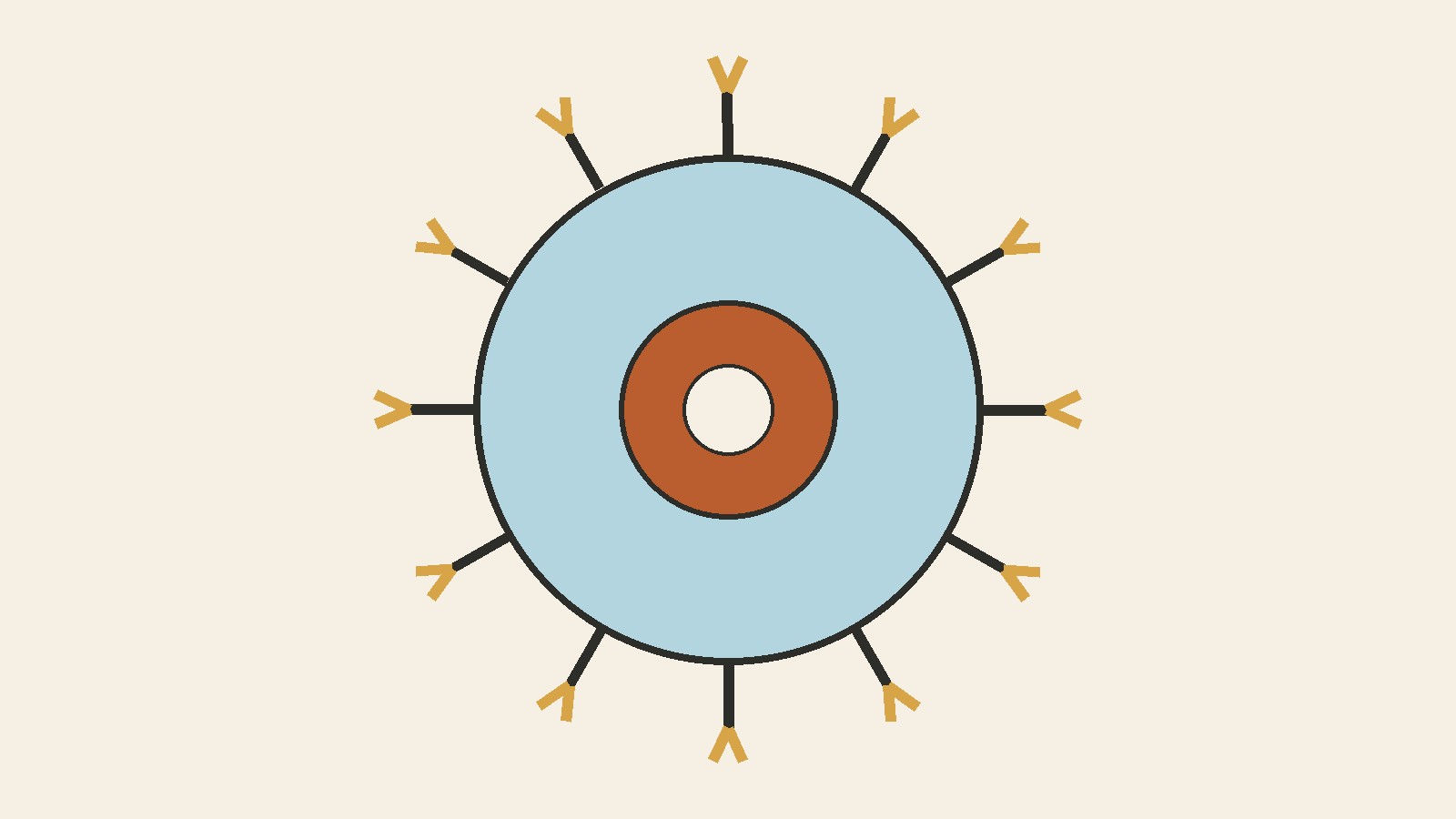
- B cells, also called B lymphocytes, are white blood cells of the adaptive immune system whose main job is antibody production. Each B cell carries many copies of one specific B cell receptor on its surface. That receptor is a membrane bound form of an antibody. When it binds a matching target, called an antigen, the B cell can activate, multiply, and give rise to plasma cells that secrete soluble antibodies and to memory B cells that persist for a faster response if the same antigen returns. In mammals, B cells mature in the bone marrow. They also present antigens to T cells and release signaling proteins, so they do more than make antibodies alone. General information only: this article explains biology. It is not medical advice and it does not diagnose, treat, or recommend any intervention for any person.
What B Cells Are
A B cell is a type of lymphocyte, which is a type of white blood cell. Lymphocytes are the main cells of adaptive immunity, the branch of immunity that learns to recognize specific targets and remembers them. Within that branch, B cells are responsible for humoral immunity. The word humoral refers to body fluids, and it points to the central B cell product: antibodies that travel in blood and other fluids and bind to targets outside cells.
An antigen is any structure that a lymphocyte receptor can recognize. Antigens can be parts of bacteria, viruses, toxins, or other foreign materials, and they can also be harmless materials that the immune system happens to recognize. Recognition does not by itself mean danger or disease. It means that a receptor fits a particular molecular shape well enough to bind it. That fit is the starting point for everything B cells do. Keep two ideas separate: specificity and diversity. Specificity means a given B cell recognizes a narrow target, not every possible invader. Diversity means that, across the whole population, different B cells carry different receptors, so the population as a whole can recognize a very wide range of targets. A single B cell is a specialist. The system as a whole is broad because it contains many specialists.
B cells are often called antibody factories, but that description is incomplete. NIAID, the National Institute of Allergy and Infectious Diseases, describes two major B cell functions: presenting antigens to T cells, and producing antibodies. The antibody role is described as the more important of the two, but the presentation role matters because it connects B cells to T cell help and to refinement of the antibody response. This article keeps general cell biology brief. Its subject is B cell specialization.
Where B Cells Come From: Development in the Bone Marrow
In mammals, B cells develop in the bone marrow from blood forming stem cells. Those stem cells give rise to lymphoid progenitors, which commit to the lymphocyte lineages. B cell development then proceeds through stages defined by what the cell has built and what it displays on its surface. The process is antigen independent at this stage, which means it does not wait for an infection. The body builds a diverse set of naive B cells in advance, so a matching cell is already present when a new antigen appears.
The key construction project is the B cell receptor. The genes that encode the antigen binding part of the receptor are not inherited in finished form. Instead, segments of DNA called V, D, and J segments for the heavy chain, and V and J segments for the light chain, are rearranged to assemble a working receptor gene. This rearrangement, known as V(D)J recombination, generates much of the diversity of the receptor repertoire. A heavy chain is assembled first, then a light chain. The finished receptor has a heavy chain and a light chain together, and its variable region determines what it binds.
Development can be summarized in stages. In the pro-B cell stage, rearrangement of the heavy chain gene begins, starting with joining of D and J segments and then addition of a V segment. In the pre-B cell stage, a successful heavy chain pairs with a temporary surrogate light chain to form a pre-B cell receptor. That checkpoint tests whether the heavy chain works. If it does, the cell divides and begins light chain rearrangement. In the immature B cell stage, a complete receptor, first expressed as IgM on the surface, is displayed. In the mature naive B cell stage, the cell co-expresses IgM and IgD on its surface and is ready to leave the bone marrow, circulate, and survey secondary lymphoid organs such as lymph nodes and the spleen.
Not every developing B cell survives. The bone marrow stage includes tolerance checkpoints. If an immature B cell binds strongly to a molecule from the body’s own tissues, tolerance mechanisms handle it. NIAID describes the general rule for adaptive cells: if a B cell produces antibodies that strongly recognize host cells, it is deleted. Other outcomes described in the immunology literature include receptor editing, in which the cell tries a different light chain, and anergy, in which the cell becomes functionally unresponsive. Tolerance is not perfect, and failures of tolerance are part of why autoimmunity is studied. After leaving the bone marrow, mature naive B cells circulate and reside in secondary lymphoid organs, where antigens are concentrated and displayed.
The B Cell Receptor: One Cell, One Specificity
The B cell receptor, often shortened to BCR, is the defining molecule of a B cell. It sits in the cell membrane, and it is, in structural terms, an antibody anchored to the cell. NIAID makes the relationship plain: the BCR on the surface is actually an antibody, and the antibodies a B cell later secretes are essentially the same binding structure in soluble form. That identity explains why the antibody response is specific. The cell does not invent a new specificity after activation. It secretes the specificity it already carried as a receptor.
All of the receptors on one B cell recognize the same target region, called an epitope. The epitope is the specific part of an antigen that fits the receptor. A pathogen usually carries many different epitopes, so many different B cells can respond to the same pathogen, each binding a different part of it. That is one reason the antibody response to a single microbe is usually polyclonal, meaning it comes from many B cell clones, rather than from one cell alone. Two features deserve emphasis. First, B cell receptors can bind antigens in their native form, directly, without that molecule first being cut into fragments. That contrasts with T cell receptors, which generally recognize fragments presented by other molecules. Second, clonal selection means that before activation each specificity is rare, and after activation the matching cell multiplies, so its specificity becomes common. The immune system does not teach every B cell to recognize a new antigen. It selects and expands the few cells that already fit.
Antibodies: What They Are and the Five Classes
An antibody, also called an immunoglobulin and shortened to Ig, is a protein that binds specifically to an antigen. Antibodies are Y shaped proteins with two antigen binding arms and a stem region that determines the class and many of the effector functions. The binding arms decide what the antibody attaches to. The stem region helps decide what happens next, including which other cells and proteins are recruited.
There are five antibody classes in humans: IgM, IgD, IgG, IgA, and IgE. Every antibody belongs to one of these classes, and the classes overlap in function while differing in where they act best and which helper mechanisms they trigger. NIAID summarizes their general roles as follows, with the caution that the roles overlap rather than being exclusive.
| Class | General role, as summarized by NIAID |
|---|---|
| IgM | Generally important for complement activation, and the main class made early in a first response. |
| IgD | Involved in activating basophils, and present as a receptor on mature naive B cells together with IgM. |
| IgG | Important for neutralization, opsonization, and complement activation, and the class that tends to dominate a secondary response. |
| IgA | Essential for neutralization in the gastrointestinal tract, and important at mucosal surfaces. |
| IgE | Necessary for activating mast cells, and involved in responses to parasites and in allergic responses. |
Class is not the same as specificity. Two antibodies can bind the same epitope yet belong to different classes, because class is determined by the constant region of the heavy chain while specificity is determined by the variable region. Class switching, described below, changes the class without changing what the antibody binds. The first antibody a naive B cell displays is IgM, and the first secreted antibody in a primary response is also typically IgM, but the system does not stay with IgM. As a response matures, class switching produces IgG, IgA, or IgE suited to different locations and tasks. A resting naive B cell does not secrete large amounts of antibody. Plasma cells, described below, are the secreting stage.
How Antibodies Help: Neutralization, Opsonization, and Complement
Antibodies do not usually kill pathogens by themselves. They bind, and binding changes what other parts of the immune system can do. NIAID groups antibody action into three major roles: neutralization, opsonization, and complement activation. Each role follows from the same binding event but leads to a different outcome.
Neutralization happens when antibody coating prevents a pathogen or toxin from binding to host cells or carrying out its harmful action. A virus coated in antibody may be unable to attach to a cell it would otherwise infect. A toxin bound by antibody may be unable to reach its target. In both cases, the antibody has not destroyed the target by itself. It has blocked the step that would have caused harm. Opsonization is a marking function. An antibody bound pathogen serves as a signal that alerts phagocytic cells, such as neutrophils and macrophages, to engulf and digest it. NIAID uses the image of a red flag: the antibody does not eat the pathogen, but it makes the pathogen conspicuous to cells that do. Complement activation recruits a system of blood proteins that can directly damage pathogens and amplify recruitment. Complement proteins assemble in sequence on a pathogen surface and can form a membrane attack complex, a pore that damages the target. Complement also produces signals that attract immune cells. IgM and IgG are the classes most associated with complement activation, though details depend on context and on how much antibody is bound. Beyond those three roles, antibody binding can cause clumping, which makes targets easier for phagocytes to handle, because antibodies have two binding arms and can link targets together.
Activation Step by Step: From Naive B Cell to Clone
A naive B cell is a mature B cell that has not yet encountered its matching antigen. Activation converts that waiting cell into an expanding clone and then into effector and memory cells. The steps below describe the common T dependent pathway, followed by the T independent variation.
First, the BCR binds its antigen. Binding alone is a signal, but for most protein antigens it is not sufficient for a full response. The B cell internalizes the antigen, processes it, and displays fragments of it on MHC class II molecules on its surface. MHC class II is a presentation molecule used to show processed antigen to helper T cells. A helper T cell whose receptor recognizes the same antigen fragment can then interact with the B cell. This coordination, in which B cell and helper T cell recognize the same antigen, is called linked recognition. It is a safeguard: two different antigen specific cells must agree before a full antibody response proceeds.
Second, the helper T cell provides additional signals. Those signals include direct cell contact signals, such as CD40 on the B cell interacting with CD40 ligand on the helper T cell, and cytokines, which are small signaling proteins secreted by the helper T cell. Cytokines influence whether the B cell divides, which class it switches to, and whether it enters a germinal center. Different cytokine environments favor different outcomes, which is one way the immune system tailors the antibody class to the type of threat.
Third, the activated B cell undergoes clonal expansion. It divides repeatedly, producing a clone of daughter cells that all carry the same receptor specificity. NCBI StatPearls summarizes this point directly: activated B cells undergo division after activation, producing a clone of cells that can produce immunoglobulin of the same antigen specificity. Most of those daughters mature into plasma cells. A smaller subset matures into memory cells. The clone is therefore both the immediate workforce and the seed of future memory. Some B cell responses do not follow this full pathway. A subset of mature B cells can respond to certain antigens without helper T cell help. These T independent responses tend to be faster and to produce mainly IgM, with less germinal center refinement and less durable memory than T dependent responses.
Germinal Centers: Where Antibodies Get Better
After activation, some B cells enter germinal centers, structures that form in secondary lymphoid organs during an active immune response. There, B cells divide rapidly, refine their receptors, switch class, and are selected for higher affinity. Two processes drive this refinement, both initiated by the enzyme activation induced cytidine deaminase, known as AID. In somatic hypermutation, small mutations accumulate in the variable region genes, so daughter cells bind slightly differently, and cells with stronger binding are preferentially selected to survive. This is affinity maturation. In class switch recombination, the constant region changes, so the cell stops making IgM and starts making IgG, IgA, or IgE, while specificity is retained. Germinal center output includes refined memory B cells and both short lived and long lived plasma cells.
Plasma Cells: The Antibody Secreting State
A plasma cell is a differentiated B cell specialized for antibody secretion. It is the effector end of the B cell pathway: the cell that turns a receptor specificity into a flood of soluble antibodies. Plasma cells develop extensive protein making machinery, including abundant rough endoplasmic reticulum, because secretion is their main task. They are morphologically distinct from resting lymphocytes for that reason. A resting B cell is built to wait and recognize. A plasma cell is built to produce.
Plasma cells are not a single uniform population. Some are short lived and contribute to the immediate wave of antibody during and shortly after an active response. Others are long lived and can continue secreting antibody for extended periods after the antigen has been cleared. Memory B cells and long lived plasma cells therefore provide two different forms of persistence: memory cells persist as responders that can reactivate, while long lived plasma cells persist as producers that keep secreting. Clonal expansion bridges recognition and production: one rare recognition event is amplified into many producers, all aimed at the same target.
Memory B Cells: Why a Second Response Is Different
Memory B cells are long lived B cells formed during a primary response that persist after the response resolves. They do not secrete large amounts of antibody while resting. Their value is readiness. On re-encounter with the same antigen, memory B cells can activate more rapidly, divide, and generate new plasma cells and additional memory cells. That readiness is the cellular basis for the difference between a primary and a secondary response.
The primary response occurs when B cells encounter an antigen for the first time. It takes time to select, expand, and refine the responding clones, and the early secreted antibody is predominantly IgM. The secondary response occurs on subsequent exposure to the same antigen. NCBI StatPearls describes it as higher in magnitude, much more rapid, and producing IgG rather than IgM as the dominant class. Those three differences, speed, size, and class, are the practical summary of immunological memory for B cells.
Memory is specific. A memory B cell remembers its antigen, not immunity in general. A person with memory B cells for one target has no automatic advantage against an unrelated target, because the memory population is made of clones selected for that first target. Memory also has limits that should be stated plainly. Not every primary response produces equally durable memory, and memory populations can wane or change over time depending on the antigen and the response. Variants of a pathogen that change the relevant epitopes may be recognized less well by existing memory cells. Those limits do not undermine the concept of memory. They explain why immunologists study memory as a graded and context dependent property rather than as an all or nothing shield.
B Cells as Antigen Presenting Cells and Signal Senders
Antibody production is the headline, but B cells also participate in immune communication. As antigen presenting cells, B cells internalize antigen through their receptor, process it, and display fragments on MHC class II molecules for helper T cells. That presentation is unusually efficient for the B cell’s own antigen, because the receptor concentrates exactly that antigen. B cells also secrete cytokines, signaling proteins that influence other immune cells. Researchers also study B cell subsets that appear to dampen immune responses. Regulatory B cell function is presented here as a studied modulatory role rather than as a settled population.
B Cells Versus T Cells Versus Natural Killer Cells
B cells, T cells, and natural killer cells are all lymphocytes, but they are distinguished by receptors, products, and tasks.
| Cell type | Matures in | Main product or action | Receptor recognition |
|---|---|---|---|
| B cell (B lymphocyte) | Bone marrow in mammals | Antibodies, secreted by plasma cells; also antigen presentation | BCR binds antigen in native form, including shapes on proteins and polysaccharides |
| T cell (T lymphocyte) | Thymus after leaving bone marrow | Helper T cells coordinate responses; cytotoxic T cells kill infected or abnormal cells; T cells do not secrete antibodies | T cell receptor recognizes processed fragments presented by MHC molecules |
| Natural killer cell | Bone marrow and related lymphoid development | Kills virus infected cells and tumor cells using granules that promote programmed cell death | Uses a combination of activating and inhibitory receptors rather than a single antigen specific receptor of the BCR or TCR type |
The B cell versus T cell contrast is the most important for readers. OpenStax states it directly: B cells function primarily by producing antibodies, while T cells do not secrete antibody but perform a variety of functions in adaptive immunity, including secreting signaling factors and destroying cells infected with intracellular pathogens. Helper T cells are the T cell subset most relevant to B cell activation, because they provide the contact and cytokine help described above. Cytotoxic T cells are the subset most relevant to direct killing. Both are T cells, but their jobs differ, and neither job is antibody production. The natural killer cell contrast corrects another common confusion. Natural killer cells are lymphocytes, and they can kill infected or tumor cells, but they are not B cells that failed to make antibody and they are not T cells without a receptor. NIAID describes them as having features of both innate and adaptive immunity, and notes that they recognize and kill virus infected cells or tumor cells using granules containing proteins that form holes in the target and cause programmed cell death.
When the B Cell System Goes Wrong: General Patterns
Three general patterns are studied, named here only as patterns, not as diagnoses or treatments for any person: too little function, misdirected function, and uncontrolled growth. Too little function means too few B cells, too little antibody, or antibody of poor quality. One studied example is X-linked agammaglobulinemia, which NIAID describes as an inherited immune disorder caused by an inability to produce B cells or the immunoglobulins that B cells make. Misdirected function means antibodies or B cell activity directed against the body’s own tissues, which can contribute to autoimmune conditions. Autoimmunity involves many cell types beyond B cells, so B cell misdirection is one contributor among several. Uncontrolled growth means B lineage cells dividing without normal control. Cancers arising from B cells, such as certain lymphomas and leukemias of B cell origin, are studied by tracing which developmental stage the malignant cells resemble. Antibodies are also used as research tools to label and isolate proteins and cells, because a specific antibody can find one target among many. Those applications are not recommendations in this article.
Frequently Asked Questions
What is the difference between B cells and B lymphocytes?
There is no difference. B cells and B lymphocytes are two names for the same cell type. B lymphocyte is the fuller name, and B cell is the common shortened form.
What do B cells do in simple terms?
B cells recognize specific antigens with their surface receptors, and after activation they produce clones that become plasma cells and memory cells. Plasma cells secrete antibodies that neutralize targets, mark them for engulfment, and activate complement.
Where are B cells made?
In mammals, B cells develop and mature in the bone marrow from blood forming stem cells. They rearrange their receptor genes through pro-B and pre-B stages, display a complete IgM receptor as immature B cells, and co-express IgM and IgD as mature naive B cells.
Do B cells produce antibodies directly?
Resting naive B cells display antibodies as receptors but do not secrete large amounts. After activation and differentiation, plasma cells, which are differentiated B cells, secrete antibodies in large amounts.
What are plasma cells and memory B cells?
Plasma cells are antibody secreting effector cells derived from activated B cells. Memory B cells are long lived cells from the same activated clone that do not secrete large amounts while resting but can reactivate rapidly on re-exposure to the same antigen.
What is the difference between a primary and a secondary immune response?
A primary response is the first response to an antigen. It takes time to expand and refine clones, and early antibody is predominantly IgM. A secondary response follows re-exposure to the same antigen and uses memory cells. It is faster, larger in magnitude, and tends to be dominated by IgG.
How are B cells different from T cells?
B cells produce antibodies and can bind antigens in native form through the B cell receptor. T cells do not secrete antibodies. Helper T cells coordinate immune responses and help activate B cells, while cytotoxic T cells kill infected or abnormal cells.
What are IgM, IgG, IgA, IgD, and IgE?
They are the five antibody classes. IgM is important early and for complement activation. IgD is present on mature naive B cells. IgG is important for neutralization, opsonization, and complement activation and tends to dominate secondary responses. IgA is essential for neutralization in the gastrointestinal tract. IgE activates mast cells and is involved in parasite and allergic responses.
What is a germinal center?
A germinal center is a structure that forms in secondary lymphoid organs during an active immune response. Activated B cells divide there, undergo somatic hypermutation to refine receptor affinity, and undergo class switch recombination to change antibody class. Cells with higher affinity receptors are selected to survive, so the response improves over time through affinity maturation.
Can B cells work without T cells?
Some B cell responses can occur without helper T cell help. These T independent responses tend to be faster, produce mainly IgM, and generate less germinal center refinement and less durable memory. Most refined, class switched, high affinity responses with strong memory are T dependent.
Sources & references
- National Institute of Allergy and Infectious Diseases, Immune Cells: B cell functions, antibody expression as BCR and secreted antibody, antibody classes and their general roles, neutralization, opsonization, and complement activation, and BCR and TCR gene rearrangement. https://www.niaid.nih.gov/research/immune-cells
- National Institute of Allergy and Infectious Diseases, Features of an Immune Response: activation, division, immune memory, and retention of memory cells after a response resolves. https://www.niaid.nih.gov/research/immune-response-features
- National Institute of Allergy and Infectious Diseases, Immune Tolerance: deletion of strongly self reactive adaptive cells and maintenance of tolerance to self antigens. https://www.niaid.nih.gov/research/immune-tolerance
- National Institute of Allergy and Infectious Diseases, X-Linked Agammaglobulinemia: inherited disorder caused by an inability to produce B cells or the immunoglobulins B cells make. https://www.niaid.nih.gov/diseases-conditions/x-linked-agammaglobulinemia
- NCBI Bookshelf, StatPearls, Histology, B-Cell Lymphocyte: BCR diversity through V(D)J rearrangement, activation and clonal division, plasma cell maturation, primary and secondary responses, and T independent B cells. https://www.ncbi.nlm.nih.gov/books/NBK560905/
- OpenStax, Anatomy and Physiology 2e, Anatomy of the Lymphatic and Immune Systems: B cells mature in red bone marrow, T cells mature in the thymus, B cells function primarily by producing antibodies, and plasma cells are activated B cells that secrete soluble antibodies. https://openstax.org/books/anatomy-and-physiology-2e/pages/21-1-anatomy-of-the-lymphatic-and-immune-systems
- PMC, B cell development: transcriptional regulation and immunological mechanisms in homeostasis: pro-B, pre-B, and immature stages, V(D)J segment rearrangement, germinal center somatic hypermutation and class switch recombination, and memory and long lived plasma cell output. https://pmc.ncbi.nlm.nih.gov/articles/PMC12370695/
- PMC, Evaluation of the Antigen-Experienced B-Cell Receptor Repertoire in Healthy Children and Adults: germinal center somatic hypermutation to increase affinity and class switch recombination to change effector function. https://pmc.ncbi.nlm.nih.gov/articles/PMC5066086/


