Short answer
- Heaviest spider: the Goliath birdeater (Theraphosa blondi) of northern South America, up to about 170 grams (6 ounces), with 175 grams cited in some references, and a leg span of 28 centimeters (11 inches) in the Guinness record, up to 30 centimeters (12 inches) per National Geographic.
- Widest leg span: the giant huntsman (Heteropoda maxima) of Laos, up to about 30 centimeters (12 inches) across, per its original scientific description (Jäger, 2001), but with a body only about 4.6 centimeters (1.8 inches) long.
- Spider "size" is not one number: leg span, body length, and weight rank different spiders first, and each is measured differently.
- Neither spider is considered medically dangerous to humans. The Goliath's bite is compared by National Geographic to a wasp sting; its barbed urticating hairs are its main defense.
- The Hercules baboon spider's place in record lists rests on one specimen held at the Natural History Museum in London, collected in Nigeria more than a century ago; when the Museum measured it against a Goliath in 2011, the Goliath was far bulkier.
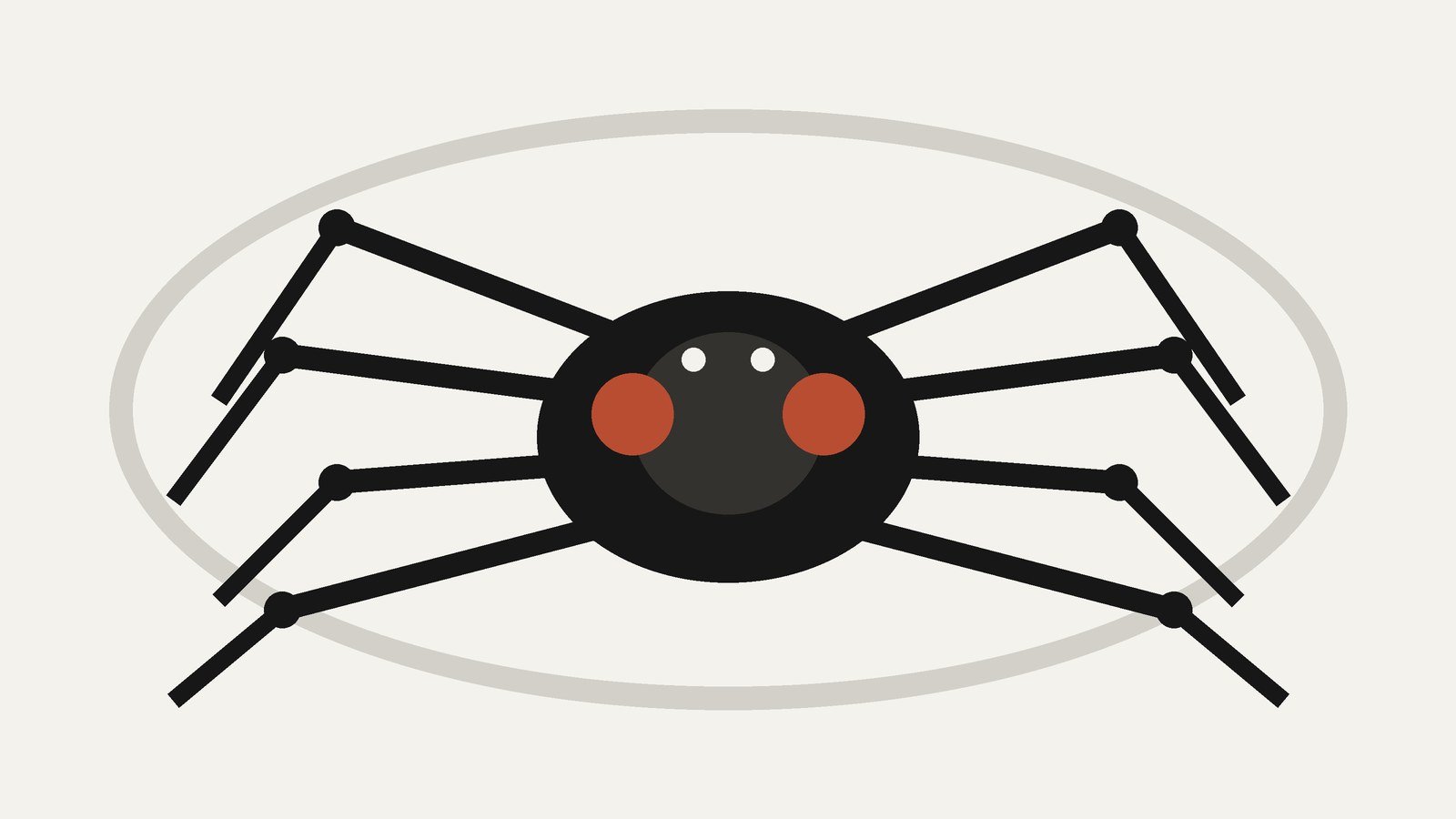
Ask which spider is the biggest in the world and you get two correct answers, because “biggest” can be measured two ways. By weight, the champion is the Goliath birdeater (Theraphosa blondi), a South American tarantula that Guinness World Records recognizes as the world’s largest spider, heavy enough to weigh as much as a small apple. By leg span, the champion is the giant huntsman (Heteropoda maxima), a cave-dwelling spider from Laos whose outstretched legs reach about 30 centimeters (12 inches) across, roughly the size of a dinner plate, on a body a fraction of the Goliath’s bulk. Both spiders are far less dangerous to people than their size suggests. This article explains how each title is earned, how spider size is measured and why records disagree, profiles both species, and introduces the runners-up, including one famous contender whose “record” rests on a single museum specimen collected over a century ago.
Two Champions, Two Measures
The confusion starts with the word “biggest.” For a spider, three different measurements get used, and they do not crown the same winner.
Leg span is the distance from the tip of the longest leg on one side to the tip of the longest leg on the other, with the legs outstretched. It is the number that produces the dinner-plate comparisons. Body length measures only the body, the front section (cephalothorax) plus the abdomen, legs excluded. Weight is self-explanatory, and it rewards bulk.
A long-legged, flat-bodied hunter can win on span while weighing very little. A heavy, thick-bodied tarantula can win on weight while its legs span less. That is precisely the situation at the top of the spider size table: the giant huntsman is mostly legs, and the Goliath birdeater is mostly body.
| Spider | Wins on | Leg span | Body length | Weight |
|---|---|---|---|---|
| Goliath birdeater (Theraphosa blondi) | Weight and body size | Up to about 28 cm (11 in); National Geographic gives up to 30 cm (12 in) | Up to about 12 to 13 cm (about 5 in) | Up to about 170 g (6 oz); 175 g cited in some references |
| Giant huntsman (Heteropoda maxima) | Leg span | Up to about 30 cm (12 in) | About 4.6 cm (1.8 in) | Not reliably published; far lighter than the Goliath |
How Spiders Are Measured, and Why Records Vary
Record figures for spiders should always be read with the measuring method in mind, because the method moves the number.
Leg span is the least standardized of the three. Spiders do not hold still, and the result depends on how the legs are posed: a spider resting naturally, legs angled, spans noticeably less than the same spider with its legs stretched flat in a straight line, which is how preserved specimens are usually measured. Sources differ on which pose a figure came from, which is one reason you will see the Goliath’s span quoted as 28 centimeters in one place and 30 in another.
Body length is more consistent, but it still varies. A spider’s abdomen swells after a large meal and shrinks as it fasts, and a female carrying eggs is bigger than the same spider a month later. Weight varies the most of all, for the same reason, and the heaviest verified weights often come from well-fed captive spiders rather than wild ones. The Goliath weight record is a case in point: Guinness’s listings include a captive specimen bred by Robert Bustard and reared by Brian Burnett in Scotland, weighed in February 1998 at 170 grams (6 ounces) with a 28 centimeter span, alongside a wild male collected at Rio Cavro, Venezuela, in April 1965 by members of the Pablo San Martin Expedition, which held the leg-span mark at 28 centimeters.
Preservation distorts things further. Museum spiders are stored in alcohol, which replaces the water in their tissues; the Natural History Museum’s 2011 weighing exercise (described below) had to correct for the fact that alcohol is about 25 percent lighter than water before it could estimate what its specimens weighed alive. And in the pet trade, sizes are often quoted as “diagonal leg span,” measured corner to corner across a resting spider, a method that produces bigger numbers than the straight tip-to-tip span used in scientific descriptions. Two honest measurements of the same spider can therefore differ by centimeters.
Finally, record numbers describe exceptional individuals, not typical adults. A “typical” large female Goliath is an enormous spider, but most never reach the maximum figures that headline articles. Treat every figure in this article as an upper end, not an average.
The Heavyweight: Goliath Birdeater
The Goliath birdeater is a tarantula from the rainforests of northern South America, recorded from Venezuela and the Guianas to northern Brazil. Encyclopaedia Britannica describes it as widely considered the largest known arachnid by mass, and Guinness World Records lists the species as the world’s largest spider.
Size. The largest Goliaths reach a body length of up to about 12 centimeters (5 inches), legs spanning up to roughly 28 to 30 centimeters (11 to 12 inches), and a weight of up to about 170 grams (6 ounces), with 175 grams cited in some references, comparable, Britannica notes, to a regulation billiard ball. Its fangs alone can exceed 3 centimeters (over an inch), per Britannica.
Habitat and hunting. Goliaths live on the rainforest floor, in deep burrows in marshy or swampy ground, often taking over and lining with silk a burrow dug by another animal. They are stealth hunters with poor eyesight, according to National Geographic, sensing the world mainly through vibration-sensitive hairs on their legs. They hunt at night, mostly arthropods, and will also take frogs, rodents, lizards, and, rarely, birds. Prey is seized with the fangs and liquefied before being consumed, as with other spiders. The famous name is an overstatement: National Geographic explains that “birdeater” traces to an eighteenth-century engraving showing a different tarantula eating a hummingbird, a picture that gave the whole genus its nickname; birds are an occasional menu item, not a staple.
Defenses and venom. Threatened, a Goliath first warns: it can rub its legs together to produce a hissing sound (stridulation) audible several feet away. Its main weapon is stranger. The abdomen carries dense fields of urticating hairs, tiny barbed hairs that the spider flicks into the air with its hind legs; they lodge in the skin and eyes of a predator and cause intense irritation. Females also line their egg sacs with these hairs. The venom, delivered through those long fangs, is the least of it for a human: National Geographic reports that bites have been described as feeling like wasp stings and almost never require medical attention, and spider expert Gustavo Hormiga of George Washington University has noted the venom is not particularly toxic to humans. It is a working venom for subduing frogs and rodents, not a defense aimed at people.
Life span. Females are long-lived for a spider, up to about 20 years in National Geographic’s figures, while males live 3 to 6 years.
The Leg-Span Champion: Giant Huntsman
The giant huntsman was unknown to science until 2001, when the German arachnologist Peter Jäger described it in the journal Zoosystema from specimens collected in the limestone caves of Khammouan Province, Laos. Its species name, maxima, simply means “the largest,” and Jäger’s paper posed the question directly: the largest huntsman spider? The late discovery startled biologists. The species surfaced during the great run of finds in the Greater Mekong region, where well over a thousand new species were documented between 1997 and 2007, and a World Wide Fund for Nature representative remarked of the region’s giants that “some of these species really have no business being recently discovered.” A spider the size of a dinner plate had simply been sitting in caves, unrecorded, into the twenty-first century.
Size. Jäger’s description gives a leg span reaching about 30 centimeters (12 inches), the widest reliably recorded for any spider, on a body length of only about 4.6 centimeters (1.8 inches). Everything about the animal is leg: where the Goliath is built like a fist, the huntsman is built like a hand with the fingers spread.
Body and habitat. Giant huntsmen are yellowish-brown with irregular dark spots on the rear half of the body and wide dark bands on the legs, per Jäger’s description. Like all huntsmen, their legs attach so that they bend forward in a crab-like fashion, and the body is flattened, a shape for slipping into narrow spaces and pressing flat against surfaces. In the Laos caves they live on and around the cave walls and entrances, ambushing prey rather than building a web; huntsmen are active, fast hunters that chase prey down instead of trapping it.
Venom. Huntsman spiders are venomous, as nearly all spiders are, but the family’s venom is not considered medically significant to humans; bites are rare, defensive, and comparable to a bee sting in most accounts. The giant huntsman is shy, fast, and far more likely to run than to bite.
The Runners-Up
Brazilian salmon pink birdeater (Lasiodora parahybana). A tarantula of northeastern Brazil, described in 1917 and named for the state of Paraíba. Its salmon-pink hairs over a dark body make it one of the most recognizable giant spiders. Large females reach a leg span of roughly 25 centimeters (about 10 inches), with exceptional individuals reported near 28 centimeters, and can weigh over 100 grams (3.5 ounces), placing it among the three or four largest tarantulas in the world, behind the Goliath and its closest relatives.
Hercules baboon spider (Hysterocrates hercules). The most ghostly name on the list. This West African tarantula, described by Pocock in 1900, is known to science from a single specimen collected in Nigeria more than a century ago and still held at the Natural History Museum in London; some accounts date the specimen to 1913, and no confirmed living specimen has been recorded since. It entered record discussions on the strength of its roughly 20 centimeter (8 inch) leg span and a reputation for bulk. In 2011 the Natural History Museum tested the claim directly for Guinness World Records: using displacement in alcohol, the Museum’s Goliath specimen measured 69 cubic centimeters of body volume against the Hercules specimen’s 22 cubic centimeters, less than a third. The Hercules baboon may be a genuinely large spider, but on the only specimen that exists, it was never the Goliath’s rival in weight. Any confident claim about it should be read with that caveat: one preserved animal, no modern data.
Other very large spiders, the pinkfoot goliath (Theraphosa apophysis) and the burgundy goliath (Theraphosa stirmi), are close relatives of the Goliath that rival its span on somewhat lighter bodies, and the Australian huntsman Beregama aurea held the huntsman family size record, at about 4 centimeters body length, until the giant huntsman displaced it.
Why Big Spiders Are Not as Dangerous as Films Suggest
Giant spiders in films are fast, aggressive, and lethally venomous. Real giant spiders are none of the three, for reasons rooted in biology.
Venom is sized for prey. Spider venom evolves to subdue insects and small vertebrates quickly. Humans are not prey, are vastly larger than anything these spiders eat, and feature in no giant spider’s hunting behavior. The species with venoms genuinely dangerous to people are mostly not the giants at all.
Size slows the threat. A heavy tarantula is a deliberate, ground-bound animal that relies on stillness, vibration-sensing, and retreat to a burrow. The genuinely fast giants, the huntsmen, use their speed to escape and to run down insects, not to chase people.
Defenses are deterrents, not attacks. The Goliath’s hissing and its cloud of barbed hairs, and the huntsman’s flattened hiding and sprinting, are all ways of ending an encounter. A bite is a last resort, and for both champions it is a painful sting, not a medical emergency, in the assessment of the sources cited here.
There is also a hard ceiling on spider size. Spiders breathe through book lungs and tracheae and support themselves on an external skeleton that must be shed and regrown at each molt. Those systems work against extreme size, which is why even the record-holders top out around the span of a dinner plate, and why no spider anywhere near human size exists.
Frequently Asked Questions
What is the biggest spider in the world?
It depends on the measure. By weight and body size, the Goliath birdeater (Theraphosa blondi), up to about 170 grams (6 ounces), recognized by Guinness World Records as the world’s largest spider. By leg span, the giant huntsman (Heteropoda maxima), up to about 30 centimeters (12 inches) across.
How big is a Goliath birdeater, exactly?
The largest recorded individuals reach a leg span of about 28 centimeters (11 inches), with National Geographic giving up to 30 centimeters (12 inches); a body length of up to about 12 to 13 centimeters (about 5 inches); and a weight of up to about 170 grams (about 6 ounces), with 175 grams cited in some references. Most adults are smaller than these maximums.
Is the Goliath birdeater dangerous to humans?
No, not in the medical sense. Its venom is not particularly toxic to humans, and bites are described as similar to wasp stings that almost never need medical attention, per National Geographic. Its urticating hairs are the more serious defense: flicked barbed hairs that irritate skin and eyes.
Where does the giant huntsman live?
In the limestone caves of Khammouan Province, Laos, in Southeast Asia. It was described scientifically only in 2001 by Peter Jäger, making it one of the most recently discovered of all record-holding animals.
Could an even bigger spider still be undiscovered?
It is possible in principle, and the giant huntsman is the proof of concept: the largest leg span on record belonged to a species science did not know existed until 2001. But any new claimant would face the same tests the ones in this article passed: a preserved specimen, published measurements, and a method other scientists can check. The Hercules baboon spider shows what happens to claims that cannot meet that standard.
Has any spider bigger than these ever been found?
Not among living spiders. Claims for the Hercules baboon spider rest on a single preserved specimen that measured far lighter than a Goliath when the Natural History Museum tested it in 2011. Fossil arachnids once claimed to be giant spiders, such as Megarachne, have been reclassified by later research and are no longer counted as spiders.
Conclusion
“Biggest spider” is really two titles. The Goliath birdeater wears the crown for weight and body size, a roughly 170-gram tarantula that Guinness recognizes as the largest spider and that defends itself with hissing and barbed hairs rather than dangerous venom. The giant huntsman wears the crown for reach, 30 centimeters of leg on a body under 5 centimeters long, hidden in Laotian caves until 2001. Behind them stand genuine giants, the salmon pink birdeater and the Goliath’s own relatives, and one instructive ghost, the Hercules baboon, whose record evaporated the moment a museum actually measured it. That may be the real lesson of the record books: in spider size, as elsewhere, the honest answer is a measurement, a method, and a source.
Sources & references
- Guinness World Records, "Largest spider" and "Heaviest arachnid": the Goliath birdeater (Theraphosa blondi) as the world's largest spider; record male collected at Rio Cavro, Venezuela, April 1965, leg span 28 cm (11 in); a captive specimen bred by Robert Bustard and reared by Brian Burnett in Scotland weighed 170 g in February 1998.
- National Geographic, "Goliath Birdeater" animal facts and "World's Biggest Spider Explained" (2013): leg span up to 12 inches and weight up to 6 ounces; urticating hair defense; the eighteenth-century engraving behind the "birdeater" name; bites likened to wasp stings and almost never requiring medical attention; female life span up to 20 years, males 3 to 6 years.
- Encyclopaedia Britannica (britannica.com), "Goliath birdeater": largest known arachnid by mass; range from Venezuela to northern Brazil; leg span some 28 cm; weight up to 170 grams; fangs more than 3 cm long.
- Jäger, P. (2001), "A new species of Heteropoda (Araneae, Sparassidae, Heteropodinae) from Laos, the largest huntsman spider?" Zoosystema 23(3), 461 to 465: description of Heteropoda maxima, leg span up to 30 cm, body length 4.6 cm, cave habitat in Khammouan Province, Laos.
- Natural History Museum, London (nhm.ac.uk), 2011 report of the Guinness "heaviest spider" challenge at the Museum: displacement measurement of the Museum's Hercules baboon spider specimen (22 cubic cm) against a Goliath birdeater specimen (69 cubic cm); the Hercules specimen is the world's only known example, held at the Museum.
- Kuntner, M., and colleagues (2017), PeerJ 5:e3972, figure documentation: Theraphosa blondi as the largest known spider by mass and Heteropoda maxima as the largest known spider by leg span.