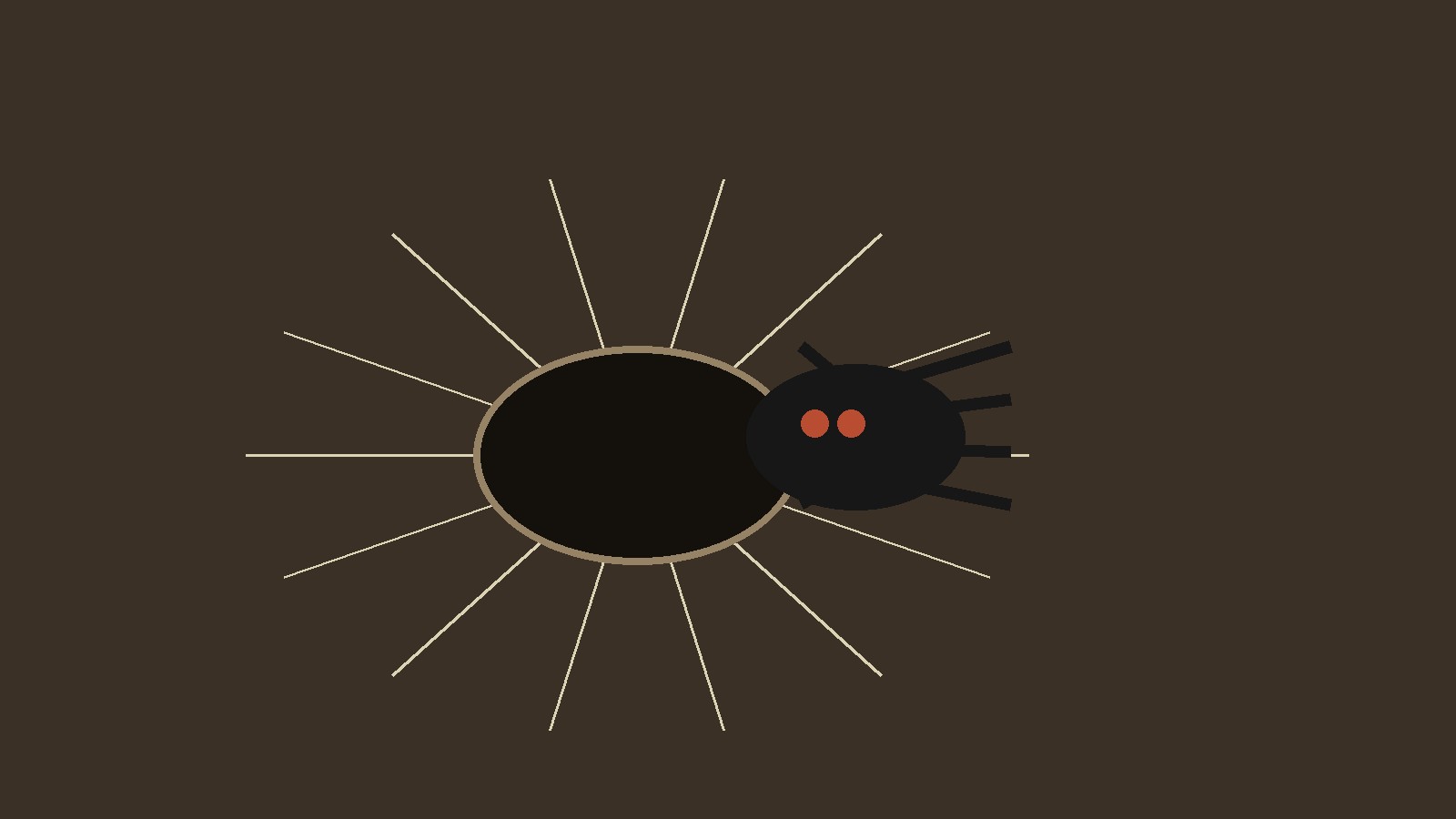
The short answer: The Sydney funnel-web spider (Atrax robustus) is a glossy black, ground-dwelling spider that lives in silk-lined burrows in the moist country around Sydney, Australia. It is famous for two things: a venom that is unusually dangerous to humans, and the antivenom, introduced in 1981, that has prevented any recorded death from its bite since. The Australian Museum calls it an icon of fear and fascination for Sydneysiders.
Few spiders carry a reputation like this one. Yet the animal behind the reputation is shy, nocturnal and mostly invisible: a spider that spends its life at the mouth of a silk tunnel, feeling for the footsteps of beetles. This article explains how to identify it, where it lives, how its burrow works, why its venom affects people so strongly, and how a venom-milking program in a reptile park turned one of the world’s most feared spiders into one of modern medicine’s better success stories.
Treat any suspected funnel-web bite as an emergency. That single point matters more than anything else in this article, and the short first-aid summary near the end, taken from Australian health authorities, explains the immediate steps their guidance sets out.
How to identify a Sydney funnel-web spider
The Sydney funnel-web is a medium-to-large spider. Funnel-web spiders as a group range from about 1 to 5 centimeters (about 0.4 to 2 inches) in body length, and the Sydney species sits toward the substantial end of that range, a heavy-bodied animal with powerful legs. The Australian Museum’s identification points for funnel-webs are the best field guide:
- A glossy, sparsely haired carapace. The hard plate covering the front of the body looks smooth and polished, almost varnished, unlike the hairy carapaces of many other large spiders.
- Deep color with no pattern. Blue-black, black, brown or dark plum, with no obvious markings.
- Finger-like spinnerets. At the tip of the abdomen sit the silk-spinning organs. In Atrax species the rear pair is long and easily visible, a feature that helps separate funnel-webs from similar dark spiders.
- Closely grouped eyes and a deeply curved groove (the fovea) across the carapace.
- In males, a spur on the second leg. Males of the genus Atrax carry an obvious conical spur partway along the middle segment of the second pair of legs, a structure used in mating. It is one of the most reliable signs that a wandering spider is a male Atrax.
Males are more lightly built than females and tend to be longer-legged, which suits the wandering life described below. Both sexes have large, strong fangs: when a funnel-web strikes, it drives those fangs downward and holds on.
Identification deserves one caution, which the Museum itself emphasizes: several other Sydney spiders look similar, including the Sydney brown trapdoor spider, female mouse spiders and the black house spider. Some of those lookalikes are far less dangerous, and one of them, the mouse spider, is treated with the same caution as a funnel-web. A large, dark, glossy spider in the Sydney region should simply be left alone, whatever it is.
Where it lives
The Sydney funnel-web is a local. The Australian Museum records Atrax robustus from the Central Coast, north of the city, south to the Georges River, and west as far as Baulkham Hills, with additional records from the Blue Mountains and Wollongong. In other words, its world is the Sydney Basin: the same ground occupied by Australia’s largest city.
Within that range, it is choosy. Funnel-webs live in moist, cool, sheltered places: under rocks, in and under rotting logs, in crevices, and in gardens they favor rockeries and dense shrubberies over open lawn. In suburban Sydney they are most common in the moist upland forest country of the Hornsby Plateau to the north and the Woronora Plateau to the south, thinning out across the dry, flat Cumberland Plain and picking up again in the foothills of the Blue Mountains.
The reason for the choosiness is water. Funnel-webs are very vulnerable to drying out, which is why most of their activity is nocturnal and why their map follows damp ground so faithfully. The spider spends the day in the humidity of its burrow and works at night.
A burrow lined with silk, wired with trip-lines
The name “funnel-web” describes the architecture. The spider digs or adopts a burrow in the moist ground, usually weakly lined with silk and rarely more than about 30 centimeters (about a foot) deep. At the surface, the burrow opens into a flattened silk entrance, a sort of vestibule with slit-like openings, and from that entrance radiate the feature every gardener in Sydney learns to recognize: irregular strands of silk spread across the ground like trip-wires.
Those trip-lines are the spider’s hunting system. They are an early-warning network. The spider sits just inside the entrance, front legs resting on the lines, and waits. When a beetle, cockroach or small skink walks across the silk, the vibrations travel down the lines, and the spider races out, seizes the prey and subdues it with a bite from its large fangs before dragging it back inside. It is ambush hunting reduced to its essentials: no web to snare anything, just a doorbell made of silk and a very fast resident.
Females hold the same burrow long-term, enlarging and maintaining it as they grow. The burrow is shelter, nursery and fortress in one, and it explains the spider’s whole character: an animal built to wait, in the damp and the dark, for the world to come to it.
The wandering males, and the swimming pool problem
The famous encounters happen because of the males. After a male matures, he leaves his burrow for good and becomes a wanderer, especially during the warmer months: the Australian Museum puts the main wandering season from November to April, the Australian summer and autumn. Guided by scent chemicals in the silk of female trip-lines, he walks the night looking for a female’s burrow. It is a one-way journey of a few months at most, ending in mating or in one of the many ways a spider on foot can come to grief.
Wandering brings males into collision with suburbia. They turn up in garages and houses, especially buildings on concrete slabs where the gap under a door is easy to reach. They hide in shoes left outside. And they fall into backyard swimming pools, which produces the funnel-web’s most unnerving party trick.
A funnel-web in a pool is not a drowning spider, or not quickly. The Australian Museum’s guidance is explicit: wandering funnel-webs often fall into backyard pools and can stay alive underwater for at least 30 hours. The spider traps a small bubble of air in the hairs around its abdomen, which supplies breathing and, for a while, buoyancy. As the spider gradually becomes waterlogged, it sinks. A motionless spider on the bottom of a pool should never be assumed dead, the Museum warns, because they often recover. Pool skimmers in Sydney are used with a respect that visitors sometimes find puzzling, until they learn this.
Rain is the other trigger. Heavy rain can flood burrows and the temporary shelters of males, flushing spiders into activity, and warm, wet nights in summer are peak funnel-web time in the city’s gardens.
The venom: a molecule aimed, by accident, at primates
Most spider venom is a prey weapon, tuned over evolutionary time to insects and other small animals, and most of it does little to people. The Sydney funnel-web’s venom is different, and the difference comes down to one component.
Male Sydney funnel-web venom contains a compound called robustoxin, known to chemists as delta-atracotoxin-Ar1. The Australian Museum explains its strange targeting: robustoxin “severely and similarly affects the nervous systems of humans and monkeys, but not of other mammals.” The venom works on the nerves, interfering with the signals that keep the body’s systems regulated, and primates, for biochemical reasons that appear to be an evolutionary coincidence, are exquisitely sensitive to it. A dog or cat bitten by the same spider is in far less danger than the person who owns it.
Two consequences follow. First, the danger is heavily male. Female Sydney funnel-web venom lacks the robustoxin component, and the Museum notes that this probably explains why bites by females have not caused any deaths: every one of the recorded funnel-web deaths has been attributed to a male. Second, the dangerous season and the wandering season are the same season. The spider most likely to meet a human, the roaming summer male, is also the spider carrying the most potent venom. The Museum credits the male with most of the thirteen recorded deaths and many medically serious bites in the years before antivenom.
None of this makes the spider aggressive in any simple sense. It is a burrow animal that bites when it is trapped, cornered or trodden on: in a shoe, under a log, in a gloved hand in the garden. Threatened, a funnel-web rears up and shows its fangs, and if it bites, it tends to hold on and bite repeatedly. The defense is formidable, but it is a defense.
The antivenom: 1981, and a record that still stands
An antivenom for the Sydney funnel-web spider was first developed for clinical use in 1981, by Dr. Struan Sutherland and his team at the Commonwealth Serum Laboratories (CSL), Australia’s national serum producer. Sutherland had spent years on the problem, and in the same period he experimentally established the pressure-immobilisation first-aid technique that Australian authorities still teach for funnel-web bites today.
The result is one of the cleanest before-and-after records in toxinology. Thirteen deaths were recorded in the decades before 1981. In the Australian Museum’s words: “No deaths have occurred since its introduction.” The systematic review of recorded clinical cases published in the Medical Journal of Australia reached the same conclusion independently: “We found no confirmed deaths after funnel-web spider bite since the antivenom was introduced,” and found that antivenom reversed the effects of envenoming in the great majority of confirmed cases. Antivenom is held at major city and regional hospitals across the spider’s range, and the funnel-web antivenom has also proved effective against the bites of other dangerous funnel-web species, and even mouse spiders.
Behind the medicine sits an unlikely supply chain. Making antivenom starts with venom, and venom has to be collected, spider by spider. Much of the venom for the original research, and for antivenom production, has come through the funnel-web venom-milking program at the Australian Reptile Park near Gosford, north of Sydney. The park is the sole supplier of funnel-web spider venom in Australia: members of the public catch wandering spiders (the park runs drop-off points and actively asks for them, especially the valuable adult males), park staff milk the spiders weekly, coaxing drops of venom from the fangs, and the raw venom is sent to CSL Seqirus in Melbourne to be made into antivenom. Every vial of antivenom therefore begins with someone in Sydney carefully catching the spider in their pool or their shoe and delivering it, in a jar, to a reptile park. It is one of the world’s more distinctive community health programs.
If a bite happens: the official first aid, briefly
This article is a natural-history explainer, not a first-aid guide, and it is no substitute for official instructions or emergency care. But the core of the Australian advice is short and widely published, and it parallels the familiar first aid for snake bite. Queensland Health’s bites and stings guidance instructs, for a funnel-web spider bite: call 000 (the Australian emergency number), apply a pressure immobilisation bandage firmly over the bitten limb, splint the limb so it cannot move, and keep the person still and calm while waiting for medical help. The Australian Museum’s first-aid summary adds that the bandage should be as firm as for a sprained ankle, that the bitten person should be kept as quiet as possible, and that medical attention must always be sought, even if symptoms are not immediately apparent, because severe envenomation is always a medical emergency. The firm bandage and the stillness work together: pressure and immobility slow the movement of venom through the lymphatic system, buying time for the antivenom to do its work in hospital.
The wider family, and a recent identity split
The Sydney funnel-web is one member of a substantial Australian family. The Australian Museum counts 38 described species of Australian funnel-web spiders, placed in three genera: Atrax, Hadronyche and the single-species genus Illawarra. Hadronyche is the diverse genus, ranging through the eastern forests from Tasmania to north Queensland, and it includes genuinely dangerous species of its own, such as the Blue Mountains funnel-web (Hadronyche versuta) and the northern tree-dwelling funnel-web (Hadronyche formidabilis), the largest of all funnel-webs, which lives in rot-holes high in rainforest trees. The family resemblance is strong: glossy carapaces, burrows or retreats, silk trip-lines, and venom that deserves respect.
In January 2025, the family made news. An international research team led by scientists from the Leibniz Institute in Germany with the Australian Museum and Flinders University compared funnel-webs from across the Sydney region anatomically and genetically, and concluded that the spider long treated as one species is actually three. The true Sydney funnel-web, Atrax robustus, centers on Sydney’s North Shore and the Central Coast. The Southern Sydney funnel-web, Atrax montanus, a name resurrected from 1914, lives mainly in the Blue Mountains and to the south and west. And around Newcastle, to the north, lives the largest of the three, formally named Atrax christenseni and nicknamed “Big Boy” by the spider collectors whose outsized specimens, delivered to the Reptile Park’s venom program, first drew the researchers’ attention. For anyone reading older books or web pages, the practical point is simple: the Sydney funnel-web of the classic accounts is now understood as the northern of three close cousins, and the famous name Atrax robustus belongs to it.
Frequently asked questions
How dangerous is the Sydney funnel-web spider?
Its bite is a genuine medical emergency, and before antivenom it killed thirteen recorded victims. Since the antivenom arrived in 1981, no deaths have been recorded in Australia, a record confirmed both by the Australian Museum and by a systematic review in the Medical Journal of Australia. Dangerous spider, solved problem, provided first aid and hospital care are prompt.
Can a Sydney funnel-web spider jump?
No. Despite popular belief, funnel-webs cannot jump, according to the Australian Museum. They can move fast, rear up when threatened and lunge when striking, which is more than enough.
How long can a funnel-web survive in a swimming pool?
At least 30 hours underwater, per the Australian Museum. The spider traps a bubble of air in the hairs around its abdomen. Never assume a still spider at the bottom of a pool is dead.
Are female Sydney funnel-webs dangerous too?
Female bites should be treated with the same respect, and the Australian Museum warns against assuming any funnel-web bite is safe. That said, female venom lacks the robustoxin that makes male venom so potent to people, no deaths have been attributed to females, and every recorded death is attributed to a wandering male.
Why is the venom so dangerous to humans but not to a dog or cat?
Because of its key component, robustoxin (delta-atracotoxin-Ar1), which acts on the nervous systems of humans and other primates but not, to anything like the same degree, on those of other mammals. It appears to be an evolutionary coincidence: the venom evolved for insect prey, and primates happen to carry the version of the target it fits.
Where does the name “funnel-web” come from?
From the web architecture: a burrow whose silk-lined entrance opens into a flattened, funnel-like sheet of silk, with irregular trip-lines radiating across the ground. The funnel is the doorway, and the trip-lines are the doorbell.
For visitors exploring Australia beyond Sydney, the continent’s most famous natural landmark is Uluru, the sandstone monolith in the Northern Territory.
Keep reading: How Many Legs Does a Spider Have? Eight, and How They Work
Sources & references
- Australian Museum, "Australian Funnel-web Spiders" (learn/animals/spiders): identification points (shiny carapace, grouped eyes, four spinnerets, male second-leg spur in Atrax); "There are 38 described species of Australian funnel-web spiders and they are currently placed in three genera: Hadronyche, Atrax and Illawarra"; "The male of Atrax robustus, the Sydney Funnel-web Spider, is probably responsible for most of the thirteen recorded deaths and many medically serious bites"; distribution "from the Central Coast south to the Georges River, extending as far west as Baulkham Hills"; burrow "rarely more than 30 cm deep" with radiating silk trip-lines; males wander "especially during the summer/autumn months," with peak activity November to April; robustoxin: "male spider venom contains a unique component called Robustoxin (delta-Atracotoxin-Ar1) that severely and similarly affects the nervous systems of humans and monkeys, but not of other mammals"; antivenom: "An antivenom for the Sydney Funnel-web Spider was first developed for clinical use in 1981 by Dr Struan Sutherland and his team at the Commonwealth Serum Laboratories. No deaths have occurred since its introduction... Much of the venom for this research was supplied through a funnel-web venom milking program at the Australian Reptile Park near Gosford, NSW"; pools: "they can stay alive for at least 30 hours underwater... It should not be assumed that a non-moving spider at the bottom of a pool is dead"; "Despite some popular beliefs, funnel-webs can't jump."
- Australian Museum media release, "Scientists resolve 'identity crisis' for Australia's deadliest spider" (January 13, 2025): the Sydney funnel-web is three species, Atrax robustus ("found from the Central Coast and throughout the Sydney Basin"), Atrax montanus ("most common in the Blue Mountains south and west of Sydney") and the Newcastle funnel-web Atrax christenseni ("Big Boy"); the release also carries the Australian Reptile Park's program description: "the sole supplier of funnel web spider venom in Australia... The funnel web spiders are milked weekly for their raw venom that is sent off to CSL Seqirus in Melbourne to be made into lifesaving anti-venom."
- Isbister, Gray et al., "Funnel-web spider bite: a systematic review of recorded clinical cases," Medical Journal of Australia 182(8), 2005: "We found no confirmed deaths after funnel-web spider bite since the antivenom was introduced. Antivenom completely reversed the effects of clinical envenoming in 97% of expertly identified cases."
- Queensland Health (qld.gov.au), "Bites and stings": first aid for funnel-web spider bites: check breathing and circulation; call 000; "Apply pressure immobilisation bandage: Firmly bandage the area of body involved (including the wound)..."; "Immobilise the limb using a splint"; "Encourage the person to sit quietly"; applying a tourniquet, cutting or sucking the venom from the wound is not recommended.
- Encyclopaedia Britannica and Wikipedia species records for Atrax robustus (taxonomy and history): family Atracidae; described by Octavius Pickard-Cambridge in 1877; "Both sexes are glossy and darkly coloured, ranging from blue-black, to black, to shades of brown or dark-plum coloured"; body length 1 to 5 cm. (Used for taxonomy, naming history and color range; all load-bearing natural-history and medical claims above rest on sources 1 to 4.)


