Short answer
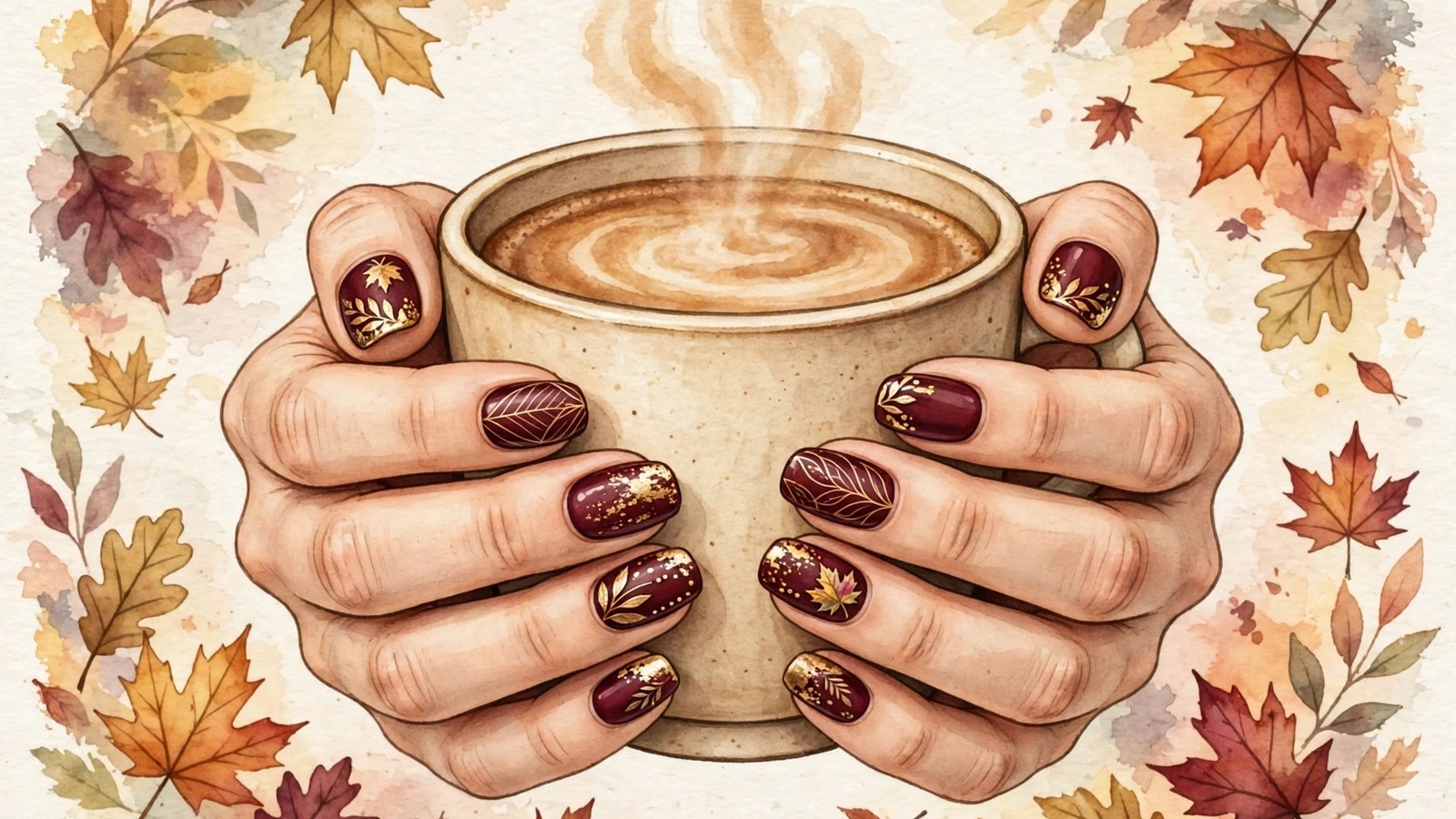
- Fall and autumn nail ideas start with color. The core fall palette is burgundy, chocolate brown, burnt orange, rust, olive green and warm gold, supported by quieter shades such as dusty pink, deep red, warm taupe, milky beige and soft gray-brown. A single well chosen shade, neatly applied, looks polished without any nail art, and it suits every nail length and shape. The easiest designs use one technique, repeated neatly: polka dots made with a dotting tool or a bobby pin, a French tip or half moon in a fall color instead of white, a single leaf accent or decal on one or two nails, a matte top coat over a familiar shade, or tortoiseshell patches in amber, brown and black. Almond nails give deeper colors room to show, and French tips in burgundy, gold or chocolate give a classic shape a seasonal update. How long the manicure lasts depends mostly on preparation and protection. Start with clean, dry nails, use a base coat, apply two thin color coats rather than one thick coat, cap the free edge, and finish with top coat, reapplied every two to three days. Wear gloves for washing up, use cuticle oil daily, and never peel polish off.
Introduction
Autumn is the season when nail color gets interesting again. After a summer of brights and pastels, the palette deepens: burgundy, chocolate brown, burnt orange, olive and warm gold take over, and simple designs, such as a leaf accent, a gold tip or a scatter of dots, suddenly feel right. Whether you call them fall nails or autumn nails, the ideas below cover the shades and styles that suit the season, from a single polished color with no art at all to almond shapes, French tips and black and gold evening looks.
This is a general fall guide. It covers autumn palettes, designs and seasonal nail care for the whole season, for work, weekends and ordinary gatherings, rather than for one specific holiday or date. It also explains, step by step, how to prepare, paint and protect a manicure so the color you choose lasts, and how to care for your nails if you wear gel polish. Start with one deep shade if you are unsure, add one accent if you want more, and keep the design at a level you can maintain in real life.
Fall Nail Colors That Work
The easiest way into autumn nails is color. A single well chosen shade, neatly applied, looks polished without any nail art at all, and it suits every nail length and shape.
Start with the classics. Burgundy is the defining autumn nail color: deep enough to feel seasonal, dark enough to suit many different hands, and easy to wear at work and at weekends. Chocolate brown is a reliable autumn choice, especially in glossy finishes and on shorter nails. Burnt orange and rust tones echo the season directly and pair well with denim, camel coats and knitwear. Olive green is the quieter option, earthy and unusual, and a good alternative if reds and browns are not your thing.
Then there are the shades that bridge summer and autumn. Soft pink nails do not disappear in October; they just get dustier and deeper, moving from bright pink to rose and mauve. Classic red nails work in every season, but in autumn they lean darker, toward cherry and wine rather than bright scarlet. And for anyone who prefers neutrals, warm taupe, milky beige and soft gray-brown shades give a tidy, understated finish that goes with everything.
| Color family | Shades to try | Good pairings | Finish that suits it |
|---|---|---|---|
| Burgundy and wine | Burgundy, wine, oxblood, cherry | Gold foil, cream, nude | Glossy, or matte for a softer look |
| Brown | Chocolate, espresso, latte, caramel | Cream, gold, tortoiseshell | Glossy on short nails, matte as an accent |
| Orange and rust | Burnt orange, rust, pumpkin tones | Nude, cream, gold | Glossy, or in an ombre gradient |
| Green | Olive, deep green | Gold, cream, brown | Glossy or matte |
| Pink and red | Dusty rose, mauve, cherry, wine red | Nude bases, gold lines | Glossy |
| Neutrals | Warm taupe, milky beige, soft gray-brown | Any fall color as an accent | Glossy or matte |
| Black and gold | Black, warm gold, nude with black details | Each other, burgundy, brown | Glossy, with foil or glitter accents |
A useful rule: if you are unsure, pick one deep shade and one accent. A burgundy manicure with a single gold accent nail, or brown nails with one glossy nude nail, looks deliberate without requiring any real artistry. Limiting the palette to two or three colors also keeps a mixed set from looking busy.
Choosing a Fall Palette That Suits You
Color names on a bottle are only a starting point, because the same shade can look different on different hands and in different light. Hold a painted swatch or the bottle next to your hand in daylight before you commit to a full set. Daylight gives a truer read than warm indoor lighting, which can make a warm shade look warmer and a cool shade look dull.
Next, decide how much contrast you want. A shade clearly darker or lighter than your skin will stand out, which suits a statement set. A shade close to your own skin depth looks softer and more blended, which suits work and everyday wear. Neither is better; they do different jobs. Warm taupe, milky beige and dusty rose are common low contrast choices, while oxblood, black and burnt orange are usually higher contrast.
Outfit colors help too. If your fall wardrobe leans toward camel, cream, olive and denim, browns and burgundies will sit comfortably inside it. If your outfit is already patterned, a solid nail color taken from one color in the pattern is calmer than adding a second pattern on your nails. These are starting points for testing, not rules.
Simple Designs Anyone Can Try
Not every autumn design needs a steady hand or a salon visit. Some of the most wearable fall nail designs use just one technique, repeated neatly.
Polka dots are the easiest place to start. A dotting tool, or the rounded end of a bobby pin, makes tidy dots in a contrasting color. Try gold dots over burgundy, cream dots over chocolate brown, or a single dot at the base of each nail for a minimal look. Polka dot nails also work well as an accent: keep four nails plain and dot just the ring fingers. Dip the tool lightly, test the first dot on paper, and reload often, because a smaller, even dot looks neater than a large one that spreads.
Half moons and French tips in autumn colors give a classic shape a seasonal twist. Paint the tip in gold over a burgundy base, or use a deep brown tip over a nude base. The contrast is subtle, but it reads as autumn immediately. For a half moon, leave or paint a small semicircle at the base of the nail in a second color and fill the rest with the main shade.
Leaf and foliage accents need not be detailed paintings. A single gold leaf decal, a tiny stamped leaf, or a few hand painted strokes in a metallic polish on one or two nails is enough. If freehand painting feels daunting, nail stickers and stamping plates give a similar effect with far less effort. Keep the leaf small on a short nail, and place it off center or near the tip so it does not crowd the whole surface.
Matte finishes change a familiar color completely. A matte top coat over burgundy or brown gives a soft, velvety look that feels very autumnal, and it is an easy way to refresh a shade you already own. Try matte on all nails, or mix finishes: glossy on four nails, matte on one accent nail.
Tortoiseshell is another autumn favorite that is simpler than it looks. Layering translucent amber, brown and black polishes in small, irregular patches creates the mottled effect, and because the pattern is deliberately uneven, small imperfections disappear into the design. Work in thin patches, let each layer settle before adding the next, and seal the finished pattern with a glossy top coat to add depth.
Ombre and gradient looks blend two fall shades into each other, for example from nude at the base to burnt orange at the tip, or from caramel into chocolate brown. A small sponge dabbed lightly over partly dried color can soften the boundary between shades. A gradient is forgiving for beginners because there is no hard line to keep straight.
Almond and French Tip Autumn Looks
Nail shape changes how a color reads, and two shapes dominate autumn nail inspiration: almond and the French tip.
Almond nails, filed to a soft point with rounded sides, suit autumn’s deeper colors particularly well. The longer, tapered shape gives burgundy, chocolate and black based designs room to show, and it makes simple designs look more elegant. Almond nails also suit gold accents and delicate leaf details. If your natural nails are short, almond shaping works on extensions or press-ons too; just keep the length practical. An almond shape needs some length to show: on a very short nail it can look almost round, so a soft almond or rounded shape is a better request until the nails grow.
French tip nails get an autumn update by swapping the usual white tip for seasonal colors. Popular variations include:
- Burgundy tips over a sheer nude base
- Gold tips over a deep brown base
- Chocolate tips over a milky pink base
- A thin metallic gold line beneath a classic white tip
The French tip is also a forgiving design for beginners: the tip is a small area, so mistakes are easy to correct, and nail guides or stickers can help keep the line neat. Keep the tip thinner on short nails, so the base color still shows and the nail does not look cut in half. For October nails that need to last through work, weekends and events, a French tip in autumn colors is a safe, versatile choice.
Short nails deserve a mention of their own, because most of the fall palette suits them. Solid burgundy, chocolate brown and olive look crisp at short lengths, and simple art reads clearly: one small leaf, one dotted ring finger or one gold stripe. File short nails to the same length on both hands before polish goes on, because mixed lengths look untidier than any single short length.
Burgundy and Brown Shades in Detail
Burgundy nails and brown nails deserve their own section, because they are two of the shades people return to most often each autumn, and because each one has more range than it first appears.
Burgundy ranges from bright wine to near black oxblood. Lighter, redder burgundies suit shorter nails and daytime wear; darker, plumper shades look striking on almond nails and in the evening. Burgundy also pairs well with gold, which is why burgundy and gold combinations appear so often in autumn nail inspiration: gold foil, gold glitter at the cuticle, or a single gold accent nail all lift the color without overpowering it. If a full burgundy set feels too dark, use burgundy only for French tips over a nude base, or on two accent nails over a milky beige set.
Brown ranges from milky latte to deep espresso. Mid browns are the most wearable day to day, while dark chocolate shades read as a softer alternative to black. Brown nails work well with cream and gold accents, and they pair naturally with autumn outfits in camel, cream, olive and denim. If brown feels too flat on its own, a glossy top coat or a single tortoiseshell accent nail adds depth. A row of browns, a different shade on each nail from latte to espresso, is another simple way to use the family without any art at all.
For both shades, two thin coats give better coverage and a smoother finish than one thick coat, and a base coat underneath helps prevent darker pigments from staining the natural nail.
Black and Gold for Evenings
Black and gold nails are the autumn evening option. They suit parties, dinners and occasions where a daytime burgundy feels too quiet, and they are surprisingly easy to wear.
The simplest version is black nails with gold accents: a gold stripe, a gold glitter fade from the tip, or gold foil pressed onto one or two nails. Gold over black reads as festive without being tied to any one holiday, which makes it a good choice from October onward.
A subtler version reverses the balance: mostly gold or nude nails with black details, such as a thin black tip, black dots, or a black half moon. This keeps the drama but feels less heavy, and it works well on shorter nails.
Black polish shows chips more readily than lighter shades, so a good top coat matters here. Reapplying top coat every couple of days helps keep the finish glossy and protects the edges, which are the first places black polish tends to wear.
Fall Looks for Work, Weekends and Gatherings
The same palette can be adjusted for different parts of fall life, mainly by changing length, finish and the amount of art.
For work, choose solid colors and small details: warm taupe, burgundy, chocolate brown or dusty rose, a thin French tip in a fall color, or one small leaf on an accent nail. Matte finishes and low contrast neutrals look especially understated, and a practical length suits typing and everyday tasks.
For weekends, there is more room to experiment: tortoiseshell accents, an ombre gradient, polka dots in a contrasting metal, or a different brown on each nail. Weekend sets are also a good place to test a bolder shade, such as burnt orange or black, before wearing it for an event.
For an autumn gathering, such as a family meal or an evening with friends, warm neutrals with one seasonal accent work well: taupe or nude nails with a single burnt orange or gold leaf nail, or burgundy or brown with gold foil. If you will be cooking or serving food, choose a shorter length and a durable, flat finish, keep nails clean, and wear gloves for washing up, because water, detergent and friction are among the fastest ways to ruin a fresh manicure. Paint the set the day before rather than a week ahead, and keep the polish with you for touch ups.
How to Do a Fall Manicure at Home, Step by Step
A beautiful autumn manicure is only useful if it survives real life. The fundamentals are simple and well established: preparation, thin layers, and protection.
- Start with clean, dry nails. Remove old polish completely, wash and dry your hands, push cuticles back gently rather than cutting them, and wipe each nail with polish remover or alcohol to remove oil before you begin. Polish bonds best to a clean, dry nail surface, and painting over oil, lotion or leftover residue is a common reason a manicure chips early.
- Use a base coat. A base coat improves grip and acts as a barrier between darker pigments and the natural nail, which helps prevent staining from burgundy, brown and black shades.
- Apply thin coats. Two thin color coats last longer than one thick one, because thick coats stay soft underneath and chip sooner. Leave about two minutes between coats.
- Cap the free edge. Brushing a little polish across the tip of each nail seals the edge and reduces early chipping.
- Add art only when the color is ready. Dots, decals, foil and French tips sit better on color that has had time to settle. Work on one or two accent nails rather than every nail if you want the set to stay neat.
- Finish with top coat, and reapply it. A top coat adds shine and chip resistance. Reapplying a thin layer every two to three days refreshes the finish and extends wear.
- Let the manicure harden. Polish can feel dry to the touch within minutes while remaining soft underneath. As a practical guide drawn from manicure longevity advice, give the finished set about 20 to 30 minutes before light activity, and avoid hot water, showers and long soaking for at least one to two hours if you can.
- Protect your hands. Wear gloves for washing up and cleaning, avoid soaking hands in hot water for long periods, avoid using your nails as tools to pry or scrape, and use cuticle oil daily to keep the nails and surrounding skin flexible.
If a nail chips, a small touch up with the same polish and a fresh layer of top coat is usually enough. There is no need to remove the whole manicure for one chip.
Gel Polish and Nail Health
Some fall looks are done in gel polish, so gel care belongs in a fall guide too. Gel polish is quick to set and more durable than regular polish, but it can be hard on nails, and Parkview Health, summarizing guidance from the American Academy of Dermatology, notes that gel polish can contribute to peeling, cracking and brittleness.
Removal matters most. Do not pick or peel gel polish off, because picking can damage the nail and lead to brittleness, cracking, pain or infection. Gel should be soaked off with acetone, roughly 15 minutes, ideally with acetone soaked cotton balls placed on the nails and wrapped, so only the fingertips are exposed, rather than soaking the whole hand.
Cuticles need care with any system. The American Academy of Dermatology guidance summarized by Parkview Health is not to let a technician cut or push back the cuticles aggressively, because the cuticle is a barrier, and breaking that skin seal can increase infection risk. At a salon, check cleanliness and ask how tools are sanitized.
For gel cured under ultraviolet light, the same summarized guidance recommends a broad spectrum, water resistant sunscreen with SPF 30 or higher on the hands before the manicure, or dark, opaque gloves with the fingertips cut out.
Finally, give nails a break. Parkview Health’s summary advises wearing polish for one to two weeks, then removing it and letting the nails recover, and moisturizing during the break, including cuticle oil a few times a day. If nails become thin, brittle, peeling or painful, leave them bare and, if the problem persists, seek advice from a health care professional or dermatologist.
Caring for Weak or Brittle Nails in Fall
Nails that are thin, peeling or brittle do not hold color as well, because the surface is uneven and layers of the nail plate can separate. A few habits, drawn from the manicure longevity guidance used for this article, can help before and between sets.
Keep weak nails a little shorter, to reduce leverage and breakage, and file gently in one direction with a fine file rather than sawing back and forth. Limit buffing: over buffing thins the nail plate and can lead to splitting and peeling, so skip aggressive buffing on already weak nails. Use cuticle oil daily, moisturize after washing your hands, and limit acetone exposure if your nails are very dry.
Do not peel off regular polish either. Peeling removes superficial layers of the natural nail along with the polish, which weakens nails and makes the next manicure chip sooner. If splitting, pitting, discoloration or nail pain persists, it is worth seeing a dermatologist, because nail changes can have causes beyond polish wear.
Choosing Your Autumn Look
If you are new to autumn nails, start with one deep shade, burgundy or brown, and add a single gold accent. If you enjoy nail art, try polka dots, a French tip in autumn colors, or a leaf accent on almond nails. And if you have an event in mind, work backward from it: black and gold for an evening out, warm neutrals with a seasonal accent for a gathering, and a durable, shorter manicure if you will be cooking or working with your hands.
Autumn nails work best when they fit your life as well as the season. Pick a color you will enjoy seeing every day, keep the design at a level you can maintain, and let the season’s palette do most of the work.
Frequently Asked Questions
What colors are best for fall and autumn nails?
The core fall colors are burgundy, chocolate brown, burnt orange, rust, olive green and warm gold. Dusty pink, mauve, cherry and wine red, warm taupe, milky beige and soft gray-brown support them for quieter or more neutral sets. A single deep shade with one accent color is the easiest starting point.
What are the easiest fall nail designs for beginners?
Polka dots, a matte top coat over a color you already own, a single leaf decal or sticker on an accent nail, and a French tip in a fall color using guides or stickers are the easiest options. Tortoiseshell also suits beginners because its irregular patches hide small imperfections.
Do fall nails have to be dark?
No. Warm taupe, milky beige, dusty rose and mauve are all fall shades, and they suit work and low contrast looks. Darker shades such as burgundy, chocolate and black simply read as more seasonal and dramatic. Finish matters too: a matte top coat can make a lighter shade feel more autumnal.
What nail shape suits autumn colors best?
Almond nails suit deeper colors, gold accents and leaf details because the tapered shape gives the color room to show. Short square, squoval and rounded nails suit solid burgundy, brown and olive sets and are more practical for cooking and everyday tasks. French tips work on most shapes if the tip is kept in proportion to the nail length.
How do I make a fall manicure last longer?
Start with clean, dry nails and remove oil before painting. Use a base coat, apply two thin color coats with about two minutes between coats, cap the free edge, and finish with top coat, reapplied every two to three days. Wear gloves for washing up and cleaning, avoid long soaking in hot water, use cuticle oil daily, and do not use your nails as tools.
How do I stop dark fall polish from staining my nails?
Use a base coat under burgundy, brown, black and other dark pigments. The base coat improves grip and acts as a barrier between the pigment and the natural nail, which helps prevent staining. Two thin color coats also give smoother coverage than one thick coat.
Can I wear fall nail designs at work?
Yes. Solid warm taupe, burgundy, chocolate brown or dusty rose, a thin French tip in a fall color, and one small accent nail all read as tidy and understated. Matte finishes and shorter lengths help a set look more conservative, while black and gold and larger art are better saved for evenings and weekends.
Is gel polish bad for my nails in fall?
Gel polish can be tough on nails and can contribute to brittleness, peeling and cracking, especially with repeated use and rough removal. The dermatology guidance summarized in this article advises soaking gel off with acetone rather than picking it, protecting hands from the ultraviolet curing light with sunscreen or dark, opaque gloves with the fingertips cut out, not cutting cuticles, and giving nails breaks from polish.
What should I do if one fall nail chips?
Touch up the chip with the same polish and add a fresh layer of top coat over the nail. That is usually enough, and there is no need to remove the whole manicure for one chip. If the underlying nail is broken, peeling or painful, remove the polish properly, shorten and file the nail gently, and leave it bare if the problem persists.
How is this general fall guide different from Thanksgiving nail designs?
This guide covers the whole autumn season: palettes, shapes, designs and nail care for work, weekends and general fall gatherings. Thanksgiving designs are a narrower, occasion specific subset, focused on one holiday meal. A general fall set in burgundy, brown or warm neutrals will usually work across the season without being tied to a single date.
Keep reading: Fall Thanksgiving Nail Designs: Simple, Short, Square, and Almond Ideas for the Season
Keep reading: Halloween Nail Designs: Simple, Spooky and Character-Inspired Ideas
Keep reading: Christmas and Holiday Nail Ideas: Classic Colors, Cute Designs and Easy Festive Looks
Keep reading: Winter and New Year Nail Ideas
Keep reading: Spring and Summer Nail Ideas
Sources & references
- Insider Beauty, "How to Make Nail Polish Last Longer" (published 22 March 2026, updated 25 March 2026). Page opened and read in full for this adaptation on 29 October 2026. Supports the preparation, base coat, thin coat, free edge capping, drying time, top coat reapplication, glove, cuticle oil, weak nail and peeling guidance in this article.
- Parkview Health, "Is gel polish damaging your nails?" Page opened and read in full for this adaptation on 29 October 2026. Supports the gel removal, acetone soak, salon cleanliness and polish break guidance in this article, and summarizes guidance from the American Academy of Dermatology on cuticles as a barrier against infection, sunscreen with SPF 30 or higher or dark, opaque gloves with the fingertips cut out for ultraviolet curing light, and moisturizing with cuticle oil during polish breaks.
- American Academy of Dermatology, gel manicure guidance as summarized by Parkview Health above, and as described in search records for its "Gel manicures: Tips for healthy nails" guidance checked on 29 October 2026: gel manicures can cause nail brittleness, peeling and cracking. The AAD page itself was not opened directly in this pass, so AAD points in this article are attributed through the Parkview Health summary rather than quoted from the AAD directly.


