Short answer
- Black and white birds are not one group. The phrase covers unrelated species that share a color pattern, from chickadees and woodpeckers to warblers, magpies, and loons.
- Start with size and place. A sparrow sized bird at a feeder, a bird creeping up a tree trunk, and a large bird diving on a lake point to different species before you look at a single feather.
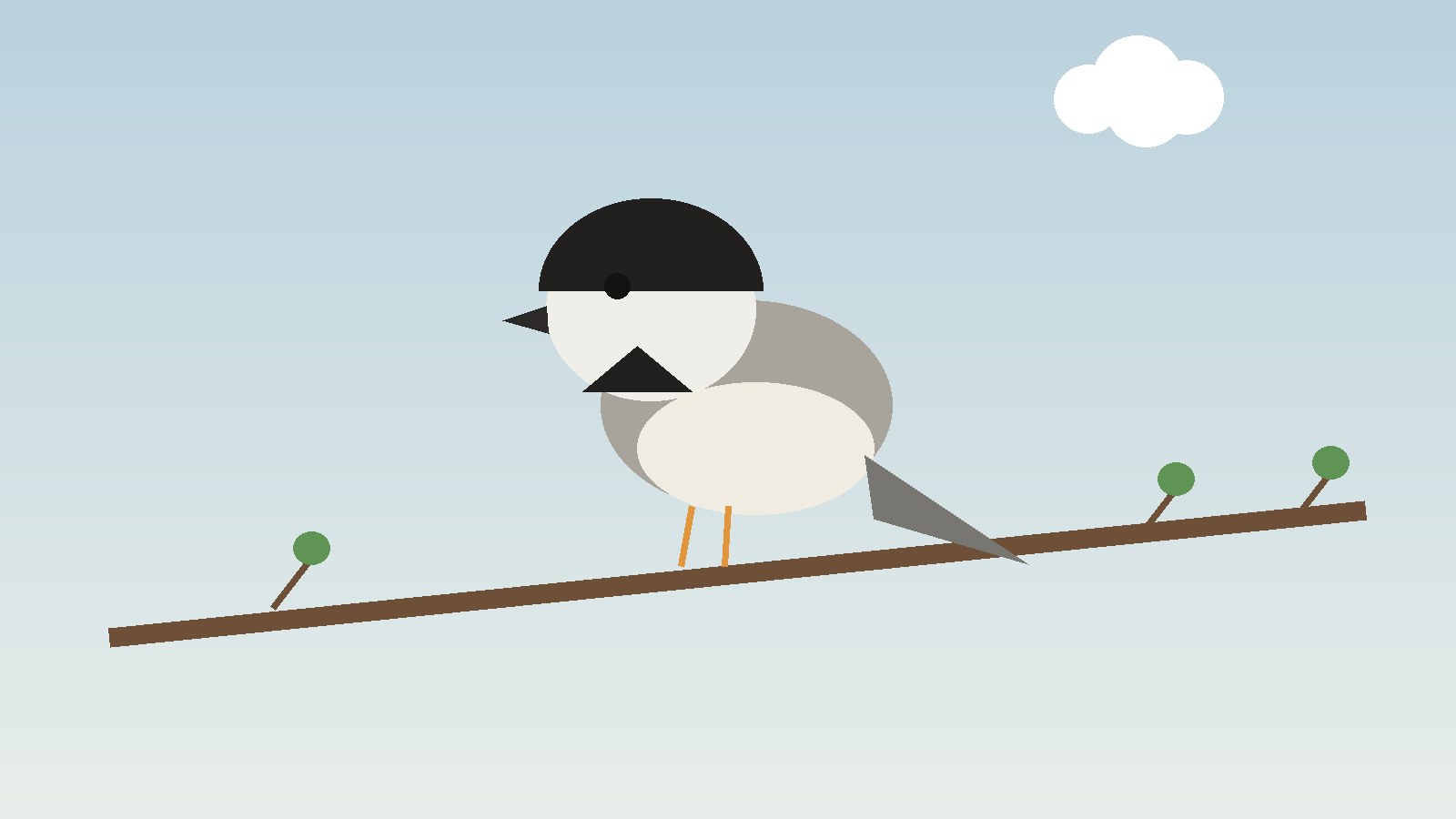
- The Black-capped Chickadee is a common starting point. It is a small, round bird with a black cap and bib, white cheeks, and a gray back, and it visits feeders readily.
- The Black-and-white Warbler is the striped one. Its black and white stripes cover the whole body, and it creeps along tree trunks and branches probing bark for insects.
- Downy and Hairy Woodpeckers look almost alike. Check the bill first: the Downy has a short bill, while the Hairy has a bill about as long as its head.
- The White-breasted Nuthatch climbs headfirst down trees. It has a black cap, white face and breast, a blue gray back, and a very short tail.
- The Dark-eyed Junco is a winter ground bird in much of the United States. The slate colored form is smooth gray above with a white belly and white outer tail feathers that flash in flight.
- The Black-billed Magpie is hard to miss. It is a crow sized bird with a very long tail, black and white plumage, and blue green iridescence on the wings and tail in good light.
- The Common Loon wears its boldest pattern only in summer. Breeding adults have a black head, a black and white striped collar, and a checkerboard back, while winter birds are plain gray above and white below.
- Black and white plumage serves several purposes. It can camouflage a bird, break up its outline, signal identity, and resist wear where feathers carry dark pigment.
- Never identify a bird from color alone. Pattern, size, bill shape, habitat, season, and sound all matter.
Introduction
A flash of black and white at a feeder, on a tree trunk, or across a lake can stop a walk in its tracks. The pattern is striking, but it is also confusing, because dozens of unrelated birds wear some version of it. A small bird with a black cap at a feeder, a striped bird creeping up a tree trunk, and a large black and white bird on a northern lake may have almost nothing in common except their colors.
This guide sorts that confusion out. It covers the black and white birds people in North America are most likely to see, explains how to tell similar species apart, and explains why the pattern shows up again and again in very different birds. Use size first, then place, then pattern, then behavior, and most sightings will narrow to one or two likely species.
What “Black and White Birds” Actually Means
When people search for black and white birds, they usually mean one of several different patterns, not a single look.
Capped birds have a dark cap on an otherwise pale head. The Black-capped Chickadee and the White-breasted Nuthatch both fit here, and telling them apart depends on body shape, tail length, and behavior rather than on the cap alone.
Striped birds carry black and white stripes across the body. The Black-and-white Warbler is a clear example in North American woodlands.
Pied birds have large, clean blocks of black and white. The Black-billed Magpie is pied, with a black head and wings, a white belly, and white patches in the wings that flash in flight.
Countershaded birds are dark above and light below. Many waterbirds and shorebirds fit this pattern. From below, the pale belly blends against bright sky or surface light, while from above the dark back blends against dark water. The Common Loon in breeding plumage adds bold patterning on top of this basic plan, with its striped collar and spotted back.
One caution matters. Many birds that look black and white at a glance are really black and white plus something else: male Downy and Hairy Woodpeckers have a small red patch on the back of the head, the White-breasted Nuthatch often shows rusty patches near the rear, and the Black-billed Magpie shows blue green iridescence in good light. Each detail is a useful clue if you notice it.
How to Identify a Black and White Bird in Four Steps
Field guides often start with color, but color is the least reliable clue on its own. Work through these four questions in order.
1. How big is it, and what shape is it? Compare the bird to birds you know well: sparrow sized, robin sized, or crow sized. Note the bill too. A short, thin bill, a long pointed bill, and a heavy dagger like bill point to very different birds. A very long tail, a very short tail, and a long tail with white outer feathers are each strong clues.
2. Where is it, and what is it doing? A bird at a feeder, a bird creeping on bark, a bird on the ground under shrubs, and a bird sitting low on open water live in different worlds. Behavior narrows the list fast. A bird that climbs down a trunk headfirst is almost certainly a nuthatch. A bird that creeps along branches probing bark like a nuthatch, but is striped all over, is likely a Black-and-white Warbler.
3. Where exactly is the black, and where exactly is the white? Is the black a cap, a bib, a back, a set of stripes, or a band across the chest? Is the white on the cheeks, the belly, the wing patches, or the outer tail feathers?
4. What season is it, and what do you hear? Season changes plumage in some species and changes location in others. The Common Loon looks like a different bird in winter, and the Black-and-white Warbler breeds in forests across central and eastern North America, so timing and place matter. Sound helps too: the chickadee gives its namesake chick-a-dee call, the warbler a thin, squeaky song, and the nuthatch a loud, nasal call.
If you still cannot decide, note the four answers and check them against a field guide or identification app later. A note that reads “sparrow sized, black cap, white cheeks, at a feeder, chick-a-dee call” is far more useful than a note that reads “black and white bird.”
Backyard and Woodland Birds You Will See First
Black-capped Chickadee
The Black-capped Chickadee is small and compact, with a short neck, a large head, and a long, narrow tail. Cornell Lab of Ornithology describes the adult as having a black cap and bib that contrast with white cheeks, a gray back and wings, and light buffy underparts.
Chickadees are curious and active, and often heard before they are seen. Their chick-a-dee call gives them their name, and when agitated they may shorten it to a string of “dee” notes. Do not confuse them with the White-breasted Nuthatch, which also has a black cap and white cheeks: the chickadee has a longer tail and perches upright, while the nuthatch has almost no neck, a very short tail, and clings to trunks.
White-breasted Nuthatch
The White-breasted Nuthatch is compact, with almost no neck, a very short tail, and a long, sharply pointed bill. Cornell Lab of Ornithology notes its blue gray back, stark white cheeks, and black cap, with a white belly and rusty spots near the rear. Females look like males but have a grayer cap. It measures about 5.1 to 5.5 inches long, sparrow sized or smaller.
The behavior gives it away. Nuthatches cling to tree bark and move down, up, and around trunks, often headfirst downward, with the head craned upward and backward. Few other common backyard birds move quite like this.
Cornell Lab of Ornithology describes the species as a common feeder bird with clean black, gray, and white markings and an appetite for insects and large, meaty seeds, and its loud, nasal, yammering call often gives it away. If the bird on your trunk is upside down, it is very likely a nuthatch, even before you check the plumage.
Downy Woodpecker and Hairy Woodpecker
Downy and Hairy Woodpeckers are the classic pair that trips up new birdwatchers, because both are black and white woodpeckers with spotted wings, a white back stripe, and, in males, a red patch on the back of the head. Cornell Lab of Ornithology Bird Academy guidance makes the separation simple: check the bill.
The Downy Woodpecker is the smaller of the two, usually about 6.5 inches long, with a bill shorter than its head. The Hairy Woodpecker is larger, usually about 9.25 inches long, around the size of a robin, with a bill about as long as its head.
A second clue is the outer tail feathers. Downy Woodpeckers typically show black barring on the white outer tail feathers, visible from below. Most eastern Hairy Woodpeckers have completely white outer tail feathers, though some Pacific and Newfoundland birds show barring too, so this clue works best combined with bill and size.
Both species hitch up trunks, probe bark for insects, drum on wood, and visit suet feeders. A small black and white woodpecker at a feeder with a tiny bill points to Downy first; a robin sized bird with a long, dagger like bill points to Hairy first.
Dark-eyed Junco
The Dark-eyed Junco is a medium sized sparrow with a rounded head, a short, stout bill, and a fairly long, conspicuous tail. Cornell Lab of Ornithology describes the species as neat and crisply marked, with bright white outer tail feathers that it habitually flashes in flight.
Plumage varies a great deal by region, which is why juncos confuse people. The widespread slate colored form of the eastern United States and most of Canada is smooth gray above with a white belly. The Oregon form of the western United States has a dark hood, a warm brown back, and rufous flanks. Despite the variation, the combination of a dark head and upperparts, a pale belly, a pale bill, and white outer tail feathers holds across forms.
Juncos feed mostly on the ground, often in loose flocks, and visit feeders or the ground beneath them, especially in winter. Cornell Lab of Ornithology notes that they flit about forest floors in western mountains and Canada and then flood the rest of North America for winter. A flock of dark gray birds with white bellies scratching on the ground in cold months is very likely juncos, even if individuals look slightly different.
Black-and-white Warbler
The Black-and-white Warbler is unmistakable once you know what to look for. Cornell Lab of Ornithology calls it a crisply striped bundle of black and white feathers that creeps along tree trunks and branches like a nimble nuthatch, probing the bark for insects with a slightly downcurved bill. Its scientific name is Mniotilta varia, and it belongs to the warbler family.
Unlike most warblers, which glean insects from leaves, this species works bark. Watch for a small striped bird creeping fairly rapidly on, around, and under larger branches of taller trees, sometimes spiraling around a trunk.
It is also one of the earliest arriving migrant warblers in spring, and it builds its cup shaped nest on the ground, in leaf litter at the base of a tree, rock, stump, or fallen log. That ground nesting habit is unusual for a bird you only ever see in trees, and a good reason to leave leaf litter undisturbed in wooded areas.
Larger Black and White Birds: The Black-billed Magpie
If the bird is crow sized with a tail that seems far too long for its body, you may be looking at a Black-billed Magpie. Cornell Lab of Ornithology describes it as a jaylike bird with a long tail and a heavy bill that appears entirely black and white, but in good light the wings and tail shine with blue green iridescence. It measures about 17.7 to 23.6 inches long, larger than a jay but smaller than a raven.
In flight, magpies show white primaries and white bars down the back, with a long diamond shaped tail trailing behind. Their wingbeats are deep and rowing, interspersed with short glides. On the ground they walk and hop with confidence, and they eat a wide ranging diet, which is why they turn up in open country, ranchland, forest edges, and towns across the western interior of North America.
Magpies are corvids, the family that includes crows and jays, and they are vocal, social, and conspicuous, often traveling in small groups or family parties. A bird that looks black and white from a distance but flashes green and blue in sunlight, with a tail longer than its body seems to justify, is almost certainly a magpie rather than a crow or a jay.
Waterbirds in Black and White: The Common Loon
The Common Loon is a striking black and white waterbird of northern North America, and also an easy bird to misidentify across seasons, because its plumage changes completely.
In breeding plumage, Cornell Lab of Ornithology describes a long bodied waterbird with a hefty bill that sits low in the water, with a black and white striped collar and a checkerboard back. The bird is large, about 26.0 to 35.8 inches long, larger and longer bodied than a Mallard, and it dives powerfully for fish.
In winter, the same bird is plain gray above and white below, with a paler partial collar on the neck. A gray and white loon in winter is still a loon: look for the large size, the heavy dagger like bill, the flat head, and feet that trail behind in flight.
Loons breed on clear lakes across Canada and the northern United States, and they are less suited to land, typically coming ashore only to nest. If you see a large black and white bird sitting low on a northern lake in summer, with a striped collar and a spotted back, you are very likely looking at a breeding Common Loon. If you see a large gray and white diving bird off the coast in winter with a heavy bill, check for a loon before assuming it is a duck or a grebe.
Other waterbirds also wear black and white, and countershading explains why: a dark back and a pale belly help a swimming or diving bird blend in from both above and below. That is why so many unrelated seabirds, shorebirds, and diving birds share the same basic plan. For waterbirds, use the same four step treatment: size, bill shape, back pattern, and season matter more than the simple fact of black and white.
Small Black and White Birds: A Quick Sorting Guide
Many searches for black and white birds are really searches for one small bird seen briefly. This short guide sorts the most likely small candidates by the clue you probably noticed first.
If the bird was tiny, round, and at a feeder with a black cap and white cheeks, start with the Black-capped Chickadee. If the bird was on a trunk, upside down, with a black cap and a white breast, start with the White-breasted Nuthatch. If the bird was creeping on bark and striped all over like a zebra, start with the Black-and-white Warbler. If the bird was on the ground in winter, dark above and white below, with white tail feathers flashing as it flew, start with the Dark-eyed Junco.
Why So Many Birds Are Black and White
Black and white plumage is not one adaptation. It is several different solutions that happen to use the same two colors, and different species use it for different reasons.
Countershading is the most widespread explanation. Stanford University’s Birds of Stanford essays describe countershading as a pattern in which a bird is darkest along the back and gradually lighter until the belly is pure white. The pattern tends to eliminate a sharply defined shadow, because the bird absorbs the most light above, where light is brightest, and reflects the most light below, where light is dimmest. For swimming and diving birds, the same logic works from two directions: dark above blends with dark water when seen from above, and pale below blends with bright sky or surface light when seen from below.
Disruptive coloration works differently. Instead of blending in, bold black and white patterns break up the outline of the bird, making it harder to see against a varied background. The same Stanford essays use the Killdeer as an example: alternating bands of white and black on the head and neck break up the outline and make the bird more difficult to see than a uniformly light or dark bird would be.
Feather wear is a quieter reason for dark markings. Pigmented feathers are more resistant to wear than unpigmented feathers, and wingtips take more wear than feathers nearer the base of the wing. Stanford’s essays note that this is thought to be the reason the wingtips of many mostly white birds, such as many gulls, terns, pelicans, and gannets, are dark.
Signaling and recognition is another function. Bold head patterns, wing patches, and tail flashes help birds recognize members of their own species and hold flocks together.
Structural color explains why some “black” birds shine green or blue. Blue and iridescent colors in birds are not produced by pigments but by the microscopic structure of the feather, which reflects some wavelengths and absorbs others. That is why a magpie can look plain black and white in shade and flash blue green in sunlight: the color changes with the angle of light, not with the bird.
Mistakes That Cause Most Misidentifications
Mistake 1: Calling every small black capped bird a chickadee. Chickadees, nuthatches, and some sparrows all wear dark caps. Check tail length, body shape, and behavior. A bird going down a trunk headfirst is a nuthatch, not a chickadee, whatever the cap looks like.
Mistake 2: Calling every black and white woodpecker a Downy. Downy and Hairy Woodpeckers are nearly identical in pattern. Always check bill length against head length, and overall size when you can. A long, heavy bill on a robin sized bird points to Hairy, even if the bird is at a feeder where Downies are more expected.
Mistake 3: Expecting the loon to look the same all year. A winter loon is gray and white, not black and white. If you rule out loon because the bird is not boldly patterned, you will miss most winter sightings. Check size, bill, and diving behavior instead.
Mistake 4: Trusting a single photo. Lighting changes black and white dramatically: backlit birds look darker, sunlit birds look washed out, and iridescence appears and disappears with angle. Combine plumage with size, shape, place, season, and sound, and leave a brief sighting unidentified rather than forcing it onto a species.
Watching Black and White Birds Responsibly
Black and white birds are often easy to approach, which makes responsible watching important. Keep a respectful distance, especially around nests, and avoid using recorded calls repeatedly to lure birds, which can stress them and draw predators.
At feeders, keep food fresh and feeders clean, and place feeders where birds have nearby cover but predators cannot ambush them easily. A feeder that attracts chickadees, nuthatches, woodpeckers, and juncos teaches their shapes and habits fast, because you see the same species repeatedly.
FAQ
What is the most common black and white bird?
There is no single answer that holds everywhere, because it depends on region, habitat, and season. In much of North America, the Black-capped Chickadee, the White-breasted Nuthatch, the Downy Woodpecker, and the Dark-eyed Junco are among the birds people see most often, each common in its own habitat.
What small black and white bird is at my feeder?
In many yards, the answer is a Black-capped Chickadee, a White-breasted Nuthatch, or a Downy Woodpecker. Check the clues in order: a round bird with a black cap and white cheeks that darts in and out is likely a chickadee; a bird clinging to a trunk or feeder upside down is likely a nuthatch; a bird with a white back stripe and spotted wings that hitches up wood is likely a woodpecker.
What black and white bird creeps up trees?
Two birds fit this description, and the difference is the pattern. A striped bird creeping along trunks and branches is likely a Black-and-white Warbler. A bird with a black cap and white breast that climbs down trunks headfirst is likely a White-breasted Nuthatch.
What black and white bird has a long tail?
The Black-billed Magpie has a very long, diamond shaped tail that is often longer than seems reasonable for its body. In flight it trails behind like a rudder, and the white wing patches flash with each wingbeat.
Is a black and white bird on a lake a loon?
It may be, especially in summer on a northern lake, if the bird is large, sits low in the water, has a heavy bill, and shows a striped collar and a spotted back. In winter, a loon looks gray and white instead, so color alone cannot rule it in or out. Check size, bill shape, diving behavior, and location, and remember that ducks, grebes, and other waterbirds also wear black and white or gray and white patterns.
Do black and white birds change color in winter?
Some do, and the Common Loon is the clearest example in this guide, trading bold breeding plumage for plain gray and white winter plumage. Others, like chickadees and nuthatches, keep essentially the same pattern year round, though individual feathers wear and freshen with molt.
How can I attract black and white birds to my yard?
Offer the foods and cover these birds use naturally: sunflower seeds and suet for chickadees, nuthatches, and woodpeckers, ground scattered seed for juncos, and native trees and shrubs that support insects for warblers. Keep feeders clean, provide nearby cover, and leave some leaf litter and dead wood for bark foragers and ground nesters.
Are black and white birds rare?
Most species in this guide are widespread and regularly seen in their habitats, not rarities. Rarity depends on place: a Black-billed Magpie is expected in the western interior but not in the eastern United States, and a Common Loon is expected on northern lakes in summer but not on a southern feeder.
What should I do if I cannot identify a black and white bird?
Note size, shape, bill, exact pattern, habitat, behavior, date, and any sound, and compare those notes to a field guide or identification app later. Leaving a brief sighting unidentified is better than recording a confident but wrong identification.
Sources & references
- Cornell Lab of Ornithology, All About Birds, "Black-capped Chickadee Identification" (black cap and bib, white cheeks, gray back and wings, light buffy underparts; length 4.7 to 5.9 inches; chick-a-dee and "dee" calls).
- Cornell Lab of Ornithology, All About Birds, "White-breasted Nuthatch Identification" (blue gray back, white cheeks, black cap, white belly, rusty spots near the rear; females with a grayer cap; length 5.1 to 5.5 inches; upside down perching on trunks).
- Cornell Lab of Ornithology, All About Birds, "White-breasted Nuthatch Overview" (common feeder bird with clean black, gray, and white markings; appetite for insects and large, meaty seeds; loud, nasal call).
- Cornell Lab of Ornithology, Bird Academy, "Downy and Hairy Woodpeckers" (Downy usually about 6.5 inches with a bill shorter than its head; Hairy usually about 9.25 inches, around robin size, with a bill about as long as its head; outer tail feather barring differences).
- Cornell Lab of Ornithology, All About Birds, "Dark-eyed Junco Identification" (medium sized sparrow with rounded head, short stout bill, fairly long tail; slate colored form smooth gray above; Oregon form with dark hood, warm brown back, and rufous flanks; white outer tail feathers).
- Cornell Lab of Ornithology, All About Birds, "Dark-eyed Junco Overview" (crisp markings, white outer tail feathers flashed in flight; birds flit about forest floors in western mountains and Canada, then flood the rest of North America for winter).
- Cornell Lab of Ornithology, All About Birds, "Black-and-white Warbler Overview" (crisply striped black and white feathers; creeps along trunks and branches like a nuthatch probing bark for insects; thin, squeaky song; one of the earliest arriving migrant warblers; ground nest in leaf litter in forests across central and eastern North America).
- Cornell Lab of Ornithology, Birds of the World, "Black-and-white Warbler" (nest placed at the base of a tree, rock, stump, or fallen log).
- Cornell Lab of Ornithology, All About Birds, "Black-billed Magpie Identification" (jaylike bird with long tail and heavy bill; appears entirely black and white but wings and tail shine blue green in good light; white primaries and white bars down the back in flight; length 17.7 to 23.6 inches).
- Cornell Lab of Ornithology, All About Birds, "Common Loon Identification" (breeding birds with black and white striped collar and checkerboard back; black head and bill with white breast; winter birds plain gray above and white below with a paler partial collar; breeds on clear lakes across Canada and the northern United States; length 26.0 to 35.8 inches).
- Stanford University, Birds of Stanford, "Color of Birds" essay (countershading: darkest along the back, gradually lighter to a pure white belly, eliminating a sharply defined shadow; disruptive coloration breaking up the outline, illustrated by the Killdeer; pigmented feathers more resistant to wear, offered as the reason wingtips of many mostly white birds are dark; blue and iridescent colors produced by feather structure, not pigment).


