Short answer
- Pick one theme for the whole group, then let each person choose a role inside it. One shared color, hat, or prop does more work than matching outfits.
- The fastest themes are color crews, skeletons, ghosts, pirates, witches, and food groups, because they use plain clothes, face paint, and paper or cardboard props.
- For last minute halloween costumes family plans, assign roles by age and comfort: babies and toddlers get soft, warm, simple versions, while older kids and adults carry the props and makeup.
- For last minute halloween costumes group plans, choose a theme that survives a missing person. A color crew or a set of weather symbols still reads clearly with three people or twelve.
- Before you leave, check fit, vision, and visibility: hems that clear the ground, eye holes or face paint that leave full vision, and reflective tape or a flashlight for every child out after dark.
- Keep props soft and flexible, and check treats at home before anyone eats them.
It is the afternoon before the party, or the morning of trick or treating, and the group chat has just agreed that everyone will dress up after all. Nobody has a plan, nobody wants to spend the evening in separate stores, and at least one person will change their mind twice. This guide is built for that exact moment.
The trick to a group costume at the last minute is to pick one idea that scales. A good theme lets each person build a version from clothes they already own, uses one repeated color or prop to tie everyone together, and still works if one person drops out or two extra friends join. That is why the best last minute halloween costumes family groups choose are rarely the most detailed ones. They are the most readable ones: a stranger should understand the theme from across the street, in the dark, in about three seconds.
Why One Theme Beats Five Separate Costumes
One shared idea keeps a group looking like a group. Start with what the group already owns. Open closets and look for three things: a strong color story, a repeated item, and a simple prop. A strong color story might be all black with white faces, all white with colored hats, or one different bright color per person. A repeated item might be matching hats, matching capes made from old sheets, or matching aprons. A simple prop might be a cardboard sign, a paper crown, or a broom made from a stick and straw.
The 30 Minute Rule for a Group Costume
Last minute does not mean rushed and miserable. It means honest about time. Use this rule: if a costume cannot be finished in about 30 minutes per person, with materials already in the house or in one quick trip, it is not a last minute costume. Save it for next year.
Work in this order. First, sort clothes by color. Second, make the shared identifier, which is the one thing that says “we belong together.” Third, add face paint or a hat. Fourth, add one prop per person at most. Props multiply clutter, slow down walking, and get lost on the street. One good prop beats three half finished ones.
Pick by Group Size: Trios, Families of Four, and Big Groups
Trios
Three people are the sweet spot for last minute costumes. The group is small enough to agree quickly and large enough to read as a set. Good trio ideas include three weather symbols (sun, cloud, and rain), three traffic lights (red, yellow, and green), three meals of the day (breakfast, lunch, and dinner, shown with a paper plate prop each), and three witches with different colored hats. Each person wears a plain outfit in one color and carries or wears one clear symbol.
Families of four
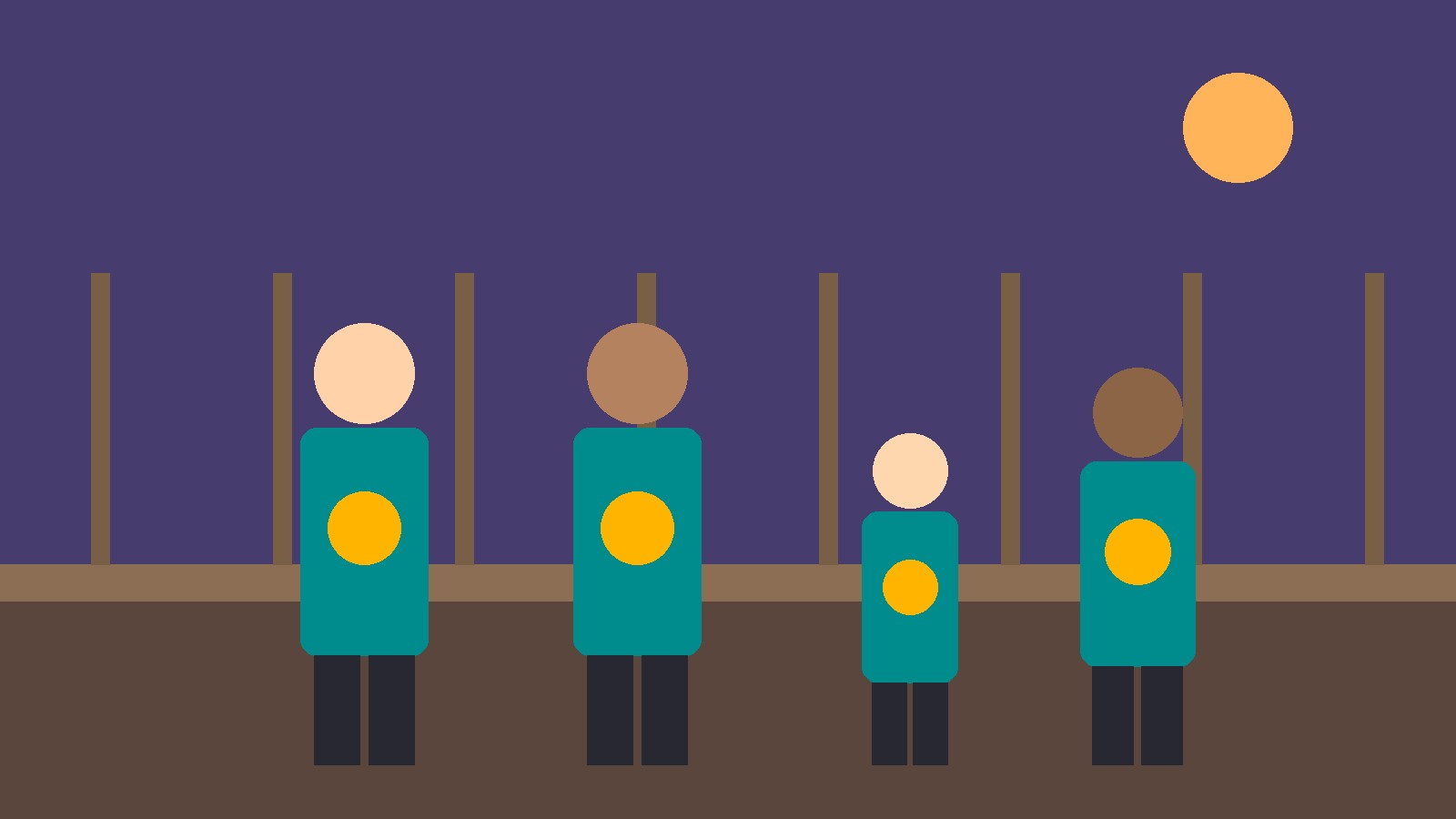
Four is a classic family size, and it suits sets of four: four seasons, four suits from a deck of cards, four crayon colors, four pieces of a breakfast table, or four monsters in one haunted house. The seasons idea is especially forgiving for last minute halloween costumes family planning, because each season is just a color plus one accessory. Spring wears green with paper flowers, summer wears yellow with sunglasses, autumn wears orange with paper leaves, and winter wears white with a scarf. Nobody needs a new outfit.
Groups of five to eight
At this size, repetition is your friend. Color crews, skeletons, ghosts, pirates, and witches all scale well, because adding another person just means adding another color, another skeleton face, or another pirate hat. A group of friends dressed as a box of crayons, a set of colored candies, or a rainbow works the same way: each person takes one color, and the group reads as one idea.
Groups of nine or more
Big groups need the simplest possible rule. Anything that requires each person to learn a character or build a different costume will collapse. Choose themes where the instruction fits in one sentence: everyone wears black and a white skeleton face, everyone wears a different bright color with a paper letter, everyone wears a striped shirt and a paper sailor hat, or everyone wears white with a different colored ghost face.
Ten Last Minute Themes That Actually Work
1. Color crew
Shared identifier: one solid color per person. Each person wears a plain shirt and pants in their color, or a plain shirt with a colored paper circle on the chest. The group can be crayons, colored candies, balloons, or simply a rainbow. Add a paper point hat for crayons, or a white letter for candies. This is the fastest of all last minute halloween costumes group ideas, because the only decision is who gets which color.
2. Skeletons
Shared identifier: black clothes and a white face. Each person wears black from head to toe and paints a skull face with white and black face paint, or wears a paper skull mask with large eye holes. Add white gloves and white tape lines on the sleeves to suggest bones. Skeletons work for any age, any group size, and any weather, because black layers are easy to add for warmth.
3. Ghosts
Shared identifier: white sheets or white clothes with dark eyes. The classic sheet version needs an old white sheet, eye holes cut large enough for full vision, and a way to keep the sheet from dragging on the ground. A safer modern version is white clothes, white face paint, and dark eye makeup, which keeps hands free and feet visible. A group of ghosts in different sizes, with one person carrying a paper lantern, makes a lovely family photo.
4. Pirates
Shared identifier: striped shirts, bandanas, and paper hats. Each person wears stripes or dark clothes, ties a bandana or scarf on their head, and carries a soft prop, such as a cardboard sword or a paper telescope. One person can be the captain with a paper hat and a coat, and the rest are the crew. Pirates are forgiving, because no two pirates need to match exactly, and a pet in a bandana fits right in as the ship mascot, if the pet is comfortable wearing it.
5. Witches and wizards
Shared identifier: a pointed hat and a dark cloak or long coat. Each person wears dark clothes, adds a paper or felt pointed hat, and carries a broom or a wand made from a stick. Give each witch a different hat color or a different colored scarf so individuals stay visible in photos. This theme suits mixed ages well, because a toddler in a small hat and a dark outfit reads as a little witch without any complicated pieces.
6. Breakfast table
Shared identifier: a paper plate or food symbol per person. One person is toast, with a brown cardboard rectangle worn over a plain shirt. One is an egg, with a white oval and a yellow circle. One is bacon, with red and pink paper strips. One is a glass of juice, with an orange shirt and a paper straw. The theme is funny, bright, and instantly clear, and it works as a family set or as a friend group set.
7. Garden group
Shared identifier: green and brown clothes with paper flowers or leaves. People can be flowers in different colors, bees in yellow and black stripes, a gardener with a hat and a watering can, and a sunflower with a yellow paper petal collar. This theme is gentle and cheerful for younger children, and it photographs beautifully in daylight before trick or treating begins.
8. Weather group
Shared identifier: one weather symbol per person. Sun wears yellow with paper rays, cloud wears white with cotton or paper puffs, rain wears blue with paper drops, snow wears white with paper flakes, and wind wears gray with paper swirls. Weather works for trios, families, and classrooms, because the symbols are simple and every child can explain their own role.
9. Playing cards
Shared identifier: a large paper card on the chest. Each person wears a plain outfit in red or black and pins on a big paper card showing a suit symbol and a letter or number. Hearts, diamonds, clubs, and spades are easy to draw, and the group can add a king, queen, or joker with a paper crown. This theme scales from four people to a full deck, and it still works if only half the deck shows up.
10. Monsters in one haunted house
Shared identifier: dark clothes plus one monster feature each. One person is a vampire with a cape and drawn fangs, one is a mummy wrapped in white strips of old cloth or paper, one is a witch with a hat, one is a ghost in white, and one is a mad scientist with a white coat and wild hair. The haunted house frame is what makes it a group costume rather than five separate monsters. Announce it that way, with a shared sign or a shared walk to the door, and the group reads as one household of monsters.
Funny, Scary, and Cute: Choosing the Right Tone
A group costume has a tone, and the tone should match the event. A funny theme that delights at a party can feel out of place on a quiet street of young trick or treaters, and a scary theme that thrills teenagers can frighten toddlers in the same group. Choose the tone first, then the theme.
Funny group costumes work by surprise or by pun. The breakfast table, the garden group, and a group dressed as a traffic jam (cars made from cardboard boxes, if you have time, or simply people in car colors with paper wheels) all land as funny because the idea is unexpected and harmless. Keep the joke visual. A pun that needs explaining at every door will wear thin by the third house. If a stranger cannot get the joke in a glance, simplify it.
Scary group costumes work by repetition and darkness. A group of identical skeletons, ghosts, or vampires walking together is far scarier than one elaborate monster, because the repetition suggests something organized and unstoppable. Keep scary makeup and masks within the comfort of the youngest person in the group, and agree on a signal for anyone who wants to step out of character. Scary should be a choice for the whole group, not a surprise imposed on one child.
Cute group costumes work by softness and scale. Baby animals, flowers, bees, and storybook villagers all read as cute because the colors are gentle and the shapes are round. For cute themes, keep props light and faces visible. A cute costume that hides a small child behind a big mask loses the very thing that makes it charming, which is the child’s face.
Last Minute Halloween Costumes Family Plans by Age
Babies and toddlers
For babies, comfort and warmth come before cleverness. Choose a soft, one piece outfit in the theme color, such as a yellow sleeper for a chick or a sun, a white sleeper for a ghost or a cloud, or a green sleeper for a frog or a leaf. Add a soft hat or a paper symbol pinned where the baby cannot grab it, and skip face paint on babies entirely. Keep the baby in a stroller or carrier, and dress the stroller as part of the theme when it helps: a stroller draped in green can be a garden bed, and a stroller with paper flames can be a campfire, as long as nothing blocks the wheels, the brakes, or the baby’s air.
For toddlers, keep costumes short, soft, and easy to remove for bathroom breaks and car seats. A toddler pirate needs a soft hat, not a stiff one. A toddler ghost needs white clothes, not a long sheet. Test the costume by having the child walk, sit, and climb stairs in it before you leave the house.
Teenagers
Teenagers often want a costume that is cool, funny, or ironic rather than cute, and they may resist matching the family exactly. Give teenagers a role with more independence inside the theme, such as the captain of the pirate crew, the lead skeleton, or the weather presenter who announces the forecast at each door. A shared color or hat keeps them visibly part of the group without making them feel dressed by someone else. If a teenager wants to go with friends instead of family, a theme that works in both groups, such as skeletons or a color crew, lets them switch groups without changing costume.
Adults and grandparents
Adults usually carry the logistics: the bags, the flashlights, the spare supplies, and the phone. Build adult costumes around comfort and pockets. A pirate captain with a coat that has pockets beats a costume with nowhere to put keys. Grandparents who join the walk need warm layers, sturdy shoes, and a costume that does not require bending or balancing. A witch with a warm cloak, a gardener with a hat, or a skeleton in a warm black outfit all work well, because the theme is in the hat and face, not in uncomfortable clothing.
A Plan for Tonight: 15 Minutes, 30 Minutes, or One Hour
| Time you have | What to do first | Shared identifier | Best themes |
|---|---|---|---|
| 15 minutes | Sort shirts by color, hand out one color per person | Color | Color crew, ghosts in white clothes, skeletons in black clothes |
| 30 minutes | Add face paint and one paper symbol per person | Color plus face or symbol | Weather group, playing cards, garden group |
| One hour | Add hats, one prop per person, and a group sign or photo plan | Color, face, hat, and prop | Pirates, witches, breakfast table, haunted house monsters |
For the 15 minute version, do not attempt hats or props. Color alone is enough, and a group photo in matching colors still looks intentional. For the 30 minute version, make all the paper symbols at one table, assembly line style: one person cuts, one person draws, one person tapes. For the one hour version, spend the first half hour on clothes and faces, and the second half hour on hats and props, then stop. A costume that is finished and comfortable beats a costume that is ambitious and half glued together.
Making It Work for Every Body and Every Budget
For sizes, choose themes based on color and symbols rather than fitted outfits. A color crew, a weather group, or a playing card group looks the same in every size, because the identifier is a color or a paper symbol, not a cut of clothing. Avoid themes that only work if everyone wears the same tight or short item.
For cold weather, plan layers as part of the costume. Black thermal layers under a skeleton costume, a warm coat under a witch cloak, and gloves in the theme color all keep the group comfortable without breaking the look. In warm weather, choose light fabrics and skip heavy capes and hats that trap heat.
For sensory needs, keep face paint optional, keep hats soft, and keep tags and seams comfortable. Offer a version of the costume without paint, without a hat, and without a prop, and treat that version as a full costume, not a lesser one. The shared color alone still marks the person as part of the group.
Safety Checks Before You Leave the House
Costume safety is part of costume planning, not an afterthought. The U.S. Consumer Product Safety Commission advises choosing costumes, masks, beards, and wigs labeled flame resistant, and notes that this label means the item resists burning and should extinguish quickly once removed from the ignition source, not that it cannot catch fire. The Commission also advises avoiding flimsy materials and outfits with big, baggy sleeves or billowing skirts, which can brush against candles and other flames. For a homemade group costume, that means keeping capes, sleeves, and skirts short and controlled, and keeping the group away from open flames, including candle lit pumpkins on doorsteps.
Visibility matters just as much. The Commission advises making costumes light and bright enough to be clearly visible to drivers, trimming costumes with reflective tape that glows in car headlights, and carrying flashlights to see and be seen. For a group, give every child a flashlight or a glow item, and add reflective tape to dark costumes and to treat bags. A group that is visible as a group is safer than a group where only the adult in front can be seen.
Fit and vision come next. The Commission advises that costumes should fit well and not drag on the ground, that children should wear well fitting, sturdy shoes, and that masks should fit securely with eye holes large enough for full vision. The American Academy of Pediatrics tips shared through Brenner Children’s Hospital make the same point in plainer form: use face paint and hats rather than masks, because loose fitting masks with small eye holes can obstruct a child’s vision, and secure hats tightly so they do not slip over children’s eyes. For a group costume, face paint is often the better shared identifier for exactly this reason: it keeps every face visible and every set of eyes unobstructed.
Props should be soft and flexible. The Commission advises that swords, knives, and similar accessories should be made of soft, flexible materials. Cardboard, foam, and paper props meet that standard. Skip anything sharp, heavy, or long enough to trip someone else in the group.
Face paint needs its own check. Use products made for skin, follow the label directions, and test a small patch ahead of time, so a reaction shows up at home. Stop if it irritates the skin. Keep paint away from the eyes unless the label says it is suitable near the eyes, and remove it gently following the label directions. Do not use craft paint, poster paint, or markers on skin.
Finally, agree on the trick or treating rules as a group before you leave. Stay together, use sidewalks where they exist, cross at corners, visit only homes that welcome visitors, and check all treats at home before anyone eats them. The Commission and the Academy tips both stress checking treats at home, and that check is easier when the whole group agrees to it in advance. If the group splits, agree on a meeting point and a return time, and make sure every child knows the name and phone number of an adult in the group.
Group Photos That Show the Theme
A group costume deserves one good photo, which needs almost no effort if the theme is clear. Take the photo before the walk, while faces are fresh and paint is neat, and again at the end if the group wants a comparison.
Frequently Asked Questions
What are the easiest last minute halloween costumes family groups can make?
The easiest options are color crews, skeletons, and ghosts, because they use clothes the family already owns plus one shared identifier. Last minute halloween costumes family plans work best when each person wears a plain outfit in an assigned color or in black or white, and the group adds face paint, a hat, or a paper symbol. Avoid themes that need a different purchased outfit for each person.
What are the best last minute halloween costumes group themes for friends?
Color crews, skeletons, pirates, witches, and weather groups scale best for friends, because they survive changes in group size. Last minute halloween costumes group themes should have a rule that fits in one sentence, such as everyone wears a different bright color, or everyone wears black with a white skeleton face. That rule lets late joiners fit in without a new plan.
How do we make a group costume work for three people?
Choose a trio with a clear set, such as three weather symbols, three traffic light colors, or three meals of the day. Give each person one large, simple symbol, and make sure the third person completes the set rather than repeating one of the first two roles. A trio works because it is small enough to agree quickly and large enough to read as a group.
How do we include a baby in a family costume without making it uncomfortable?
Dress the baby in a soft outfit in the theme color, skip face paint, and keep hats soft and easy to remove. Build the baby’s role around comfort and warmth, such as a chick, a cloud, a frog, or a flower, and dress the stroller or carrier as part of the theme only when it does not block wheels, brakes, or the baby’s air. The baby is part of the group through color, not through complicated pieces.
What if one person drops out at the last minute?
Pick a theme that still reads clearly with one fewer person. Color crews, skeletons, ghosts, pirates, and weather groups all survive a missing person, because the remaining people still show the pattern. Avoid themes that need an exact number, such as a set that only makes sense with four specific roles, unless you have a backup person ready to step into the missing role.
Can a group costume be funny, scary, or cute at the same time?
It can mix tones if the group agrees on it, but it works better to pick one main tone and let individuals vary inside it. For example, adults can be scarier monsters while children are cute monsters, as long as a shared color or hat ties them together. The key is consent: scary makeup or masks should never be imposed on a child who does not want them.
How do we stay safe trick or treating as a group after dark?
Use reflective tape on dark costumes and treat bags, carry a flashlight for every child, keep hems short and shoes sturdy, and prefer face paint over masks that block vision. Keep props soft and flexible, keep the group together, and check treats at home before eating. These steps follow the costume guidance from the U.S. Consumer Product Safety Commission and the American Academy of Pediatrics tips shared through Brenner Children’s Hospital.
Do we need to spend money to make a group costume look good?
No. The clearest group costumes use closets, paper, cardboard, tape, and face paint. Spend first on safety items that help the whole group, such as reflective tape and flashlights, and only then on decorative pieces. A clear theme, a shared color, and a group that is comfortable and visible will look better in photos than an expensive set of mismatched outfits.
Conclusion
A last minute group costume is not a lesser costume. It is a different kind of costume, one that values clarity over detail, comfort over complexity, and the group over any single outfit. Pick one theme, give everyone a role they can build in about 30 minutes, add a shared color or hat, and check fit, vision, and visibility. The group photo will show the theme, the walk will stay comfortable, and the evening will belong to the group, not to the costume crisis before it.
Sources & references
- U.S. Consumer Product Safety Commission, CPSC Urges Safety for Halloween Trick-or-Treaters: flame resistant labeling, bright and reflective costumes, reflective tape, flashlights, fit, sturdy shoes, mask eye holes, and soft flexible props.
- American Academy of Pediatrics tips shared through Brenner Children's Hospital and Atrium Health Wake Forest Baptist, Brenner Children's Hospital and the American Academy of Pediatrics Offer Safety Tips for Halloween: flame resistant material, short costumes, face paint and hats rather than masks, reflective tape, flashlights, flexible props, and checking treats at home.
- U.S. Food and Drug Administration, Makeup page and Halloween Food Safety Tips for Parents, opened: cosmetics must be safe when used as labeled or as customarily used, color additives must be approved by FDA, and face paints can cause rash, swollen eyelids, or other reaction. The face-paint checks in this article are general advice, not an FDA quotation, because the former novelty-makeup URL returns 404 and its text was not exposed in the opened Makeup page.


