Short answer
- St Moritz is a high Alpine resort town in the Upper Engadine valley in southeastern Switzerland, beside Lake St Moritz, at about 1,822 meters (5,978 feet). Go in winter, roughly December to April, for skiing, skating, and the social season at its peak, or in summer, roughly June to September, for hiking, lake sports, and a quieter, less formal resort. Most visitors arrive by train, about three hours from Zurich main station, or by car, about three hours from Zurich or Milan. Stay in St Moritz Dorf for the grand hotels, boutiques, and evening scene, or in St Moritz Bad, down by the lake and the mineral springs, for flatter, quieter ground. Dress smarter than you would in most ski resorts, especially for dinner, and budget honestly: St Moritz is one of the most expensive resorts in the Alps, and prices and opening dates change by season and by year, so confirm them directly before you commit.
Introduction
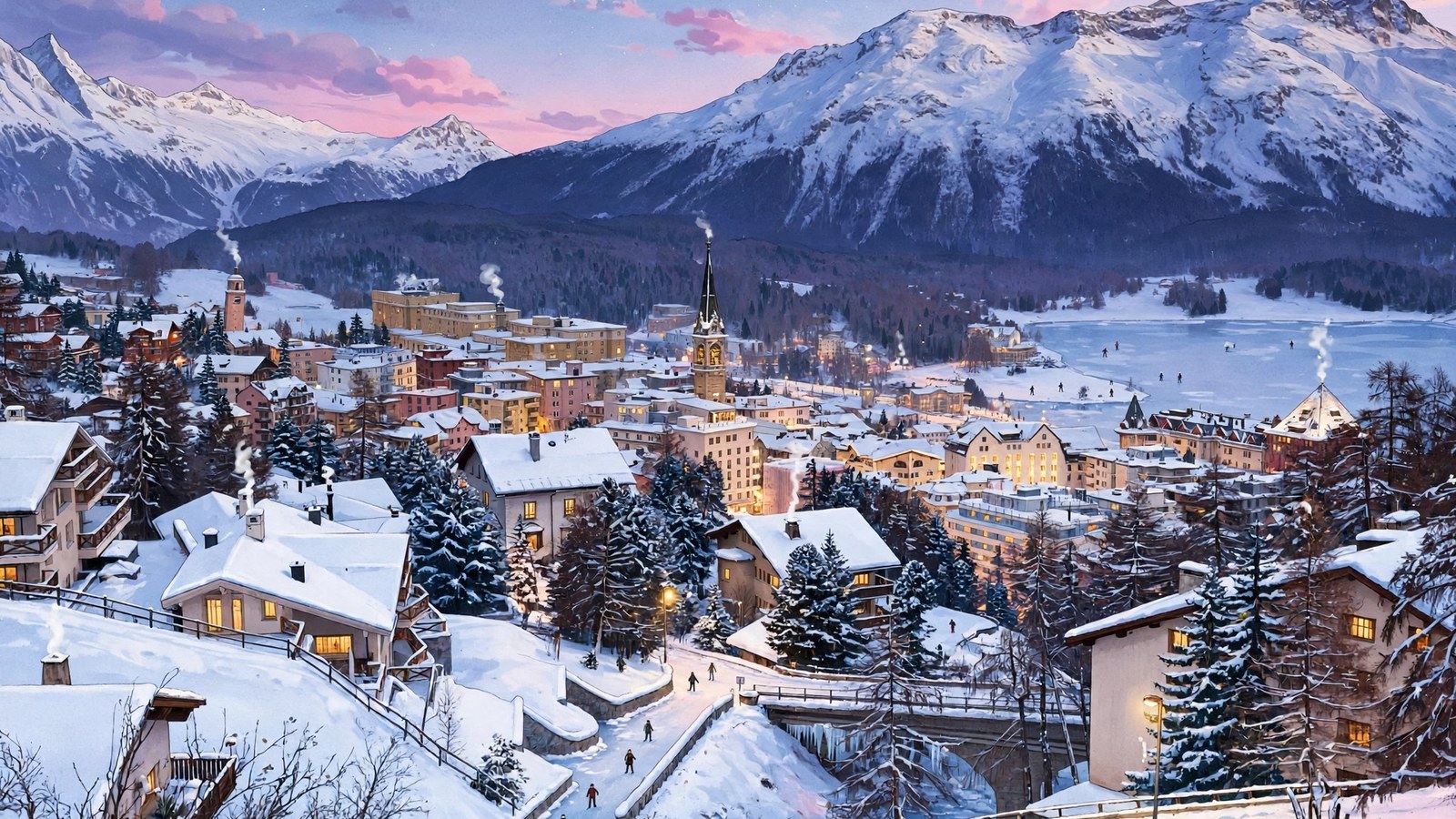
St Moritz is the grand old resort of the Swiss Alps: high, sunny, expensive, and unapologetically glamorous. It sits in the Upper Engadine valley in the canton of Graubünden, also called Grisons, on the shore of its own lake, at an elevation of about 1,822 meters (5,978 feet). It hosted the Winter Olympic Games in 1928 and again in 1948, and it has been a fashionable address for well over a century.
This guide covers where St Moritz is and when to go, how to get there, where to stay, what to do in winter and summer, what to wear, where to eat, and how it compares with Gstaad. It is written for first-time visitors and for travelers who want the classic St Moritz experience without wasting time on the wrong choices. Hotel depth is kept brief on purpose: the resort’s two palace hotels have their own companion guide, and this article points to it rather than repeating it.
Where St Moritz Is and When to Go
St Moritz lies in southeastern Switzerland, in the Romansh and German speaking Engadine valley, close to the Italian border. Encyclopaedia Britannica describes the town as made up of the Dorf (village), the Bad (spa), and the hamlets of Suvretta and Champfèr. The two parts most visitors deal with are St Moritz Dorf, the hillside village with the grand hotels and boutiques, and St Moritz Bad, down by the lake, where the mineral springs are. The lake itself, Lake St Moritz, freezes over in winter and becomes a venue for events on the ice.
The altitude, about 1,822 meters (5,978 feet), is part of the town’s character. The air is thin, dry, and bright, and the resort promotes a famously high number of sunny days, which is best read as a resort claim rather than a measured guarantee for your travel dates. If you arrive from low altitude, take the first day gently, drink water, and avoid overdoing alcohol on the first evening. Most visitors feel fine at this height, but a slow first day costs nothing and protects the rest of the trip.
St Moritz was a health resort before it was a ski resort. Britannica notes that it was originally known for its curative mineral springs and became a fashionable spa and summer resort in the 17th century. Visitors originally came to take the waters, and that spa heritage is still visible in the baths and wellness facilities of St Moritz Bad. It is also one reason the resort works well for travelers who do not ski: you can build a trip around walking, bathing, and eating rather than the slopes. The winter chapter came later. Britannica dates the resort’s development as a winter sports center to the late 19th century, and the Winter Olympic Games of 1928 and 1948 fixed that identity for good.
When to Go
Winter, December to April, is the classic season. Skiing, skating, winter walking, and the social calendar are all at their peak. Expect the highest prices and the busiest weekends, especially around Christmas, New Year, and February school holidays. If your trip depends on a particular hotel, restaurant, or panoramic train seat, this is the season to arrange it earliest.
Summer, June to September, means hiking, lake swimming, sailing, golf, and mountain biking, with long daylight hours and a quieter, more relaxed atmosphere. Many hotels close for a break between seasons, so check opening dates before you plan around a specific property, especially in May and November.
The shoulder seasons, May and November, are the quietest and usually the cheapest, but some hotels, restaurants, and lifts close between seasons, choice is narrower, and the weather is less predictable. These months suit travelers who prioritize quiet and value over a full program of open lifts and restaurants.
There is no single best time. Winter is for snow and glamour; summer is for walking, water, and space; the shoulders are for quiet, at the price of a thinner resort.
Getting There
St Moritz has no large airport of its own. The official resort arrival page confirms that Engadin Airport is in the nearby town of Samedan and serves private jets, charter flights, and air taxis. Most visitors arrive by train or car from Zurich or Milan, and for most first-time visitors the train is the better plan.
By Train
The train is the most enjoyable way to arrive, and the route is part of the experience. The official arrival page states that the Rhaetian Railway carries passengers to the Engadin from Chur via the Albula Pass, or from Tirano in Italy via the Bernina Pass, and that the Glacier Express and the Bernina Express travel along a UNESCO World Heritage railway line. UNESCO inscribed the Rhaetian Railway in the Albula and Bernina Landscapes on the World Heritage List in 2008, covering the Albula line and the Bernina line, with their tunnels, viaducts, and bridges. Spiral tunnels and high viaducts are part of both approaches, so the journey itself is sightseeing, not just transport.
The same official page gives the train journey from Zurich main station to St Moritz as three hours, usually with a change, at Chur or Landquart depending on the connection. Check timetables before you travel, as connections and journey times vary by season and time of day.
The southern approach is worth considering if you are combining St Moritz with Italy. The Rhaetian Railway runs from Tirano, just over the Italian border, up over the Bernina Pass to St Moritz, and the Bernina Express covers the same route as a named panoramic service. It is a slower way in, but for many visitors the most memorable part of the trip. Reserve seats on the named panoramic trains in advance in high season, as they can sell out.
By Car
The official arrival page states that driving takes around three hours from Zurich or Milan, and around four hours from Munich. Mountain passes can close or require winter equipment in bad weather, so check road conditions in winter and carry what local rules require. If you would rather not drive over the Alps, the same page confirms you can load your car onto a train through the Vereina Tunnel, a journey of about 18 minutes between the Prättigau and Sagliains in the Engadin.
Getting Around
Once you are there, you will probably not need a car. The resort is compact, local buses serve the villages and lift stations, many hotels run shuttles, and in winter ski buses connect the separate ski areas.
Where to Stay: An Overview
St Moritz offers everything from family run guesthouses to grand palace hotels, and where you stay shapes the trip. The two names everyone asks about are Badrutt’s Palace Hotel and the Kulm Hotel, the resort’s two great historic hotels. Both sit above the lake in St Moritz Dorf, both have 19th century roots, the Kulm dating to 1856 and Badrutt’s Palace opening in 1896, and both have deep links to the birth of Alpine winter tourism. They are compared in detail in the companion guide to the St Moritz palace hotels, so this guide deliberately does not repeat that comparison here.
Beyond the grand hotels, consider:
- Boutique and design hotels in St Moritz Dorf and Bad, often quieter and more contemporary in style.
- Guesthouses and apartments in St Moritz Bad, Celerina, or Pontresina, which suit families and longer stays and are usually better value.
- Wellness focused hotels built around the mineral springs, a good choice if spas matter more to you than nightlife.
Location within the resort matters too. St Moritz Dorf puts you close to the grand hotels, boutiques, and evening scene, but it is hillside and steep in places. St Moritz Bad is flatter, closer to the lake and the baths, and generally a little quieter. If anyone in your party has limited mobility, or you simply prefer level walking, Bad is worth considering. That single choice, hillside Dorf or level Bad, does more to shape a stay than most hotel features do.
Book early for peak winter weeks, and always check what is included: some rates include lift passes or local transport, others do not. Prices and availability change constantly, so treat any figure you see online as planning context only, and confirm directly with the hotel before you commit. This guide names no hotel as a recommendation and quotes no rates.
What to Do in Winter and Summer
Winter
St Moritz is a serious winter sports resort, not just a fashionable one. The ski areas around Corviglia, the mountain directly above the village, and Corvatsch and Diavolezza farther along the valley offer terrain for beginners through to experts, and the high altitude generally gives reliable snow through the season. The areas are separate mountains rather than one linked circuit, so a ski day normally stays on one of them, with buses or the railway carrying you to the next on another day. The resort’s Olympic history is still visible: it hosted the Winter Games in 1928 and 1948, and winter sports have been central to its identity ever since.
Off the slopes, there is plenty to fill a day:
- Skating and winter walking on and around the frozen lake.
- Cross country skiing on the Engadine’s valley trails, one of the valley’s signature winter activities.
- Tobogganing, and the Cresta Run, the famous natural ice skeleton track that runs toward Celerina. The Cresta Run’s own site explains that it is run by the St Moritz Tobogganing Club, that only club members are eligible to ride in its races, and that beginners can book a practice session through the club’s online calendar, with women now able to ride on the same basis as men. It is still not a casual walk up activity, so check access, conditions, and requirements with the club well in advance if it interests you.
- Spectator events on the frozen lake in high season, including horse racing and polo on the ice in some winters. Dates vary by year and depend on ice conditions, so check the resort calendar for your dates rather than assuming an event will run.
- Spas and mineral baths, drawing on the springs that first made St Moritz a health destination. After a day outdoors, a spa afternoon is the classic St Moritz recovery, and some hotels open their wellness areas to nonresidents. Check in advance, as access and prices vary.
- Village life. Not every day needs to be a mountain day. St Moritz Dorf has boutiques, galleries, and cafés, the lakeside promenade is an easy walk, and a slow morning, a long lunch, and an afternoon at the spa is a perfectly good use of a bad weather day.
Summer
Summer in St Moritz is quieter and, for many visitors, more rewarding. The same mountains that hold snow in winter become hiking and biking country, with trails for all levels, from lakeside paths to high routes. Lake St Moritz and the other Upper Engadine lakes offer swimming, sailing, windsurfing, and stand up paddleboarding, and golf, tennis, horse riding, and fishing are all available nearby. Switzerland Tourism’s Engadin listings describe hiking and mountain biking networks across the Upper Engadine and golf courses at Samedan and Zuoz, a reminder that much of a summer trip happens outside the village itself. Summer also brings cultural events, open air concerts, and village festivals.
Summer is also the best season for a first visit if you are unsure about the resort. The pace is slower, the hotels are less formal, and you can explore the villages, the lake, and the surrounding valleys without the winter crowds or winter prices. Families often find summer easier, too: children can swim, cycle, and play outdoors, and the days are long enough for unhurried sightseeing.
What to Wear in St Moritz
St Moritz has a reputation for dressing up, and it is partly deserved. The dress code depends on where you are going, and the mistake most first-time visitors make is packing for only one of the resort’s two lives, the mountain or the village, when a St Moritz day usually includes both.
On the Mountain
Wear proper ski or winter sports clothing: warm, waterproof, and layered. Temperatures at altitude can be far colder than in the village, and the sun at about 1,800 meters (about 5,900 feet) is strong, so bring sunglasses or goggles and high factor sun protection. Good boots with grip matter for icy village streets as well as for the slopes.
In the Village and in the Evening
St Moritz is smarter than most ski resorts. In the grand hotels and smarter restaurants, guests tend to dress up in the evening: a smart coat, good shoes, and something more polished than ski wear. You do not need black tie, and most places are welcoming, but turning up in ski boots and a ski suit for dinner will feel out of place.
A practical packing formula, if you are putting together a St Moritz outfit for the trip: one smart evening outfit, one good coat that works for both village and restaurant, warm layers, waterproof boots, and accessories, meaning a hat, gloves, and a scarf, in a color that goes with everything. If you are buying pieces for photos or an event, choose classic, well fitting items in neutral colors with one bold accent, rather than a full designer look you will never wear again.
Summer
Summer days can be warm in the valley but cool at altitude, and mountain weather changes quickly. Pack layers, a waterproof jacket, sun protection, and sturdy walking shoes. Evenings can be cool, so bring something warmer than you expect to need.
Eating Out
St Moritz has a strong food scene, from mountain restaurants serving Engadine specialties to fine dining in the grand hotels. Local dishes worth trying include capuns, parcels of dough wrapped in chard leaves, barley soup, the hearty grain soup associated with Graubünden, and Engadine nut tart, a rich caramel and walnut pastry that is the valley’s signature cake.
A few practical points:
- Reserve ahead for popular restaurants, especially in high season and on weekends.
- Mountain restaurants are often the best value at lunchtime and the most scenic place to eat.
- Budget honestly. St Moritz is one of the most expensive resorts in the Alps. A casual lunch is manageable, but a multi course dinner in a grand hotel is a splurge. Mixing one special meal with simpler lunches and self catering breakfasts keeps costs under control.
- Dietary needs: most restaurants are used to handling allergies and dietary requirements, but mention them when reserving rather than on arrival.
Day Trips and the Gstaad Comparison
Day Trips
St Moritz makes a good base for the Engadin. Pontresina and Celerina are nearby villages worth a wander, and the Bernina Express route toward Tirano is one of the great railway journeys in Europe, worth riding as a day out in its own right rather than only as a way in. In summer, a trip up to Diavolezza or the Morteratsch Glacier gives you high Alpine scenery without a full day’s hike. The Albula line toward Chur is equally scenic if you want a rail based day out in the other direction.
St Moritz or Gstaad?
Gstaad is the resort St Moritz is most often compared with, and the two could hardly be more different in feel. Gstaad, in the Bernese Oberland, sits at 1,050 meters (3,445 feet) above sea level according to Gstaad’s official tourism site, which describes it as a traffic free chalet village. It is a lower, greener village of traditional wooden chalets, with a reputation for discretion: a quieter social scene and a more low key kind of luxury. St Moritz, at about 1,822 meters (5,978 feet), is higher, grander, and more theatrical, with palace hotels, a lake, and a social calendar built around being seen.
Choose St Moritz if you want high altitude skiing, grand hotels, a famous name, and a lively winter scene. Choose Gstaad if you want a quieter, more village like stay, gentler terrain, and a more private atmosphere. Both are expensive, both are beautiful, and the right choice depends on temperament more than on any ranking.
Practical Tips and Budget Notes
- Money: Switzerland uses the Swiss franc (CHF). Cards are widely accepted, but carry some cash for small mountain huts and local buses.
- Language: German is widely used in the resort, Romansh is the Engadine’s historic language, and Italian is also heard in the valley, which sits close to the Italian border. English is widely spoken in hotels and restaurants.
- Altitude: at about 1,822 meters (5,978 feet), most visitors feel fine, but take the first day easy if you are sensitive to altitude, and drink plenty of water.
- Lift passes and transport: check whether your hotel rate includes local transport or lift access. Arranging passes in advance can save time at the lift station, and multi day passes are usually better value than daily ones, though prices change and should be checked for your dates.
- Budget: St Moritz rewards planning. Accommodation and dining are the big costs; transport, lift passes, and activities add up quickly. Set a daily budget for food and activities, arrange the big items early, and leave room for one unplanned treat.
- Insurance and winter driving: if you ski or take part in winter sports, make sure your travel insurance covers them, including off piste skiing if you plan to go off piste with a guide. If you drive, check winter tire and equipment rules for Switzerland and for any country you pass through, and allow extra time for mountain roads in snow.
- Sun protection: the combination of altitude, snow, and bright sun catches many visitors out. Pack high factor sunscreen, lip protection, and good sunglasses even on cloudy days, in both winter and summer.
- Confirming details: prices, opening dates, event dates, and availability change by season and by year. Always confirm rates, what is included, cancellation terms, and seasonal opening dates directly with the hotel or provider before you commit.
Frequently Asked Questions
Where is St Moritz?
St Moritz is in the Upper Engadine valley in the canton of Graubünden, also called Grisons, in southeastern Switzerland, close to the Italian border. It stands beside Lake St Moritz at about 1,822 meters (5,978 feet) above sea level, and its two main parts are St Moritz Dorf, on the hillside, and St Moritz Bad, by the lake and the mineral springs.
When is the best time to visit St Moritz?
It depends on the trip you want. Winter, roughly December to April, is best for skiing, skating, and the peak social season, and it carries the highest prices. Summer, roughly June to September, is best for hiking, lake sports, and a quieter, less formal resort. May and November are the quietest months, but some hotels, restaurants, and lifts close between seasons, so check opening dates for your exact dates.
How do I get to St Moritz?
Most visitors take the train, about three hours from Zurich main station according to the official resort site, usually with a change, or drive, about three hours from Zurich or Milan. The scenic approaches are the Rhaetian Railway from Chur via the Albula Pass or from Tirano in Italy via the Bernina Pass, both on the UNESCO listed line. Engadin Airport at Samedan serves private and charter flights only, so most travelers route through Zurich or Milan.
Is St Moritz worth visiting if I do not ski?
Yes. The resort began as a spa destination built on its mineral springs, and the baths and wellness facilities in St Moritz Bad still anchor a non skiing trip. Winter walking, skating, cross country trails, the frozen lake, boutiques and galleries in the Dorf, long lunches, and scenic rail day trips toward Tirano or Chur can fill a stay without a single day on downhill skis.
What should I wear in St Moritz?
On the mountain, wear warm, waterproof, layered winter sports clothing, boots with grip, and strong sun protection, because the sun at about 1,800 meters (about 5,900 feet) is powerful even in winter. In the evening, dress smarter than in most ski resorts: a good coat, proper shoes, and one polished outfit will cover most restaurants and grand hotel bars. In summer, pack layers, a waterproof jacket, and sturdy walking shoes, because valley warmth does not last at altitude.
How expensive is St Moritz?
St Moritz is one of the most expensive resorts in the Alps, and accommodation and dining are the main costs. This guide quotes no prices, because rates change by season and year. The workable approach is to confirm rates and what they include directly with the hotel, mix one special meal with simpler lunches, check whether transport or lift access is included, and set a daily budget before you go.
Can anyone ride the Cresta Run?
Not casually. The Cresta Run is run by the St Moritz Tobogganing Club, a private club, and only club members can ride in its races. The club’s own site says beginners can book a practice session through its online calendar and that women may now ride on the same basis as men, but places, conditions, and requirements are the club’s to set, so contact the club well in advance rather than expecting to arrange it on the day.
Should I choose St Moritz or Gstaad?
Choose on temperament. St Moritz, at about 1,822 meters (5,978 feet), is higher, grander, and more theatrical, with palace hotels, a frozen lake social scene, and high altitude skiing. Gstaad, at 1,050 meters (3,445 feet), is a lower, greener chalet village in the Bernese Oberland with a quieter, more private atmosphere and gentler terrain. Both are expensive and both are beautiful, so the deciding question is whether you want to be seen or to disappear.
Do I need a car in St Moritz?
No, for most stays. The resort is compact, local buses serve the villages and lift stations, many hotels run shuttles, and ski buses connect the separate ski areas in winter. A car is mainly useful if you are touring beyond the Engadin, and drivers should remember that passes can close in bad weather and that the Vereina Tunnel car train is an alternative to driving over the Alps.
Keep reading: St Moritz Palace Hotels: Badrutt’s Palace and Kulm Hotel
Sources & references
- St. Moritz Tourism (official resort site), Arrival to St. Moritz. Page opened and read 29 October 2026. Covers the three hour train journey from Zurich main station, driving times of around three hours from Zurich or Milan and four hours from Munich, the Vereina Tunnel car train and its roughly 18 minute crossing, the Glacier Express and Bernina Express traveling a UNESCO World Heritage railway line, the Rhaetian Railway approaches from Chur and Tirano, and Engadin Airport at Samedan serving private, charter, and air taxi flights.
- UNESCO World Heritage Centre, Rhaetian Railway in the Albula and Bernina Landscapes, inscription decision (32 COM 8B.38). Checked 29 October 2026. Covers the 2008 inscription of the Albula and Bernina lines on the World Heritage List.
- Encyclopaedia Britannica, Saint Moritz. Checked 29 October 2026. Covers the town's composition of Dorf, Bad, Suvretta, and Champfèr, its origin in curative mineral springs and its fashionable spa era in the 17th century, its development as a winter sports center since the late 19th century, the Winter Olympic Games of 1928 and 1948, the airport at Samedan, and German and Romansh as the languages of the population.
- Encyclopedia.com, St Moritz. Checked 29 October 2026. Covers the altitude of 1,822 meters, the 1928 and 1948 Winter Olympics, the Cresta Run as a St Moritz institution, and the resort being noted for curative mineral springs.
- House of Switzerland (Swiss federal presence abroad), Switzerland: cradle of the Winter Olympics. Checked 29 October 2026. Covers St Moritz hosting the 1928 and 1948 Winter Games, the altitude of 1,822 meters, and German, Italian, and Romansh being spoken in the area.
- Gstaad Saanenland Tourism (official), Charming chalet villages in Gstaad. Checked 29 October 2026. Covers Gstaad at 1,050 meters above sea level, in the Bernese Oberland, as a traffic free chalet village and the heart of a region of ten chalet villages.
- Cresta Run (St Moritz Tobogganing Club, official site), Facts about the Cresta and booking information. Checked 29 October 2026. Covers beginners booking practice sessions through the club's online calendar, only club members being eligible to ride in races, and women now being able to ride on the same basis as men.
- Visit Graubünden (official Graubünden tourism) and the Kulm Hotel record, via the ARTICLE-0007 package sources. Checked 29 October 2026. Covers the Kulm Hotel opening in 1856 as the first hotel built in St Moritz, used here only for the 19th century roots of the two palace hotels, alongside the Badrutt's Palace opening date of 1896 recorded in the same package.
- Switzerland Tourism (MySwitzerland) Engadin St. Moritz listings. Checked 29 October 2026. Covers Upper Engadine hiking and mountain biking networks, winter pistes across the Corviglia, Corvatsch, and Diavolezza areas, cross country and winter hiking trails, lake sports including sailing, windsurfing, and stand up paddling, and the golf courses at Samedan and Zuoz.


