Short answer
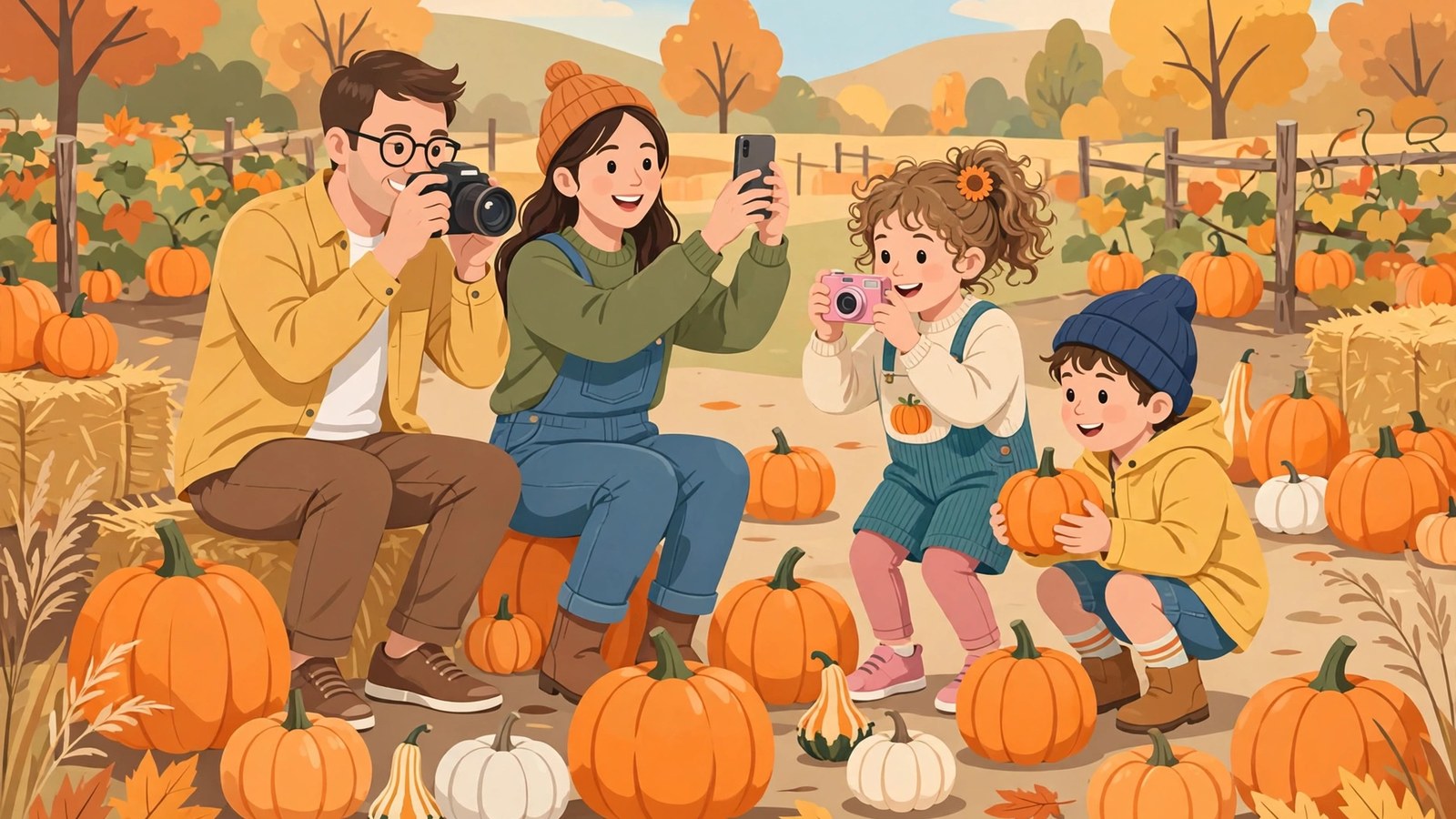
- For pumpkin patch captions, pick a short line that matches the photo you have chosen, such as "Pick of the patch" for a simple portrait, "Oh my gourd, look at this one" for a playful find, or "Picking pumpkins with my favorite people" for a family group. Write the caption after you choose the photo, and name one real detail from the picture, such as the mud, the wagon, or the biggest pumpkin, to make a familiar line feel like yours. For outfits, wear layers you can add or remove, sturdy waterproof footwear for muddy or uneven ground, and clothes you do not mind getting a little dirty. Coordinate colors in a small palette instead of matching outfits exactly. For photos, mix a few planned poses, such as holding a pumpkin, sitting among pumpkins, and walking through the rows, with candid moments. Soft light early or late in the day is usually kinder for portraits than harsh midday sun.
Introduction
A pumpkin patch visit is one of the easiest fall days out, and one of the most photographed. The same trip can produce a family group photo, a couples portrait, a solo outfit shot, and a close look at the pumpkin someone finally chose after a long search. Posting those photos well takes three small decisions: a caption that fits the picture, an outfit that works in a field as well as in a frame, and a few photo ideas planned before the light changes.
This guide brings those three decisions together. It gives pumpkin patch captions grouped by tone, from cute and funny to short lines that let the photo speak, plus captions for family, couple, friends, and kids photos. It then covers outfit ideas built around layers, practical footwear, and colors that photograph well against orange pumpkins. After that come photo and pose ideas, composition guidance for different kinds of light, and practical visit tips, including how to choose a pumpkin, how to store it, and what to check before you travel.
You do not need to use all of it. Many readers will come for one caption and leave. Others will plan the whole visit from this page. Either way, the guiding rule is the same: treat the visit as a day out first and a photo session second. The best captions and the best pictures usually come from a day people actually enjoyed.
Caption Ideas
The best pumpkin patch captions are short, specific, and easy to read. Tone matters less than fit. A funny line on a quiet sunset portrait can feel forced, and a sincere line on a muddy outtake can miss the joke everyone in the photo is already enjoying.
Use the groups below as a starting point, not a script. Pick the group that matches the people in the photo, then swap in a detail from your own afternoon, such as the pumpkin that caused the argument, so the line could only describe your trip. If you post several photos from one trip, vary the tone: heartfelt for the strongest group shot, funny for the outtake, brief for the detail shot.
How to Choose a Caption That Fits the Photo
Start by looking closely at the picture itself: who appears in it, what everyone was doing a moment earlier, and the one detail you would point out first to a friend. Build the caption around any one of those, and it will sound like it belongs to this photograph, not like a stock line borrowed for the day.
Match length to format. A single strong photo can carry three to six words, because the image does most of the work. A carousel, a first visit, or a milestone photo can support two or three sentences: the short line first, then one sentence of detail. Stories need the briefest version of all, positioned so the text stays clear of people’s faces.
Finally, write the caption after you choose the photo, not before. A caption that describes something actually in the picture, such as the child who refused to leave or the pumpkin that barely fit in the wagon, feels genuine in a way a generic fall line cannot.
Cute Captions
Cute captions suit warm, gentle photos: a small pumpkin cradled in two hands, a pause between the rows at sunset, or a family photo where everyone is smiling at once.
- Oh my gourd, look at this one
- Pumpkin kisses and harvest wishes
- Picked the pick of the patch
- Falling for you, and for this pumpkin
- Cutest pumpkin in the patch
- Autumn days, pumpkin ways
- Sweater weather and pumpkin patches
- Home is where the pumpkins are
- Small pumpkin, big autumn feelings
Funny Captions
Funny captions suit the outtakes and the honest moments: the overloaded wagon, the long debate over two nearly identical pumpkins, and the mud nobody planned for. Keep the joke on the situation, not on a person, especially in group photos.
- I came, I saw, I picked a pumpkin
- Gourd big or gourd home
- Let’s give them pumpkin to talk about
- This patch chose me
- Warning: I may bring home more pumpkins than planned
- Squash goals, achieved
- I like big pumpkins and I cannot lie
- Paid the pumpkin patch tax (one pumpkin for the house, three for me)
- We compared pumpkins for an hour, then took the first one
Punny Captions
Punny captions are the traditional pumpkin patch choice, and they work best when used once per post rather than stacked. One pun is charming. Three in a row can bury the photo.
- Oh my gourdness
- Pumpkin spice and everything nice
- You are the pick of the patch
- Hay there, pumpkin
- Feeling gourd-geous today
- Patch you later
- A-maize-ing day at the patch
- Vine and dandy
- Life is gourd
Short Captions
Short captions work well when the photo does the talking: a single portrait, a landscape of rows, or a close detail shot.
- Pick of the patch
- Pumpkin season
- Autumn, but make it orange
- Patch day
- Gourd vibes only
- Fall feels
- Pumpkin hunting
- Harvest mood
- Cart piled high, spirits higher
A short caption can also open a longer one: “Patch day. Fourth October at our usual farm, and we still left with more than we planned.”
Captions for Family and Couple Photos
Family and couple photos need captions that name the occasion, because those are the posts people return to in later years. The year or the first visit is often the detail worth recording.
- Our little pumpkins
- The whole patch crew
- Picking pumpkins with my favorite people
- Same patch, new memories
- He picked me, I picked this pumpkin
- Autumn adventures with my favorite human
- Family tradition, pumpkin edition
- Five people, five different favorites, zero overlap
- The best part of fall, standing right beside me
- Another October, another inch taller against the pumpkins
For an annual visit, add the year or one small change each time, so each year’s post stays distinct.
Captions for Friends and Group Photos
Captions for a whole group work best when nobody is singled out. Write in the plural, around something everyone shared: a mood, a joke, or a minor disaster with the wagon.
- Squad assembled among the pumpkins, as tradition requires
- Came for pumpkins, stayed to document everything
- Nothing bonds friends like an hour of pumpkin debates
- One shared wagon, and no two of us wanted the same pumpkin
- Fourth annual trip, fourth attempt at fitting everyone in frame
- Low sun, loud laughter, excellent pumpkins
Captions for Kids and Baby Photos
For photos of children, anchor the caption in action: the toddler dragging a pumpkin nearly as big as she is, the six year old inspecting the underside of every candidate, the baby napping through most of it. Action keeps the post lively, and the joke stays on the situation, not on the child.
- Tiny rain boots, enormous pumpkin ambitions
- She passed every giant and claimed the tiniest one as hers
- Quality control, performed by a very thorough four year old
- Our littlest hunter bagged the most perfectly round one
- Her first October outing, and definitely not her last
- Small baby, vast field, one very proud family
Think about privacy before posting photos of children: share the joy of the outing, but skip surnames, leave the school unnamed, and describe the setting in general terms rather than tagging an exact spot.
Writing Your Own Caption
If none of the lines above fits, assemble your own from three ingredients: where you were, how the afternoon felt, and one thing only your group would remember: “Muddy rows, warm cider breath, and a pumpkin shaped like a lopsided heart.” A crooked stem, a borrowed wheelbarrow, or the trudge back to the parking area can supply it, and a line built from it will bring the day back years later, as no generic slogan can.
Hashtags and Posting Notes
Add only a few tags, chosen to fit the actual photograph, not the season in general. Put your own sentence first and let the tags follow it, so your voice opens the post, not a string of labels. Guidance changes over time, so check the help pages inside the app before publishing rather than trusting numbers in older posts.
Outfit Ideas
A pumpkin patch outfit has to do two jobs at once: look good in photos and survive a field. Comfortable layers, sturdy shoes, and colors with some depth do both, and they are also the practical choice for mud and weather that changes during the visit.
Start With Layers
Autumn weather can be unpredictable, so layers are the key. Mini Travellers advises dressing in layers for pumpkin picking, starting with a light base, adding a cozy sweater, and bringing a waterproof jacket in case of rain, so you stay warm without being too bundled up if it turns sunny. Pumpkin Village makes a similar point: a light base layer, a warm mid layer, and a weather resistant outer layer give more flexibility than one very heavy coat.
Layering also helps photos. A jacket can come off for a portrait and go back on between rows, and a sweater or flannel shirt adds texture against the smooth shapes of pumpkins. If the day is cold, keep a hat, gloves, and a scarf handy, as Mini Travellers suggests.
Footwear Matters Most
Footwear matters more than any other outfit choice. Pumpkin patches can be muddy or uneven, so sturdy footwear is important. Mini Travellers recommends rain boots or waterproof boots that can handle walking through fields and protect against mud and water. Pumpkin Village gives similar guidance: closed shoes with a good grip are the minimum sensible choice, waterproof boots or rain boots are better when the ground is wet or muddy, and rain boots are specifically recommended if it has rained in the days before your visit.
Light shoes are a backup only on dry days. Pumpkin Village also suggests bringing a change of footwear for the journey home after a muddy day. Wear the boots the field requires, and let the outfit work around them.
Colors That Photograph Well
For photos, coordinated colors work better than matching outfits. Pick a small palette, such as cream, denim, and rust, or navy, camel, and burgundy, and let each person interpret it differently. Solid colors and simple textures, such as denim, knit, and corduroy, sit well against orange pumpkins, while busy patterns can fight with the background.
Avoid white clothes if you plan to sit among the pumpkins. Mini Travellers advises avoiding white because patches can be dusty or muddy, and it recommends darker, practical clothes you do not mind getting a bit messy. A mud mark also shows less, and distracts less in a photo, on a darker tone.
Simple Outfit Formulas
These formulas are starting points, using what you already own. None requires buying anything new.
- Classic autumn: Knitted sweater, jeans, ankle boots, and a scarf in a warm tone.
- Cozy casual: Flannel shirt over a plain top, leggings or jeans, and waterproof boots. The flannel can be worn open or removed, giving two looks from one outfit.
- Smart casual: A midi dress with tights and boots, plus a coat you can remove for photos. Choose a dress you can sit, crouch, and carry a pumpkin in.
- Family coordinated: Everyone in the same two or three colors, with different textures. Denim, knit, and corduroy mix nicely.
- Kids: Comfortable jeans or leggings, a soft sweater, a layerable jacket, and sturdy boots they can run in. Pumpkin Village notes that a spare layer for children in the car is useful if clothes get damp or muddy.
Before you leave, give any outfit a movement test. Can you crouch beside a pumpkin, sit on the ground among them, stroll a full row, and haul your pick back without tripping or tugging at the outfit? If not, change one piece. Comfortable people move and smile more naturally, and the photos show it.
Photo and Pose Ideas
Pumpkin patch photos work best when they look natural rather than staged. Choose a few poses in advance, add detail shots, and leave room for candid moments. Take more photos than you think you need, and choose the best later. It is easier to delete extras than to recreate a moment.
Poses That Cover Most Situations
- The carry: Hold a pumpkin in both arms, or balance a small one on one hip, and look at the camera or at the pumpkin. The classic shot, for adults, children, and couples.
- Sitting among the pumpkins: Sit on the ground surrounded by pumpkins of different sizes. Shoot from slightly above, and keep the biggest pumpkins near the front of the frame.
- Walking through the rows: Walk away from the camera down a row, then glance back over your shoulder. This shows the patch itself, not just the people.
- The comparison: Hold a pumpkin up next to your head, or stand a child beside the biggest pumpkin you can find. Size contrast makes a fun photo.
- The wheelbarrow shot: If the patch provides wheelbarrows or carts, a child sitting in one among pumpkins makes a charming photo, with an adult holding it steady.
- The couple shot: Stand back to back holding pumpkins, or share a hay bale seat with one pumpkin resting between you.
- The detail shot: Close views of hands holding a small pumpkin, a row of pumpkins in different colors, or boots in the mud tell the story of the day without a posed portrait.
- The golden hour shot: Late in the afternoon, use the low light. Face it for bright, warm portraits, or shoot into it for a soft silhouette.
For groups, stagger heights instead of lining everyone up: one person sitting, one crouching, and one standing looks more natural. With young children in the group, gather everyone early for the full line up, while patience is at its peak, and save pair and solo portraits for later.
Light and Composition
Light decides more pumpkin patch photos than the camera does. The National Park Service photography guidance calls the stretch just after sunrise and just before sunset golden hour, when the light is soft and warm in tone. Faces look good in that light, and orange pumpkins photograph richly, so if your patch opens early or stays open late, those hours are prime time for portraits.
Midday calls for a different plan. The same NPS guidance warns that overhead sun around noon produces hard light and unflattering shadows across faces. When the sun is high, find shade from a barn or tree line, position the group with the brightness behind them rather than in their eyes, or use midday for wide views and details, saving portraits for later. Overcast skies help too: the guidance notes that cloud cover softens daylight considerably, which makes photographing people easier.
Composition can stay simple. Let a pumpkin row run away from the camera toward the horizon, and the shot gains depth, your group inside the scene rather than lined up in front of it. Give portraits an uncluttered backdrop: a single row stretching away, or plain sky, is plenty. Keep pumpkins at waist level or on the ground in portraits, so nothing blocks a face. On a camera, the guidance explains that aperture governs depth of field: opening the lens wider throws what sits behind a portrait subject out of focus, while a smaller opening keeps more of a group scene sharp. On a phone, tap on a face on the screen so focus locks there, then review a few frames for blinkers.
A Simple Shot List for the Visit
A short list, settled before you arrive, prevents the usual regret of reaching home and realizing a key shot is missing: a broad view across the whole field; an individual portrait for every visitor, plus one of each couple or pair of friends; the entire group together at mixed heights; a close study of hands, stems, and rind colors; the moment someone settles on a pumpkin; the loaded wagon before you leave; and, once home, your haul arranged where it will live.
Above all, mix posed and candid photos. Some of the best pictures are unplanned: a child concentrating on choosing, or the group walking back to the car loaded down.
Tips for a Great Pumpkin Patch Visit
Before You Go
Check the patch’s own information before you travel. Mini Travellers notes that pumpkin picking is popular and that many events require prebooking, and it advises booking to get the time and date you want. Patches also differ on payment, dogs, and facilities, so check whether your patch is cashless or prefers cash, whether dogs are welcome, and whether there are toilets and baby changing areas. Bring water, snacks, wipes, and a reusable bag for small purchases, a suggestion Pumpkin Village also makes, and a wagon or large bag if you plan to buy several pumpkins, because they are heavier than they look.
Plan for access in the same check. Pumpkin Village advises anyone who uses a wheelchair, a mobility aid, or a stroller to contact the venue before traveling, to check routes, surfaces, parking, and facilities for the date of the visit. Fields vary a lot after rain, so an answer for your date is worth more than a general description.
Going early can also help: weekend mornings are usually quieter, and the selection is fullest before other visitors have picked through it.
Choosing a Pumpkin
Choose with the pumpkin’s job in mind. Mini Travellers advises deciding first what it is for, because size and shape follow from that: medium to large pumpkins suit carving, smaller dense varieties suit cooking, and a mix of sizes and colors suits decorating.
Then check the individual pumpkin. A good pumpkin feels solid all around, with no soft spots or blemishes, which can be signs of rotting, and a gentle press should meet no give. Look for deep, consistent color for its variety, since uneven coloring or pale patches can mean it is not fully ripe. If you plan to carve or display it, choose a flat base so it can sit upright, and test it on a flat surface first. Examine the stem: Mini Travellers describes a sturdy stem as a good sign, while a dry or brittle stem can suggest the pumpkin has been off the vine longer and could spoil sooner. Do not carry a pumpkin by its stem, because the stem can break off and leave the pumpkin more open to rot. Carry it from underneath, and let young children point to their choice while an adult lifts it.
Storing and Carving
Store pumpkins properly once you are home. Mini Travellers advises keeping them in a cool, dry place out of direct sunlight, such as a garage or shed, until you are ready to use them, and warns that a hot or damp place can make a pumpkin spoil faster. Carve as close to Halloween as practical: a carved pumpkin lasts only about 3 to 5 days, especially in warmer climates.
Frequently Asked Questions
What are the best pumpkin patch captions for Instagram?
The best pumpkin patch captions for Instagram are short, specific, and matched to the photo. For a playful photo, try “Oh my gourd, look at this one.” For a family photo, try “Picking pumpkins with my favorite people.” For a simple portrait, “Pick of the patch” is enough. Add one real detail from the day (the wagon, the weather, the mud) to make any line your own.
What should I wear to a pumpkin patch for photos?
Wear layers you can add or remove, sturdy waterproof footwear, and clothes you do not mind getting dirty. A light base, a cozy sweater or flannel shirt, and a waterproof jacket handle changing weather, and rain boots or waterproof boots handle muddy, uneven fields better than light shoes. Choose a small coordinated palette, such as cream, denim, and rust, rather than matching outfits, and avoid white if you plan to sit among the pumpkins.
What are good pumpkin patch photo ideas for families?
Good family ideas include the whole family seated among pumpkins with the biggest pumpkins near the front, each child holding the pumpkin they chose, a walking shot through the rows, a child in a wheelbarrow held steady by an adult, and a close view of little hands on a small pumpkin. Take the group portrait while children are still fresh, mix posed shots with candid moments, and close with your pumpkins arranged on the step at home.
When is the best time of day for pumpkin patch photos?
Early morning and late afternoon usually give the softest light. The National Park Service photography guidance calls the warmly lit, gentle light just after the sun rises and just before it sets golden hour, and portraits benefit most then. Around noon the sun sits high and throws hard shadows across faces, so step into shade or postpone portraits. An overcast sky helps as well, because cloud cover diffuses the light and makes it gentler on skin.
How do I choose a good pumpkin at the patch?
Decide what the pumpkin is for first, then check the individual fruit. Choose one that feels solid with no soft spots, has deep, consistent color for its variety, and has a flat base if you plan to carve or display it. Look for a sturdy stem, carry it from underneath rather than by its stem, and store it in a cool, dry place out of direct sunlight.
How long does a carved pumpkin last?
Not long, so timing matters. Mini Travellers states that a carved pumpkin lasts only about 3 to 5 days, especially in warmer climates. Carve as close to Halloween as practical, and keep uncarved pumpkins cool, dry, and out of direct sunlight in the meantime.
How many hashtags should I use with pumpkin patch captions?
Use a handful of relevant hashtags that describe your photo, added underneath your caption wording rather than in front of it. Guidance gets updated over time, so check the help section inside the app rather than relying on a number from an older post.
Keep reading: Pumpkin Patch Captions for Instagram
Keep reading: Best Pumpkin Carving Ideas for 2026: Creative, Cool, and Contest Ready Designs
Keep reading: Easy Pumpkin Painting Ideas and Designs
Keep reading: Baby Pumpkin Ideas: Safe Painting, Footprint Art, and Photo Setups
Keep reading: Halloween Activities and Crafts for Kids
Keep reading: Autumn and Fall Outfit Ideas
Sources & references
- Mini Travellers, "Top Tips for Pumpkin Picking This Autumn." Page opened and checked 29 October 2026. Supports the advice on prebooking, dressing in layers with a waterproof jacket, sturdy waterproof footwear for muddy or uneven fields, keeping a scarf, gloves, and hat handy, avoiding white clothes, choosing pumpkins by purpose, firmness, color, flat base, and stem condition, not carrying a pumpkin by its stem, storing pumpkins in a cool and dry place out of direct sunlight, and a carved pumpkin lasting about 3 to 5 days. https://minitravellers.co.uk/top-tips-for-pumpkin-picking/
- Pumpkin Village, "What to Wear Pumpkin Picking in Autumn." Page opened and checked 29 October 2026. Supports the guidance on closed shoes with grip as a minimum, waterproof boots or rain boots when the ground is wet or muddy, layers over one heavy coat, a spare layer for children, a change of footwear for the journey home, a reusable bag, and contacting the venue in advance to check routes, surfaces, parking, and facilities for wheelchair, mobility aid, and stroller users. https://www.pumpkinpickingvillage.co.uk/what-to-wear-pumpkin-picking.html
- United States National Park Service, Grand Canyon National Park photography page. Page opened and checked 29 October 2026. Supports the description of golden hour as shortly after sunrise or before sunset with a warmer glow and soft lighting, the warning that high noon direct sunlight casts harsh and unflattering shadows on people, the point that slightly overcast weather makes lighting softer and easier for photos of people, and the explanation that aperture affects depth of field. https://www.nps.gov/grca/planyourvisit/photography.htm


