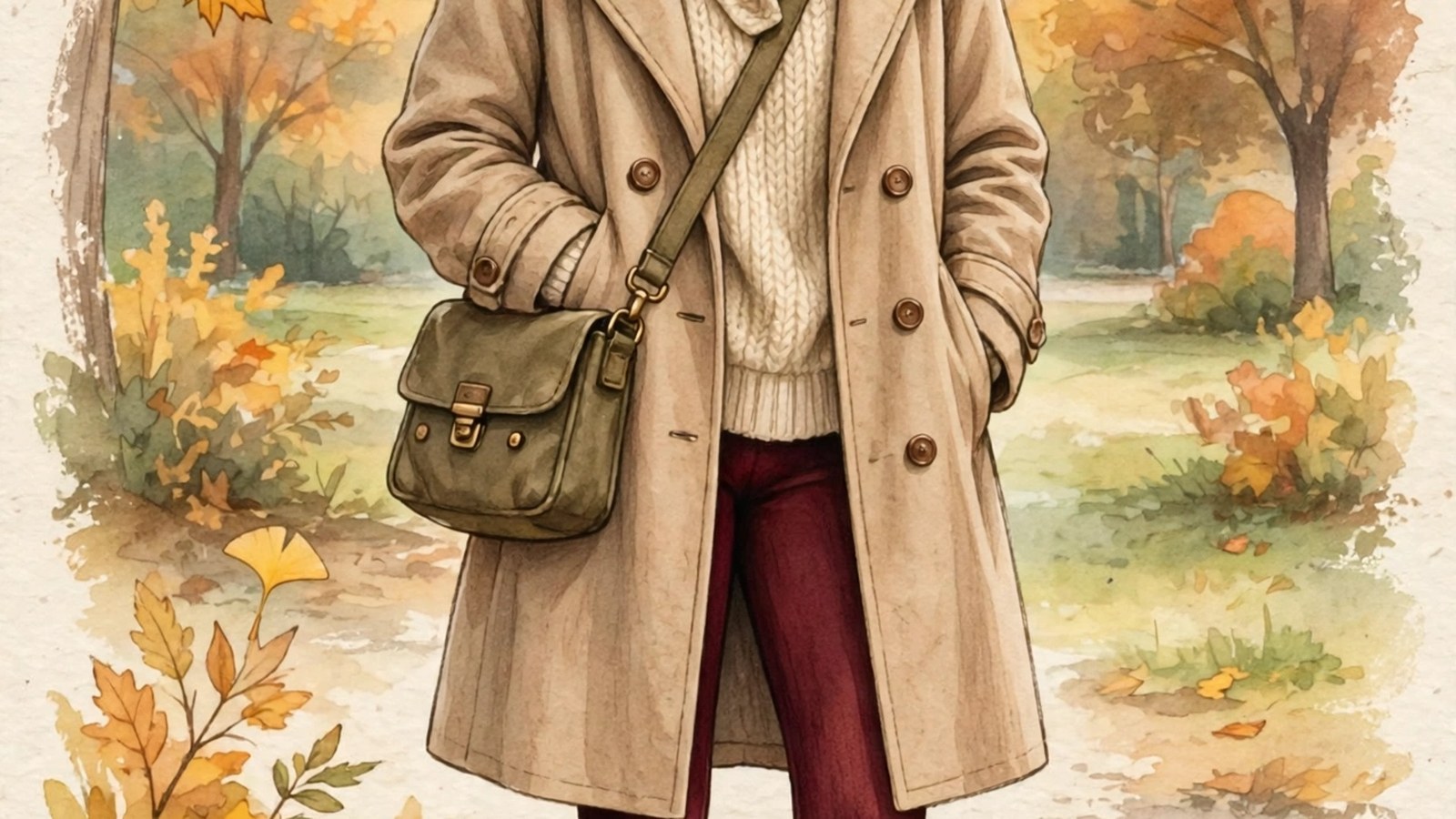
Short answer
- A reliable fall outfit has three parts: a base layer that sits close to the body, a middle layer that adds warmth and character, and outerwear that finishes the look and protects you from wind and rain. Build it from two or three autumn colors, such as burgundy, rust, olive, mustard, camel or chocolate brown, plus one neutral such as black, cream or navy. Mix textures so the outfit does not look flat, keep the bulkiest layer on the outside, and use colored tights, especially burgundy for an easy option or red for a bolder one, to add color and warmth to skirts and dresses. For days that start cold and turn mild, choose layers you can remove and carry, and swap just one or two pieces to take the same base from work to weekend.
Introduction
Autumn dressing is about balance: warm enough for crisp mornings, flexible enough for mild afternoons, and put together enough that you do not feel buried under layers. The easiest way to get that balance is to stop treating each outfit as a new problem and start using a simple formula instead: a good base, one interesting layer, and outerwear that pulls the whole thing together, repeated with different colors and textures.
This guide explains that formula in full, then applies it to the parts of autumn dressing that cause the most hesitation. It covers layering that actually regulates temperature, colored tights outfits built around burgundy and red, outfit ideas for common autumn days, and looks that move from the office to the weekend with one or two changes. It stays on general autumn outfits and layering throughout. It gives no shopping lists to buy from, names no retailers, and treats any piece mentioned as something to find in your own wardrobe first.
Building a Fall Outfit Formula
A reliable fall outfit starts with three parts. First, a base layer that sits close to the body: a fitted long sleeve top, a thin knit or a simple dress. Second, a middle layer that adds warmth and character: a chunky knit, a blazer, a denim jacket or a cardigan. Third, outerwear that finishes the look: a wool coat, a trench coat or a waxed jacket, depending on the weather.
The formula works because each part has a different job, so you can change one part without rebuilding the outfit. If the day turns warmer, the outerwear comes off and the middle layer carries the look. If an outfit feels dull, the middle layer is usually the easiest place to add pattern, color or texture, because the base and the coat can stay quiet.
Color: two or three autumn tones plus a neutral
Color is where autumn outfits come alive. The season’s palette of burgundy, rust, olive, mustard, camel and chocolate brown works because the shades sit well together. An outfit built from two or three of these tones, plus one neutral such as black, cream or navy, almost always looks considered without much effort.
A few pairings that are hard to get wrong:
- Burgundy with camel and cream. Warm and polished, and an easy setting for burgundy tights.
- Rust with olive and dark denim. Earthy and relaxed, good for weekends and outdoor days.
- Mustard with navy and chocolate brown. The navy keeps the mustard from feeling too bright.
- Chocolate brown with cream and burgundy. A softer alternative to black based outfits in autumn.
- Olive with black and camel. A quiet combination that suits work as well as days off.
If you are unsure where to start, pick the color through one piece only, such as tights, a knit or a scarf, and keep everything else neutral. One clear color decision reads as intentional. Three competing bright pieces usually read as accidental.
Texture and proportion
Texture matters as much as color. Pairing a soft knit with structured denim, or a suede boot with a wool coat, stops an outfit from looking flat. If everything you are wearing is the same texture, add one contrasting piece, such as a leather bag, a silk scarf or a pair of boots, to give the look depth. Autumn fabrics make this easy, because knits, corduroy, denim, wool, suede and leather all sit naturally in the same outfit.
Proportion is the other quiet decision that makes an outfit work. A chunky knit works best with a slimmer bottom half, such as straight jeans or a fitted skirt with tights. A flowing midi skirt pairs well with a cropped jacket or a tucked in knit. A long coat over a long dress works when the coat is the straighter, simpler shape and the dress moves underneath it. Getting one proportion decision right does more for an outfit than adding extra accessories, because it decides the outline of the whole look before any detail is noticed.
Layering That Works
Layering is the practical heart of autumn dressing, and it works best when each layer has a job. Cold weather layering guidance from the Continental Divide Trail Coalition and the Occupational Safety and Health Administration describes the same three part system, and it applies to everyday autumn outfits just as well as to outdoor clothing, even when the fabrics are dressier.
| Layer | Job | Everyday autumn examples |
|---|---|---|
| Base layer | Sits next to the skin and manages moisture | A fitted long sleeve top, a thin knit, a thermal top on cold days |
| Middle layer | Insulates and traps warmth | A chunky knit, fleece, cardigan, blazer or denim jacket |
| Outer layer | Protects against wind and rain | A wool coat, trench coat, waxed jacket or rain jacket |
The base layer matters more than it looks. The Continental Divide Trail Coalition advises that base layers should be made of a warm, moisture wicking fabric such as wool or polyester, and that cotton is not recommended for that role because it does not dry quickly enough and can leave you very chilly if it gets wet or you sweat in it. The Occupational Safety and Health Administration makes the same point: cotton loses its insulation value when it becomes wet, while wool, silk and most synthetics retain their insulation even when wet. That is why a damp cotton top feels cold by mid afternoon while a wool blend base still feels comfortable.
The outer layer has a protective job, not just a decorative one. The Occupational Safety and Health Administration recommends an outer wind and rain protection layer that allows some ventilation to prevent overheating, and the National Weather Service advises layers of loose fitting, lightweight, warm clothing, noting that trapped air between the layers will insulate you, and that outer garments should be tightly woven and water repellent. In outfit terms, a coat that actually closes and sheds at least light rain will serve you better than a decorative jacket that only looks warm.
A few layering rules keep autumn outfits looking intentional:
- Vary the lengths. A shorter knit over a longer shirt, with the hem peeking out, looks more considered than two layers ending at exactly the same point.
- Keep the bulkiest layer on the outside. A chunky coat over a fine knit works; a fine jacket over a chunky knit usually does not.
- Leave room to move. Each layer should fit comfortably over the one beneath it. If a coat pulls across a knit, size up the coat or slim down the knit. Tight clothing is also poor insulation practice: the Occupational Safety and Health Administration notes that tight fitting clothing reduces blood circulation to the extremities.
- Add and remove layers as conditions change. Both the Continental Divide Trail Coalition and the Occupational Safety and Health Administration stress adjusting layers to regulate temperature, removing a layer before you overheat and adding one when you stop moving. A hat, scarf and gloves work as adjustable layers you can add or remove through the day, which is easier than changing your main outfit.
- Plan for transitional days. When mornings are cold and afternoons mild, a middle layer you can carry, such as a cardigan, a light jacket or a shawl, is more useful than a heavy coat you cannot take off indoors.
- Keep a dry change in reserve on very wet days. Moisture increases the rate of heat loss from the body, a point the Occupational Safety and Health Administration makes in its safety tips. A spare pair of socks or tights in your bag is the everyday version of that advice.
Colored Tights Outfits: Burgundy and Red
Colored tights are one of the easiest ways to make an autumn outfit feel deliberate. They add color exactly where a dark outfit needs it, they extend the life of summer and early autumn dresses and skirts, and they add warmth on days when bare legs are no longer comfortable.
Choosing denier and opacity first
Denier is the number printed on most tights packaging, and it is worth understanding before choosing a color. Denier is a yarn measurement: the weight in grams of 9,000 meters of the yarn. A higher denier therefore means a heavier yarn, and in hosiery that generally means a thicker, more opaque and warmer pair of tights, while a lower denier means a finer, sheerer pair. Treat the ranges below as general guidance rather than fixed rules, because knit and fiber also affect how a pair looks and feels.
| Denier range | Typical finish | Best use in autumn |
|---|---|---|
| Under 20 | Sheer, skin shows through | Mild days and dressier outfits |
| 20 to 40 | Semi opaque, color with some softness | Transitional days, work outfits |
| 40 to 80 | Opaque, even solid color | Colored tights outfits, colder days |
| Above 80 | Heavy opaque, closest to leggings | The coldest autumn days |
For colored tights in particular, opaque pairs give the most even color and the most warmth, while sheerer pairs show more skin through the color and suit milder days. If the color is the point of the outfit, an opaque or semi opaque pair usually shows it best.
Burgundy tights outfits
Burgundy tights are the most versatile colored tight. They pair naturally with black, navy, charcoal, cream and olive, and they soften the contrast that black tights can create against lighter skirts. Combinations worth trying:
- A black sweater dress, burgundy tights and ankle boots, for a simple weekend look.
- A gray plaid skirt, a cream knit, burgundy tights and a camel coat, for something smarter.
- A navy dress, burgundy tights and brown boots, where the burgundy warms up the navy without clashing.
- An olive skirt, a black fitted top and burgundy tights, for an all autumn palette in one outfit.
- A floral or checked skirt in muted tones with burgundy tights, where the print picks up the color without matching it exactly.
Red tights outfits
Red tights make a bolder statement, and they work best when the rest of the outfit stays quiet: a black dress, a navy skirt with a cream knit, or charcoal tailoring with red as the single pop of color. Red tights with a red top can look costume like, so it usually works better to let the tights be the only red in the outfit. For a first attempt, choose a deeper, darker red rather than a bright primary red shade. It is easier to wear and reads as autumnal rather than festive. Keep footwear simple with red tights, in black, brown or navy, so the eye is not asked to settle two competing statements at once.
Caring for colored tights
A little care keeps colored tights looking even. Wash colored tights in cool water to help the color last, and keep a spare pair in your bag on days when you will be out for a long time, so a snag does not end the outfit. Put tights on slowly, store them away from anything sharp or rough in the drawer, and let them dry away from direct heat. It matters more for colored pairs than for black ones, because fading and snags show sooner against a clear color.
Outfit Ideas for Common Autumn Days
The formula adapts to most days without much thought. These are starting points to copy loosely with pieces you already own, not lists to buy.
A casual weekend day. Straight jeans, a fitted long sleeve base, a chunky knit, ankle boots and a waxed jacket or wool coat. Add a scarf you can remove indoors. This is the formula at its simplest, and changing the knit changes the whole feel.
A work day. A wool midi skirt or tailored trousers, a blouse or fine knit as the base, a blazer as the middle layer, and a camel or navy coat over the top. Burgundy tights in a semi opaque finish work here with a skirt, because the color is deep enough to stay office appropriate.
An evening out. A simple black dress, opaque burgundy or deep red tights, ankle boots and a long coat. The tights do the work that jewelry would do in summer, so keep accessories small.
A day mostly outdoors. A moisture managing base layer rather than cotton, a warm knit or fleece as the middle layer, and an outer layer that closes against wind and light rain. Choose boots with grip over smooth soled shoes, carry a crossbody bag so your hands stay free, and add a hat and gloves you can take off as you warm up.
A rainy, windy day. Start from the outer layer and work inward: a water repellent coat that closes fully, then a knit, then a base that will not feel cold if it gets damp at the edges. The National Weather Service describes wind chill as the temperature it feels like outside, based on the rate of heat loss from exposed skin as wind increases, which is why a windy day can feel far colder than the forecast suggests. A hat, a scarf and boots that keep feet dry matter more on these days than any styling detail.
A weekend away. Pack around one base set, such as dark jeans and a black dress, then bring two middle layers and one coat that works over both. Colored tights take almost no space and give the dress a second, different look.
Work to Weekend Autumn Looks
The most useful autumn outfits are the ones that adapt. A few pieces move easily between work and weekend:
- A wool midi skirt wears with a blouse and blazer for work, and with a chunky knit and boots for the weekend.
- Straight leg dark jeans pair with a smart coat and loafers for a casual office, and with sneakers and a knit for days off.
- A camel or navy coat smartens up almost anything, from office tailoring to weekend denim.
- A simple black dress works with tights and a blazer for work, and with an oversized cardigan and boots for the weekend.
- Loafers or ankle boots bridge the gap between formal and casual better than either sneakers or heels alone.
The trick to a work to weekend outfit is changing just one or two elements. Swap the blouse for a knit, the blazer for a cardigan, or the loafers for boots, and the whole outfit shifts register without a full change. Keeping the base, such as the skirt, jeans or dress, the same makes mornings simpler and wardrobes smaller.
Building a Small Autumn Capsule
It helps to plan around a small capsule of autumn pieces rather than buying something new for each occasion. Start with the items you already wear most, such as a favorite coat, a reliable pair of boots and a knit that goes with everything, and build outward from those. A new piece earns its place when it works with at least three things you already own, such as burgundy tights that lift three different skirts or a camel coat that finishes work and weekend looks. This three outfit test is a rule of thumb, not a guarantee, but it quickly exposes pieces that would only ever work one way.
A workable autumn capsule, in general terms, looks like this:
| Slot | Pieces to have covered |
|---|---|
| Bases | Two or three fitted long sleeve tops or thin knits, one simple dress |
| Bottoms | Dark straight jeans, one skirt that works with tights, tailored trousers if you need them for work |
| Middle layers | One chunky knit, one cardigan, one blazer or denim jacket |
| Outerwear | One coat that closes against the weather and fits over your thickest knit |
| Tights and footwear | Black tights, one colored pair, ankle boots, loafers or sneakers |
| Adjustable extras | Scarf, hat and gloves |
This approach keeps the wardrobe manageable, makes packing for a weekend away easier, and means the pieces you reach for are the ones that genuinely suit your life, not just the season’s trends.
Common Autumn Outfit Mistakes
Most autumn outfit problems are small and fixable. Wearing one heavy layer instead of several lighter ones leaves you no way to adjust when the temperature changes, which is the whole point of layering. A coat that does not fit over your thickest knit means your warmest outfits cannot actually be worn together. A cotton base on an active or wet day can leave you feeling chilly if it gets damp, for the fabric reasons explained above. Wearing every autumn color at once, instead of two or three plus a neutral, makes an outfit look busy rather than seasonal. And choosing shoes for the photograph rather than the ground, the distance and the weather is the mistake most likely to shorten your day.
Putting Your Autumn Wardrobe Together
Autumn outfits do not need a large wardrobe, just a clear formula: a base, a warm middle layer, outerwear that fits over both, and one or two seasonal colors, such as burgundy tights, a rust knit or a camel coat, to make it feel like autumn. Add layers you can adjust through the day, choose footwear that suits where you are actually going, and let texture and proportion do the work that extra accessories cannot. Done that way, getting dressed for autumn becomes one of the easiest parts of the season.
Frequently Asked Questions
What is a simple fall outfit formula?
Base, middle and outer. Wear a fitted base layer close to the body, add a middle layer such as a knit, cardigan or blazer for warmth and character, and finish with outerwear such as a coat or jacket that fits over both and suits the weather. Build the outfit from two or three autumn colors plus one neutral, and it will look considered with very little effort.
How do I layer for a day that starts cold and turns mild?
Choose layers you can remove and carry. A removable middle layer, such as a cardigan or light jacket, is more useful than a heavy coat you cannot take off indoors. Accessories work as adjustable layers too: a scarf, hat and gloves can come off as the day warms. Layering guidance makes the same point in general terms: adjust layers as conditions change, rather than overheating in a fixed outfit.
What colors go with burgundy tights?
Burgundy pairs naturally with black, navy, charcoal, cream and olive, and it also works with camel and chocolate brown. Try it with a black sweater dress and ankle boots for an easy look, or with a gray plaid skirt and a camel coat for something smarter. Because burgundy is deep rather than bright, it usually stays appropriate for work in a semi opaque or opaque finish.
How do I wear red tights without looking overdone?
Keep everything else quiet and let the tights be the only red in the outfit. A black dress, a navy skirt with a cream knit, or charcoal tailoring all give red tights a calm background. A deeper, darker red is easier to wear than a bright primary red, and simple footwear in black, brown or navy keeps the look grounded.
What does denier mean when I am choosing tights?
Denier is a yarn measurement: the weight in grams of 9,000 meters of the yarn. Higher denier generally means a thicker, more opaque and warmer pair of tights, and lower denier means a finer, sheerer pair. As general guidance, under 20 denier is sheer, 20 to 40 is semi opaque, 40 to 80 is opaque, and above 80 is heavy opaque. Knit and fiber also affect the finish, so use the number as a guide, not a promise.
Why does a cotton top feel cold when it gets damp?
Because of how the fabric handles moisture and insulation. The Occupational Safety and Health Administration states that cotton loses its insulation value when it becomes wet, while wool, silk and most synthetics retain their insulation even when wet, and the Continental Divide Trail Coalition notes that cotton does not dry quickly enough and can leave you chilly if it gets wet or you sweat in it. For active or wet autumn days, a wool or synthetic base layer is the more comfortable choice.
How can I take an autumn outfit from work to the weekend?
Keep the base the same and change one or two elements. Swap a blouse for a chunky knit, a blazer for a cardigan, or loafers for boots, and a wool midi skirt, dark jeans or a simple black dress shifts from office appropriate to weekend ready. A camel or navy coat works over both versions, which is why a versatile coat earns its place in a small autumn wardrobe.
Keep reading: Fall Thanksgiving Nail Designs: Simple, Short, Square, and Almond Ideas for the Season
Keep reading: Fall and Autumn Nail Ideas: Colors, Designs and Easy Looks to Try
Keep reading: Winter Party Outfits: Warm, Stylish Ideas for Nights Out, Birthdays and New Year’s Eve
Sources & references
- Continental Divide Trail Coalition, "Tips for Layering in the Cold Weather." Page opened and read 29 October 2026. Supports the three layer system used in this article: a base layer next to the skin in a warm, moisture wicking fabric such as wool or polyester, with cotton not recommended because it does not dry quickly enough and can leave you chilly when wet; an insulating middle layer; an outer layer that protects against wind and rain; and adjusting layers as conditions and body temperature change. https://cdtcoalition.org/tips-for-layering-in-the-cold-weather/
- Occupational Safety and Health Administration (OSHA), "Cold Stress Guide." Page opened and read 29 October 2026. Supports the statements that cotton loses its insulation value when wet while wool, silk and most synthetics retain their insulation even when wet; that at least three layers are recommended, comprising an inner layer of wool, silk or synthetic to keep moisture away from the body, a middle layer of wool or synthetic to provide insulation even when wet, and an outer wind and rain protection layer that allows some ventilation to prevent overheating; that tight fitting clothing reduces blood circulation to the extremities; and that moisture or dampness can increase the rate of heat loss from the body. https://www.osha.gov/emergency-preparedness/guides/cold-stress
- National Weather Service, "Tips on how to dress for cold weather" (Wind Chill Temperature Index brochure). Document opened and read 29 October 2026. Supports the advice to wear layers of loose fitting, lightweight, warm clothing, that trapped air between the layers will insulate you, that outer garments should be tightly woven and water repellent, and the description of wind chill as the temperature it feels like outside, based on the rate of heat loss from exposed skin as wind and cold increase. https://www.weather.gov/media/ajk/brochures/Wind_Chill_Temperature_Index.pdf
- Online Clothing Study, "Definitions of Yarn Measuring Systems (Yarn count)," citing British Standards definitions. Page opened and read 29 October 2026. Supports the definition of denier as the weight in grams of 9,000 meters of yarn. https://onlineclothingstudy.com/definitions-of-yarn-measuring-systems/


