Short answer
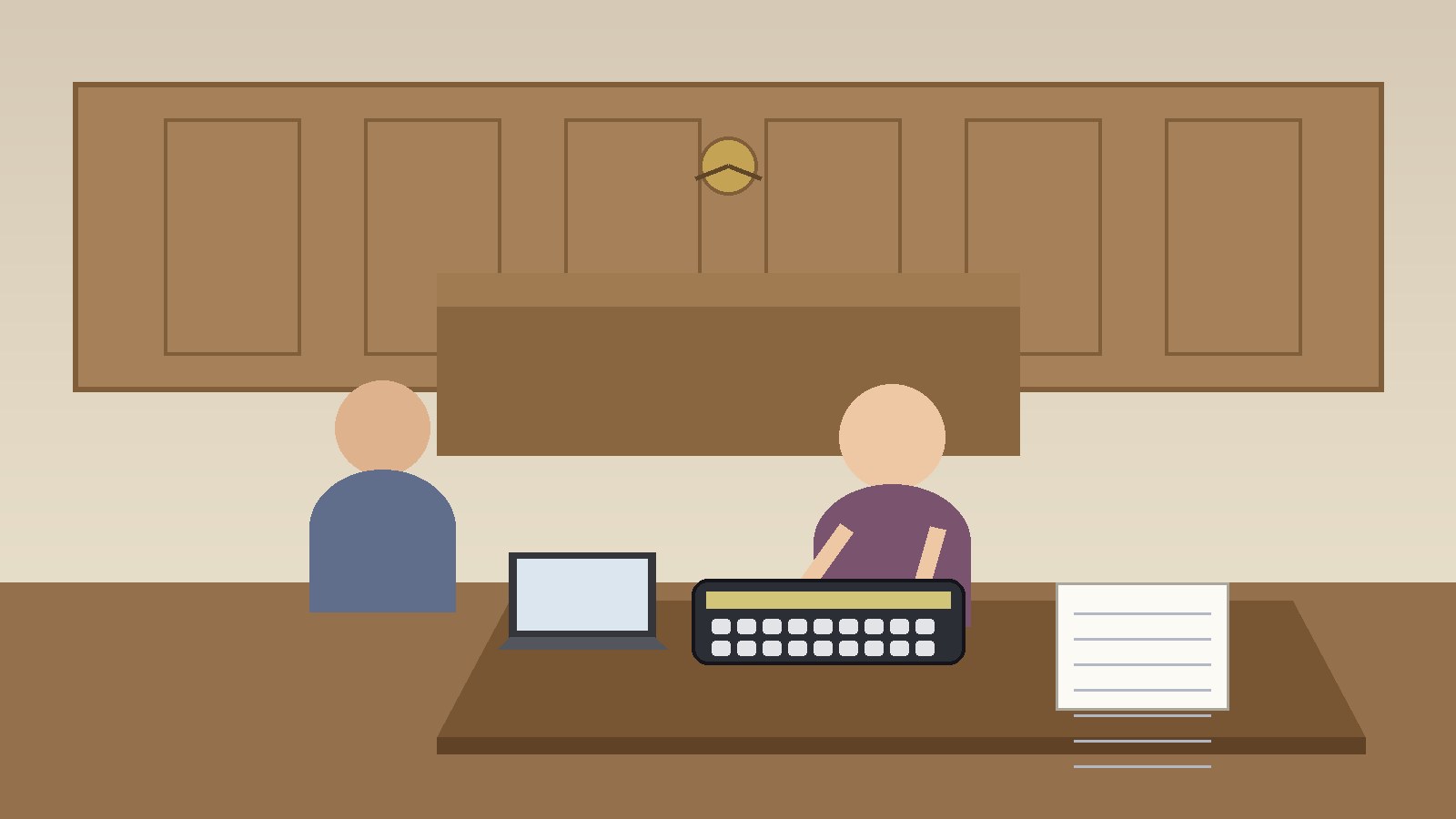
- A stenographer is a trained professional who captures spoken words as they are said and turns them into an accurate written record. Most stenographers use a small, specialized keyboard called a stenotype machine. Instead of typing one letter at a time, they press several keys at once to record whole sounds, syllables, or words in a single stroke. Specialized software then translates those strokes into readable text. Stenographers are best known for their work in courtrooms, where they create the official record of trials, hearings, and depositions. They also work outside the legal system. Broadcast captioners provide live captions for television programs. CART captioners provide Communication Access Realtime Translation, which is instant speech to text for people who are deaf or hard of hearing in classrooms, meetings, and public events. Other stenographers record legislative proceedings, government hearings, and business meetings. The defining feature of the role is speed combined with accuracy. A stenographer must keep up with natural speech, including fast exchanges, interruptions, and technical terms, and still produce a record that other people can rely on. That combination is why the work requires dedicated training rather than ordinary fast typing.
What a Stenographer Is
The word stenographer comes from stenography, the practice of writing quickly in shorthand. People often use stenographer and court reporter as if they meant the same thing, but they are not exact synonyms. Stenography is the broader skill: capturing speech in real time using shorthand or a stenotype machine. Court reporting is one major application of that skill, focused on legal proceedings. Every court stenographer is a stenographer, but not every stenographer works in a court.
It helps to separate the skill from the setting. The skill is realtime capture of speech. The setting decides what the finished record is used for. In a courtroom, the transcript may become the official record that lawyers, judges, and appeals courts rely on. In a broadcast studio, the output appears as captions on screen within seconds. In a classroom, the output appears on a student’s screen so the student can follow the lesson as it happens.
A stenographer aims for a verbatim record: what was said, in the order it was said, including who said it. A good transcript also marks interruptions and unclear passages honestly rather than guessing. Summarizing or tidying up a speaker’s words into neater sentences is a different job, and it would defeat the purpose of an official record. Stenographers are also expected to be neutral. In a courtroom, the stenographer does not take a side or shape the record to favor one version of events. Their loyalty is to the record itself.
How Stenography Works: The Stenotype Machine
The stenotype machine is the tool most people picture when they think of a stenographer. It looks like a small keyboard, but it works on a different principle from an ordinary computer keyboard. A modern stenotype machine typically has about 22 keys, and the keys are unmarked. Consonant keys sit on the left and right sides, vowel keys sit in the center, and a number bar runs across the top. The exact layout and key count can vary by model, but the principle is the same across machines.
The key idea is chording. On an ordinary keyboard, you press one key for one letter, so a long word takes many keystrokes. On a stenotype machine, the stenographer presses several keys at the same time in a single stroke. Each stroke, called a chord, represents a sound, a syllable, a whole word, or even a short phrase. The left hand generally covers the sounds at the start of a syllable, the thumbs cover the vowels, and the right hand covers the sounds at the end. With practice, a stenographer builds up a personal dictionary of strokes for common words and phrases, so frequent terms and names can be written in a single stroke. Single strokes that stand for whole words or phrases are called briefs.
The strokes do not become readable English by themselves. They pass through computer-aided transcription software, often shortened to CAT software. The software uses the stenographer’s personal dictionary to translate each stroke into words, then formats the result into a transcript with speaker labels, line numbers, and question and answer formatting. In realtime work, this translation happens instantly, so text appears on a screen as the speaker talks. In other work, the stenographer reviews, edits, and proofreads the translated draft after the proceeding. Older machines printed their output on a long strip of paper; modern machines send it electronically to a computer, which is what makes realtime display possible.
Learning the machine takes time because it means learning a new writing system, not just typing faster on a familiar keyboard. Students learn steno theory, the rules for how sounds map to keys, and then build speed through repeated dictation practice. Speed standards show what the job demands. The National Court Reporters Association, usually shortened to NCRA, offers a widely recognized entry level certification called the Registered Professional Reporter, or RPR. Its skills test covers literary material at 180 words per minute, jury charge material at 200 words per minute, and testimony in question and answer form at 225 words per minute, each at 95 percent accuracy. Those figures describe a certification standard, not a promise about any individual, and different states and employers set their own requirements.
Shorthand Systems in Plain Language
Machine shorthand is the most common form of stenography in the United States today, but pen shorthand systems came first. Pen shorthand replaces ordinary spelling with symbols that represent sounds. The writer draws a short mark for a sound or syllable, and often drops vowels or short words that a trained reader can fill in from context. Two well known systems are Pitman shorthand, published by Isaac Pitman in 1837, and Gregg shorthand, published by John Robert Gregg in 1888. Both aimed at the same problem: ordinary handwriting is too slow to keep up with speech.
Machine shorthand solves the same problem with a keyboard instead of a pen, and its output can be translated by software into ordinary text. That makes realtime display and fast transcript production possible. Pen shorthand, by contrast, must be read back and transcribed by the person who wrote it. So keep three ideas separate: shorthand is the general idea of writing speech quickly; pen shorthand is one family of methods for doing it by hand; and machine shorthand, or stenotype writing, is the method most professional stenographers use today.
Where Stenographers Work
Courts and legal proceedings
The courtroom is the classic workplace of the stenographer. Official court reporters work for the judicial system and create the official record of trials and hearings. Freelance reporters, sometimes called deposition reporters, are hired by attorneys or firms to record depositions, arbitrations, and other proceedings outside the courtroom. A deposition is a sworn statement taken before trial, usually in a lawyer’s office or by video link, where a witness answers questions under oath.
Legal work demands more than speed. The stenographer must know legal terminology and procedure, mark exhibits and speaker changes, and handle witnesses who mumble, lawyers who interrupt, and experts who use unfamiliar terms. The stenographer may ask a speaker to repeat a word or spell a name, and must mark passages that remain unclear rather than inventing them. After the proceeding, the stenographer produces a certified transcript that can be filed, quoted, and used on appeal.
Legislatures and government hearings
Legislative reporters transcribe proceedings in Congress and in state legislatures, as well as committee hearings and public inquiries. The vocabulary shifts toward policy, procedure, and the names of bills, agencies, and officials, but the requirement is the same: an accurate, complete record that becomes part of the public record. Government hearings, regulatory proceedings, and formal board meetings also use stenographers when a verbatim record is required, because a summary would not show readers what was actually said and who said it.
Broadcast captioning
Broadcast captioners, also called stenocaptioners, use stenotype skills to provide live captions for television programs, working from a studio or from home. News programs, sports events, emergency broadcasts, and live entertainment all rely on this work. The captioner cannot pause the program or ask a presenter to slow down, and must handle breaking news, unfamiliar names, and rapid exchanges. NCRA notes that broadcast captioners serve viewers who are deaf or hard of hearing, and that captioning demand grew sharply when closed captioning requirements expanded for local television programs.
CART and communication access
CART stands for Communication Access Realtime Translation. A CART captioner provides instant speech to text translation for a specific person or group, using a stenotype machine, a computer, and realtime software. The text appears on a screen or laptop so the consumer can read what is being said as it is said. CART is used in classrooms, business and government meetings, courtrooms, and religious, civic, cultural, and entertainment events.
The key difference from broadcast captioning is the audience. Broadcast captions serve a general television audience. CART serves identified consumers in a particular room or event, and the captioner may include speaker identification so the reader can follow who is talking. CART is an access service, not a convenience feature: for the person relying on it, the transcript is their access to the spoken content. NCRA’s guidance therefore stresses that CART should be provided by qualified captioners with appropriate training rather than by students or untrained note takers.
Meetings, conferences, and business settings
Stenographers also work where a verbatim record is needed but no court is involved: board meetings, shareholder meetings, union proceedings, arbitration hearings, conferences, and convention sessions. The client may want a full transcript, a realtime feed for participants, or both. The common thread is the same: someone needs a reliable written record of speech, produced live, by a professional whose job is accuracy rather than participation in the discussion.
A Day in the Life of a Stenographer
Preparation comes first. Before a proceeding, the stenographer checks the stenotype machine, the computer, the connection, the CAT software, and any backup equipment, and reviews names, technical terms, and word lists provided in advance. Adding difficult names to the personal dictionary beforehand prevents mistranslations during the job. During the proceeding, attention is almost entirely on listening and writing: tracking who is speaking, marking speaker changes, noting objections and exhibit references, and keeping writing through fast exchanges. Breaks are set by the court or the schedule, not by the stenographer.
After the proceeding, the stenographer reviews the translated draft, proofreads it, checks names and numbers, formats the transcript to the required standard, and produces the finished document. A scopist may help at this stage: a scopist is a professional transcript editor who compares the stenographer’s notes with the finished transcript to catch mistranslations. Whether or not a scopist is involved, the stenographer remains responsible for certifying the transcript as accurate where certification is required. Broadcast and CART captioners follow a different rhythm, since the live session is the product: more emphasis falls on preparation and live performance, and less on post session polishing. Freelance stenographers also spend time scheduling jobs, communicating with clients, delivering transcripts, and maintaining equipment.
Workforce Snapshot in Brief
For context only, the U.S. Bureau of Labor Statistics groups court reporters and simultaneous captioners together in one occupation category. For that combined category, it reported 19,900 jobs in 2025, median pay of 72,420 dollars per year in May 2025, and a job outlook of little or no change from 2025 to 2035, with about 1,800 openings projected per year on average over the decade, mostly from workers leaving the occupation. Those are national figures for a combined category, not a promise about any individual stenographer’s pay or prospects, which vary by location, employer, specialty, and experience.
Stenography vs Voice Writing vs Digital Recording
Three methods are often confused, because all three can produce a written record of speech. Stenography uses a stenotype machine and machine shorthand: the stenographer listens to the original speakers and writes their words directly in shorthand. Voice writing is different. A voice writer, sometimes called a voice reporter, speaks into a handheld device called a stenomask, which fits over the mouth and is designed to muffle the writer’s voice. The voice writer listens to the speakers and repeats everything they say, including punctuation and speaker identification, into the mask, and speech recognition software converts that repeated speech into text. The voice writer is still a trained professional working live, but the capture method is spoken repetition rather than keyed shorthand.
Digital recording is different again. Microphones capture the audio, and the recording itself becomes the record; a transcript, if needed, is produced later from the recording. Recording is inexpensive and preserves tone of voice, but it cannot ask a mumbling witness to repeat a name, mark in the moment that two people spoke at once, or rescue a passage when microphones fail. A stenographer in the room can notice those problems as they happen and address them. The practical choice between methods comes down to what the record will be used for, the rules of the court or body involved, and the reliability required. Many courts and agencies use more than one method.
Automatic speech recognition software, used on its own without a trained professional, raises a similar point. It can be fast and inexpensive, but it does not understand context, cannot reliably separate overlapping speakers, and cannot ask for clarification. NCRA’s published position is that automatic speech recognition cannot replace a trained, certified, impartial human court reporter or captioner in creating, preserving, and certifying the official record. Treat that as the association’s position, not as a settled technical fact about every use of speech recognition. For informal notes, automated transcription may be perfectly adequate. For an official record that may be quoted or appealed years later, the standard is higher, and that is where trained stenographers continue to be used.
A Brief History of Stenography
Stenography is an old answer to a persistent problem: speech moves faster than ordinary writing. According to NCRA, as summarized by the California Department of Consumer Affairs, the profession traces back to the 4th century BC, when Marcus Tullius Tiro used a system of shorthand to record the speeches of Roman leaders. The modern history begins with printed systems: Timothie Bright, an English physician and clergyman, published the first formal phonetic writing system in 1588, meaning symbols that represent spoken sounds rather than ordinary spelling. Later systems followed, including Thomas Gurney’s in 1750, Isaac Pitman’s in 1837, and John Robert Gregg’s in 1888.
The next major change was mechanical. In 1913, Ward Stone Ireland produced a reliable and portable stenotype machine, which let reporters capture word sounds in phonetic code by pressing one or more keys at a time. Over the following decades, machines became smaller, more reliable, and eventually computerized, and CAT software turned shorthand strokes into readable text automatically. Those changes made realtime captioning possible and shortened the time between a proceeding and its finished transcript. NCRA itself was founded in 1899, and its Captioning Matters site notes that it represents approximately 12,000 captioners, stenographic court reporters, and legal videographers, a figure that describes membership at the time the page was written and will change over time.
Skills and Qualities That Matter
Speed gets the most attention, but it is only one part of the job. A stenographer needs strong listening skills, including following several speakers and picking out words in noisy rooms, and vocabulary for the settings they work in, since an unrecognized legal, medical, or technical term is more likely to be mistranscribed. Language skills matter too: a transcript must be grammatically sound, correctly punctuated, and consistently formatted, even when the original speech was hesitant or interrupted. Much of a finished transcript’s value comes from careful review after the proceeding, when errors can still be caught.
Professional qualities matter as well. Stenographers handle confidential material, work under time pressure, and deal with people in stressful situations. Discretion, reliability, impartiality, and calm under pressure are part of the job in practice, even if they do not appear in a speed test. Technical competence matters too, since a modern stenographer works with machines, software, audio equipment, and realtime feeds, and must troubleshoot problems quickly while a proceeding is under way.
The career path into stenography, including training routes and certification options, is a separate topic from what the role itself involves, and it is covered separately from this explainer. Readers who want the step by step path should look for a dedicated guide to becoming a court reporter rather than expecting this article to cover both the role and the route into it in full.
Why Human Stenographers Are Still Used
It is reasonable to ask why courts and broadcasters still employ stenographers when phones can record audio and software can transcribe speech. First, a stenographer produces a record in the room, at the time, with a human being accountable for it: if a passage is unclear, they can flag it immediately or ask for a repeat. Second, a certified transcript is a finished, usable document that can be searched, quoted, filed, and cited. Third, realtime access matters: judges and lawyers may read a live feed during a proceeding, a CART consumer reads live to participate, and broadcast captions must appear as the program airs. Fourth, professional standards matter: a trained reporter works under ethical rules and, in many states, licensing rules, so there is an accountable professional behind the record. None of this means a stenographer is right for every need: for informal meetings or personal notes, a simple recording or automated transcript may be entirely sufficient and far cheaper. The case for a stenographer is strongest where the record must be verbatim, timely, certified, or used as an access service.
What a Stenographer Does Not Do
A stenographer does not decide cases, advise parties, or interpret the law. In a courtroom, the stenographer records the proceeding but does not participate as an advocate or decision maker. A stenographer also does not summarize testimony unless specifically asked to produce a summary as a separate product, which differs from the verbatim transcript that is the normal output. Nor does a stenographer guarantee a perfect transcript in every circumstance: if speakers talk over each other or use terms no one can spell, even a skilled stenographer may need to mark a passage as unclear rather than guessing. Finally, a stenographer is not the same as a general transcriptionist, who typically works from recorded audio after the event, or a sign language interpreter, who provides access through signed language rather than text.
Frequently Asked Questions
What is the simple definition of a stenographer?
A stenographer is a professional who writes down spoken words quickly and accurately, usually with a stenotype machine, to create a verbatim written record or live captions. Common workplaces are courtrooms, depositions, legislatures, television captioning, and CART services for people who are deaf or hard of hearing.
Is a stenographer the same as a court reporter?
Not exactly. Court reporting is a major branch of stenography focused on legal proceedings. All court stenographers are stenographers, but stenographers also work in captioning, CART, legislative reporting, and business settings that have nothing to do with a court.
How fast does a stenographer need to write?
It depends on the job and the rules that apply. As a benchmark, the NCRA Registered Professional Reporter exam tests literary material at 180 words per minute, jury charge material at 200 words per minute, and testimony at 225 words per minute, each at 95 percent accuracy. Requirements vary by state, employer, and assignment, so read these as a widely used standard, not a universal rule.
What machine does a stenographer use?
Most professional stenographers use a stenotype machine, sometimes called a stenograph machine: a small keyboard with about 22 unmarked keys on modern models, designed so several keys can be pressed at once to form chords representing sounds, syllables, words, or phrases. CAT software translates those chords into readable text, instantly for realtime work or as a draft for later editing.
What is the difference between a stenographer and a voice writer?
Both work live and produce verbatim records, but they use different tools. A stenographer writes on a stenotype machine using keyed shorthand. A voice writer speaks into a stenomask, repeating everything the speakers say, including punctuation, and speech recognition software converts that repeated speech into text.
What is CART?
CART stands for Communication Access Realtime Translation: the instant translation of spoken words into English text using a stenotype machine, a computer, and realtime software. A CART captioner provides that text on a screen for a specific person or group, for example a student in a classroom or a participant in a meeting. It differs from broadcast captioning, which serves a general television audience.
Do stenographers still work now that audio recording and speech recognition exist?
Yes. Recording preserves sound but cannot ask for clarification or produce a certified, searchable transcript on its own. Automated transcription suits rough drafts and informal notes, but for official records, realtime access, and certified transcripts, courts, legislatures, and captioning services continue to rely on trained human stenographers.
How is stenography different from ordinary transcription?
Transcription usually means listening to a recording after the event and typing out what was said. Stenography usually means capturing speech live, as it happens, with shorthand or a stenotype machine. Transcriptionists work from files; stenographers work in the moment.
Keep reading: How to Become a Court Reporter: Training, Certification, and Licensing Explained
Sources & references
- U.S. Bureau of Labor Statistics, Occupational Outlook Handbook, "Court Reporters and Simultaneous Captioners." Opened and read 30 October 2026. Figures used: 2025 median pay of 72,420 dollars per year for court reporters and simultaneous captioners combined; 19,900 jobs in 2025; job outlook of little or no change from 2025 to 2035; about 1,800 openings projected per year on average over the decade. Available at https://www.bls.gov/ooh/Legal/Court-reporters.htm
- National Court Reporters Association, "Captioning Matters." Opened and read 30 October 2026. Used for: definitions of broadcast captioning and CART captioning, settings where CART is provided, and NCRA's founding in 1899 with approximately 12,000 members as stated on that page. Available at https://www.NCRA.org/captioningmatters
- National Court Reporters Association, "Registered Professional Reporter" certification page. Testing information read via search result summary 30 October 2026. Used for: RPR skills test speeds of 180, 200, and 225 words per minute at 95 percent accuracy. The writer ledger records this limitation.
- California Department of Consumer Affairs, "Reporting on Court Reporters," published 11 September 2020. Opened and read 30 October 2026. Used for: history summary from Tiro through Bright, Gurney, Pitman, Gregg, and Ireland's 1913 stenotype machine; roles including freelance, hearing, stenocaptioner, legislative, and official reporters; and the scopist role. Available at http://thedcapage.blog/2020/09/11/reporting-on-court-reporters/
- Rev, "What Is a Stenographer? Responsibilities and Career Path." Opened and read 30 October 2026. Used for: general method descriptions, including CAT software translating stenotype strokes into English text, and the distinction between stenography, court reporting, and transcription. Available at https://www.rev.com/blog/what-is-a-stenographer
- National Court Reporters Association, position statements on artificial intelligence and CART, read via search result summary 30 October 2026. Used only for: NCRA's stated position that automatic speech recognition cannot replace a trained, certified, impartial human court reporter or captioner for the official record, attributed as NCRA's position.


