Short answer
- Cook onion, bell pepper, garlic, and tomato paste in olive oil, bloom cumin, smoked paprika, coriander, and optional chipotle in the warm oil, then add 1 can of pumpkin puree, 2 cans of drained and rinsed black beans, fire roasted diced tomatoes, and 4 cups of low sodium vegetable broth. Simmer for 25 to 30 minutes, blend part of the soup and stir it back in for body without losing texture, and finish with lime juice, salt, pepper, and a little maple syrup if needed. Serve with a toppings bar. Cool leftovers promptly in shallow containers, refrigerate within 2 hours, use refrigerated soup within 3 to 4 days, freeze it for 2 to 3 months for best quality on the soup specific chart, and reheat soups to a rolling boil.
Introduction
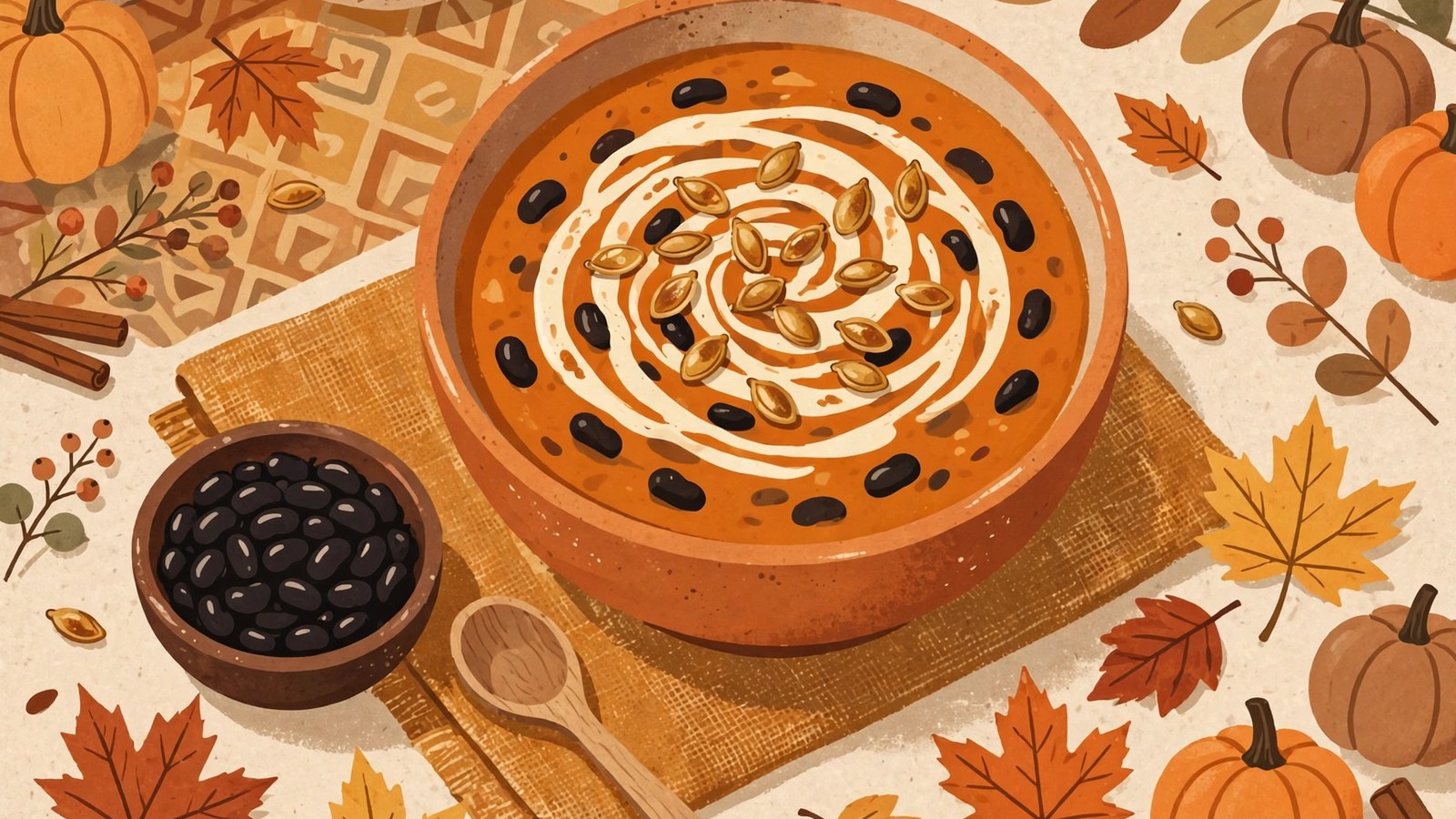
Halloween pumpkin black bean soup is built for a night that does not sit still. The porch light is on, visitors arrive in waves, and people eat at different times, sometimes in costume and sometimes between trips to the door. A pot of soup solves that pattern better than a dish that must be served the moment it leaves the oven. It can be made ahead, held warm, ladled into small cups for a taste or large bowls for dinner, and finished by each person at a simple toppings bar.
The soup itself leans on pantry staples: canned pumpkin puree, canned black beans, broth, and warm spices. Pumpkin gives the soup body and gentle sweetness. Black beans give it substance and savory depth. Cumin and smoked paprika add warmth and a smoky note, and lime juice at the end brightens the whole pot. A swirl of sour cream or a plant based alternative cools the spice, and toasted pumpkin seeds add the crunch that a smooth soup needs.
This guide gives the full recipe, the reasons each step matters, and the food safety detail that matters most for a make ahead soup: how quickly to cool it, how long it keeps in the refrigerator and freezer, and how to reheat it safely. Storage and reheating statements were checked against FoodSafety.gov and the United States Department of Agriculture Food Safety and Inspection Service (USDA FSIS) on 30 October 2026. Nutrition notes were checked against United States Department of Agriculture (USDA) household food fact sheets for canned pumpkin and canned black beans on the same date.
Why This Soup Suits Halloween Night
A Halloween meal has to serve people who are not eating on a schedule. Soup waits well in a way that roasted or fried food does not. Kept hot at 140 degrees Fahrenheit or above, a pot can stay ready without repeated reheating, and each bowl takes seconds to ladle.
It also suits a mixed table. As written, with maple syrup instead of honey and plant based toppings, the soup is plant based, so it can serve vegetarian and vegan guests without a separate pot. Guests who want dairy add sour cream to their own bowl. That separation is the point of the toppings bar: the base stays broadly suitable, and personal choices happen in the bowl.
Color helps without gimmicks. The soup is a deep warm orange, and dark beans, green herbs, and pale sour cream echo the season without food coloring. Finally, the canned ingredients keep in the pantry, so the shop can happen days ahead. Fresh items are limited to onion, bell pepper, garlic, limes, and toppings you choose.
Canned Pumpkin and Canned Beans: What You Are Actually Buying
Canned pumpkin puree is not the same product as pumpkin pie filling, and the difference controls the recipe. Puree should list pumpkin as the ingredient, sometimes with water. Pie filling is already sweetened and spiced for dessert, and it will make the soup sweet in a way that salt and lime cannot fully correct. Read the front of the can and the ingredient list before you buy. If the can says pie filling or pie mix, save it for dessert and buy puree for the pot.
The USDA household food fact sheet for canned pumpkin, no salt added, notes that 1 cup of canned pumpkin counts as 1 cup in the Vegetable group. It describes pumpkin as an important source of nutrients including vitamins A and C, B vitamins, fiber, and potassium, and places pumpkins in the red and orange vegetable category alongside red peppers, tomatoes, carrots, and sweet potatoes. The same fact sheet advises storing unopened cans in a cool, clean, dry place, and storing any remaining opened pumpkin in a tightly covered container that is not made from metal in the refrigerator.
Fresh pumpkin works with trade offs. It varies in water content and sweetness, and it adds peeling, roasting, and pureeing. Canned puree is consistent, blends smoothly, and keeps cooking time short. On Halloween night, consistency is a feature.
Canned black beans bring a different kind of convenience. The USDA household food fact sheet for canned black beans, low sodium, notes that canned black beans are precooked, require no soaking, and can be used in place of cooked dried beans in any recipe, and that half a cup counts as 2 ounces in the Protein group or as half a cup in the Vegetable group. It describes black beans as low in fat and a good source of plant protein, supplying protein, iron, zinc, and magnesium, and directs readers to the product Nutrition Facts panel for specific figures. That is the right habit here: brands differ, especially on sodium, so read the can you bought. It gives the same pantry advice as for pumpkin: store unopened cans in a cool, clean, dry place, and after opening, store unused beans out of the can in a tightly covered container in the refrigerator.
Draining and rinsing the beans is part of the recipe, not an optional tidy up. The packing liquid is starchy and salty, and adding it would cloud the soup and make the salt level harder to control. Rinse until the water runs mostly clear, then add the beans themselves. The soup has plenty of body from the pumpkin, so it does not need the bean liquid as a thickener.
Ingredients
This recipe makes about 6 servings, roughly one and a half cups each. The arithmetic is simple: about 9 cups of finished soup divided by 6 servings equals 1.5 cups per serving. Scale it up by half again for a larger party, which gives 9 servings, using a larger pot and tasting carefully for salt and lime as you go, because a larger pot does not need exactly one and a half times the salt.
- 2 tablespoons olive oil
- 1 medium yellow onion, diced
- 3 cloves garlic, minced
- 1 red bell pepper, diced
- 1 tablespoon tomato paste
- 2 teaspoons ground cumin
- 1 teaspoon smoked paprika
- 1/2 teaspoon ground coriander
- 1/4 teaspoon chipotle powder, or more to taste (optional)
- 1 can (15 ounces) pumpkin puree, not pumpkin pie filling
- 2 cans (15 ounces each) black beans, drained and rinsed
- 4 cups low sodium vegetable broth
- 1 can (14.5 ounces) fire roasted diced tomatoes, undrained
- 1 tablespoon lime juice, plus extra wedges for serving
- 1 teaspoon kosher salt, plus more to taste
- 1/2 teaspoon black pepper
- 1 teaspoon maple syrup or honey, optional, to round out acidity (use maple syrup for a fully plant based version)
For serving, choose what suits your table: sour cream or a plant based alternative, toasted pumpkin seeds, chopped fresh cilantro, sliced scallions, crushed tortilla chips, and lime wedges. Check labels if you are cooking for someone with an allergy, since toppings and broth vary by brand.
Each ingredient has a job. Olive oil carries the spices. Tomato paste, cooked briefly in oil, adds concentrated savory depth. Cumin is the earthy base, smoked paprika adds smoke, coriander adds a lighter note, and chipotle adds heat as well as smoke. Lime juice is not an afterthought: its acid keeps pumpkin and beans from tasting flat. A teaspoon of maple syrup or honey does not make the soup sweet; it rounds sharp acidity. Taste before and after, and stop at balance.
How to Make It, Step by Step
Start with the aromatics. Warm the olive oil in a large pot or Dutch oven over medium heat. Add the onion and bell pepper with a pinch of salt and cook, stirring occasionally, until the onion softens and turns translucent, about 6 to 8 minutes. Stir in the garlic and tomato paste and cook for 1 minute more, until the garlic smells fragrant and the paste darkens slightly. This short step matters. Cooking the paste in oil deepens its flavor and keeps the soup from tasting raw.
Add the spices: cumin, smoked paprika, coriander, and chipotle powder if using, and stir for about 30 seconds. Spices bloom quickly in warm oil, and that brief toast wakes them up. Do not extend this step to several minutes, because ground spices scorch quickly once the pan is dry. Pour in a splash of broth and scrape the bottom of the pot to loosen any browned bits. Those bits are flavor, not a mistake, and the broth lifts them into the soup.
Add the pumpkin puree, black beans, remaining broth, and diced tomatoes with their liquid. Stir well, breaking up the pumpkin so it dissolves into the liquid. Bring the pot to a gentle simmer, then reduce the heat to low, cover partially, and cook for 25 to 30 minutes, stirring occasionally. The soup should thicken slightly and the flavors should meld. If it gets thicker than you like, add broth a half cup at a time. A partial cover limits splatter while letting a little steam escape.
For a smoother soup, blend part of it. Use an immersion blender directly in the pot for short bursts, or transfer about 2 cups to a blender, blend until smooth, and stir it back in. Blending only part of the pot keeps some whole beans and texture. Two cups blended and returned is the balance point: the returned puree thickens the broth, and the unblended beans keep the bowl varied.
If you use a countertop blender, follow hot liquid safety without shortcuts. Do not fill it more than halfway with hot soup, hold the lid down with a folded towel, and vent the steam as your blender manual directs. Hot soup expands, and a sealed, overfilled blender is a burn risk. An immersion blender should be fully submerged before it is switched on, and it should be switched off before it is lifted out, or hot soup will splatter.
Finish with lime juice, salt, pepper, and the optional maple syrup or honey. Taste before you serve. Pumpkin soups often need more salt and acid than expected, and the right amount of lime is what keeps the soup from tasting flat. Adjust in small increments: a little more lime, a pinch more salt, and taste again. Add the lime at the end rather than during the long simmer, because its bright flavor fades with prolonged heat.
Texture, Heat, and Salt: How to Adjust at the Stove
Thickness is controlled by three levers. Liquid: broth added a half cup at a time thins the soup. Blending: blending more of the soup thickens it, because blended beans and pumpkin suspend in the liquid. Time: simmering uncovered for a few extra minutes reduces and concentrates it. Use one lever at a time, stir, and wait before judging.
Heat is best kept mild in the base pot when the table includes mixed tolerance. With only cumin and smoked paprika, the soup is warm rather than hot. Chipotle powder adds real heat, so start with the quarter teaspoon listed, taste after the simmer, and add more only then. For a crowd, the safer pattern is a mild pot and hot sauce on the table. That pattern lets each person raise the heat in their own bowl without making the whole batch too hot for anyone.
Salt needs the same patience. Canned beans, broth, and tomatoes all bring different amounts of sodium depending on the brand, even when the broth is labeled low sodium. That is why the recipe seasons in stages: a pinch with the onion, a measured teaspoon near the end, and a final taste. If the soup tastes dull, check acid before adding much more salt. A squeeze of lime often restores brightness that looks at first like a salt problem.
Making It Ahead and Holding It for a Party
This soup is a good make ahead candidate. Cook it the day before, cool it promptly using the storage steps below, and refrigerate it. Reheating often improves it, as the spices have more time to settle into the beans and pumpkin. When you reheat, bring the soup to a rolling boil on the stove, stirring well, and then reduce to a simmer until it is steaming throughout.
For a party, holding temperature matters as much as flavor. FoodSafety.gov advises keeping food out of the danger zone, between 40 degrees Fahrenheit and 140 degrees Fahrenheit, by using a heat source such as a chafing dish, warming tray, or slow cooker. FSIS states hot food must be kept at 140 degrees Fahrenheit or warmer. In practice, a slow cooker on warm is only suitable if the soup actually stays at or above that temperature. Put the soup in already steaming hot, keep the lid on, and do not use it to reheat cold soup. Reheat on the stove to a rolling boil first, then transfer it to hold.
Set out toppings separately so they stay crisp and guests can serve themselves safely, each bowl with its own spoon. Label anything that matters for allergies or dietary needs, especially the dairy and plant based bowls, which can look similar. Small cups work well for a taste before a full bowl. If this is the main dinner rather than a starter, pair it with cornbread, crusty bread, quesadillas, or rice. Keep the pairing simple.
Variations Worth Trying
The base recipe is intentionally flexible. Once you know the method, you can change the emphasis without changing the technique.
For a smokier version, increase the smoked paprika slightly and add a minced chipotle pepper in adobo sauce instead of chipotle powder. Taste as you go, since chipotles in adobo vary in heat and bring extra salt and acidity with them. For a milder version for children, leave out the chipotle entirely and rely on cumin and paprika for warmth. The soup will still be flavorful, because the smoke comes mainly from the paprika and the fire roasted tomatoes.
For extra vegetables, add a diced sweet potato with the broth and simmer until tender, or stir in a couple of handfuls of baby spinach at the end until just wilted. Sweet potato makes the soup thicker and sweeter and needs the full simmer, so add it at the start. Spinach needs almost no cooking time.
For a creamier finish, stir in a half cup of coconut milk at the end and warm it through without boiling hard. For a chunkier, chili like version, skip blending and add an extra can of beans. The result is closer to a stew and holds up well over rice. Taste again for salt and lime, because the balance shifts.
For a different bean or broth, keep the quantities and the timing. White beans give a lighter color and a softer texture. Chicken broth can replace vegetable broth if a plant based soup is not needed at your table, but that change ends the vegetarian and vegan suitability of the base, so label it clearly if you make it.
Food Safety, Storage, and Reheating
Cool leftovers promptly, and treat the clock as part of the recipe. FoodSafety.gov states that bacteria that cause food poisoning multiply quickest between 40 degrees Fahrenheit and 140 degrees Fahrenheit, that your refrigerator should be set to 40 degrees Fahrenheit or below and your freezer to 0 degrees Fahrenheit or below, and that perishable foods should be refrigerated within 2 hours, or within 1 hour if the food is exposed to temperatures above 90 degrees Fahrenheit. USDA FSIS gives the same rule for leftovers: within 2 hours of cooking food, or after it is removed from an appliance keeping it warm, leftovers must be refrigerated, and perishable food left at room temperature for more than 2 hours, or more than 1 hour when the temperature is over 90 degrees Fahrenheit, should be thrown away.
Cooling speed matters as well as the deadline. FSIS explains that food should be cooled rapidly to 40 degrees Fahrenheit or below, and large amounts should be divided into shallow containers. Its example is directly on point: a big pot of soup will take a long time to cool, inviting bacteria to multiply, so divide it into smaller containers. FSIS also notes hot food can be placed directly in the refrigerator, so do not leave soup on the counter to cool first. Cover or seal leftovers and refrigerate or freeze them immediately.
The two federal sources frame the freezer window slightly differently, so both are given here. The FoodSafety.gov Cold Food Storage Chart lists soups and stews at 3 to 4 days in the refrigerator at 40 degrees Fahrenheit or below, and 2 to 3 months in the freezer at 0 degrees Fahrenheit or below. That soup specific line is the one to use for this dish. FSIS general leftovers guidance says 3 to 4 days refrigerated or 3 to 4 months frozen, and that frozen leftovers are safe indefinitely but lose moisture and flavor over time. The chart makes the same quality point: freezer guidelines are for quality only. In short, use 2 to 3 months frozen for best quality for this soup.
Thaw frozen soup safely. FSIS lists three safe ways to thaw leftovers: in the refrigerator, in cold water, and in the microwave oven. Refrigerator thawing takes the longest but the leftovers stay safe the entire time, and after thawing the food should be used within 3 to 4 days or can be refrozen. Cold water thawing is faster but requires the frozen leftovers to be in a leak proof package or plastic bag, and foods thawed by the cold water method should be cooked before refreezing. Microwave thawing is the fastest method, and when thawing in a microwave, heating should continue until the food reaches 165 degrees Fahrenheit as measured with a food thermometer. Never thaw soup on the counter.
You do not have to thaw before reheating. FSIS states that it is safe to reheat frozen leftovers without thawing, either in a saucepan or microwave in the case of a soup or stew, although reheating will take longer than if the food is thawed first. That saucepan option suits this soup well: heat it gently at first so the frozen block does not scorch on the bottom, stir as it loosens, and then bring it fully to a boil.
Reheat refrigerated or thawed soup thoroughly. FSIS states that when reheating leftovers, you should be sure they reach 165 degrees Fahrenheit as measured with a food thermometer, and that sauces, soups, and gravies should be reheated by bringing them to a rolling boil. Cover leftovers to reheat, which retains moisture and ensures that food will heat all the way through. For soup, the rolling boil is the visible check that matches the instruction: stir well so no cool pocket remains in the center, and let the whole surface boil, not just the edges. Do not reheat the same portion repeatedly. Reheat only what you plan to serve, and keep the rest refrigerated within its 3 to 4 day window. FSIS notes that it is safe to refreeze any food remaining after reheating previously frozen leftovers to 165 degrees Fahrenheit as measured with a food thermometer, and that if a large container of leftovers was frozen and only a portion is needed, it is safe to thaw the leftovers in the refrigerator, remove the needed portion, and refreeze the remainder of the thawed leftovers without reheating it.
A final kitchen safety note: pumpkin puree and hot soup can splatter when simmering. Keep the pot partially covered, stir with a long handled spoon, and keep children back from the stove while the pot is hot.
Allergen and Dietary Notes
Allergen notes deserve a careful read of labels rather than assumptions. This soup contains no wheat, egg, dairy, or nuts as written, but broth, canned tomatoes, and toppings vary by brand. Check the labels of the exact products you bought, especially if you are cooking for someone with an allergy. Keep dairy toppings in a separate bowl with its own spoon, and use separate spoons for each topping.
Pumpkin seeds are seeds, not tree nuts, but people with seed allergies should follow their own guidance. Keep the seeds in their own bowl so a guest can skip them without skipping the soup. Dietary labels need the same precision. Honey makes the soup vegetarian but not vegan; maple syrup keeps it plant based. Chicken broth makes it neither. Keeping changes in the bowl rather than the pot preserves choice.
Frequently Asked Questions
Can I use fresh pumpkin instead of canned?
Yes, but expect a different texture and a longer process. Roast peeled pumpkin until very soft, puree it until smooth, and use about 2 cups of puree in place of one 15 ounce can. Taste for sweetness and salt, since fresh pumpkin varies more than canned in water content and sweetness. On a busy Halloween night, canned puree is the more predictable choice, because it is consistent from can to can and needs no roasting or peeling.
Is this soup vegan?
It is vegan as written if you use maple syrup rather than honey, vegetable broth, and plant based toppings. Check the broth label if that matters to your guests, since some broths include animal derived ingredients even when the name sounds neutral. Keep any sour cream in a separate bowl, not stirred into the pot, so the soup itself stays plant based for everyone.
Can I freeze it?
Yes. Cool it completely and promptly in shallow containers, portion it into freezer safe containers leaving headspace for expansion, and label each container with the date. The FoodSafety.gov Cold Food Storage Chart gives soups and stews 2 to 3 months in the freezer at 0 degrees Fahrenheit or below for best quality. Thaw it overnight in the refrigerator, in cold water in a leak proof package, or in the microwave, and reheat it to a rolling boil. Toppings such as sour cream, seeds, and chips should be added fresh, not frozen with the soup.
How spicy is it?
With only smoked paprika and cumin, it is mild and warm rather than hot. Chipotle powder adds heat, so start with the quarter teaspoon listed and add more after tasting. Chipotle in adobo, if you use it in the smokier variation, varies in heat by brand, so the same caution applies. For a crowd with mixed heat tolerance, serve the soup mild and offer hot sauce on the side.
What if the soup is too thick or too thin?
Thickness is easy to fix, and the method section gives the three levers. Thin it with broth, a half cup at a time. To thicken it, simmer uncovered for a few extra minutes, or blend a larger portion of the soup and stir it back in. Use one lever at a time and stir well before judging. Either adjustment should be followed by a final taste for salt and lime, because changing the concentration changes the seasoning balance.
How far ahead can I make it?
Make it the day before for the best balance of convenience and quality, cool it in shallow containers, and refrigerate it within 2 hours. Use refrigerated soup within 3 to 4 days. If you need to make it further ahead, freeze it instead and plan thawing time in the refrigerator. Reheat only the amount you will serve, to a rolling boil, rather than reheating the whole batch repeatedly.
Keep reading: New Year’s Black-Eyed Pea Soup: A Lucky, Hearty Start to the Year
Keep reading: Slow-Cooker Vegetarian Chili: Set It in the Morning, Serve It at Night
Sources & references
- FoodSafety.gov, Cold Food Storage Chart. Used for soups and stews with vegetable or meat added keeping 3 to 4 days in the refrigerator at 40 degrees Fahrenheit (4 degrees Celsius) or below and 2 to 3 months in the freezer at 0 degrees Fahrenheit (minus 18 degrees Celsius) or below, and for the chart note that freezer guidelines are for quality only because frozen foods stored continuously at 0 degrees Fahrenheit or below can be kept indefinitely.
- FoodSafety.gov, 4 Steps to Food Safety. Used for bacteria multiplying quickest between 40 degrees Fahrenheit and 140 degrees Fahrenheit, the refrigerator being set to 40 degrees Fahrenheit or below and the freezer to 0 degrees Fahrenheit or below, refrigerating perishable foods within 2 hours or within 1 hour above 90 degrees Fahrenheit, placing leftovers in shallow containers and refrigerating promptly for quick cooling, and keeping food hot at 140 degrees Fahrenheit or above after cooking by using a heat source such as a chafing dish, warming tray, or slow cooker.
- USDA Food Safety and Inspection Service, Leftovers and Food Safety. Used for bacteria growing rapidly between 40 degrees Fahrenheit and 140 degrees Fahrenheit, hot food being kept at 140 degrees Fahrenheit or warmer, refrigerating leftovers within 2 hours (1 hour above 90 degrees Fahrenheit) and discarding perishable food left longer, cooling rapidly by dividing large amounts of food into shallow containers with the big pot of soup as the example, hot food being placeable directly in the refrigerator, covering or sealing leftovers and refrigerating or freezing immediately, leftovers keeping 3 to 4 days in the refrigerator or 3 to 4 months in the freezer and frozen leftovers being safe indefinitely but losing moisture and flavor over time, the three safe thawing methods (refrigerator, cold water in a leak proof package, and microwave), using thawed food within 3 to 4 days, reheating frozen leftovers without thawing in a saucepan or microwave for soup or stew, reheating leftovers to 165 degrees Fahrenheit as measured with a food thermometer, reheating sauces, soups, and gravies by bringing them to a rolling boil, covering leftovers to reheat, and the refreezing rules for reheated and portioned leftovers.
- USDA Food and Nutrition Service, Pumpkin, No Salt Added, Canned: Household Food Fact Sheet (October 2020). Used for canned pumpkin counting as a Vegetable group food with 1 cup counting as 1 cup in the Vegetable group, pumpkin being an important source of vitamins A and C, B vitamins, fiber, and potassium, pumpkins counting toward the red and orange vegetable category, storing unopened cans in a cool, clean, dry place, and storing remaining opened pumpkin in a tightly covered container that is not made from metal in the refrigerator.
- USDA Food and Nutrition Service, Black Beans, Canned, Low Sodium: Household Food Fact Sheet (October 2019). Used for half a cup of black beans counting as 2 ounces in the Protein group or as half a cup in the Vegetable group, black beans being low in fat and a good source of plant protein and supplying protein, iron, zinc, and magnesium, canned black beans being precooked with no soaking required and usable in place of cooked dried beans, referring readers to the product Nutrition Facts panel for specific information, storing unopened cans in a cool, clean, and dry place, and storing unused opened beans out of the can in a tightly covered container in the refrigerator.


