Short answer
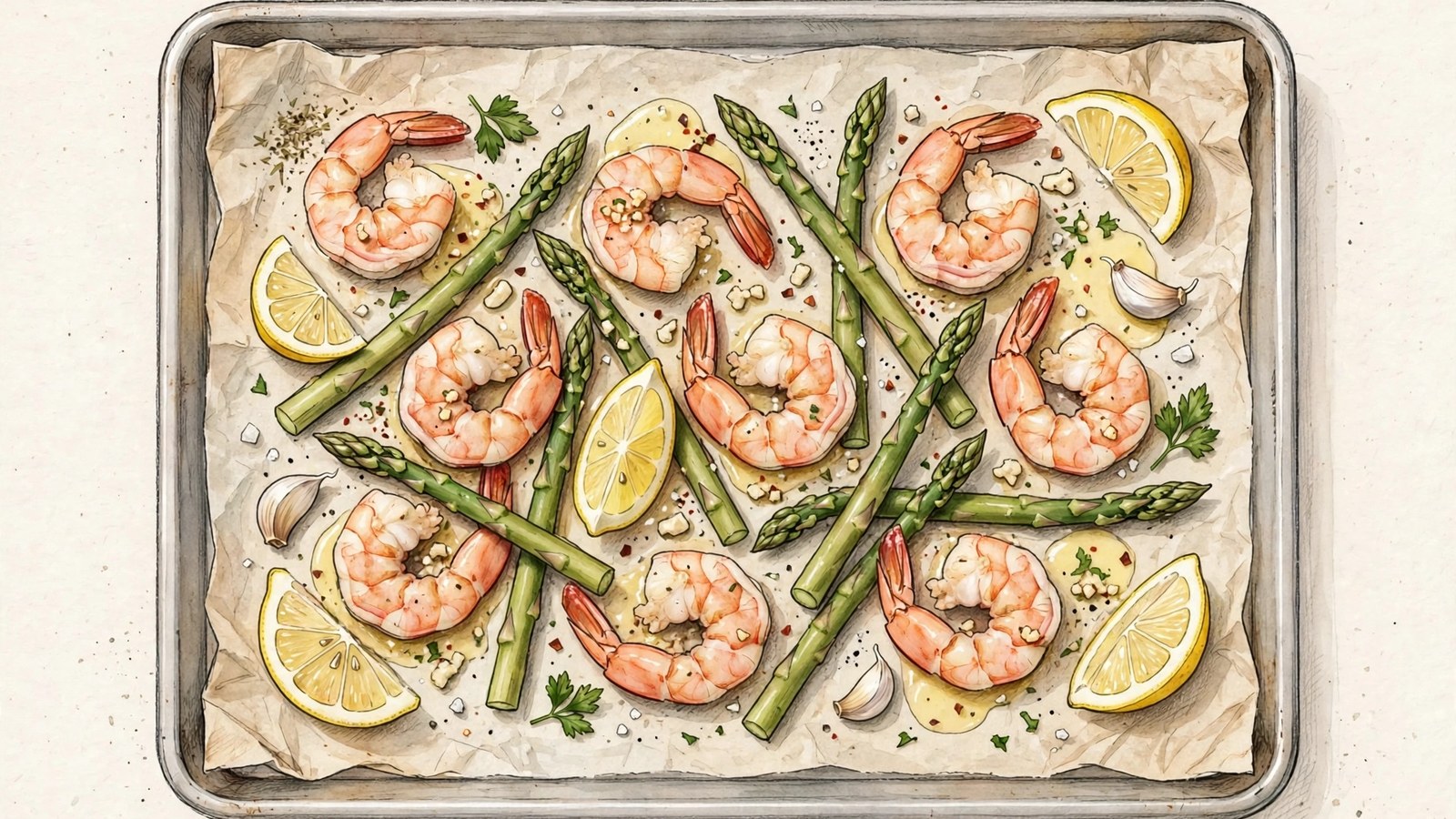
- Roast the asparagus first, then add the shrimp. Preheat the oven to 425°F. Toss 1 1/2 pounds of trimmed asparagus with butter, olive oil, salt, and pepper, spread it in a single layer on a large rimmed sheet pan, and roast it alone for 5 minutes. Toss 1 1/2 pounds of peeled, deveined, well dried shrimp with melted butter, garlic, and lemon zest, add them to the pan in a single layer, and roast for 5 to 7 minutes more. The shrimp are done when the flesh is pearly or white and opaque, firm, and curled into a loose C shape. Finish with lemon juice and parsley, serve promptly, and refrigerate leftovers within 2 hours.
Introduction
Sheet pan garlic butter shrimp and asparagus sounds simple, and then it quietly falls apart in many home kitchens: the shrimp turn rubbery, the asparagus comes out raw in the middle or limp at the tips, and the garlic butter that should become a pan sauce scorches or disappears. The dish avoids most of those traps, but only if you respect one basic fact. Shrimp and asparagus cook at different speeds, and putting them on a single pan does not erase that difference.
This guide explains how to time the two so they finish together, how to build real garlic butter flavor without burning the garlic, and how to turn one pan into a complete meal. It also covers the food safety points that matter most for seafood at home: how to buy and store shrimp, how to thaw it safely, how to judge doneness, and how to handle leftovers. Safety statements were checked against FoodSafety.gov, the United States Food and Drug Administration (FDA), and the United States Department of Agriculture Food Safety and Inspection Service (USDA FSIS) on 30 October 2026.
The recipe serves four. It takes about 10 minutes of preparation and 10 to 12 minutes in the oven. If you are cooking for two, halve the shrimp and asparagus but keep the full amount of butter sauce. A little extra sauce is never a problem when there is bread or rice to catch it.
Why the Sheet Pan Suits This Dish
Shrimp cook in minutes, which makes them ideal for high heat and a short stay in the oven. Asparagus, especially thin spears, also cooks quickly, but it needs direct contact with the hot pan to brown rather than steam. A rimmed sheet pan gives both foods space and heat at the same time, and the butter melts into a sauce right on the pan. There is no separate skillet to wash and no sauce to reduce on the stove.
The catch is crowding. When shrimp and asparagus are piled on top of each other, steam gets trapped, the asparagus goes soft, and the shrimp turn gray instead of pink and lightly browned at the edges. Spread everything in a single layer with a little space between pieces, and use a large pan. A standard half sheet pan is the right tool. If your pan is small, use two pans rather than squeezing everything onto one.
Choosing the Shrimp and Asparagus
Buy large or extra large shrimp, either fresh or frozen and thawed. Smaller shrimp overcook in the time it takes the asparagus to soften, and they are harder to remove at the right moment. Look for shrimp that are already peeled and deveined if you want the fastest prep, but keep the tails on if you like the way they look and do not mind them at the table. Pat the shrimp very dry with paper towels. Dry shrimp brown. Wet shrimp steam.
Labels can mislead if you shop by name alone. Shrimp are sold by count per pound: 21/25 means about 21 to 25 shrimp make up one pound, and the smaller the count, the larger the shrimp. Larger sizes are sometimes shown as U/10 or U/12, meaning under 10 or under 12 per pound. A sizing guide reproduced by the Smithsonian Institution lists, for unpeeled shrimp without heads, extra jumbo at 16/20, jumbo at 21/25, extra large at 26/30, and large at 31/35. The same guide warns that there is no official guideline for what names such as jumbo or large signify, so the count is the figure to trust. For this recipe, a count in the 16/20 to 26/30 range stays juicy through the short roast. If you buy a different count, adjust the time using the timing notes below rather than changing the oven temperature.
At the counter, freshness checks matter. FoodSafety.gov advises buying only seafood that is refrigerated or displayed on a thick bed of fresh ice, preferably in a case or under a cover. Shrimp, scallop, and lobster flesh should be clear with a pearl-like color and little or no odor, and fish should smell fresh and mild, not fishy, sour, or ammonia-like. For frozen shrimp, the FDA adds package checks: do not buy frozen seafood if its package is open, torn, or crushed on the edges, avoid packages with frost or ice crystals, which may mean it was stored a long time or thawed and refrozen, and avoid packages where the frozen flesh is not hard.
For asparagus, medium spears, roughly the thickness of a pencil, are the most forgiving. Very thin spears can go limp before the shrimp are done, and very thick spears may still be woody in the center. Penn State Extension advises selecting spears that are firm, straight, and uniformly sized, with closed, compact tips. Spears of similar thickness also finish at similar times. Snap off the woody ends by bending each spear until it breaks, or trim the bottom inch or so with a knife. Penn State Extension suggests trimming at least 1/2 inch from the bottom. If your spears are thick, peel the lower third lightly so they cook evenly.
Buying, Storing, and Thawing Before You Cook
Good timing in the oven starts with safe handling before the oven is on. FoodSafety.gov says to put seafood on ice or in the refrigerator or freezer within 2 hours after buying it, or within 1 hour if it is exposed to a temperature of 90°F or more, such as in a car parked in the sun. If seafood will be used within 2 days after purchase, store it in a clean refrigerator at 40°F or below, and use a refrigerator thermometer to check. Otherwise, wrap it tightly in plastic, foil, or moisture-proof paper and store it in the freezer.
Keep asparagus cold too. Penn State Extension says fresh asparagus is best eaten or preserved the day it is purchased or harvested, but will keep up to 3 days if refrigerated, wrapped in a damp cloth in a perforated plastic bag, or standing upright in about 1 inch of water in a glass or measuring cup in the refrigerator.
Frozen shrimp work well here, but thaw them properly first. The FDA says to thaw frozen seafood gradually by placing it in the refrigerator overnight. If you have to thaw it quickly, seal it in a plastic bag and immerse it in cold water, changing the water every 30 minutes, as FoodSafety.gov describes. Or, if the food will be cooked immediately afterward, microwave it on the defrost setting and stop the cycle while it is still icy but pliable. Do not thaw shrimp in warm water or at room temperature, and cook shrimp thawed quickly in cold water or in the microwave promptly.
Prevent cross-contamination while you prep. FoodSafety.gov advises washing your hands for at least 20 seconds with soap and water after handling any raw food, and washing cutting boards, dishes, utensils, and countertops with soap and hot water between preparing raw seafood and preparing cooked or ready-to-eat foods. Keep raw shrimp separate from the parsley, lemon, and salad, and do not put cooked shrimp back on a plate that held them raw.
Ingredients
- 1 1/2 pounds large shrimp, peeled and deveined, tails on or off as you prefer
- 1 1/2 pounds asparagus, woody ends trimmed
- 5 tablespoons unsalted butter, melted
- 4 cloves garlic, finely minced
- 1 tablespoon olive oil
- 1 teaspoon lemon zest, plus lemon wedges for serving
- 1/2 teaspoon kosher salt, plus more to taste
- 1/4 teaspoon black pepper
- 1/4 teaspoon red pepper flakes (optional)
- 2 tablespoons chopped fresh parsley
- Cooked rice, crusty bread, or pasta, for serving (optional)
Method
Preheat the oven to 425°F. Line a large rimmed sheet pan with parchment paper for easy cleanup, or leave it unlined if you prefer more browning.
Toss the asparagus first. In a large bowl, combine the asparagus with 1 tablespoon of the melted butter, the olive oil, half the salt, and half the pepper. Spread the spears in a single layer on the pan, leaving space between them.
Roast the asparagus alone for 5 minutes. This head start is the key step most recipes skip. It lets the asparagus begin to soften and brown before the shrimp arrive, so the two finish at the same time.
While the asparagus roasts, toss the shrimp in a bowl with the remaining melted butter, the garlic, lemon zest, remaining salt and pepper, and red pepper flakes if using. Do not add the shrimp early, and do not scatter garlic bare on the pan, where it will burn quickly in a hot oven.
Remove the pan from the oven, push the asparagus to the sides if needed, and arrange the shrimp in a single layer among the spears. Spoon any butter left in the bowl over the shrimp. Return the pan to the oven and roast for 5 to 7 minutes more, until the shrimp are pink, opaque, and curled into a loose C shape. Shrimp that have curled into a tight O shape are usually overcooked. Scatter the parsley over the pan, squeeze lemon juice over everything, and serve at once, straight from the pan or tipped onto a warm platter with the butter spooned over the top.
How to Tell When Shrimp Are Done
Federal guidance treats shrimp differently from fin fish, and the distinction prevents both undercooking and the rubbery result of chasing the wrong number. The FoodSafety.gov Safe Minimum Internal Temperature Chart, updated 21 November 2024, lists fish such as salmon, tuna, and cod at 145°F (63°C), or until the flesh is no longer translucent and separates easily with a fork. For shrimp, lobster, crab, and scallops, the same chart gives no single thermometer number. It says to cook until the flesh is pearly or white, and opaque.
The FDA states the broader rule and the visual test side by side. Its seafood guidance says most seafood should be cooked to 145°F, and that if you do not have a food thermometer, there are other ways to tell whether seafood is done. For shrimp, scallops, crab, and lobster, it says the flesh becomes firm, pearly, and opaque.
Use the visual test as the primary check here, together with the shape test. Properly cooked shrimp are opaque throughout, firm to the touch, and curled gently. Translucent centers mean they need another minute. A tight, rubbery curl means they have gone too far, and the best fix is to serve them immediately rather than returning them to the oven.
Because shrimp continue to cook from residual heat, pull the pan when the last few shrimp still look just barely opaque in the thickest part. They will finish as you add the parsley and lemon. Waiting until every shrimp looks fully firm in the oven usually means some will be overcooked at the table.
One more safety check happens before cooking. Both the FDA and FoodSafety.gov warn that uncooked spoiled seafood can have sour, rancid, fishy, or ammonia odors, and that these odors become stronger after cooking. If you smell sour, rancid, or fishy odors in raw or cooked seafood, do not eat it. If you smell a fleeting or persistent ammonia odor in cooked seafood, do not eat it. Cooking does not rescue spoiled shrimp.
Building Flavor Without Burning the Garlic
Garlic burns easily at 425°F, and burnt garlic turns bitter in a way that no amount of lemon can rescue. Three choices protect it. First, mince the garlic finely but do not crush it into a paste, which burns faster. Second, keep most of the garlic clinging to the shrimp rather than scattered bare on the hot pan. Third, consider adding half the garlic to the shrimp before roasting and stirring the other half into the hot butter on the pan right after it comes out of the oven. The residual heat blooms the raw garlic without scorching it, and you get a fresher garlic note alongside the roasted one.
Lemon also matters more than it seems. Lemon zest added before cooking survives the oven and gives a bright, almost floral note. Lemon juice added after cooking gives sharpness. Use both: zest in the butter, juice squeezed over the finished pan. If you only have bottled lemon juice, use it after cooking, not before, so it does not make the shrimp watery.
Butter is the third flavor decision. Five tablespoons is enough to coat the pan and form a light sauce without drowning the asparagus. If the butter browns slightly at the edges, that nuttiness is welcome. If it smokes or turns dark brown, the garlic will taste bitter, so use a larger pan next time and check the garlic placement.
Timing by Shrimp Size
Size changes the timing more than any other variable, which is why the count per pound in the buying section matters at the stove. Use the recipe timing as the center, then adjust:
| Shrimp count per pound | What changes | Guide for the second roast |
|---|---|---|
| 16/20, extra jumbo in the sizing guide | Largest shrimp in the suggested range, slowest to turn opaque | Start checking at 6 minutes, expect 6 to 8 minutes |
| 21/25, jumbo in the sizing guide | The recipe center, balanced against medium asparagus | Start checking at 5 minutes, expect 5 to 7 minutes |
| 26/30, extra large in the sizing guide | Smaller and faster, easier to overcook | Start checking at 4 minutes, expect 4 to 6 minutes |
| 31/40 or smaller | Too small for the full asparagus timing | Shorten the second roast and check very early, or choose larger shrimp |
When in doubt, check the smallest shrimp first and pull the pan when they are done. A minute of extra heat hurts small shrimp more than it helps large ones. If sizes vary widely in one bag, remove the smallest shrimp as they turn opaque and let the largest finish.
Variations That Keep the Dish Intact
Once the timing is right, the dish adapts easily. For a Mediterranean leaning version, add a handful of halved cherry tomatoes with the asparagus and finish with crumbled feta and chopped olives. For a little more heat, increase the red pepper flakes or add a pinch of smoked paprika to the butter. For a lower-dairy version, replace half the butter with olive oil. The sauce will be thinner, but the garlic and lemon still carry it.
If asparagus is out of season or expensive, green beans are the closest substitute because they roast in about the same time. Broccoli florets also work, but cut them small and give them the same 5 minute head start. Zucchini is a poor substitute here because it releases water and softens too quickly at this temperature.
Each variation still has to respect the rules that make the original work. The vegetable must be dry, spread out, and given a head start if it is denser than asparagus. Quick-cooking additions go in with the shrimp, not at the start.
What to Serve With It
This dish is deliberately light, so pair it with something that catches the butter. Crusty bread is the simplest choice: tear it, toast it lightly, and use it to mop the pan. Cooked rice or orzo turns the pan into a fuller dinner, and a simple green salad with a sharp vinaigrette balances the butter. For a one-pan meal with no extra pot, add a can of drained and rinsed white beans with the shrimp. They warm through in the same time and soak up the garlic butter.
For a weeknight table, keep the sides simple. One starch and one fresh element are enough. Anything more turns a 25 minute dinner into a project, which defeats the point of the sheet pan. On nutrition, keep claims modest: the FDA and FoodSafety.gov describe fish and shellfish as containing high-quality protein and other essential nutrients and as an important part of a healthful diet. No per-serving nutrition figure is given here, because the result depends on the shrimp, butter, and sides you actually use.
Storage and Food Safety
Shrimp and asparagus are both perishable, so handle leftovers promptly. USDA FSIS explains why the clock matters: bacteria grow rapidly between 40°F and 140°F, hot food must be kept hot at 140°F or warmer, and within 2 hours of cooking, or after food is removed from an appliance keeping it warm, leftovers must be refrigerated. Throw away perishable food left at room temperature for more than 2 hours, or more than 1 hour if the temperature is over 90°F. The FDA gives the same limits for seafood.
Refrigerate leftovers within that window in a shallow, covered container. FSIS says to divide large amounts of food into shallow containers to cool rapidly, cover leftovers or seal them in airtight packaging, and refrigerate or freeze them immediately. Hot food can be placed directly in the refrigerator. For this dish, tip the shrimp and asparagus off the hot pan into a shallow container rather than storing them on the pan, where the shrimp keep cooking.
FSIS says leftovers can be kept in the refrigerator for 3 to 4 days or frozen for 3 to 4 months, and that frozen leftovers are safe indefinitely but can lose moisture and flavor over time. When reheating, FSIS says to be sure leftovers reach 165°F as measured with a food thermometer, and to cover them so moisture is retained and food heats through. Warm leftovers gently until verified at 165°F, and accept that reheated asparagus will be softer. Or eat the shrimp cold over a salad the next day, within the same 3 to 4 day window.
Do not leave the finished pan sitting in a cooling oven. The oven holds heat, the shrimp keep cooking, and the food spends time in the range where bacteria grow most quickly. Serve promptly, then store what is left.
Allergy and Ingredient Notes
This dish contains crustacean shellfish (shrimp) and milk (butter), two of the nine major food allergens recognized in the United States. The FDA explains that the Food Allergen Labeling and Consumer Protection Act of 2004 (FALCPA) identified eight foods as major food allergens, including milk and crustacean shellfish, and that the Food Allergy Safety, Treatment, Education, and Research (FASTER) Act, signed on 23 April 2021, declared sesame the ninth, effective 1 January 2023. The full list is milk, eggs, fish, crustacean shellfish, tree nuts, peanuts, wheat, soybeans, and sesame. FALCPA labeling rules apply to packaged foods. At home, the practical lesson is disclosure: tell guests what is in the dish before you serve it.
If you are cooking for a guest with a shellfish allergy, do not adapt this recipe by leaving the shrimp out of a shared pan. Cook a separate portion, with separate utensils, or choose a different dish. For a dairy-free version, use olive oil in place of butter and check that any accompaniment is also dairy-free. If feta or bread is added in a variation, its allergens, such as milk or wheat, need the same disclosure.
Common Problems and Fixes
If the asparagus is still tough, your spears were probably thick or the pan was crowded. Next time, peel thick spears, give them a longer head start, or roast them on a separate pan at the same temperature until tender before adding shrimp.
If the shrimp are rubbery, they almost certainly stayed in the oven too long. Set a timer for 5 minutes after the shrimp go in and check early. Ovens vary, and the difference between perfect and overdone shrimp is often less than two minutes.
If the pan sauce tastes flat, it usually needs salt or acid rather than more butter. Add a pinch of salt and an extra squeeze of lemon after cooking, then taste again before adding anything else.
If the garlic tastes bitter, it burned. Next time, keep the garlic on the shrimp, shorten the roasting time, or stir half the garlic in after the pan leaves the oven, as described above.
If the shrimp steamed instead of browning, they were wet or the pan was crowded. Pat them dry, spread them out, and use a second pan if needed. The same fix applies to steamed asparagus.
Frequently Asked Questions
Can I use frozen asparagus?
Fresh asparagus gives a better texture, but frozen asparagus can work in a pinch. Thaw and pat it very dry first, skip the head start, and expect a softer result that will not brown like fresh spears.
Can I make this ahead?
You can trim the asparagus and mix the butter, garlic, and lemon zest a few hours ahead and refrigerate them separately. Do not toss the shrimp in the butter until you are ready to cook, since the salt will draw moisture from the shrimp. Keep raw shrimp at 40°F or below and use fresh seafood within 2 days of purchase, as FoodSafety.gov advises, or freeze it.
What if I do not have parchment paper?
The dish works on a lightly oiled bare pan, and the asparagus may brown a little more. The trade-off is a pan that needs soaking afterward.
Is this dish good cold?
The shrimp are good cold the next day in a salad or grain bowl, within the 3 to 4 day refrigerated leftover window. The asparagus is best eaten warm or at room temperature. Reheated asparagus tends to go soft.
How do I thaw frozen shrimp safely?
Thaw it gradually in the refrigerator overnight, as the FDA advises. For a faster method, seal the shrimp in a plastic bag, immerse it in cold water, and change the water every 30 minutes. Microwave defrosting is the other FDA option only if the shrimp will be cooked immediately afterward, stopping the cycle while it is still icy but pliable. Never thaw shrimp at room temperature or in warm water.
Do I need a thermometer for shrimp?
Not as the primary test. The FoodSafety.gov temperature chart gives fin fish a figure of 145°F and gives shrimp, lobster, crab, and scallops a visual test instead: cook until the flesh is pearly or white, and opaque. The FDA adds firm to that description. Use opacity, firmness, and a loose C curl together. Reserve the thermometer for reheating leftovers, where FSIS sets the target at 165°F measured with a food thermometer.
Sources & references
- FoodSafety.gov, Cook to a Safe Minimum Internal Temperature (Safe Minimum Internal Temperature Chart, updated 21 November 2024). Used for fin fish at 145°F (63°C) or until flesh is no longer translucent and separates easily with a fork, shrimp, lobster, crab, and scallops cooked until flesh is pearly or white, and opaque, leftovers at 165°F (74°C), and the instruction to use a food thermometer to check whether food has reached a temperature hot enough to kill harmful germs.
- United States Food and Drug Administration, Selecting and Serving Fresh and Frozen Seafood Safely. Used for shrimp, scallop, and lobster flesh being clear with a pearl-like color and little or no odor, frozen package checks (open, torn, or crushed packages, frost or ice crystals, flesh that is not hard), seafood stored at 40°F or below and used within 2 days or else frozen, thawing in the refrigerator overnight, in cold water in a sealed bag, or in the microwave on defrost if cooked immediately, most seafood cooked to 145°F with shrimp flesh becoming firm, pearly, and opaque, the 2 hour and 1 hour serving limits, bacteria growing quickly between 40°F and 140°F, spoiled seafood odors, and fish and shellfish containing high-quality protein and other essential nutrients.
- FoodSafety.gov, Safe Selection and Handling of Fish and Shellfish. Used for buying only seafood refrigerated or displayed on a thick bed of fresh ice, fish smelling fresh and mild and not fishy, sour, or ammonia-like, putting seafood on ice or in the refrigerator or freezer within 2 hours of buying it (1 hour at 90°F or more), refrigerator storage at 40°F or below for use within 2 days, cold water thawing with the water changed every 30 minutes, hand washing for at least 20 seconds after handling raw food, and washing boards, dishes, utensils, and countertops between raw and ready-to-eat foods.
- USDA Food Safety and Inspection Service, Leftovers and Food Safety. Used for bacteria growing rapidly between 40°F and 140°F, hot food kept at 140°F or warmer, refrigerating leftovers within 2 hours (1 hour above 90°F), cooling rapidly in shallow containers, covering or sealing leftovers, leftovers kept 3 to 4 days in the refrigerator or 3 to 4 months in the freezer, frozen leftovers being safe indefinitely but losing moisture and flavor over time, and reheating leftovers to 165°F as measured with a food thermometer.
- United States Food and Drug Administration, Food Allergies: What You Need to Know. Used for FALCPA identifying eight major food allergens including milk and crustacean shellfish, the FASTER Act signed 23 April 2021 declaring sesame the ninth major food allergen effective 1 January 2023, and the full list of nine: milk, eggs, fish, crustacean shellfish, tree nuts, peanuts, wheat, soybeans, and sesame.
- Penn State Extension, Asparagus: Canning, Freezing, Pickling. Used for selecting firm, straight, uniformly sized spears with closed, compact tips, trimming at least 1/2 inch from the bottom of each spear, keeping fresh asparagus cold, asparagus being best the day it is purchased or harvested but keeping up to 3 days if refrigerated, and storing it wrapped in a damp cloth in a perforated plastic bag or upright in about 1 inch of water.
- Smithsonian Institution, Smithsonian American Art Museum Pickles and Tea, Small, medium, large, jumbo, colossal (shrimp sizing guide courtesy of Oceangarden.com). Used for shrimp being sold by count per pound, 16/20 meaning 16 to 20 shrimp per pound, U/10 and U/12 meaning under 10 or under 12 per pound, the guide table for unpeeled shrimp without heads (extra jumbo 16/20, jumbo 21/25, extra large 26/30, large 31/35), and the warning that there is no official guideline for what size names signify, so the count per pound should be used.


