Short answer
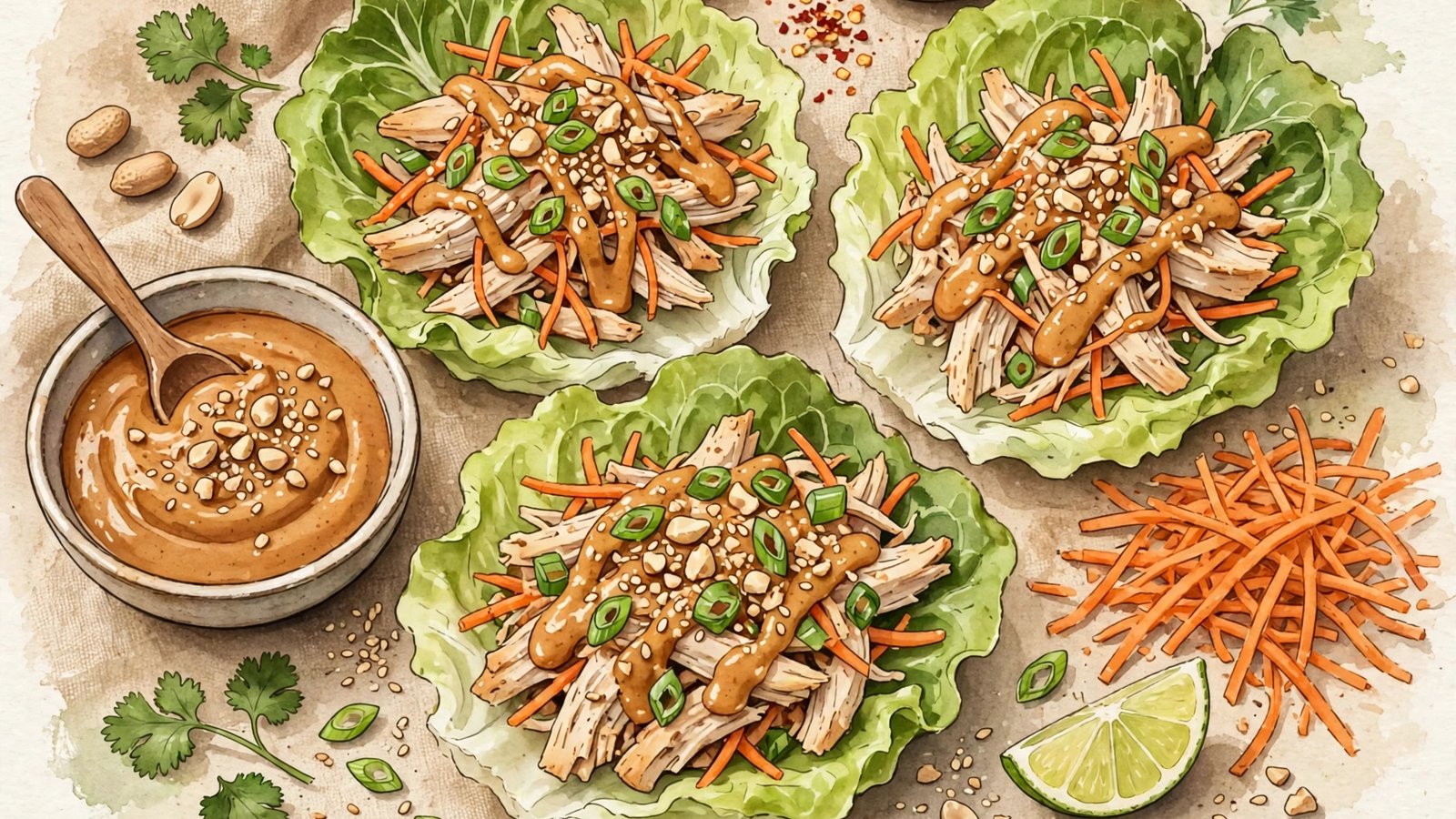
- Wash and thoroughly dry butter lettuce leaves and keep them cold. Cook ground or finely diced chicken in a hot skillet with onion, garlic, and ginger until it browns in places and reaches 165 degrees Fahrenheit, measured with a food thermometer, then season it with soy sauce, rice vinegar, and optional sesame oil and chili sauce. Whisk peanut butter with soy sauce, lime juice, rice vinegar, garlic, ginger, and warm water added slowly until the sauce pours smoothly, and adjust salt, acid, sweetness, and heat by taste. Spoon two to three tablespoons of hot filling into each cold lettuce leaf, drizzle with sauce, add shredded carrot, green onion, and cilantro, and eat at once. Store the filling, sauce, and lettuce separately, refrigerate leftovers within two hours, use refrigerated leftovers within three to four days, and reheat the filling to 165 degrees Fahrenheit. Never serve the peanut sauce, or a wrap made on shared equipment with it, to a person with peanut allergy.
Introduction
Chicken lettuce wraps solve a specific dinner problem: you want something savory, saucy, and hands on, but you do not want a heavy meal built around tortillas, sandwich wraps, or a large serving of rice. In this version, ground or finely diced chicken is cooked with ginger, garlic, and soy sauce until savory and lightly browned, spooned into crisp butter lettuce cups, and finished with a homemade peanut sauce, crunchy vegetables, and fresh herbs. Each wrap is light to pick up, but a plate of three or four is a real meal, especially with a simple side.
The peanut sauce is the reason to make this at home. Bottled peanut sauces can be very sweet, very salty, or both, and you cannot adjust them. A homemade version takes about five minutes: peanut butter, soy sauce, lime juice, rice vinegar, a little sweetener if the peanut butter needs it, garlic, ginger, and warm water to thin it to a drizzle. You control the salt, the sweetness, and the heat, and the sauce tastes fresh. A double batch keeps in the refrigerator and works later in the week on salads, noodles for anyone who wants them, and grilled vegetables.
Two honesty notes belong at the top. First, this recipe is low in carbohydrates as written because lettuce replaces a flour wrap or a bed of rice, but this article makes no specific carbohydrate count and no keto claim. The total will vary with the peanut butter, sweetener, sauce amount, and toppings you choose, and anyone who tracks carbohydrates for a medical reason should calculate it from the actual labels they use. Second, this dish is built around peanut, a major food allergen. Read the allergy section below before you cook it for anyone else. It is not a dish to make safe for a person with peanut allergy by swapping one ingredient and assuming the result is fine.
Read This First If Anyone at the Table Has a Food Allergy
Peanuts are one of the nine major food allergens recognized in the United States, a list the Food and Drug Administration gives as milk, eggs, fish, crustacean shellfish, tree nuts, peanuts, wheat, soybeans, and sesame. Sesame became the ninth major allergen under the FASTER Act, effective January 1, 2023. This recipe can involve four of the nine. Peanut is in the sauce and in the optional chopped peanut topping. Soy is in soy sauce or tamari. Wheat is usually in regular soy sauce, so check the label rather than assuming. Sesame is in the optional sesame oil and in any sesame seed garnish.
For a person with peanut allergy, there is no safe version of the peanut sauce in this article. Using a different brand of peanut butter does not help, and replacing peanut butter with a tree nut butter introduces a different major allergen and still leaves the risk of peanut contact from shared jars, utensils, and preparation surfaces. The Food and Drug Administration notes that there is no cure for food allergies and that strictly avoiding the food is an important way to prevent serious effects. So if a guest has a peanut allergy, do not serve them this sauce and do not serve them a supposedly peanut free wrap prepared alongside it without a careful plan agreed with that person first. The safer choice, and the one this article recommends, is to cook a different dish for that person, prepared with clean hands, clean utensils, and clean surfaces, or to choose a different menu for the whole table.
Cross contact is the practical kitchen risk: an allergen is unintentionally transferred to a food that was not meant to contain it, for example by a spoon that stirred peanut sauce and then served another food, or by chopped peanuts scattered near plain toppings. Washing hands, utensils, boards, and counters with hot, soapy water between tasks, using separate spoons, and keeping peanut toppings in their own bowl reduce that transfer for general cleanliness. They do not turn a peanut centered meal into a safe meal for a person with peanut allergy.
Know the warning signs in general terms. The Food and Drug Administration says symptoms can appear from within a few minutes to a few hours after eating, can include hives, flushing, tingling in the mouth, swelling of the face, tongue, or lips, vomiting, coughing or wheezing, dizziness, swelling of the throat, and difficulty breathing, and can progress to anaphylaxis, a severe and life threatening reaction. It advises a person with a known allergy who starts having symptoms to stop eating the food immediately, evaluate the need for emergency treatment such as epinephrine, and seek medical attention. That is general information, not medical advice for any one person. Anyone with a diagnosed allergy should follow the plan agreed with their own clinician.
Always read every label, every time, including the peanut butter, soy sauce, and chili sauce. Formulations change, and the label is where the major allergens in that package are declared. If you are unsure about an ingredient for a guest, ask the guest rather than guessing.
Why Lettuce Changes the Meal, Without a Magic Claim
A lettuce cup holds the filling without a bread product, adds cold crunch against hot chicken, and forces a smaller, neater portion per bite, which makes the strong seasoning work harder. That is the whole low carbohydrate logic of the dish: a substitution, not a transformation. Sweetener, honey, or maple syrup in the sauce still adds sugar if you use it.
Treat any precise per serving carbohydrate figure with caution unless you calculated it yourself from weighed ingredients and your own labels. Peanut butters differ in added sugar and oil, and one cook’s drizzle is another cook’s quarter cup. As practical advice, if carbohydrate content matters to you, use an unsweetened peanut butter, taste the sauce before adding any sweetener, and measure the sauce the first time you make the recipe. If you need a medical nutrition target, a registered dietitian who knows your situation is the right source for it, not a recipe headnote.
Choosing Lettuce That Actually Holds Up
Butter lettuce, also sold as Bibb or Boston lettuce, is the best choice for wraps. Its leaves are naturally cup shaped, tender but sturdy enough to hold filling, and mild in flavor so they do not compete with the chicken and sauce. Look for heads with intact outer leaves and no dark, slimy spots, and buy one extra head, because some leaves will tear or be too small to use.
Romaine hearts can work if you use the inner leaves, which are more cup like, but their thick ribs crack more easily when folded. Iceberg is crisp but flat and brittle, so it is better shredded as a topping than used as the wrap. Little gem leaves are small and sturdy for a snack sized version. Green leaf and red leaf lettuce taste fine but are too soft to hold a hot, saucy filling neatly.
Whatever lettuce you choose, separate the leaves carefully, keeping the cup shape intact. FoodSafety.gov advises rinsing fruits and vegetables under running water without soap, bleach, or commercial produce washes, and drying produce with a paper towel or a clean cloth towel. Then dry the leaves thoroughly: wet leaves make the filling slide, dilute the sauce, and turn a wrap soggy within minutes. A salad spinner helps, or pat the leaves dry and let them air dry on a towel for a few minutes. Stack the dried leaves on a clean towel inside a container, refrigerate them, and keep them cold until serving.
Ingredients and What Each One Does
For the chicken filling
- 1 1/2 pounds ground chicken, or boneless skinless chicken thighs finely diced
- 1 tablespoon neutral oil, such as avocado oil
- 1 small yellow onion, finely diced
- 3 cloves garlic, minced
- 1 tablespoon fresh ginger, grated
- 1 can (8 ounces) water chestnuts, drained and finely diced, optional, for crunch
- 3 tablespoons soy sauce or tamari, check the label for your gluten free and allergen needs
- 1 tablespoon rice vinegar
- 1 teaspoon sesame oil, optional, and a sesame allergen if used
- 1 teaspoon chili garlic sauce or sriracha, optional
- Salt and black pepper, to taste
Ground chicken is the fastest option and coats evenly with seasoning. Finely diced thigh meat gives a chewier bite and is more forgiving if it cooks a minute too long. Breast can be used, but it dries out more easily. Onion builds a sweet base, garlic and ginger provide the aromatic core, and water chestnuts add crunch that survives cooking. Rice vinegar brightens the filling, and sesame oil, if you use it, should go in near the end because a teaspoon is enough.
For the peanut sauce
- 1/2 cup creamy peanut butter
- 2 tablespoons soy sauce or tamari
- 1 tablespoon lime juice, freshly squeezed
- 1 tablespoon rice vinegar
- 1 tablespoon honey, maple syrup, or another sweetener, to taste, optional
- 1 clove garlic, grated
- 1 teaspoon fresh ginger, grated
- 1/2 teaspoon chili garlic sauce or sriracha, optional
- 3 to 5 tablespoons warm water, to thin
Peanut butter brands vary widely in sweetness, salt, and thickness, and that variation explains most sauce problems. Natural peanut butter, usually just peanuts and sometimes salt, tends to make a thinner sauce that often needs a little sweetener. Conventional peanut butter, which often contains added sugar and oil, tends to make a sweeter, thicker sauce that may need none. Use the jar you like, then adjust with lime, soy sauce, and water rather than following the sweetener line blindly.
To serve
- 16 to 20 butter lettuce leaves, washed and dried
- 1 cup shredded carrots
- 1/2 cup sliced green onions
- 1/4 cup chopped fresh cilantro, optional
- 1/4 cup chopped roasted peanuts, optional, and a peanut allergen if used
- Lime wedges
- Chili flakes or sliced fresh chili, optional
The toppings are not decoration. Carrot adds crunch and sweetness, green onion adds sharpness, and cilantro adds freshness. Serve cilantro in its own bowl, so diners who dislike it can leave it out.
Set Up Before You Turn on the Heat
This filling cooks quickly, so prepare everything first. Dice the onion, mince the garlic, grate the ginger, drain and dice the water chestnuts, shred the carrots, and slice the green onions. Measure the sauce ingredients before the skillet gets hot, and keep a sauce spoon separate so it never ends up in a shared topping bowl.
Apply the clean and separate steps from FoodSafety.gov while you work. Wash hands with plain soap and water for at least 20 seconds before you start, after handling raw chicken or its juices, and before you handle lettuce and herbs that will be eaten without further cooking. Use one cutting board for fresh produce and another for raw poultry, and wash boards, plates, utensils, and counters with hot, soapy water after they have held raw chicken. Do not wash the raw chicken itself: FoodSafety.gov advises not washing meat or poultry, because washing can spread harmful germs around the kitchen. Keep raw chicken in a sealed, leak proof container in the refrigerator, away from and below ready to eat foods.
Cooking the Chicken Filling, Step by Step
Warm the oil in a large skillet over medium high heat. A large pan matters: chicken piled deep in a small pan steams instead of browning. Add the onion and cook for three to four minutes, until softened. Add the garlic and ginger and cook for about 30 seconds, until fragrant, keeping them moving so they do not burn.
Add the chicken, breaking ground chicken apart with a wooden spoon or spreading diced chicken in a single layer. Let it cook undisturbed for two to three minutes so it browns in places, then stir and continue cooking until it is cooked through and lightly browned. As cooking advice, browning is worth the patience: chicken that is only steamed tastes flat, while chicken with some golden edges tastes more savory and holds its own against a rich sauce. Break ground chicken into small, even crumbles as it cooks, because large clumps cook unevenly and make clumsy wraps.
Stir in the water chestnuts if using, the soy sauce, rice vinegar, sesame oil if using, and chili sauce if using. Cook for two to three minutes, stirring, until the liquid has mostly evaporated and the filling looks moist but not saucy. A wet filling will soak the lettuce, so let the pan juices reduce. Taste and adjust. The filling should taste bold on its own, because the lettuce and fresh toppings will soften the seasoning. If it tastes bland, it usually needs more soy sauce, more lime or vinegar, or a pinch of salt, in that order. If it tastes harshly salty, a squeeze of lime and a spoonful of water will round it out more safely than adding sugar by default.
Food safety is not optional here, and color is not the test. FoodSafety.gov lists 165 degrees Fahrenheit as the safe minimum internal temperature for all poultry, including whole birds, breasts, legs, thighs, wings, and ground poultry. Use a food thermometer, placed in the thickest part of the food without touching bone, fat, or gristle. For a skillet of ground or diced chicken, check in several places, including the center of the largest pieces and the thickest part of the mixture, because a pan heats unevenly and one reading from the edge can mislead you. Do not rely on the chicken looking white or the juices running clear. Once the filling reaches temperature, remove it from the heat rather than simmering it until it dries out.
Making the Peanut Sauce, and Fixing It When It Misbehaves
Whisk together the peanut butter, soy sauce, lime juice, rice vinegar, sweetener if using, garlic, ginger, and chili sauce in a medium bowl. The mixture will thicken and look stiff at first. That seizing is normal: peanut butter tightens when the first liquid goes in, then loosens as you keep whisking and add more. Add warm water one tablespoon at a time, whisking constantly, until the sauce pours in a smooth, drizzle like stream. It should coat a spoon but still flow easily off it. Warm water works better than cold here, because it helps the sauce come together smoothly.
Taste before you serve, and adjust in small steps. More lime gives brightness, more soy sauce gives salt, and more chili sauce gives heat. A little more sweetener helps only if the sauce still tastes sharp after the lime and vinegar are balanced. If it is too thick, whisk in warm water a teaspoon at a time. If it is too thin, whisk in peanut butter a tablespoon at a time. The sauce thickens as it sits and further in the refrigerator, so stir it well and thin it again with warm water just before serving.
Make the sauce while the chicken cooks, or up to a day ahead. Do not leave it sitting out through a long evening and then return it to the refrigerator for another day: the storage rules below apply once it has been served.
Assembling Wraps That Do Not Fall Apart
Set out the lettuce, filling, sauce, and toppings in separate bowls, and let everyone build their own wraps. Wraps assembled too far ahead become soggy, and a build your own table lets each person control sauce, heat, and toppings.
Spoon two to three tablespoons of hot filling into a lettuce leaf. More than that is the most common reason wraps tear or collapse. Drizzle with sauce rather than flooding the leaf, then top with carrot, green onion, cilantro, and chopped peanuts if using. Fold the sides in slightly and eat the wrap like a taco, over the plate to catch drips. Keep extra leaves on the table: a double leaf makes a sturdier wrap for a larger portion.
Three to four wraps make a satisfying main meal for most adults, as a practical serving guide rather than a nutrition claim. For a heartier table that stays light, add cucumber salad with rice vinegar, steamed broccoli, or a simple cabbage slaw. If some people want a more substantial meal, offer rice or noodles on the side without changing the wraps themselves.
Variations, With the Right Temperature for Each Protein
The filling adapts well once the base technique works, but the safe temperature changes with the protein, so change your thermometer target when you change the meat. FoodSafety.gov gives these safe minimum internal temperatures: all poultry, including ground turkey and ground chicken, 165 degrees Fahrenheit; ground beef, pork, veal, and lamb, 160 degrees Fahrenheit; and pork steaks, roasts, and chops, 145 degrees Fahrenheit with a rest time of three minutes. Read the target for the protein you actually bought, not the one in the original recipe.
Ground turkey can replace ground chicken one for one, with the same method and the same 165 degree target, and it benefits from the same patient browning. Finely diced pork or ground pork can replace chicken for a richer filling: use 160 degrees Fahrenheit for ground pork and 145 degrees Fahrenheit with a three minute rest for whole cuts of pork that you dice yourself, and cook diced pieces until they meet that temperature and rest. Extra firm tofu or tempeh makes a vegetarian version: press tofu well, crumble or cube it, and brown it thoroughly in the skillet so it picks up color and sheds moisture, then season it as you would the chicken. The dish will taste different, earthier and less rich, and the peanut sauce becomes even more central.
For more crunch, add diced celery or jicama at the end of cooking, or top the wraps with toasted sesame seeds for diners who can have sesame. For more heat, add sliced fresh chili or extra chili garlic sauce. For a fresher version, add torn mint alongside the cilantro. None of these variations is an allergy substitution. In particular, do not present a seed or nut butter sauce as a safe peanut sauce replacement for a person with peanut allergy: a sauce made for taste preference, for a person with no peanut allergy, is a different matter from a sauce claimed to be safe for an allergic diner.
Common Mistakes and How to Avoid Them
Wet lettuce guarantees slippery, soggy wraps, so wash it, dry it properly, and keep it cold. Overcrowding the pan makes the chicken steam instead of browning, so cook it in two batches rather than piling it deeper. Under seasoning is just as common: lettuce, carrot, and a rich sauce all mute salt and acid, so season the filling boldly and taste a small assembled wrap, not just a spoonful of filling, before you call it done.
Guessing doneness is the most serious mistake. Ground chicken can look pale and cooked before it is safe throughout, so use the thermometer, in several spots, every time. Flooding the wrap also ruins it: a drizzle seasons the whole leaf, while a pool overwhelms it and runs out of the bottom, so serve extra sauce at the table instead. Finally, do not assemble ahead. Even 20 minutes of sitting will wilt a filled leaf, including for packed lunches, where the filling should travel in its own container and be reheated before the wraps are built.
Storage, Cooling, and Reheating
Store the components separately in covered containers in the refrigerator, and refrigerate promptly. The United States Department of Agriculture Food Safety and Inspection Service advises keeping food out of the danger zone, the range between 40 and 140 degrees Fahrenheit where bacteria grow rapidly, and refrigerating leftovers within two hours of cooking, or within one hour if the temperature is over 90 degrees Fahrenheit, such as at an outdoor summer meal. Hot food can go directly into the refrigerator. Divide a large amount of filling into shallow containers so it cools rapidly, cover or seal the containers, and keep your refrigerator at 40 degrees Fahrenheit or below.
The same service says leftovers can be kept in the refrigerator for three to four days, or frozen for three to four months, although frozen leftovers lose moisture and flavor over longer storage. Apply the three to four day limit to the cooked filling, and to peanut sauce that has been served at the table or mixed with chicken. Sauce stored separately, cleanly, and promptly should also be used within a few days, and discarded if it was left out too long or dipped into with a used spoon. Store lettuce leaves dry, layered with a clean towel inside a container, and use them within a few days while they are still crisp.
Reheat the filling until it reaches 165 degrees Fahrenheit, measured with a food thermometer, in a skillet or in the microwave. FoodSafety.gov lists leftovers of any type at 165 degrees Fahrenheit, and the Food Safety and Inspection Service advises reheating sauces, soups, and gravies by bringing them to a rolling boil, covering leftovers to reheat, and, in a microwave, covering and rotating the food and checking the temperature in several places because microwaves have cold spots. Then assemble fresh wraps with cold lettuce and sauce thinned with a little warm water if needed.
Do not store assembled wraps: the lettuce wilts and the result is hard to reheat evenly. Freeze the cooked filling on its own for longer keeping, thaw it in the refrigerator, and reheat it to 165 degrees Fahrenheit before serving. Do not freeze filled wraps or lettuce leaves for this dish.
Frequently Asked Questions
Can I use chicken breast instead of thighs or ground chicken?
Yes. Finely dice boneless skinless chicken breast and cook it the same way, in a hot skillet with room to brown, until it reaches 165 degrees Fahrenheit in the thickest pieces. Breast meat dries out more easily than thigh meat, so avoid overcooking it, check the temperature early and often, and do not let the filling simmer for a long time after it is cooked through.
Why is my peanut sauce lumpy or too thick?
Peanut butter seizes when liquid is added too quickly or when the liquid is cold. Use warm water, add it one tablespoon at a time, and whisk vigorously and continuously. If the sauce still looks grainy, whisk in a little more warm water or blend it briefly until smooth. If it thickened in the refrigerator, stir it well and thin it with warm water before serving.
Can I make the peanut sauce and the filling ahead?
Yes, and making them ahead is often the calmest way to serve this dish. Refrigerate the sauce in a covered jar and the filling in a covered shallow container, each promptly and separately, and use them within three to four days. Reheat the filling to 165 degrees Fahrenheit, thin the sauce with warm water if needed, wash and dry fresh lettuce, and assemble the wraps only when you are ready to eat.
What if I do not have water chestnuts?
Leave them out, or replace them with diced celery or jicama for crunch. The wraps will still work, though they will have a slightly softer texture. Add celery or jicama near the end of cooking so they stay crisp rather than softening in the pan.
How do I keep the lettuce from tearing?
Use the inner, cup shaped leaves of butter lettuce, dry them thoroughly, keep them cold, and do not overfill. Two to three tablespoons of filling is enough for most leaves. If a leaf is thin or already nicked, use two leaves nested together. Overfilling and warm, wet leaves are the most common reasons wraps fall apart.
Is this recipe safe for someone with a peanut allergy if I use a different nut butter?
No. Do not serve this dish to a person with peanut allergy on the basis of a swap. A different nut butter is itself a major allergen for some people, shared jars and utensils can transfer peanut, and the recipe was built around peanut in both the sauce and an optional topping. Cook a different dish for that person with clean equipment, or change the menu, and agree any plan directly with the person affected rather than assuming a substitution is safe.
How can I tell the chicken is done without a thermometer?
You cannot tell reliably, and this article does not recommend guessing. Color, texture, and clear juices can all mislead, especially with ground chicken. FoodSafety.gov directs cooks to use a food thermometer in the thickest part of the food. Use one in several spots in the pan until every spot reads 165 degrees Fahrenheit.
Keep reading: Low-Carb Cauliflower Fried Rice With Chicken
Keep reading: Low-Carb Zucchini Noodle Shrimp Scampi
Keep reading: Low-Carb Garlic Butter Steak Bites with Green Beans
Sources & references
- FoodSafety.gov, Cook to a Safe Minimum Internal Temperature. Used for always using a food thermometer to check whether meat has reached a safe minimum internal temperature, all poultry including ground poultry at 165 degrees Fahrenheit, ground meat and sausage at 160 degrees Fahrenheit, pork steaks, roasts, and chops at 145 degrees Fahrenheit with a three minute rest time, and leftovers of any type at 165 degrees Fahrenheit.
- United States Department of Agriculture, Food Safety and Inspection Service, Leftovers and Food Safety. Used for bacteria growing rapidly between 40 and 140 degrees Fahrenheit, refrigerating leftovers within two hours of cooking and within one hour when the temperature is over 90 degrees Fahrenheit, dividing large amounts into shallow containers to cool rapidly, covering or sealing leftovers in storage containers, keeping leftovers in the refrigerator for three to four days or frozen for three to four months, reheating leftovers to 165 degrees Fahrenheit as measured with a food thermometer, reheating sauces, soups, and gravies by bringing them to a rolling boil, covering leftovers to reheat, and microwave reheating with covering, rotating, and checking the temperature in several places.
- FoodSafety.gov, 4 Steps to Food Safety. Used for the clean, separate, cook, and chill steps, washing hands with plain soap and water for at least 20 seconds before, during, and after preparing food and after handling raw meat and poultry, washing cutting boards, dishes, utensils, and countertops with hot, soapy water after they have held raw poultry, rinsing fruits and vegetables under running water without soap or bleach and drying produce with a paper towel or clean cloth towel, not washing meat or poultry, using one cutting board for fresh produce and another for raw meat, poultry, or seafood, using separate plates and utensils for cooked and raw foods, placing the food thermometer in the thickest part of the food without touching bone, fat, or gristle, keeping the refrigerator at 40 degrees Fahrenheit or below, and refrigerating perishable foods within two hours, or within one hour above 90 degrees Fahrenheit.
- United States Food and Drug Administration, Food Allergies: What You Need to Know. Used for there being no cure for food allergies and strictly avoiding the food being an important way to prevent serious effects, the Food Allergen Labeling and Consumer Protection Act of 2004 identifying eight major food allergens and the FASTER Act declaring sesame the ninth major food allergen effective January 1, 2023, the nine major allergens list of milk, eggs, fish, crustacean shellfish, tree nuts, peanuts, wheat, soybeans, and sesame, food labels clearly identifying the food source names of major allergen ingredients, symptoms appearing from within a few minutes to a few hours and including hives, flushed skin or rash, tingling or itchy sensation in the mouth, face, tongue, or lip swelling, vomiting and diarrhea, abdominal cramps, coughing or wheezing, dizziness, swelling of the throat and vocal cords, difficulty breathing, and loss of consciousness, anaphylaxis leading to constricted airways, severe lowering of blood pressure and shock, and suffocation by swelling of the throat and larynx, the advice to stop eating the food immediately, evaluate the need for emergency treatment such as epinephrine, and seek medical attention if symptoms occur, and the tips to always read food labels and avoid foods you are allergic to.


