Short answer
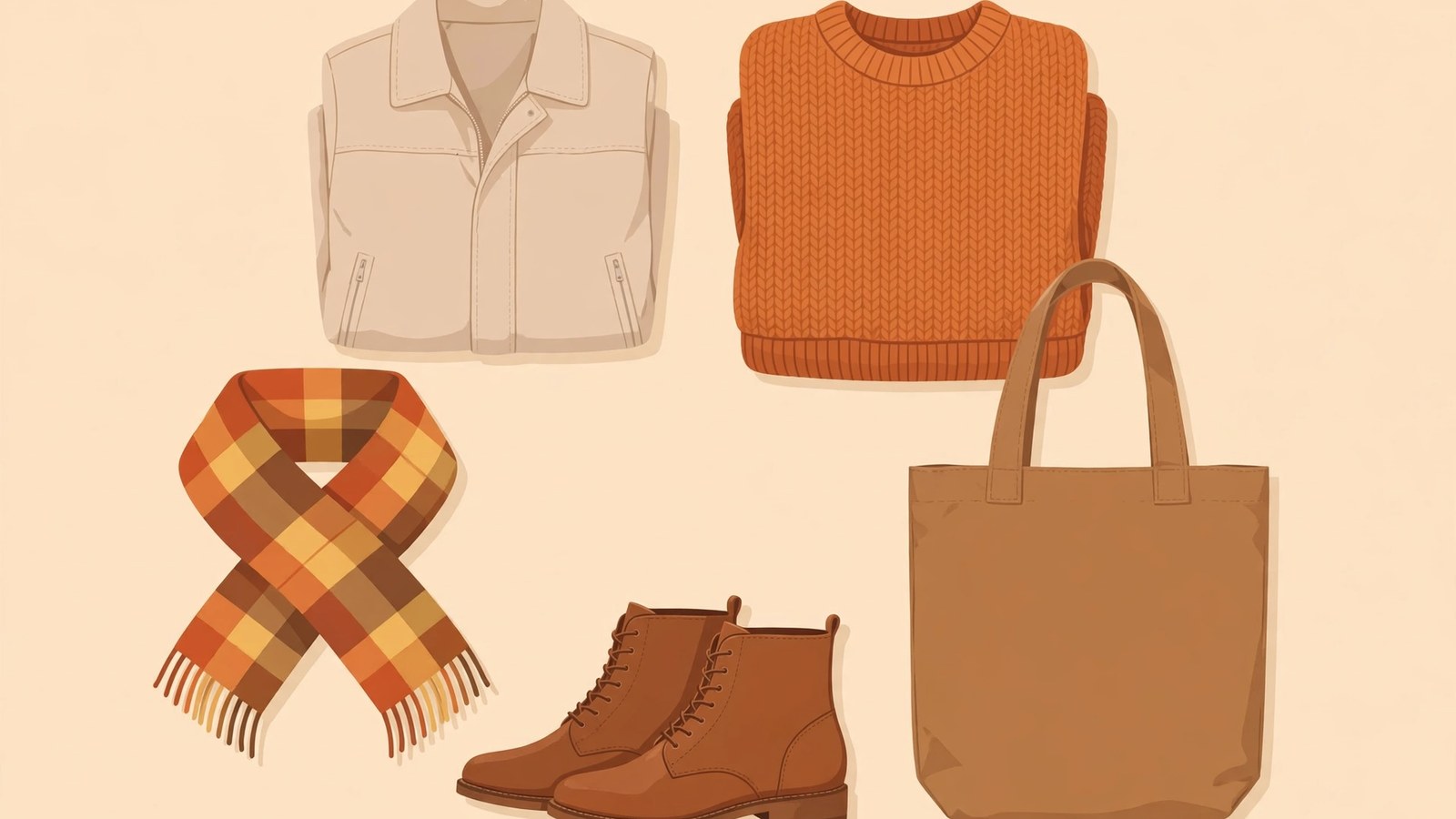
- Use three jobs, not three random tops. The base layer sits next to the skin, smooth and close fitting enough to sit under other layers without bunching, and presentable on its own. The middle layer traps air and provides most of the warmth, and it is the layer you will add and remove most often, so choose one that is easy to carry and fits under your outer layer. The outer layer blocks wind and sheds light rain, and it does not need to be the warmest piece. Dress for the full forecast range: start with enough layers for the coldest hour you will be outside, plan where removed layers will go, and keep every layer wearable on its own.
Introduction
Fall transitional weather rarely stays at one temperature. A morning can start cold enough for a coat, an afternoon can warm enough for a single top, and an evening can turn cool and damp again. Dressing for the average of that day fails at both ends. Layering works because you build the outfit from pieces you can add, remove, and carry, so the same outfit covers the cold start, the warm middle, and the cool finish.
This fall layering guide for transitional weather covers what each layer is for, how to choose layers by temperature band, how fabrics behave when damp, how to read a clothing label, and how to judge proportion and fit. It then gives outfit builds for distinct fall days, a small capsule that covers most of them, and fixes for common mistakes. Fabric points follow Kansas State University Extension guidance reported with its fashion studies faculty and a Federal Trade Commission guide to wool labeling. Cold safety points follow National Weather Service guidance. Both were checked on 30 October 2026 and are named in the Sources section. Temperature bands here are comfort planning ranges, not medical thresholds or a guarantee for any one person. Wind, rain, activity, and time outdoors all change what a temperature feels like.
The Three Layer System, Job by Job
The base layer manages contact with the skin
In fall the base is usually a lightweight long sleeve top, a fitted short sleeve top under a warmer middle layer, or a thin wool or synthetic top on a colder day. Too loose, and it bunches under a sweater. Too tight, and it restricts movement and feels clammy indoors. Kansas State University Extension guidance is specific: the base should be knit and very close to the skin, and a wool base is described as helping to wick moisture away. A cotton base can be comfortable on a dry, mild day, but on a wet day or a sweaty commute it is a weaker choice next to the skin, for reasons in the fabric section below. Test any base by wearing it alone and then adding your middle layer: if sleeves twist or fabric gathers, it will annoy you all day.
The middle layer traps air and provides warmth
Warmth comes less from thickness alone than from still air held close to the body. Kansas State Extension puts it directly: the middle layer helps keep air trapped next to the body, and air is the best thermal insulator. National Weather Service guidance says the same in different words: wear several layers of loose fitting, lightweight, warm clothing rather than one layer of heavy clothing, because trapped air between the layers will insulate you. That is why two thinner options often beat one very thick one. A fine knit suits a mild day. A cardigan opens at the front, so you can vent heat without removing it. A fleece traps more air for an active or colder day. A light quilted vest warms the core while leaving the arms freer. Choose at least one middle layer you can remove in a minute and carry without creasing badly.
The outer layer blocks wind and sheds weather
In fall the outer layer is often a trench style coat, a water resistant jacket, or a heavier coat on the coldest days. Its jobs are to stop wind stripping away the warm air your middle layer trapped, and to keep light rain off the layers underneath. Kansas State Extension describes the exterior layer as having the most power to keep someone dry or protected, and recommends a dense exterior with tightly packed yarns so air or water cannot easily get in. National Weather Service guidance aligns: outer garments should be tightly woven and water repellent. The outer layer does not have to provide all the warmth. A lighter outer layer over an adjustable middle layer gives you more states in between than a very heavy coat that is either on and overheating or carried.
Layering by Temperature Band
Use these bands as a starting plan, then adjust for wind, rain, sun, and activity. A still, sunny 55 degree afternoon and a windy, wet 55 degree morning are not the same problem. Temperatures are Fahrenheit first, with Celsius in parentheses.
About 60 to 70 degrees (about 16 to 21 degrees Celsius): the light band
Wear a breathable base you would wear alone, plus one light middle layer such as a cardigan or fine knit for morning and evening. Carry a light outer layer only if wind, showers, or being out after dark is likely. The main risk here is overdressing at midday, so keep the middle layer easy to tie, drape, or pack, and make sure the base looks finished on its own.
About 50 to 60 degrees (about 10 to 16 degrees Celsius): the classic transitional band
Wear a full base, a proper middle layer such as a sweater or fleece, and a light to medium outer layer to start the day. Expect to remove the outer layer late in the morning and to open or remove the middle layer if the afternoon warms. Add a scarf on colder mornings: it warms the neck gap where outer layers leak air, and it packs small. Choose footwear that covers the foot fully, because ground and shade are cooler than midday air in this band.
About 40 to 50 degrees (about 4 to 10 degrees Celsius): the cold fall band
Add warmth in the middle before adding bulk outside: a warmer sweater or fleece, or a vest over a fine knit, usually beats the same light outer layer over a thin top. Keep the outer layer wind resistant, because wind matters more as temperature falls. National Weather Service guidance defines wind chill for temperatures at or below 50 degrees and wind speeds above 3 miles per hour, as a feels like temperature based on the rate of heat loss from exposed skin caused by wind and cold. So in this band a windy day deserves the warmer plan even if the air temperature has not changed. Cover the gaps too: gloves, a hat or ear covering, warmer socks, and tights or a leg base layer.
Below about 40 degrees (below about 4 degrees Celsius): treat it as early winter
Keep the structure, but upgrade each job: a wool or synthetic base rather than damp prone cotton next to the skin, a genuinely insulating middle layer, and a tightly woven, water repellent, preferably hooded outer layer. The National Weather Service advises removing layers to avoid sweating and the chill that can follow, and covering exposed skin to reduce the risk of frostbite or hypothermia in extreme cold. If the forecast includes wind, rain, or long exposure at these temperatures, plan from winter guidance, not from a light fall outfit with one extra sweater.
Dress for the range, not the average
A forecast of 54 to 68 degrees Fahrenheit (about 12 to 20 degrees Celsius) is not a 61 degree day. It is a cold morning, a warm afternoon, and a cool evening in one outfit. Build for the coldest hour, make sure the warmest hour works with layers removed, and decide in advance where removed layers will go: a tote, a backpack, a car, or tied or draped. A layer with nowhere to go gets left behind and then missed in the evening.
Fabrics: What They Actually Do
Fabric advice is more useful as behavior than as a ranking: what does this fiber do when damp, how much air does the garment trap, and how fast does it dry?
Cotton: comfortable when dry, slow when damp
Cotton is a plant fiber. Kansas State Extension notes that plant type fibers such as cotton, linen, and hemp are good for hot weather, while animal fibers such as wool can be really good for colder weather. The same guidance recommends avoiding cotton next to the skin in cold conditions because it keeps moisture in itself, and warns that moisture trapped next to the skin in the cold can be dangerous. In fall terms: cotton is a reasonable base on a mild, dry day, and a poor one on a wet commute or a day when you will sweat and then stand in cold air, because it holds moisture and dries slowly. Save cotton tops for drier plans, or wear one over a thin wool or synthetic base on colder days.
Wool and merino: insulation that tolerates damp
Wool is an animal fiber. The Extension guidance gives it two fall advantages: it can help wick moisture away at the base, and animal fibers suit colder weather. A thin wool base or wool blend sweater also feels less punishing than cotton when slightly damp, and it can feel warm without great thickness, which helps it fit under an outer layer. Wool is not one uniform material, though. The Federal Trade Commission explains that under the Wool Products Labeling Act, the word cashmere can be used only for the fine dehaired undercoat fiber of the Cashmere goat, with an average fiber diameter that does not exceed 19 microns, and with no more than 3 percent by weight of cashmere fibers over 30 microns. Fibers from the same goat that do not meet that definition should be labeled as wool. The wider lesson: marketing words are not fiber content. Read the percentages below, and follow the care label.
Fleece and synthetic layers: light, warm, and faster drying
Synthetic textiles include polyester and nylon, per the Extension guidance. Fleece, usually a synthetic knit, traps air in its pile, feels light for its warmth, and generally dries faster than a heavy cotton or wool knit of similar warmth, which makes it practical for active, travel, and rainy days. The trade offs are appearance and wind. Most fleece looks casual, and air passes through many fleeces easily, so a fleece alone on a windy day loses the warm air it traps. Pair it with a tightly woven outer layer: the fleece holds the air, the outer layer stops the wind taking it.
Outer fabrics: density matters more than thickness
Look first at how dense the fabric is. A tightly woven, water repellent shell protects the layers under it better than a thicker but loose and absorbent coat in wind and light rain. Waxed and treated fabrics shed water at the surface, and leather blocks wind well but is not a rain plan on its own. Water resistant is not the same as staying dry in sustained heavy rain: then use a waterproof outer layer, a hood, or an umbrella as well, because a soaked middle layer stops trapping dry air well.
How to read the label before you trust a layer
The Federal Trade Commission states that wool product labels must accurately reflect fiber content, country of origin, and the manufacturer or marketer name or registered identification number, and that apparel labels must also show a safe cleaning method. Blends must disclose their split: a sweater with cashmere and sheep wool must state the percentages, for example 80 percent wool and 20 percent cashmere, and cannot legally be described simply as cashmere without them. So read the percentages in order, not the front tag headline, note the second fiber, which often explains price and care, and check the care instruction. A layer you are afraid to wash will quietly drop out of rotation.
Proportion and Fit: A Method, Not a Rule About Bodies
Layering looks wrong most often because of volume in the wrong place, not because any single piece is wrong. Work through this sequence in a mirror as you add each layer.
First, check the base alone. It should skim rather than cling or hang in folds, and decide once whether a long base will stay tucked, sit over trousers or a skirt, or be partly tucked. Second, add the middle layer, fasten it fully, and sit down: if it pulls hard across the front when seated, it is too small to be your main cold morning layer, however good it looks standing and open. Third, add the outer layer, fasten it, and raise both arms as if holding a rail on transit. If the outfit lifts, twists, or locks at the shoulder, the usual fix is a thinner middle layer, not a much larger coat, which will hang loose and leak air over lighter combinations. Fourth, stagger the endings. Avoid three layers ending at the same point, which creates one heavy band of stacked hems: let a base end at the hip, a cardigan a little lower, and a coat lower still. Fifth, check the lower half seated and walking, because waistbands over tights or leggings can stack into one tight roll. Warmth that makes you fidget all day has failed as clothing.
Building a Small Fall Layering Capsule
A capsule works when every middle layer fits over every base and under the outer layer. Test combinations at home, not on the first cold morning.
Start with two or three bases in colors that work under all your middle layers, for example one light neutral, one darker neutral, and one patterned option if you like pattern. At least one base should be a thin wool, wool blend, or synthetic top, so damp prone cotton is not your only skin layer option. Add three middle layers with different jobs: a fine knit for mild days, a cardigan that works open or closed, and a warmer option such as a thicker knit, a fleece, or a vest. If a middle layer is too bulky under your outer layer, count it as a standalone top, not a layering piece.
Choose one or two outer layers. One should handle your typical weather and trip: a trench style or water resistant jacket suits many commutes. Check pockets for gloves and a phone, a collar that closes against wind, and a length that covers the middle layer hem in rain. Finish with a scarf, gloves, and a hat or ear covering that fits in a bag or pocket, plus socks matched to your footwear and, on cold days, tights or a leg base layer. Ankle boots are a common fall choice because they cover more than summer shoes without the weight of winter boots: choose a broken in pair with a sole that grips on wet pavement, tested with the socks you plan to wear.
Worked Outfit Builds for Distinct Fall Scenarios
Build 1: Mild dry day, office or classroom, warm afternoon
Base: a breathable long sleeve top you would wear alone. Middle: a cardigan, closed in the morning, open or removed by midday. Outer: a light jacket for the trip in and out, left off indoors. Lower half: regular trousers, or a skirt with light tights only at the cold end of the band. Feet: closed shoes or ankle boots with ordinary socks. Every layer is presentable alone, which matters because in a heated space you may spend most of the day in the base or the base plus cardigan, and two removal steps let you adjust in small amounts.
Build 2: Cold morning, warm afternoon, transit commute
Base: a thin wool or synthetic long sleeve top. Middle: a warmer sweater or fleece. Outer: a wind resistant coat, plus a scarf and gloves for the morning walk or wait. Carry a tote or backpack sized for the sweater, scarf, and gloves. Start fully layered. Remove the outer layer first late in the morning, and the middle layer too if the afternoon is genuinely warm, traveling home in the base plus the outer layer carried or worn open as the evening cools. The bag is part of the outfit. Without it, this build fails by lunchtime.
Build 3: Rainy fall day with a long walk
Base: a wool or synthetic top, not cotton as the only skin layer. Middle: a fleece or other synthetic layer that tolerates damp better than a heavy absorbent knit. Outer: a water resistant or waterproof coat with a hood, or a water resistant coat plus a compact umbrella. Lower half: trousers that will not drag in puddles. Feet: footwear that handles wet ground, plus an extra pair of socks in a sealed bag if the walk is long. The outer layer is the priority, and changing into dry socks at the destination restores comfort out of proportion to the space the spare pair takes.
Build 4: Windy day, mostly outdoors
Base: a smooth, close fitting top. Middle: a fleece or knit close enough not to balloon. Outer: a tightly woven coat with a collar that closes high, fastened fully. Tuck the scarf inside the coat, and choose gloves that cover the wrist gap. Loose layers are the weakness here: wind gets under them and strips away the trapped air that was insulating you. On long outdoor stretches at or below 50 degrees, plan using the wind chill idea above, not only the air temperature.
Build 5: Active day, walking, market, or travel
Base: a wool or synthetic top that handles sweat without staying clammy. Middle: a light fleece or vest you can open and pack quickly. Outer: a packable water resistant jacket. Lower half: trousers or leggings and footwear tested for hours of walking. Movement generates heat, and overheating is followed by a chill when you stop. National Weather Service guidance makes the same point: sweating can lead to a chill, and layers should be removed to avoid overheating. Vent early, before you are hot.
The Lower Half, Accessories, and Carrying Layers
On cold days, add tights under a skirt or dress, or a thin leg base layer under trousers, and check the combined fit seated. Choose socks for the footwear and the weather: a thin sock in a roomy boot on a wet day invites cold feet, and a very thick sock forced into a snug shoe fits badly.
Accessories earn their place by being adjustable. A scarf can be wrapped, loosened, worn only at the neck gap, or removed, giving several warmth levels from one small item. Gloves matter most in morning and evening and pack small in between. A hat or ear covering matters most in wind and on long outdoor stretches. None needs to match perfectly. They need to be with you, which means choosing versions you like enough to carry daily.
Carrying is part of the system. Roll knitwear rather than folding it hard, keep a spare layer in the car if you drive, and on uncertain days favor layers that pack small, such as a thin vest or a packable rain jacket.
Common Layering Mistakes and Their Fixes
Mistake one is stacking thick pieces. Three thin layers are usually more flexible than two thick ones, and often feel warmer, because each gap holds trapped air and each layer removes separately. Swap one thick sweater for a thin base plus a fine knit. Mistake two is a layer that cannot be seen: if the base is a worn thermal top you would not want to be seen in, you will keep your coat on indoors and overheat. Every layer should be presentable alone. Mistake three is choosing by a headline word instead of the label: a small percentage of a premium fiber does not transform a garment. Mistake four is ignoring wind and rain because the number looks mild: a damp or windy 50 degree day needs an outer layer and damp tolerant base that a dry, still day does not. Mistake five is planning only the torso: cold legs, thin socks, and an exposed neck gap make a well layered top feel like a failure. Mistake six is having no plan for removed layers.
A Brief Safety Note for Cold Fall Snaps
Most fall transitional days are a comfort problem, not a safety emergency. Cold snaps are the exception. The National Weather Service states that hypothermia occurs when body temperature falls below 95 degrees Fahrenheit, with warning signs including uncontrollable shivering, memory loss, disorientation, incoherence, slurred speech, drowsiness, and exhaustion, and that medical attention should be sought immediately. Its winter safety guidance adds that hypothermia can also occur at cool temperatures above 40 degrees Fahrenheit if a person becomes chilled from rain, sweat, or submersion in cold water. The fall translation is narrow: do not dismiss a wet, windy day in the 40s as merely uncomfortable if you will be outside a long time, especially in damp cotton layers. Stay dry where you can, change out of wet clothing once inside, cover exposed skin in extreme cold, and take warning signs seriously. This is general information from the National Weather Service, not medical advice for any individual.
Frequently Asked Questions
How many layers do I actually need for fall?
For most transitional days, three jobs are enough: a base, a middle, and an outer. On a mild day you may wear only two at a time, carrying the third. On a cold, wet, or windy day you may add a second middle layer or a leg base layer. Count jobs, not garments: if two pieces do the same job and neither removes easily, the outfit is probably too bulky rather than too warm.
Is cotton really a bad base layer for fall?
Not on every fall day. Cotton can be comfortable on a mild, dry day spent mostly indoors. It becomes a poor base when the day is wet, cold, or active, because cotton holds moisture in itself and dries slowly, a point Kansas State University Extension makes when it advises avoiding cotton next to the skin in cold conditions. On those days, choose a thin wool, wool blend, or synthetic base.
How do I stop layered outfits looking bulky?
Use the fit method in this guide. Choose a smooth base with no extra fabric to bunch, trap air with a thinner middle layer instead of one very thick sweater, stagger where the layers end instead of stacking all hems at one point, and test the full combination seated and with arms raised. If the outer layer locks at the shoulder, thin the middle layer first. Bulk is usually a combination problem, not a problem with any single piece.
What is the single most useful fall layer to own?
For most wardrobes, a middle layer that fits under your main outer layer, looks presentable alone, and is easy to carry: a cardigan or fine to medium knit that works over all your bases. It is the layer you will adjust most often. A scarf is the most useful small addition, because it packs to almost nothing.
How should I dress when the forecast shows a big temperature swing?
Dress for the range. Build for the coldest hour you will be outside, confirm the warmest hour works with layers removed and every remaining layer presentable on its own, and decide where removed layers will go before you leave. Check wind and rain as well as the two temperature numbers: a swing with rain in the cold morning needs a different outer layer and base than the same swing on a dry day.
Can I layer with a skirt or dress in fall?
Yes, by treating the lower half as layers too. Add tights, or thicker tights or a leg base layer on colder days, and footwear that covers the foot and ankle. Check the waistband combination seated, because a dress waist, tights, and a cardigan hem can stack uncomfortably. On top, use a dress as the base, a middle layer over it, and an outer layer longer than the middle layer in rain.
Sources & references
- Kansas State University Extension guidance on layering and fiber choice, as reported in High Plains Journal, Beat the chill: Essential layering tips, with Kelsie Doty, assistant professor of fashion studies, and Reannan Boisvert. Used for the division between synthetic textiles such as polyester and nylon and natural fibers such as cotton, linen, and wool, plant fibers suiting hot weather and animal fibers suiting colder weather, the base layer being knit and close to the skin with wool helping to wick moisture away, the middle layer trapping air next to the body and air being the best thermal insulator, the exterior layer having the most power to keep a person dry and protected with dense and tightly packed yarns resisting air and water, and avoiding cotton next to the skin in the cold because it keeps moisture in itself.
- National Weather Service, Winter Weather Safety (La Crosse office winter safety page). Used for wind chill as the apparent temperature the body feels when wind is factored in, wind chill being based on the rate of heat loss from exposed skin, hypothermia occurring at cool temperatures above 40 degrees Fahrenheit if a person becomes chilled from rain, sweat, or submersion in cold water, and dressing in layers and covering exposed skin to reduce the risk of frostbite or hypothermia.
- National Weather Service, Wind Chill Questions (cold weather safety frequently asked questions). Used for hypothermia occurring when body temperature falls below 95 degrees Fahrenheit, its warning signs of uncontrollable shivering, memory loss, disorientation, incoherence, slurred speech, drowsiness, and exhaustion, seeking medical attention immediately, wearing several layers of loose fitting, lightweight, warm clothing with trapped air between the layers insulating, removing layers to avoid sweating and chill, outer garments being tightly woven, water repellent, and hooded, and wind chill temperature being defined only for temperatures at or below 50 degrees Fahrenheit and wind speeds above 3 miles per hour.
- Federal Trade Commission, Cachet of Cashmere: Complying with the Wool Products Labeling Act. Used for wool product labels having to accurately reflect fiber content, country of origin, and the manufacturer or marketer name or registered identification number, apparel labels showing a safe cleaning method, cashmere being usable only for the fine dehaired undercoat fiber of the Cashmere goat with an average diameter not exceeding 19 microns and no more than 3 percent by weight of fibers over 30 microns, fibers not meeting that definition being labeled as wool, and blends having to disclose percentages rather than being described by a premium name alone.


