Short answer
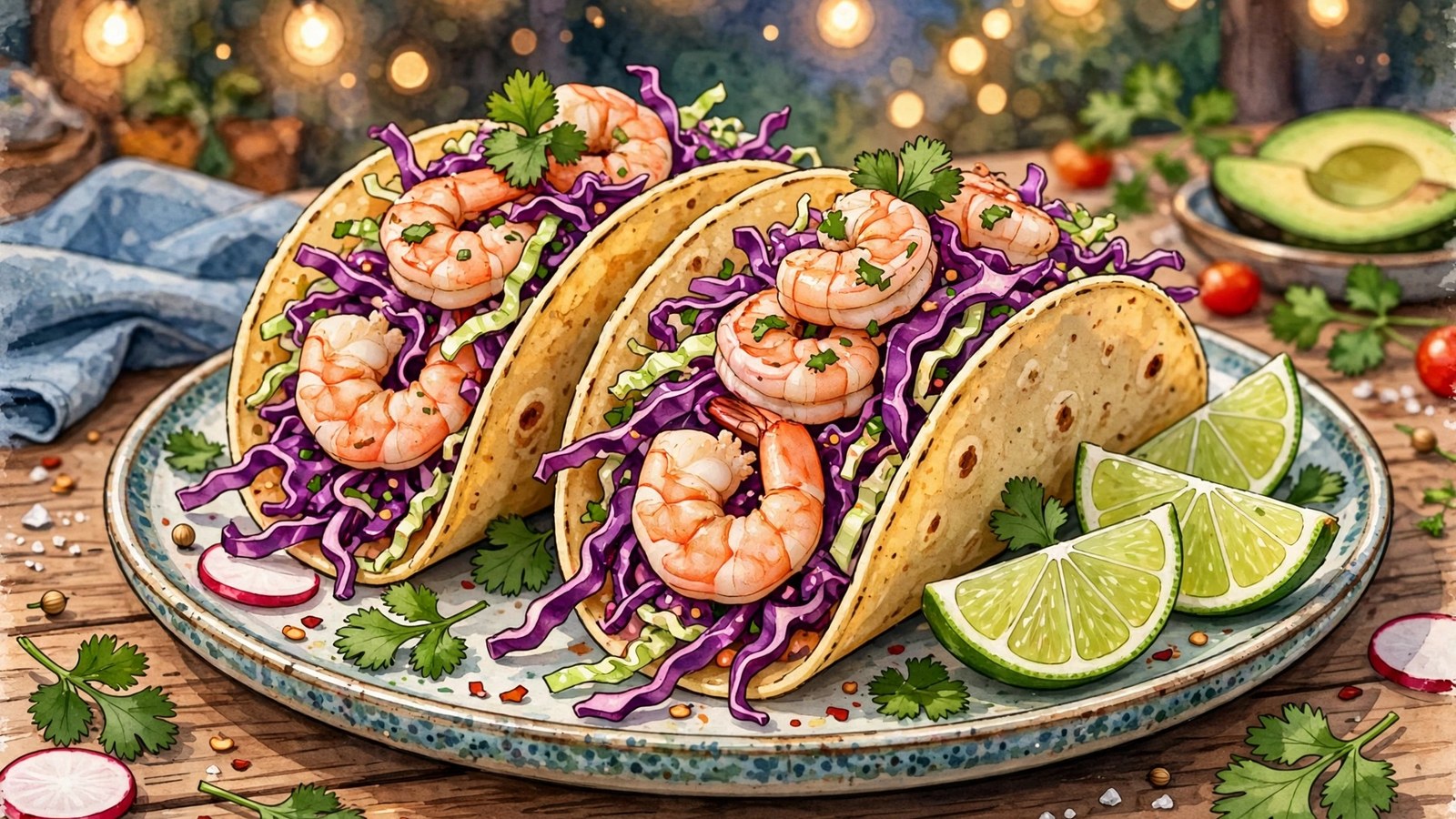
- Make the slaw first and refrigerate it while you work. Pat thawed shrimp dry, toss them with olive oil, chili powder, cumin, smoked paprika, garlic powder, onion powder, salt, and pepper, and add lime juice only just before cooking. Preheat the air fryer to 400 degrees Fahrenheit and cook the shrimp in a single layer for six to eight minutes, turning them halfway, until the flesh is pearly or white and opaque and the shrimp curl into a loose C shape. The Food and Drug Administration advises that most seafood should be cooked to an internal temperature of 145 degrees Fahrenheit, and FoodSafety.gov describes shrimp, lobster, crab, and scallops as done when the flesh is pearly or white and opaque. Warm the tortillas, fill each one with slaw and three or four shrimp, and serve at once with lime. Refrigerate leftovers at 40 degrees Fahrenheit or below, use them within three to four days, and reheat them to 165 degrees Fahrenheit. The tacos contain crustacean shellfish, and the slaw also contains egg if made with mayonnaise or milk if made with yogurt, so read the allergen note before serving guests.
Introduction
Air fryer shrimp tacos with cabbage slaw are a weeknight taco that does not turn into a production. There is no second pan for a filling, no deep frying, and no row of topping bowls to wash before anyone sits down. The shrimp cook in a single layer in the air fryer in about six to eight minutes, the slaw comes together in one bowl with no cooking at all, and warm tortillas bring the two together. The whole meal is ready in roughly half an hour once the shrimp are thawed.
Shrimp suit the air fryer well because they are small and cook quickly, and the hot circulating air gives them lightly crisped edges without deep frying. The risk is overcooking. Shrimp go from tender to rubbery in a minute or two, so this guide is built around avoiding that moment: pat the shrimp dry, season them briefly, cook them in a single layer, and watch for the point where the flesh turns pearly and opaque.
This article gives the full recipe, explains how to choose, store, and thaw shrimp, shows how to judge doneness using both the temperature guidance and the visual standard that federal food safety sources describe, and covers storage, reheating, and allergen notes in plain factual terms. The food safety guidance was checked against FoodSafety.gov, the United States Department of Agriculture Food Safety and Inspection Service, and the Food and Drug Administration on 31 October 2026.
Why Shrimp and Slaw Belong Together
A good taco needs contrast, and shrimp tacos need it more than most. Shrimp are tender, mild, and slightly sweet, and on their own they can taste one note. Slaw supplies the other half: crunch from cabbage, acidity from lime, a little sweetness from carrot, and a creamy or tangy dressing that ties the taco together. Without slaw, a shrimp taco is often just shrimp in a tortilla with a squeeze of lime. With slaw, each bite has hot and cool, soft and crisp, and rich and bright at the same time.
Cabbage is practical as well as flavorful. It keeps well in the refrigerator for days, it costs little, and it stays crisp far longer than lettuce, which wilts quickly under warm shrimp and dressing. A slaw made an hour ahead can improve, because the salt and lime soften the cabbage just enough while leaving it crunchy, and a slaw made in the morning is still good at dinner if it is not overdressed. Make the slaw while the shrimp thaw, or during lunch, and the evening work shrinks to cooking shrimp and warming tortillas.
Tortilla choice matters too. Corn tortillas give an earthy, toasty flavor that pairs naturally with shrimp and lime. Flour tortillas are softer, more pliable, and more forgiving because they tear less. Either works. What matters most is warming them properly, because a cold tortilla straight from the bag is stiff and prone to cracking, while a warmed tortilla is flexible and tastes better.
Ingredients
This recipe makes about four servings, or eight to ten tacos. Have everything ready before the air fryer is preheated, because the shrimp cook in minutes.
For the shrimp:
- 1 and 1/2 pounds large shrimp, peeled and deveined, tails removed if you prefer
- 1 tablespoon olive oil
- 1 teaspoon chili powder
- 1 teaspoon ground cumin
- 1/2 teaspoon smoked paprika
- 1/2 teaspoon garlic powder
- 1/2 teaspoon onion powder
- 1/2 teaspoon salt
- 1/4 teaspoon black pepper
- A pinch of cayenne pepper, optional
- Juice of half a lime
For the cabbage slaw:
- 3 cups shredded green cabbage, or a mix of green and red cabbage
- 1 cup shredded carrot
- 1/4 cup thinly sliced red onion
- 1/4 cup chopped fresh cilantro, optional
- 1/3 cup mayonnaise, or plain Greek yogurt for a lighter version
- 2 tablespoons lime juice, freshly squeezed
- 1 tablespoon honey or sugar, optional, to balance the lime
- 1/2 teaspoon salt, plus more to taste
- 1/4 teaspoon black pepper
For serving:
- 8 to 10 corn or flour tortillas
- Lime wedges
- Hot sauce, optional
- Sliced avocado or guacamole, optional
- Crumbled cotija cheese or feta, optional
- Extra cilantro and sliced radishes, optional
Shrimp size changes cooking time. Large shrimp, usually sold as 26 to 30 per pound or 21 to 25 per pound, are the best choice here: big enough to stay juicy, easy to handle, and a sensible size for tacos. Small shrimp are easy to overcook, while jumbo shrimp need longer and can cook unevenly if crowded. Peel and devein the shrimp before cooking if they are not already prepared. The dark vein along the back is the digestive tract. It is not dangerous, but removing it improves texture and appearance.
Choosing, Storing, and Thawing the Shrimp
Good tacos start at the counter. The Food and Drug Administration advises buying only seafood that is refrigerated or displayed on a thick bed of fresh ice. Shrimp, scallop, and lobster flesh should be clear with a pearl like color and little or no odor, and shrimp should smell fresh and mild, not fishy, sour, or ammonia like. If shrimp smell strongly of ammonia, do not use them, even if a package date has not passed. For frozen shrimp, do not buy a package that is open, torn, or crushed, and avoid packages with frost or ice crystals, which may mean the seafood was stored a long time or thawed and refrozen.
Fresh versus frozen is less of a divide than it looks. Much of the shrimp sold as fresh in a supermarket case was previously frozen and thawed, so frozen shrimp thawed properly at home is often the fresher tasting option. Put seafood in the refrigerator or freezer soon after buying it. The Food and Drug Administration advises storing seafood in a clean refrigerator at 40 degrees Fahrenheit or below if it will be used within 2 days of purchase, and otherwise wrapping it tightly and freezing it.
Thaw frozen shrimp safely and completely before cooking. The safest way is gradually in the refrigerator overnight. For a faster method, seal the shrimp in a leak proof bag and immerse it in cold water, changing the water every 30 minutes, and cook the shrimp immediately after thawing. Microwave defrost is a third option only if the shrimp will be cooked immediately afterward. Do not thaw shrimp on the counter, and do not cook them from frozen for this recipe. Frozen shrimp release water, steam instead of crisping, and can overcook outside before the center is ready.
Once thawed, pat the shrimp very dry with paper towels. Wet shrimp steam instead of crisping, and surface water dilutes the seasoning. Keep raw shrimp separate from the slaw and other ready to eat foods, and wash hands, boards, utensils, and surfaces that touched raw shrimp with hot soapy water before using them for anything else. Discard thawing water.
Making the Slaw First
Start with the slaw, because it benefits from resting while you prepare the shrimp. Combine the cabbage, carrot, red onion, and cilantro, if using, in a large bowl. In a small bowl, whisk the mayonnaise or yogurt, lime juice, honey or sugar if using, salt, and pepper until smooth. Pour the dressing over the cabbage and toss until every strand is lightly coated. Taste and adjust: more lime for brightness, more salt if it tastes flat, or more honey if the lime is sharp.
Do not overdress the slaw. It should look glossy and lightly coated, not swimming in dressing. Cabbage releases water as it sits, especially after salting, so a slaw that looks perfectly dressed at first can become watery after an hour. Start with a little less dressing than you think you need, and add more just before serving if needed. If you make the slaw hours ahead, dress it lightly, refrigerate it covered, and drain any excess liquid and toss again before serving.
The choice between mayonnaise and Greek yogurt changes the slaw. Mayonnaise gives a richer, classic slaw. Greek yogurt gives a tangier, lighter slaw with more protein, but it can taste sharp if the lime is also strong, so reduce the lime slightly if you use yogurt and taste before adding more. A half and half blend is a good compromise. Sour cream can replace part of the mayonnaise, though it is thinner, so use a little less lime juice with it.
A few additions work without changing the method. Thinly sliced jalapeno adds heat: remove the seeds for mild heat, and wash your hands after handling it. Minced chipotle in adobo stirred into the dressing gives a smoky version. Thinly sliced radishes add peppery crunch and color. Diced mango gives a sweet version, but it makes the slaw wetter, so add it just before serving.
Seasoning and Cooking the Shrimp in the Air Fryer
Place the dried shrimp in a bowl, drizzle with the olive oil, and toss to coat. Sprinkle over the chili powder, cumin, smoked paprika, garlic powder, onion powder, salt, pepper, and cayenne if using, and toss again until evenly coated. Add the lime juice last, and do not let the shrimp sit in it for long. Acid changes the texture of raw seafood over time, so season and cook within about 15 minutes rather than marinating for hours.
Preheat the air fryer to 400 degrees Fahrenheit for three to five minutes, following the instructions for your model. A preheated basket cooks more evenly, and shrimp cook so quickly that a cold start can leave some pieces underdone while others catch up. Lightly spray or brush the basket with oil, or use a perforated parchment liner made for air fryers, to prevent sticking. Do not use regular parchment paper cut to size unless it is rated for air fryer use and held down by food, because loose paper can lift into the heating element.
Arrange the shrimp in a single layer with a little space between pieces. Crowding is the most common air fryer mistake: shrimp piled on each other steam, cook unevenly, and never develop lightly crisped edges. If your basket is small, cook in two batches. Keep the first batch warm under foil while the second cooks, and still serve promptly.
Cook for six to eight minutes, shaking the basket or turning the shrimp halfway, until the shrimp are opaque and pearly or white and curled into a loose C shape. Check the largest shrimp, because if the largest is done, the smaller ones are done too. Remove the shrimp promptly. Residual heat continues to cook them, a tight O shape usually means overcooked, and a shrimp still translucent in the center needs more time.
Taste one shrimp before assembling the tacos, and adjust with lime or salt if needed. Underseasoned shrimp usually need salt or acid, not more spice. Do not return fully cooked shrimp to the fryer for long, or they will toughen.
How to Tell When Shrimp Are Done
Shrimp doneness is described in two complementary ways in federal guidance, and home cooks are often told only one of them.
The Food and Drug Administration, in its guidance on selecting and serving seafood safely, states that most seafood should be cooked to an internal temperature of 145 degrees Fahrenheit. If you use a food thermometer, that is the figure to use for shrimp in this recipe, checked in the thickest part of the largest shrimp where a thin probe can be inserted. FoodSafety.gov gives the same general instruction to always use a food thermometer to check whether food has reached a safe minimum internal temperature.
FoodSafety.gov publishes its temperature chart in a more specific form for shellfish. Fish are listed at 145 degrees Fahrenheit, or until the flesh is no longer translucent and separates easily with a fork, while shrimp, lobster, crab, and scallops are listed with a visual standard: cook until the flesh is pearly or white, and opaque. The Food and Drug Administration gives the same fallback for cooks without a thermometer, describing done shrimp, scallops, crab, and lobster as flesh that becomes firm, pearly, and opaque.
Used together, the guidance is consistent. Where a thin probe fits the thickest part of a large shrimp, check for 145 degrees Fahrenheit. In all cases, look for the visual change: the flesh becomes pearly, white, and opaque throughout, with a firm feel and a loose C curl. Translucent or gray patches mean a little more time is needed. A hard, tight O curl means the shrimp has gone too far.
Warming Tortillas and Assembling the Tacos
Warm the tortillas while the second batch cooks, or just after, so everything is hot at the same time. In a dry skillet over medium heat, warm each tortilla for 20 to 30 seconds per side, until pliable and lightly toasted in spots, and stack them in a clean kitchen towel to keep warm. In the air fryer, warm a small stack at 350 degrees Fahrenheit for one to two minutes, wrapped loosely in foil, but watch them closely, because they dry out quickly. In the microwave, stack tortillas between damp paper towels and heat in 30 second bursts. That method makes them soft rather than toasty, and they cool and stiffen faster.
To assemble, place a tortilla flat, spoon slaw down the center, and top with three or four shrimp. Add avocado, cheese, cilantro, radishes, or hot sauce as you like, and finish with a squeeze of lime. Do not overload the taco: an overfilled taco tears, spills, and is hard to eat. Two well filled tacos are better than one overflowing one. Serve immediately, while the shrimp are warm and the slaw is cool and crisp.
For a party, set up a taco bar. Keep the shrimp warm in a covered dish, the slaw on ice if the room is warm, the tortillas wrapped in a towel, and the toppings in small bowls. Put out only small amounts and replenish from the refrigerator, rather than leaving one large tray out for hours. Label the slaw dressing if it contains egg or milk, because mayonnaise contains egg and yogurt and cheese contain milk, and guests with allergies need that information.
Food Safety, Storage, and Reheating
FoodSafety.gov organizes home food safety into four steps: clean, separate, cook, and chill. The chill step governs both the taco bar and the leftovers. Refrigerate perishable food within 2 hours of cooking, or within 1 hour if the food has been exposed to temperatures above 90 degrees Fahrenheit. Bacteria that cause food poisoning multiply quickest between 40 degrees Fahrenheit and 140 degrees Fahrenheit, so do not leave cooked shrimp or slaw sitting out while the kitchen is cleaned.
Keep your refrigerator at 40 degrees Fahrenheit or below and your freezer at 0 degrees Fahrenheit or below. Cool leftovers rapidly in shallow, covered containers. The United States Department of Agriculture Food Safety and Inspection Service gives the storage window used throughout federal guidance: leftovers keep for three to four days in the refrigerator, or three to four months frozen, although frozen leftovers lose moisture and flavor and shrimp and slaw both suffer in texture. Store leftover shrimp, slaw, and tortillas separately, and assemble fresh tacos when you serve them again.
When reheating, bring leftovers to 165 degrees Fahrenheit throughout, measured with a food thermometer. FoodSafety.gov lists leftovers of any type at 165 degrees Fahrenheit, and the Food Safety and Inspection Service adds that sauces, soups, and gravies should be reheated by bringing them to a rolling boil, and that covering leftovers helps them heat through. Reheat shrimp gently and briefly, just until they reach temperature, because shrimp toughen quickly. Cold leftover shrimp, properly refrigerated and still within the three to four day window, can also be eaten cold in a salad without reheating. Do not leave cold leftovers out at room temperature to take the chill off.
Cross contamination matters with raw seafood. Wash your hands with plain soap and water for at least 20 seconds after handling raw shrimp, wash boards, dishes, utensils, and countertops with hot soapy water between raw seafood and ready to eat foods, and use separate plates and utensils for raw and cooked shrimp. Do not use the same tongs for raw and cooked shrimp without washing them first. Do not wash the shrimp themselves, because washing seafood can spread germs around the kitchen. If seafood smells sour, rancid, fishy, or like ammonia, discard it.
Allergen and Dietary Notes
This section is factual information for planning and serving, not medical advice. These tacos contain crustacean shellfish, in the form of shrimp. Depending on the choices you make, they can also contain egg, in mayonnaise, milk, in Greek yogurt, sour cream, cotija, or feta, and wheat, in flour tortillas. Crustacean shellfish, egg, milk, and wheat are all major food allergens in the United States. The Food and Drug Administration lists nine foods, and ingredients containing their proteins, as major food allergens: milk, egg, fish, crustacean shellfish, tree nuts, wheat, peanuts, soybeans, and sesame. Sesame became the ninth major food allergen under the Food Allergy Safety, Treatment, Education, and Research Act, with labeling required from 1 January 2023.
Shrimp allergy can cause a severe allergic reaction and must not be treated as a mild preference. If you are cooking for guests, ask about shellfish allergy before you plan this dish, not at the table, and state clearly that the tacos contain shrimp. Do not assume that picking the shrimp out of a taco, or serving slaw and tortillas that shared a basket, tongs, or surfaces with shrimp, makes the food safe for a person with a shrimp allergy. Cook a separate dish with clean utensils, a clean basket or pan, and clean surfaces, or choose a different menu. When in doubt, ask the guest what they need.
Corn tortillas made only from corn, water, and lime treated cornmeal are naturally without wheat, but manufacturing cross contact varies. Check for a certified gluten free label if celiac disease or a serious wheat allergy is involved, and read the entire ingredient list every time you buy tortillas, mayonnaise, yogurt, cheese, or hot sauce, because the Food and Drug Administration notes that recipes can change and advises reading labels each time.
Troubleshooting
Rubbery shrimp almost always mean overcooking. Next time, reduce the time by one minute, check earlier, and keep the shrimp in a single layer. Crowded shrimp cook unevenly, and the cook often leaves them in longer to finish the underdone pieces, overcooking the rest. Bland shrimp usually need more salt, more lime at the end, or a properly preheated basket.
Slaw that is watery usually was overdressed, salted heavily too far ahead, or left too long at room temperature. Drain it, add fresh shredded cabbage to restore crunch, and dress lightly. Slaw that tastes too sharp needs a little sweetness or a little more mayonnaise or yogurt to round out the lime. Slaw that tastes flat usually needs salt first and lime second.
Tortillas that crack usually were not warmed enough, or they are stale. Warm them longer, keep them wrapped in a towel, and check the package date. Corn tortillas stiffen quickly once cool, so warm only a few at a time and rewarm as needed. Shrimp that stick usually mean the basket was not oiled, the shrimp were wet, or the basket was cold. Oil lightly, pat dry, and preheat next time.
Variations and Sides
For a spicier taco, keep the cayenne, add sliced jalapeno to the slaw, and serve hot sauce at the table so the base taco stays moderate. For a milder, child friendly taco, leave out the cayenne, use a yogurt slaw with less lime, and let children add their own toppings. For a Baja style taco, drizzle on a simple sauce of mayonnaise, lime juice, and a little garlic, and top with plain shredded cabbage rather than dressed slaw, so the sauce provides the creaminess.
Sides that suit these tacos are simple: Mexican style rice, black beans, grilled corn, or a fruit salad. A cold drink with lime cuts through the richness nicely. Avoid heavy sides: the meal is already balanced between hot shrimp, cool slaw, and warm tortillas.
If shrimp are unavailable or unsuitable, the same slaw and tortilla method can be used with fish pieces, chicken strips, or tofu, but those are different recipes with their own checks, not a direct swap with identical timing. Poultry must reach 165 degrees Fahrenheit, fish follows the 145 degrees Fahrenheit and opaque flesh guidance above, and tofu should be cooked until hot throughout and crisped to your liking.
Frequently Asked Questions
Can I use pre-cooked shrimp?
You can, but the result is different. Pre-cooked shrimp only need warming, not cooking, and a few minutes in a hot air fryer can make them rubbery. Season lightly, warm them briefly at a lower temperature, and watch them closely until they are hot throughout. Raw shrimp, cooked fresh as in the main recipe, give the better texture and are recommended here.
Can I make the slaw the day before?
Yes, with a texture tradeoff. For the best crunch, shred the cabbage, carrot, and onion a day ahead, refrigerate them covered without dressing, and dress the slaw an hour or two before serving. Fully dressed slaw made a day ahead will be softer and wetter, though still usable. Drain any liquid, toss well, taste for salt and lime, and add fresh cabbage if it needs crunch restored.
Are corn tortillas gluten-free?
Corn tortillas made only from corn, water, and lime treated cornmeal contain no wheat ingredient, but that alone is not a guarantee for a person who must avoid gluten strictly. Manufacturing and handling cross contact varies by brand. If celiac disease or a serious wheat allergy is involved, choose a product with a certified gluten free label and read the full ingredient list. Flour tortillas contain wheat and are not gluten free.
How do I know the shrimp are done without a thermometer?
Look for flesh that is pearly or white and opaque throughout, with no translucent or gray areas, a firm feel, and a loose C curl. That is the visual standard FoodSafety.gov lists for shrimp, lobster, crab, and scallops, and the Food and Drug Administration describes the same endpoint as flesh that becomes firm, pearly, and opaque. A thin probe check of the largest shrimp against 145 degrees Fahrenheit gives added certainty.
Can I double the recipe?
Yes, but cook the shrimp in batches and keep a single layer in each batch. Doubling the slaw is straightforward in a larger bowl. Doubling the shrimp without batching will crowd the basket, trap steam, and undo the lightly crisped edges. Hold each finished batch briefly under foil and serve as soon as the last batch is done.
How long do leftovers keep, and how should I reheat them?
Refrigerate leftovers promptly in shallow covered containers, within 2 hours of cooking or within 1 hour if the room is above 90 degrees Fahrenheit. Keep the refrigerator at 40 degrees Fahrenheit or below and use the leftovers within three to four days, or freeze them for three to four months with some loss of texture. Store shrimp, slaw, and tortillas separately. Reheat shrimp to 165 degrees Fahrenheit throughout, measured with a food thermometer, heating gently and briefly so they do not toughen.
Sources & references
- FoodSafety.gov, Cook to a Safe Minimum Internal Temperature. Used for the safe minimum internal temperature chart, last reviewed 21 November 2024: fish at 145 degrees Fahrenheit or until flesh is no longer translucent and separates easily with a fork, shrimp, lobster, crab, and scallops cooked until flesh is pearly or white, and opaque, leftovers of any type reheated to 165 degrees Fahrenheit, and the instruction to always use a food thermometer to check whether food has reached a safe minimum internal temperature.
- Food and Drug Administration, Selecting and Serving Fresh and Frozen Seafood Safely. Used for buying only seafood that is refrigerated or displayed on a thick bed of fresh ice, fish and shrimp smelling fresh and mild and not fishy, sour, or ammonia like, shrimp, scallop, and lobster flesh being clear with a pearl like color and little or no odor, avoiding frozen packages that are open, torn, or crushed or that show frost or ice crystals suggesting long storage or thawing and refreezing, storing seafood in a clean refrigerator at 40 degrees Fahrenheit or below if used within 2 days of purchase and otherwise freezing it, thawing frozen seafood gradually in the refrigerator overnight or quickly sealed in a bag in cold water or by microwave defrost if cooked immediately, most seafood being cooked to an internal temperature of 145 degrees Fahrenheit, shrimp, scallops, crab, and lobster being done when the flesh becomes firm, pearly, and opaque, uncooked spoiled seafood having sour, rancid, fishy, or ammonia odors, and never leaving seafood or other perishable food out of the refrigerator for more than 2 hours or more than 1 hour above 90 degrees Fahrenheit, with bacteria growing quickly between 40 degrees Fahrenheit and 140 degrees Fahrenheit.
- FoodSafety.gov, 4 Steps to Food Safety. Used for the four steps clean, separate, cook, and chill, washing hands with plain soap and water for at least 20 seconds, washing surfaces and utensils with hot soapy water after raw seafood, using separate cutting boards and plates for produce and for raw meat, poultry, and seafood and separate plates and utensils for cooked and raw foods, not washing meat, poultry, eggs, or seafood, cooking with a food thermometer placed in the thickest part of the food, keeping a refrigerator at 40 degrees Fahrenheit or below and a freezer at 0 degrees Fahrenheit or below, refrigerating perishable food within 2 hours or within 1 hour above 90 degrees Fahrenheit, placing leftovers in shallow containers and refrigerating promptly, and thawing or marinating meat, poultry, and seafood in the refrigerator rather than on the counter.
- United States Department of Agriculture, Food Safety and Inspection Service, Leftovers and Food Safety. Used for bacteria growing rapidly between 40 degrees Fahrenheit and 140 degrees Fahrenheit, refrigerating leftovers within 2 hours of cooking or 1 hour above 90 degrees Fahrenheit, cooling food rapidly in shallow containers, covering and sealing leftovers, keeping leftovers in the refrigerator for 3 to 4 days or frozen for 3 to 4 months with loss of moisture and flavor over longer freezer storage, safe thawing in the refrigerator, cold water, or the microwave, and reheating leftovers to 165 degrees Fahrenheit as measured with a food thermometer, with sauces, soups, and gravies reheated by bringing them to a rolling boil and leftovers covered during reheating.
- Food and Drug Administration, Have Food Allergies? Read the Label. Used for the nine major food allergens accounting for the large majority of severe food allergic reactions: milk, egg, fish, crustacean shellfish, tree nuts, wheat, peanuts, soybeans, and sesame, for allergen food sources having to be identified on packaged food labels, for sesame becoming the ninth major food allergen under the Food Allergy Safety, Treatment, Education, and Research Act with labeling required from 1 January 2023, and for the advice to read the entire ingredient list every time a product is bought because ingredients can change at any time.


