Short answer
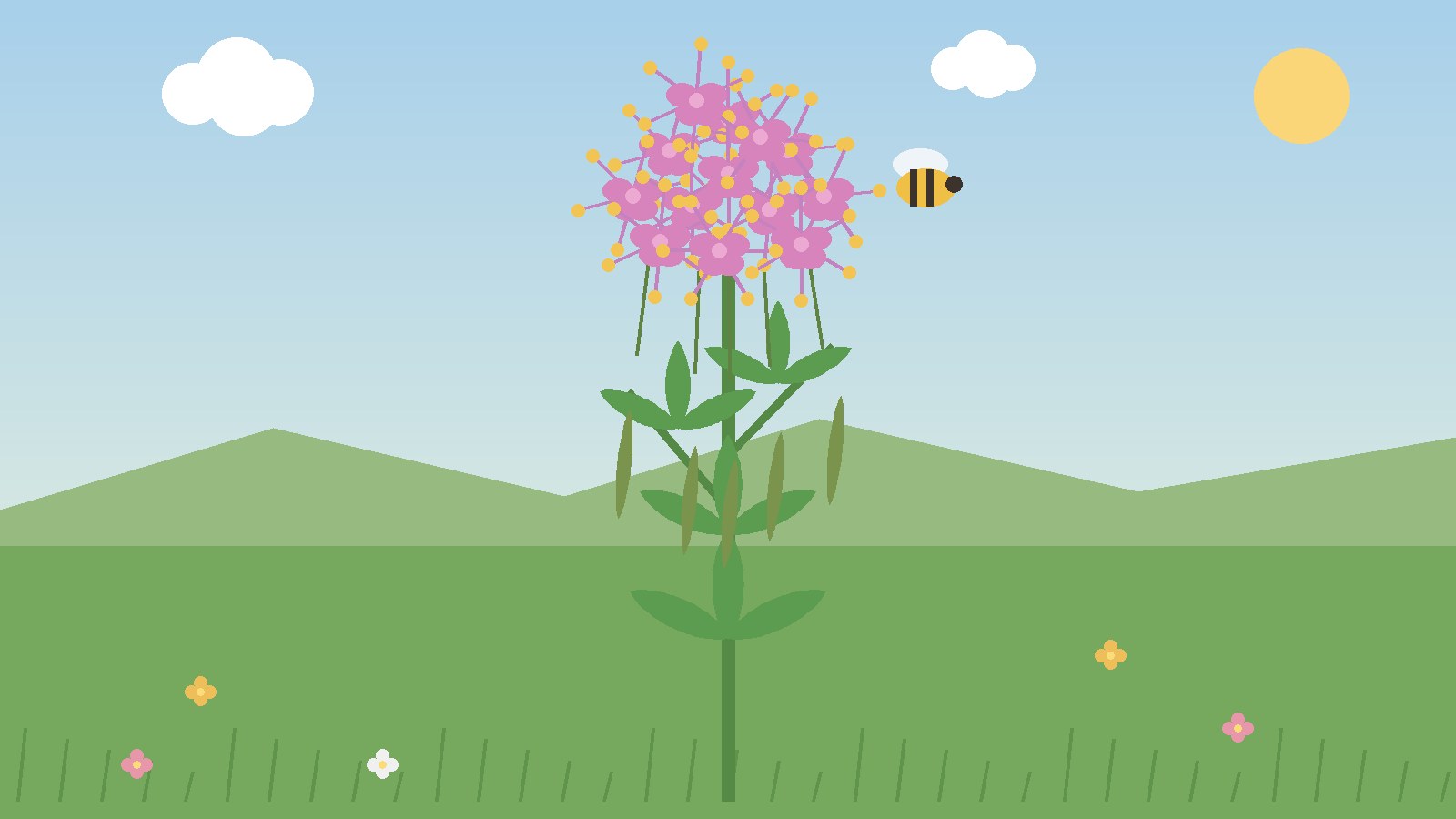
- Rocky Mountain bee plant is a tall, annual wildflower of western and central North America, known in botanical sources as Cleome serrulata, with Peritoma serrulata as a synonym. It grows upright, usually 1 to 2 meters tall, with leaves divided into three leaflets and clusters of pink to purple flowers that have four petals and six long stamens sticking out well beyond the petals. After flowering it forms long, narrow, drooping seed pods. It is called a bee plant because its nectar filled flowers attract many bees and other pollinators, and the United States Department of Agriculture (USDA) recommends it for pollinator plantings in the Rocky Mountain region and the Intermountain West. It is an annual, so one plant completes its life in one growing season, but it can return in later years from seed dropped on the same ground.
What Is Rocky Mountain Bee Plant?
Rocky Mountain bee plant is a native annual forb. A forb is a broad leaved herbaceous plant, as opposed to a grass, and an annual germinates, flowers, sets seed, and dies within one growing season. The USDA Natural Resources Conservation Service describes it as a tall, upright, native, annual forb with showy purple flowers. That description captures what a walker notices first: height, an upright shape, and a conspicuous flower head at the top of the plant.
It is not only a garden plant, even though it is also grown in wildflower meadows, hedgerows, and ornamental plantings. Its first home is open, disturbed ground in the West: roadsides, rangeland, valley and foothill shrubland, grassland, and field edges. It is an early seral species, one of the plants that colonize ground soon after disturbance, before longer lived plants take over. That habit explains why it can appear in a large patch one year and be thinner the next year on the same site. In the USDA account it is not a weed in the invasive sense: the USDA Plant Guide states that it is a native species, commonly found in disturbed sites, and not considered weedy or invasive.
Several common names point to different parts of its story. Rocky Mountain beeweed and bee spiderflower point to pollinators and to the spider like look of the long stamens and later pods. Stinking clover, skunk weed, and stinkweed point to its strong, unpleasant odor. Navajo spinach points to its historical use as a cooked green. No single common name is enough for identification. The plant should always be checked against its leaf, flower, and pod characters together.
Scientific Name and Family: Why the Name Varies
The USDA Plant Guide published in 2024 uses Cleome serrulata Pursh and gives Peritoma serrulata (Pursh) DC. as an alternate scientific name. The USDA Forest Service Plant of the Week page also uses Cleome serrulata. More recent treatments cited in field guides use Cleomella serrulata for the same species. This article uses Cleome serrulata because it is the name used by the two USDA sources checked for this profile, with the other names noted so a reader who meets them elsewhere is not confused.
The 2024 USDA Plant Guide says Cleome is currently accepted as a member of the caper family, Capparaceae, in the USDA source it cites, but it also notes that the plant has been associated with the mustard family, Brassicaceae, or placed in its own family, Cleomaceae. The USDA Forest Service page says the plant was traditionally considered a member of the caper family, but recent genetic studies indicate it is much more closely related to the mustard family, and many current floras have adopted Cleomaceae. The Western Forbs account, drawing on the Flora of North America treatment, places it in Cleomaceae, the spiderflower family. If a source says Capparaceae, Cleomaceae, or notes a close link to Brassicaceae, it may still be describing the same plant. Check the species name, not only the family label.
How to Identify It
Identification is easiest when the plant is in flower, because the flower head, the leaf pattern, and the later pods all point in the same direction. No single feature should be used alone.
Growth habit and height
Rocky Mountain bee plant is tall and upright, with single or multiple stems, according to the USDA Plant Guide. That guide gives a typical height of 1 to 2 meters, or 3 to 6 feet. The USDA Forest Service page describes an annual herb that can grow up to 4 feet tall. The Montana Field Guide gives stems 15 to 80 centimeters tall. Height varies with soil moisture, elevation, latitude, and local growing conditions. The useful field impression is a tall, lanky, upright annual, usually well above knee height, rather than a low, spreading groundcover.
Leaves
The leaves are trifoliate, meaning each leaf is divided into three leaflets. The USDA Plant Guide describes three lanceolate or elliptic leaflets, each 1.5 to 7 centimeters long and 4 to 14 millimeters wide. Lanceolate means shaped like a narrow lance head, wider near the base and tapering to a point. The USDA Forest Service page describes stem leaves divided into three linear elliptic leaflets arranged alternately along the stem, meaning leaves are placed singly at different points up the stem rather than in opposite pairs. Look for that three leaflet pattern on an intact stem.
Flowers
Flowers are clustered in elongated racemes near the top of the stems. A raceme is a flower cluster in which individual flowers are carried on short stalks along a central stem, with the lower flowers generally opening first. The USDA Plant Guide describes flowers as pink to purple, with four petals and four sepals. The USDA Forest Service page also gives four petals and four sepals, plus six long, showy stamens. Stamens are the pollen producing parts of a flower. Here they project well beyond the petals, which gives the flower head its spidery look and is the origin of names such as bee spiderflower. The Montana Field Guide notes pink or purple flowers, rarely white, so color alone should not decide an identification.
Seed pods and seeds
After flowering, the plant forms a long, narrow pod. The USDA Plant Guide gives pod length as 2.5 to 7 centimeters, or 1.0 to 2.76 inches. The USDA Forest Service page describes distinctive podlike capsules, up to 4 inches long, that droop downward from elongated stalks. The Montana Field Guide gives fruit 2 to 6 centimeters long. The shape matters more than an exact length: a slender, drooping, podlike capsule on a long stalk, hanging below the flower head as the season advances. Seeds are dark and small. The USDA Plant Guide gives approximately 145,370 seeds per kilogram, or 66,000 seeds per pound.
Life Cycle Through the Year
As an annual, Rocky Mountain bee plant lives on a one season timetable, with seed as the bridge to the next year. It germinates, grows rapidly, flowers in summer, sets seed, and dies. The next generation depends on seed that falls to the ground and survives winter, or on seed sown by people for restoration or garden use.
Flowering time shifts with latitude and elevation. The USDA Plant Guide says flowering occurs in midsummer, in August and September in northern states, but can flower as early as May in southern latitudes. The USDA Forest Service page gives a long blooming season from May through September, depending on location and elevation. A reader in the northern Rockies should therefore not expect the same flowering month as a reader in Arizona or New Mexico, and a late summer visit is the best time to see the plant at its showiest in the north.
Seed behavior is important to its ecology and to its use in plantings. The USDA Plant Guide notes that seed often has significant dormancy, meaning seed does not all germinate at once, and that chilling duration, gibberellins, and seed after ripening all influence germination. A patch may not return evenly every year, and a planting may need a cold period or a dormant fall sowing to establish well. USDA guidance for rangeland use recommends fall, dormant seedings for most rangeland applications, while noting that stratifying seed in cold, moist sand for 30 days is commonly recommended for spring seeding. Stratifying means exposing seed to cold, moist conditions that mimic winter.
The plant is also described as self fertile. The USDA Plant Guide, citing research on Cleome, says Rocky Mountain beeplant and other Cleome are self fertile, and outcrossing does not increase seed set or seedling vigor. Self fertile means a flower can set seed with its own pollen. That does not mean insects are unimportant. Insect visits still move pollen, support the insects themselves, and help pollinate nearby plants. After disturbance, the plant is typically abundant for the first few years and then reduces in density, making way for later seral, longer lived species, according to the USDA Plant Guide.
Native Range and Habitat
Rocky Mountain bee plant is native throughout much of North America, with its core range in the West and center of the continent. The USDA Plant Guide says it is native throughout much of North America, commonly found in western states, with infrequent occurrences as far east as Maine and Massachusetts, but absent from the southeast. The USDA Forest Service page gives a more geographic summary: throughout western North America, from southern British Columbia, east to Minnesota, and as far south as Arizona and New Mexico, and now also naturalized in eastern areas of North America. Naturalized means a plant introduced outside its native range that now grows and reproduces there without human help, even if it is not invasive.
The Montana Field Guide, citing a manual of Montana vascular plants, gives a native range from Washington to Saskatchewan, south to California, Arizona, and New Mexico, with introduction in eastern North America. That account matches the USDA picture: a western and central native plant, with eastern occurrences that reflect introduction and naturalization rather than original native range. Readers outside the West should therefore check a local flora or state plant list before assuming a plant they see is native to their state.
Habitat is open and often disturbed. The USDA Plant Guide says it occupies disturbed, early seral sites, including roadsides in valley and foothill shrubland and grasslands, and in the Intermountain West it is associated with sagebrush scrub habitat. The USDA Forest Service page lists disturbed sites along roads, meadows, and rangelands, plus dry roadsides and waste places. The Montana Field Guide lists sparsely vegetated, often saline, sandy to clayey soil of grasslands, steppe, moist meadows, and roadsides, on plains and valleys. It is found in semiarid rangeland plant communities receiving approximately 200 to 500 millimeters, or 8 to 20 inches, of mean annual precipitation, according to the USDA Plant Guide.
Why It Is Called a Bee Plant
The USDA Forest Service page describes numerous clusters of nectar filled flowers as a magnet for many pollinators. The Western Forbs account, summarizing common name origins, says the common names derive from the many pollinators, primarily bees, attracted to the plant, its profuse nectar production, the resemblance of the long, dangling pods to the legs of a spider, the plant’s slightly unpleasant odor, and its widespread use by Native Americans. Bees are central to the name, but the spiderflower part of some names comes from the flower and pod shape, not from spiders.
The USDA Plant Guide lists pollinators as bees, butterflies, wasps, and hummingbirds, and says the species provides pollen and nectar to agriculturally managed bees such as the European honeybee, Apis mellifera, and the alfalfa leafcutter bee, Megachile rotundata. It also notes documented visits by monarch butterflies, Danaus plexippus, and says the species is recommended for monarch butterfly habitat creation. The USDA Forest Service page notes a broad tailed hummingbird visiting the flowers. The Western Forbs account also records the plant as a larval host for the checkered white butterfly, Pontia protodice, citing the Xerces Society for Invertebrate Conservation as reported through the Lady Bird Johnson Wildflower Center. A larval host is a plant on which caterpillars feed, a different role from a nectar plant for adults.
One striking figure in the USDA Plant Guide should be read with care. It says honey yields of over 100 pounds per colony have been reported from Rocky Mountain beeplant over a 10 day period, citing a Xerces Society book. Reported is the key word. That figure describes a reported yield in a particular setting, not a guaranteed yield for a beekeeper in any location. What can be said with confidence is that the plant is recognized in USDA and Xerces Society guidance as a strong nectar and pollen source for bees, and is recommended for pollinator plantings in the Rocky Mountain region and the Intermountain West.
Ecological Uses and Limits
In restoration and rangeland work, Rocky Mountain bee plant is used as an early seral forb. The USDA Plant Guide says it serves as an early seral forb in restoration and reclamation, and is recommended for hedgerows, wildflower meadow, rangeland, and ornamental plantings. The addition of the species to seed mixes has been shown, in studies cited by the guide, to provide greater overall cover, greater native plant diversity, and greater arthropod richness than adjacent reference communities in reclamation seedings.
First, the USDA Plant Guide says the species is known to benefit diverse native insects, especially in post fire restoration seedings, by producing a pollen and nectar source in the first year of establishment. A first year nectar source matters after fire because many longer lived plants have not yet returned. Second, the guide cites research showing that Rocky Mountain beeplant reduced the above ground growth of the invasive Halogeton glomeratus. That is a specific experimental result, not a general claim that the plant controls all invasive species. The guide also says seed is known to be eaten by doves, citing an Arizona flora.
Cultural and Historical Uses
Rocky Mountain bee plant is an important cultural plant for many Southwestern tribes, according to the USDA Forest Service page.
For food, the USDA Plant Guide says Navajo, Hopi, Cochiti, and Apache boiled and ate the plant’s greens, and Hopi boiled flowers of Rocky Mountain beeplant for food. The USDA Forest Service page says young, tender shoots and leaves are good sources of vitamin A and calcium, that in the past they were used as potherbs or medicinally as teas for fevers and other ailments, and that seeds were ground and used to make gruel or bread. These are historical reports, not modern dietary or medical recommendations. A reader should not harvest and eat a wild plant on the basis of a general article.
For dye, the USDA Plant Guide says the plant was used to create pottery paint and dyes. The USDA Forest Service page says the Navajo still use the plant as a source of yellow green dye for wool rugs and blankets, and many pueblo tribes use a concentrated form of dye, made from boiling the plant into a thick black resin, to paint designs on pottery or for decorating baskets.
Cultivation Basics as General Information
This section gives general information about how the plant grows, not a step by step planting guide for a particular garden. Local extension advice should be checked for soil, timing, and seed sourcing in a specific state or county. It grows in open ground, in valley and foothill shrubland, grassland, and sagebrush scrub, and it is associated with semiarid conditions. The USDA Plant Guide recommends it for use at sites receiving more than 300 millimeters, or 12 inches, of mean annual precipitation in the Intermountain West. That threshold is a guide for restoration sites in that region, not a universal rule for gardens elsewhere. It tolerates poor, sandy, or gravelly ground in its native range, and it is drought tolerant once established in suitable conditions, but drought tolerant does not mean it will thrive with no water in a hot, dry garden bed outside its range.
As an annual, it must be allowed to set seed if it is to return. It is not a perennial, and it will not come back from the same root crown the next year. It can self sow, meaning seed dropped at the end of the season can germinate the next year, but USDA guidance notes that stands may not persist due to succession, and new stands may need to be located periodically.
Seed dormancy is significant, and the USDA Plant Guide notes that cold stratification, gibberellins, and seed after ripening all influence germination. For rangeland use, fall dormant seeding is recommended for most applications, while cold, moist stratification for 30 days is commonly recommended for spring seeding. Seed depth in the USDA planting guidance is very shallow, 0 to 3 millimeters, or 0 to 1/8 inch, when broadcast or drill seeded into a firm, weed free seedbed. A full stand seeding rate of 17 pounds per acre is given for restoration use. Those rates are restoration figures, not garden packet figures.
Because it colonizes disturbed ground and self sows readily, it can spread within a garden or meadow beyond its first planting spot. That is not the same as being invasive in the USDA sense, but it is a reason to give it room, to check local status, and to avoid planting it where a native plant community is being protected from new introductions. The USDA Plant Guide advises consulting a local land grant university, local extension, or local USDA office for recommendations for a particular area.
Look-Alikes and Confusions
Yellow beeplant
Yellow beeplant, Cleome lutea, is the closest look-alike. It shares the same family, the same general growth habit, the same long stamens, and the same long, drooping pod shape. The clearest difference in flower is color: Rocky Mountain bee plant flowers are pink to purple, rarely white, while yellow beeplant flowers are yellow. That difference is reliable in bloom, but it disappears out of bloom, when both plants show similar leaves and pods. Out of bloom, the safest check is the full botanical name on a seed packet or plant label, plus local range information. Occasional hybrids between a Utah phase of Rocky Mountain bee plant and yellow beeplant are reported in the Western Forbs account.
Ornamental spider flower
Ornamental spider flower, sold as cleome, is a different species with a similar spidery flower. North Carolina State Extension describes spider flower, Cleome houtteana, previously known as Cleome hassleriana and Cleome spinosa, as an annual in the Cleomaceae family native to Argentina, Paraguay, Uruguay, and southeast Brazil, growing 3 to 6 feet tall in full sun to partial shade, with pink, purple, and rarely white flowers and stamens up to 3 inches long. That description overlaps Rocky Mountain bee plant in height, flower color, and stamen length, so appearance alone can mislead. Origin and full species name are the useful checks.
Mustard family plants
Because Rocky Mountain bee plant flowers resemble mustard family flowers, a walker may confuse it with a wild mustard. The USDA Plant Guide makes the distinction explicit: the flowers closely resemble those of Brassicaceae, but have long, exserted stamens. Wild mustards also form long pods, so pod shape alone is not enough. The combination of three leaflets, pink to purple flowers, six very long stamens, a strong odor, and a tall annual habit in open western ground points away from most mustards and toward this species. When in doubt, a photograph showing leaves, flowers, and pods together, plus location, will help an expert or a local flora key confirm the identification.
Frequently Asked Questions
Is Rocky Mountain bee plant the same as cleome?
Not always. Cleome is a genus name that has been used for several species, including garden ornamentals. Rocky Mountain bee plant is one species in that group, Cleome serrulata, with Peritoma serrulata and Cleomella serrulata as names used for the same species in different treatments. A plant sold simply as cleome may be ornamental spider flower, Cleome houtteana, instead. Check the full species name.
Is Rocky Mountain bee plant a perennial?
No. It is an annual. An individual plant dies after setting seed in one growing season. It can return in later years from seed, either by self sowing or by new sowing, but it does not survive winter as a living root crown or woody stem.
Why is it called a bee plant?
Because its flowers produce abundant nectar and pollen and attract many bees, along with butterflies, wasps, and hummingbirds. The Western Forbs summary of common name origins links the bee name to the many pollinators, primarily bees, attracted to the plant and to its profuse nectar production. The spiderflower part of some names comes from the long stamens and dangling pods, not from spiders.
Is Rocky Mountain bee plant invasive?
According to the USDA Plant Guide, it is a native species and is not considered weedy or invasive, even though it colonizes disturbed sites. It has naturalized in eastern North America outside its core native range, so local status should still be checked. Being native in the West does not automatically make it native in an eastern state.
Is Rocky Mountain bee plant edible?
Historically, greens and flowers were boiled and eaten by Navajo, Hopi, Cochiti, and Apache peoples, and seeds were ground for gruel or bread, according to USDA sources. That history does not make wild harvesting safe for a modern reader without expert identification and local knowledge. Do not eat a wild plant based on a general article alone.
Does Rocky Mountain bee plant attract hummingbirds?
Yes, hummingbirds are documented visitors. The USDA Plant Guide lists hummingbirds among its pollinators, and the USDA Forest Service page describes a broad tailed hummingbird visiting the nectar filled flowers. Bees, butterflies, and wasps are also documented visitors.
When does Rocky Mountain bee plant bloom?
Flowering time depends on location and elevation. The USDA Forest Service page gives May through September as a broad season. The USDA Plant Guide gives August and September in northern states, with flowering as early as May in southern latitudes. In the north, late summer is the most reliable time to see it in full flower.
How tall does Rocky Mountain bee plant grow?
Typical height in the USDA Plant Guide is 1 to 2 meters, or 3 to 6 feet. The USDA Forest Service page describes plants up to 4 feet tall, and the Montana Field Guide gives stems 15 to 80 centimeters tall. Height varies with moisture, soil, and elevation, so a shorter plant on dry ground can still be the same species.
What is the difference between Rocky Mountain bee plant and yellow beeplant?
Flower color is the clearest difference in bloom. Rocky Mountain bee plant flowers are pink to purple, rarely white. Yellow beeplant, Cleome lutea, has yellow flowers. Both share a similar habit, leaf pattern in broad terms, long stamens, and drooping pods, so color plus the full scientific name are the safest checks.
Sources & references
- USDA Natural Resources Conservation Service, Plant Guide for Rocky Mountain bee plant (Cleome serrulata), by D. Tilley and M. Wolf, Aberdeen Plant Materials Center, published 2024. Used for identification, height, leaf and pod measurements, range, habitat, pollinator guidance, restoration use, seed information, and cultural use summary.
- USDA Forest Service, Plant of the Week: Rocky Mountain Bee Plant (Cleome serrulata), by Teresa Prendusi. Used for growth habit, flower and pod description, bloom season, range summary, odor, cultural uses, and family placement summary.
- Montana Natural Heritage Program, Montana Field Guide, Rocky Mountain Beeplant, Cleome serrulata, drawing on Lesica et al., Manual of Montana Vascular Plants. Used for Montana stem, leaf, petal, and fruit measurements, habitat description, and range summary.
- North Carolina State University Extension Gardener Plant Toolbox, Spider Flower, Cleome houtteana. Used only for the ornamental spider flower comparison, including origin, height, flower color, and stamen length.
- Western Forbs, Rocky Mountain beeplant (Peritoma [Cleome] serrulata), drawing on the Flora of North America treatment by Vanderpool and Iltis. Used for family placement, common name origins, checkered white larval host record as reported through the Xerces Society, and hybrid note.


