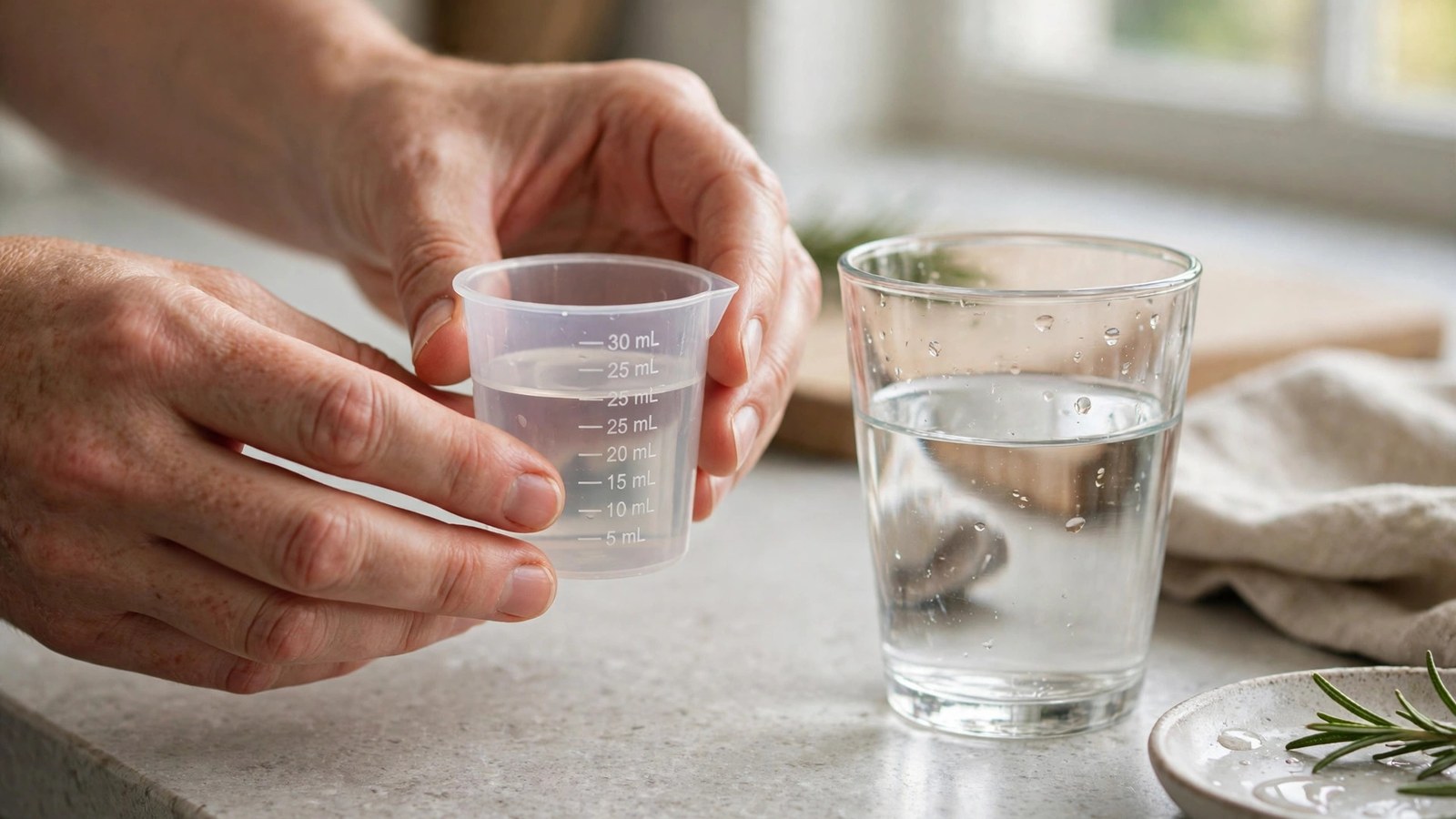
Short answer
- One US fluid ounce is exactly 29.5735295625 milliliters, usually written as 29.5735 ml. One milliliter is 0.033814 US fluid ounces. To convert milliliters to US fluid ounces, divide the milliliter figure by 29.5735295625, or multiply it by 0.033814. To convert US fluid ounces to milliliters, multiply the fluid ounce figure by 29.5735295625. The imperial fluid ounce used in the United Kingdom is smaller. One imperial fluid ounce is exactly 28.4130625 milliliters, and one milliliter is 0.035195 imperial fluid ounces. The difference between the two fluid ounces is about 4 percent, which is small in a single small drink and larger across a full batch. The figures people ask for most often are these. 30 ml is 1.0144 US fluid ounces. 100 ml is 3.3814 US fluid ounces. 250 ml is 8.4535 US fluid ounces. 300 ml is 10.1442 US fluid ounces. 500 ml is 16.9070 US fluid ounces, and 1,000 ml, one liter, is 33.8140 US fluid ounces. In the other direction, 1 fl oz is 29.5735 ml, 3.4 fl oz is 100.5500 ml, and 8 fl oz is 236.5882 ml. Every figure was recomputed from the two exact constants above.
By Emma Hudson
Milliliters and fluid ounces meet in kitchens, on drink bottles, on medicine cups, and in travel bags. A recipe may call for fluid ounces while a jug shows milliliters. A bottle may print one scale on one side and the other scale on the reverse. This guide gives the exact conversion in both directions, for US fluid ounces and for imperial fluid ounces, with full tables, worked examples for the container sizes people meet most often, and a clear note on where rounded label figures differ from exact ones.
The Exact Conversion Factors
A conversion factor is a fixed ratio between two units. Because the US gallon and the imperial gallon are each defined in metric terms, both fluid ounces have exact milliliter values, not estimates.
The US fluid ounce is one 128th of a US gallon. The US gallon is 3.785411784 liters, so one US fluid ounce is 3,785.411784 ml divided by 128, which is 29.5735295625 ml exactly. NIST lists this factor in Appendix B.8 of its Guide to the SI as 29.57353 ml to the digits printed there.
The imperial fluid ounce is one 160th of an imperial gallon. The imperial gallon is exactly 4.54609 liters, an exact factor in the same NIST appendix, so one imperial fluid ounce is 4,546.09 ml divided by 160, which is 28.4130625 ml exactly. NIST lists this factor as 28.41306 ml to the digits printed there.
Four formulas cover every conversion in this article.
Milliliters to US fluid ounces: milliliters divided by 29.5735295625.
US fluid ounces to milliliters: fluid ounces multiplied by 29.5735295625.
Milliliters to imperial fluid ounces: milliliters divided by 28.4130625.
Imperial fluid ounces to milliliters: fluid ounces multiplied by 28.4130625.
For quick work, the shortened factors are accurate enough for most kitchen use. Use 29.5735 for US fluid ounces and 28.4131 for imperial fluid ounces, and use 0.033814 and 0.035195 as the matching one milliliter factors. The shortened and exact factors agree to the third decimal place in every table in this guide, and any difference appears only in later decimal places.
How to Convert Step by Step
First, check which fluid ounce the source uses. A source from the United States uses US fluid ounces unless it says otherwise. A source from the United Kingdom may use imperial fluid ounces, especially in older recipes, although many modern United Kingdom recipes give milliliters directly and need no conversion at all.
Second, pick the formula for the direction you need. Milliliters to fluid ounces means divide. Fluid ounces to milliliters means multiply.
Third, do the arithmetic once and write the result down before measuring, rather than converting several amounts in your head while cooking.
Fourth, round to a precision your tool can show. A jug marked every 10 ml cannot deliver a tenth of a milliliter. Four decimal places are for checking a table, not for pouring.
A worked check shows the method. To convert 175 ml to US fluid ounces, divide 175 by 29.5735295625. The result is 5.9175 US fluid ounces. To check it, multiply back. 5.9175 multiplied by 29.5735295625 gives 175.001 ml, which rounds to 175 ml. Converting there and back returns the starting figure, apart from rounding, because the two factors are exact inverses of each other.
Milliliters to Fluid Ounces Table
The table below gives common milliliter values in both fluid ounce systems. Figures are rounded to three decimal places. The 100 ml row is also given to four decimal places in the Short Answer, where 100 ml is 3.3814 US fluid ounces and 3.5195 imperial fluid ounces.
| Milliliters | US fluid ounces | Imperial fluid ounces |
|---|---|---|
| 1 ml | 0.034 | 0.035 |
| 2 ml | 0.068 | 0.070 |
| 5 ml | 0.169 | 0.176 |
| 10 ml | 0.338 | 0.352 |
| 15 ml | 0.507 | 0.528 |
| 20 ml | 0.676 | 0.704 |
| 25 ml | 0.845 | 0.880 |
| 30 ml | 1.014 | 1.056 |
| 40 ml | 1.353 | 1.408 |
| 50 ml | 1.691 | 1.760 |
| 60 ml | 2.029 | 2.112 |
| 75 ml | 2.536 | 2.640 |
| 100 ml | 3.381 | 3.520 |
| 120 ml | 4.058 | 4.223 |
| 150 ml | 5.072 | 5.279 |
| 180 ml | 6.087 | 6.335 |
| 200 ml | 6.763 | 7.039 |
| 250 ml | 8.454 | 8.799 |
| 300 ml | 10.144 | 10.559 |
| 330 ml | 11.159 | 11.614 |
| 355 ml | 12.004 | 12.494 |
| 400 ml | 13.526 | 14.078 |
| 500 ml | 16.907 | 17.598 |
| 750 ml | 25.361 | 26.396 |
| 1,000 ml | 33.814 | 35.195 |
Two rows act as anchors. The 1,000 ml row is one liter, and its US figure, 33.814 fluid ounces, is the same figure used in the liters to ounces conversion. The 30 ml row sits just above one US fluid ounce, which is why 30 ml is so often used as a rough stand in for one fluid ounce on labels and in quick kitchen conversions, even though it is not exact.
Fluid Ounces to Milliliters Table
This table runs in the opposite direction, for a recipe, label, or bottle that gives fluid ounces and a jug or cup that shows milliliters. Figures are rounded to three decimal places, so the one fluid ounce row shows 29.574 ml, which is the exact 29.5735295625 ml rounded to three places.
| Fluid ounces | Milliliters, US | Milliliters, imperial |
|---|---|---|
| 0.5 fl oz | 14.787 ml | 14.207 ml |
| 1 fl oz | 29.574 ml | 28.413 ml |
| 2 fl oz | 59.147 ml | 56.826 ml |
| 3 fl oz | 88.721 ml | 85.239 ml |
| 3.4 fl oz | 100.550 ml | 96.604 ml |
| 4 fl oz | 118.294 ml | 113.652 ml |
| 5 fl oz | 147.868 ml | 142.065 ml |
| 6 fl oz | 177.441 ml | 170.478 ml |
| 8 fl oz | 236.588 ml | 227.305 ml |
| 10 fl oz | 295.735 ml | 284.131 ml |
| 12 fl oz | 354.882 ml | 340.957 ml |
| 16 fl oz | 473.176 ml | 454.609 ml |
| 20 fl oz | 591.471 ml | 568.261 ml |
| 32 fl oz | 946.353 ml | 909.218 ml |
The 8, 16, and 32 fluid ounce rows in US measures are familiar kitchen landmarks. 8 US fluid ounces is one US cup, 236.588 ml. 16 US fluid ounces is one US pint, 473.176 ml. 32 US fluid ounces is one US quart, 946.353 ml. NIST lists the US cup to milliliter factor as 236.5882 ml, which matches the 8 fluid ounce row in this table.
Worked Examples for Common Volumes
30 milliliters to ounces. Divide 30 by 29.5735295625. The result is 1.0144 US fluid ounces, just over one fluid ounce. In imperial fluid ounces, 30 divided by 28.4130625 is 1.0559. In kitchen terms, 30 ml is also close to two US tablespoons. NIST lists one tablespoon as 14.78676 ml, so two tablespoons are 29.5735 ml, which is one US fluid ounce. A 30 ml pour is therefore a slightly generous two tablespoons.
100 milliliters to ounces. Divide 100 by 29.5735295625. The result is 3.3814 US fluid ounces. In imperial fluid ounces the result is 3.5195. This is also the travel size figure covered below.
250 milliliters to ounces. Divide 250 by 29.5735295625. The result is 8.4535 US fluid ounces, just over one US cup of 8 fluid ounces. In imperial fluid ounces the result is 8.7988. A 250 ml glass can be set at the 8.5 fluid ounce mark on a jug with a small error of about 1.4 milliliters.
300 ml to ounces. Divide 300 by 29.5735295625. The result is 10.1442 US fluid ounces, or about 1.27 US cups. In imperial fluid ounces the result is 10.5585. Many small drink cans and bottles sit near this size, so 10.1 US fluid ounces is a handy figure to remember for a 300 ml container.
500 milliliters to ounces. Divide 500 by 29.5735295625. The result is 16.9070 US fluid ounces, just over one US pint of 16 fluid ounces. In imperial fluid ounces the result is 17.5975.
8 ounces to ml. Multiply 8 by 29.5735295625. The result is 236.5882 ml, one US cup. Many recipes round a cup to 240 ml, a labeling convention covered below. That figure is 3.4118 ml above the exact one, and the difference grows with scale. Four cups at 240 ml give 960 ml, while four exact cups give 946.353 ml.
One ounce to ml. Multiply 1 by 29.5735295625. The result is 29.5735 ml to four decimal places. Everyday measuring often rounds this to 30 ml, a rounding covered in the measuring section below.
Common Container Sizes
Bottles and cans are sold in a small set of standard sizes, and converting those sizes once is faster than converting every pour.
A 330 ml can or bottle is 11.1586 US fluid ounces and 11.6144 imperial fluid ounces. A 355 ml can is 12.0040 US fluid ounces, effectively the 12 fluid ounce can size, because 12 US fluid ounces is 354.882 ml and 355 ml is its metric rounding. In imperial fluid ounces, 355 ml is 12.4943.
A 473 ml container is 15.9940 US fluid ounces, effectively one US pint of 16 fluid ounces, exactly 473.176473 ml. A 750 ml bottle is 25.3605 US fluid ounces and 26.3963 imperial fluid ounces. A one liter bottle is 33.8140 US fluid ounces, and a two liter bottle is double that, 67.6280 US fluid ounces.
Small containers follow the same arithmetic. A 50 ml miniature bottle is 1.6907 US fluid ounces, and a 200 ml carton is 6.7628 US fluid ounces. The tables include standard can, carton, and bottle sizes alongside round numbers for this reason.
Milliliters in Kitchen Measures
Teaspoons, tablespoons, and cups are volume measures, so each one has a fixed milliliter value and a fixed fluid ounce value. NIST lists one teaspoon as 4.928922 ml and one tablespoon as 14.78676 ml in Appendix B.8 of its Guide to the SI, and its Metric Kitchen page gives the same relationships in rounded cooking form, with 5 ml for a teaspoon, 15 ml for a tablespoon, and 30 ml for one fluid ounce.
One teaspoon is 4.9289 ml, which is 0.1667 US fluid ounces, exactly one sixth of a fluid ounce. One tablespoon is 14.7868 ml, which is 0.5 US fluid ounces exactly, because a US fluid ounce contains two tablespoons. One quarter cup is 59.1471 ml and 2 US fluid ounces. One third cup is 78.8627 ml and 2.6667 US fluid ounces. One half cup is 118.2941 ml and 4 US fluid ounces. One cup is 236.5882 ml and 8 US fluid ounces.
These relationships give a second check. 45 ml is three tablespoons as a rounded household figure, because three multiplied by 14.78676 ml is 44.3603 ml. It is also 1.5216 US fluid ounces. A recipe that states a teaspoon as 5 ml uses a rounded figure 0.0711 ml above the exact teaspoon, invisible in one spoon and measurable only across a large batch.
US Versus Imperial Fluid Ounces
The two fluid ounces differ because the two gallons differ. The US gallon is 128 US fluid ounces and 3.785411784 liters. The imperial gallon is 160 imperial fluid ounces and exactly 4.54609 liters. The imperial gallon is larger, but it is divided into more fluid ounces, and each imperial fluid ounce ends up smaller than each US fluid ounce.
The size gap is about 4 percent. One US fluid ounce is 1.0408 imperial fluid ounces. One imperial fluid ounce is 0.9608 US fluid ounces. For a single fluid ounce, the gap is 1.1605 ml. For ten fluid ounces, a US measure is 295.735 ml while an imperial measure is 284.131 ml, a gap of 11.605 ml. For twenty fluid ounces, which is one imperial pint, the imperial measure is 568.261 ml, while twenty US fluid ounces is 591.471 ml, a gap of 23.209 ml.
Pints show the gap clearly. A US pint is 16 US fluid ounces and 473.176 ml. An imperial pint is 20 imperial fluid ounces and 568.261 ml. The imperial pint is larger in total, even though its fluid ounce is smaller, because it contains more of them.
Use US fluid ounces for United States sources, labels, and tools. Use imperial fluid ounces for older United Kingdom sources that state fluid ounces. If a modern United Kingdom source gives milliliters, use them directly rather than converting out and back.
The 3.4 Fluid Ounce Travel Size
One conversion appears in airport security rules. 3.4 US fluid ounces multiplied by 29.5735295625 is 100.5500 ml. The Transportation Security Administration states its liquids rule as travel size containers of 3.4 ounces or 100 milliliters, with each passenger limited to one quart size bag of liquids, gels, and aerosols. The rule uses the round 100 ml figure, which is slightly below the exact 100.5500 ml conversion.
A container labeled 100 ml states a volume below the exact conversion of 3.4 fluid ounces, and a container labeled 3.4 fluid ounces states the size the rule names in ounces. Both describe the size the rule allows, because the rule itself states both figures. This article covers only the arithmetic. Travelers should check the current rules of the security authority, airline, and airport they are using, because rules and exceptions change.
Why US Food Labels Say 30 Milliliters
Readers sometimes notice that a United States food label treats one fluid ounce as 30 ml, a cup as 240 ml, and a tablespoon as 15 ml, and wonder whether the exact figures in this guide are wrong. They are not. Labeling law uses its own rounded household measures for nutrition labeling. Under Title 21 of the Code of Federal Regulations, section 101.9, for nutrition labeling purposes a teaspoon means 5 ml, a tablespoon means 15 ml, a cup means 240 ml, one fluid ounce means 30 ml, and one ounce in weight means 28 grams.
Those label figures are conventions for consistent serving declarations, not redefinitions of the units. The exact fluid ounce, cup, and tablespoon remain 29.5735295625 ml, 236.5882 ml, and 14.7868 ml. The label cup is 3.4118 ml larger than the exact cup, and the label fluid ounce is 0.4265 ml larger than the exact fluid ounce. Use exact figures for measuring, expect rounded figures on labels, and do not treat a mismatch as an error in either place.
Medicine Volumes as Conversion Facts
Medicine cups and oral syringes are commonly marked in milliliters, and some older packaging also shows fluid ounces or teaspoons, so the same conversion facts apply to small volumes. Stated only as conversions, 2.5 ml is 0.0845 US fluid ounces, 5 ml is 0.1691 US fluid ounces, 7.5 ml is 0.2536 US fluid ounces, 10 ml is 0.3381 US fluid ounces, 15 ml is 0.5072 US fluid ounces, and 20 ml is 0.6763 US fluid ounces. In teaspoons, using the exact teaspoon of 4.9289 ml, 5 ml is a rounded one teaspoon household figure, and 15 ml is a rounded three teaspoon figure that equals one tablespoon as a volume.
Two factual cautions belong with those figures. Household spoons from a cutlery drawer are not standardized measuring devices and their volumes vary, so a volume marked on a medicine cup or syringe is the figure to use when a container provides one. A conversion changes only the unit name, never the volume itself. This guide gives no dose information for any medicine and covers only how a stated volume in one unit is written in another.
Fluid Ounces Versus Weight Ounces
The ounce in this guide is the fluid ounce, a unit of volume. There is also an ounce of weight, the avoirdupois ounce, which is a unit of mass. NIST lists one avoirdupois ounce as 28.34952 grams. Volume and mass are different quantities, so there is no fixed conversion from milliliters to weight ounces unless the density of the substance is known.
Water is the special case that causes the confusion, because one milliliter of water has a mass of about one gram. 29.5735 ml of water therefore has a mass of about 29.5735 grams, which divided by 28.349523125 grams per weight ounce is 1.0432 weight ounces. One US fluid ounce of water weighs a little more than one weight ounce. The two figures are close for water, which is why they are often treated as interchangeable, but they are not equal.
For other liquids the gap differs, because a lighter liquid gives less mass for the same volume and a heavier liquid gives more, while the fluid ounce conversion stays the same. If a source gives milliliters, read ounces as fluid ounces unless weight is stated. If a recipe gives ounces for a dry ingredient such as flour, read it as weight and weigh it.
Rounding and Practical Measuring
Rounding is a choice about precision, not a change in the conversion. The commonest rounding treats one fluid ounce as 30 ml. The error is 0.4265 ml per fluid ounce, which is about 1.44 percent high. On one fluid ounce, that error is less than half a milliliter. On eight fluid ounces, using 30 ml per ounce gives 240 ml instead of the exact 236.588 ml, an error of 3.412 ml. On 32 fluid ounces, it gives 960 ml instead of 946.353 ml, an error of 13.647 ml. Whether that matters depends on the task. For diluting a drink or filling a water bottle, it does not. For baking ratios or any mixture where proportions must stay fixed as a batch scales, use the exact factor.
Use the scale your tool shows well. If a jug shows milliliters clearly, convert to milliliters once and measure in milliliters, and the reverse for a cup marked in fluid ounces. For small volumes, read the liquid surface at eye level. The curved surface in a narrow cup, called the meniscus, can distort a reading taken from above, and with 5 ml or 10 ml a small error is a large share of the total. A small medicine cup is built for small volumes and fine marks, and a kitchen jug for larger volumes, and each reads its own range more reliably.
Related Conversions
Milliliters to ounces sits inside a family of conversions sharing the same constants. Liters to ounces uses the same factor, because one liter is 1,000 ml and 33.8140 US fluid ounces. Milliliters in a gallon uses the gallon totals, 3,785.411784 ml US and 4,546.09 ml imperial. Milliliters to tablespoons divides by 14.7868 ml. Ounces in a gallon uses the counts, 128 US and 160 imperial fluid ounces per gallon.
Frequently Asked Questions
How many ml are in an oz?
One US fluid ounce is 29.5735295625 ml, usually written as 29.5735 ml. One imperial fluid ounce is 28.4130625 ml. Most United States recipes, labels, and measuring tools use the US figure.
How do I convert milliliters to ounces?
Divide the milliliter figure by 29.5735295625 for US fluid ounces, or multiply it by 0.033814 for the same result. For imperial fluid ounces, divide by 28.4130625 or multiply by 0.035195. For example, 200 ml divided by 29.5735295625 is 6.7628 US fluid ounces.
How do I change ounce to ml?
Multiply the fluid ounce figure by 29.5735295625 for US measures. For example, 2 US fluid ounces multiplied by 29.5735295625 is 59.1471 ml. For imperial measures, multiply by 28.4130625, so 2 imperial fluid ounces is 56.8261 ml.
How many ounces is 100 ml?
100 ml is 3.3814 US fluid ounces and 3.5195 imperial fluid ounces. The US figure is the one used for the travel size container discussed in this guide, where the published rule states 3.4 ounces or 100 milliliters.
Is 1 oz the same as 30 ml?
Not exactly. One US fluid ounce is 29.5735295625 ml, so 30 ml is 1.0144 US fluid ounces. The 30 ml figure is a rounded household and nutrition labeling figure. It is close enough for many kitchen tasks, at about 1.44 percent high, and it is not the exact conversion.
What is 30 milliliters to ounces?
30 ml is 1.0144 US fluid ounces and 1.0559 imperial fluid ounces. It is also close to two US tablespoons, which together are exactly one US fluid ounce at 29.5735 ml.
How many ounces are in 250 ml?
250 ml is 8.4535 US fluid ounces and 8.7988 imperial fluid ounces. In US kitchen terms it is just over one cup, because one US cup is 8 fluid ounces and 236.5882 ml.
What is 300 ml to ounces?
300 ml is 10.1442 US fluid ounces and 10.5585 imperial fluid ounces. That is about 1.27 US cups, and it is a common size for small drink cans and bottles.
What does 8 ounces is ml mean as a conversion?
It asks for 8 fluid ounces in milliliters. Eight US fluid ounces is 236.5882 ml, which is one US cup. Eight imperial fluid ounces is 227.3045 ml. A label that prints 240 ml for an 8 fluid ounce serving is using the rounded nutrition labeling cup.
Why do US and imperial fluid ounces differ?
They are defined against different gallons. The US gallon is 128 US fluid ounces and 3.785411784 liters. The imperial gallon is 160 imperial fluid ounces and exactly 4.54609 liters. Dividing each gallon by its fluid ounce count gives two different fluid ounce sizes, 29.5735295625 ml and 28.4130625 ml.
Is a fluid ounce the same as an ounce by weight?
No. A fluid ounce measures volume and an avoirdupois ounce measures mass, at 28.34952 grams per ounce. One US fluid ounce of water has a mass of about 1.0432 weight ounces, because one milliliter of water has a mass of about one gram. For liquids with a different density from water, the mass of one fluid ounce is different again.
Keep reading: Liters to Ounces: Exact Conversion Table & Examples
Keep reading: How Many Ounces in a Gallon
Keep reading: Milliliters in a Gallon
Sources & references
- National Institute of Standards and Technology, NIST Guide to the SI, Appendix B.8, Factors for Units Listed Alphabetically. Used for the fluid ounce (U.S.) to milliliter factor of 29.57353 ml, the ounce (Canadian and U.K. fluid, imperial) to milliliter factor of 28.41306 ml, the cup (U.S.) to milliliter factor of 236.5882 ml, the tablespoon to milliliter factor of 14.78676 ml, the teaspoon to milliliter factor of 4.928922 ml, the gallon (U.S.) to liter factor, the exact imperial gallon factor of 4.54609 liters, and the avoirdupois ounce to gram factor of 28.34952 grams. https://www.nist.gov/physical-measurement-laboratory/nist-guide-si-appendix-b8
- National Institute of Standards and Technology, Approximate Conversions from Metric to U.S. Customary Measures, NIST SP 365 Metric Conversion Card page. Used for the point that NIST SP 811 Appendix B is the source for exact conversion factors, and for the approximate milliliter to fluid ounce relationship on the conversion card. https://www.nist.gov/pml/owm/metric-si/unit-conversion/approximate-conversions-metric-us-customary-measures
- National Institute of Standards and Technology, Metric Kitchen, Cooking Measurement Equivalencies. Used for the rounded household cooking equivalents of 5 ml for one teaspoon, 15 ml for one tablespoon or one half fluid ounce, 30 ml for one fluid ounce, 240 ml for one cup, and 480 ml for 16 fluid ounces or one pint. https://www.nist.gov/pml/owm/metric-si/metric-kitchen/metric-kitchen-cooking-measurement-equivalencies
- Transportation Security Administration, Liquids, Aerosols, and Gels Rule. Used for the wording that each passenger may carry liquids, gels, and aerosols in travel size containers that are 3.4 ounces or 100 milliliters, limited to one quart size bag per passenger. https://www.tsa.gov/travel/frequently-asked-questions/liquids-aerosols-and-gels-rule
- Title 21, Code of Federal Regulations, section 101.9, Nutrition labeling of food, paragraph (b)(5)(viii). Used for the nutrition labeling figures that a teaspoon means 5 ml, a tablespoon means 15 ml, a cup means 240 ml, 1 fl oz means 30 ml, and 1 oz in weight means 28 grams. https://www.ecfr.gov/current/title-21/section-101.9


