Short answer
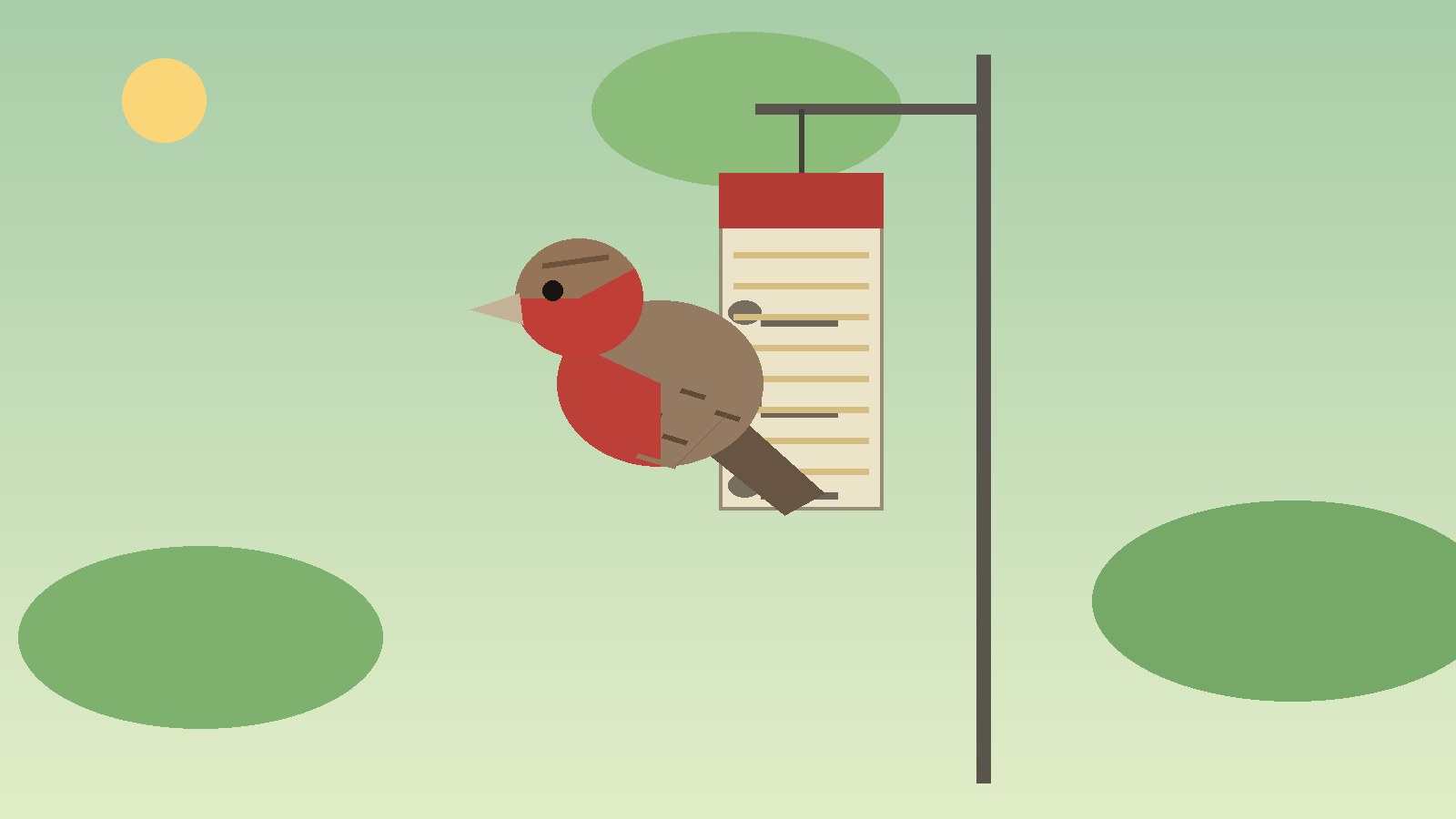
- A small bird with a red head in North America is most often a male house finch, but that answer fits only when the rest of the bird fits too. A male house finch is sparrow sized, with red on the forehead, the stripe over the eye, the throat, and the upper breast, a streaked brown back and sides, and a short conical bill for cracking seeds. Red on the head alone does not settle the identification. A purple finch male wears a raspberry wash over much more of the body, a common redpoll wears a small neat red cap with a black chin patch, a ruby crowned kinglet usually hides its red crown patch completely, and several woodpeckers wear only a small red patch on the back of the head. Females and young birds of most of these species show little or no red at all. Use four checks together. First, where are you, and what kind of place is it? Second, what time of year is it? Third, how big is the bird compared with a sparrow, and what shape is its bill? Fourth, what else can you see besides the red? The pattern of the red, the color of the back and belly, the streaking on the sides, and the behavior of the bird matter more than the exact shade of red. Photograph the bird and note those details at once. If marks conflict, leave the identification open.
How to Use This Guide
Start with the head, then move away from it fast. A red head narrows the list to a handful, but the second mark names the bird: flank streaking, a plain brown face, a white eye stripe, a black chin patch, a white wing bar, a chisel shaped bill, or constant wing flicking.
Work through four questions. Where are you? A town feeder, a winter birch tree, a mountain conifer forest, and an open woodland each favor different species. What time of year is it? Some red headed birds stay all year, others are mainly winter visitors. How big is the bird, and what bill shape does it have? A finch bill, a tiny kinglet bill, and a woodpecker bill point in different directions. What exactly is red? A whole red head, a red forehead only, a hidden crown patch, and a back of head patch are four different clues.
Light can mislead you with red. Against bright sky a bird looks darker, and in warm evening light it looks redder, so at a distance trust shape, pattern, size, and behavior first, and treat color as supporting evidence.
At a Glance: The Most Likely Small Candidates
| Bird | Red on the head in the adult male | Best second mark | Where and when to expect it |
|---|---|---|---|
| House finch | Red forehead, eye stripe, throat, upper breast | Bold flank streaks, streaked back, red rump in flight | Towns and feeders, much of North America, all year |
| Purple finch | Raspberry wash over head, nape, back | Little belly streaking, larger head, notched tail | Northern forests in summer, eastern feeders in winter |
| Cassin’s finch | Raspberry crown, paler pink brows | Peaked crown, minimal flank streaking, longer bill | Western mountains, higher elevation conifer forest |
| Common redpoll | Small red forehead cap | Black chin patch, streaked body, small yellow bill | North in summer, feeders in winter, irregular numbers |
| Ruby-crowned kinglet | Ruby crown patch, usually hidden | Wing flicking, white eye ring, wing bar, tiny size | Shrubs, widespread in winter and migration |
| Downy woodpecker | Small nape patch, male only | Black and white body, short bill, spotted tail feathers | Woodlands and parks, much of North America, all year |
| Hairy woodpecker | Small nape patch, male only | Larger than downy, bill about head length | Woodlands, much of North America, all year |
| Red-headed woodpecker | Whole crimson head in adult | Black and white body, large white wing patches | Open eastern woodlands, larger than finches here |
| Red-bellied woodpecker | Red cap in male, nape only in female | Barred back, pale belly, long bill | Eastern woodlands and suburbs, all year, larger than finches here |
Read the table as a starting point, not a verdict. A female house finch shows no red head, a young red headed woodpecker has a brown head, and a ruby crowned kinglet usually shows no red crown.
The House Finch: The Most Likely Answer
The house finch is the bird most readers picture first, and often it is the right answer, especially at a feeder or in a town garden. The adult male is about 5 to 6 inches long, about the size of a house sparrow but slimmer, with a fairly large bill for a small finch and short wings that make the tail look long. Cornell Lab Bird Academy describes the male as having a rounded head, red concentrated on the head and breast, red on the rump visible in flight, and bold brown streaking on the flanks. The back and wings are streaked brown, the belly is whitish with brown streaks down the sides, and the bill is short and conical, built for cracking seeds.
Check where the red stops. In a male house finch, red sits on the forehead, the stripe over the eye, the throat, and the upper breast, and often on the rump, but the brown back carries no red wash. That limit separates a house finch from a purple finch, whose raspberry color washes over the head, nape, back, and wings. Also check the sides. A house finch male has clear, bold brown streaks along the flanks, while a purple finch male has little or no strong streaking on the belly. Shade alone will not separate them, because house finch males vary from bright red to orange red or even yellowish, depending in part on diet and individual variation.
The female house finch has no red head and is easy to dismiss as just a brown bird. Cornell Lab Bird Academy describes the female and immature house finch as having a uniformly brown head with no facial pattern, and long, thin, blurry streaks on the breast. If your brown streaked bird has a plain face, a small conical bill, and bold flank streaking, a house finch is a strong candidate even with no red in sight. Young males look similar before they molt into red. House finches are common town and suburban feeder birds, present all year in many areas, with a cheerful warbling song. A house sparrow male has a gray crown and a black bib, not a red head. An American goldfinch male is bright yellow with a black cap, not a red head, and stays without a red head in winter.
Purple Finch: The Raspberry Wash Bird
The purple finch is the finch most often confused with the house finch, because the two overlap at feeders in the East in winter and look similar at a glance. The difference is in how far the color spreads and how clean the underparts look. Cornell Lab Bird Academy describes the male purple finch as having a larger head in proportion to the body than the house finch, a pink wash on the wings and belly as if dipped in raspberry juice, and no distinct streaks on the belly or flanks. The male looks raspberry red over the head, nape, back, and breast, not red only on the head and upper breast with a brown back.
The female purple finch is the fastest way to separate the two species when a pair or a flock is present. She has a bold facial pattern that the female house finch lacks: a white stripe over the eye, a dark stripe trailing away from the bill, and short, thick, smudged streaks on the breast, on a brighter white background. National Audubon Society guidance makes the same point. Female purple finches are more crisply patterned, with a well defined white mark above each eye, while female house finches are plainer. A brown streaked finch with a bold white eyebrow stripe at a winter feeder points to purple finch before house finch.
Shape helps too. The purple finch is plumper, with a fairly large head and a short tail clearly notched at the tip. The house finch is slimmer, with a rounder head and a longer tail only shallowly notched. The purple finch bill is larger and less curved on top than the smaller house finch bill. Purple finches nest in Canada, along the Pacific coast, and in the Northeast, and in winter visit eastern and southern feeders, sometimes in large numbers one year and hardly at all the next. They do not typically visit the interior West, where Cassin’s finch takes their place.
Cassin’s Finch: The Western Mountain Lookalike
Cassin’s finch is the third member of the red headed finch trio, and it matters mainly in the West. If you are in the East and you think you see a Cassin’s finch, check house finch and purple finch first, and be ready to leave the record uncertain unless the marks are clear. If you are in the western mountains, Cassin’s finch should be high on the list, especially in conifer forest at higher elevation.
Cornell Lab Bird Academy describes the male Cassin’s finch as having a raspberry crown that stands out more than the pink brows, a crown that often peaks or sticks up, and minimal streaking on the flanks. That peaked crown is the key head mark. The house finch has a rounder head with red spread across the forehead and eye stripe. The purple finch has a raspberry wash covering head, nape, and back more evenly. In Cassin’s finch, the crown looks like a distinct cap redder than the paler pink around it, and the top of the head often looks pointed rather than rounded.
The female Cassin’s finch sits between the other two females, with a less defined eye stripe than the female purple finch and sharply defined breast streaks, rather than the long, thin, blurry streaks of the female house finch. National Audubon Society guidance adds that Cassin’s finch has a longer, straighter bill than the house finch, and a noticeable eye ring. Use bill and peaked crown together, since no single female mark in this trio is safe alone. Among high elevation conifer forests from western Montana to northwestern New Mexico and Nevada, Cassin’s finch is the most likely of the trio.
Common Redpoll: The Small Red Cap With a Black Chin
The common redpoll, now often listed simply as redpoll, is a small northern finch that many readers meet only in winter, and often in a flock. It is smaller and more compact than a house finch, with a neat red cap much smaller than the red head of a house finch. Do not expect a whole red head. Expect a small bright red patch on the forehead, a black patch on the chin, a streaked brown and white body, and a small yellow bill with a dark tip.
Cornell Lab of Ornithology describes redpolls as small finches of the arctic tundra and boreal forest that migrate erratically, and that occasionally show up in large numbers as far south as the central United States in irruption years, when they often gather at feeders, particularly for thistle or nyjer seed. Most people in North America see redpolls only in winter, when the birds come to feeders or forage on small seeds in trees or in weedy fields. A small red capped finch at a feeder in July in the southern United States is very unlikely to be a redpoll, while the same bird at a feeder in January in the northern United States, in a busy flock, fits redpoll well.
Both sexes carry the red forehead cap and the black chin patch, which separates redpolls from female house finches and female purple finches at once. The male adds a variable wash of rose across the upper breast that the female lacks or shows only faintly. The body is streaked brown above and whitish below, with streaks on the flanks, and the wings show pale bars. The bill is small and pointed compared with the thicker conical bill of a house finch, which fits a diet of small seeds such as birch and alder seeds in winter. Redpolls give sharp, buzzy call notes and energetic trills and chatters. Redpoll numbers vary hugely from winter to winter, so the safe backyard level is usually redpoll, with any finer split left open.
Ruby-Crowned Kinglet: The Red Crown You Usually Cannot See
The ruby crowned kinglet is the smallest bird in this guide, and it breaks the simple rule that a red head means a red headed bird. The male has a brilliant ruby crown patch, but he usually keeps it hidden under the surrounding feathers. Cornell Lab of Ornithology states the point directly. The male’s brilliant ruby crown patch usually stays hidden, and the best chance to see it is to find an excited male singing in spring or summer. Cornell Lab also warns readers not to rely on seeing the ruby crown, because it is often kept completely hidden. If you find a tiny green gray bird with no visible red, a ruby crowned kinglet may still be the answer.
Identify the kinglet by everything except the crown. Smaller than a warbler or chickadee, it forages almost frantically through lower branches, constantly flicking its wings, often the first thing you notice. The body is plain green gray, with a white eye ring and a white wing bar, and the bill is tiny and thin, nothing like a finch bill.
Season and place help. In much of the United States, ruby crowned kinglets are widespread in winter and on migration, but in summer you will need to be in northern North America or the western mountains. The golden crowned kinglet is the closest lookalike. Its crown is orange to yellow, with black stripes on the sides of the crown and a white stripe over the eye, and it does not show a ruby red patch. A quick glimpse of a bright crown in a conifer can be misread as red in warm light. Check the face. A golden crowned kinglet shows a bold black and white striped face, while a ruby crowned kinglet shows a plainer face with a white eye ring.
Woodpeckers: When Red Means Only a Patch
Woodpeckers cause a different kind of red head confusion. Many people who report a small bird with a red head have actually seen a woodpecker with only a small red patch, or a larger woodpecker seen at a distance and judged smaller than it is. The first question for any black and white bird on a tree trunk is whether it clings to bark and uses a chisel shaped bill. Finches perch on feeders, wires, and branches and crack seeds. Woodpeckers cling to trunks and probe bark. That behavior alone separates the groups in most cases.
The downy woodpecker is the smallest woodpecker in North America, about 6 inches long, and the most likely woodpecker to be called small. The adult male has a small red patch on the back of the head, not a red head. The body is black and white, with a broad white stripe down the back, spotted wings, and a short bill. The female has no red patch at all. The hairy woodpecker looks very similar but is larger, about 9 inches long, with a bill about as long as its head and clean outer tail feathers without the dark spots seen on the downy. Size and bill separate them better than the shared red patch.
The red headed woodpecker is a different case, because the adult really does have a whole head of crimson red. It is, however, a medium sized woodpecker, not a small finch. The adult has a crimson red head, a white breast and belly, a black back and tail, and black wings with large white patches. The juvenile has a brown head and a dingier brown appearance overall, until it molts into adult plumage in autumn and winter. The red headed woodpecker lives in open eastern woodlands. If your bird is black and white with a whole red head and large white wing patches, and clearly larger than a finch, it is a strong candidate. A finch sized bird at a seed feeder is not.
The red bellied woodpecker adds a naming trap. Despite its name, its belly is pale, and its red sits on the head. The male has a red cap from bill to nape, the female red on the nape only, and the back and wings are black and white barred, unlike the solid black back of the red headed woodpecker. Both are medium sized eastern woodland birds, larger than the finches here. For every woodpecker here, note whether the red covers the whole head, only the cap, or only the back of the head, plus the back pattern, size, and bill.
Why the Red Varies, and Common Mistakes
Red in these birds is not a fixed paint color. It varies with sex, age, season, molt, diet, and individual condition. In the finches, adult males carry the red, females are brown and streaked, and young males start brown and streaked before molting into red. In the red headed woodpecker, juveniles have brown heads and only gain the crimson adult head as they molt. In the ruby crowned kinglet, the male can hide or flash his crown patch depending on excitement, so the same bird can look red crowned one minute and plain the next. Diet also affects finch color, since red and orange tones come in part from pigments in food, so a dull house finch is usually still a house finch.
The most common mistake is trusting a single flash of red. A house finch seen from behind can look red headed when only the rump shows. A northern cardinal seen from behind can look like a small red headed bird until its crest, its size, and its black face mask come into view. Cardinals are larger than the finches here, about 8 to 9 inches long, with a pointed crest, a black face mask, and a very thick bill. The second common mistake is calling a yellow finch with red on its head a goldfinch with a red head. American goldfinches do not naturally carry a red head. The third common mistake is ignoring females and young birds. A brown streaked finch with no red is not automatically a sparrow. House sparrows are chunkier, with a larger rounded head and a stouter bill, and male house sparrows have a gray crown and a black bib. The fourth common mistake is judging size without a reference. Compare the bird with a house sparrow, a robin, or a crow, or with a feeder or fence post in the same view. The fifth common mistake is forgetting season. A redpoll in July in the South needs stronger evidence than a common claim, ideally photographs and notes on several marks.
What to Note for a Reliable Identification
A good field note is short but specific. Record the date, place, and habitat, the size compared with a familiar bird, the bill shape, and the head pattern in detail. Is the red on the whole head, the forehead only, the crown only, or the back of the head only? Is there a white eye stripe, a dark eye stripe, a black chin patch, or a plain brown face? Note the back, wings, belly, and tail, including streaking, wing bars, and any red on the rump, plus behavior and sound in your own words.
Photographs help most when they show more than the head. A side view showing bill, back, and tail beats a front view showing only a red patch, and a female in the same flock can be just as useful, because her face pattern often separates finch species. Treat any identification app suggestion as a starting point, not proof, and check whether the species is expected in your area at that season. If you cannot reach a firm identification, that is normal, especially with females, young birds, distant birds, and birds in molt. Record the bird as unidentified, with your notes, and keep them for a later comparison. Do not disturb the bird to get a better view, and do not play recorded songs repeatedly to lure a bird closer.
Frequently Asked Questions
What is the most common small bird with a red head?
In much of North America, the male house finch, especially at feeders and in towns and suburbs. Confirm it by the red limit, the flank streaking, and the bill, not by the red head alone.
Is a small bird with a red head always male?
Usually, in the finches and kinglets here. Females are brown and streaked or plain green gray with no red head. The ruby crowned kinglet male usually hides his crown patch, and male woodpeckers often carry a red patch the female lacks, while red headed woodpecker adults of both sexes share a whole red head.
Why does my house finch look orange or yellow instead of red?
House finch males vary from bright red to orange red or even yellowish, depending in part on diet and individual variation. Check the streaked sides, the red limit, the conical bill, and the plain face of accompanying females before considering another species.
How do I tell a house finch from a purple finch?
A male house finch has red on the head and upper breast, a streaked brown back, and bold flank streaks. A male purple finch has a raspberry wash over head, nape, back, and wings, with little belly streaking. A female purple finch has a bold white eye stripe and short, thick, smudged breast streaks, while a female house finch has a plainer head and long, thin, blurry streaks.
How do I tell a house finch from a common redpoll?
A house finch male has red across the forehead, eye stripe, throat, and upper breast, with a thicker bill and bold flank streaking. A redpoll has a small red cap on the forehead only, a black chin patch in both sexes, a smaller yellow bill with a dark tip, and usually appears in winter flocks in the North.
Why can I not see the red crown on my kinglet?
Because the ruby crowned kinglet male usually keeps his crown patch hidden, and Cornell Lab of Ornithology warns readers not to rely on seeing it. Use tiny size, wing flicking, white eye ring, and white wing bar instead.
Is a red headed woodpecker the same as a red bellied woodpecker?
No. The red headed woodpecker adult has a whole crimson head, a white belly, a black back, and black wings with large white patches. The red bellied woodpecker has a black and white barred back, a pale belly, and a red cap in the male from bill to nape, with red on the nape only in the female.
Can a northern cardinal be mistaken for a small bird with a red head?
Yes, especially at a distance or from behind. Cardinals are larger, about 8 to 9 inches long, with a pointed crest, a black face mask, and a very thick bill. Young cardinals are brownish and duller than adult males.
What if the bird has a red head but I am outside North America?
Use a local guide, because the candidate list changes completely. In Europe, Fiji, or Central America the bird may be a European goldfinch, a red headed parrotfinch, or a red headed barbet.
What should I do if I cannot identify the bird?
Keep your notes and photographs, note the date, place, habitat, size, bill shape, head pattern, back color, and behavior, and compare them with a field guide or a trusted source. Leave the identification open if the marks do not fit one species clearly, and seek a second sighting in better light.
Sources & references
- Cornell Lab of Ornithology, Bird Academy, House Finches, Purple Finches, and Cassin's Finches identification guide. Accessed 1 November 2026.
- Cornell Lab of Ornithology, All About Birds, Redpoll overview. Accessed 1 November 2026.
- Cornell Lab of Ornithology, All About Birds, Ruby-crowned Kinglet overview. Accessed 1 November 2026.
- National Audubon Society, House Finch or Purple Finch, identification guidance. Accessed 1 November 2026.
- Forest Preserve District of Will County, Red-bellied woodpecker versus red-headed woodpecker, citing Cornell Lab of Ornithology and National Wildlife Federation. Accessed 1 November 2026.
- Cornell Lab of Ornithology, Birds of the World and All About Birds species accounts, as summarized in the writer ledger, for downy woodpecker, hairy woodpecker, and northern cardinal size and head marks. Accessed 1 November 2026.


