Short answer
- A strong minotaur name usually does one of three things. It draws on the bull, with hard consonants, a rolled middle syllable, and a firm ending. It draws on the labyrinth, with words for stone, gate, wall, path, turn, and thread. Or it draws on Greek myth itself, most often on Asterion, the personal name of the original Minotaur of Crete, and on tauros, the Greek word for bull that sits inside the word Minotaur. For a quick pick, use a Greek styled name such as Asterion, Tauros, Keratos, or Petrakos for a character rooted in myth. Use a brutal name such as Braxxus, Goremaul, or Korthax for a gladiator or raider. Use a noble name such as Minothar, Asterios, or Taurian for a chief, priest, or elder. Then add a clan or herd name, such as Ironherd, Stormhoof, or Stonehorn, to place the character in a family and a culture. Every name in this article is an original suggestion for any story or game unless it is clearly labeled as a traditional myth name.
By Emma Hudson
If you need help with a minotaur name, start from what a minotaur is in your setting: a labyrinth dweller, a warrior, a herd leader, or a lone exile. The name should sound like it belongs in a maze of stone, with a snort of breath behind it. This guide gives you well over a hundred original names you can use in fiction and tabletop play, explains the real Greek myth and Greek word roots behind the strongest of them, and shows you how to build a name of your own when none of the lists quite fits.
The Myth Behind the Name: Asterion of Crete
Minotaurs come from Greek myth, and the original figure was not a species. He was one individual, with a personal name, a family, and a home that became the most famous maze in Western storytelling. Knowing that story will make almost any name you choose feel more grounded, because you will understand which parts of the legend you are echoing and which parts you are deliberately leaving behind.
In the account preserved by Apollodorus in the Library, King Minos of Crete prayed for a sign and Poseidon sent a fine white bull from the sea, the Cretan Bull, on the understanding that Minos would sacrifice it. Minos kept the bull instead. In punishment, Poseidon made the bull savage and caused Minos’s wife, Pasiphae, to conceive a passion for it. With the help of Daedalus, the exiled Athenian craftsman who built a hollow wooden cow for her, Pasiphae bore a child. Apollodorus puts it plainly: she gave birth to Asterius, who was called the Minotaur. He had the face of a bull, but the rest of him was human.
That sentence carries three naming lessons. First, the creature had a given name, Asterius, also rendered Asterion or Asterios in later retellings. It comes from the Greek aster, meaning star, so the name is often understood as starry or little star. The monster of the maze was, in other words, named like a child of a royal house, not like an animal. Second, Minotaur itself is a description, not a birth name. It combines Minos with tauros, Greek for bull, and means the Bull of Minos. Third, his form in the classical tradition is specific: a bull’s head on a man’s body. Roman poet Ovid described him more loosely as part man and part bull, and later art sometimes reversed the mix, but the bull headed, human bodied figure is the classical standard.
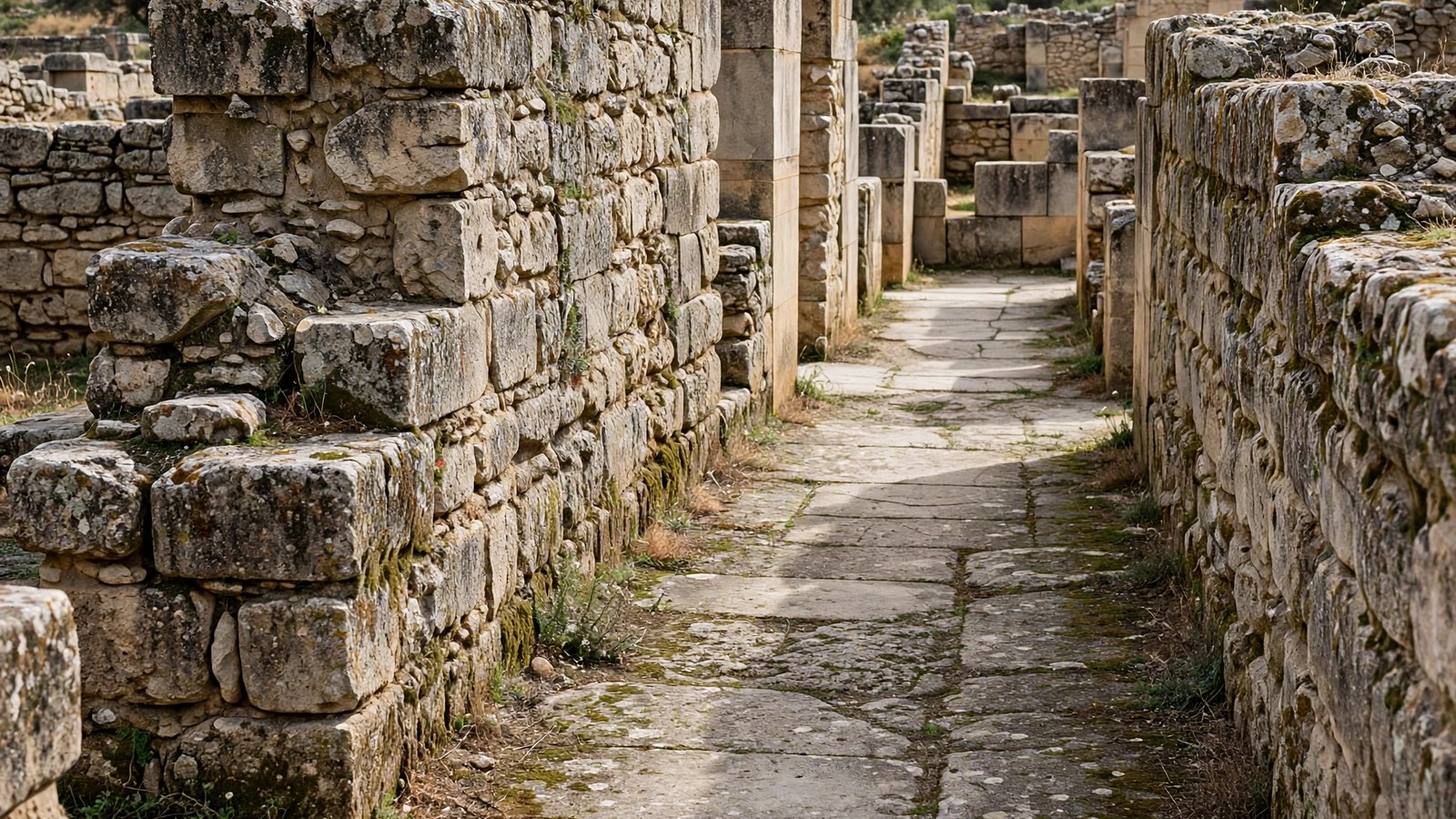
Minos, acting on oracles, shut Asterion in the Labyrinth. Apollodorus describes the Labyrinth that Daedalus constructed as a chamber that with its tangled windings perplexed the outward way. Tradition places it at Knossos on Crete, whose sprawling palace complex has often been linked in popular accounts to the maze story, although no separate labyrinth building has been identified there. The double axe, called labrys in a tradition reported by Plutarch, was a prominent Minoan symbol, and Arthur Evans and others proposed that labyrinth derives from labrys. Modern scholars treat that derivation as uncertain, so use it in fiction as an evocative idea, not as settled fact.
The rest of the story explains the tribute and the thread that still shape minotaur naming today. After Minos’s son Androgeus died in Attica, Athens was compelled to send tribute to Crete. In the best known tradition, seven young men and seven young women were sent at intervals, often given as every nine years, to be placed in the Labyrinth. The Athenian hero Theseus, son of King Aegeus, volunteered to go with the tribute and end the practice. On Crete, Minos’s daughter Ariadne, who was Asterion’s half sister, fell in love with Theseus and helped him. In most accounts she gave him a ball or clew of thread. He fastened it at the entrance, unwound it as he went to the center, killed the Minotaur, and followed the thread back out. He then sailed from Crete with Ariadne and the Athenians.
For naming, notice how much material sits inside that one story. Crete, Knossos, Minos, Pasiphae, Ariadne, Daedalus, and Theseus can all be adapted as personal, place, and family names. Thread, maze, tribute, and center translate directly into bynames. Asterion himself offers the model many modern writers prefer: a person first, not a nameless beast.
Modern fantasy has since given minotaurs many cultures, from maze monsters to sailors, farmers, priests, and citizens. That range is why the lists below separate the main styles. If you are building a whole roster, see also cambion names and demon names, since minotaurs are often mistaken for both in world and the contrast keeps each culture distinct.
How Minotaur Names Are Built
Bull sounds help: hard consonants, rolling syllables and names that end on a firm note. Maze words help too: gate, wall, path, turn and thread all signal the labyrinth without needing an explanation. Underneath those English patterns sit a small set of verified Greek roots that give the most convincing fantasy names, because they sound ancient, they carry real meaning, and they connect back to the myth without copying any one game setting.
Tauros is the foundation. Ancient Greek tauros means bull, and it survives in Latin taurus, also meaning bull. Any name built with tauros, taur-, or tauro- will read as bovine to an audience that knows the myth, even if they cannot translate it. Use it at the start for a direct, public identity, as in Tauron or Tauros, or at the end, as in Minotauros.
Aster is the second foundation. Greek aster means star, and the name Asterion or Asterius, the Minotaur’s own given name, is built from it. Star names suit minotaurs with a royal, priestly, or fated quality, and they soften an otherwise brutal list in a useful way. A star named chief or seer feels different from a maul named raider, and that difference does story work before the character says a word.
Keras is the horn root. Greek keras means a horn, of an animal, and by extension a symbol of strength. Names with Ker, Kera, or Kerat suggest horns without using the English word horn, which can sound blunt in a given name but works very well in a clan name. Petra, Greek for rock, does similar work for stone. A name such as Petrakos or Keratos sounds Greek, signals stone or horn, and remains easy to say at the table, which matters more than strict ancient grammar for most fiction and play.
Two cautions keep coinages honest. First, most root based names here are modern inventions for fiction, not attested ancient Greek personal names. Second, do not stack every root into one name. Two strong elements beat five. Pick the bull, the star, the horn, or the stone as your lead image, then add one ending or one byname.
Endings shape gender, age, and status in a way readers feel even when they cannot explain it. Hard endings in os, ax, ak, and uth read as heavy and masculine in most English language fantasy. Endings in a, ia, and ea read as lighter and are often used for female characters in Greek styled lists, following the pattern of names such as Ariadne and Pasiphae, though neither pattern is a rule. Endings in ion and ios feel formal and old. Short names of one or two syllables, such as Brukk, Torn, or Grau, suit fighters and exiles. Longer names of three or four syllables suit elders, law speakers, and anyone whose name is announced before they enter a room.
Greek Styled Minotaur Names
These names lean closest to the myth. They suit Crete inspired settings, classical worlds, temple cultures, and any minotaur whose people remember an old language. Each note gives the root or image behind the name, so you can judge the fit and adapt the spelling with confidence.
Asterion is the traditional given name of the Minotaur himself, from aster, star. Reserve it for a central figure, a namesake, or a character whose parents deliberately invoked the legend. Asterios and Asterius are traditional variant forms of the same name and work well for brothers, ancestors, or a dynastic line. Tauros, simply the Greek word for bull used as a name, suits a blunt, proud character who owns the description others might use as an insult. Minos is the name of the king of Crete in the myth. As a minotaur name it carries complicated weight, since Minos was the Minotaur’s stepfather and jailer, and it fits an ambitious ruler or a bitter exile reclaiming the name.
Keratos combines keras, horn, with a firm Greek styled ending and suits a horn proud warrior or standard bearer. Kerana is a softer coinage from the same horn root, well suited to a female elder or horn carver. Petrakos, from petra, rock, fits a mason, a gate warden, or anyone tied to the stone of the maze. Petrah, a shorter form from the same root, works for a grounded, plain spoken character. Taurian blends tauros with a formal ending and reads as noble without sounding soft, a good fit for a captain or envoy. Tauria is its lighter counterpart, suited to a diplomat, priestess, or herd speaker.
Daedalos adapts Daedalus, the craftsman who built the Labyrinth, and should be used carefully. In a minotaur culture that honors builders, it is a fine name for an architect or maze keeper. In a culture that blames Daedalus for the prison, it would be an insult name or a rebel’s chosen name. Kretos, from Crete itself, places a character by origin and suits a traveler far from home whose homeland is his identity. Knossia, from Knossos, the palace city linked to the Labyrinth, suits a female character from an old house or a keeper of records. Ariadnos adapts Ariadne, the princess who gave Theseus the thread. Among minotaurs the name is double edged, since Ariadne helped kill Asterion, so it fits a guide, a thread keeper, or a character trusted by outsiders and doubted at home. Pasitauros adapts Pasiphae, mother of Asterion, with tauros, and suits a matriarch in a setting where Pasiphae is remembered as a queen rather than a cautionary tale.
More options on the same roots: Asterak for a young warrior, Asterla for a female star name, Taurakos for weight, Kerathis for a priestly feel, Petranos for an elder, Labryn echoing labyrinth and labrys, Knossos used directly for a guardian, Thessea as a defiant adaptation of Theseus, Minothar as a blend of Minos and tauros for a would be king, and Asterom for a scout. For towering folk by contrast, see giant names, which use size as the lead image where these names use horn and stone.
Brutal and Warrior Names
A brutal name promises violence before a weapon is drawn. These names use blunt consonants, battle words, and damage as identity. They suit gladiators, raiders, pit fighters, mercenaries, and guards whose job is to be feared at a gate. The original warrior set is retained in full here, with notes, followed by further options in the same register.
Braxxus is a double hard coinage with no soft syllable in it, ideal for a pit champion. Tauron places the bull root first and ends firm, a versatile warrior name that also works for a sergeant. Goremaul joins gore with maul, a heavy two handed weapon, and should be reserved for a character the story wants the reader to fear on sight. Korthax has a clipped, armored sound and suits a disciplined soldier rather than a berserker. Brindlehoof mixes a mottled coat pattern, brindle, with hoof, and fits a scarred veteran whose markings tell his history. Mazekor puts the maze first and ends hard, well suited to a labyrinth guard who has never left the stone. Hornfall is a story name. As the original guidance notes, think about horns as identity. Does your minotaur file their horns, paint them, break one in battle, or wear rings on them? A name that nods to that detail, like Hornfall for a minotaur who lost a horn, will feel personal rather than generic. Bulwark is a defensive name, a wall that moves, and suits a shield bearer, a door warden, or an older fighter who protects others for a living.
More options: Gorehorn, Brukk, Skullsplit, Ironjaw, Bloodmane, Crackhorn, Wargore, Thudrik, Maulgar, Razehorn, Bonemaul, and Chargefirst as an earned battlefield byname. Use brutal names sparingly for sympathetic leads. A gentle healer named Goremaul is a deliberate irony that can work well, but if every herd member carries a slaughter name, none stands out.
Noble and Regal Names
Noble minotaur names answer a different need. Many settings give minotaurs law, ritual, memory, and rank, and a chief or priest needs a name that can be spoken in a council, carved on a gate, or inherited. These names favor the star and bull roots, longer syllables, and titles kept separate from the given name, so the character can grow into the honor rather than be defined by a weapon.
Asterios, Minothar, Taurian, and Keratos all belong here when paired with a rank. More coinages: Tauranos for a high chief, Asterama for a queen or herd mother, Kerathea for a priestess, Petragon for a law speaker, Minotaea for a royal female name, Taurisel for an envoy, Asterophan for a seer, Horncrowned as a title, Labyrinth Keeper as a hereditary office, and Elder Tauros for the simplest strong effect.
Give noble characters a plain birth name and an earned second name. Asterios called Stonehorn tells a life story. Tauria called Threadless suggests a guide who needs no thread, high praise in a labyrinth culture. If horn rings, paint, or a broken horn mark rank in your setting, reflect that in the byname.
Maze and Labyrinth Names
Maze names suit guides, prisoners, exiles, maze keepers, and any character whose identity is bound to place rather than to battle or rank. They trade on stone, turning, depth, and the thread. The original maze set is retained in full here.
Labyrinthe uses the full maze word with a formal ending and suits a keeper, a scholar, or a character named for the place itself. Stonepath joins stone with path and fits a guide who knows the safe route. Turnwise suggests someone wise in turns, at home where visitors are lost, an excellent name for a scout within the maze. Corridane softens corridor into a personal name and suits a female guide or record keeper. Mazeera has a smooth, almost musical sound and works for a singer, messenger, or maze born child. Wallsinger is the poetic option in the set, a minotaur who sings to find echoes, judge distance, or calm the herd in stone halls. Deepgate names the threshold itself and suits a warden of the lowest or innermost door. Threadless, discussed above as a byname, also works as a chosen name for an exile who cut ties, or for a guide so skilled that the thread of Ariadne is an insult by comparison.
Add Centerborn, Lastturn, Echowall, Dustcorridor, Ariadne Thread as a memorial name, Clewkeeper (clew is the older word for a ball of thread), Doorless, and Stonethread. For contrast, leshy names grow from trees and seasons where maze names grow from stone and turning.
Gentle, Herd, and Pastoral Names
Not every minotaur is a warrior or a prisoner. Herds need herders, healers, cooks, calf minders, farmers, and grandparents, and gentle names keep a culture believable. The original guidance holds here: choose from the herd list or soften a warrior name. A gentle minotaur with a fierce name, or a fierce minotaur with a gentle name, both make strong characters.
Soft options include Thistledown, Meadowhorn, Sweetmane, Calmbrook for a healer adopted into the herd, Asterla, Taurenna, Mildpetra as a contrast of gentle and stone, Lambherd for a calf minder, Softstep, Warmhay, and Brindle alone as an affectionate coat name. Shorten fierce names for daily use: Braxxus becomes Brax at home, Goremaul becomes Gor with his mother. A public name and a home name add more realism than any single clever coinage.
Clan, Herd, and Family Names
A given name identifies a person. A clan or herd name identifies belonging, land, work, and reputation. In most minotaur cultures you invent, the clan name will do more world building than the given name, because it tells the reader what the group eats, fights with, worships, or is mocked for by neighbors. The original herd and clan set is retained in full here, followed by guidance on using these names as surnames, house names, and war band names.
Ironherd suggests armor, mining, or a herd that marches to war as a unit. Dustmane places the group on dry plains and suits nomads. Emberhorn links horn with fire and fits smiths, hearth keepers, or a house marked by red horn paint. Stormhoof promises speed and noise, a raiding or courier herd. Oakensnout is earthy and slightly comic, a farming house with deep roots and no interest in glory. Redpasture names land directly and suits a settled, territorial family. Grazelord is a boast name, a house that controls good grazing and knows it, useful for a proud or resented neighbor. Thistledown, the gentlest name in the set, suits healers, weavers, or a small house underestimated by louder herds.
Use them three ways: as a surname (Asterios Ironherd), as a house name (Asterios of the Ironherd), or as a collective only, with individuals identified by place or parentage (Asterios of Knossos, Tauron son of Petrakos). More coinages: Stonehorn, Goldring, Brokhorn, Whitehide in memory of the Cretan Bull, Threadbound, Gatewatch, Deeppasture, Saltmane, Ashhoof, and Starherd for a line claiming descent from Asterion. For a contrasting small marsh people, see grung names.
Naming Conventions in Fantasy Settings
Fantasy settings differ, and a good name respects the setting without copying its protected or signature names. This article deliberately provides original suggestions for any story or tabletop game, not a list copied from any one setting. That said, the conventions readers expect are consistent enough to plan around.
In classical settings, lean on the Greek styled list and use clan names sparingly, since classical figures are usually identified by place or parentage. In high fantasy settings with minotaur nations, use the full system: given name, clan name, and earned byname, with pastoral names well represented so the nation feels populated rather than mustered. In darker, maze bound settings, brutal and maze names dominate and a single gentle name lands with real force. Seafaring settings can adapt the clan pattern (Saltmane, Tidehoof, Harborhorn), and underground settings deepen the stone vocabulary (Deepgate, Stonepath, Petrakos).
For tabletop play, test a name aloud as an introduction, a battlefield shout, and a whisper. If other players shorten it, accept the short form as the home name. Keep infernal names in a different sound family on purpose with help from cambion names and demon names.
For fiction, keep a naming ledger: given name, clan name, byname, who uses each form, and the horn detail. Filed horns suggest discipline, painted horns ritual or rank, ringed horns wealth or vows, a broken horn violence survived, polished horns vanity or court life. When name and horns tell the same story, as with Hornfall, the character is memorable. When they contradict, the character is interesting. Both work if the choice is deliberate.
How to Choose a Minotaur Name
Start with role, then sound, then story. Role selects the list. Sound matters because you will say the name often, so read a shortlist aloud and cut anything you stumble on twice. Story does the lasting work: add one detail, a horn detail, a place, a parent, a failure, or a vow, as a byname or home name.
Match tone before personality. A comic campaign can carry Grazelord and Oakensnout together. A grim one probably cannot, unless the comedy is the point. Greek roots are used here because the myth is Greek. Do not borrow a living culture’s naming patterns as decoration for a monster culture without research. Finally, check the cast as a whole and pair heavy minotaur names with lighter or differently weighted names from leshy names and giant names so each people keeps its own music.
If you are still stuck, use this quick picker. For a proud captain, take Taurian Goldring. For a maze guide, take Turnwise Threadbound. For a pit fighter, take Braxxus called Hornfall. For a herd mother, take Asterama Thistledown. For an exiled prince, take Asterios called Threadless. For a gentle healer in a war herd, take Calmbrook of the Ironherd. Each pairing works because the two halves pull in slightly different directions, and that tension is what makes a name feel lived in.
A minotaur name should echo in stone corridors: strong, a little rough, and unmistakably theirs. Pick the pattern that matches your character story, then let the maze do the rest.
Frequently Asked Questions
Where do minotaurs come from?
From Greek myth, where the Minotaur was kept in the labyrinth of Crete. His given name was Asterius, also rendered Asterion, son of Pasiphae and the Cretan Bull, confined by King Minos in the Labyrinth built by Daedalus and killed by Theseus with Ariadne’s help. Modern fantasy games have since given minotaurs many different cultures, from maze monsters to sailors, farmers, and citizens.
What does Minotaur mean?
It means the Bull of Minos. The word combines Minos, the king of Crete, with tauros, the Greek word for bull. It was a description of Asterion, not his birth name, which is why this guide treats Asterion and Minotaur as two different kinds of naming model: a personal name and a title like description.
Are these names tied to one game?
No. They are original suggestions for any story or tabletop game. A small number of names, including Asterion, Asterius, Minos, Daedalus, Ariadne, and Pasiphae, are traditional names from Greek myth itself and are labeled as such in the text. All other names are modern coinages created for this guide, many built from verified Greek roots such as tauros for bull, aster for star, keras for horn, and petra for rock.
What if my minotaur is gentle?
Choose from the herd and pastoral lists or soften a warrior name. Use the full fierce name in formal or public scenes and a short home form in private scenes. A gentle minotaur with a fierce name, or a fierce minotaur with a gentle name, both make strong characters, because the gap between name and nature gives other characters something to notice, question, and eventually understand.
How do I name a female minotaur?
Use the same roots with a form that fits your setting. Greek styled options in this guide include Kerana, Tauria, Knossia, Asterama, Kerathea, Minotaea, and Asterla. Pastoral and maze options such as Mazeera, Corridane, and Thistledown also work well. There is no single correct pattern. Classical Greek female names such as Ariadne and Pasiphae end in varied sounds, so consistency within your own cast matters more than any one ending.
Should my minotaur have a surname?
Only if your setting gives minotaurs families, houses, or herds that act as surnames do. A clan name such as Ironherd, Stormhoof, or Stonehorn is the most natural fit. In classical settings, use place or parentage instead, such as Asterios of Knossos or Tauron son of Petrakos. In settings where minotaurs are solitary monsters or exiles, a byname such as Hornfall or Threadless usually serves better than a family name.
Sources & references
- Apollodorus, Library, Book 3, Chapter 1, on the birth of Asterius called the Minotaur, his bull face and human body, and his confinement in the Labyrinth built by Daedalus. Perseus Digital Library, Tufts University.
- Wikipedia, Minotaur, for the summary of Asterion as the Minotaur's other name, his parentage as son of the Cretan Bull and Pasiphae, his dwelling at the center of the Labyrinth in Crete, the Athenian tribute of seven men and seven women, and his death at the hands of Theseus with Ariadne's thread.
- Online Etymology Dictionary, Taurus, for tauros as the Greek word for bull and Minotaur as Minos plus tauros.
- Wiktionary, Aster, for Greek aster meaning star, the root of Asterion.
- Wiktionary, Petra, for Greek petra meaning rock.
- Blue Letter Bible, Strong's Greek Lexicon G2768 Keras, for Greek keras meaning horn.
- Wikipedia, Labrys, for Plutarch's report that labrys was the Lydian word for the double bitted axe, Evans's proposed link between labrys and labyrinth, and the modern scholarly caution that the derivation is speculative.


