Short answer
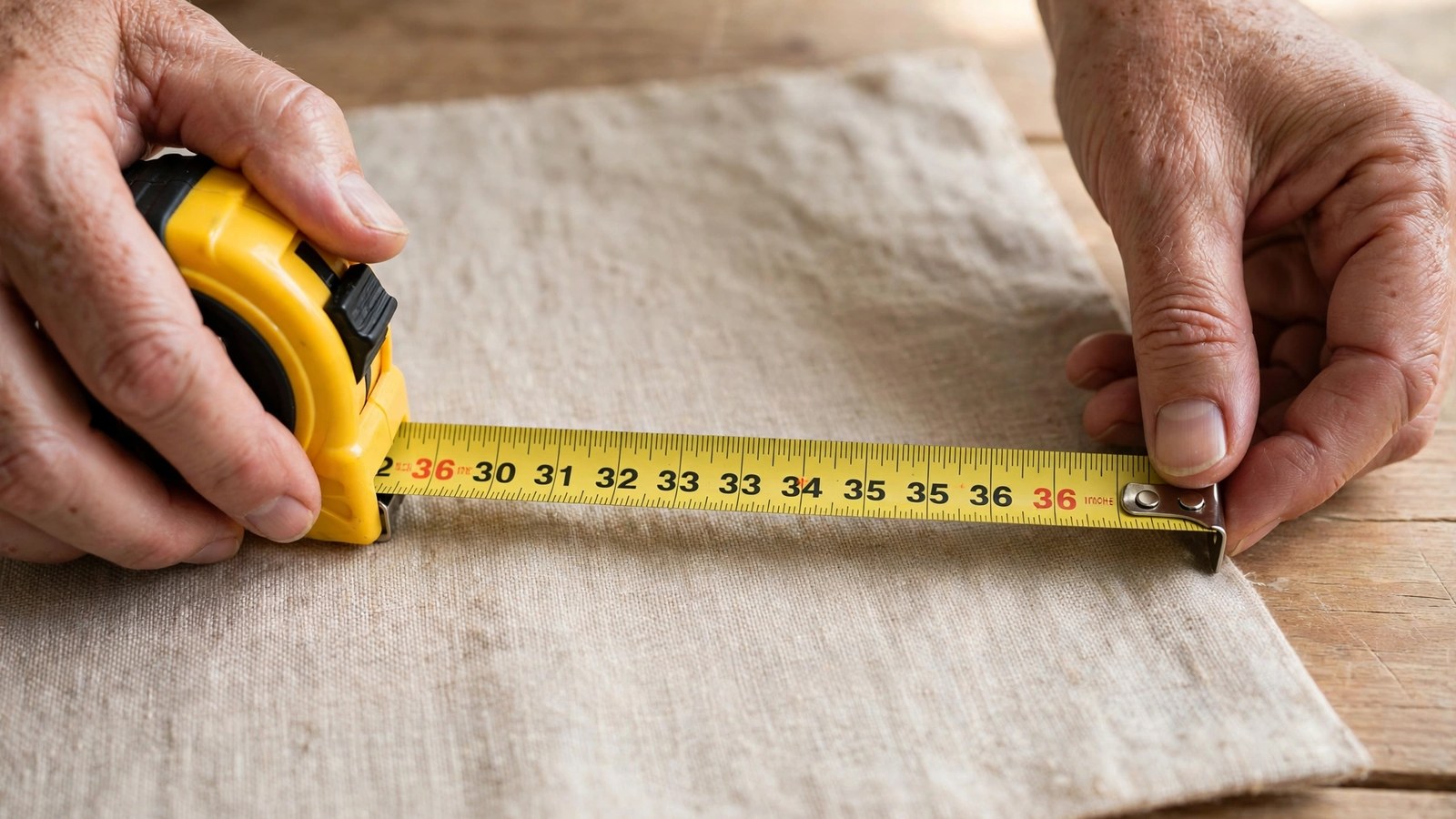
- One yard equals 36 inches exactly. There is no rounding in that answer and no difference between a yard of fabric, a yard of ribbon, and a yard measured across a room. A yard is a unit of length, and wherever length is being measured, 1 yard is 36 inches. To convert yards to inches, multiply by 36. To convert inches to yards, divide by 36. For example, 2 yards is 2 x 36 = 72 inches, and 72 inches is 72 / 36 = 2 yards. Half a yard is 18 inches, and a quarter yard is 9 inches. A yard is also exactly 3 feet, exactly 91.44 centimeters, and exactly 0.9144 meters. Those figures all describe the same length in different units, and each one can be rebuilt from the inch. Because 1 inch is exactly 2.54 centimeters, 36 inches is 36 x 2.54 = 91.44 centimeters, which is 0.9144 meters. A meter is slightly longer than a yard: 1 meter is about 39.37 inches, so it exceeds a yard by about 3.37 inches. The wordings how many inches for a yard and how many inches are in a yard ask the same question, and the answer to both is 36.
By Emma Hudson
If you are measuring fabric, checking a garden bed, or reading a sewing pattern, the same question comes up quickly: how many inches are in a yard? The short version is simple, but the useful version takes a little more space. This guide gives the exact answer, shows why the number is 36 and not an estimate, and then works through the conversions people actually need: yards to inches, inches back to yards, and yards compared with feet, meters, and centimeters. It also covers the places this conversion shows up most often, from fabric shops and garden plans to home projects and American football fields, and the mistakes that most often spoil an otherwise simple calculation.
Why a Yard Is 36 Inches
The yard sits in a short chain of units, and the chain explains the number 36 completely. One foot is 12 inches. One yard is 3 feet. Multiply those two steps together and the yard to inch relationship follows: 3 feet x 12 inches per foot = 36 inches. There is no leftover fraction and nothing to memorize beyond the two smaller steps. If you ever forget the 36, rebuild it from 3 and 12 and you will land on the same answer.
These relationships are definitions, not measurements that might shift with a better instrument. The yard, foot, and inch belong to the imperial system and to United States customary units, and their modern values were fixed by the International Yard and Pound Agreement of 1959. That agreement defined the yard as exactly 0.9144 meters. Once the yard is fixed at 0.9144 meters, and the yard is divided into 36 inches, each inch is exactly 0.0254 meters, which is exactly 2.54 centimeters or 25.4 millimeters. The National Institute of Standards and Technology, known as NIST, publishes these values in its official tables of units of measurement: 1 yard = 36 inches = 3 feet = 91.44 centimeters = 0.9144 meters, and 1 inch = 2.54 centimeters.
Conversions inside the yard, foot, and inch chain are always exact, because each step is a whole number. Conversions to metric units are also exact at the level of the defining constants, since 2.54 and 0.9144 are exact by definition. Rounding only enters when a result runs to many decimal places and is shortened for display, as with 100 inches expressed in yards.
In everyday speech, a yard can also mean the ground around a house. In a measurement context it always means the unit of length: a pattern calling for 2 yards of fabric asks for a length of 72 inches, not for part of a garden.
The Two Formulas You Need
Every conversion in this article uses one of two formulas. When you start with yards and want inches, multiply:
Inches = yards x 36
When you start with inches and want yards, divide:
Yards = inches / 36
That is the whole method. The only judgment call comes when the answer is not a whole number. A result such as 100 / 36 = 2.777… yards can be reported as a decimal, about 2.78 yards rounded to two decimal places, or as a mixed length, 2 yards and 28 inches, because 2 yards accounts for 72 inches and 100 - 72 = 28 inches remain. Some results are tidy fractions: 54 inches is 1.5 yards, and 90 inches is 2.5 yards. The decimal form is easiest for a calculator; the yards and inches form is easiest to picture on a tape measure.
A reliable habit prevents most errors: convert everything in a problem to inches first, do the addition, subtraction, or division in inches, and convert back to yards only at the end if the final answer needs to be in yards. Adding 2 yards to 10 inches without converting first is the classic slip. Converted properly, 2 yards is 72 inches, and 72 + 10 = 82 inches, which is about 2.28 yards. Working in one unit from start to finish removes the risk of treating yards and inches as if they were the same thing.
Keep full precision until the final step. If you round 100 inches to 2.78 yards and multiply back by 36, you get 100.08 inches, not 100 inches. Round once, at the end, and say how many decimal places you used.
Conversion Tables
The tables below are all recomputed from the same constants: 1 yard = 36 inches, 1 foot = 12 inches, 1 inch = 2.54 centimeters, and 1 yard = 0.9144 meters. Values that are not whole numbers are rounded as labeled, and the working is shown so any row can be checked in seconds.
Yards to inches
| Yards | Inches | Working |
|---|---|---|
| 0.25 | 9 | 0.25 x 36 = 9 |
| 0.5 | 18 | 0.5 x 36 = 18 |
| 0.75 | 27 | 0.75 x 36 = 27 |
| 1 | 36 | 1 x 36 = 36 |
| 1.5 | 54 | 1.5 x 36 = 54 |
| 2 | 72 | 2 x 36 = 72 |
| 2.5 | 90 | 2.5 x 36 = 90 |
| 3 | 108 | 3 x 36 = 108 |
| 4 | 144 | 4 x 36 = 144 |
| 5 | 180 | 5 x 36 = 180 |
| 7 | 252 | 7 x 36 = 252 |
| 8 | 288 | 8 x 36 = 288 |
| 10 | 360 | 10 x 36 = 360 |
| 12 | 432 | 12 x 36 = 432 |
| 20 | 720 | 20 x 36 = 720 |
| 100 | 3,600 | 100 x 36 = 3,600 |
Fractional yards appear constantly in sewing, where fabric is often cut in eighths, quarters, and thirds of a yard. Those fractions convert cleanly because 36 divides well:
| Fraction of a yard | Inches | Working |
|---|---|---|
| 1/8 yard | 4.5 | 36 / 8 = 4.5 |
| 1/4 yard | 9 | 36 / 4 = 9 |
| 1/3 yard | 12 | 36 / 3 = 12 |
| 3/8 yard | 13.5 | 36 x 3 / 8 = 13.5 |
| 1/2 yard | 18 | 36 / 2 = 18 |
| 5/8 yard | 22.5 | 36 x 5 / 8 = 22.5 |
| 2/3 yard | 24 | 36 x 2 / 3 = 24 |
| 3/4 yard | 27 | 36 x 3 / 4 = 27 |
| 7/8 yard | 31.5 | 36 x 7 / 8 = 31.5 |
Note that a third of a yard is exactly 12 inches, which is exactly 1 foot. That is a useful check: thirds of a yard and feet are the same lengths, counted differently.
Inches to yards
| Inches | Yards | Working |
|---|---|---|
| 9 | 0.25 | 9 / 36 = 0.25 |
| 12 | 0.33 (rounded) | 12 / 36 = 0.3333 |
| 18 | 0.5 | 18 / 36 = 0.5 |
| 24 | 0.67 (rounded) | 24 / 36 = 0.6667 |
| 36 | 1 | 36 / 36 = 1 |
| 48 | 1.33 (rounded) | 48 / 36 = 1.3333 |
| 54 | 1.5 | 54 / 36 = 1.5 |
| 72 | 2 | 72 / 36 = 2 |
| 84 | 2.33 (rounded) | 84 / 36 = 2.3333 |
| 90 | 2.5 | 90 / 36 = 2.5 |
| 108 | 3 | 108 / 36 = 3 |
| 144 | 4 | 144 / 36 = 4 |
| 180 | 5 | 180 / 36 = 5 |
| 360 | 10 | 360 / 36 = 10 |
Yards, feet, centimeters, and meters together
| Yards | Feet | Inches | Centimeters | Meters |
|---|---|---|---|---|
| 0.5 | 1.5 | 18 | 45.72 | 0.4572 |
| 1 | 3 | 36 | 91.44 | 0.9144 |
| 2 | 6 | 72 | 182.88 | 1.8288 |
| 3 | 9 | 108 | 274.32 | 2.7432 |
| 5 | 15 | 180 | 457.2 | 4.572 |
| 10 | 30 | 360 | 914.4 | 9.144 |
Each metric row follows from the inch: inches x 2.54 gives centimeters, and centimeters divided by 100 gives meters. For 3 yards, 108 x 2.54 = 274.32 centimeters, and 274.32 / 100 = 2.7432 meters. The yard row also checks directly: yards x 0.9144 gives meters, so 3 x 0.9144 = 2.7432 meters, the same result by a second route.
Worked Examples
Example 1: Fabric for a curtain
A curtain pattern calls for 2.5 yards of fabric. How many inches is that? Multiply by 36: 2.5 x 36 = 90 inches. If a shop cuts by the inch, ask for 90 inches of length. If it cuts by the yard or by fractions of a yard, 2.5 yards is the same length stated in the unit the pattern used.
Example 2: A ribbon offcut
You have a ribbon that measures 54 inches and a project that lists materials in yards. Divide by 36: 54 / 36 = 1.5 yards. The offcut is one and a half yards.
Example 3: A garden border
A border is 4 yards long. In inches that is 4 x 36 = 144 inches. If edging strips are sold in 12 inch lengths, the count follows directly: 144 / 12 = 12 strips. The yard to inch step is what makes the second step possible, because the strip length was given in inches.
Example 4: A mixed measurement
A shelf is described as 1 yard and 7 inches long. Convert the yard first: 36 + 7 = 43 inches in total. To go back, 43 / 36 = 1.194 yards as a decimal, or 1 yard and 7 inches in mixed form, since one full yard accounts for 36 of the 43 inches and 7 inches remain.
Example 5: Curtain panels sold by the inch
Two curtain panels are each 84 inches long, so together they need 84 + 84 = 168 inches. In yards that is 168 / 36 = 4.67 yards, rounded to two decimal places. Round up to the next cut offered rather than down, because 4.5 yards is only 162 inches and would leave the pair 6 inches short.
Example 6: A metric pattern
A pattern gives a length of 150 centimeters. Convert to inches first: 150 / 2.54 = 59.06 inches, rounded to two decimal places. Then convert to yards: 59.06 / 36 = 1.64 yards, rounded to two decimal places. The same result follows in meters: 150 centimeters is 1.5 meters, and 1.5 / 0.9144 = 1.64 yards. Both routes agree, which is the expected check when exact constants are used.
Example 7: Mulch depth from a cubic yard
Mulch is sold by the cubic yard, which is a volume, but the coverage question is a length calculation. One cubic yard is 27 cubic feet, because 3 feet x 3 feet x 3 feet = 27. Spread at a depth of 3 inches, which is 0.25 feet, the covered area is 27 / 0.25 = 108 square feet. Spread at 2 inches deep, which is one sixth of a foot, the area is 27 / (1/6) = 162 square feet. The inch figures drive the answer even though the product is sold in yards.
Yards, Feet, and Inches Together
Most tape measures show inches and feet, not yards, so it helps to hold all three units in view at once. The inch is the smallest of the three in everyday use. Twelve inches make 1 foot. Thirty-six inches make 1 yard, which is also 3 feet. To convert yards to feet, multiply by 3. To convert feet to inches, multiply by 12. To go from yards straight to inches, multiply by 36, which is simply the two steps combined: 3 x 12 = 36.
Feet and inches are often written together, as in 5 feet 10 inches. In inches that is (5 x 12) + 10 = 70 inches. In yards it is 70 / 36 = 1.94 yards, rounded to two decimal places, or 1 yard and 34 inches. Heights, room dimensions, and lumber lengths arrive in this mixed form, and the routine is always the same: turn the feet into inches, add the remaining inches, and only then divide by 36 if a yard figure is needed.
Two slips account for most wrong answers in this family. The first is treating a yard as 12 inches, which confuses it with a foot and gives an answer three times too small. The second is treating a yard as 100 inches, which borrows the tidy hundreds pattern from metric units where it does not belong. A yard is neither figure. It is 36 inches, three times a foot, and a little shorter than a meter.
Yards and Metric Units: Meters and Centimeters
Many patterns, product listings, and instructions now give lengths in meters or centimeters, so the bridge between yards and metric units is worth setting out carefully. The bridge is the inch: 1 inch = 2.54 centimeters exactly. From that single constant, every other bridge follows. One foot is 12 x 2.54 = 30.48 centimeters, or 0.3048 meters. One yard is 36 x 2.54 = 91.44 centimeters, or 0.9144 meters. One meter is 100 centimeters, so in inches a meter is 100 / 2.54 = 39.37 inches, rounded to two decimal places. In yards a meter is 1 / 0.9144 = 1.09 yards, rounded to two decimal places.
Because a meter is longer than a yard, the numbers behave in a way that catches people out. A length of 10 meters is 10.94 yards, a larger yard count than the meter count, because each yard is the shorter unit and more of them are needed to cover the same distance. Going the other way, 10 yards is 9.144 meters, a smaller meter count, because each meter covers more length. If a conversion gives a larger number in the longer unit, something has gone wrong and the division or multiplication is the wrong way round.
For quick mental estimates, a yard is roughly nine tenths of a meter, and a meter is roughly 39 inches, about a yard plus 3 inches. Those shortcuts are fine for judging whether a rug will fit a room, but not for cutting or ordering, where the exact constants 0.9144 and 2.54 should be used.
Practical Uses: Fabric and Sewing
Fabric is the setting where this conversion is used most often. In the United States, cloth is commonly sold by the yard and by fractions of a yard, while patterns mix units freely: finished lengths and seam allowances are often given in inches, and the amount of cloth to buy is given in yards. Converting accurately is what prevents the two classic fabric mistakes, buying too little to finish the project or paying for far more than the project needs.
Suppose a project needs a finished length of 90 inches plus 6 inches of working allowance, for a total of 96 inches. In yards that is 96 / 36 = 2.67 yards, rounded to two decimal places. A shop cutting quarter yards would sell 2.75 yards for this need, which is 99 inches, leaving 3 inches beyond the required 96. That small margin is the result of the cutting increment, not of a conversion error, and it is worth recognizing so the leftover is not mistaken for a mistake.
The fraction table above earns its keep here. When a pattern calls for small pieces, add the pieces in inches first and divide the total by 36 to get the yardage to buy in one clean step, instead of adding fractions of a yard with different denominators.
Practical Uses: Gardens and Landscaping
Garden plans mix units just as sewing patterns do. Bed lengths and fence runs are often paced or planned in yards or feet, while plant spacing, seed packet guidance, and edging products are often given in inches. A bed that is 6 yards long is 216 inches long. If plants are spaced 12 inches apart along that bed, the spacing count is 216 / 12 = 18 spaces. If the spacing is 18 inches, the count is 216 / 18 = 12 spaces. The yard figure alone answers neither question until it has been converted to inches.
Landscaping materials add the volume version of the yard. Soil and mulch are sold by the cubic yard, and a cubic yard is a cube 1 yard, or 36 inches, on each side. Its volume is 36 x 36 x 36 = 46,656 cubic inches, and in feet it is 3 x 3 x 3 = 27 cubic feet. Example 7 above shows how that volume turns into coverage at a stated depth. The key point is that the word yard in cubic yard still rests on the same 36 inch length; only the dimension being measured has changed, from length to volume.
A square yard is a square 1 yard by 1 yard. Its sides are 36 inches each, so its area is 36 x 36 = 1,296 square inches, or 3 x 3 = 9 square feet. Turf, paving, and carpet are often discussed in square yards or square feet, while edging is a linear measure. Keep the three apart: linear yards convert with 36, square yards with 1,296 square inches or 9 square feet, and cubic yards with 46,656 cubic inches or 27 cubic feet.
Practical Uses: Home Projects and Sports
Around the home, the same conversion settles everyday questions. A rug listed as 8 feet by 10 feet is 96 inches by 120 inches, and in yards its sides are 96 / 36 = 2.67 yards and 120 / 36 = 3.33 yards, both rounded to two decimal places. A curtain rod for a window 72 inches wide needs a rod at least 72 inches long, which is exactly 2 yards. A fence run of 15 yards is 540 inches, or 45 feet, and a bracket spacing given in inches can be divided into that total only after the conversion is done.
Sports give the yard its most public use. An American football field is marked in yards: the playing field between the goal lines is 100 yards long, which is 3,600 inches or 300 feet, and each end zone adds 10 yards, making the full length 120 yards, or 4,320 inches. The field is 53 and one third yards wide, which is 160 feet or 1,920 inches. A first down requires 10 yards, which is 360 inches or 30 feet. Those distances are hard to picture in inches, which is why the sport keeps the yard as its working unit.
How to Measure a Yard Accurately
A yardstick shows the answer directly, but a standard tape measure does the same job. Pull the tape to 36 inches and that length is one yard. Many tapes also mark feet, and the 3 foot mark is the same point on the tape. For longer lengths, mark each 36 inch point in turn rather than trying to estimate multiples in one stretch, because small errors at each estimated step accumulate.
For fabric, measure on a flat surface with the cloth relaxed, and mark at 36 inches for each yard. For a room or a garden, write each segment in inches before adding, so the total is converted once at the end. For many adults, a yard is roughly the distance from the nose to the fingertips of an outstretched arm. Arm lengths vary, so treat that only as a rough check, never as a basis for cutting or buying.
Whatever the tool, measure twice before cutting or ordering. The conversion is exact, so a wrong final length almost always comes from a misread tape, a mixed unit addition, or a rounded figure used too early.
Common Mistakes to Avoid
Mixing up feet and yards is the most common error. One foot is 12 inches and one yard is 36 inches. If an answer looks about three times too small, check whether feet were used where yards were meant, or the reverse.
Adding mixed units directly is the second error. Two yards and 10 inches is not 12 of anything. Convert first: 2 yards is 72 inches, plus 10 inches is 82 inches.
Confusing linear, square, and cubic yards is the third error. A linear yard is a length of 36 inches. A square yard is an area of 1,296 square inches. A cubic yard is a volume of 46,656 cubic inches. Each has its own conversion, and using the linear factor 36 for an area or volume question gives a meaningless result.
Treating a yard as a meter is the fourth error. A yard is 0.9144 meters, so the two differ by about 3.37 inches per yard. Over 10 yards that gap grows to about 33.7 inches, nearly a full yard, which is large enough to ruin a cut or a fit.
Rounding too early is the fifth error. Keep the full value through every step and round only the final answer, stating the decimal places used.
Quick Reference
1 yard = 3 feet = 36 inches = 91.44 centimeters = 0.9144 meters. 1 foot = 12 inches = 30.48 centimeters = 0.3048 meters. 1 inch = 2.54 centimeters = 25.4 millimeters exactly. 1 meter = about 39.37 inches = about 1.09 yards. 1 mile = 1,760 yards = 63,360 inches, since 1,760 x 36 = 63,360. 1 square yard = 9 square feet = 1,296 square inches. 1 cubic yard = 27 cubic feet = 46,656 cubic inches.
Keep 36 as the key number: multiply yards by 36 for inches, and divide inches by 36 for yards.
Frequently Asked Questions
How many inches are in a yard?
There are 36 inches in a yard, exactly. The same answer covers the wording how many inches for a yard, because both phrases ask for the same conversion. One yard is also 3 feet, and 3 x 12 inches = 36 inches.
How many feet are in a yard?
There are 3 feet in a yard. Since each foot is 12 inches, 3 x 12 = 36 inches, which confirms the yard to inch answer by a second route.
How do I convert inches to yards?
Divide the number of inches by 36. For example, 72 inches / 36 = 2 yards, and 100 inches / 36 = 2.78 yards, rounded to two decimal places, or 2 yards and 28 inches in mixed form.
How many inches are in half a yard?
Half a yard is 18 inches, because 0.5 x 36 = 18. A quarter yard is 9 inches, and three quarters of a yard is 27 inches.
How many inches are in 2 yards?
Two yards are 72 inches, because 2 x 36 = 72. Three yards are 108 inches, and 10 yards are 360 inches, by the same multiplication.
Is a yard longer than a meter?
No. A yard is 0.9144 meters, so a meter is slightly longer than a yard. One meter is about 39.37 inches, which is about 3.37 inches more than the 36 inches in a yard.
How many centimeters are in a yard?
There are 91.44 centimeters in a yard, exactly. The figure follows from the inch: 36 inches x 2.54 centimeters per inch = 91.44 centimeters.
What is the difference between a linear yard and a square yard?
A linear yard is a length: 36 inches in a straight line. A square yard is an area: a square 1 yard by 1 yard, equal to 9 square feet or 1,296 square inches. A cubic yard is a volume: 27 cubic feet or 46,656 cubic inches. The three units share a name but measure different things and convert with different numbers.
How many yards are in a mile?
There are 1,760 yards in a mile. In inches, a mile is 1,760 x 36 = 63,360 inches. In feet, a mile is 1,760 x 3 = 5,280 feet.
Keep reading: Feet to Inches
Keep reading: Meters in a Foot
Keep reading: How Many Centimeters Are in an Inch? The Exact Answer and How to Use It
Keep reading: Kilometers to Miles: The Conversion, and the Distances People Actually Ask About
Sources & references
- National Institute of Standards and Technology (NIST), Handbook 44, 2024, Appendix C, General Tables of Units of Measurement. Used for the length tables showing 1 inch = 2.54 centimeters and 0.0254 meters, 1 foot = 12 inches, 30.48 centimeters, and 0.3048 meters, 1 yard = 36 inches, 3 feet, 91.44 centimeters, and 0.9144 meters, the United States customary table entry 3 feet = 1 yard, and the area and volume relationships from which the square yard and cubic yard figures in this article are computed. https://www.nist.gov/system/files/documents/2024/01/14/NIST%20HB%2044%202024%20Appendix%20C%20General%20Tables%20of%20Units%20of%20Measurement.pdf
- SIS Pitches, Football Field Dimensions and Line Markings. Used only for the American football field layout figures: 100 yards between the goal lines, 10 yard end zones, 120 yards in total, and a width of 53 and one third yards or 160 feet. All inch and feet restatements of those yard figures in this article are arithmetic using 36 inches and 3 feet per yard. https://www.sispitches.com/us/news/football-field-dimensions/


