Short answer
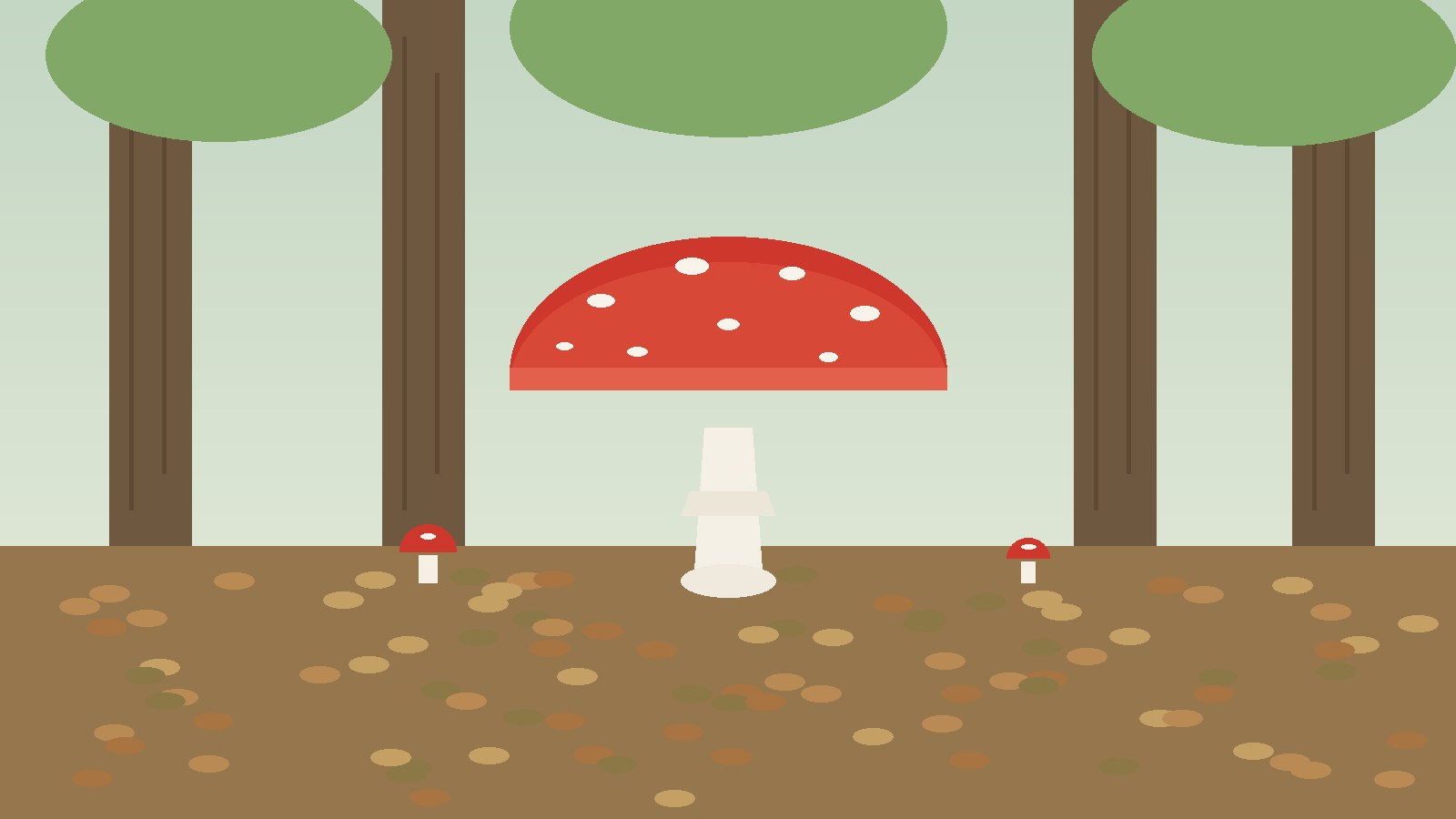
- The red toadstool with white spots that most readers picture is usually fly agaric, whose scientific name is Amanita muscaria. It has a bright red to orange cap marked with white wart-like spots, white gills under the cap, a white stem, a skirt-like ring on the stem, and a bulbous base with rings of scales. It grows in woodland and heathland, often near birch, pine, or spruce, and it is most often seen from late summer to early winter. Fly agaric is poisonous and must not be eaten. Its white spots are not paint and they are not part of the cap itself. They are fragments of a white veil that once enclosed the young mushroom, and rain can wash them away. That is why an older fly agaric can look plain red and still be the same species. Never use color alone to identify a mushroom, and never eat a wild mushroom on the basis of a photograph or a single feature.
What You Are Looking At
A toadstool is the fruiting body of a fungus, the part that rises above the ground to release spores. The main body of the fungus lives out of sight, in soil and around tree roots. When conditions suit it, the fruiting body appears, grows quickly, releases spores from under its cap, and then decays. Fly agaric follows that pattern, which is one reason a patch can seem to appear suddenly after wet weather and then vanish within days.
The name fly agaric comes from its historic use as a fly catcher in Europe. The Woodland Trust explains that the cap was broken up and put into saucers of milk, and that a compound in the mushroom, ibotenic acid, both attracts and kills flies. That history explains the first half of the common name. The second half, agaric, is a general word for a gilled mushroom. The scientific name, Amanita muscaria, points to the same fly connection, since musca is Latin for fly.
In everyday language, people often use mushroom and toadstool as if they were different things, with mushroom for food and toadstool for anything poisonous or strange. That distinction is not scientific. Fly agaric is both a mushroom in the biological sense and a toadstool in the storybook sense. The safest way to think about it is simpler: it is a wild fungus with a famous appearance and a poisonous chemistry, and appearance alone never makes a wild fungus safe.
Identification: The Features That Matter Together
No single feature identifies fly agaric on its own. Use the set below as a checklist, and treat a mismatch as a reason to stop, not as a detail to explain away.
Cap: The cap is scarlet to orange, sometimes fading toward orange or yellow with age. In a young mushroom it is rounded, almost like a ball. As it grows, it opens into a dome and then flattens. The Woodland Trust gives a size of up to 20 centimeters across, about 8 inches, and a height of up to 30 centimeters, about 12 inches. Large specimens can look dramatic, but size varies a great deal, so a small red cap is not automatically a different species.
White spots or warts: The white marks are raised, wart-like flecks, not flat printed dots. They vary in number and size, and they may be white or slightly cream to yellowish. Some caps carry many warts, some carry few, and some carry almost none after heavy rain. A cap that has lost its warts can still be fly agaric, and a cap with white flecks is not automatically fly agaric either.
Gills: Under the cap, the gills are white to cream, closely packed, and not joined to the stem. In the language of mushroom guides, they are free gills. Gill color matters because it separates fly agaric from some lookalikes at a glance, but gill color changes with age in many fungi, so it must be checked with the other features.
Stem: The stem, called the stipe in field guides, is white and brittle. It carries a large skirt, a ring left by the partial veil that once protected the developing gills. The ring can be loose or ragged, and it can wear away, so its absence does not rule fly agaric out, but its presence is a helpful clue when combined with the other features.
Base: The base is bulbous, meaning swollen, and it sits in a volva, a cup-like remnant at the foot of the stem. Around the bulb there are shaggy rings of scales. This base is one of the most important parts to observe, because several Amanita species share a ring and a volva, and several dangerous species do too. The base is also easy to miss if a mushroom is picked or if leaf litter hides it, which is another reason to observe the mushroom in place rather than pulling it up.
Put together, the picture is this: a large red to orange cap with raised white warts, white free gills, a white stem with a skirt, and a swollen base with scaly rings, growing near suitable trees in late summer to early winter. If several of those features are missing or different, the mushroom in front of you may be something else, and that uncertainty is the whole point. Wild mushroom identification rewards caution, not speed.
How Fly Agaric Grows, From Button to Flat Cap
Fly agaric changes shape as it matures, and that change explains many mistaken identifications. It starts as a button, a small rounded form pushing out of the ground. At that stage it is enclosed in a universal veil, a white layer of tissue that wraps the whole young mushroom like an egg case. As the stem lengthens and the cap expands, the veil breaks. The lower part stays at the base as the volva, with its scaly rings. The upper part is carried up on the cap, where it breaks into the white warts that give fly agaric its famous look.
That history also explains why the spots are not reliable on their own. The warts are veil fragments sitting on the cap surface, not color in the cap skin. Rain can wash them off, wind and handling can rub them off, and age can fade them. The Woodland Trust states this plainly: the spots are remnants of the white veil of tissue that at first enclosed the young mushroom, and they are sometimes washed off by the rain. A reader who finds a plain red cap in a birch wood in autumn should not assume it is safe, or even that it is a different species, just because the spots are gone.
Cap color changes too. A fresh cap is often a strong scarlet red. With age and exposure, the red can soften to orange and then toward yellow. The cap also flattens as it matures, so a young dome and an old flat cap can look like different mushrooms to a new observer. Add slugs, insects, weather damage, and the natural variation between individual mushrooms, and it becomes clear why guides warn against identifying from one photograph.
Where It Grows, When to Look, and Which Trees It Partners With
Fly agaric grows in woodland and heathland on light soils, according to the Woodland Trust, and it is often found among birch, pine, or spruce. Kew describes the same pattern, adding evergreen conifers, while the United States Forest Service notes fly agaric under firs and spruces. The tree list therefore centers on birch, pine, spruce, and fir, with local variation depending on the wood.
The reason for that tree association is not coincidence. Fly agaric forms mycorrhizal relationships with trees. In a mycorrhizal relationship, fungal threads connect with tree roots. Kew explains the exchange in simple terms: the fungi transport essential nutrients from the soil to the tree roots in exchange for carbon and nutrients. The fungus gains food it cannot make on its own, and the tree gains better access to soil nutrients. That partnership is why fly agaric is found under or near its partner trees rather than in open lawns far from any tree, and why planting or keeping partner trees matters for where it appears.
This also explains its distribution. Kew states that fly agaric is native to Europe, Asia, and North America. The Woodland Trust calls it native to the United Kingdom. In North America it is widespread in temperate and northern forests, and it has also spread with planted pines and other partner trees into parts of the Southern Hemisphere. For a reader in the United States, the practical point is that fly agaric is not a rare exotic curiosity. It is a northern forest fungus that can appear in woods, parks, and heathland where its partner trees grow, provided the soil and season suit it.
Season matters. The Woodland Trust gives late summer to early winter as the fruiting season, and Kew gives late summer to early winter as the period when its red and white mushrooms are commonly seen. In practice that means autumn is the peak season in many places, but the exact weeks shift with climate, rainfall, and latitude. A warm, wet autumn often brings a stronger showing than a dry one, and a cold snap can end a fruiting flush. If you are looking in spring or high summer, a red toadstool with white spots is less likely to be fly agaric at its peak, and more likely to be something else or a very early or late specimen, so extra caution applies.
Why the White Spots Wash Off
The white spots wash off because they were never part of the cap. They are leftovers. When fly agaric is young, the universal veil encloses it completely. Think of it as a protective wrapping. As the mushroom grows, the wrapping splits. The bottom stays at the base as the volva. The top is stretched and torn as the cap expands, leaving scattered warts on the surface.
Rain is the main remover. A heavy shower can rinse warts off a cap, especially once the cap has flattened and the warts sit loosely on a smooth surface. Handling has the same effect, which is why a mushroom that has been picked, carried, or brushed may look plainer than it did in the ground. Age adds a third effect: as the cap expands, the same amount of veil material is spread over a larger area, so the warts look sparser even before rain touches them.
Illustrations make the problem worse in a helpful way to understand. Artists often draw fly agaric with neat, evenly spaced white dots, because that is the image readers recognize at once. Real caps are messier: warts vary in size, cluster unevenly, crack, fade, and wash away. If your mushroom looks less perfect than the picture in a book, that does not mean you have found a new species. It usually means you have found a real one, shaped by weather and age.
Common Lookalikes and Why They Cause Trouble
Fly agaric has several lookalikes, and the trouble they cause runs in both directions. Some lookalikes are less dangerous but still not to be eaten on a guess, and some are far more dangerous than fly agaric itself. The examples below are the ones a reader is most likely to meet, and they show why color alone fails.
The blusher, Amanita rubescens, is the lookalike the Woodland Trust names directly for fly agaric. It has a similar shape, but its cap is pale reddish brown rather than bright scarlet, and its spots are cream colored. Its flesh is also known to bruise or blush reddish, which gives it its name. A faded fly agaric and a blusher can look closer than a fresh fly agaric and a blusher do, especially in poor light. Do not separate them by one shade of red. Check the whole set of features, the habitat, and the season, and leave the mushroom alone if the picture does not fit cleanly.
The death cap, Amanita phalloides, is the lookalike that matters most for safety, even though its colors differ. The Woodland Trust describes it as deadly poisonous, with a shiny olive yellow to greenish bronze cap, broad white free gills, an off white stem with a floppy ring, and a swollen base sitting in a bag-like volva. Its cap color is very different from scarlet, so a careful observer should not confuse a classic fly agaric with a classic death cap. The danger comes at the edges: young buttons, faded or rain washed specimens, and mushrooms seen in dim woodland light can mislead, and both species share the Amanita pattern of a ring and a volva. The lesson is not that every white gilled mushroom with a volva is a death cap. The lesson is that the Amanita genus contains species that can kill, so no Amanita should ever be eaten on a visual guess.
A final warning applies to faded specimens in particular. When fly agaric loses its red intensity and its warts, it can resemble other orange or yellow capped fungi. Guides warn about this overlap because it is where confident mistakes happen: the reader remembers the bright storybook image, meets a duller real specimen, and decides it must be something else. Age, rain, and light change a mushroom. Identification must allow for that change, and when it cannot, it must stop.
Is It Dangerous? Toxicity Stated Plainly
Fly agaric is poisonous. Kew states that fly agaric mushrooms are poisonous and cause cramping, vomiting, and risk of death when consumed by humans, and that they should not be eaten. The Woodland Trust calls the species highly toxic and notes that it is infamous for its psychoactive and hallucinogenic properties, while also noting that reports of human deaths are extremely rare. Those two statements belong together. Extremely rare does not mean safe, and a low death count does not cancel poisoning, cramps, vomiting, confusion, or hallucinogenic effects.
The mushroom contains compounds that act on the nervous system, including ibotenic acid and muscimol, which are named by the Woodland Trust and by Kew-linked research. That chemistry is why fly agaric is described as both poisonous and psychoactive. It is not a food mushroom with a mild warning attached. It is a toxic species whose effects are unpredictable, and no preparation tip, folk rule, or storybook image changes that classification.
This article gives no treatment, dosage, or first aid instructions, and no advice on making fly agaric edible. If someone eats one, seek emergency help right away.
The point for a reader who only wants to know what they saw is straightforward. Admire fly agaric, photograph it, learn its trees and its season, and leave it where it grows. Poisonous does not mean that looking at it harms you, and it does not mean that every woodland walk is dangerous. It means that eating is the risk, and that the risk is avoided by not eating wild mushrooms you cannot identify with expert certainty. Fly agaric fails that test for almost every casual observer, because its lookalikes, its age changes, and its lost spots all create room for error.
Folklore, Fairy Tales, and the Christmas Connection
Few fungi have entered human culture as deeply as fly agaric. Kew calls it particularly iconic in popular culture, often illustrated in children’s books as the magical home of fairies. The Woodland Trust notes that it has turned up in many fairy tale stories and features in the story of Alice in Wonderland, where Alice is given some fly agaric to eat. That literary link is part of why the red and white toadstool feels familiar even to people who have never seen one in a wood. It arrives already wrapped in story.
The fairy association has older roots than children’s books. Fly agaric grows in woods and heathlands, appears in autumn, and forms striking groups under trees, so it fits naturally into stories about hidden worlds, forest spirits, and small folk. Garden ornaments and illustrations kept that image alive, and the image then fed back into how people see the real fungus. When a reader meets fly agaric for the first time, they often feel they already know it, because the shape has been drawn for them since childhood. That familiarity is charming, and it is also a risk, because familiarity can feel like knowledge. It is not. Knowing the picture is not the same as knowing the species.
The Christmas connection is the most widely repeated part of fly agaric folklore, and it needs careful wording. The United States Forest Service describes how pre-Christian winter solstice rituals in northern Europe and Asia centered on the collection and use of fly agaric, and it sets out the suggested parallels: shamans in red garments trimmed with white, carrying a sack, entering a dwelling through a smoke hole, and traveling in a sleigh drawn by reindeer. Kew tells a similar story, noting that Siberian shamans consumed fly agaric during spiritual celebrations, gave samples as gifts, and wore red and white clothes mimicking the mushroom colors, and that reindeer are said to favor fly agaric as food. The Woodland Trust adds that fly agaric was common on Victorian and Edwardian Christmas cards as a symbol of good luck, and that its colors are thought to have been the inspiration for the red and white suit of Santa Claus.
Those sources support a suggested link, not a proven origin. Santa Claus has many sources, and fly agaric is one thread in that larger story, not the whole explanation. The same caution applies to the older claim that fly agaric was the sacred drink called soma in India and Iran, which the Woodland Trust dates back over 4,000 years. That is best presented as a traditional identification rather than a closed case.
How to Observe It Safely
Safe observation is simple, and it starts with leaving the mushroom in place. Look at the cap, the gills if they are visible without handling, the stem, the ring, and the base, and note the trees nearby. Photograph it from the side and from slightly above if you can do so without disturbing it, and include a nearby tree trunk or leaf litter for scale in the picture rather than placing an object against the mushroom. Note the date, the wood, and the partner trees, because those details help later identification far more than a close up of the cap alone.
Do not touch it, pick it, or taste it to test it. Do not carry it home for a second opinion unless you are working with an expert mycological group that has asked you to do so and has given you safe handling guidance. For most readers, a photograph and a written note are enough. If you want a firmer identification, share the photographs and notes with a local mycological society or a reputable field guide, and accept unidentified as a valid answer.
Keep the same rule for children and for pets on a walk. The risk comes from eating, so the practical step is supervision and a clear rule: we look at toadstools, we do not pick them, and we do not put them in our mouths. Wash hands after a woodland walk as a matter of routine, and do not let the beauty of a red cap override the rule. A child who can spot fly agaric and name it has learned something valuable, and that learning does not require touching it.
Frequently Asked Questions
What is the red toadstool with white spots called?
It is usually fly agaric, Amanita muscaria. That identification fits when the mushroom also has white gills, a white stem with a ring, and a bulbous base with scaly rings, and when it grows near birch, pine, spruce, or fir in late summer to early winter. Color alone is not enough, because spots wash off and colors fade.
Are mushrooms with red caps and white spots always fly agaric?
No. Other fungi can have red caps, pale flecks, or a similar shape, and fly agaric itself can lose its spots and fade toward orange or yellow. Check the gills, stem, ring, base, habitat, and partner trees together, and treat any mismatch as a reason to leave the identification open.
Why do the white dots wash off fly agaric?
The dots are fragments of the universal veil that enclosed the young mushroom. As the cap expands, the veil breaks into warts on the cap surface and a volva at the base. Rain, handling, and age can remove the warts, because they sit on the cap rather than forming part of its skin.
Where does fly agaric grow in the United States?
It grows in temperate and northern forests, in woodland and heathland, near partner trees such as birch, pine, spruce, and fir. It has also spread with planted partner trees beyond its original northern range. Look in autumn, in woods with light soils and leaf litter, rather than in open ground far from trees.
When is fly agaric in season?
Late summer to early winter is the usual fruiting season, with autumn as the peak in many places. Exact timing varies with rainfall, temperature, and latitude, so a wet autumn often brings more caps than a dry one.
Is fly agaric poisonous?
Yes. It is poisonous and must not be eaten. Kew states that it causes cramping, vomiting, and risk of death, and the Woodland Trust describes it as highly toxic with psychoactive and hallucinogenic properties, while noting that reports of human deaths are extremely rare. Rare deaths do not make it safe.
Can I touch fly agaric to move it for a better photograph?
No, leave it in place and photograph it where it grows. Moving it damages the mushroom, removes the base and volva clues from view, and teaches a habit that can be dangerous with other species. A side view and a view from slightly above, with nearby trees in the frame, usually give a better record than a handled specimen.
What is the difference between fly agaric and the death cap?
Fly agaric has a bright red to orange cap with white warts, while the death cap, Amanita phalloides, has a shiny olive yellow to greenish bronze cap. Both have white gills, a ring on the stem, and a volva at the base, and both belong to the Amanita genus. That shared pattern is exactly why no Amanita should be eaten on a visual guess, and why a faded or young specimen needs expert help rather than a quick decision.
Why is fly agaric linked to Santa Claus and fairy tales?
Kew and the United States Forest Service both describe Siberian and northern European winter traditions in which shamans used fly agaric, wore red and white, and entered dwellings through a smoke hole. The Woodland Trust notes its use on Victorian and Edwardian Christmas cards as a symbol of good luck. These are suggested links, not a single proven origin.
Does fly agaric help trees?
Yes, through its mycorrhizal partnership. Kew explains that the fungi transport essential nutrients from the soil to tree roots in exchange for carbon and nutrients. That is why fly agaric appears under its partner trees, and why its presence can tell you something about the woodland around it.
Sources & references
- Royal Botanic Gardens, Kew, Grow Wild. Deck the halls with festive fungi. Published 20 December 2023. https://growwild.kew.org/blog/deck-halls-festive-fungi
- United States Department of Agriculture, Forest Service. Fly Agaric. https://www.fs.usda.gov/wildflowers/ethnobotany/Mind_and_Spirit/flyagaric.shtml
- Woodland Trust. Fly Agaric (Amanita muscaria). https://www.woodlandtrust.org.uk/trees-woods-and-wildlife/fungi-and-lichens/fly-agaric/
- Woodland Trust. Deathcap (Amanita phalloides). https://www.woodlandtrust.org.uk/trees-woods-and-wildlife/fungi-and-lichens/deathcap/


