Short answer
- The elements of gothic stories are a gloomy, often isolated setting, an atmosphere of dread built through weather, darkness, and silence, supernatural or uncanny events that may or may not receive a rational explanation, secrets from the past that return to haunt the present, decay and ruin as signs of lost power, a persecuted heroine or hero, a powerful villain, intense emotion, and suspense created by what is withheld. Together, these elements produce terror, the dread of what might happen, and sometimes horror, the shock of what does happen. A story does not need every element to be gothic, but an oppressive place, a buried past, and a threatened central character form the core pattern. The genre began with Horace Walpole's The Castle of Otranto in 1764 and was shaped by Ann Radcliffe, Matthew Lewis, Mary Shelley, Edgar Allan Poe, the Brontes, Robert Louis Stevenson, Oscar Wilde, and Bram Stoker.
A castle at night, a letter that should never have been opened, a heroine who hears footsteps where no one should be walking. Readers recognize a gothic story quickly, often before they can say why. This guide names the elements that create that recognition, shows how they work together, and traces how they developed from the 18th century to today.
What Is a Gothic Story?
A gothic story is a work of fiction that uses fear, mystery, and the supernatural, or the appearance of the supernatural, to explore emotion, power, guilt, and the limits of reason. Encyclopaedia Britannica describes gothic fiction in broad terms as European Romantic pseudomedieval fiction with a prevailing atmosphere of mystery and terror. That definition points to two facts. First, early gothic fiction borrowed medieval settings and romance plots while belonging to its own later period. Second, atmosphere is not decoration in gothic fiction. It is part of the meaning.
The word gothic itself needs explanation, because it points several ways. In architecture, it refers to the medieval style associated with pointed arches and tall stone buildings. In literature, Walpole added the subtitle A Gothic Story to the second edition of The Castle of Otranto in 1765. At that time, the word also carried a sense of the medieval, the old, and the barbarous, as opposed to the order and reason prized by many 18th century thinkers. A gothic story therefore often looks backward to an older world, while asking whether that world is truly gone.
Gothic fiction is best understood as a mode, a set of tools and effects, rather than a single rigid formula. A gothic novel, short story, poem, play, or film can use all the classic tools or only a few. Southern gothic moves the ruined castle to a decaying plantation house or a small town. Modern gothic may set its haunted house in a suburb or an apartment building. The place changes. The pattern of dread, secrecy, and an unburied past remains.
1. Setting: A Place That Acts Like a Character
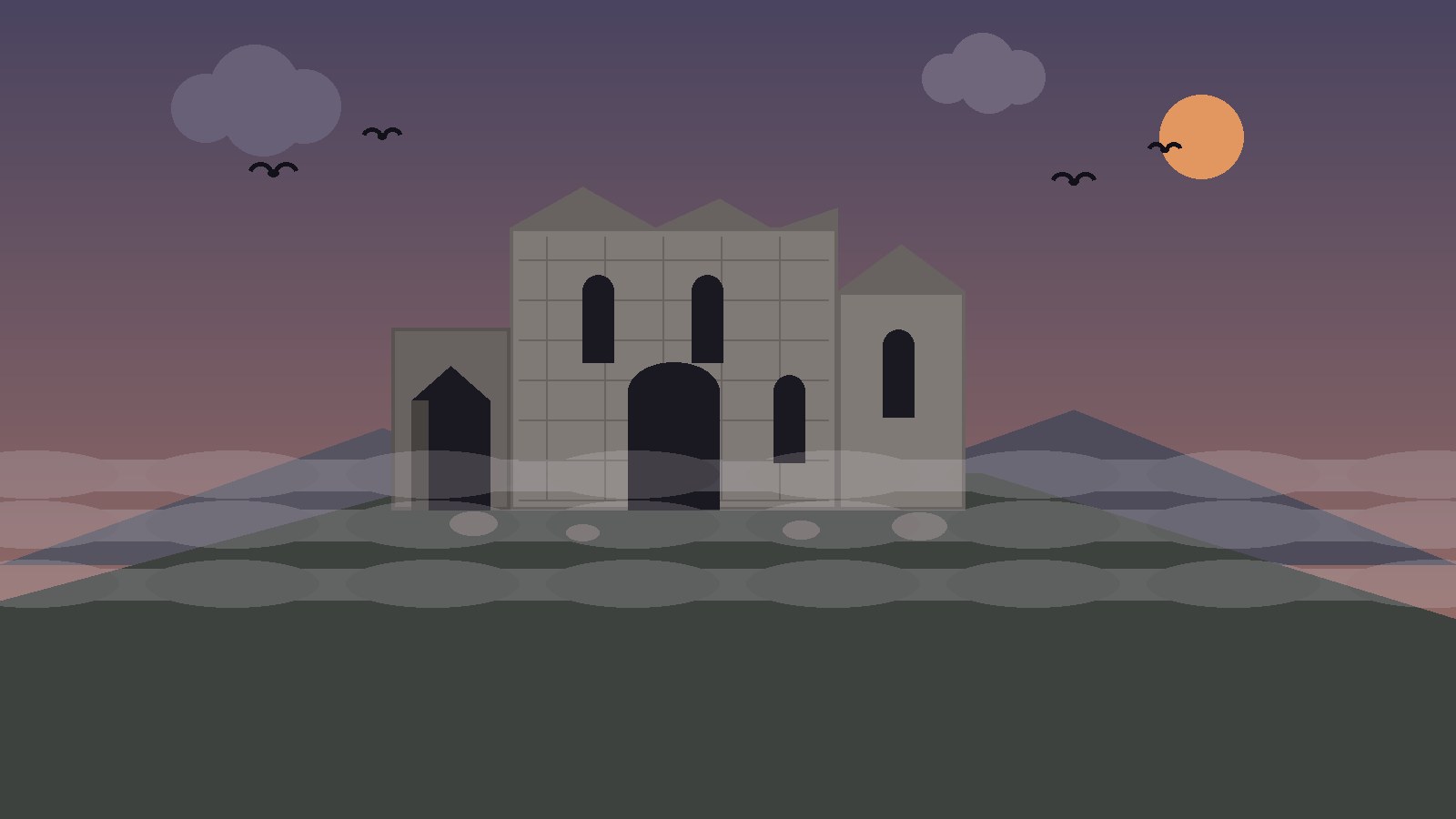
Setting is the most recognizable element of gothic stories, and many readers meet it first. The classic gothic setting is large, old, isolated, and difficult to escape. Castles, abbeys, monasteries, mansions, and remote houses dominate early examples. Later writers use prisons, asylums, schools, ships, laboratories, and whole towns that feel cut off from help. What matters is not the building type alone. It is what the building does to the people inside it.
A gothic setting has several linked qualities. It is remote, so help is far away and escape is hard. It is enclosed, with locked doors, hidden passages, dungeons, towers, attics, and cellars. It is old or ruined, so its walls carry evidence of earlier lives, crimes, and power. And it is labyrinthine, so characters and readers lose their bearings. A character who cannot find the way out also cannot easily find the truth.
In gothic fiction, setting often mirrors a character’s inner state. A dark corridor matches confusion, a storm matches panic or grief, and a locked room matches a secret that cannot be spoken. Writers call this effect, in which nature and place seem to reflect human feeling, pathetic fallacy. The house itself may seem to watch, remember, or punish, even when no ghost ever appears.
Weather and light complete the setting. Night, fog, rain, wind, candlelight, and shadow limit what characters can see, and therefore what they can know. A sound heard in darkness is more frightening than the sound in daylight, because the mind fills the gap. Gothic writers show a door, a portrait, a footprint, or a voice, and delay the explanation.
2. The Supernatural and the Uncanny
The supernatural is the element most readers associate with gothic stories: ghosts, curses, monsters, vampires, doubles, animated portraits, and events that reason cannot easily explain. Gothic writers use the supernatural in different ways, and the difference matters.
In some gothic stories, the supernatural is real within the world of the story: a ghost returns, a curse takes effect, a vampire feeds. The horror comes from confronting a force that breaks the rules of ordinary life. In other gothic stories, the supernatural is explained by the end: a supposed ghost turns out to be a person in disguise, a sound has a natural cause, or a mystery has a human plot behind it. Ann Radcliffe became famous for this second approach, often called the explained supernatural.
Between those two poles sits the uncanny: something familiar made strange. A portrait that seems to follow a character with its eyes, a house that repeats a pattern from an earlier generation, a stranger who resembles the hero, or a voice heard in an empty room can all feel uncanny without being openly supernatural. The uncanny is powerful in gothic fiction because it suggests that the ordinary world is thinner than it looks. A home, which should be safe, becomes a place of threat. A family member, who should be trusted, becomes a source of fear.
Readers should also notice what the supernatural stands for. A ghost may embody guilt, an unpaid debt, or a crime hidden by a family. A monster may embody a fear of science without conscience or of a self that cannot be controlled. The best gothic stories keep both levels working at once: the ghost frightens as a ghost, and it also points to something human that has been buried.
3. Secrets, the Past, and Decay
If setting is the body of a gothic story, the past is its engine. Almost every classic gothic plot turns on something from long before the story opens: a hidden marriage, a stolen inheritance, a murder, a curse, a family shame, a locked away document, or an ancestor whose actions still shape the living. The present characters inherit consequences they did not choose, and must uncover the secret, survive it, or break its hold.
Decay and ruin make that past visible. A crumbling castle, a faded portrait, a neglected grave, a torn letter, or a house falling into disrepair shows that power, beauty, and reputations fade. Ruins also raise a question that runs through gothic fiction: what survives after a family, a faith, or an empire falls? Sometimes the answer is a curse or a crime. Sometimes it is a truth that finally frees the living. Either way, the ruin is evidence that the past was real and is not finished.
Manuscripts, letters, diaries, portraits, and wills are common gothic devices for the same reason. They let the past speak in its own voice, often incompletely: a manuscript may break off at the crucial page, a letter may be unsigned, and a portrait may hide a resemblance that explains a mystery. Gothic stories often tell tales through layers, with one narrator retelling another’s account. Each layer can be mistaken or misleading, as real family histories reach us in fragments.
4. Characters: Heroines, Heroes, Villains, and Doubles
Gothic characters are often built around contrast: innocence against corruption, reason against obsession, freedom against confinement. Early gothic fiction made the persecuted heroine central. She is young, virtuous in the moral terms of her time, and trapped by a more powerful figure, a place, or a family arrangement she cannot easily refuse. Ann Radcliffe’s heroines, such as Emily in The Mysteries of Udolpho, endure imprisonment, threats, and terrifying sights while trying to understand what is happening to them. Their fear is not weakness in the story’s design. It is the lens through which the reader experiences the mystery.
The gothic villain is equally important, and often more memorable. He, or sometimes she, holds power through rank, wealth, age, or knowledge, and uses it to control others, as a tyrannical lord, corrupt monk, cruel guardian, obsessive scientist, or charming stranger with a hidden past. What makes the villain gothic is not cruelty alone. It is the combination of power, secrecy, and a claim over another person’s future, often through marriage, inheritance, imprisonment, or debt.
The hero in early gothic fiction is often less central than the heroine and the villain. He may rescue, investigate, or bear witness, but the emotional center stays with the person under threat. Later gothic fiction complicates this pattern. The threatened figure may be male, as in much of Poe’s work. The monster may also be a victim, as in Frankenstein, where the creature’s suffering and rejection raise questions about responsibility. The villain may be divided, doubled, or mirrored by a second self.
That double, or doppelganger, is a key gothic character device. In Strange Case of Dr Jekyll and Mr Hyde, one man contains two opposing selves, and the story asks what happens when the respectable self tries to separate itself from desire and violence. In The Picture of Dorian Gray, a portrait bears the marks of a life its owner refuses to show. In both cases, the double asks whether a person can escape the consequences of their own choices by splitting them off or hiding them.
5. Terror Versus Horror: Two Kinds of Fear
One of the most useful distinctions in gothic fiction is the difference between terror and horror. Ann Radcliffe, writing in an essay published after her death, argued that terror and horror work in opposite ways. Terror, in her account, expands the soul and awakens the faculties to a high degree of life. It comes from suspense, obscurity, and the imagination working on what is not yet known. Horror, by contrast, contracts and freezes. It comes from direct confrontation with something shocking, violent, or repulsive.
Readers can use that distinction as a practical reading tool. Terror is the creak on the stairs, the locked door, the letter that stops mid-sentence, the figure glimpsed and then gone. Horror is the body discovered, the violence shown in detail, the monster fully revealed. Many gothic stories move from terror to horror: they build dread through suggestion, then deliver a shock. Others stay mainly in terror, and their power lies in what is never fully shown. Matthew Lewis’s The Monk leans further toward horror and explicit transgression than Radcliffe’s novels, which is one reason the two writers are often paired as opposites within the same tradition.
Neither approach is automatically better. Terror depends on restraint: if a writer explains too much too soon, terror collapses. Horror depends on timing: if every scene is shocking, shock loses force. The strongest gothic stories give readers enough information to fear, but not so much that imagination has nothing left to do.
6. Suspense, Mystery, and Narrative Technique
Gothic stories build suspense by withholding information. A character hears a sound but cannot find its source. A document is mentioned but not read. A door is locked, and the key is missing. A portrait resembles someone, but no one explains why. The reader, like the character, must wait, guess, and revise guesses as new clues arrive. That shared uncertainty is part of the pleasure and the fear.
Several narrative techniques support this effect. Epistolary form, telling a story through letters, diary entries, or newspaper reports, as in Dracula, gives intimate but partial viewpoints, so the reader must assemble the whole picture. Framed narration, in which one narrator passes the tale to another, adds distance and doubt. Retrospective narration adds further uncertainty, because the narrator may remember wrongly or hide a motive.
Foreshadowing is central. A curse pronounced early, a dream, a storm, a portrait, or a warning that is ignored all signal that trouble is coming without revealing its shape. Dreams and visions let gothic writers show guilt, desire, or fear in symbolic form, and blur the line between inner life and outer event. The question is not only what is haunting the house. It is also what is haunting the mind.
7. Themes: Transgression, Power, and the Limits of Reason
Beneath the castles and ghosts, gothic stories return to a small set of themes. Transgression is one of the most important. Characters cross a boundary: a moral law, a social rule, a religious prohibition, a limit of science, or a line between life and death. Victor Frankenstein crosses that boundary when he makes a living being and refuses responsibility for it. Dorian Gray does so when he lets a portrait carry his corruption. Dracula does so when he enters England and threatens domestic life. In each case, the supernatural element makes an abstract moral question concrete and frightening.
Power is a second theme. Gothic villains often embody institutions that feel unchallengeable: aristocracy, the church, patriarchy, empire, or science. Heroines and heroes struggle not only against a person but against a system that gives that person authority. That is why imprisonment, forced marriage, and inheritance law appear so often. They are images of power working on a life.
Reason and its limits form a third theme. Early gothic fiction appeared during the Enlightenment, a period that prized reason, order, and scientific explanation. Gothic writers asked what reason could not explain: dreams, guilt, grief, desire, and the persistence of the past. Radcliffe’s explained supernatural restores reason at the end, but only after a long experience of fear. Poe’s narrators often reason brilliantly and still lose control. Frankenstein shows reason producing a result its maker cannot govern. Gothic fiction therefore tests reason, and shows where it breaks or arrives too late.
8. How Gothic Developed: From 1764 to the Present
The Castle of Otranto, published by Horace Walpole in 1764, is widely regarded as the first gothic novel in English. Britannica notes that first editions bear the following year’s date, 1765, which explains why some references give 1765. Walpole combined medieval romance with the realism of the modern novel of his day, and he added the subtitle A Gothic Story in the second edition. His castle, with its secret passages, hidden identities, and supernatural forces, set a pattern that many later writers followed, varied, or challenged.
The 1790s were the decade of early gothic romance. Ann Radcliffe’s The Romance of the Forest appeared in 1791, The Mysteries of Udolpho in 1794, and The Italian in 1797. Radcliffe refined the form: atmospheric landscape description, heroines who observe and endure, and mysteries that receive rational explanations. Matthew Lewis’s The Monk, published in 1796, took the opposite path, with explicit horror and transgression shown rather than suggested. Clara Reeve’s The Old English Baron, published in 1778, offered an earlier, more moralized version of Walpole’s pattern.
The 19th century expanded gothic fiction in several directions. Mary Shelley’s Frankenstein, published in 1818, moved the gothic castle toward the laboratory and the Arctic, and made the created being, rather than a ghost, the center of dread. Edgar Allan Poe, in The Fall of the House of Usher, published in 1839, and The Raven, published in 1845, turned gothic inward, toward obsession, guilt, and an unreliable mind. Charlotte Bronte’s Jane Eyre and Emily Bronte’s Wuthering Heights, both published in 1847, used gothic houses, secrets, and wild landscapes to explore confinement, passion, and social power, even though neither novel is only a gothic novel.
The end of the 19th century brought a second great flowering of gothic fiction. Robert Louis Stevenson’s Strange Case of Dr Jekyll and Mr Hyde appeared in 1886, Oscar Wilde’s The Picture of Dorian Gray, first published in 1890 and released in expanded book form in 1891, and Bram Stoker’s Dracula in 1897. These works kept the gothic interest in doubles, secrets, and transgression, but set it in modern cities, with modern science, law, medicine, and empire close at hand. Dracula, told through letters, diaries, and newspaper reports, also showed how fully gothic narration could use documents to build dread.
In the 20th century and after, gothic fiction spread further. Southern gothic writers, including William Faulkner and Flannery O’Connor, used decaying houses, family guilt, and grotesque characters to examine the American South after slavery and civil war. Later writers carried gothic elements into horror, fantasy, mystery, and literary fiction, and film and television. A modern gothic novel may have no castle and no ghost, but still use isolation, a buried secret, a house with a history, and a character trapped by the past.
9. Landmark Works at a Glance
The table below summarizes landmark works discussed in this guide, with plot detail kept to the minimum needed to illustrate an element.
| Work and author | Year | Element it best illustrates |
|---|---|---|
| The Castle of Otranto, Horace Walpole | 1764 | Founding pattern: castle, secret, threatened heroine |
| The Old English Baron, Clara Reeve | 1778 | Moralized, restrained early gothic romance |
| The Mysteries of Udolpho, Ann Radcliffe | 1794 | Atmosphere, persecuted heroine, explained supernatural |
| The Monk, Matthew Lewis | 1796 | Horror, transgression, demonic temptation shown directly |
| Frankenstein, Mary Shelley | 1818 | Creation, responsibility, monster as threat and victim |
| The Fall of the House of Usher, Edgar Allan Poe | 1839 | Psychological gothic: house, mind, decay mirroring each other |
| Jane Eyre, Charlotte Bronte | 1847 | Confinement, house with a secret, heroine seeking independence |
| Wuthering Heights, Emily Bronte | 1847 | Wild landscape, passion, ghosts, unreleased past |
| Strange Case of Dr Jekyll and Mr Hyde, Robert Louis Stevenson | 1886 | The double: respectable and violent selves |
| The Picture of Dorian Gray, Oscar Wilde | 1890 (book form 1891) | Appearance versus conscience, portrait bearing corruption |
| Dracula, Bram Stoker | 1897 | Vampire, epistolary narration, modern science, old evil |
10. How Gothic Differs From Horror and Romance
Gothic, horror, and romance overlap, and many books belong to more than one category, but the emphasis differs. Horror aims first at fear, shock, or revulsion, and it may use gore, violence, or a monster as its central effect. Gothic also uses fear, but it typically places fear inside a longer structure of mystery, atmosphere, and a past that must be uncovered. A horror story can be set anywhere and can begin with the threat already present. A gothic story usually needs a place with a history and a secret that unfolds slowly.
Romance, in the older literary sense, means a story of adventure, love, and marvels, often set in a distant or idealized world. Early gothic fiction grew from romance, and it keeps romance elements: threatened lovers, separations, reunions, and heightened emotion. Modern romance, as a publishing category, centers on a developing love relationship with an emotionally satisfying resolution. Gothic fiction may include love, but love is not its organizing promise. Love in a gothic story often increases danger, because the beloved is threatened, the lover is untrustworthy, or the relationship itself crosses a forbidden line.
11. How to Spot Gothic Elements When You Read
Readers new to gothic fiction can use a short checklist. First, notice the place: is it isolated, old, enclosed, or ruined? Second, notice what is hidden: a secret, a document, a locked room, or a family event no one will discuss? Third, notice the power balance: who controls the house, money, marriage, or information, and who is trying to escape that control? Fourth, notice the fear: is it built through suggestion, which points to terror, or through direct shock, which points to horror? Fifth, notice the ending: does it explain its mysteries, leave them supernatural, or leave them uncertain?
Gothic endings vary: Radcliffe explains, Lewis shocks, Poe leaves the reader inside a collapsing mind and house, and Stoker closes with documents that seem to settle the matter while leaving a trace of doubt.
Frequently Asked Questions
What are the main elements of gothic stories?
The main elements are a gloomy, isolated, and often ruined setting; an atmosphere of dread; supernatural or uncanny events; secrets from the past; decay; a persecuted heroine or hero; a powerful villain; intense emotion; and suspense built by withholding information. Not every gothic story uses every element, but the combination of an oppressive place, a buried past, and a threatened character is central.
What is the difference between gothic and horror?
Horror centers on fear, shock, or revulsion, and may rely on gore or a monster. Gothic also uses fear, but builds it through atmosphere, mystery, and history. A gothic story typically needs a place with a past and a secret that unfolds over time, while a horror story can begin with the threat already present.
What is the difference between terror and horror in gothic fiction?
Terror is dread built through suspense, obscurity, and imagination: the fear of what might happen. Horror is shock at what does happen, often shown directly and violently. Ann Radcliffe associated terror with an expanded, awakened state of mind and horror with a contracted, frozen state. Many gothic stories move from terror to horror, while others stay mainly in terror.
What was the first gothic novel?
The Castle of Otranto by Horace Walpole, published in 1764, is widely regarded as the first gothic novel in English. Britannica notes that first editions bear the following year’s date, 1765. Walpole added the subtitle A Gothic Story in the second edition, which helped give the new form its name.
Do all gothic stories have ghosts?
No. Some gothic stories have real ghosts, vampires, or curses within the world of the story. Others explain their mysteries rationally by the end, as Ann Radcliffe often did. Still others rely on the uncanny, in which something familiar feels strange, without ever confirming a supernatural cause. The common thread is dread and mystery, not a ghost in every book.
Why are castles and old houses so common in gothic stories?
Castles and old houses combine isolation, enclosure, history, and decay in one place. They can hide secrets, imprison characters, and show the past in ruined walls, portraits, and locked rooms. They also mirror inner states: a dark, labyrinthine house can feel like confusion or guilt. Modern gothic writers keep the same function while changing the building to a school, hospital, apartment, or town.
Is Frankenstein a gothic novel?
Yes, Frankenstein is commonly grouped with gothic fiction, although it also points toward later science fiction and philosophical fiction. It uses gothic elements such as dread, isolation, a created being outside nature, guilt, and a creator who refuses responsibility. Its setting moves from laboratories and universities to remote landscapes and the Arctic, showing that gothic dread does not require a castle.
What is Southern gothic?
Southern gothic is a later form of gothic fiction set in the American South. It keeps decaying houses, family secrets, guilt, and grotesque characters, but applies them to Southern history and social life, including the aftermath of slavery and civil war. The ruined castle becomes a decaying plantation house, a small town, or a family home with a hidden past.
How can I tell if a modern book is gothic?
Look for the pattern rather than the costume. A modern book is gothic if it uses an oppressive or isolated place with a history, a secret from the past that returns, a character trapped by power or guilt, an atmosphere of dread, and suspense built through what is withheld. A book with a ghost but no mystery or atmosphere may be supernatural fiction without being fully gothic, while a book with no ghost can still be gothic if it uses the rest of the pattern.
Sources & references
- Encyclopaedia Britannica, The Castle of Otranto: summary, publication history, and place in the gothic tradition.
- Encyclopaedia Britannica, Gothic fiction: introductory account of gothic fiction for students, including Walpole and The Castle of Otranto.
- Marist College Library, Gothic Classics: What is the Gothic?: library guide defining gothic literature, its history, and classic works.
- Worcester College, University of Oxford, A sort of delightful terror: library blog on early gothic literature, Ann Radcliffe, and the explained supernatural.


