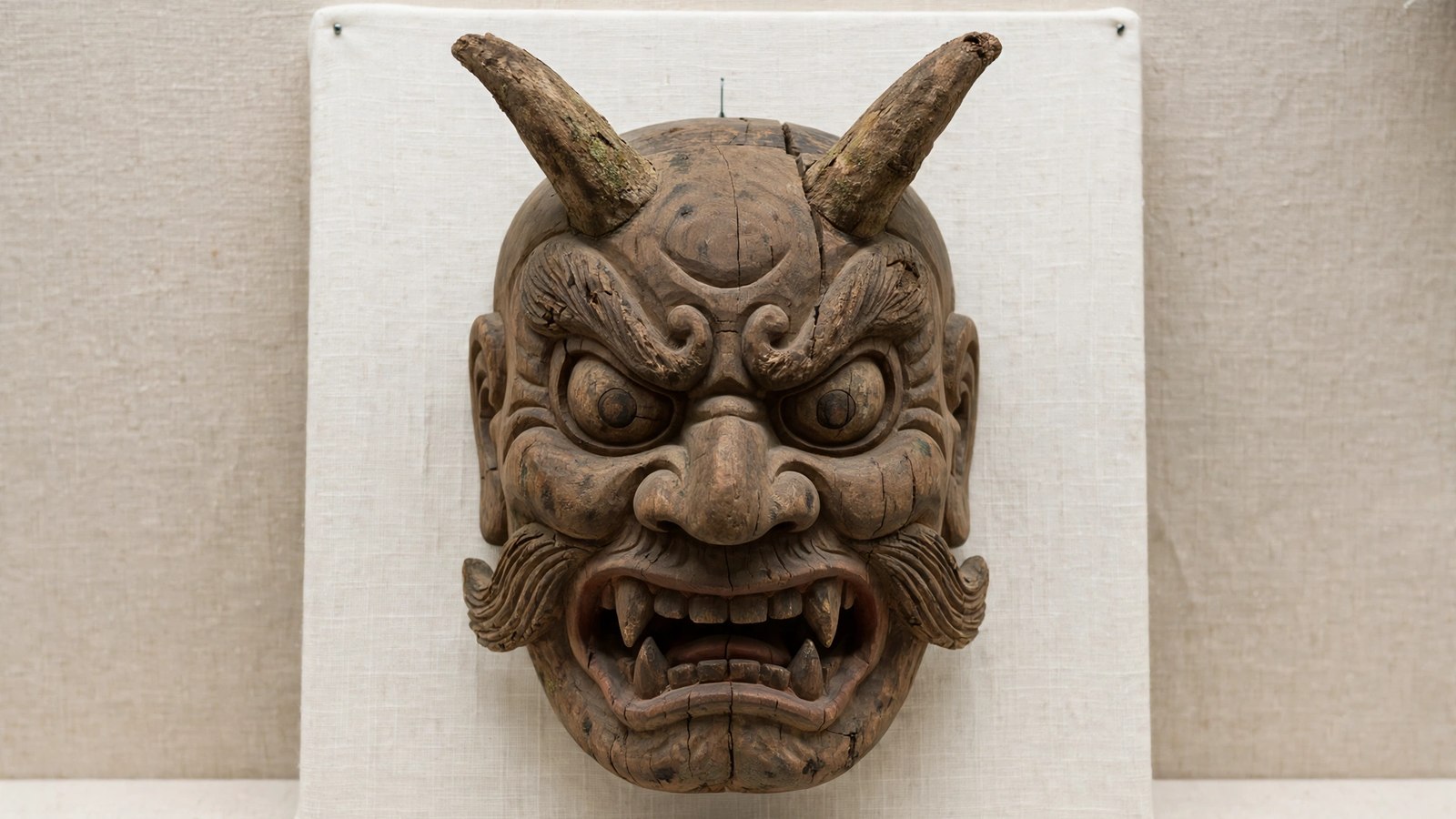
Short answer
- The most direct Korean word for demon or devil is akma, written 악마 in hangul and 惡魔 in hanja. It is a common noun, not a given name. Korean given names are not built that way: they are usually chosen for hopeful meanings carried by hanja characters, such as wisdom, brightness, grace, strength, or good fortune, or they are native Korean words chosen for a warm sound and sense. A name intended to mean demon would run against the whole purpose of that tradition, so there is no established category of Korean baby names meaning demon. Gwisin (귀신) is not a correct substitute. It means ghost or spirit, and in folklore it most often refers to the spirit of a dead person who remains in the world of the living because something is unfinished. Dokkaebi (도깨비) is not a substitute either. A dokkaebi is a legendary trickster creature, formed not from a dead person but, in the traditional account, from an old discarded object that has taken on a spirit. Dokkaebi can frighten or cheat people, but they can also help them, reward the kind, and punish the greedy. That mixed temperament is a long way from demon. So the honest short answer has three parts. Use akma when you mean a demon. Use gwisin when you mean a ghost. Use dokkaebi when you mean a trickster creature. And if you need a Korean name that means demon for a story, build it openly as a fiction construction from one of those words, and say that is what you have done. Anything else, including a neat list of demon baby names with no warnings attached, is inventing a tradition that does not exist.
By Emma Hudson
Search for Korean names that mean demon and you will find plenty of lists online. Most of them are misleading. They take ordinary Korean words for supernatural beings, present those words as baby names, and leave out the one fact that matters most: Korean parents do not, in any established tradition, give their children a name that means demon.
This article keeps the honest answer at the center. The closest Korean word to demon is akma (악마). Two neighboring words explain why translation gets messy. Gwisin (귀신) means a ghost or spirit, usually of a person who has died. Dokkaebi (도깨비) names a goblin-like trickster from folklore who was never a human being at all. Those three words are not synonyms, and none of them is a normal given name.
What follows explains each word with its hangul spelling and Revised Romanization, sets out the folklore behind it, explains why literal demon given names barely exist in Korean, and then does the useful part honestly: it shows writers and game designers how to build fiction character names from these words as creative constructions, clearly labeled as inventions rather than as real Korean names. If you came here looking for a list to copy for a baby, this article will not give you a false one. If you came for the language, the folklore, or a character name that respects both, it will give you plenty to work with.
Three Words That Are Not Interchangeable
Much of the confusion around this search comes from English, not Korean. English uses demon loosely for almost any frightening supernatural being. Korean folklore makes finer distinctions, and keeping them separate is the core skill this article teaches.
| Korean word | Hangul | Revised Romanization | What it actually is |
|---|---|---|---|
| Akma | 악마 | akma | A demon or devil: a supernatural being associated with evil |
| Gwisin | 귀신 | gwisin | A ghost or spirit, usually of a dead person with unfinished business |
| Dokkaebi | 도깨비 | dokkaebi | A goblin-like trickster creature, never a dead human, formed from an object or nature spirit |
| Akryeong | 악령 | akryeong | An evil spirit; a dictionary rendering of demon in the sense of an evil spirit |
| Yogoe | 요괴 | yogoe | A broad word for a strange or supernatural creature or monster |
Read the table by origin. An akma is defined by evil. A gwisin is defined by death: it was once a living person. A dokkaebi is defined by neither. Collapsing all three into demon erases the distinctions Korean storytellers rely on, because a gwisin story is about grief or an unfinished duty, while a dokkaebi story is usually about a bargain, a contest, or a trick.
For a wider tour of how different traditions divide up beings of this kind, see our guide to demon names, which treats demon as its own category rather than as a catch-all label.
Akma: The Closest Word to Demon
What the word is made of
Akma is a Sino-Korean word, written with the hanja 惡魔. The first character, 惡, read ak, carries the sense of evil or wickedness. The second character, 魔, read ma, means a demon or devil-like being, and in its older history it is connected with Buddhist usage for a demonic tempter or destroyer. Put together, the word means something close to evil demon, and modern dictionaries treat akma as the standard Korean equivalent of demon and devil.
That construction matters for naming. Because akma is a two-character compound built to name a kind of being, it behaves in Korean the way the word demon behaves in English. It is a label for a creature, not a personal name. English speakers do not normally name a child Demon, and Korean speakers do not normally name a child Akma. The parallel is close, and it is the fastest way to understand why lists that present Akma as a baby name are misleading.
How akma is used
In everyday and literary Korean, akma appears where English would use demon or devil: for a supernatural being associated with evil, for the Devil in religious contexts, and figuratively for a cruel person. Collins English-Korean Dictionary gives akryeong (악령), literally an evil spirit, as a rendering of demon in its first sense. Another established word, magwi (마귀), also means a devil or demon. None of these words functions as a personal name.
Akma also has a close cousin worth noticing. Japanese akuma, written with the same underlying characters, is the Japanese reading of the same compound. Korean akma and Japanese akuma are therefore cognates. If you are comparing East Asian vocabularies, our overview of Japanese gods and goddesses is a better place to start for the Japanese side than any list that mixes the two languages together.
Why akma is not a given name
Three reasons stack up. First, meaning: the word denotes evil, and Korean name-giving is oriented toward hopes for the child. Second, grammar and use: akma is a common noun for a class of being, and using a creature label as a personal name reads as a title or a nickname, not as a name. Third, the hanja system: where a given name is written in hanja, parents choose characters from the characters permitted for use in personal names, and they choose them for the meanings they want the name to carry. A parent deliberately assembling a name to mean demon would be working against the stated purpose of that choice, and there is no recognized naming tradition that does so.
None of this makes akma a taboo or unusable word. It is a normal, useful Korean word. It simply belongs in the vocabulary column, not the baby name column.
Gwisin: Ghosts, Not Demons
What a gwisin is
Gwisin (귀신) is the everyday Korean word for a ghost or spirit. In Korean folklore, gwisin are usually understood as the spirits of people who have died but who remain in the world of the living, often because something in their life is unfinished: a duty undone, a wrong unavenged, a loved one still in need of care, or a death that came too early or unjustly. When that business is settled, the spirit can move on to the world of the dead. Until then, it lingers.
The typical image is familiar from Korean horror and drama: a pale, translucent figure, often described as legless and floating, wearing white. That image comes from specific ghost types, covered below, rather than from gwisin in general. Gwisin is the umbrella word. It covers many kinds of ghost, defined mostly by how the person died or what keeps them here.
Gwisin are also not uniformly evil. Some are frightening and vengeful. Some are pitiable. Some, in story, are looking for help rather than victims. That moral range is one reason gwisin cannot simply be translated as demon. A demon, in the sense akma captures, is evil by nature. A gwisin is a person first, and a ghost second, and its behavior grows out of the life and death it had.
Why translation blurred gwisin and demon
If gwisin and demon are so different, why are they so often treated as the same? Part of the answer is translation history. A peer-reviewed study in the International Journal of Asian Christianity, titled When Ghost (Gwisin) Becomes Demon, examines how gwisin was used in Korean Protestant Bible translation to render the demons and unclean spirits of the Gospel of Mark. The author argues that this was a mistranslation: the gwisin of Korean culture is not conceptually the same as the always evil demon of Mark, and using the one word for the other taught many readers to hear gwisin as absolutely evil in a way the traditional concept is not.
Everyday translation adds smaller blurs. Collins gives a second, approving sense of the English word demon, as in working like a demon, and renders that sense with gwisin in its Korean examples. That is a compliment about uncanny skill, not a claim about evil spirits. Anyone building a name list by scraping dictionary entries in both directions can easily end up treating gwisin, akma, and demon as three spellings of one idea. They are not.
Types of gwisin in folklore
Folklore sorts gwisin into named types. Each type is useful to a writer precisely because it carries its own story, and each is a ghost type, not a demon name and not a given name.
Cheonyeo gwisin (처녀귀신), the unmarried woman’s ghost. This is the best known gwisin type: the ghost of a woman who died unmarried. She is usually pictured in sobok (소복), the white mourning hanbok, with her long black hair worn down, because in the older social order an unmarried woman did not wear her hair up as a married woman did. In the traditional reading, she died before she could take up the roles her society expected of her, and that unfulfilled life is her unfinished business. She is the figure behind many of the white-clad ghosts of Korean horror film.
Chonggak gwisin (총각귀신), the unmarried man’s ghost. The male counterpart of the cheonyeo gwisin is the ghost of a man who died unmarried, also called mongdal gwisin (몽달귀신) in some tellings. He is less prominent in popular culture than his female counterpart, but he belongs in any complete account.
Mul gwisin (물귀신), the water ghost. A mul gwisin is the spirit of a person who drowned. Stories often say these ghosts are lonely in the cold water where they died and may pull a living swimmer down, out of jealousy or a wish for company. The image was strong enough to enter everyday language: the Korean expression mul gwisin tactics describes dragging someone else down into your own trouble.
Wonhan gwisin, the ghost of a grievance. Wonhan (원한) means a deep grievance or resentment, and a ghost described this way is one held in the world by an unjust death or an unrighted wrong. Revenge is the most common plot in gwisin legends, and this is the type that carries it most directly.
Dalgyal gwisin (달걀귀신), the egg ghost. The strangest type in many accounts is a smooth, egg-shaped ghost with no eyes, nose, or mouth, and no arms or legs. Some legends say that seeing one brings death.
Used with their folklore intact, these types give a writer far more than the word demon ever could: a cause of death, a grievance, an appearance, and a reason the spirit cannot rest.
Dokkaebi: Tricksters, Not Demons and Not Ghosts
Where dokkaebi come from
Dokkaebi (도깨비) are legendary creatures of Korean mythology and folklore, often called Korean goblins or Korean ogres in English. Both translations mislead a little. A dokkaebi is not small and malicious in the European goblin pattern, and it is not simply a brute. Reference works on Korean folklore, including the Encyclopedia of Korean Culture tradition summarized in folklore scholarship, draw the defining line by origin: unlike gwisin, dokkaebi are not formed by the death of a human being. They arise when a spirit takes up residence in an inanimate object, typically an old, discarded household tool such as a broom, a sieve, a flail, or a pestle, and particularly an object stained with human blood. The thing that was used for years and never thrown away becomes a creature.
The earliest known documentation is old. The Silla-era tale of Lady Dohwa and Bachelor Bihyeong, preserved in the Memorabilia of the Three Kingdoms (Samguk Yusa), compiled in the Goryeo period, is regularly cited as the earliest record, and dokkaebi appear throughout the folk tale collections of the Joseon period that followed.
What dokkaebi do
Dokkaebi have extraordinary powers, and their character is double-sided. They play tricks on people and they help people. Folklore describes them challenging travelers to ssireum (씨름), Korean wrestling, sometimes for the right to pass. It describes them loving games, singing, and drink, being fooled by quick-witted humans, rewarding the kind and honest, and turning on the greedy. One well-known tale pattern has an honest man gain treasure through a dokkaebi encounter, while a greedy imitator who copies him ends up worse off than before. The moral engine is fairness, not evil.
Two magical objects travel with them in the tales. The dokkaebi bangmangi (도깨비 방망이) is a magic club that can summon or produce what its holder calls for. The dokkaebi gamtu (도깨비 감투) is a hat that makes its wearer invisible. A flickering blue flame or strange light in the dark, called dokkaebi-bul, is traditionally taken as a sign of their presence.
Dokkaebi appearance has never been fixed. Tales and images give them many forms, sometimes fearsome, with the horned figure familiar today owing a debt to old roof tiles carved with dokkaebi patterns. No single design is the authentic one.
For naming, the conclusion is the same as for gwisin. Dokkaebi is the name of a kind of creature: an excellent word for a trickster character, a species, or a title. It is not a Korean given name meaning demon, and presenting it as one gets both halves wrong: the creature is not a demon, and the word is not a name.
Related Words Worth Knowing
A careful searcher will meet a few more Korean words in this territory. Knowing what each one actually covers prevents most list-making errors.
Akryeong (악령), evil spirit. A compound of ak, evil, with ryeong, a spirit. Dictionaries use it for demon in the specific sense of an evil spirit, including in phrases about possession. It is closer to akma in spirit than gwisin is, but it is still a vocabulary word, not a name.
Magwi (마귀), devil or demon. Another established noun for a devil or demon, common in religious and older literary registers. Again: a word for a being, not a personal name.
Yogoe (요괴), supernatural creature. A broad umbrella for strange beings, monsters, and apparitions. It tells you something is supernatural without telling you whether it is a ghost, a creature, good, or evil. Useful for describing a cast of beings; useless as a precise equivalent of demon.
Satan (사탄), Satan. Korean also uses satan, a transliteration, for Satan as a specific religious figure, distinct from akma as a general word for a demon or devil.
This is also where half-human figures belong, as a contrast rather than as Korean material. Traditions outside Korea imagine beings who are part human and part demon and give them their own name lore. Our article on cambion names covers that separate tradition on its own terms. Korean folklore, as this article has shown, sorts its beings differently, and borrowing the cambion frame onto akma or gwisin would be another translation blur.
Why Korean Given Names Rarely Mean Demon
Names are built from chosen meanings
A traditional Korean full name puts the family name first, followed by a given name of usually one or two syllables. For a large share of Korean names, each syllable of the given name corresponds to a hanja character, and the character is chosen, not accidental. Because the same hangul syllable can be written with many different hanja, two people whose names sound identical can have names that mean quite different things. The meaning lives in the characters the parents selected.
What parents select for is consistent across guides to Korean naming: qualities and hopes. Characters for wisdom, grace, brightness, beauty, strength, talent, prosperity, and good fortune recur because a name is treated as a wish for the child’s life. Some families consult naming specialists, and traditional practice can also weigh sound, stroke counts, and the child’s birth time. Details and fashions change, and no single method governs every family, but the direction of travel does not change: the meaning is meant to help, not harm.
Two modern qualifications keep this honest. First, not every Korean name uses hanja. Native Korean word names exist and are well loved, using ordinary Korean words with warm meanings, such as Haneul (하늘), sky. Second, the hanja that may legally be used in a registered personal name are restricted to an official list maintained under Korea’s family registration rules, administered through the Supreme Court system. Neither qualification opens a door to demon names. A native word name meaning demon would still contradict the wish a name is meant to carry, and no one has produced an established naming tradition that does it.
The honest conclusion about baby names
So: are there Korean baby names that mean demon? Not in any established sense that a responsible article can list. No verified traditional given name whose chosen meaning is demon has been produced for this article, and the writer found none in the dictionary and folklore sources consulted. That negative finding is the finding. It is more valuable than an invented list, because it is true, and because it tells a parent, a writer, or a curious reader something real about how Korean naming works: meaning is a deliberate gift, and demon is not a gift Korean name-givers give.
Anyone who encounters a list elsewhere should apply three tests. Does it give hangul and hanja for each name, or only a romanized sound? Does it cite a naming source, or only other list sites? And does it admit that its entries are words for beings rather than attested given names? A list that fails all three is selling the search phrase, not the culture.
Fiction and Character Names Inspired by Korean Spirit Words
Fiction is where these words can legitimately become names, provided the naming is labeled as creative use. A novel, game, comic, or screenplay can name a character after a kind of being, give a character a title built from akma, or name a creature after a gwisin type. Readers accept invented names in fiction every day. What they should not be given is an invented name dressed up as an authentic Korean baby name.
The constructions below are adapted from the source material for this article. Every one of them is a creative construction for a fictional character or creature. None of them is presented as a real Korean given name.
- Akma as a title element. For a demon lord, a possessed villain, or a hunter defined against demons, use Akma as a title or epithet attached to a character’s actual name, in the way English fiction might style someone the Demon of a place. This keeps the word’s meaning exact: the character is being called a demon, openly, as a title.
- Gwisin as a creature or epithet name. For a ghost character, a codename, haunting, or ship or unit named for a ghost, Gwisin keeps its ghost sense intact. It works best where the character truly is, or is treated as, the spirit of someone who died.
- Dokkaebi as a trickster name. For a prankster spirit, a wrestling challenger, a gambler, or a morally double-sided helper, Dokkaebi signals trickery and bargaining rather than evil. It suits a character readers may end up liking.
- Mul Gwisin as a creature name. A water ghost from folklore, usable as a creature name in a story, with its drowning ghost story acknowledged rather than stripped away. Best kept near water, where the folklore puts it.
- Cheonyeo Gwisin as a story figure. The unmarried woman’s ghost, usable as a named story figure with her white sobok, loose hair, and unfulfilled life kept in view. Handle this one with care: the figure encodes real historical constraints on women’s lives, and a respectful treatment will keep that weight.
- Wonhan Gwisin as a vengeful spirit name. A ghost held by grievance, for a spirit character whose plot is a wrong that needs righting. The name promises a revenge or redress arc, so use it where the story will deliver one.
Three rules keep fiction naming honest and make it better. First, pick the word by the being, not by the sound: akma for a true demon, gwisin for a ghost, dokkaebi for a trickster. Second, show the hangul at least once if your medium allows it. Third, never describe your construction as a traditional Korean name. One honest sentence, saying the name is built from the Korean word for demon, ghost, or trickster, will make the character feel more Korean, not less.
Frequently Asked Questions
What is demon in Korean?
The most direct word is akma, written 악마 in hangul and 惡魔 in hanja. It means a demon or devil, a supernatural being associated with evil. Related words include akryeong (악령), an evil spirit, and magwi (마귀), a devil or demon. All of them are common nouns for beings, not given names.
Is gwisin the same as demon?
No. Gwisin (귀신) means a ghost or spirit, usually of a person who has died and who remains in the world of the living because something is unfinished. Some gwisin are vengeful, but gwisin are ghosts first. Translation, including older Bible translation discussed in academic research, has sometimes blurred gwisin into demon, but Korean folklore treats the two as different concepts.
Is dokkaebi a demon?
No. A dokkaebi (도깨비) is a goblin-like trickster creature of Korean folklore. It was never a human being, it is traditionally said to form from an old discarded object taken over by a spirit, and its stories center on tricks, contests, bargains, and rewards or punishments based on how people behave. Mischievous is not the same as demonic.
Are there Korean baby names that mean demon?
Not in any established sense. Korean given names are chosen for hopeful meanings, most often through hanja characters selected by the parents, or as native Korean words with warm senses. A name meaning demon would contradict that purpose, and no verified traditional given name meaning demon was found in the sources consulted for this article. Lists presenting akma, gwisin, or dokkaebi as baby names are presenting words for beings, not attested names.
Can I use Akma as a character name?
Yes, as a creative choice, with a label. In fiction, Akma works well as a title, epithet, codename, or the name of a demonic being, because that is what the word means. What you should not do is describe it, in the story’s notes or publicity, as a traditional Korean given name. Used openly as the Korean word for demon, it is accurate and effective.
What is a cheonyeo gwisin?
A cheonyeo gwisin (처녀귀신) is the ghost of a woman who died unmarried, the best known gwisin type. She is traditionally pictured in a white mourning hanbok called sobok, with her long hair worn down. Her unfinished business, in the traditional telling, is the life she did not get to live. She is a ghost type from folklore, not a name and not a demon.
What is the difference between a mul gwisin and other gwisin?
A mul gwisin (물귀신) is specifically the spirit of a person who drowned. Where other gwisin types are defined by marital status, grievance, or manner of appearance, the mul gwisin is defined by water and by drowning, and stories often place it in the river, lake, or sea where the death happened, where it may try to pull the living down.
Why do so many websites list Korean demon names, then?
Because the search phrase is popular and the honest answer is short. Sites that need a long list fill it with Korean words for supernatural beings, with romanized syllables assembled to sound like names, or with words borrowed from neighboring traditions, and present the result without warnings. The giveaway is what is missing: hangul and hanja for each entry, a naming source, and any admission that the entries are words rather than attested given names.
Sources & references
- Collins English-Korean Dictionary, entries for demon and demonic. https://www.collinsdictionary.com/us/dictionary/english-korean/demon
- Gwisin, Wikipedia, summarizing Korean folklore sources including Kim, Chongho, Korean Shamanism: The Cultural Paradox (Routledge). https://en.wikipedia.org/wiki/Gwisin
- Dokkaebi, Wikipedia, citing the National Folk Museum of Korea, Encyclopedia of Korean Folk Literature and Encyclopedia of Korean Folk Beliefs. https://en.wikipedia.org/wiki/Dokkaebi
- When Ghost (Gwisin) Becomes Demon: Mistranslation of Demon/Unclean Spirit to Gwisin in Mark, International Journal of Asian Christianity 4 (2021), 94 to 115. https://brill.com/downloadpdf/view/journals/ijac/4/1/article-p94_94.pdf
- Korean naming practice and hanja selection, Your Guide to Korean Names, Best of Korea. https://bestofkorea.com/your-guide-to-korean-names/
- Standard Korean Language Dictionary (National Institute of Korean Language), institutional background. https://en.wikipedia.org/wiki/Standard_Korean_Language_Dictionary
- Who's Who: Korean Ghosts, Goblins, and Gumiho, Koreabridge (Seoul Searching). https://koreabridge.net/post/whos-who-korean-ghosts-goblins-and-gumiho-seoulsearching


