Short answer
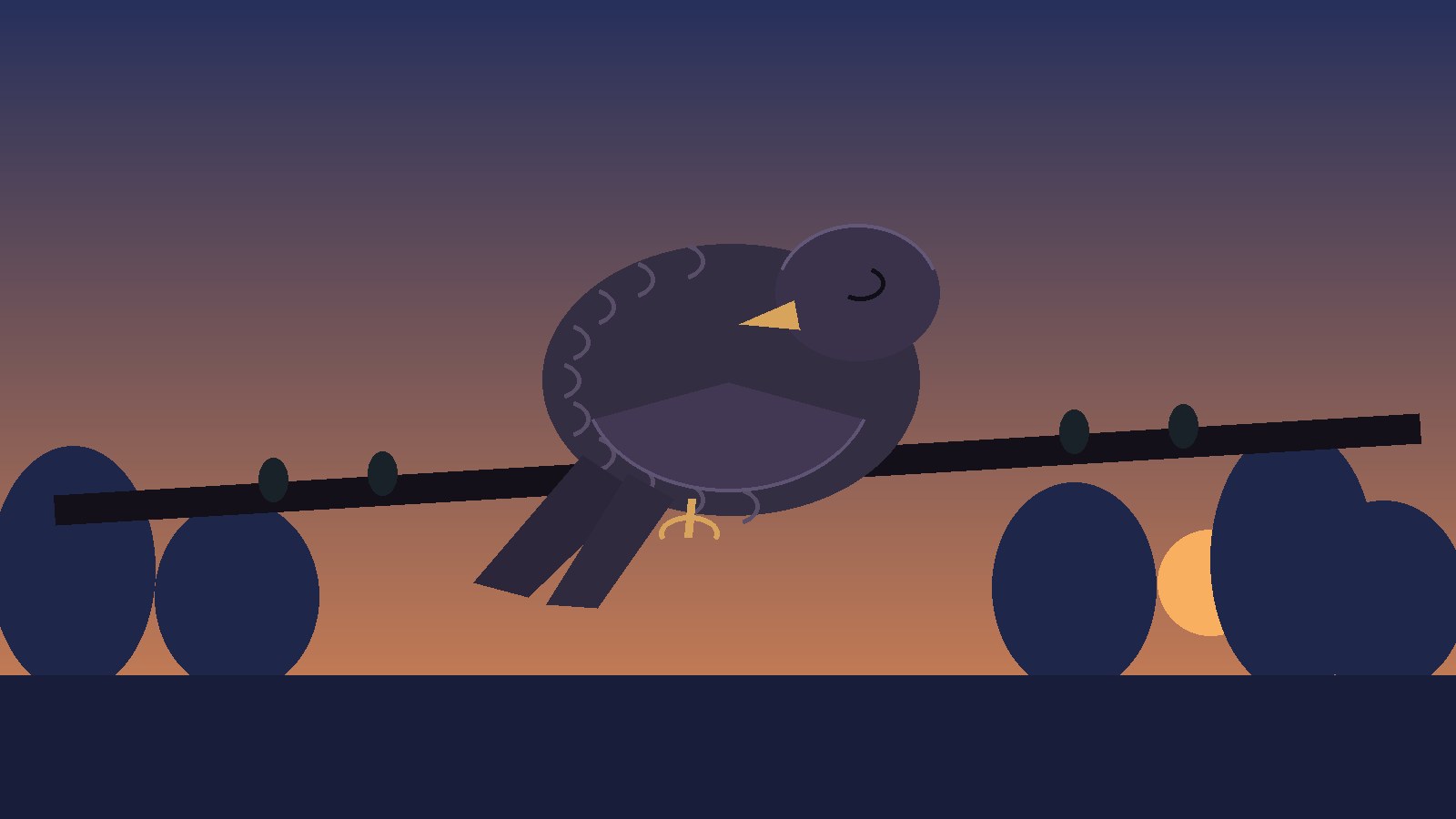
- Birds sleep in short cycles that include both slow wave sleep and rapid eye movement sleep, but their cycles are much shorter than ours and are often broken into many brief bouts. Most day active birds sleep at night and most night active birds sleep by day. A roosting bird usually perches or settles in a sheltered spot, fluffs its feathers for warmth, tucks its beak into its back feathers, and may pull one leg up into its belly feathers. Some birds can also sleep with half the brain awake and one eye open, a state called unihemispheric slow wave sleep. That half awake state lets a bird rest while still watching for danger. Torpor is different from sleep. In torpor, a bird deliberately lowers its body temperature, heart rate, and energy use far below normal sleep levels in order to survive a cold night or a shortage of food. Resting is different again. A bird can sit quietly, alert and ready to move, without being asleep at all.
By Emma Hudson
Yes, birds sleep. They do not, however, sleep in quite the way most people sleep, and they do not all sleep in the same place, at the same time, or in the same posture. Some sleep standing on one leg. Some sleep floating on water. Some sleep clinging to a tree trunk or to the inside of a chimney. A few even sleep in short bursts while flying over the open ocean. This guide explains how birds sleep, why their sleep looks so different from ours, and how to tell sleep apart from simple resting and from torpor, a much deeper energy saving state.
Why Bird Sleep Looks So Strange to Us
People often picture sleep as one long, still, unbroken block of night. For a wild bird, that picture would be dangerous. A bird asleep for hours in the open, unable to react, would be easy prey, and a bird that slept deeply through a cold night without conserving heat could lose too much energy. Bird sleep must therefore restore the brain and body while leaving the bird able to respond quickly, stay warm, and in some cases keep flying.
That trade off explains why bird sleep is broken into bouts, can be shallow or deep, can involve one half of the brain or both halves, and can happen on a branch, on water, on a cliff, in a tree cavity, or in the air. The exact pattern depends on the species, the season, the weather, the safety of the roost, and whether the bird is migrating or breeding.
It also explains why how long do birds sleep has no single answer. A bird on a safe roost may sleep far longer than the same kind of bird on a risky roost. A migrating bird may sleep far less than it would on land. A hummingbird in torpor may look almost lifeless for hours, yet that is not the same as a full night of ordinary sleep.
The Two Main Kinds of Bird Sleep
Like mammals, birds have both non rapid eye movement sleep and rapid eye movement sleep. In non rapid eye movement sleep, brain activity slows in a regular pattern. In rapid eye movement sleep, the brain becomes more active and the eyes may move under closed lids. Birds share those broad stages with mammals, but the timing is very different.
According to the National Audubon Society, a bird’s non rapid eye movement cycle averages around two and a half minutes, and its rapid eye movement sleep lasts about nine seconds. Those figures are averages, not promises for every species or every night, and they show why bird sleep can look so jumpy. A bird may pass through many cycles in a short period, waking briefly between them or shifting position, then settling again.
Another difference matters for birds that sleep on perches, on water, or in flight. Audubon notes that a bird does not lose much muscle tone in deep sleep. A mammal in rapid eye movement sleep normally loses muscle tone and would fall if perched on a branch. A bird keeps enough muscle control to stay in place, and that control, together with the locking grip described below, helps explain why a sleeping bird does not topple off its perch. The balance between slow wave and rapid eye movement sleep can also change with safety, temperature, and need. In a safe place, a bird may allow both halves of the brain to sleep deeply. In a risky place, it may keep one half awake.
Sleeping With One Eye Open
Unihemispheric slow wave sleep is the scientific name for sleeping with half the brain asleep and half awake. The eye connected to the awake half stays open. The eye connected to the sleeping half closes. Audubon reports that birds can adjust how much of the brain is asleep by how wide they open or close the eye. That is not a trick of language. The degree of eye opening is linked to the depth of sleep on that side of the brain.
The Cornell Lab of Ornithology explains the practical benefit in plain terms. A bird using this half brain sleep can spring into action quickly if a threat approaches, while still getting rest if no threat appears. Ducks and other waterfowl are particularly good at it, although peregrine falcons and Eurasian blackbirds can do it as well. Scientists have studied the pattern in blackbirds, pigeons, mallards, and other species.
Group sleeping shows the idea clearly. When mallards rest in a group, birds on the outside, where danger is most likely to arrive, are more likely to sleep with one eye open. Reporting on researcher Niels Rattenborg, Northern Woodlands notes that those edge birds direct the open eye away from the other ducks, as if watching for predators. Birds in the middle, sheltered by neighbors, are more likely to sleep with both eyes closed. The group therefore shares vigilance. This half brain sleep is also found in some marine mammals, such as dolphins, but in birds it is especially flexible, switching between whole brain and half brain sleep as conditions change.
How Birds Stay on a Perch Without Falling
One of the most common worries about sleeping birds is simple: why do they not fall off? The answer lies in the foot, not in willpower. The Cornell Lab explains that the grip is largely automatic: as the bird settles, its body weight pulls tendons running into the toes taut, so the foot stays curled around the branch. The grip is therefore maintained by the bird’s own weight and by the tendon system, rather than by constant conscious effort. A sleeping perching bird is not gripping in the same way a person grips a rope. Its foot is locked in place by anatomy.
Posture helps as well. Before sleep, a typical perching bird puffs up the soft down under its outer feathers, turns its head so the beak rests buried in the plumage of its back, and draws one leg up against its warm underside. Down feathers are the short fluffy feathers under the sleek outer feathers, and they hold in heat. Tucking the beak and legs reduces heat loss from bare skin.
Not every bird sleeps on a branch. Audubon lists standing, perching, roosting, lying on the ground, swimming, and even hanging upside down as real sleeping positions across bird species. The posture that looks odd to us usually makes sense for that bird’s body and habitat.
Where Birds Sleep: Roosts, Not Nests
One of the most persistent myths about bird sleep is that birds sleep in nests. Most do not, except when they have a reason to be in a nest. Audubon, in a BirdNote account of cold winter nights, states the point directly. The only time of year when birds sleep in nests is when they are incubating eggs or keeping their young warm. During the rest of the year, birds select a roosting spot, and often they use the same roost night after night.
A roost is a regular sleeping place. It may be a branch, a dense shrub, a tree cavity, a cliff ledge, a reed bed, a beach, or a sheltered bay. The best roost offers shelter from wind and rain, cover from predators, and a quick escape route. Some roosts are solitary. Others are communal, with hundreds or thousands of birds gathering in one place, which can help with warmth and shared vigilance.
Different birds choose very different roosts. Songbirds often find a protected perch, sheltered from rain and safe from nighttime predators. Small forest birds, including the red breasted nuthatch, may spend the night huddled together in tree cavities. Ducks float in protected bays. Woodpeckers, such as the downy woodpecker, cling to vertical tree trunks. The Cornell Lab adds that ducks often stand at the water’s edge or on a partly submerged stick or rock and tuck one foot into the body, and that chimney swifts have been documented resting while clinging to the insides of chimneys.
Roost choice also changes with season. In winter, shelter and warmth matter more, so birds may huddle, choose cavities, or gather in larger groups. In summer, a bird may choose a cooler, more open roost. Watching where birds go at dusk, rather than assuming they return to a nest, gives a far more accurate picture of their night.
Day Birds, Night Birds, and In Between
Most birds are diurnal, meaning they are awake during the day and asleep at night. Owls, nighthawks, and other nocturnal birds reverse that pattern. They wake as the sun sets and hunt at night. During the daytime, they find a safe place and close their eyes to block out the light. Some birds are most active at dawn and dusk, when light is low but not absent. Those crepuscular patterns mean that at any hour, some birds are waking, some are settling, and some are in the middle of activity.
This matters for how people interpret what they see. An owl sitting still with eyes closed in daylight is not necessarily sick or tame. It may simply be sleeping during its normal rest period. A bird that seems restless at night during migration may be following a different rhythm again, because migration can shift sleep timing for days or weeks. Chicks in a nest are kept warm by a parent, and their sleep is broken by feeding, which is not the same as an adult bird’s independent roosting sleep.
How Much Sleep Do Birds Get?
Because bird sleep is broken into bouts, total sleep is best thought of as a sum of many short periods, not as one block. On land, many birds sleep for many hours in total across a night, even if they wake often. During migration or breeding, totals can fall sharply. During torpor, the bird is not simply sleeping longer. It is in a different state, with different energy costs and risks.
Audubon reports one migration example. In a study of Swainson’s thrushes, birds took hundreds of daytime naps to make up for lost nighttime sleep. That makes sense for a migrant that must fly at night and feed by day. It repays sleep in small installments when it can. Breeding can also cut sleep. A parent feeding chicks or defending a territory may sleep less than outside breeding season, and a bird guarding eggs may sleep in the nest in broken bouts.
Sleeping in Flight: Frigatebirds, Swifts, and Migration
For many years, scientists suspected that some birds slept while flying, but they lacked direct proof. That proof came from tiny brain recorders fitted to great frigatebirds. Audubon reports that Niels Rattenborg of the Max Planck Institute for Ornithology and colleagues fitted electroencephalographs, devices that measure electrical activity in the brain, to frigatebirds nesting in the Galapagos Islands, letting researchers tell when the birds were awake or asleep during flights lasting days over the ocean.
The results were striking. While flying, frigatebirds slept very little, about 45 minutes each day in short bursts of about ten seconds, usually after dark. On land, by contrast, the same birds slept about 12 hours each day, in bouts of about one minute at a time. Northern Woodlands, reporting the same study, puts the in flight total at just over 7 percent of the time. The small difference between reports of 41 minutes and 45 minutes reflects rounding and averaging across birds and days. The main finding is consistent: sleep in flight is real, but it is a small fraction of sleep on land.
Frigatebirds did not sleep at all times in flight. Audubon notes that all recorded sleep occurred during the upward circling portion of flight, when birds rise in thermal updrafts, and none occurred while gliding down. They often slept with only one side of the brain, although they could also sleep with both sides at once for very short periods. Rattenborg suspected that staying half awake might help prevent mid air collisions, although none were observed. The eye facing into the turn tended to stay open, which fits that idea.
The Alpine swift holds a different kind of record. Audubon notes that one Alpine swift logged more than 200 days in the air as it hunted flying insects over West Africa. That is a flight record, and the Cornell Lab notes evidence that the Alpine swift can fly nonstop for 200 days, sleeping while in flight. Keep the two parts separate. The 200 day figure describes time airborne. It does not mean a swift sleeps soundly for 200 days, or that every swift flies for that long.
Other migrants use different strategies. Audubon notes that ducks and geese flying in V formations will use unihemispheric sleep when they are not at the head of the group. The leading bird must navigate and set the pace, while birds behind it can rest one half of the brain while still following the formation.
A famous extreme comes from breeding chinstrap penguins. Northern Woodlands reports that Rattenborg’s team found breeding chinstrap penguins obtained large amounts of slow wave sleep through more than 600 microsleeps per hour, lasting on average 4 seconds each. Those penguins must guard eggs and chicks while staying alert. Their solution is not a long sleep, but thousands of tiny sleeps that add up.
Torpor: When Sleep Is Not Enough
Torpor is the state most often confused with sleep, and the confusion matters because torpor is far more extreme. In torpor, a bird lowers its body temperature and slows its heart rate and metabolism in a controlled way to save energy. Audubon describes nocturnal torpor as a controlled hypothermia that some birds use in cold temperatures after fluffing feathers and generating heat. It is not simply being very sleepy. It is a deliberate shutdown to a lower energy level.
Hummingbirds are the clearest example. CORDIS, reporting research by ecologist Catherine Graham of the Swiss Federal Institute for Forest, Snow and Landscape Research, notes that hummingbirds can require up to 1,000 heart beats per minute and 50 to 80 wing beats per second while hovering. After two or three hours without food, some species can die. At night, they cannot feed, so they must cut energy use sharply or starve before morning.
In deep torpor, CORDIS reports, a hummingbird can bring its heart rate down to around 50 beats per minute. In shallow torpor, a lighter resting state, the bird reduces its body temperature by about 3 degrees Celsius, gains some energy saving, and can come out of torpor more quickly if needed. Hummingbirds can move flexibly between shallow and deep torpor. Graham also notes that female nesting hummingbirds use torpor rarely, because they need to warm their eggs and stay alert to predators. Torpor saves energy, but it also leaves a bird slow to react, cold, and vulnerable.
Torpor also takes time to reverse. A bird in deep torpor cannot simply wake and fly at full speed. It must rewarm, raise its heart rate, and restore normal breathing. During that rewarming period, it is still vulnerable. Torpor is therefore a survival strategy with costs, not a state with no downside.
Resting Is Not the Same as Sleeping
A bird sitting still is not necessarily asleep. Resting can mean perching quietly, preening, watching, or simply pausing between activities while fully alert. Sleep involves changes in brain activity, reduced responsiveness, and the sleep stages described above. A resting bird will usually respond quickly to a sudden movement or sound. A sleeping bird may respond more slowly, or may wake in stages, first opening one eye, then lifting the head, then becoming fully alert.
This distinction helps observers avoid two common mistakes: assuming every still bird is asleep, and assuming every bird with closed eyes is in deep sleep. A bird sunning itself, drying its wings, or waiting for prey may look inactive but is awake and attentive. A bird may also close its eyes briefly while resting, or sleep with one eye open, so eye position alone does not settle the question. Posture, responsiveness, time of day, and context all matter. The practical rule is simple: keep distance, and do not try to test whether a bird is asleep by approaching it. A bird in torpor may be unable to escape quickly at all.
Cold Nights, Warm Feathers, and Seasonal Change
Winter nights test bird sleep more than summer nights. Temperatures fall, nights lengthen, and food becomes harder to find. Birds respond by fluffing feathers to trap warm air, tucking beaks and legs to reduce heat loss, choosing sheltered roosts, huddling in cavities or communal roosts, and in some cases using torpor.
Audubon notes that on cold nights birds fluff feathers for insulation and often hunker down over bare legs and feet. Most birds cannot tuck their heads under their wings as people often imagine. Instead, they turn their heads around and poke their beaks under shoulder feathers, which protects the beak from cold air while keeping the bird able to wake and move.
Season also changes who sleeps where. A cavity that is a safe winter roost may be a breeding nest in spring. A bird that migrates may sleep in entirely different habitats along its route. Sleep is not fixed to one place. It follows food, safety, and temperature through the year.
What Science Still Does Not Fully Know
Bird sleep research has advanced quickly since small brain recorders made it possible to measure sleep in free flying birds, but important questions remain. Audubon notes that researchers still do not have the complete answer to how migrating birds sleep. Different species almost certainly use different mixes of daytime naps, half brain sleep, and short flight sleeps, and the costs of sleep loss during migration are still being studied.
The same caution applies more broadly. Most detailed brain recordings come from a small number of species, often in specific places and seasons. A finding in great frigatebirds or chinstrap penguins does not automatically apply in the same form to a garden sparrow. It suggests a pattern worth testing, not a universal rule. Observation alone also has limits. A bird with one eye open may be in half brain sleep, but only brain recordings can confirm that state. A bird sitting still may be resting, sleeping lightly, or entering torpor.
How to Watch Sleeping Birds Without Disturbing Them
The best way to learn about bird sleep is to watch roosts at dusk and dawn from a distance, with binoculars if available, and without approaching, calling, or shining light at roosting birds. At dusk, watch where birds gather and whether they settle in groups or alone. At dawn, watch the order in which they leave. Those patterns reveal roost choice and daily rhythm without interference.
Do not approach a roost to check whether birds are asleep, and do not handle a bird that looks still or lifeless. A bird in torpor may look dead to an untrained observer yet be alive and in need of undisturbed time to rewarm. If a wild bird appears injured or in immediate danger, contact a local wildlife rescue organization for advice rather than attempting care yourself. This guide covers wild birds only and gives no pet bird care advice.
Keeping a simple notebook can help. Record the date, time, place, weather, species if known, number of birds, and roost type. Over weeks, those notes show seasonal change far better than a single evening’s impression.
Frequently Asked Questions
Do birds sleep at night?
Most day active birds sleep at night, and most night active birds sleep during the day. Owls and nighthawks, for example, are active at night and rest by day. The exact timing varies by species, season, and migration, so night is the usual sleep period for most familiar garden birds, but not for all birds.
Do birds sleep in nests?
Usually no. Birds sleep in nests when incubating eggs or keeping young warm. At other times, they choose a roosting spot, often the same spot night after night. Songbirds may perch in sheltered shrubs, small birds may huddle in tree cavities, ducks may float in protected bays, and woodpeckers may cling to tree trunks.
Why do birds not fall off their perch when asleep?
When a bird puts weight on its feet, leg muscles force foot tendons to tighten, locking the foot around the branch. The bird also keeps enough muscle control during sleep to stay in place. Falling is therefore very unlikely for a healthy bird on a suitable perch, although a sick or disturbed bird can still fall.
Can birds sleep with one eye open?
Yes. In unihemispheric slow wave sleep, one half of the brain sleeps while the other half stays awake, and the eye linked to the awake half stays open. Birds can adjust how much of the brain sleeps by how wide they open or close the eye. Birds on the edge of a resting group are more likely to sleep with the outward eye open, watching for predators.
Do birds sleep while flying?
Some do, in very short bursts. Great frigatebirds studied with brain recorders slept about 45 minutes per day in flight, in bursts of about ten seconds, usually while circling upward in thermals, compared with about 12 hours per day on land. Alpine swifts can stay airborne for more than 200 days, but that figure is a flight record, not a claim that a swift sleeps continuously for that period.
What is the difference between bird sleep and torpor?
Sleep is a regular brain state with slow wave and rapid eye movement stages, usually in short cycles. Torpor is a deeper, controlled lowering of body temperature, heart rate, and energy use to survive cold or food shortage. Hummingbirds in deep torpor can drop their heart rate to around 50 beats per minute. Torpor saves more energy than sleep, but it also leaves the bird slower to react and in need of time to rewarm.
Do birds dream?
Birds have rapid eye movement sleep, the stage linked to dreaming in humans, but brain waves alone cannot confirm what, if anything, a bird experiences during that stage. It is safer to say birds have that sleep stage, without claiming that birds dream in the human sense.
How long do birds sleep each day?
There is no single figure. Totals vary by species, safety, season, breeding, and migration. A bird on land may sleep many hours in total across a night in short bouts. A migrating frigatebird may sleep under an hour per day in flight. A breeding penguin may accumulate sleep in thousands of microsleeps of a few seconds each.
Sources & references
- Cornell Lab of Ornithology, Do Birds Sleep?
- National Audubon Society, How Do Birds Sleep?
- National Audubon Society, How Do Birds Spend Cold Winter Nights?, a BirdNote account
- National Audubon Society, Scientists Finally Have Evidence That Frigatebirds Sleep While Flying, reporting the Nature Communications study by Niels Rattenborg and colleagues at the Max Planck Institute for Ornithology
- Northern Woodlands, The Eye-Opening Realm of Avian Sleep, reporting research by Niels Rattenborg at the Max Planck Institute for Biological Intelligence
- European Commission CORDIS, Do Hummingbirds Ever Sleep?, reporting research by Catherine Graham at the Swiss Federal Institute for Forest, Snow and Landscape Research


