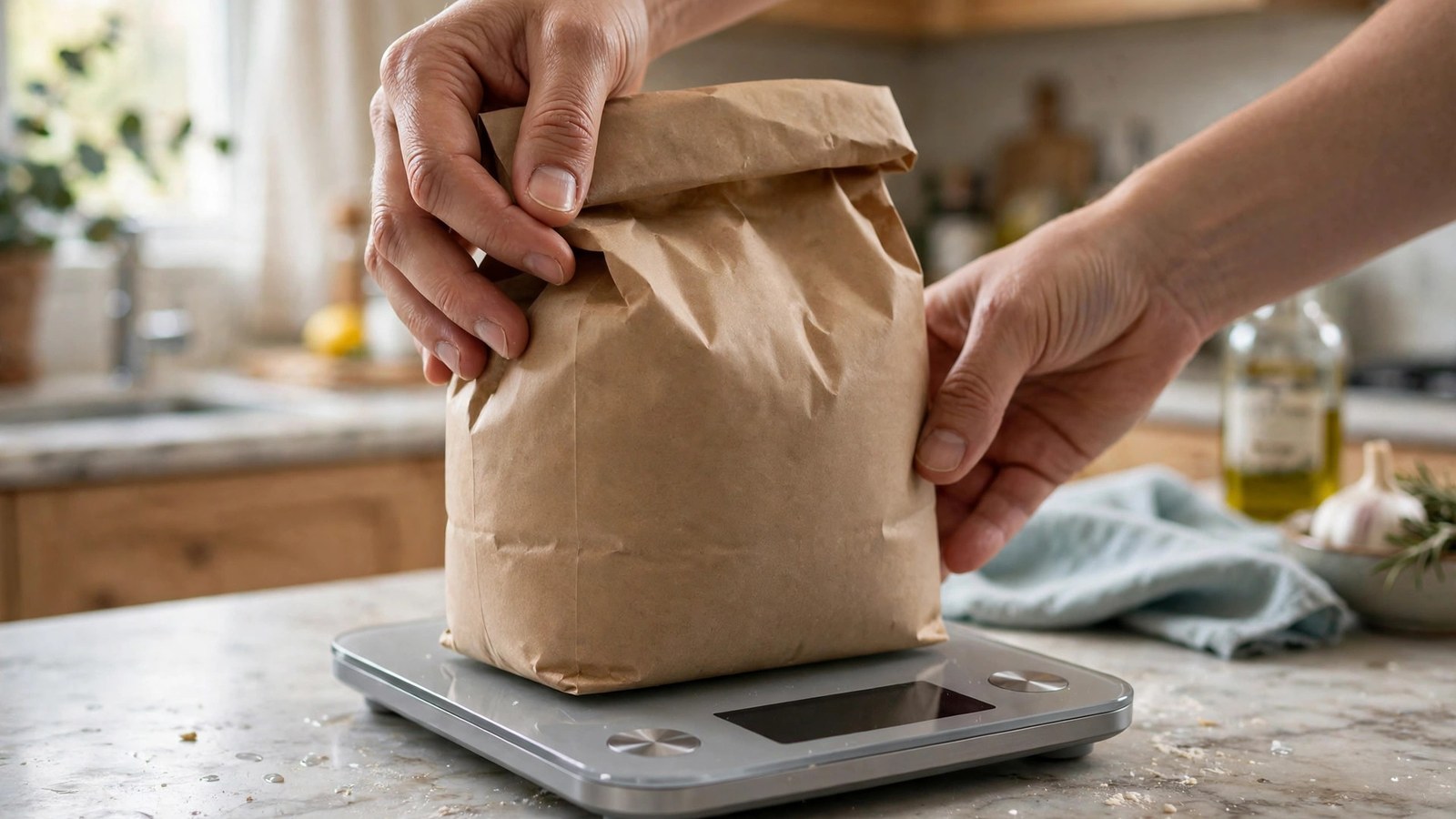
Short answer
- One pound equals exactly 16 ounces, and one ounce equals exactly 0.0625 pounds. That is the whole conversion for everyday weight in the avoirdupois system, the system used for groceries, body weight, postage, and shipping in the United States, and for everyday weights in the United Kingdom as well. To convert ounces to pounds, divide the number of ounces by 16. To convert pounds to ounces, multiply the number of pounds by 16. So how many ounces is a pound? Sixteen. How many oz in 1 lb? Sixteen, because lb is simply the abbreviation for pound and oz is the abbreviation for ounce. A pound is how many oz in every everyday context: 16. The answer is exact, not rounded. The international avoirdupois pound is defined as exactly 0.45359237 kilograms, and the avoirdupois ounce is defined as one sixteenth of that pound, which makes one ounce exactly 28.349523125 grams. Because both units come from the same definition, dividing one by the other gives exactly 16, with no remainder and no approximation hiding in the result. Two exceptions matter, and this guide keeps them separate. Precious metals are weighed in troy ounces, and a troy pound holds 12 troy ounces, not 16. Fluid ounces measure volume, not weight, and they do not convert to pounds at all without knowing what substance is being measured.
By Emma Hudson
Recipes, parcel scales, luggage allowances, and gym weights all switch between ounces and pounds, sometimes on the same label. The conversion between them is one of the simplest in the US customary system, but three traps catch people out: the troy system used for precious metals, the fluid ounce used for volume, and decimal answers that would be clearer written as pounds and ounces together. This guide gives the exact rule, full tables in both directions, and worked examples for the kitchen, the post office, and the metric conversions that build on the same rule.
The Two Rules and Why They Are Exact
Converting ounces and pounds needs only two rules. Ounces to pounds: divide by 16. Pounds to ounces: multiply by 16. Every table and every worked example in this article is one of those two operations, so if you remember nothing else, remember the number 16 and which direction you are traveling.
The exactness is worth understanding, because it is unusual. Many conversions, such as inches to centimeters in older books, were once approximations that were later fixed by agreement. The pound and ounce went through the same process. In 1959 the international yard and pound agreement fixed the avoirdupois pound at exactly 0.45359237 kilograms. The ounce was already defined as one sixteenth of a pound, so the agreement fixed the ounce at the same moment: 0.45359237 divided by 16 is exactly 0.028349523125 kilograms, or 28.349523125 grams. The National Institute of Standards and Technology, known as NIST, publishes these factors in its Guide to the SI, Appendix B, and marks the underlying pound factor as exact. That is why a scale, a recipe, and a shipping label can all use 16 with complete confidence. There is no more precise version of the number waiting in a reference book.
The abbreviation lb comes from the Latin word libra, which is also why the pound sign and the abbreviation look unrelated to the English word pound. The abbreviation oz comes from the Italian word onza. Neither abbreviation changes the math. A label that writes 1lb, 1 lb, or one pound is stating the same weight, and 1lb to ounces is always 16 ounces.
Ounces to Pounds Table
The table below covers every whole ounce from 1 to 16, then the larger amounts that come up most often in recipes, parcels, and shopping. Every figure is ounces divided by 16.
| Ounces (oz) | Pounds (lb) | Ounces (oz) | Pounds (lb) |
|---|---|---|---|
| 1 oz | 0.0625 lb | 16 oz | 1 lb |
| 2 oz | 0.125 lb | 20 oz | 1.25 lb |
| 3 oz | 0.1875 lb | 24 oz | 1.5 lb |
| 4 oz | 0.25 lb | 28 oz | 1.75 lb |
| 5 oz | 0.3125 lb | 32 oz | 2 lb |
| 6 oz | 0.375 lb | 40 oz | 2.5 lb |
| 7 oz | 0.4375 lb | 48 oz | 3 lb |
| 8 oz | 0.5 lb | 64 oz | 4 lb |
| 9 oz | 0.5625 lb | 80 oz | 5 lb |
| 10 oz | 0.625 lb | 96 oz | 6 lb |
| 11 oz | 0.6875 lb | 100 oz | 6.25 lb |
| 12 oz | 0.75 lb | 112 oz | 7 lb |
| 13 oz | 0.8125 lb | 128 oz | 8 lb |
| 14 oz | 0.875 lb | 160 oz | 10 lb |
| 15 oz | 0.9375 lb | 200 oz | 12.5 lb |
| 16 oz | 1 lb | 320 oz | 20 lb |
Three landmarks in this table are worth learning by sight, because they cover most everyday questions. Eight ounces is half a pound. Four ounces is a quarter of a pound. Twelve ounces is three quarters of a pound. If a recipe, a deli counter, or a parcel label uses any other amount, start from the nearest landmark and adjust. A 12 ounce bag of coffee, for example, is three quarters of a pound before you do any division at all, and a 20 ounce parcel is a pound plus 4 ounces, which is 1.25 pounds.
Pounds to Ounces Table
Running the conversion the other way is a multiplication, and the results are the weights most often printed on packaged food and quoted for luggage and body weight.
| Pounds (lb) | Ounces (oz) | Pounds (lb) | Ounces (oz) |
|---|---|---|---|
| 0.25 lb | 4 oz | 6 lb | 96 oz |
| 0.5 lb | 8 oz | 7 lb | 112 oz |
| 0.75 lb | 12 oz | 8 lb | 128 oz |
| 1 lb | 16 oz | 9 lb | 144 oz |
| 1.5 lb | 24 oz | 10 lb | 160 oz |
| 2 lb | 32 oz | 15 lb | 240 oz |
| 2.5 lb | 40 oz | 20 lb | 320 oz |
| 3 lb | 48 oz | 25 lb | 400 oz |
| 4 lb | 64 oz | 50 lb | 800 oz |
| 5 lb | 80 oz | 100 lb | 1,600 oz |
How many ounces is 10 lb is one of the most searched versions of this question, and the table gives it directly: 10 × 16 = 160 ounces. A 10 pound bag of flour, sugar, rice, or potatoes holds 160 ounces. The same multiplication scales to any whole number of pounds. Three pounds is 48 ounces, 7 pounds is 112 ounces, and a 50 pound luggage allowance is 800 ounces. The rule never changes inside the avoirdupois system, however large the weight becomes.
Fractional Pounds
Recipes and deli counters quote fractions of a pound more often than decimals, so it helps to be able to move between the two forms. How many oz is 1/2 pound? Half of 16 is 8, so half a pound is 8 ounces. A quarter of a pound is 4 ounces, and three quarters of a pound is 12 ounces. An eighth of a pound is 2 ounces, a figure that appears on butter packaging and cheese labels, and a sixteenth of a pound is 1 ounce by definition.
Decimal pounds convert the same way. A weight of 0.375 pounds is 0.375 × 16 = 6 ounces. A weight of 0.625 pounds is 10 ounces. If a scale or a spreadsheet gives you a decimal and you need ounces, multiply the decimal by 16. If it gives you a fraction, find the fraction of 16 instead: for thirds, which do appear in some older recipes, one third of a pound is 16 ÷ 3 = 5.33 ounces to two decimal places, and two thirds of a pound is 10.67 ounces. Thirds are the common fraction that does not land on a whole number of ounces, because 16 divides exactly by 2, 4, 8, and 16, but not by 3.
Pounds and Ounces Together
Many real weights are stated as pounds and ounces together, such as 2 lb 9 oz, rather than as a decimal. To convert a combined weight to ounces only, multiply the pounds by 16 and add the ounces: 2 lb 9 oz is 32 + 9 = 41 ounces. To convert back, divide the ounces by 16, keep the whole number as pounds, and write the remainder as ounces: 41 ounces is 2 whole pounds using 32 ounces, with 9 ounces left over, written 2 lb 9 oz.
This format is usually clearer than a decimal for anything a person will weigh again. A newborn recorded at 7 lb 8 oz weighs 7 × 16 + 8 = 120 ounces, or 7.5 pounds as a decimal, but the pounds and ounces form is the one parents, midwives, and family records actually use. A parcel of 37 ounces is 2 lb 5 oz, which most people can picture and check on a scale more easily than 2.3125 pounds. Use the decimal form for calculations and spreadsheets, and the combined form for labels, recipes, and anything read aloud.
Worked Examples: Cooking and the Kitchen
A standard US stick of butter weighs 4 ounces, which is a quarter of a pound. A recipe calling for half a pound of butter therefore needs two sticks, or 8 ounces, and a recipe calling for a pound of butter needs four sticks. When a cookbook from outside the United States gives butter in grams, the same stick is about 113 grams, because 4 ounces × 28.349523125 grams = 113.398 grams, usually rounded to 113 grams.
Chocolate, cheese, and meat are often sold in ounces and cooked from recipes written in pounds, or the other way round. Twelve ounces of chocolate is 12 ÷ 16 = 0.75 pounds, three quarters of a pound. A deli order of 0.75 lb of cheese is 12 ounces. A chicken breast weighing 6 ounces is 0.375 pounds. Ground meat sold as an 80 ounce family pack is 80 ÷ 16 = 5 pounds, which divides into ten 8 ounce portions of half a pound each, or twenty quarter pound portions of 4 ounces each.
Scaling a recipe uses the same two rules. If a recipe for four people uses 24 ounces of tomatoes and you are cooking for eight, doubling gives 48 ounces, which is 3 pounds. If you are halving a recipe that calls for 1.5 pounds of potatoes, half is 0.75 pounds, which is 12 ounces, a weight a small kitchen scale displays directly in ounces. Weighing in ounces for small amounts and in pounds for large ones, and converting at the point where the scale changes unit, is the habit that prevents most kitchen conversion errors.
One caution belongs in every kitchen example. A cup is a volume measure, and the fact that 8 fluid ounces of water weigh close to 8.35 ounces by weight is a property of water, not a conversion. Flour, sugar, oil, and honey all fill a cup with different weights, which is why this article keeps weight ounces and fluid ounces strictly apart, and why serious baking recipes give weights in grams or ounces rather than cups.
Worked Examples: Postage, Shipping, and Luggage
Postal and parcel scales often display ounces while price bands are set in pounds, so converting ounces and pounds is a daily task for anyone who mails packages. A parcel weighing 20 ounces is 20 ÷ 16 = 1.25 pounds. A parcel weighing 40 ounces is 2.5 pounds. A small packet weighing 9 ounces is 0.5625 pounds, a little over half a pound. A parcel weighing 53 ounces is 3 lb 5 oz in combined form, or 3.3125 pounds as a decimal.
The conversion itself never rounds, but billing often does. Many carriers price by the whole pound or by a weight band and round a part pound up to the next band for charging. A parcel of 17 ounces is exactly 1.0625 pounds as a weight, but it may be billed as a 2 pound parcel if the carrier rounds up. Check the rounding rule of the specific carrier and service you are using, because it is a pricing policy, not part of the conversion, and it differs between carriers and between domestic and international services.
Luggage works the same way at larger weights. A cabin bag limit of 10 pounds is 160 ounces. A checked bag limit of 50 pounds is 800 ounces, so a bag whose contents weigh 780 ounces is 48.75 pounds and inside that limit, while a bag at 810 ounces is 50.625 pounds and over it. Body weight follows the same math: a person who weighs 150 pounds weighs 2,400 ounces, a number nobody uses in practice, which is exactly why large weights settle into pounds and small weights settle into ounces.
Related Conversions: Grams and Kilograms
The 16 ounce pound is also the bridge to metric weights, which is why searches for pounds and ounces to kilograms conversion, a kilograms to pounds and ounces converter, kilos to lbs and ounces, kilograms to ounces to pounds, and kilos to pounds and ounces all lead back to this same rule. The bridge factors are exact: 1 pound = 0.45359237 kilograms, and 1 ounce = 28.349523125 grams.
| Weight | Grams | Kilograms |
|---|---|---|
| 1 oz | 28.349523125 g | 0.028349523125 kg |
| 4 oz | 113.3980925 g | 0.1133980925 kg |
| 8 oz | 226.796185 g | 0.226796185 kg |
| 1 lb (16 oz) | 453.59237 g | 0.45359237 kg |
| 2 lb (32 oz) | 907.18474 g | 0.90718474 kg |
| 5 lb (80 oz) | 2,267.96185 g | 2.26796185 kg |
| 10 lb (160 oz) | 4,535.9237 g | 4.5359237 kg |
For a combined weight, convert each part and add. A weight of 2 lb 9 oz is 2 × 453.59237 + 9 × 28.349523125 = 907.18474 + 255.145708125 = 1,162.330448125 grams, or about 1.162 kilograms. Working in the other direction, 1 kilogram is 1,000 ÷ 453.59237 = 2.20462 pounds to five decimal places, and in ounces it is 1,000 ÷ 28.349523125 = 35.27396 ounces to five decimal places. A 500 gram bag of pasta is therefore 500 ÷ 28.349523125 = 17.637 ounces, or about 1.102 pounds, just over a pound. Once you can move between ounces and pounds, every metric weight conversion is one more multiplication or division by a fixed factor.
The Troy Exception for Precious Metals
There is one well known exception to the 16 ounce rule, and it matters because it changes both numbers in the conversion. Gold, silver, platinum, and other precious metals are weighed in the troy system, not the avoirdupois system. In the troy system, a pound is built differently: 1 troy pound = 12 troy ounces. How many troy ounces in a pound is therefore 12, when the pound in question is a troy pound.
The troy ounce itself is also a different weight. One troy ounce is exactly 31.1034768 grams, against 28.349523125 grams for an avoirdupois ounce. The troy ounce is heavier by 2.753953675 grams, which is about 9.7 percent. The shared unit underneath both systems is the grain: a troy ounce holds 480 grains and an avoirdupois ounce holds 437.5 grains, and one grain is exactly 0.06479891 grams, so 480 × 0.06479891 = 31.1034768 grams exactly.
The surprise follows from the two differences combined. A troy pound is 12 × 31.1034768 = 373.2417216 grams, while an avoirdupois pound is 453.59237 grams. The troy ounce is heavier than the everyday ounce, yet the troy pound is lighter than the everyday pound, because the troy pound is built from fewer ounces. One avoirdupois pound, expressed in troy ounces, is 453.59237 ÷ 31.1034768 = 14.5833 troy ounces to four decimal places. One kilogram is 1,000 ÷ 31.1034768 = 32.1507 troy ounces to four decimal places.
The practical rule is strict. Use 16 when the weight is groceries, luggage, body weight, postage, or any everyday goods, and use 12 only when the unit is explicitly troy, as it is in precious metal prices, bullion, and coin specifications. Never mix the two systems inside one calculation. A price quoted per troy ounce that is converted using the avoirdupois ounce weight is wrong by about 9.7 percent before any other error is added, which on a precious metal purchase is a significant sum of money.
Fluid Ounces Are Volume, Not Weight
The fluid ounce shares a name with the weight ounce and nothing else. A fluid ounce measures volume, meaning how much space a liquid takes up. A weight ounce measures mass. The two units answer different questions, and there is no fixed conversion between them, because the weight of a given volume depends on the density of the substance filling it.
In the US customary system, 1 fluid ounce is 1/128 of a US gallon, which is exactly 29.5735295625 milliliters, usually written as about 29.57 milliliters. NIST cooking equivalencies list 30 milliliters as the approximate equivalent of 1 fluid ounce, 15 milliliters for 1 tablespoon, which is half a fluid ounce, and 480 milliliters for 16 fluid ounces, which is 1 pint. The imperial fluid ounce used in the United Kingdom is a different size again, about 28.41 milliliters, roughly 4 percent smaller than the US fluid ounce, although the weight pound and weight ounce are the same in both countries.
Water is the source of the confusion, because water sits close to the one case where the numbers nearly meet. A US pint is 16 fluid ounces by volume, and that volume of water weighs about 16.7 ounces by weight, because 16 fluid ounces of water is 473.176 milliliters and water weighs close to 1 gram per milliliter. Close is not equal, and the near match holds only for water and liquids of similar density, at ordinary temperatures. The same pint of honey weighs considerably more than 16.7 ounces, and a pint of oil weighs less, because honey is denser than water and oil is less dense. This is the origin of the old saying that a pint is a pound the world around. It is a rough memory aid for water in the US system, not a conversion, and it fails for other liquids, other temperatures, and the imperial pint, which holds 20 imperial fluid ounces.
On labels, the abbreviation gives the clue. A drinks bottle marked fl oz is stating volume. A food packet marked oz next to a weight, or a scale reading in ounces, is stating weight. If a recipe lists fluid ounces, measure with a jug or a spoon. If it lists ounces by weight, use a scale. Treating the two as interchangeable is the single most common ounce error in the kitchen.
Common Mistakes
Dividing by 12 instead of 16 is the most frequent error. Twelve is the number of troy ounces in a troy pound and the number of inches in a foot. It is not the everyday ounce count. Everyday pounds divide into 16 ounces, and any answer produced with 12 for groceries, body weight, or postage is wrong.
Confusing fluid ounces with weight ounces is the second error, covered in full above. A fluid ounce is volume. Only for water do the numbers land near each other, and even then they are not equal.
Forgetting the remainder is the third error. A scale reading of 37 ounces converted carelessly becomes 2.3125 pounds and stops there, when 2 lb 5 oz is the same weight in the form a cook, a parent, or a postal clerk can actually use. Divide, keep the whole pounds, and write what is left as ounces.
Rounding too early is the fourth error. Convert with the exact factor and round once, at the end, to the precision the task needs. A recipe can live with whole grams. A shipping charge may depend on a carrier rounding rule that applies after the exact conversion, not instead of it.
Mixing troy and avoirdupois units is the fifth error, and the most expensive. Check whether an ounce is a troy ounce before converting any precious metal weight, and never carry a figure from one system into a calculation in the other.
Frequently Asked Questions
How many ounces is a pound?
Sixteen ounces. One avoirdupois pound, the pound used for groceries, body weight, postage, and shipping, equals exactly 16 avoirdupois ounces. The exception is troy weight, used for precious metals, where 1 troy pound equals 12 troy ounces.
How many oz in 1 lb?
Sixteen. The abbreviations change nothing: lb means pound and oz means ounce, so 1 lb = 16 oz, and going the other way, 1 oz = 0.0625 lb.
How do I convert ounces to pounds?
Divide the number of ounces by 16. For example, 40 ounces ÷ 16 = 2.5 pounds, and 100 ounces ÷ 16 = 6.25 pounds. To convert pounds to ounces, do the reverse and multiply by 16.
How many pounds in 1 ounce?
One ounce is 1 ÷ 16 = 0.0625 pounds, one sixteenth of a pound. Small weights are usually quoted in ounces rather than as small pound decimals, which is why the ounce exists as a unit.
How many ounces is 10 lb?
160 ounces. Multiply the pounds by 16: 10 × 16 = 160. A 10 pound bag of flour or potatoes holds 160 ounces.
How many oz is 1/2 pound?
Eight ounces. Half of 16 is 8, so half a pound of butter, cheese, or meat is 8 ounces by weight. Do not confuse this with 8 fluid ounces, which is a volume measure, equal to 1 US cup.
How many troy ounces in a pound?
Twelve, if the pound is a troy pound: 1 troy pound = 12 troy ounces = 373.2417216 grams. If the pound is an everyday avoirdupois pound, it contains 16 avoirdupois ounces, or about 14.5833 troy ounces by weight. Precious metals are priced in troy ounces.
Is a fluid ounce the same as an ounce of weight?
No. A fluid ounce measures volume and a weight ounce measures mass. One US fluid ounce is about 29.57 milliliters of space. What that volume weighs depends on the substance: a pint of water, 16 fluid ounces, weighs about 16.7 ounces, while the same volume of honey weighs more and the same volume of oil weighs less.
Is an ounce of gold the same as an ounce of flour?
No. Gold is weighed in troy ounces of exactly 31.1034768 grams. Flour is weighed in avoirdupois ounces of exactly 28.349523125 grams. The troy ounce is about 9.7 percent heavier, so the two ounces must never be swapped in a calculation.
A pound is how many oz on a UK scale?
Sixteen, the same as in the United States. The United Kingdom uses the same avoirdupois pound of 16 ounces and the same exact metric definition, 0.45359237 kilograms. UK and US fluid measures differ, but the weight pound does not.
How do I write an answer in pounds and ounces instead of a decimal?
Divide the ounces by 16. The whole number is the pounds and the remainder is the ounces. For example, 53 ounces is 3 whole pounds, using 48 ounces, with 5 ounces left over, written as 3 lb 5 oz. The decimal form, 3.3125 pounds, is the same weight.
Keep reading: Kilograms to Ounces
Keep reading: Kilograms to Pounds
Keep reading: How Many Grams in an Ounce? The Everyday Answer and the Exceptions
Keep reading: How Many Ounces in a Gallon
Sources & references
- National Institute of Standards and Technology (NIST), Guide to the SI, Appendix B: Conversion Factors (NIST Special Publication 811). Used for the exact status of the pound factor, given as 1 lb = 4.535 924 E-01 kg in the worked examples of section B.3 and rounded there as 0.453 592 4 kg, for the avoirdupois ounce factor given as 1 oz = 2.834 952 E-02 kg, and for the principle that a factor printed in boldface is exact. https://www.nist.gov/pml/special-publication-811/nist-guide-si-appendix-b-conversion-factors
- National Institute of Standards and Technology (NIST), Metric Kitchen: Cooking Measurement Equivalencies. Used for the kitchen equivalencies 28 g for 1 ounce by weight, 114 g for 1/4 pound (4 ounces), 454 g for 1 pound (16 ounces), 30 mL for 1 fluid ounce, 15 mL for 1 tablespoon (1/2 fluid ounce), and 480 mL for 16 fluid ounces (1 pint), and for the statement that in the metric system both fluid and dry commodities are measured in volume units. https://www.nist.gov/pml/owm/metric-si/metric-kitchen/metric-kitchen-cooking-measurement-equivalencies
- National Institute of Standards and Technology (NIST), Approximate Conversions from Metric to U.S. Customary Measures (NIST Special Publication 365, Metric Conversion Card). Used for the approximate mass factors, gram to ounce and kilogram to pound, and milliliter to fluid ounce, and for the direction that when exact conversion factors are needed, NIST SP 811 Appendix B is the essential source. https://www.nist.gov/pml/owm/metric-si/unit-conversion/approximate-conversions-metric-us-customary-measures
- Troy weight factors, 1 troy ounce = 31.1034768 grams exactly, 1 troy pound = 12 troy ounces = 373.2417216 grams, 480 grains per troy ounce and 437.5 grains per avoirdupois ounce, as published in the NIST Handbook 44 Appendix C tables and the London Bullion Market Association precious metals conventions, and cross checked in the writer ledger against the grain arithmetic, 480 × 0.06479891 g = 31.1034768 g.


