Short answer
- Wear comfortable, breathable clothes you have worn before, broken in shoes you can walk in for hours, and a small hands free bag with a secure closure. Pack sun protection and layers you can add or remove: a light jacket for the evening and a packable rain jacket or poncho for rain. For sunscreen, the American Academy of Dermatology recommends a broad spectrum, water resistant sunscreen with SPF 30 or higher, applied to dry skin 15 minutes before going outdoors and reapplied about every two hours outdoors, or after swimming or sweating, following the directions on the bottle. Repeat bottoms and shoes across days, change tops and accessories for variety, and bring spare socks and basic blister care.
Introduction
A summer music festival weekend tests outfit planning in a way a normal day does not. You may walk for hours, stand in crowds, dance in heat, get caught in rain, sit on grass, and go from bright afternoon sun to a cool evening, often with no real chance to change. An outfit that looks perfect in a mirror at home can fail by midday: shoes that blister, a top that sticks and needs adjusting, a bag that digs into one shoulder, or a jacket left behind that you need badly after dark.
The goal is not to copy a photograph from someone else’s festival. It is to build outfits that are comfortable, practical, and ready for weather changes, and that still feel like you, across two or three long and active days outdoors.
This guide covers how to plan for heat, rain, mud, and cool evenings, what to wear each day without packing a completely new outfit for every day, which shoes, bags, and accessories work in a crowd, and how to pack light while still being prepared. It is written for general festival weekends, from large outdoor festivals to smaller local events. A folk festival, a rock festival, and an electronic festival may have different styles, but they share the same practical demands.
Start With the Festival, Not the Outfit
Before choosing clothes, learn about the festival itself: its location, terrain, weather history, rules, and schedule. A festival on grass in a field, a festival on concrete in a city, and a festival on a beach demand different footwear and layers. A festival with camping on site means you also need outfits for mornings in a tent, which can be cold and damp, as well as for daytime performances. A day festival, with travel home each night, allows a fresh outfit each day and much less packing.
Check the festival rules about bags, bottles, and items allowed on site. Many festivals restrict bag size, ban glass, and run security checks, so a bag that is too large or an item left at the gate can disrupt your day. Check whether there are lockers for a jacket, and check the schedule. If your favorite acts play late, you will need an evening layer. If they play early, you may need strong sun protection for the afternoon.
Weather is the biggest variable. Summer festivals can be hot and sunny, but they can also be rainy, muddy, and surprisingly cool at night, even in July or August. Check the forecast a few days before and again on the morning, but prepare for change, because exposed sites can shift during the day. Pack for both sun and rain, with layers you can add or remove.
Comfort and personal style matter as much as practicality. An outfit should feel like you, not like a costume for photographs. If you never wear crop tops, fringe, or glitter at home, a festival is not the best time to try all three at once. Choose pieces you already like, in fabrics and fits you trust, and add one or two festival touches, such as a bright color or a fun accessory, rather than reinventing your style.
Core Pieces That Work Hard
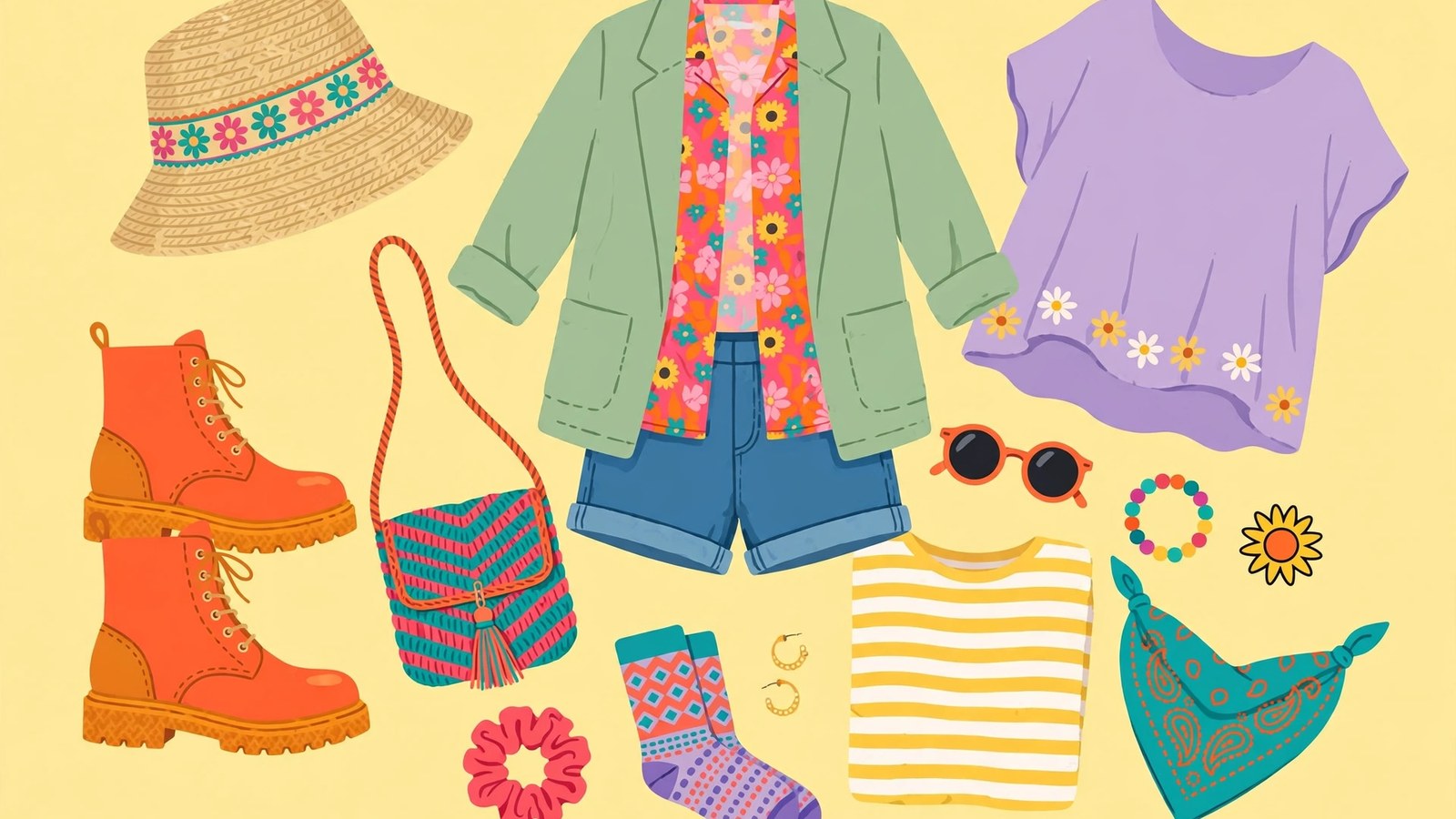
A festival weekend wardrobe can be built from a small set of versatile pieces, repeated in different combinations across days, rather than a completely new outfit for each day. That saves packing space, reduces morning decisions, and means every piece is one you already trust.
Bottoms are the foundation. Denim shorts are durable and go with many tops, but they can chafe in heat and become heavy when wet, so choose a length and fit you have worn for long days before. A skirt or lightweight pants can be cooler alternatives for dancing and sitting on grass. For cooler or rainy festivals, jeans or pants protect legs from mud and evening chill better than shorts. Choose bottoms with usable pockets if you can, to reduce reliance on a bag.
Tops should be breathable and easy to move in. A T-shirt, tank top, light blouse, or crop top can all work, provided the fit allows dancing and raising your arms without constant adjustment. Light colors are cooler in strong sun, though dark colors hide mud and grass stains better. A top that can be layered, such as a T-shirt under an open shirt, is more versatile than one that only works on its own.
Dresses and jumpsuits can be excellent because they are a complete outfit in one item and allow airflow in heat. A flowy midi dress, a shirt dress, or a jumpsuit in a breathable fabric can look festive and feel comfortable all day. Choose a length that allows sitting on grass and dancing without constant adjustment, and avoid trailing hems that get muddy or trip you in a crowd. Pockets are a practical bonus.
Layers are essential, even in summer. A light, denim, or utility jacket for the evening, plus a packable rain jacket or poncho, covers the main weather changes. A layer that can be tied around the waist or carried in a bag is more useful than a heavy coat. A flannel shirt, worn open or tied around the waist, adds warmth and comes off easily.
A spare top and spare socks, carried in a bag or left in a locker, are usually more useful than a full change of outfit. A spare top freshens a sweaty afternoon, and dry socks save damp feet. A full change matters only if the festival has water features, a beach, or camping showers.
Footwear: The Most Important Decision
Footwear can make or break a festival weekend, because you will be on your feet for many hours, walking on uneven ground, standing in crowds, and possibly dealing with mud. The rule is simple: wear shoes you have already broken in, that you can walk in for hours, and that suit the terrain.
For dry, grassy festivals, comfortable sneakers or walking shoes are reliable. They provide support, cushioning, and grip on grass, gravel, and concrete. Choose a pair that is not brand new, fits well with socks, and that you have walked in for a full day before. White sneakers get dirty quickly, so choose a color you do not mind getting muddy.
For wet or muddy festivals, waterproof boots or rain boots are essential. Rain boots suit deep mud, but they can be hot and heavy for long walking, so choose a comfortable footbed, wear thick socks, and break them in first. Ankle boots with a grippy sole are a good middle ground for wet grass and light mud. Avoid smooth soled shoes, high heels, and open sandals on muddy ground, because they slip, sink, or offer no protection.
Sandals can work for hot, dry beach or city festivals on flat ground, but they offer little protection in crowds, where feet can be stepped on, and they are poor for muddy or uneven terrain. If you wear them, choose a sturdy pair with a secure strap and grippy sole, and bring closed shoes as backup.
Socks matter as much as shoes. Moisture wicking or wool blend socks usually stay more comfortable than cotton, which soaks up sweat and rain. Bring spares: dry socks at midday can transform comfort after rain. If you are prone to blisters, use blister bandages, tape, or balm on known hot spots before you start walking. Never wear a brand new pair of shoes for the first time at a festival.
Bags, Accessories, and Sun Protection
A festival bag should be small, secure, hands free, and weather resistant. A crossbody bag, small backpack, or belt bag keeps hands free for dancing and eating, and is less likely to be lost in a crowd than a tote. Check bag size rules first, choose a secure zipper or closure, and prefer a waterproof bag or rain cover to protect a phone, wallet, and sunscreen.
Essentials include a phone and portable charger, a wallet or card, identification if required, sunscreen, a water bottle if allowed, spare socks, blister bandages, and any medication you need. Phone batteries drain quickly with photos and schedule checks, and festival charging points can be busy. Keep valuables in an inner pocket, and do not carry items you would be upset to lose or damage.
Sun protection is essential, even on cloudy days. A wide brimmed hat, cap, or bucket hat shades the face, but choose one that stays on in wind and does not block vision in a crowd. Sunglasses should be comfortable and secure, with a strap if you worry about losing them. Avoid expensive pairs you would be upset to lose or break.
For sunscreen itself, follow qualified guidance rather than habit. The American Academy of Dermatology recommends sunscreen that offers broad spectrum protection against UVA and UVB rays, SPF 30 or higher, and water resistance. It advises applying sunscreen to dry skin 15 minutes before going outdoors and, when outdoors, reapplying approximately every two hours, or after swimming or sweating, according to the directions on the bottle. Food and Drug Administration sunscreen labeling follows the same pattern, with directions to reapply at least every two hours and, for water resistant products, after the labeled 40 or 80 minutes of swimming or sweating and immediately after towel drying. No sunscreen is waterproof, so heavy sweating at a festival is a reason to reapply, not to assume the morning application still holds. Carry a small, portable size in your bag so reapplication is easy during the day. A lip balm with sun protection is also useful, because lips can burn and become chapped in sun and wind. If you have sensitive skin, consider a fragrance free sunscreen and test it before the festival, because a reaction on the first day can spoil the weekend.
A bandana can serve as a sun shield, a cover in dusty conditions, or a hair tie, and takes little space. Jewelry should be simple, secure, and not valuable: earrings that stay in while dancing and pieces that will not catch are best. Glitter, face paint, and temporary tattoos can be fun, but choose products labeled for skin use, test them first if you have sensitive skin, and avoid anything that irritates eyes or is hard to remove.
Dressing for Heat, Rain, Mud, and Cool Evenings
Heat is the primary challenge. Choose breathable fabrics such as cotton and linen blends that allow airflow. Avoid heavy fabrics, tight clothes that trap heat and chafe, and dark colors in strong sun if you overheat easily. A hat, sunglasses, regular water breaks, and shade at the hottest time of day help. If you feel dizzy, nauseous, or unwell, seek shade and water and get medical help promptly.
Rain needs a different approach from rain in a city. A packable rain jacket or poncho is more practical than an umbrella, which is hard to use in a crowd, blocks views, and may be banned. A poncho also covers your bag, though it can be hot. Waterproof boots handle mud better than sneakers. If rain is heavy, dry socks and a dry top in a locker or car can make the evening far more comfortable.
Mud affects choices beyond footwear. Pick pants or shorts that wash easily, a hem that does not drag, and a bag that wipes clean. A trailing dress or skirt becomes heavy and dirty quickly. Dark colors hide mud, light colors are cooler in heat, so balance the two by forecast.
Cool evenings are easy to forget, but they can be surprisingly cold in exposed fields or near water. A jacket, sweater, or hoodie, carried or left in a locker, is essential, and a layer that goes over your daytime outfit is more useful than a separate evening outfit. If you are camping, pack a warm layer for cold, damp tent mornings too.
Outfits for Each Day of a Festival Weekend
For day one, arrival day, comfort matters most, because you may be traveling, setting up camp, and exploring. Wear a tried and tested outfit: denim shorts or jeans, a breathable top, comfortable shoes, and an evening layer. Avoid a brand new outfit, because walking and carrying magnify any discomfort.
For day two, the main day, you can be more expressive, because you know the site and weather. A dress, jumpsuit, or more colorful outfit with the same practical shoes and bag can feel festive without sacrificing comfort. Change the top or accessories for variety in photographs, and use a spare top to refresh the outfit for late performances.
For day three, comfort matters again, because you may be tired, packing, and traveling home. Wear an outfit you already trust, with weather layers. Avoid a new, untested outfit when energy is lower. Repeating a favorite from the weekend is fine: comfort matters more than novelty.
Across days, repeating bottoms and shoes is normal and practical, because they are the bulkiest items and the ones that most affect comfort. Changing tops, accessories, and layers provides variety without requiring a completely new outfit each day. A small set of tops, two bottoms, one or two layers, and one pair of shoes, plus a backup pair if rain is likely, can cover a three day festival weekend without overpacking.
Packing Light for a Festival Weekend
Packing is a balance between preparedness and portability, especially if you are camping. Lay out the outfits you planned and remove the one item you are least likely to wear. Most people overpack, bringing extra outfits that stay unworn because the trusted outfit is more comfortable.
Roll clothes to save space, organize outfits by day in packing cubes or small bags, and keep sunscreen, a charger, and medication in an accessible pocket. If you are camping, pack nighttime layers separately so you are not searching in a dark tent. If you travel home nightly, pack the next day’s fresh top and socks the night before.
Check rules for prohibited items and bag sizes. An oversized bag may be refused at the gate, and glass bottles and large umbrellas may be banned. If lockers are available, use one for a jacket or spare shoes so you do not carry everything all day.
On arrival, learn the layout: stages, shade, water, restrooms, medical help, and layer storage. Keep your phone charged, share your location with friends, and agree on a meeting point, because signal at large festivals can be unreliable.
Safety, Comfort, and Looking After Yourself
Outfits should support safety as well as style. Wear shoes that protect your feet in crowds, avoid trailing clothes that can trip you or others, and avoid accessories that can catch, such as long scarves or dangling jewelry. Make sure a hat does not block vision. Keep glitter and face paint out of your eyes, and remove them thoroughly at night.
Drink water regularly, not just when thirsty, and carry a bottle if allowed. Eat regularly, because long days, dancing, and heat increase energy needs. Seek shade at the hottest hours, take breaks, and listen to your body. If you feel unwell, dizzy, or overheated, seek shade and water and get medical help. Medical tents are there for this, and using them early beats pushing through.
At night, remove makeup, glitter, and sunscreen with a gentle cleanser, moisturize if needed, and let skin rest. Air out clothes if camping, and sleep in dry clothes, because damp, sweaty clothes can leave you cold. These small habits make the next day far more enjoyable.
Respect other attendees. Avoid outfits that use cultural symbols in a way that could offend, and be mindful of space: a large hat, wide bag, or trailing outfit can block views. Festival style is best when it is expressive, comfortable, and considerate.
Common Mistakes to Avoid
The most common mistake is wearing new shoes to a festival. New shoes, however stylish, are a reliable source of blisters on a long, active day. Break in shoes well before the festival, and bring blister protection. A second mistake is forgetting an evening layer because the day was hot. Evenings at festivals can be cool, and a jacket carried in a bag or left in a locker is essential.
A third mistake is an outfit that photographs well but is impractical: a skirt that needs constant adjustment, a top that slips, a bag that digs, or a shoe that cannot handle grass. Test outfits at home by walking, sitting, and dancing in them for an hour. A fourth mistake is overpacking outfits that are never worn. A small, versatile wardrobe beats a large, untested one.
A fifth mistake is neglecting sun and rain protection and assuming the weather will stay as it was in the morning. Sunscreen, a hat, and a packable rain layer take little space and can save a day. Finally, many people forget to plan for mud, wearing light shoes and long hems that become dirty and heavy. Check the terrain, choose appropriate footwear, and accept that festival clothes will get dirty. Choose clothes you do not mind washing or that can handle mud.
Frequently Asked Questions
What should I wear to a summer music festival?
Comfortable, breathable clothes you have worn before, with practical shoes you can walk in for hours, a hands free and secure bag, sun protection, and a layer for the evening and for rain. Choose outfits that allow dancing, sitting on grass, and walking on uneven ground without constant adjustment.
What shoes are best for a festival?
Broken in sneakers or walking shoes for dry festivals, and waterproof boots or rain boots for wet or muddy festivals. Avoid new shoes, high heels, and delicate sandals on uneven or muddy ground, and bring spare socks and blister protection.
How do I dress for a festival in rain?
Wear a packable rain jacket or poncho with a hood, waterproof boots, and clothes that dry relatively quickly and can be washed easily. Avoid umbrellas in crowds, carry a dry top and socks if you can, and choose a hem that does not drag in mud.
What should I pack for a three day festival?
Two bottoms, several tops, one or two layers including a rain layer, one pair of trusted shoes plus a backup if rain is likely, a small secure bag, sunscreen, a hat, sunglasses, a portable charger, spare socks, and blister bandages. Repeat bottoms and shoes across days, changing tops and accessories for variety.
Can I wear a dress to a festival?
Yes. A flowy midi dress or a shirt dress in a breathable fabric, with comfortable shoes, can be an excellent festival outfit, provided the length allows sitting, walking, and dancing without constant adjustment and the hem does not drag in mud. A dress with pockets is a practical bonus.
How do I stay cool at a summer festival?
Wear breathable, loose fabrics and light colors, wear a hat and sunglasses, drink water regularly, seek shade during the hottest hours, and take breaks from dancing and standing. Reapply sunscreen about every two hours outdoors, or sooner after sweating, following the bottle directions. If you feel dizzy or unwell in heat, seek shade and water and get medical help promptly.
Keep reading: How to Remove Waterproof Mascara Without Rubbing
Sources & references
- American Academy of Dermatology, Sunscreen FAQs. Used for the recommendation that sunscreen offer broad spectrum protection, SPF 30 or higher, and water resistance, for applying sunscreen to dry skin 15 minutes before going outdoors, and for reapplying approximately every two hours when outdoors, or after swimming or sweating, according to the directions on the bottle.
- Food and Drug Administration, sunscreen labeling as summarized in FDA regulated product directions. Used for directions to reapply at least every two hours, to reapply water resistant sunscreen after 40 or 80 minutes of swimming or sweating as labeled, and immediately after towel drying, and for the point that water resistant does not mean waterproof.


