Short answer
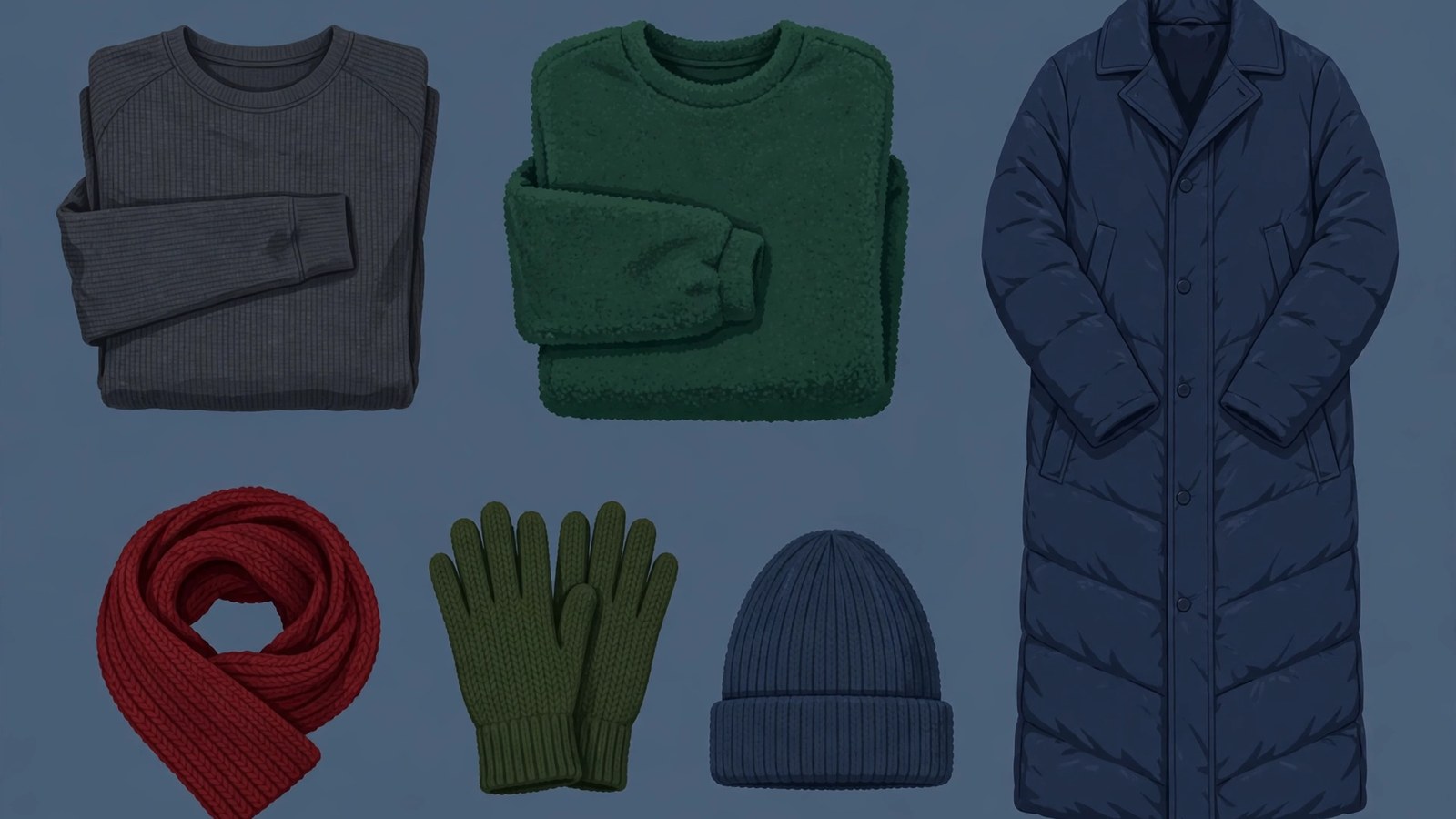
- Dress in three loose fitting layers. Start with a base layer of wool, silk, or a synthetic fabric that moves sweat away from your skin, and avoid cotton next to your skin because cotton loses its insulation value when it becomes wet. Add a middle layer of wool, fleece, or a synthetic insulation to trap warm air, adding a second middle layer on very cold or inactive days. Finish with an outer layer that blocks wind and resists rain and snow, and that still fits comfortably over everything beneath it. Cover the parts frostbite hits first, your nose, ears, cheeks, chin, fingers, and toes, with a hat, a scarf or knit mask, mittens or gloves, warm socks, and water resistant, insulated boots. Check the wind chill, not just the air temperature, vent or remove a layer before you sweat, and add layers back before you feel cold. If skin turns white or grayish yellow, feels firm or waxy, or goes numb, or if someone shows shivering, confusion, slurred speech, or drowsiness in the cold, treat it as a warning sign, get into warmth, and seek medical attention.
Introduction
On a genuinely cold winter day, one heavy coat is rarely the whole answer. A single thick layer can trap sweat while you move, leave you chilled when you stop, and give you no way to adjust when the wind rises, snow starts, or you step from a freezing sidewalk into a heated store. Layering works better because each layer has one job, and you can add, open, or remove a layer as conditions change through the day.
This guide is for everyday winter cold: commuting, school runs, walking the dog, weekend errands, waiting for a bus, and time outdoors when temperatures stay low and the wind makes it feel colder still. It is firmly a winter guide, for sustained cold, wind, and snow, not a guide to mild fall days that swing warm by afternoon. It is also not a guide to mountaineering or to working outdoors in severe cold for long shifts, where specialist clothing, employer safety rules, and dedicated training apply. The system here uses pieces most people already own or can reasonably add, arranged in a repeatable order: a base layer that keeps skin dry, a middle layer that traps warmth, and an outer layer that blocks wind and wet weather, finished with real protection for your head, hands, legs, and feet.
Why Winter Cold Needs a System, Not Just a Bigger Coat
Winter cold is not one condition. A calm, dry morning at 25 degrees Fahrenheit is a different problem from the same temperature with strong wind, falling snow, or a long wait standing still. The National Weather Service explains that wind chill describes what the air temperature feels like to human skin when cold and wind combine: as wind speed rises, it carries heat away from the body faster, so exposed skin cools faster even though the thermometer has not changed. That is why a coat that felt fine on a sheltered block can feel inadequate on an open, windy corner.
A single heavy coat also gives you only two states, on or off. With it on, brisk walking or carrying bags can make you sweat. With it off, you lose almost all of your insulation at once. The Centers for Disease Control and Prevention notes that in cold temperatures the body begins to lose heat faster than it can produce it, which can lead to serious health problems. A layered system answers both problems: it spreads insulation across pieces you can adjust in small steps, and it keeps a dry layer against your skin, which matters because wet clothing speeds heat loss. The goal in plain terms is to stay warm, stay dry, and stay able to adjust.
The Three Layers in Plain Terms
The Occupational Safety and Health Administration, in its cold stress guidance, recommends at least three layers of loose fitting clothing for cold environments, because layering provides better insulation. The National Weather Service gives the same picture: wear several layers of loose fitting, lightweight, warm clothing, because trapped air between the layers will insulate you. Loose matters as much as the count. Tight clothing reduces blood circulation, and warm blood needs to reach your hands and feet.
Each layer has a distinct job:
| Layer | Its one job | Typical pieces |
|---|---|---|
| Base | Keep skin dry by moving sweat away | Long sleeve top and bottoms in wool, silk, or synthetic fabric |
| Middle | Trap warm air and insulate | Fleece, wool sweater, or insulated jacket |
| Outer | Block wind and keep out rain and snow | Windproof or water resistant coat, ideally with a hood |
The key point is that trapped, still air does much of the insulating. Several well chosen layers trap air between them and let you regulate your temperature. One bulky garment, worn over a cotton shirt, does neither job as well.
Base Layers: Dry Skin Comes First
The base layer sits next to your skin and manages moisture. You sweat when you move, even in cold weather, and sweat that stays on your skin cools you quickly when you stop. OSHA describes the inner layer for cold work as wool, silk, or synthetic fabric, worn to keep moisture away from the body. Choose a base layer that fits close without being tight, and that stays tucked in when you bend.
Fabric choice matters most here. OSHA states that cotton loses its insulation value when it becomes wet, while wool, silk, and most synthetics retain their insulation even when wet. That is why cotton is a poor base layer on a cold day, however comfortable it feels indoors: it absorbs sweat, holds it against your skin, and cools you as it slowly dries.
Between the better options, match the fabric to your day. Wool, including merino wool, is a practical everyday choice for commuting and errands, and it retains insulation when damp. Synthetic fabrics such as polyester are widely used for active days, because a close fitting synthetic top is built to move sweat outward and dry. Silk is a thinner option some people prefer under work clothes. What matters is the function: move moisture, do not store it.
Weight matters too. A lightweight base suits an active day, when you generate your own heat. A midweight base suits general winter cold. A heavyweight base is for very cold days with little movement, such as watching an outdoor game. If a base layer feels clammy after a short walk, it is either holding moisture instead of moving it, or it is too warm for your activity level. On colder days, add base layer bottoms under your trousers, because legs are part of the system, not an afterthought.
Middle Layers: Where Most of the Warmth Lives
The middle layer traps warm air close to your body, and this is where most of your warmth comes from. OSHA describes the middle layer for cold conditions as wool, fleece, or synthetic fabric that provides insulation even when wet. Fleece is a reliable everyday choice: warm, breathable, and easy to wash. A wool sweater insulates well and can look neat enough for work, though it may be heavier and slower to dry than fleece. A lightweight insulated jacket, filled with down or synthetic insulation, adds a lot of warmth for its weight and packs down small, which makes it useful as an extra middle layer or as a spare layer in a bag.
On a very cold day, or a day when you will stand still outdoors, wear two middle layers: a fleece or wool sweater plus a light insulated jacket, under a roomy outer coat. Two thinner middle layers give a finer adjustment than one thick one. You can remove the insulated jacket indoors and keep the fleece, rather than choosing between overheating and being cold.
Fit decides whether doubling up works. You should be able to raise your arms, bend, sit, and climb stairs without layers binding or riding up. Insulation needs loft, meaning the air held inside and between fabrics. A coat forced tight over thick layers compresses that air out and can leave you colder, not warmer. If two middle layers fight each other, one warmer middle layer in the right size will serve you better. Test the full system at home before a cold day: zip everything and move around for a minute. If you cannot move freely, change a piece.
Outer Layers: Blocking Wind and Wet Weather
The outer layer is your weather shield, and in winter it has to handle wind first. Wind strips away the warm air your middle layer has trapped, which is why the wind chill effect is so noticeable on exposed, open ground. OSHA describes the outer layer as wind and rain protection that still allows some ventilation, so you do not overheat inside it. The CDC likewise advises a water resistant coat as part of dressing for extreme cold.
On a dry, bitter, windy day, a windproof coat may be enough. On a wet or snowy day, you need water resistance or full waterproofing, plus a hood that stays up in wind. A longer coat that covers your hips keeps more warmth in when you are standing still or walking slowly. A shorter jacket can suit driving and active movement better, because it does not bunch when you sit. Match the coat to how you will actually spend the day.
Check the details that decide real world performance. Look for a collar that closes high around the neck, cuffs that seal at the wrist, and a hem you can draw in, because wind enters at openings. Check that pockets are reachable while you wear gloves, and confirm the coat closes comfortably over your full middle layer combination, not just over a thin shirt. If your main coat is warm but not waterproof, a compact rain shell worn over it on wet days is a practical addition, and it adds wind protection at the same time.
Head, Hands, Legs, and Feet: The Parts People Forget
Cold injuries tend to start at the edges of the body. The CDC advises covering the body parts most often affected by frostbite in warm, dry clothing: nose, ears, toes, cheeks, chin, and fingers. Its cold weather guidance lists the full finishing set: a scarf or knit mask that covers the face and mouth, a hat, mittens or gloves, a water resistant coat, water resistant boots, and several layers of loose fitting clothing. OSHA adds a simple reason to take the hat seriously: wearing a hat or hood helps keep your whole body warmer, because hats reduce the amount of body heat that escapes from your head.
For hands, mittens and gloves involve a trade. Mittens are generally warmer because fingers rest together and share warmth, while gloves suit tasks that need dexterity, such as handling keys or a phone. A thin liner glove inside a mitten gives you both options. A spare pair in your bag is worthwhile, because a wet glove loses its value fast.
Legs need layers too. Thermal leggings or base layer bottoms under trousers make a real difference, especially if you will stand still outdoors. Fleece lined trousers are a simpler one piece option. Keep the fit loose enough for circulation: warmth depends on blood flow as well as insulation.
Feet deserve the same planning. Choose wool or wool blend socks rather than thin cotton socks, wear insulated, waterproof boots on snow, slush, and ice, and make sure the boots fit over your chosen socks without squeezing, because tight boots can restrict circulation and make feet colder. Boots also need grip: a warm boot that slides on ice has failed at its second job. If your feet get wet, change into dry socks when you can. Staying dry is a safety point, not just a comfort point: the National Weather Service advises staying dry because wet clothing results in much faster heat loss, and it recommends waterproof, insulated boots.
Read the Wind Chill, Not Just the Temperature
Before you dress, check two numbers: the air temperature and the wind chill. The National Weather Service wind chill guidance gives a clear example of how large the gap can be. At an air temperature of 0 degrees Fahrenheit with a wind speed of 15 miles per hour, the wind chill temperature is minus 19 degrees Fahrenheit, and under those conditions exposed skin can freeze in 30 minutes. A separate National Weather Service page warns that wind chill values near minus 25 degrees Fahrenheit mean frostbite is possible within 15 minutes.
| What you check | What it tells you | How to respond |
|---|---|---|
| Air temperature alone | How cold the still air is | A starting point only |
| Wind chill | How cold it feels on exposed skin, given the wind | Cover skin, shorten time outside, add wind protection |
| Precipitation | Whether layers will get wet | Choose water resistant outer layers and spare dry socks or gloves |
| Your activity | Whether you will generate heat or cool down standing still | Dress lighter for brisk movement, warmer for waiting |
Use the wind chill to decide how much skin stays covered and how long you stay out, not to win an argument about how cold it really is. On days when the wind chill is very low, the safest choices are simple ones: cover ears, cheeks, and chin, choose mittens, limit long stretches outdoors, and plan warm indoor breaks. Dressing well extends what you can do in winter. It does not remove the limits that extreme cold sets.
Adjusting Through the Day: Vent Before You Sweat
The most common layering mistake is dressing for the coldest moment of the day and then overheating for the rest of it. Dress for your activity, not only for the temperature. If you will walk briskly, start out feeling slightly cool, because your body will warm up within minutes. If you will stand still, at a bus stop, on a sideline, or in a slow line outdoors, dress warmer than feels necessary at your front door, because inactivity cools you fast.
The working rule is to vent before you sweat. When you start to feel warm, open a zip, loosen a collar, remove your gloves, or take off the insulated middle layer. Add layers back before you feel cold, not after. Sweat that soaks into your clothing is hard to recover from outdoors, because damp fabric keeps cooling you once you slow down. Prevention is easier than correction.
Plan for the shape of your day. A commute may combine a cold walk, a heated train, and another cold walk, so choose layers you can open quickly and put back on without a struggle. Keep a spare layer in your bag on changeable days: a packable insulated jacket or an extra fleece weighs little and can turn a miserable late afternoon into a comfortable one. OSHA gives workers in the cold the same advice: keep extra clothing, including socks, gloves, and a hat, handy in case what you are wearing gets wet.
Three Cold Day Outfits That Use the Same System
For a cold commuting day, try a wool or synthetic base top, a wool sweater, and a long insulated or wool coat, with base layer bottoms under trousers, wool blend socks, waterproof boots, gloves, a hat, and a scarf. The coat can look professional, while the layers underneath do most of the warming. Indoors, you can shed the coat and still feel properly dressed.
For a cold weekend outdoors, swap the sweater for a fleece plus a light insulated jacket, choose a waterproof outer layer with a hood, and add mittens, a liner glove, and a neck gaiter or scarf that covers your cheeks. This combination favors adjustment, because outdoor activity alternates between moving and standing around.
For a cold day of errands with children, prioritize layers that go on and off easily, boots with real grip, and pockets that can hold small gloves and hats, because you will adjust layers often. In every case the system is identical. Only the pieces change to match the day.
Know the Warning Signs: Frostbite and Hypothermia
Layering is comfort advice up to a point, and safety advice beyond it. Two conditions matter most, and both are described consistently by the CDC, OSHA, and the National Weather Service.
Frostbite is an injury caused by freezing of the skin and underlying tissues. The CDC says it leads to a loss of feeling and color in the areas it affects, usually the nose, ears, cheeks, chin, fingers, and toes, and that it can permanently damage the body. Its warning signs are specific: redness or pain in any skin area may be the first sign, and other signs include a white or grayish yellow skin area, skin that feels unusually firm or waxy, and numbness. A person with frostbite may not notice it, because frozen tissue is numb, so on very cold days it is worth checking on each other, especially children and older companions.
Hypothermia is a dangerously low body temperature. OSHA defines it as occurring when body heat is lost faster than it can be replaced and normal body temperature drops to less than 95 degrees Fahrenheit. The CDC gives the adult warning signs: shivering, exhaustion, confusion, fumbling hands, memory loss, slurred speech, and drowsiness. For infants, the signs are bright red, cold skin and very low energy. Do not assume hypothermia needs extreme cold. The CDC notes it can occur above 40 degrees Fahrenheit if a person is wet from rain, sweat, or cold water and becomes chilled, and the National Weather Service notes that hypothermia deaths can occur with temperatures between 30 and 50 degrees Fahrenheit, with wet clothing making it more likely. The CDC names who is at higher risk: older adults without proper food, clothing, or heating, people who stay outdoors for long periods, people who drink alcohol in excess or use illicit drugs, and babies sleeping in cold rooms.
If you suspect either condition, act rather than wait. The CDC advises seeking medical attention as soon as possible, getting the person into a warm room or shelter, removing any wet clothing, and warming them under dry layers of blankets and clothing. For frostbite, it advises placing affected areas in warm to touch water, and warns: do not rub or massage frostbitten areas, and do not use a fireplace, heat lamp, radiator, stove, heating pad, or electric blanket, because numb skin can be harmed without the person feeling it. If a person’s temperature is below 95 degrees Fahrenheit, get medical attention immediately. This article can help you recognize the signs. It is not a substitute for medical care.
Care, Storage, and the Mistakes That Undo Good Layers
Layering fails most often in predictable ways. Wearing cotton as a base layer, and then wondering why you feel cold after a walk, is the classic one. Wearing a coat so tight over your layers that it compresses the insulation is another. Buying a coat that fits only over a thin shirt, and discovering in January that it will not close over a sweater, is a third. Dressing children or yourself for the car seat or the store, rather than for the walk between them, is a fourth.
Care keeps the system working. Wash wool and technical fabrics according to their labels, because the wrong detergent or high heat can reduce how well a fabric moves moisture or insulates. Dry insulated jackets thoroughly so the fill does not clump. Store winter layers clean and dry at the end of the season, because damp storage can damage fabrics. Check zips, cuffs, boot soles, and glove seams before winter, while repairs are still a choice rather than an emergency. The real value of a cared for system is readiness: on the coldest morning of the year, everything you need is clean and dry.
Frequently Asked Questions
Do I really need three layers on every cold day?
Not always, and the system is a framework, not a rule. OSHA recommends at least three layers of loose fitting clothing for work in cold environments, and that full system is the right default for genuinely cold winter days. On a milder winter day, a base layer under a warm coat may be enough. Use the temperature, the wind chill, and your activity to decide, and add or remove layers as conditions change.
Why is cotton such a problem in winter?
Because of what happens when it gets wet. OSHA states that cotton loses its insulation value when it becomes wet, while wool, silk, and most synthetics retain their insulation even when wet. A cotton base layer absorbs sweat, stays damp against your skin, and cools you as it dries, especially when you stop moving. Save cotton for indoors, and build your winter base layer from wool, silk, or a synthetic fabric instead.
What is the warmest single change I can make?
If you already own a decent coat, adding a proper moisture managing base layer usually makes the biggest difference, because keeping your skin dry improves how every layer above it performs. The close second is covering what is exposed: on a windy day, a hat, a scarf or gaiter, mittens, warm socks, and insulated boots will change how the whole outfit feels, and the CDC lists those items as the way to dress for extreme cold.
Are mittens really warmer than gloves?
Generally, yes, for a simple physical reason: in a mitten, your fingers rest together and share warmth, while in a glove each finger is separated and loses heat on its own. Gloves are still the better tool when you need dexterity. Many people solve the trade with a thin liner glove inside a mitten, so a hand stays covered during the brief moments when the mitten comes off.
How cold is too cold to rely on clothing alone?
There is no single temperature, because wind and wetness change the answer. Use the wind chill as your guide: the National Weather Service notes that at a wind chill near minus 25 degrees Fahrenheit, frostbite is possible within 15 minutes on exposed skin. At that level, the right response is not a thicker sweater. It is covering all skin, shortening your time outside, taking warm breaks indoors, and staying indoors when you can, which is what the CDC advises when weather is extremely cold. If you must work outdoors in severe cold, follow your employer’s cold safety rules as well as this general guide.
What should I do if my layers get wet during the day?
Change out of them as soon as you reasonably can. Wet clothing results in much faster heat loss, in the National Weather Services words, and both the CDC and OSHA build wet clothing into their cold safety advice: remove wet clothing, replace it with dry layers, and warm up under dry blankets or clothing if someone is already chilled. This is why a spare set of socks and gloves, and ideally a spare base top, earns its space in a bag or car on a long winter day.
Sources & references
- Centers for Disease Control and Prevention, Preventing Hypothermia. Used for the body losing heat faster than it can produce it in cold temperatures, the dressing list for extreme cold (scarf or knit mask, hat, mittens or gloves, water resistant coat, water resistant boots, several layers of loose fitting clothing), covering the nose, ears, toes, cheeks, chin, and fingers, the groups at higher risk, the frostbite signs, the hypothermia signs in adults and infants, hypothermia occurring above 40 degrees Fahrenheit when a person is wet and chilled, getting medical attention immediately if a person's temperature is below 95 degrees, and the treatment steps and frostbite cautions.
- Centers for Disease Control and Prevention, Preventing Frostbite. Used for frostbite as an injury caused by freezing that leads to loss of feeling and color, the body parts it usually affects, its power to permanently damage the body, poor circulation and being improperly dressed as risk factors, the signs of a white or grayish yellow skin area, skin that feels unusually firm or waxy, and numbness, a person being unaware of frostbite because frozen parts are numb, and the advice to put affected areas in warm, not hot, water and not to rub, massage, or apply direct heat from a pad, lamp, stove, fireplace, or radiator.
- National Weather Service, Wind Chill Safety (Boulder forecast office). Used for wind chill taking into account heat loss from the human body in cold and windy weather, wind chill values near minus 25 degrees Fahrenheit meaning frostbite is possible within 15 minutes, frostbite first affecting fingers, toes, nose, and ears, hypothermia warning signs, hypothermia deaths occurring with temperatures between 30 and 50 degrees Fahrenheit and becoming more likely with wet clothing, staying dry because wet clothing results in much faster heat loss, wearing waterproof insulated boots, and trapped air between loose fitting clothing helping to insulate.
- National Weather Service, Wind Chill (Amarillo forecast office). Used for wind chill describing what air temperature feels like to human skin when cold temperatures and wind on exposed skin combine, wind carrying body heat away faster as wind speed increases, and the worked example that an air temperature of 0 degrees Fahrenheit with a wind speed of 15 miles per hour produces a wind chill of minus 19 degrees Fahrenheit, under which exposed skin can freeze in 30 minutes.
- Occupational Safety and Health Administration, Cold Stress Guide. Used for dressing properly and fabric behavior (cotton loses its insulation value when wet, while wool, silk, and most synthetics retain insulation even when wet), wearing at least three layers of loose fitting clothing, the inner layer of wool, silk, or synthetic to keep moisture away from the body, the middle layer of wool, fleece, or synthetic to provide insulation even when wet, the outer wind and rain protection layer that allows some ventilation, tight clothing reducing blood circulation to the extremities, hats reducing body heat escaping from the head, keeping extra clothing handy in case you get wet, hypothermia occurring when body temperature drops to less than 95 degrees Fahrenheit and being possible above 40 degrees Fahrenheit when a person is chilled from rain, sweat, or cold water, and frostbite affecting the extremities, particularly the feet and hands.


