Short answer
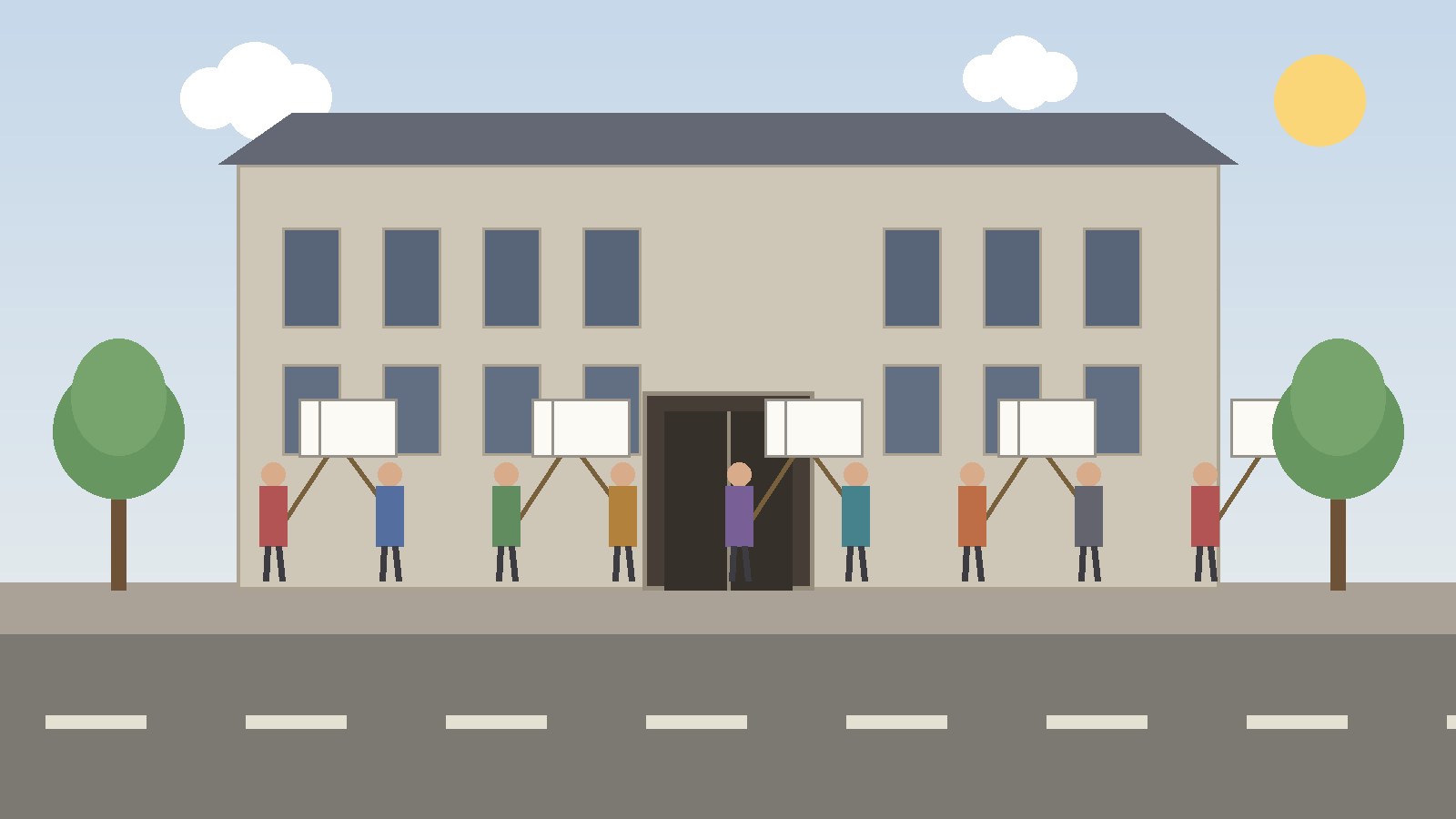
- A strike is a temporary stoppage of work by a group of employees who act together to express a grievance, enforce a demand, or protest the terms, conditions, or provisions of a contract. That definition, in substance, is the one used by the US Bureau of Labor Statistics for its work stoppage statistics. In everyday language, workers are said to go on strike when they withhold their labor as a group, usually after talks with an employer have stalled or broken down. A strike is a form of collective action. It is not the same as one employee calling in sick, quitting, or refusing a single task on their own. It is also not the same as a lockout, in which management temporarily denies employment to workers during a labor dispute. This article explains the labor relations meaning of a strike, because that is the meaning most readers are looking for. A brief note near the start covers other uses of the word.
What a Strike Is
At its core, a strike is organized and collective. A group of employees stops work together, for a shared purpose, and for a limited period. The stoppage may last a day, several days, several weeks, or longer. It may involve workers at one workplace, workers across several sites owned by the same employer, or workers in a wider industry. The common thread is that the employees are acting together, not simply making individual decisions at the same time.
The Bureau of Labor Statistics defines a strike as a temporary stoppage of work by a group of employees to express a grievance, enforce a demand, or protest the terms, conditions, or provisions of a contract. That wording points to three elements readers can check in any news report. First, the stoppage is temporary, which means the workers are not resigning their jobs as a group. Second, it is done by a group, which means coordination and a shared aim matter. Third, it has a stated purpose, such as higher pay, safer staffing, shorter hours, or a protest against an action the workers say the employer took unlawfully.
A strike is also a pressure tactic. By withholding labor, workers reduce or stop production, service, or sales at the affected workplace, creating practical and financial pressure on the employer to return to talks, change a proposal, or settle. At the same time, striking workers usually give up pay for time not worked and accept uncertainty about when and how the dispute will end, which is why both sides often describe strikes as a serious step.
It helps to distinguish a strike from nearby forms of action. A slowdown, in which workers deliberately work at a reduced pace, is not the same as a full stoppage. A protest outside working hours, a petition, or a public statement may support a dispute, but none of those actions, on its own, is a strike. The Bureau of Labor Statistics notes that production slowdowns and worker protests generally do not meet its criteria for inclusion as a work stoppage. A strike, by contrast, is defined by the act of stopping work together.
Other Meanings of the Word Strike
The word strike has several meanings outside labor relations, and a short note here prevents confusion. In baseball, a strike is a pitch that counts against the batter under the rules of the game. In bowling, a strike means knocking down all the pins with the first ball. In military language, an air strike is an attack from the air. The word can also mean to hit something, to discover a valuable resource such as oil, or to make an impression, as in a remark that strikes a chord. None of those meanings is the subject of this article. When this article uses the word strike without qualification, it means a labor strike.
Why Workers Strike
Workers strike for reasons that usually fall into a small number of groups, even though the details differ from dispute to dispute. The most common reason is economic. Workers may seek higher wages, better benefits, shorter hours, safer working conditions, or protection against cuts to pay, pensions, or health coverage. In these cases, the strike is used to strengthen the workers’ position in bargaining over the terms of employment.
A second reason is protest against conduct the workers or their union say breaks the law. For example, a union may claim that an employer refused to bargain in good faith, retaliated against employees for union activity, or interfered with organizing. Strikes called for this reason are treated differently under US labor law from economic strikes, as explained below, because the employer’s alleged unlawful conduct is central to the dispute.
A third reason is a grievance about how an existing agreement is being applied. Workers may believe that management has changed a work rule, a schedule, or a staffing practice in a way that conflicts with the contract. Whether a strike is the lawful response in that situation depends on the contract and the law that applies, and a contract may contain a no strike provision that limits action during its term. Readers should therefore not assume that every grievance leads to a strike, or that every strike is lawful in every circumstance.
Finally, workers may strike in support of other workers. This is often called a sympathy strike. In that case, the striking workers are not pressing a demand against their own employer alone. They are refusing to cross another group’s picket line, or otherwise supporting a separate dispute. The rules for sympathy action are narrower and more fact specific than the rules for a strike over a group’s own dispute, so news reports about sympathy strikes should be read with care. In practice, more than one reason may be present at once, and labor agencies often look closely at the stated object of a strike and the facts behind it, rather than relying on a label alone.
Who May Strike
In the United States, the right to strike is not unlimited, and it does not apply in the same way to every worker. The main federal law in this area is the National Labor Relations Act, usually shortened to NLRA. The National Labor Relations Board, the federal agency that enforces that law, explains that Section 7 of the Act protects concerted activity for collective bargaining or other mutual aid or protection, and that strikes are included among the protected concerted activities. Section 13 of the Act also states that nothing in the Act should be read to interfere with, impede, or diminish the right to strike, except as specifically provided in the Act. The same Board guidance stresses that the law places limitations and qualifications on that right.
The NLRA covers most employees in the private sector. The Board’s frequently asked questions page states that the law does not cover government employees, agricultural laborers, independent contractors, and supervisors, with limited exceptions for supervisors, and does not apply to federal, state, or local governments, to employers who employ only agricultural workers, or to employers subject to the Railway Labor Act, such as interstate railroads and airlines. Workers in excluded groups may be covered by other or state laws, or may have no comparable protection for striking, depending on sector, state, and job, so an article cannot settle any individual worker’s position.
Union membership is not always required for NLRA protection. The Board notes that employees at union and nonunion workplaces have the right to help each other by sharing information, signing petitions, and seeking to improve wages and working conditions in a variety of ways. That means a group of nonunion employees who act together over working conditions may, in some cases, be engaged in protected concerted activity. It does not mean that every individual refusal to work is protected, or that every group action is lawful regardless of its purpose, timing, or conduct.
Public sector workers deserve a separate note. Because the NLRA does not cover government employees, the right of teachers, municipal workers, and other public employees to strike is governed mainly by state law, and state rules differ widely. Some states permit public sector strikes in defined circumstances, while others restrict or prohibit them. Anyone reading about a public sector strike should therefore look for the state law that applies, rather than assuming the NLRA rules described in this article apply directly.
Types of Strikes
Labor law and everyday language use several labels for strikes. The labels matter because they can affect the legal consequences, especially reinstatement rights. The two main classes recognized by the National Labor Relations Board for strikes with a lawful object are economic strikes and unfair labor practice strikes.
An economic strike seeks an economic concession, such as higher wages, shorter hours, or better working conditions. Economic strikers retain employee status and cannot be discharged for striking, but they can be replaced. If bona fide permanent replacements fill their jobs when strikers apply unconditionally to return, strikers are not entitled to reinstatement at that time, although they may be entitled to recall to jobs for which they are qualified when openings occur, if they have not obtained regular and substantially equivalent employment and have made an unconditional reinstatement request. That distinction is often misunderstood in news coverage.
An unfair labor practice strike is called to protest an unfair labor practice committed by the employer. Unfair labor practice strikers can be neither discharged nor permanently replaced. When the strike ends, they are entitled to have their jobs back, absent serious misconduct on their part, even if employees hired to do their work have to be discharged. If the Board finds that strikers who made an unconditional request for reinstatement were unlawfully denied reinstatement, it may award backpay from the time they should have been reinstated. The stronger reinstatement rights in this category reflect the Board’s view that the strike was caused by the employer’s unlawful conduct.
Other terms appear often in reporting. A sympathy strike supports another group’s dispute. A wildcat strike takes place without authorization from the representing union, or without following its agreed procedures. A general strike is a large scale stoppage across many workplaces or industries, usually for a broad demand rather than a single contract dispute. A sitdown strike, in which employees remain inside the workplace and refuse to work, is not protected under the NLRA, according to the Board, because it deprives the owner of property. Treat these labels as starting points, not legal conclusions: lawfulness and rights depend on object, timing, and conduct, often decided by the Board on the facts.
A strike may also be unlawful because of purpose, timing, or misconduct. Examples from the Board include a strike in support of a union unfair labor practice, a strike that would force an employer to commit an unfair labor practice, and a strike that violates a no strike provision. A strike at the end of a contract period may be unlawful if Section 8(d) notice and bargaining conditions were not met, unless the strike was caused by an employer unfair labor practice. Serious misconduct, such as violence, threats, or blocking entry to a struck plant, may cost strikers reinstatement rights. The right to strike in US law is real, but it is qualified.
How a Strike Is Authorized
Authorization procedures vary by union, by contract, and by country, so there is no single universal process. In a unionized workplace in the United States, the usual pattern has several steps, and readers will recognize most of them from news reports.
First, bargaining reaches a point where negotiators believe further talks without added pressure are unlikely to produce a settlement. Union leadership may then seek members’ authority to call a strike, often, but not always, through a strike vote held in person, by ballot, or by another method in the union’s constitution or bylaws. The approval threshold varies: some unions require a simple majority, others a larger share. Authorization does not always mean a strike begins at once; it may give negotiators a mandate to use the threat of a strike, and a settlement may still avoid one.
Second, the union usually gives notice to the employer, and in some cases to a government agency, that a strike may occur. Notice requirements can come from the contract, from statute, or from both. The Board’s guidance on strikes at the end of a contract period refers to conditions that must be met when a party wants to terminate or change an existing contract. Failure to meet those conditions can affect the lawfulness of a strike.
Third, if talks fail and the authorized strike is called, the union sets a start date and communicates practical details to members. Those details may include picketing schedules, strike pay arrangements where a union fund exists, and guidance on conduct at the picket line. The level of detail varies widely, and smaller or nonunion actions may follow a much simpler process. In a nonunion workplace, authorization may consist of a group decision by the employees involved, without a formal ballot. Readers should be cautious about headlines that say workers “voted to strike” when the vote was only to authorize a strike. Authorization and action are related, but they are not identical.
Picketing and Replacements
Picketing and replacement hiring often cause confusion, because both sides describe them in very different terms. A neutral description helps.
Picketing is the practice of workers standing outside a workplace, often carrying signs, to publicize a dispute and to ask others not to cross the picket line. The Board notes that the right to picket, like the right to strike, is subject to limitations and qualifications, and that picketing can be prohibited because of its object, its timing, or misconduct on the picket line. Picketing is therefore not an unlimited right. Peaceful picketing that communicates information about a dispute is treated differently from picketing that blocks access, threatens people, or pursues an unlawful object.
Replacement workers are people hired by an employer to do the work of striking employees during a strike. The rules for replacements depend on the type of strike. As noted above, economic strikers can be permanently replaced, while unfair labor practice strikers cannot be permanently replaced. An employer may also hire temporary replacements in some circumstances. The permanent versus temporary distinction matters greatly for reinstatement. Employers often describe replacement hiring as keeping a business operating during a dispute. Unions often describe it as weakening the strike and reducing pressure for a settlement. Both descriptions reflect the interests of the side making them. The legal position, as set out by the Board, turns on the category of the strike and on whether a bona fide permanent replacement is in place when strikers seek to return.
Not every employee at a struck workplace is on strike: some may choose not to strike, some may be in a different bargaining unit, and some may be managers or supervisors outside the unit. Check which groups are actually participating before accepting a “shut down” description.
How Strikes End
Strikes end in several ways, and the ending does not always mean that one side has won outright. The most common ending is a settlement. The union and the employer reach a tentative agreement on a new contract or on the disputed issue, and the union’s members vote on whether to ratify it. If members approve the agreement, workers return to work under its terms. If members reject it, talks may resume, or the strike may continue. The Bureau of Labor Statistics notes that the ending date of a work stoppage is based on initial or tentative agreement by both parties, and that the ending date may not be the same as the contract ratification date or the date workers return to work.
A second ending is an unconditional return to work. Strikers, or their bargaining representative, may offer to return to work without conditions, even if no new agreement has been reached. In that case, reinstatement depends on the strike type and on whether permanent replacements are in place, as described above. Economic strikers not reinstated at once may remain on a recall list for future openings, subject to the Board’s conditions.
A third ending is third party intervention: a mediator helping the parties settle, an arbitrator deciding a defined issue where arbitration was agreed, or a court or labor board order affecting the dispute. Some public sector and essential service disputes require mediation, fact finding, or another procedure before or instead of a strike, varying by jurisdiction. After a strike ends, workers return to jobs or recall lists, a new contract takes effect, and a strained working relationship resumes, not always immediately for every striker where replacements are involved.
Effects on Workers and Employers
Effects are felt first by those directly involved, then more widely. For workers, the immediate effect is loss of income for time not worked, unless a union strike fund or another source provides partial support. Availability and amount vary by union and dispute; do not assume every striker receives strike pay, or that it matches regular wages. Strikers may face uncertainty about reinstatement, benefits, and return timing. They may gain a stronger bargaining position, a better contract, or a remedy for an unfair labor practice, but those gains are not guaranteed and must be weighed against its costs.
For employers, the immediate effect is disruption to production, service, or sales: reduced output, delayed deliveries, closed locations, or damaged customer relationships, plus the cost of hiring and training replacements, security or legal advice, and lost business. An employer may use a strike period to press its own bargaining demands or seek terms it considers sustainable. As with workers, the outcome is not predetermined.
Wider effects depend on size and sector. A large stoppage in transport, health care, education, or manufacturing can affect customers, patients, students, suppliers, and other workers whose jobs depend on the struck operation. The Bureau measures work stoppages in workers involved and days of idleness, a scheduled workday missed because of a work stoppage. Its major work stoppage series covers stoppages involving 1,000 or more workers and lasting at least one full shift, so many smaller strikes are not counted there. Check whether a reported figure refers to all strikes or only to major work stoppages.
Neither side’s perspective alone gives a full picture. Unions tend to emphasize the grievance and the strikers’ sacrifices; employers tend to emphasize the cost of the demand, disruption, and the need for sustainable terms. Check the stated demand, the employer’s position, the type claimed, and the number involved before drawing conclusions.
How a Strike Differs From a Lockout and From a Collective Bargaining Agreement
Three terms are often confused in reporting: strike, lockout, and collective bargaining agreement. Each has a distinct meaning.
A lockout is the employer side counterpart to a strike. The Bureau of Labor Statistics defines a lockout as a temporary denial of employment by management, typically during a labor dispute. In a strike, workers withhold their labor. In a lockout, the employer refuses to allow employees to report to work. The practical result may look similar, because work stops in both cases, but the party that initiates the stoppage is different. That difference matters for legal analysis and for the Bureau’s statistics, although the Bureau notes that its work stoppage program makes no attempt to distinguish between strikes and lockouts in its published statistics, because of the complexity of most labor management disputes.
A collective bargaining agreement, often shortened to CBA, is not an action at all. It is a written contract between an employer and a union that sets wages, hours, benefits, and other terms and conditions of employment for the workers covered by it. A strike may occur during bargaining for a new agreement, after an agreement has expired, or in protest against an alleged breach of an agreement. A lockout may occur in the same contexts. The agreement itself is the document that the parties are negotiating, applying, or seeking to change. It is therefore distinct from the strike or lockout, which is a tactic used during a dispute about the agreement or about working conditions. In short, a strike is initiated by employees withholding labor, a lockout is initiated by management denying employment, and a collective bargaining agreement is the contract that governs the employment relationship.
Frequently Asked Questions
What is a strike in simple terms?
A strike is when a group of employees stops work together, for a temporary period, to press a demand, express a grievance, or protest working conditions or contract terms. The action is collective, temporary, and purposeful. One employee acting alone is not, in ordinary usage, a strike.
Is a strike legal?
In the United States, strikes by most private sector employees are protected under the National Labor Relations Act, subject to limits on purpose, timing, and conduct. Strikes by many public sector workers are governed by different laws that vary by state. This article is general information only, not legal advice.
What is the difference between an economic strike and an unfair labor practice strike?
An economic strike seeks an economic concession, such as higher wages or better working conditions. An unfair labor practice strike protests an unfair labor practice by the employer. Economic strikers cannot be discharged for striking but can be permanently replaced. Unfair labor practice strikers can be neither discharged nor permanently replaced.
Do workers get paid while on strike?
Regular pay for time not worked is normally interrupted during a stoppage. Some unions provide strike pay from a union fund, but availability and amount vary by union and dispute, and strike pay should not be assumed to equal regular wages. Benefit arrangements also vary.
What is picketing?
Picketing is when workers stand outside a workplace, often with signs, to publicize a dispute and ask others not to cross the picket line. Peaceful picketing that communicates information is treated differently from picketing that blocks access, threatens people, or pursues an unlawful object.
Can an employer replace striking workers?
It depends on the type of strike. In an economic strike, an employer may hire bona fide permanent replacements, and strikers may not be reinstated at once if those replacements fill their jobs when they seek to return, although recall rights may apply. In an unfair labor practice strike, the employer may not permanently replace the strikers.
What is a lockout?
A lockout is a temporary denial of employment by management, typically during a labor dispute. It is the employer initiated counterpart to a strike. The Bureau of Labor Statistics does not distinguish between strikes and lockouts in its major work stoppage statistics, because of the complexity of most disputes.
What is a collective bargaining agreement?
A collective bargaining agreement is a written contract between an employer and a union that sets wages, hours, benefits, and other terms and conditions of employment for covered workers. A strike is a tactic that may be used during bargaining for such an agreement, or during a dispute about its application.
How long do strikes usually last?
There is no usual length. Some last a day, some last weeks, and some last months. Duration depends on the gap between the parties, financial pressure, mediation, and whether a tentative agreement can be ratified. The Bureau’s ending date for a major work stoppage is based on tentative agreement, which may precede ratification and return to work.
Do all workers have the right to strike?
No. The National Labor Relations Act covers most private sector employees but does not cover government employees, agricultural laborers, independent contractors, and supervisors, with limited exceptions. Public sector rights are mainly a matter of state law and vary widely, and workers covered by the Railway Labor Act are also outside NLRA coverage.
Keep reading: What Is a CBA?
Sources & references
- National Labor Relations Board, NLRA and the Right to Strike. This page sets out Sections 7 and 13 of the National Labor Relations Act, the distinction between economic strikers and unfair labor practice strikers, replacement and reinstatement rules, strikes unlawful because of purpose, timing, or misconduct, and the right to picket. Accessed 30 October 2026.
- National Labor Relations Board, Frequently Asked Questions. This page states which employees and employers are covered by the National Labor Relations Act, that employees at union and nonunion workplaces may act together to improve working conditions, and that strikes and picketing are protected under certain conditions and to varying degrees. Accessed 30 October 2026.
- US Bureau of Labor Statistics, Work Stoppages: Concepts, Handbook of Methods. This page defines a strike, a lockout, a major work stoppage, days of idleness, and beginning and ending dates for work stoppages, and notes that the program does not distinguish between strikes and lockouts in its statistics. Accessed 30 October 2026.


