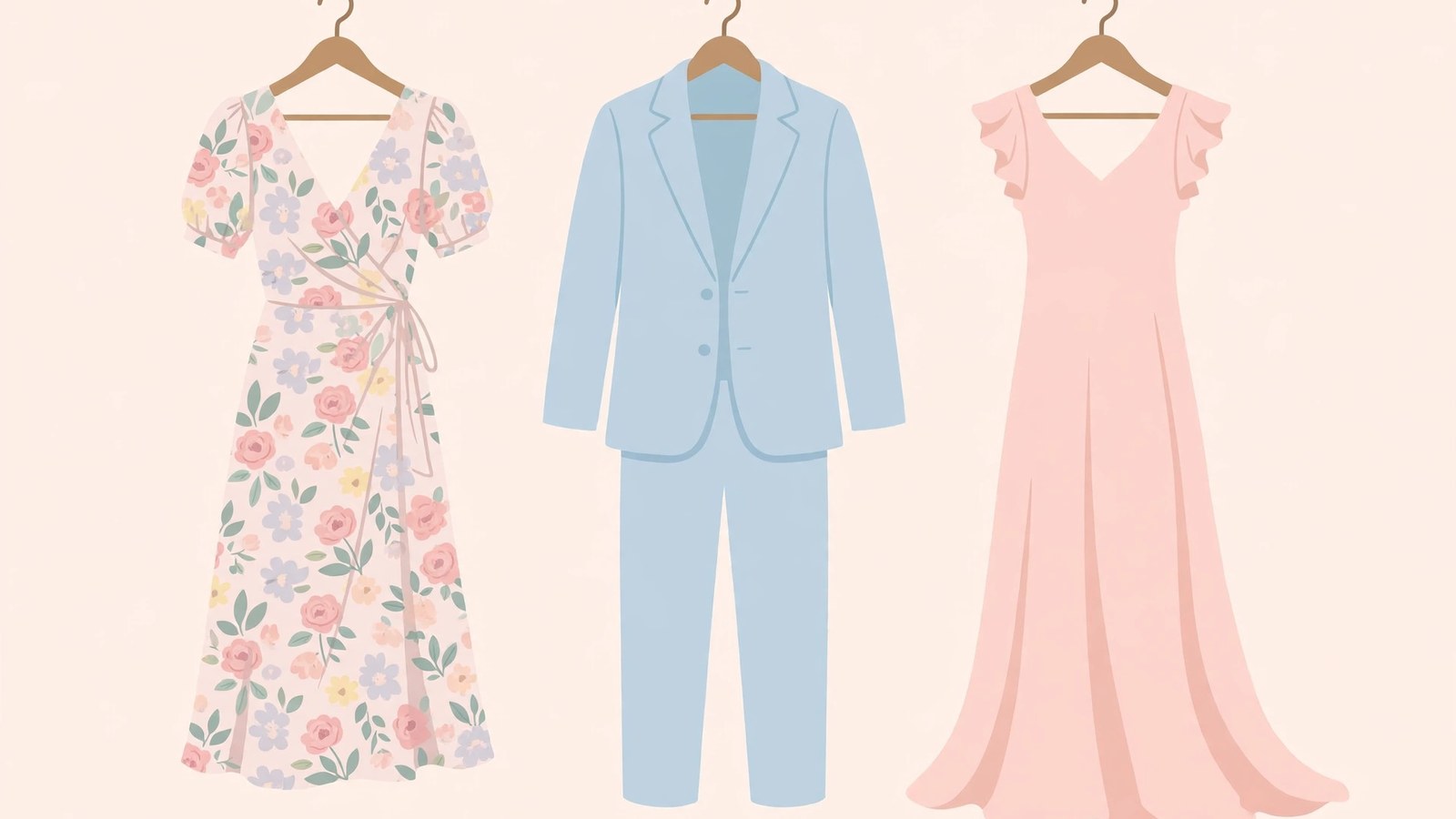
Short answer
- Start with the exact words on the invitation, then adjust for venue, time of day and summer heat. Casual means a polished sundress or smart trousers and a blouse, never denim or athletic wear at a wedding. Semi-formal means a midi or knee length dress, a tailored jumpsuit or a suit, and cocktail is a slightly dressier version of the same idea. Formal and black tie optional mean a floor length dress, an elevated midi or a dark suit, with a tuxedo welcome but not required. Black tie means a formal floor length gown or a tuxedo. Beach formal means a breathable midi or maxi with flat sandals or wide based shoes that will not sink into sand. At every level, avoid white, ivory and colors that photograph as white unless the couple asks guests to wear them, choose breathable fabrics such as linen blends, cotton, crepe and chiffon, and pick shoes for the actual ground, grass, sand, gravel or polished floors, not just for the outfit.
Introduction
A summer wedding invitation usually names a dress code, and that code is the best starting point for choosing an outfit. It tells you how formal the event will be, what the hosts expect, and what other guests are likely to wear. Ignoring it risks feeling overdressed in a ballroom or underdressed on a beach. Reading it carefully, and then adapting it to summer heat, outdoor ground and a long day of celebrating, is the key to feeling comfortable and looking appropriate.
This summer wedding guest outfit guide by dress code covers the codes guests meet most often, from casual to black tie, with practical advice on fabrics, colors, shoes and what to avoid. Dress code definitions below follow the established guidance of the Emily Post Institute and The Knot, checked on 30 October 2026. Always check the invitation and the wedding website for extra details, such as the venue, a theme, or a note about grass, sand or a religious ceremony, since those details can change the best choice more than the dress code alone.
First, Read the Whole Invitation
Before choosing an outfit, read the invitation in full, including any wedding website. The dress code may be a single phrase, such as cocktail or semi-formal, or it may include details like garden party, beach formal or black tie optional. The Knot advises guests who cannot find a code in print to look for a Dress Code tab on the couple wedding website, and if there is no such tab, to check the FAQ or question and answer page, where couples often list the attire they would like guests to wear.
Note the venue and the time as well. An evening event leans more formal than the same code in the afternoon. The Emily Post Institute makes the same point for semi-formal, advising that if the event is later than 6 in the evening, guests should err on the side of formality. Note the surface you will walk on, since grass, sand and gravel all affect shoe choice. If the ceremony is in a place of worship, note whether shoulders or legs should be covered, and bring a wrap or shawl if needed.
If the dress code is still unclear, ask the couple or a member of the wedding party. A short, polite question is better than guessing all day. It is safer to be slightly overdressed than underdressed, but not by a large margin. The Knot gives similar advice for formal events, suggesting that when in doubt, guests go more dressed up than they first think.
The Dress Codes at a Glance
The table below summarizes the main codes from the most formal to the least formal. It is a starting point only. The couple wording, venue and time of day always override a general table.
| Dress code | Dresses and jumpsuits | Suits and tailored wear |
|---|---|---|
| White tie | Formal floor length evening gown, long gloves optional | Black tailcoat, white waistcoat, white bow tie, black patent shoes |
| Black tie | Formal floor length evening gown or a dressy cocktail dress | Black tuxedo, white formal shirt, black bow tie, black patent shoes |
| Black tie optional | Formal evening gown, dressy cocktail dress or dressy separates | Tuxedo, or a dark suit with a white dress shirt and a conservative tie |
| Formal | Floor length dress, sleek jumpsuit or an elegant cocktail dress | Dark colored suit and tie |
| Cocktail | Knee length or midi dress with a structured shape, or an elegant jumpsuit | Suit and tie with a crisp dress shirt |
| Semi-formal | Short afternoon or cocktail dress, midi dress, wrap dress or dressy separates | Dark suit, dress shirt and tie, or a suit and tie in a lighter seasonal fabric |
| Dressy casual | Dress, skirt and dressy top, or a dressy pants outfit | Seasonal sport coat or blazer with slacks, tie optional |
| Casual | Sundress, or a long or short skirt with a polished top | Khakis or smart trousers with a collared shirt or polo shirt |
| Beach or resort | Flowing maxi or midi dress in a light fabric, dressy flat sandals | Linen suit or button down shirt, loafers or boat shoes |
White tie sits at the top of the scale, though it is rare at summer weddings. The Emily Post Institute describes it, also called full evening dress, as the most formal of all dress codes, and The Knot notes that it is often reserved for state dinners, royal banquets and very formal weddings. If an invitation says white tie, treat it literally.
Casual and Dressy Casual: Relaxed but Polished
Casual summer weddings are often held outdoors, in gardens, backyards or restaurants, and the atmosphere is relaxed. That does not mean anything goes. The Emily Post Institute describes casual dress as informal and comfortable, yet clean, and advises choosing nicer casual wear rather than the baggier items worn around the house. For a wedding, that means a sundress in a breathable fabric, a midi dress with a floral or solid print, or smart trousers with a pretty blouse. Cotton, linen blends and lightweight crepe work well in heat.
Dressy casual sits one step above casual. The Emily Post Institute lists a dress, a skirt and dressy top, or a dressy pants outfit, and a seasonal sport coat or blazer with slacks and an optional tie. The Knot describes dressy casual as a spin on business casual, with darker colors for evening and lighter colors and fabrics for daytime. Even at a casual wedding, avoid denim, shorts, slogan T-shirts and athletic shoes. The Knot notes that jeans, athleisure and tennis shoes are still off limits for daytime weddings. A backyard is a location, not a lowering of the occasion.
Garden Party and Daytime: Color, Print and Grass
Garden party is a setting applied to casual, dressy casual or semi-formal dress rather than a separate level of formality. Think floral dresses, pastel and bright colors, and light fabrics that move well outdoors. A midi dress with a small heel or a dressy flat is a reliable choice. The Knot advises, for outdoor weddings in general, seasonally appropriate fabrics such as linen and cotton for summer, and sensible shoes for walking on grass, sand or other uneven ground.
Shoes deserve special attention here. Thin heels sink into grass, so choose block heels, wedges or elegant flats if the ceremony or reception is on a lawn. The Knot gives the same guidance for backyard weddings, recommending block heels, loafers and sandals with sturdy soles because of uneven grass. If you love a thin heel, wear it only on a known hard surface, or add a heel protector designed for grass and test it before the day.
A straw hat or small fascinator may suit a garden party, but check that it will not block the view of guests behind you. Very pale colors can photograph as white in strong summer light, so hold a pale outfit up in daylight before deciding.
Semi-Formal: The Most Common Ambiguous Code
Semi-formal is one of the most common and most misunderstood codes. The Knot calls it the most popular dress code for a wedding, falling in the gray area between casual and formal, less embellished than cocktail attire but still polished. The Emily Post Institute describes it as more formal than office wear, but slightly less formal than a formal event. It is dressed up and deliberate, but it stops short of gowns and tuxedos.
For dresses, the Emily Post Institute lists a short afternoon or cocktail dress, a little black dress, a long dressy skirt and top, or dressy separates. The Knot lists midi dresses, wrap dresses and jumpsuits, typically trading beading or sequins in favor of quiet elegance. In summer, a knee length or midi dress in a breathable dressy fabric or a tailored jumpsuit works well.
For suits, the Emily Post Institute lists a dark business suit, dress shirt, tie and leather dress shoes, with a vest optional. The Knot lists a suit and tie, with color dependent on vibe, venue and season. A lighter suit in beige, light gray or navy can suit a daytime summer wedding. Avoid heavy wool in heat, and avoid a blazer with jeans. Time is the tiebreaker: afternoon leans lighter, and after 6 in the evening leans darker and more formal.
Cocktail: Dressier, Shorter and More Polished
Cocktail is usually slightly dressier and more festive than semi-formal. The Knot describes cocktail guests as having more flexibility with hemlines, colors and patterns, with embellishment through accessories encouraged, and lists formal dresses with shorter hemlines, structured silhouettes, and elegant jumpsuits.
Choose a polished version of your semi-formal idea: a cocktail dress, a sleek jumpsuit, or a dress with pleating, lace or a subtle sheen. Knee length and midi are safest. A gown is usually more than cocktail asks for, and a casual sundress is less. Fabric and finish matter as much as length: crepe or lace reads as cocktail, while everyday cotton jersey reads as casual.
For suits, The Knot lists a suit and tie with a crisp black or white button up shirt, with room to play with color by venue or theme. A light suit can work by day, and a darker suit is safer in the evening. Keep the tie unless the couple wording suggests otherwise, and choose a breathable shirt and jacket instead. Bright colors, pastels and floral prints suit the season. If you prefer neutrals, add a colorful shoe, statement earring or contrasting clutch.
Formal and Black Tie Optional: Dressing Up in Summer
Formal summer weddings call for longer dresses, more polished fabrics and a more finished look. The Knot lists floor length dresses as a safe bet, with sleek jumpsuits and elegant cocktail dresses also appropriate, and a well tailored dark suit with a tie. A floor length or tea length dress or a gown in chiffon or crepe works well. Heavy fabrics such as velvet or thick satin are less suitable for summer, since they will be hot and look out of season.
Black tie optional confuses many guests. The Emily Post Institute explains that it gives guests a couple of formal options: men are requested to wear a tuxedo, but can opt for a dark suit, and women can choose a formal evening gown, a shorter cocktail dress or dressy separates. The Knot describes it as a fusion between black tie and formal fashion, with floor length gowns welcome, elevated midi dresses also accepted, and elegant dark suits permitted with upscale shoes. Evening weddings lean more upscale, and early afternoon allows one step less formal.
In short, black tie optional is a choice between two formal levels, not a suggestion to dress down. Dress to the full level, in a long gown or tuxedo, or take the permitted step down, in a long or midi cocktail dress in a formal fabric or a dark suit with a tie. Avoid short, casual dresses here.
Black Tie and White Tie: The Top of the Scale
Black tie is the most common formal dress code for weddings and formal dinners, in the Emily Post Institute wording, slightly less formal than white tie but more formal than business attire. For dresses, it lists a formal floor length evening gown, a dressy cocktail dress, or your dressiest little black dress. The Knot lists formal gowns that graze the ground or the top of the shoes, with refined jewelry. For a wedding, the floor length gown is safest, and a cocktail dress should be genuinely formal in fabric and finish.
For tailored wear, the Emily Post Institute lists a black tuxedo jacket and matching trousers, a formal white shirt, studs and cuff links, a black bow tie, a black cummerbund or vest, and black patent shoes, with no gloves. In summer, in the tropics or on a cruise, it lists a white dinner jacket with black tuxedo trousers as the accepted alternative, allowing a lighter jacket without lowering formality.
White tie allows no casual substitution. The Emily Post Institute lists a formal floor length gown with long gloves optional, and a black tailcoat, white wing collared shirt, white vest, white bow tie and black patent shoes. The Knot lists elbow length white gloves, floor length ball gowns, and tailcoats reaching to the back of the knee. White tie is rare, but it is a distinct and stricter code, not black tie with a different name.
Beach, Resort and Destination Weddings: Heat, Sand and Wind
Beach weddings have their own challenges. The code may be beach formal, tropical or casual, but the venue changes everything. The Knot lists, for beach and resort weddings, floral maxis and midis in breezy silhouettes with dressy flat sandals, and linen suits and button down shirts with loafers or boat shoes, with ties optional. It advises silhouettes that are not clingy, says no to formal gowns and yes to midi dresses, and permits pretty flat sandals if the ceremony is in the sand.
Choose fabrics that breathe and move, such as linen blends, cotton and chiffon, and avoid heavy fabrics, long trains or anything that will drag in sand. A midi or maxi that falls above the sand is more practical than a gown that will collect it. If the code is beach formal, keep formal polish while changing construction: a formal shape in a light fabric, with shoes made for the surface.
Shoes are the key decision. High heels sink into sand. Flat sandals, dressy flats or wedges with a wide base are better. Some couples suggest barefoot ceremonies, in which case bring shoes you can slip on easily for the reception. Wind also matters: choose a fabric with enough weight to drape, and an updo or braided hairstyle over loose hair. For a destination wedding, The Knot advises letting location guide you first, then following the couple code, since tropical black tie differs in fabric from mountain black tie, though the formality is the same.
Fabrics, Colors and Comfort for a Long Summer Day
Summer wedding days are long, outdoors in heat, indoors for dinner, and dancing into the evening. Fabrics that breathe and resist wrinkling are ideal: cotton, linen blends, crepe and chiffon. The Knot notes that in spring and summer guests can lean into lighter and brighter hues, while fall and winter lend themselves to jewel tones and deep neutrals, and it names linen and cotton as seasonally appropriate for outdoor summer weddings. Linen wrinkles easily, so a linen blend often looks smarter by evening than pure linen.
Avoid fabrics that show sweat easily, such as light colored satin in a tight fit, and avoid very tight outfits. At formal levels, avoid casual fabrics altogether, since a formal shape in an everyday fabric reads as less formal than the code requires. A garment that holds its shape will also photograph better after hours of wear.
Fit matters as much as style. Choose a fit that allows you to sit, eat and move freely, try it on for an extended period before the wedding, and break in new shoes before the day. Bring flat shoes for dancing if your main shoes are heeled. For color, check a mostly white print or a very pale solid in daylight and in a photograph: if the first impression is white, choose something else. A black dress or dark suit is a standard formal evening choice, and summer guests can lighten it with lighter accessories.
What to Avoid at Any Summer Wedding
Avoid white, ivory, cream and any color that could be mistaken for the bridal outfit, unless the couple has specifically asked guests to wear white. Avoid outfits that are overly revealing, very short or designed to draw attention away from the couple, and avoid matching the wedding party exactly if you know their colors in advance.
Avoid treating any code as permission to wear everyday clothes. Casual does not mean denim and athletic shoes at a wedding, semi-formal does not mean business casual, and beach does not mean swimwear worn as a dress. Avoid a tuxedo at a cocktail or casual wedding, which reverses the error. Match the room, the ground and the hour, then add personal style inside those limits. Finally, plan for the whole day: bring a light layer for the evening, a small bag for essentials, and hair and shoes that will last in heat.
A Simple Decision Checklist
Use this checklist in order. First, find the exact dress code words on the invitation or the wedding website Dress Code or FAQ page. Second, note the venue, whether any part of the day is outdoors, and the ground. Third, note the start time, remembering that later than 6 in the evening leans more formal. Fourth, choose the outfit for that code above, then adapt only fabric, color and shoes for heat and surface. Fifth, check it against the universal rules: no white family colors, no denim or athletic wear, and nothing that competes with the couple. If two outfits still seem plausible, choose the slightly more formal one, or ask a short, specific question naming both options.
Frequently Asked Questions
What is the difference between semi-formal and cocktail wedding attire?
They overlap, but cocktail is usually slightly dressier and more festive. Semi-formal, as The Knot describes it, is polished but less embellished, with midi dresses, wrap dresses and jumpsuits, and a suit and tie. Cocktail allows shorter, more structured dresses, more color and pattern, and embellishment through jewelry, shoes and bags. Venue and time of day are the best tiebreakers.
What does black tie optional actually mean for guests?
It means black tie is welcome but not required. The Emily Post Institute states that men are requested to wear a tuxedo but can opt for a dark suit, and women can choose a formal evening gown, a shorter cocktail dress or dressy separates. The Knot adds that elevated midi dresses are also accepted and elegant dark suits are permitted with upscale shoes. Optional refers to that choice between two formal levels. It does not mean optional effort, and casual dresses will look underdressed.
Can I wear a white dinner jacket to a summer black tie wedding?
Yes, in the circumstances the Emily Post Institute names: in summer, in the tropics or on a cruise, a white dinner jacket with black tuxedo trousers and the other black tie elements is the summer alternative. The rest stays black tie, including the formal white shirt, black bow tie, cummerbund or vest, and black patent shoes. It is not a general substitute at a winter wedding where the host expects a black tuxedo.
What should I wear if the invitation gives no dress code?
Look in the other places couples put it. The Knot advises checking the wedding website for a Dress Code tab and, failing that, its FAQ page. If no code appears anywhere, use venue, invitation formality and time of day. An evening hotel event leans formal to cocktail, a daytime garden event leans semi-formal to dressy casual, and a beach venue leans beach formal in construction. Cocktail level polish is a reasonable middle course for an evening wedding, and you can also ask the couple directly.
Are jeans ever appropriate for a wedding guest?
Not on the strength of the word casual alone. The Emily Post Institute casual list includes nice jeans in a general context, but wedding guidance is stricter: The Knot notes that jeans, athleisure and tennis shoes are still off limits for daytime weddings. Choose smart trousers, khakis or a dress instead, unless the couple specifically asks guests to wear jeans or a theme that includes denim.
What colors should wedding guests avoid in summer?
Avoid white, ivory, cream and any very pale color or mostly white print that could be mistaken for the bridal outfit or photograph as white, unless the couple has specifically asked guests to wear white. Check pale outfits in daylight and in a photograph before deciding. Beyond that family, summer supports bright colors, pastels and floral prints at casual, cocktail and semi-formal levels, and deeper colors in the evening at formal levels. If you know the wedding party colors, avoid dressing as an exact match for that group.
Sources & references
- The Emily Post Institute, Attire Guide: Dress Codes from Casual to White Tie. Used for the definitions of casual, dressy casual, semi-formal, black tie, black tie optional and white tie, including the semi-formal advice to err on the side of formality for events later than 6 in the evening, the black tie list for gowns, cocktail dresses, tuxedos, bow ties, cummerbunds and patent shoes, the summer, tropical and cruise provision for a white dinner jacket with black tuxedo trousers, the black tie optional options of a tuxedo or a dark suit and a gown, cocktail dress or dressy separates, and white tie as the most formal code, also called full evening dress.
- The Knot, The Ultimate Guide to Wedding Dress Codes. Used for the dress code summaries for white tie, black tie, black tie optional, formal, cocktail, semi-formal, dressy casual, casual, daytime and beach or resort attire, for finding a dress code on a couple wedding website through a Dress Code tab or an FAQ or question and answer page, for semi-formal as the most popular wedding dress code falling between casual and formal, for formal advice to go more dressed up when in doubt, for outdoor wedding advice on linen and cotton in summer and sensible shoes for grass, sand and uneven ground, for backyard wedding shoe advice, for daytime weddings excluding jeans, athleisure and tennis shoes, for seasonal color guidance favoring lighter and brighter hues in spring and summer, and for destination weddings letting location guide construction while following the couple dress code.


