Short answer
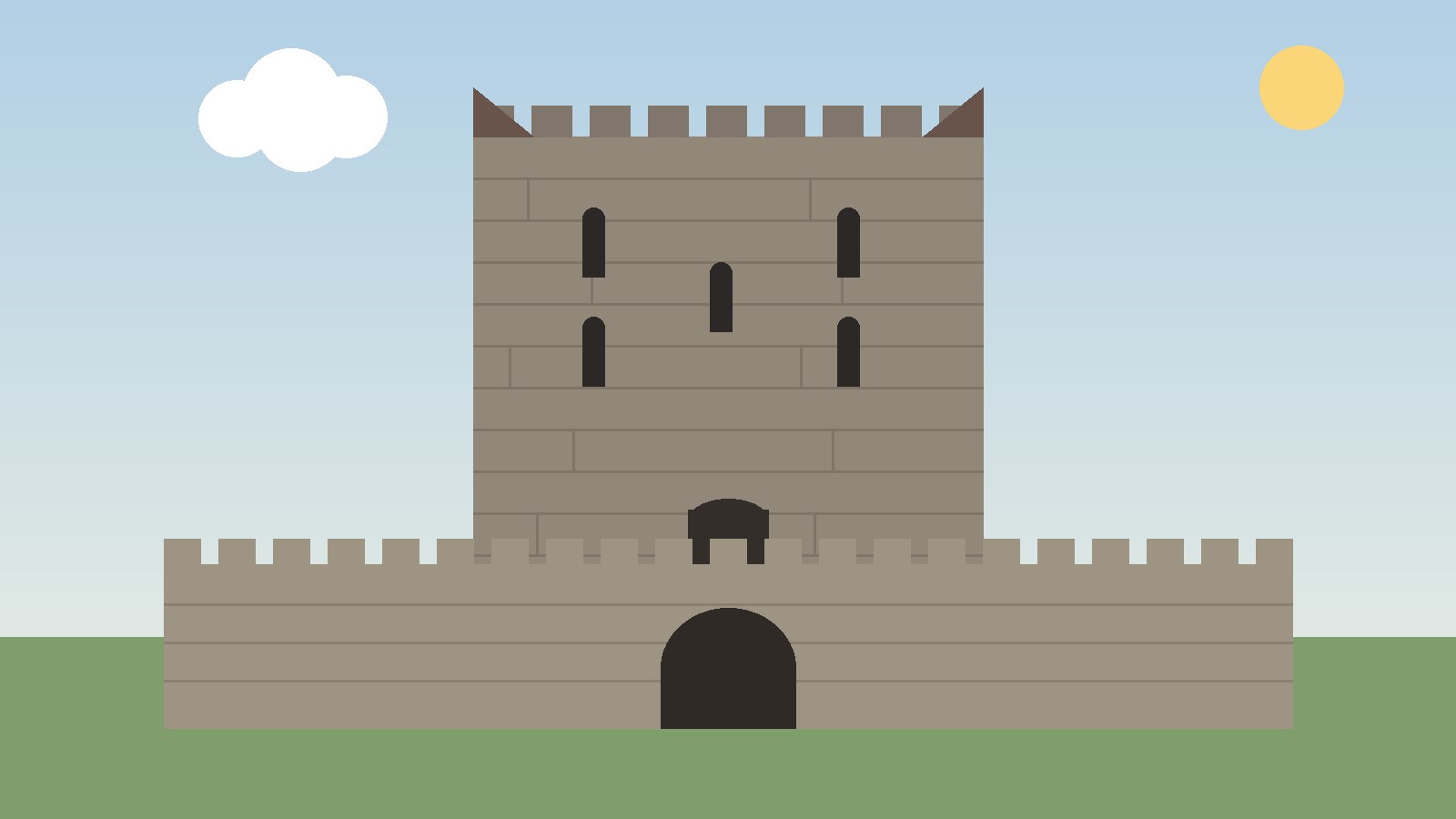
- A keep is a large, strongly built tower inside a castle. In medieval England and France it was usually the strongest building on the site and the place where the lord's best rooms, stores, and last line of defense were found. The word keep is the English name for what French writers called a donjon, and modern heritage bodies often call the same building a great tower. A keep could be a single solid tower block, such as the great square towers at the Tower of London and Rochester, or a ring of wall with buildings ranged around a courtyard inside it, which is called a shell keep. Early keeps were built of timber, often on top of an earth mound called a motte. Later keeps were built of stone and took square, round, or polygonal shapes. A keep combined defense, residence, storage, and display. Its thick walls, height, and small lower openings made it hard to attack, while its great hall, private chambers, chapel, and fine stonework showed the wealth and authority of its owner. Not every castle had a keep. Some castles relied instead on strong curtain walls, towers, and gatehouses. A keep is therefore best understood as one castle building with several jobs, not as a synonym for a castle, and not as a prison, even though the word dungeon grew out of the same French root.
Introduction
Ask for a picture of a castle and most people draw the same thing: a tall stone tower with battlements on top. That tower is often a keep, and it is easy to see why it became the symbol of the whole castle. It was usually the tallest building on the site, the most strongly built, and the one that survived longest as a ruin. Yet the keep was only one part of a castle, and not every castle had one. This guide explains the keep on its own terms: what it was, what it was for, how its form changed, and where the popular picture of it goes wrong. The whole castle, with its moat, curtain wall, gatehouse, and bailey in full, belongs to a companion guide. Here the keep itself takes center stage.
One Building, Several Jobs
The simplest way to picture a keep is as a fortified house stacked upward. At its most basic it gave its owner a secure place to live, a safe place to store valuables and supplies, a high place from which to watch the surrounding land, and a final strong point if the outer defenses of the castle fell. No single job explains the building on its own. A purely military tower would not need a chapel, a great hall, and decorated stonework. A purely domestic house would not need walls many feet thick and an entrance that was hard to reach. The keep makes sense only when all of its jobs are held together.
Defense came first in the design, but it did not crowd out daily life. Thick walls resisted battering and mining. Height gave defenders a view and made scaling ladders less useful. Small windows low down reduced weak points, while larger windows higher up let light into the rooms that mattered most. The entrance was often the most carefully defended feature of the whole tower, because a tower with a weak door was a weak tower however thick its walls were. Inside, stairs, passages, and separate floors let the household control movement through the building. A visitor might be received in a hall, while stores stayed below and private rooms stayed above, each reached by its own route.
Residence mattered just as much. The best rooms in many keeps were designed for the lord and his household, not for soldiers alone. A great hall gave space for meals, meetings, and public business. Private chambers gave the lord and his family somewhere to withdraw from the hall. A chapel served worship inside the tower itself, so the household did not have to leave the strongest building to pray. Fireplaces, window seats, and decorated arches survive at Rochester as evidence that these rooms were meant to impress as well as to shelter. English Heritage notes that the survival of doors, fireplaces, and windows at Rochester, together with evidence for floors and partitions, allows an unusually good reconstruction of how people moved through the building and how each floor was used.
Storage was the third job, and it is the one most often forgotten. A keep held the things a lord could not afford to lose: coin, plate, documents, arms, and food for a siege. Ground floor rooms were often cool, dark, and secure, which made them well suited to storage even when they were poor places to live. A well inside the castle, or inside the tower itself at some sites, mattered for the same reason. A tower that could not feed and water its occupants through a siege was a poor refuge, however strong its walls looked from outside.
Display was the fourth job, and in some cases it may have been the most important. A great tower dominated the skyline and told everyone approaching the castle who held the land. Historic Royal Palaces makes this point directly about the Tower of London, where William the Conqueror intended his mighty castle keep not only to dominate the skyline but also to dominate the hearts and minds of the defeated Londoners. A keep built on that scale was a political statement in stone. Smaller keeps made the same statement at a local scale. A lord who could raise a stone tower above his neighbors’ timber halls had visibly set himself apart.
Keep, Donjon, and Great Tower: Three Names for One Building
The vocabulary around keeps causes more confusion than almost any other part of castle history, so it is worth sorting out before going further. In modern English, keep is the everyday word for the strong tower of a castle. Heritage bodies in England often use the term great tower for the same building, especially when describing a major royal castle. In French, the equivalent word is donjon, from a Latin word for lordship. The three terms point to the same kind of building, but they come from different languages and different periods, and they are not exact substitutes in every context.
The word keep itself is later than the buildings it describes. Medieval writers in England did not generally call these towers keeps. They used Latin words such as turris, meaning tower, or magna turris, meaning great tower. The English word keep, in the castle sense, came into common use in later centuries, when antiquaries and historians needed a short name for the principal tower of a castle. A medieval lord would not have said that he was building a keep. He would have said that he was building a tower, or a castle, and the particular form of that tower depended on his wealth, his site, and the fashion of his time.
Donjon needs similar care. In French usage, donjon refers to the lord’s tower, the strong residence at the heart of a castle, and it carries the sense of lordship in its root. English writers borrowed the word, and over time it changed form and meaning in English. The English word dungeon comes from donjon. At first, dungeon could mean the keep itself, the lord’s tower, rather than a prison cell. Only later did dungeon settle into its modern sense of an underground prison. That history explains a persistent myth: that keeps were mainly prisons, and that their lower rooms were dungeons full of prisoners. Some keeps did hold prisoners at some point in their long histories, and the Tower of London famously became a state prison. But imprisonment was not the defining purpose of a keep. Its defining purposes were residence, storage, defense, and display.
Great tower is the most neutral of the three terms, and it is the one most often used in modern heritage descriptions. English Heritage describes both Rochester and Dover in these terms, calling Rochester’s building a great tower and Dover’s a great tower as well. The phrase has the advantage of describing what the building is, a tower greater than the other towers of the castle, without importing later ideas about prisons or last stands. When this guide uses the word keep, it means a great tower in this sense: the principal strong tower of a castle, built as a fortified residence and a final defensive strong point, whatever its exact shape.
A Keep Is Not a Castle
The most common misunderstanding about keeps is to treat the words keep and castle as interchangeable. They are not. A castle is a whole defended site: its walls, ditches, gatehouses, courtyards, halls, kitchens, stables, chapels, and stores, together with the lord’s household and garrison who lived and worked there. A keep is one building within that site, although it could be the largest and most visible building. A visitor who has seen only the keep has seen the heart of the castle, but not the castle itself.
This distinction explains why some castles have no keep at all. A castle could be strong without a great tower if its curtain walls, towers, and gatehouses were strong enough and well arranged. Later medieval castles in particular sometimes spread their strength around the whole circuit of walls rather than concentrating it in a single tower. Attackers who broke through one part of the wall still faced another wall, another gate, and towers that could fire along the wall face. In such a castle, the lord’s residence might be a hall range built against the curtain wall rather than a separate tower. The castle was no weaker for lacking a keep. It simply used a different defensive idea.
Timber Keeps and the Motte
The earliest keeps in England after the Norman Conquest were not stone towers at all. They were timber towers, often raised on top of an artificial earth mound called a motte. The motte and bailey castle, an earth mound topped by a tower with an enclosed courtyard beside or below it, was a fast way to plant a defended center in newly conquered land. Timber was available locally, earth could be dug and heaped by a large workforce, and a timber tower on a mound gave height, visibility, and defense within weeks or months rather than years.
A timber keep should not be dismissed as a makeshift version of a stone keep. It did the same jobs: it gave the lord a raised, enclosed residence, it stored supplies, it watched the surrounding country, and it provided a strong point that attackers had to take before they controlled the site. Timber towers could also be substantial buildings, with halls and chambers inside a timber frame, and they were often surrounded by a timber palisade and ditch. Their weakness was fire and decay, not size or planning. Timber rots, and a determined attacker with fire could destroy in hours what took months to build. That vulnerability, together with growing wealth and a desire for permanence, pushed lords who could afford it toward stone.
The Great Square Keeps of the Normans
The classic image of a keep is the great square Norman tower: a massive rectangular block of stone, with corner turrets, thick walls, small windows, and a forbidding entrance. This form dominated castle building in England in the late 11th and 12th centuries, and its best known examples are royal castles built to impress as much as to defend. The White Tower at the Tower of London is the most famous of them. Historic Royal Palaces dates the Tower of London to the 1070s, built by William the Conqueror as a massive stone fortress to defend and proclaim his royal power, taking around 20 years to build. The great keep at its center was later painted white in 1240, under Henry III, which gave the White Tower its modern name. The tower combined a royal residence with the strongest point of the fortress, and later centuries added walls, a moat, and a palace around it.
Rochester Castle in Kent gives the clearest surviving example of what a great Norman keep contained. English Heritage describes Rochester’s keep as an architectural masterpiece and the tallest surviving great tower of its type in Europe, almost certainly among the tallest at the time of its construction. Its principal rooms lay on the second floor, made more imposing by a gallery set into the thickness of the outer walls. The detailing of the building, even in its ruined state, shows that Norman castle architecture could be extremely sophisticated, simpler than a great cathedral but far from crude. Rochester also gives the classic siege story that shaped how later writers thought about keeps. In 1215, during the siege by King John, defenders used the keep’s spine wall, the wall dividing the tower inside, as a final barrier. English Heritage notes that the conventional idea of great towers as buildings of last resort owes much to the story of Rochester.
Dover Castle shows the same form at royal scale a generation later. English Heritage records that Henry II, from 1179, began building the castle seen today, including the great tower and inner defenses, and that his son John and grandson Henry III completed the royal castle’s defenses and accommodation. Dover’s great tower was therefore not an isolated tower but the center of a complete royal castle, with an inner bailey wall and outer defenses built around it. In 1216 and 1217 those defenses were twice tested when the castle withstood sieges by French forces. Dover’s story shows the keep doing all of its jobs at once: residence for a king, storehouse and command center for a garrison, and symbol of royal power on the coast facing France.
Inside a square keep, the layout usually followed a vertical order. The ground floor, often with few openings and sometimes reached only from above, served for storage and security. The principal floor above it held the hall and the best chambers, with larger windows, fireplaces, and decorated stonework. Upper floors held further chambers, lodgings, and sometimes a chapel. Stairs in the thickness of the walls or in corner turrets linked the floors, and the entrance was commonly placed where it could be defended, sometimes reached by an external stair or through a forebuilding, a smaller structure built against the tower to protect its door. This vertical order is a pattern, not a rule. Individual keeps varied with their site, date, and owner, and later alterations often changed the original arrangement.
Shell Keeps: A Wall Instead of a Block
Not every keep was a solid tower block. A shell keep is a stone wall built around the top of a motte, or around a raised enclosure, with buildings ranged around the inside of the wall and an open courtyard in the middle. From outside, a shell keep looks like a round or polygonal tower, because the outer wall forms a continuous circuit. From inside, it feels more like a small courtyard castle, because the rooms sit against the wall and face inward onto the courtyard rather than stacking up inside a single block.
Restormel Castle in Cornwall is the clearest English example. English Heritage describes Restormel as a variant of the shell keep type, unusual for its spacious size, at 33.3 meters in diameter, for its situation, partly buried by an earth bank within a deep ring ditch rather than standing on a high motte, and for its late date. The building type is generally associated with the 12th century rather than the late 13th, which makes Restormel a late and spacious example. Inside the wall, the courtyard was surrounded by a range of buildings, two floors high except for the kitchen, including a hall, an inner hall or solar, an ante chapel, a great chamber, and a wardrobe or storeroom. The ground floor spaces were all unheated and most were probably storerooms, while the hall, ante chapel, and great chamber were entered from wooden stairs rising from the courtyard.
The shell keep shows how flexible the idea of a keep could be. Instead of building one massive tower, a lord could enclose the top of his motte with a stone wall and fit his hall, chambers, kitchen, and chapel inside it. The result gave him the same combination of defense, residence, and storage, but arranged horizontally around a courtyard rather than vertically inside a block. It also reused the existing earthwork, which saved labor and kept the advantage of height. Shell keeps are therefore best seen as a different solution to the same problem, not as a lesser version of a square keep.
Round, Polygonal, and Later Forms
During the 12th and 13th centuries, builders experimented with keeps that broke away from the square plan. Round keeps removed the vulnerable square corners and gave defenders a continuous curved wall that was harder to undermine at any single point. Polygonal keeps, with many sides, offered a similar advantage while giving more usable straight wall inside for rooms and fireplaces. Each form traded one advantage against another. A round wall is strong, but round rooms are harder to furnish and divide than rectangular rooms. A polygonal tower is a compromise, keeping some straight walls while reducing the sharp corners of a square.
Later medieval castles moved further away from the single great tower. Concentric castles, with one ring of walls inside another, spread defensive strength around the whole site. Gatehouses grew into major buildings in their own right, with twin towers, guardrooms, and lodgings. Wall towers grew larger and more numerous, giving flanking fire along the curtain wall. In such castles, the lord’s residence might be a hall range against the wall, and there might be no building that can properly be called a keep. This was not a decline in castle building. It was a change in defensive thinking, driven by better siege weapons, larger garrisons, and a growing emphasis on controlling entry and covering every approach with fire from towers.
Keeps Under Siege, and Why Some Castles Had No Keep
Siege is the test most often applied to keeps, and it is the test that created the popular image of the keep as a last refuge. The image has a real basis, but it needs qualification. A keep could indeed hold out after the outer defenses fell, because its walls were thick, its entrance was defended, and its stores and well could support a small group for a time. Rochester in 1215 is the classic case. English Heritage records that the siege and capture of the castle by King John shocked contemporaries, that detailed chronicle descriptions have made it one of the best known episodes in English history, and that the conventional interpretation of great towers as buildings of last resort owes much to the story of Rochester, including the use of the spine wall as a final barrier by defenders. The defenders did fall back inside the tower, and they did use an internal wall as a last line. But the castle still fell, which shows the limits of the idea. A last refuge delays capture. It does not by itself prevent it.
Dover shows the other side of the same coin. There the whole castle, not only the great tower, withstood attack. English Heritage records that Dover’s defenses were twice tested in 1216 and 1217, when the castle withstood sieges by French forces. Dover’s strength lay in the combination of its great tower, its inner bailey wall, its outer defenses, and its garrison, not in the tower alone. A keep that stood inside weak outer defenses would have been besieged sooner and more easily, because attackers could approach it without first fighting through walls, gates, and courtyards.
Siege warfare also changed over time, and keeps changed with it. Early sieges relied on blockade, escalade with ladders, battering, and mining under walls. A tall, thick walled tower with a well and stores was well suited to resisting those methods for weeks or months. Later sieges used more powerful artillery, which could batter even thick stone walls from a distance. Against cannon, height became a liability, because a tall tower presented a large target, and thick walls alone could not absorb sustained artillery fire. Later castles therefore lowered their profiles, thickened their walls at the base, and spread their guns along walls and bastions rather than concentrating defense in a tall tower.
Cost, site, and changing ideas about defense also explain why some castles never gained a keep. A great stone tower was enormously expensive, requiring quarried stone, skilled masons, timber for scaffolding and floors, and years of labor. A lord who could afford a strong curtain wall, towers, and gatehouse might still not be able to afford a great tower as well, and a strong wall circuit could give him a defensible castle without one. A castle on a steep rock or a narrow headland might gain more from walls that followed the edge of the rock than from a single tower. And as siege weapons improved, builders found that a complete circuit of walls with flanking towers and strong gatehouses could be harder to take than a single great tower inside weaker walls.
FAQ
What is a keep in simple terms?
A keep is the large, strong tower at the heart of many medieval castles. It served as a fortified residence for the lord, a storehouse for valuables and supplies, and a final strong point if the rest of the castle fell. The same building is often called a great tower, and in French it is called a donjon.
Is a keep the same as a castle?
No. A castle is a whole defended site, with walls, ditches, gatehouses, courtyards, halls, kitchens, and stores. A keep is one building inside that site, usually the tallest and strongest. Some castles had no keep at all and relied on strong walls, towers, and gatehouses instead.
What is the difference between a keep and a donjon?
There is no difference in the building described. Donjon is the French word for the lord’s strong tower, and keep is the English word for the same kind of building. Modern heritage writing often uses great tower as a neutral alternative to both.
What is the difference between a keep and a dungeon?
A dungeon in modern English means a prison, often underground. The word dungeon grew out of donjon, which originally meant the lord’s tower itself, not a prison cell. A keep could hold prisoners at times, but imprisonment was not its main purpose. Its main purposes were residence, storage, defense, and display.
What is a shell keep?
A shell keep is a stone wall built around the top of a motte or raised enclosure, with buildings ranged around the inside of the wall and an open courtyard in the middle. Restormel Castle in Cornwall is a well known example, described by English Heritage as a variant of the shell keep type, with a circular wall 33.3 meters in diameter enclosing a hall, chambers, kitchen, and chapel.
Were keeps made of timber or stone?
Both. Early keeps after the Norman Conquest were often timber towers on earth mounds. Later keeps were built of stone, first as great square towers and later in round, polygonal, and shell forms. Timber keeps were faster and cheaper to build, but they were vulnerable to fire and decay, which pushed wealthier lords toward stone.
Did every medieval castle have a keep?
No. Some castles relied on strong curtain walls, towers, and gatehouses, and later castles sometimes spread their defenses around a whole circuit of walls rather than concentrating them in one tower. Cost, site, and changing ideas about warfare all influenced whether a castle gained a keep.
What is the most famous keep in England?
The White Tower at the Tower of London is the most famous example. Historic Royal Palaces dates the Tower of London to the 1070s, built by William the Conqueror as a massive stone fortress, with its great keep later painted white in 1240. Rochester Castle is another leading example, described by English Heritage as the tallest surviving great tower of its type in Europe.
Why did builders stop building keeps?
Builders did not stop all at once. As siege artillery improved, tall towers became large targets, and later castles spread their defenses around lower, thicker walls with flanking towers and strong gatehouses. Comfort also mattered more, and lords increasingly preferred hall ranges with large windows and gardens over cramped towers. Keeps survived as residences, stores, prisons, and landmarks long after they ceased to be the best military design.
Keep reading: Parts of a Castle: What Each Part Did, From Moat to Great Hall
Sources & references
- English Heritage, Significance of Rochester Castle. Verified 1 November 2026. Keep as an architectural masterpiece and the tallest surviving great tower of its type in Europe, second floor principal rooms with a gallery in the wall thickness, doors, fireplaces, and windows as evidence for circulation and floor functions, and the 1215 siege and spine wall as the source of the last resort interpretation.
- English Heritage, Dover Castle History and Stories. Verified 1 November 2026. Henry II beginning the present castle from 1179, including the great tower and inner defenses, completion under John and Henry III, and sieges withstood in 1216 and 1217.
- Historic Royal Palaces, The Story of the Tower of London. Verified 1 November 2026. Tower built in the 1070s by William the Conqueror as a massive stone fortress to defend and proclaim royal power, taking around 20 years, great keep painted white in 1240, and use as a surprisingly luxurious palace for 500 years.
- English Heritage, Description of Restormel Castle. Verified 1 November 2026. Shell keep variant, 33.3 meters in diameter, partly buried by an earth bank within a deep ring ditch, late date against a generally 12th century type, courtyard range with hall, solar, ante chapel, great chamber, wardrobe, and kitchen, ground floor storerooms, and stone bridge replacing a medieval drawbridge.
- Encyclopaedia Britannica, Keep (donjon). Verified 1 November 2026. Keep as the English term corresponding to the French donjon, the strongest portion of a castle fortification, and either a single tower or a larger fortified enclosure. Used only for the definition framing in the Short Answer; the named site examples in this article come from English Heritage and Historic Royal Palaces.


