Short answer
- After teeth whitening, aftercare is mostly about being gentle, not adding extra whitening, and giving temporary sensitivity time to settle. Sensitivity to cold, heat, or sweet foods is the most common effect of bleaching, and for most people it is mild and passes within a few days. Gum irritation is the other common effect, usually linked to gel touching the gums or a tray that fits poorly, and it also tends to settle once treatment stops. Many dentists advise avoiding strongly colored food and drink for the first day or two, often called a white diet. That advice is a precaution, not a proven rule: two recent systematic reviews of clinical trials found that people who ate and drank normally, including coffee, tea, cola, and red wine, achieved much the same color change as people who followed a strict white diet. Follow your own dentist's sheet first, but one coffee in the first two days does not automatically undo whitening. Keep brushing twice a day with fluoride toothpaste and cleaning between your teeth once a day, with a soft brush and a light hand. Do not wear trays longer, use more gel, or repeat treatment sooner than directed to try to go whiter faster. Overuse is the pattern the American Dental Association warns can damage enamel or gums. Whitening is not permanent, and it does not change the color of crowns, veneers, or fillings. This article is general information only. It is not a diagnosis and it is not a substitute for advice from your own dentist. If sensitivity is severe, keeps getting worse, affects only one tooth, or has not clearly improved after about a week, contact your dentist rather than adjusting treatment yourself. The same applies to gums that are blistered, badly sore, or slow to recover.
What Whitening and Bleaching Mean
The American Dental Association (ADA) uses whitening for any process that makes teeth appear whiter. Bleaching is narrower: a product bleaches when a peroxide actually changes the natural color of the tooth, rather than only cleaning its surface. Most bleaching products contain hydrogen peroxide or carbamide peroxide, which breaks down into hydrogen peroxide, the active agent. The ADA explains that these bleaches break stains into smaller pieces, making the color less concentrated and the teeth brighter. That change inside the tooth is why bleaching lightens color that scrubbing cannot remove, and why it can irritate the nerve.
Not everything sold as whitening bleaches. Stain removal toothpastes work at the surface, using mild abrasives to scrub away stains on the enamel, and the ADA notes that Seal accepted stain removal toothpastes do not change the color of the teeth themselves. They are maintenance tools, not a way to top up a bleaching result, and scrubbing harder does not turn them into bleach.
Bleaching reaches teeth in several ways: a stronger product applied by a dentist in the office in one visit, with the gums protected; a custom made tray and gel supplied by a dentist for home use over days to weeks; or store bought strips at lower concentrations. The general principles here apply across all three, but strength, contact time, and instructions differ, which is why your own treatment sheet governs where it says something specific.
Results differ by stain. The ADA gives the standard pattern: yellow toned teeth will probably bleach well, brown teeth may not respond as well, and teeth with gray tones may not bleach at all. Discoloration caused by certain medications or by an injury to a tooth may not respond either. Whitening works on natural teeth only, a limit covered below because it shapes what aftercare can and cannot fix.
What to Expect in the First Days
Temporary sensitivity is the headline effect: teeth may react to cold air, cold or hot drinks, or sweet foods with a brief sharp twinge. The 2018 Cochrane review of home based bleaching, covering 71 trials, found sensitivity and oral irritation were the most common side effects, more common with higher concentrations, and mild and transient. A 2022 review of in office bleaching reported sensitivity in up to half of patients, most often lasting two to three days.
Gum effects are the second pattern. The NHS lists sensitivity to cold or sweet food and drink, sore gums or throat, and white patches on the gums among the short term effects of professional whitening. Leeds Teaching Hospitals NHS Trust tells its bleaching patients that gums looking whiter than usual, and sensitivity, normally disappear a few days after stopping whitening. White patches that fade are a known short term effect; gums that blister, swell, or stay painful are different, and belong in the when to call section below.
Judge the shade fairly. Teeth are drier straight after a session, lighting differs from home, and before treatment photographs are fairer than memory. If the shade disappoints after a full course used as directed, discuss options with your dentist rather than starting a second course alone. Bleaching has a ceiling, and extra applications add irritation without whiteness.
The First 24 to 48 Hours and the White Diet, Honestly Scoped
The best known piece of whitening aftercare is the white diet: for the first day or two, choose light colored foods unlikely to stain, such as water, milk, plain yogurt, white rice, plain chicken, and white bread, and avoid coffee, tea, red wine, cola, tomato sauce, curry, berries, and beetroot. Many dental teams give some version of this advice; Leeds Teaching Hospitals instructs its tray patients to avoid highly colored food and drink during bleaching, naming curry, red wine, and tomato based foods.
What the evidence says deserves equal billing, because the white diet is often presented online as a strict clinical law, and it is not one. A 2024 systematic review in Dentistry Journal found that, in the clinical trials it pooled, color differences between diet restricted and unrestricted patients were not statistically significant during home bleaching, one month after home bleaching, or one month after in office treatment, and concluded that dietary restrictions are not necessary. A 2025 network meta-analysis in the Journal of Dentistry reached the same destination from seven trials: white diet patients achieved similar color change to patients given coffee, black tea, cola, grape juice, or red wine, or who ate an unrestricted diet.
Those findings have honest limits. Trial numbers are small, study staining challenges do not perfectly copy real life, and the reviews address the final color change from bleaching, not how a result ages over months and years. The ADA still identifies coffee, tea, and red wine as major staining culprits over time, because their intense pigments, called chromogens, attach to enamel. Habitual intake across months is a different question from one drink in the first 48 hours.
So the balanced position is this. If your dentist gave you a white diet sheet for a day or two, follow it: it costs little and your dentist knows your treatment. Do not extend it into weeks of anxious restriction, and do not treat a lapse as a disaster: no good evidence shows that one coffee or one glass of red wine in the first two days reverses a result. And do not let the diet crowd out the parts of aftercare with stronger support: using the product exactly as directed, managing sensitivity, and keeping up ordinary hygiene.
Eating and Drinking Comfortably While Teeth Are Sensitive
Comfort is a practical guide for the first days, white diet or not. Teeth that zing at temperature extremes will be happier with food and drink that is lukewarm or cool rather than icy or piping hot, and very sweet foods are a common trigger too. Ordinary meals suit most people; no special diet is required.
Water is the natural default drink: no pigment, no sugar, and no acid. Our guide to hydration and healthy snack swaps for workdays covers steady hydration habits in more detail. Rinsing with plain water after coffee, tea, or red wine is a low effort habit that washes pigment off sooner: sensible, but not a guarantee against staining.
Acidic drinks matter for a different reason: fizzy and citrus flavored drinks expose enamel to acid, and reactive teeth may notice them more. If sparkling drinks are part of your routine, our explainer on whether seltzer water is bad for your teeth works through the evidence on plain, flavored, and sweetened fizzy drinks, three quite different cases. Its pattern, that frequency and contact time matter as much as the drink itself, applies after whitening too.
Tobacco is the clearest item on the avoid list, and not only for the first days. The ADA identifies tar and nicotine as the tobacco chemicals that create stubborn stains, with nicotine turning yellowish on contact with oxygen. Smoking right after whitening works directly against the result and irritates tender gums. Keeping tobacco away from freshly whitened teeth is the diet related choice with the least ambiguity around it.
Sensitivity After Whitening: Why It Happens and What Helps
The ADA describes the mechanism plainly: sensitivity happens when peroxide gets through the enamel to the soft layer of dentin underneath and irritates the nerve. Peroxide has to travel through the tooth to break up stains, so some nerve irritation is a byproduct of treatment working as designed, not a sign something has gone wrong. The 2022 review adds that existing weak points, such as leaky restorations, gum recession, or defects where enamel meets root, can make sensitivity more severe, which is why a pre treatment check matters and why sensitivity in one tooth deserves attention.
The expected pattern is early and short. The ADA’s whitening statement notes that sensitivity often occurs during the early stages of treatment, and the Cochrane review found it more prevalent with higher concentrations while remaining mild and transient. In office studies summarized in the 2022 review put the typical course at two to three days, and Leeds tells home bleaching patients that sensitivity normally disappears a few days after stopping whitening.
What helps is mostly about reducing stimulation while the nerve settles:
- Pause rather than push through. The ADA’s patient guidance notes that sensitivity is usually temporary and suggests you can delay treatment, then try again. Leeds advises patients whose teeth become very sensitive to switch to using the gel on alternate nights.
- Use a toothpaste made for sensitive teeth. Leeds instructs its patients to brush with one during bleaching and, on a non bleaching night and only if advised, to place sensitive toothpaste in the tray overnight. Follow that second step only if your own dentist has suggested it.
- Avoid your triggers for a few days, especially very cold food and drink, which Leeds advises avoiding for the duration of bleaching.
- Do not add more whitening. Extra gel, longer tray wear, or an added round of strips increases peroxide exposure, the very input driving the sensitivity.
- Ask your dentist about desensitizing options rather than improvising. The 2022 review found that desensitizing agents applied by professionals before in office bleaching lowered sensitivity scores in the first day without harming the color result. That is a point for a dental team, not a home recipe; evidence for store bought desensitizing products used on your own schedule is thinner and more mixed.
If sensitivity is severe, wakes you, stops you eating, gets worse instead of better, or lingers well beyond the few day pattern, it has left the territory of normal aftercare. See the when to contact your dentist section, and make the call.
Gum Irritation and Tray Habits
Gum irritation is usually a contact problem, not a tooth problem. The ADA’s whitening statement attributes tissue irritation most often to an ill fitting tray, and notes that sensitivity and tissue irritation are usually temporary and stop after treatment ends. Gel overflowing the tray onto the gums is the everyday version of the same issue.
Use the amount of gel your dentist demonstrated, usually less than people expect, and wipe away excess that squeezes out when the tray seats; Leeds gives its patients exactly this instruction. Remove the tray before eating and drinking, and clean and store it and the gel as directed, out of children’s reach. If a tray rocks, pinches, or leaves one patch of gum sore every session, report it at review rather than reshaping it yourself, because fit is part of the treatment.
For sore gums, gentle is the whole prescription: pause bleaching if your sheet allows it, brush the area softly rather than scrubbing or skipping it, and avoid strongly flavored or alcoholic rinses that sting. Blistering, swelling, peeling that does not settle, or soreness still prominent several days after the last application should be reported.
Brushing, Flossing, and Daily Care After Whitening
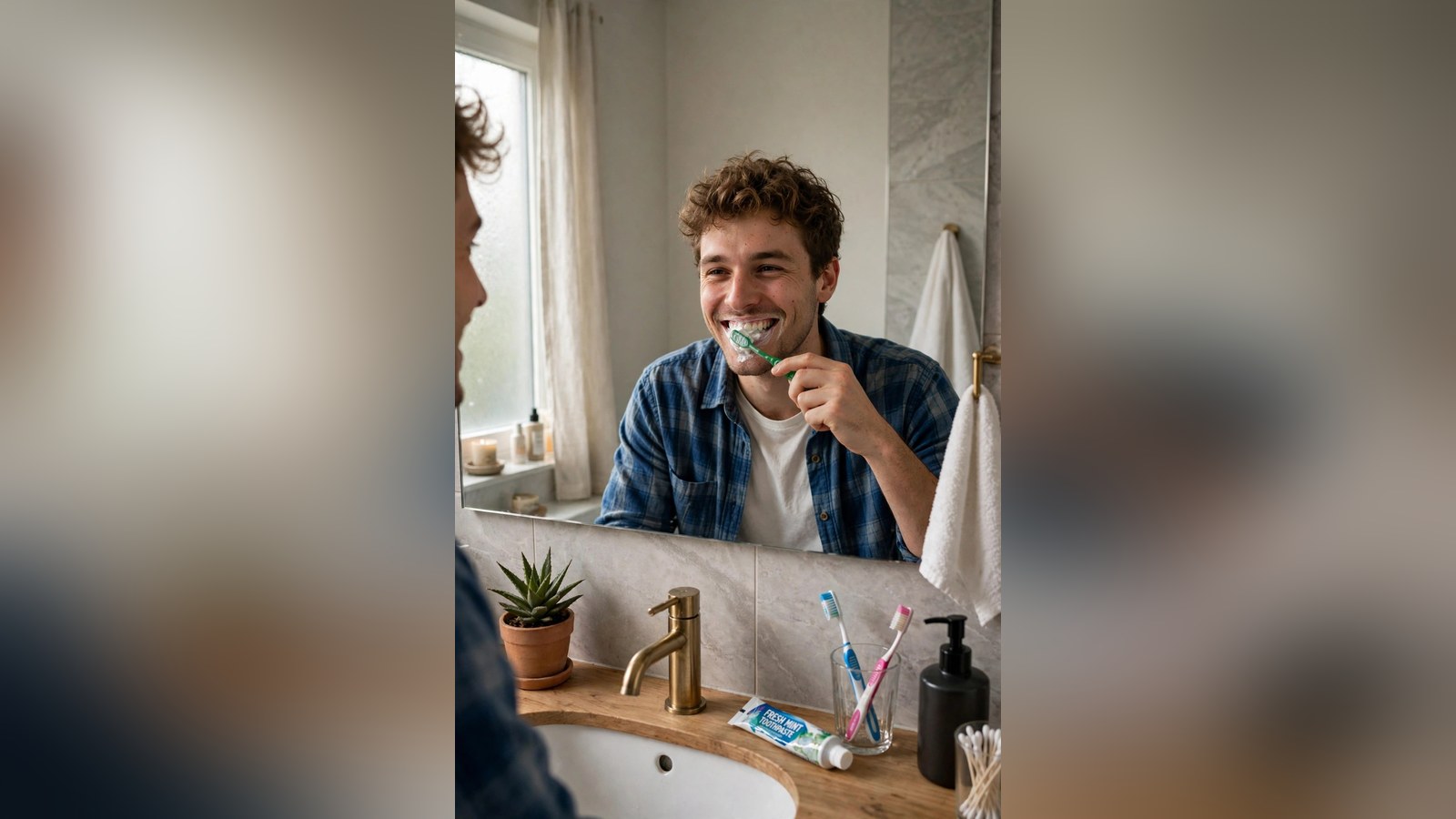
Whitening changes nothing about the foundations of oral care. ADA oral hygiene guidance is the standard routine: brush twice a day with a soft bristled brush and a fluoride toothpaste, which helps protect teeth from decay, and clean between the teeth once a day with floss or another interdental cleaner, because plaque between the teeth is where a brush cannot reach and where gum disease starts.
Technique matters more in the first days than product choice. Brush gently at the gumline for two minutes, rather than scrubbing as if polishing the whiteness in. Hard scrubbing does not maintain a bleaching result, because the color change is inside the tooth, not a coating on it; it risks irritating tender gums and wearing tooth surface. A softer touch for a few days is reasonable if gums are sore, but do not stop brushing: plaque left undisturbed irritates those gums and dulls the result.
Whitening toothpastes in maintenance remove surface stain only and do not change tooth color. Used normally, they can help clear surface stains that build up between courses; used aggressively, abrasive products join the overuse pattern the ADA warns about. A regular fluoride toothpaste is sufficient for most people. Charcoal pastes and acidic home remedies sit outside this guidance entirely; the ADA warns that home remedies can do more harm than good, and none of them is aftercare.
Enamel Safety, Stated Carefully
Does whitening damage enamel? Online advice tends to split into two overstatements: that bleaching dissolves enamel, or that it is entirely harmless in any amount. The sources support neither extreme.
On the reassuring side, the NHS states that a kit from a dentist, or whitening done at a dental surgery, is the safest route, because the chemicals are strong and should only be used or sold by dental professionals who know how to protect teeth and gums. Leeds tells patients that whitening lightens shade safely when carried out by a trained professional and removes no tooth structure. The ADA Seal of Acceptance covers home bleaching products found safe and effective when used according to the manufacturer’s instructions. That last clause, when used as directed, does real work.
On the caution side, the ADA is explicit that overuse can damage enamel or gums, that irreversible tooth damage has been reported on rare occasions, and that evidence does not support unsupervised long term or repeated use. Reviews add texture rather than alarm: temporary enamel surface changes are described after bleaching, and side effects were more prevalent at higher concentrations. Dose and discipline are the safety story: use the product given, in the amount given, for the time given, and stop when the course ends.
Crowns, Veneers, Fillings, and Uneven Results
Whitening changes the color of natural tooth tissue. It does not change the color of dental materials. The ADA states that whitening will not work on caps, veneers, crowns, or fillings, and Leeds gives the practical consequence: previous fillings may require replacement after whitening if they are no longer a good color match, because the natural teeth around them have lightened and they have not.
Aftercare cannot fix a mismatch, and more bleaching makes it worse, because each application lightens the natural teeth further from the restoration. If a front filling or crown stands out, book a review to discuss replacing it to match the new shade; dentists usually let the shade settle before matching new work. If veneers are part of your longer term thinking, including where teeth are missing, our comparison of veneers with missing teeth options sets out what veneers can and cannot do there.
Uneven results have their own logic. Teeth differ in thickness and how much dentin shows through, so they lighten at different rates, and the neck near the gum often stays deeper than the biting edge. A tooth darkened by injury or medication may barely respond. Judge the whole result in daylight a few days later, and raise persistent single tooth darkness with your dentist, as it can signal a problem inside the tooth.
Keeping the Result, Touch Ups, and Repeating Treatment
Whitening is not permanent. The NHS says so directly, while noting that if you follow your dentist’s advice the effect may last a long time, around three years in its estimate. Treat that figure as an illustration of the range, not a promise: duration depends on the original stain, the method used, and your habits afterward.
What fades a result is mostly what stained the teeth first, acting slowly: chromogen pigments from coffee, tea, and red wine, tar and nicotine from tobacco, and thinning enamel with age. You need not eliminate coffee or tea. The habits that support a result are ordinary: twice daily brushing and daily interdental cleaning, rinsing with water after strongly colored drinks, no tobacco, and routine dental appointments.
Touch ups are normal, but they run on your dentist’s schedule. Courses are separated by months, not days, and the right interval depends on your teeth, sensitivity history, and how the shade has aged. Never start a repeat course to correct a result you have not discussed: disappointment is sometimes about an unresponsive stain type or a restoration mismatch, and in both cases more peroxide is the wrong tool.
Who Should Talk to a Dentist Before Whitening at All
Aftercare starts before treatment, with the check that says whether whitening suits your mouth. The NHS does not carry out whitening for people aged 17 or younger, or with unhealthy teeth or gums, and does not recommend it during pregnancy or while breastfeeding. It also advises that whitening from beauty salons or kits bought from a pharmacy or online does not work as well and may harm teeth and gums. Those are United Kingdom service rules, quoted as a sensible boundary checklist rather than law elsewhere; the point travels well: a dental professional should check teeth and gums before strong chemicals are applied.
Untreated decay, gum disease, cracked or leaking fillings, exposed roots, and existing sensitivity all change the calculation, because peroxide reaching a nerve through a defect differs from peroxide reaching it through healthy enamel, and the 2022 review linked those weak points to more severe sensitivity. Raise any of them before starting rather than discovering the interaction mid course. For most people this is not a permanent ban: decay can be treated, gums stabilized, and whitening reconsidered afterward, in the right order.
When to Contact Your Dentist
Contact your dentist, rather than simply adjusting your aftercare, if any of the following apply:
- Sensitivity that is severe, disturbs sleep or eating, or is getting worse instead of easing after the first day or two.
- Sensitivity or pain that has not clearly improved about a week after your last application, or that returns without further treatment.
- Pain focused in one tooth, especially throbbing or lingering pain, which can point to decay, a crack, or a leaking filling rather than general bleaching sensitivity.
- Gums that are blistered, swollen, peeling, or still badly sore several days after treatment ended, or white patches that do not fade.
- A tooth that changes color unevenly, darkens, or looks markedly different from its neighbors after treatment.
- Swelling of the face or gum, fever, or a bad taste that persists, which need prompt assessment whatever their cause.
Also contact your dentist before starting whitening if you are pregnant or breastfeeding, or if you know you have gum disease, untreated decay, or a tooth that already hurts.
Frequently Asked Questions
How long should I avoid coffee after whitening?
Many dentists advise avoiding strongly colored drinks for the first day or two, and if your sheet says that, follow it. But systematic reviews of clinical trials in 2024 and 2025 found no significant difference in final color between patients on a strict white diet and patients who drank coffee, tea, cola, and red wine or ate normally. A day or two is a common precaution, not a proven requirement, and one coffee inside that window will not undo your result.
Is a white diet necessary after whitening?
No, not on current evidence. It is a widespread and harmless short term precaution, and some dental teams, including an NHS teaching hospital service, advise avoiding highly colored food and drink during a bleaching course. But the pooled clinical trial evidence found that dietary restriction did not significantly improve bleaching outcomes during treatment or a month afterward. Follow your own dentist’s sheet where it gives one, keep any restriction short, and do not treat a lapse as a failure.
Is sensitivity after whitening normal, and how long does it last?
Yes. Sensitivity and oral irritation were the most common side effects in the Cochrane review of 71 home bleaching trials, and they were mild and transient. In office studies, sensitivity was reported in up to half of patients and most often lasted two to three days; home course sensitivity tends to appear early and settle a few days after stopping. Severe pain, pain in one tooth only, or no clear improvement after about a week should be checked.
Can I brush my teeth normally after whitening?
Yes, and you should. Brush twice a day with a soft bristled brush and fluoride toothpaste, and clean between your teeth once a day, as the ADA advises for everyone. Brush gently rather than scrubbing: bleaching changes color inside the tooth, so hard brushing adds nothing to the result and can irritate tender gums. A sensitive teeth toothpaste is a reasonable choice while sensitivity lasts. Avoid aggressive use of abrasive whitening products, which belongs to the overuse pattern that can damage enamel and gums.
Does teeth whitening damage enamel?
Used as directed, under dental supervision or with a product accepted as safe and effective, whitening is the route the NHS and the ADA describe as safe for suitable teeth, and it removes no tooth structure. The cautions are specific: the ADA states that overuse can damage enamel or gums, that irreversible damage has been reported on rare occasions, and that evidence does not support unsupervised long term or repeated use.
Will whitening work on my crown, veneer, or filling?
No. Bleaching changes the color of natural teeth only, and the ADA states plainly that whitening will not work on caps, veneers, crowns, or fillings. If natural teeth lighten around an existing restoration, the restoration can look darker by contrast, and dentists may suggest replacing it to match the new shade once that shade has settled. Do not try to close the gap with extra bleaching, which only lightens the natural teeth further. Raise it at a review appointment instead.
How long will the results last, and can I repeat whitening?
Results are not permanent. The NHS notes that with your dentist’s advice followed, the effect may last around three years, but individual results vary widely with stain type, method, diet, tobacco use, and aging, since enamel thins over time and more yellow dentin shows through. Touch up courses, spaced by months, are a normal way to maintain a result, but plan them with your dentist, especially if you were sensitive before. Repeating treatment on your own schedule, or immediately after a disappointing course, adds irritation without reliably adding whiteness.
Sources & references
- American Dental Association, MouthHealthy, Teeth Whitening, including how peroxide bleaches break stains into smaller pieces, yellow teeth bleaching well while brown teeth respond less and gray toned teeth may not bleach at all, no effect on caps, veneers, crowns, or fillings, in office, dentist supplied tray, and over the counter options, sensitivity occurring when peroxide gets through enamel to dentin and irritates the nerve and usually being temporary, and overuse damaging enamel or gums. https://www.mouthhealthy.org/all-topics-a-z/teeth-whitening.
- American Dental Association, Council on Scientific Affairs, Statement on the Safety and Effectiveness of Tooth Whitening Products, including whitening as any process that makes teeth appear whiter, bleaching products containing peroxide that removes intrinsic and extrinsic stains, carbamide peroxide breaking down into hydrogen peroxide (10 percent carbamide peroxide yielding about 3.5 percent hydrogen peroxide), tooth sensitivity and occasional soft tissue irritation as the most commonly observed side effects, sensitivity often occurring in the early stages, tissue irritation most often from an ill fitting tray, both effects usually temporary, rare reports of irreversible tooth damage, and insufficient information to support unsupervised long term or repeated use.
- American Dental Association, Cleaning Your Teeth and Gums (Oral Hygiene), including brushing twice a day with a soft bristled brush and a fluoride toothpaste, which helps protect teeth from decay, and cleaning between the teeth once a day with floss or another interdental cleaner, removing plaque from areas a toothbrush cannot reach, where cavities and gum disease start.
- NHS, Teeth whitening, including whitening not being permanent with an effect lasting around three years when dentist advice is followed, whitening lightening natural teeth only, dentist supplied or surgery based whitening as the safest route, salon, pharmacy, or online kits not working as well and possibly harming teeth and gums, no whitening at 17 or younger or with unhealthy teeth or gums, not recommended in pregnancy or breastfeeding, and side effects of sensitivity to cold or sweet food and drink, sore gums or throat, and white patches on the gums lasting a short time. https://www.nhs.uk/tests-and-treatments/teeth-whitening/
- Leeds Teaching Hospitals NHS Trust, Tooth Whitening information for adult patients, including whitening being safe when carried out by a trained dental professional and removing no tooth structure, fillings and veneers not changing color and possibly needing replacement to match, gum irritation reduced by using the correct amount of gel and wiping away excess, avoiding highly colored food and drink such as curry, red wine, and tomato based foods during bleaching, sensitivity and gum whitening normally disappearing a few days after stopping, switching to alternate nights and using sensitive toothpaste if teeth become very sensitive, and avoiding very cold food and drink during bleaching. https://www.leedsth.nhs.uk/patients/resources/tooth-whitening-information-for-adult-patients/
- Eachempati P et al., Home-based chemically-induced whitening (bleaching) of teeth in adults, Cochrane Database of Systematic Reviews 2018, CD006202, a review of 71 trials finding low to very low certainty evidence of whitening compared with placebo over two weeks to six months, no reliable conclusion that any composition, method, concentration, or schedule is superior, and tooth sensitivity and oral irritation as the most common side effects, more prevalent with higher concentrations and mild and transient. https://pubmed.ncbi.nlm.nih.gov/30562408/
- Krishnakumar K et al., Post-Operative Sensitivity and Color Change Due to In-Office Bleaching With the Prior Use of Different Desensitizing Agents: A Systematic Review, Cureus 2022, including sensitivity reported in up to 50 percent of cases after in office bleaching and most often transient over two to three days, enamel surface alterations and leaky restorations, gum recession, or cementoenamel junction defects as contributors to more severe sensitivity, and professionally applied desensitizing agents before bleaching reducing sensitivity scores in the first 24 hours. https://pmc.ncbi.nlm.nih.gov/articles/PMC9090214/
- Hardan L et al., Is a White Diet Necessary for Tooth Bleaching Procedures? A Systematic Review and Meta-Analysis, Dentistry Journal 2024, including no statistically significant color differences for restricted versus unrestricted diets during the first, second, or third weeks of at home bleaching (p = 0.64, 0.26, 0.43), one month after at home treatment (p = 0.27), or one month after in office treatment (p = 0.90), and the conclusion that dietary restrictions are not necessary during or after bleaching. https://pubmed.ncbi.nlm.nih.gov/38668030/
- Münchow EA et al., White diet is not necessary during dental bleaching treatment: A systematic review and network meta-analysis of clinical studies, Journal of Dentistry 2025, including seven clinical trials at low risk of bias with moderate quality evidence, similar color change for a white diet versus coffee, black tea, cola, grape juice, red wine, or an unrestricted diet, and the conclusion that restricting dietary pigments during bleaching is not essential. https://pubmed.ncbi.nlm.nih.gov/39557282/


