Short answer
- Safe flea and tick treatment depends on species, age, weight and health, and the product label governs every choice. Never use a dog product on a cat. Many dog products contain permethrin, which can be lethal to cats. For kittens, manual removal with a flea comb comes first. Most kittens cannot use a chemical preventive until they reach the label minimum age and weight, commonly around 8 weeks for monthly products. Puppies have similar minimums. Adult cats and dogs have a wider choice of topical, oral and collar products, but young, pregnant, senior or medicated animals need veterinary advice first. This article is general information only and gives no dose for an individual animal.
Why Fleas and Ticks Need a Plan, Not a Single Treatment
Fleas feed on blood and reproduce fast. The adult fleas you see are only part of the population. According to the Merck Veterinary Manual, a single female flea can produce up to 50 eggs per day. The eggs fall from the fur into bedding, carpet and soil, hatch into larvae, and then form pupae. Adults can stay inside the cocoon for weeks before emerging when a host is near. That hidden life cycle is why a single bath or dose rarely ends an infestation. Effective control treats the pet and the home together, and continues prevention on the schedule the label sets.
Fleas are more than an itch. The Merck Veterinary Manual notes that fleas can transmit tapeworm infections and can cause allergies and anemia. Many pets are allergic to flea saliva, a condition called flea allergy dermatitis. An allergic pet may itch intensely, lose hair and develop scabs, sometimes after only a few bites. In heavy infestations, especially in young kittens and puppies, blood loss can cause anemia, which can become life threatening.
Ticks attach and feed for days, and while attached they can transmit serious infections. Risk depends on where you live and which tick species are present. Indoor pets are not exempt. Fleas can arrive on clothing, shoes or another animal and survive indoors through winter. Mosquitoes add a separate risk, because they transmit heartworm, covered briefly below.
How to Tell Whether Your Pet Has Fleas or Ticks
Signs of fleas include frequent scratching, biting or grooming, restlessness, red or irritated skin, hair loss and scabs. You may also see small dark specks in the fur. Those specks are often flea dirt, which is flea excrement. The Merck Veterinary Manual explains a simple check. Place the specks on a damp paper towel. Flea excrement dissolves and produces a reddish brown color, because it contains digested blood. Adult fleas are small and fast, so flea dirt is often the clearest clue.
Ticks are often easier to feel than to see. Check around the ears, under the collar, between the toes, along the belly and in the groin, feeling for a small bump. See a veterinarian right away if a kitten with fleas seems weak, has pale gums, stops eating or breathes fast. Those can be signs of flea anemia, treated as urgent in a kitten.
The Safety Rules That Govern Every Product
Flea and tick products in the United States are regulated by the US Environmental Protection Agency or the US Food and Drug Administration, depending on the product. The FDA fact sheet on isoxazoline products makes that split clear. Regulation does not make a product safe for every animal. It makes the label the authority for the animals the product was tested and approved for. The EPA page on controlling fleas and ticks on your pet gives the core rules.
- Use a product only on the species and the size or weight named on the label. Never apply a dog product to a cat, or a cat product to a dog, because some ingredients are more toxic to one species than to the other.
- Apply only the amount indicated for that size and weight. A product made for a larger animal can overexpose a smaller one.
- Do not apply a product to a kitten or puppy unless the label specifically allows it. The label states the minimum age or size.
- Follow label limits for weak, aged, medicated, sick, pregnant or nursing pets. Ask your veterinarian first in those cases.
- Monitor your pet after application, especially the first time, and keep the packaging.
- Keep pets separated after a topical application until it has dried, when the label requires it, so one animal does not groom product off another.
Do not split a dose between pets, and do not combine two parasite products unless your veterinarian confirms they are safe together. If label wording is unclear, ask your veterinarian or call the manufacturer before use.
Flea Treatment for Kittens by Age
Age sets the floor for what is safe, and weight matters just as much. A product that is fine for an adult cat can be too concentrated for a kitten that weighs barely a pound. Match the product to your kitten’s exact age and weight and confirm the choice with your veterinarian. The examples below reflect common United States labels at the time of writing. Labels change, so the label you hold is the authority, and no example here is a recommendation for your kitten.
Kittens Under 4 Weeks: Flea Comb and Gentle Bath Only
Very young kittens usually cannot use chemical spot on or oral preventives. The safe tools are a fine toothed flea comb and a careful bath. Comb through the fur over a white paper towel, paying attention to the neck, belly and base of the tail, and drop live fleas into soapy water so they cannot jump back on.
A short bath with plain mild dish soap can remove and kill the live fleas present that day. Keep the kitten warm and the bath short, because chilling is a real danger for small kittens. Wash from the neck down, avoid the eyes, ears and mouth, rinse fully, towel dry right away, and return the kitten to a warm space. A bath gives no lasting protection, so pair it with cleaning the bedding and with veterinary guidance. If the kitten is weak, pale or not feeding, contact a veterinarian first.
Kittens From 4 Weeks: Short Acting Knockdown Becomes an Option for Some
One oral product, sold under the brand name Capstar, has nitenpyram as its active ingredient and is commonly labeled in the United States for kittens from 4 weeks that weigh at least 2 pounds. It is a short acting knockdown for adult fleas already on the animal. It gives no lasting protection, so it is a rescue tool rather than a preventive. Talk to your veterinarian before using it, and never use it below the labeled age or weight.
Kittens 8 Weeks and Older: Monthly Preventives Open Up
From around 8 weeks, many kittens can use monthly spot on or oral flea products, as long as they meet the weight minimum on the label. Examples of common United States label minimums follow. Check the current label before you rely on any figure here.
- Advantage II, a topical spot on for cats, commonly labeled from 8 weeks and 2 pounds, covering adult fleas, eggs and larvae, and generally available without a prescription.
- Frontline Plus, a topical spot on for cats, commonly labeled from 8 weeks and 1.5 pounds, covering fleas and ticks, and generally available without a prescription.
- Revolution Plus, a topical spot on for cats, commonly labeled from 8 weeks and 2.8 pounds, covering fleas and ticks and some other parasites, and available by prescription.
- Comfortis, an oral chewable for cats, commonly labeled from 14 weeks and 4.1 pounds, covering adult fleas, and available by prescription.
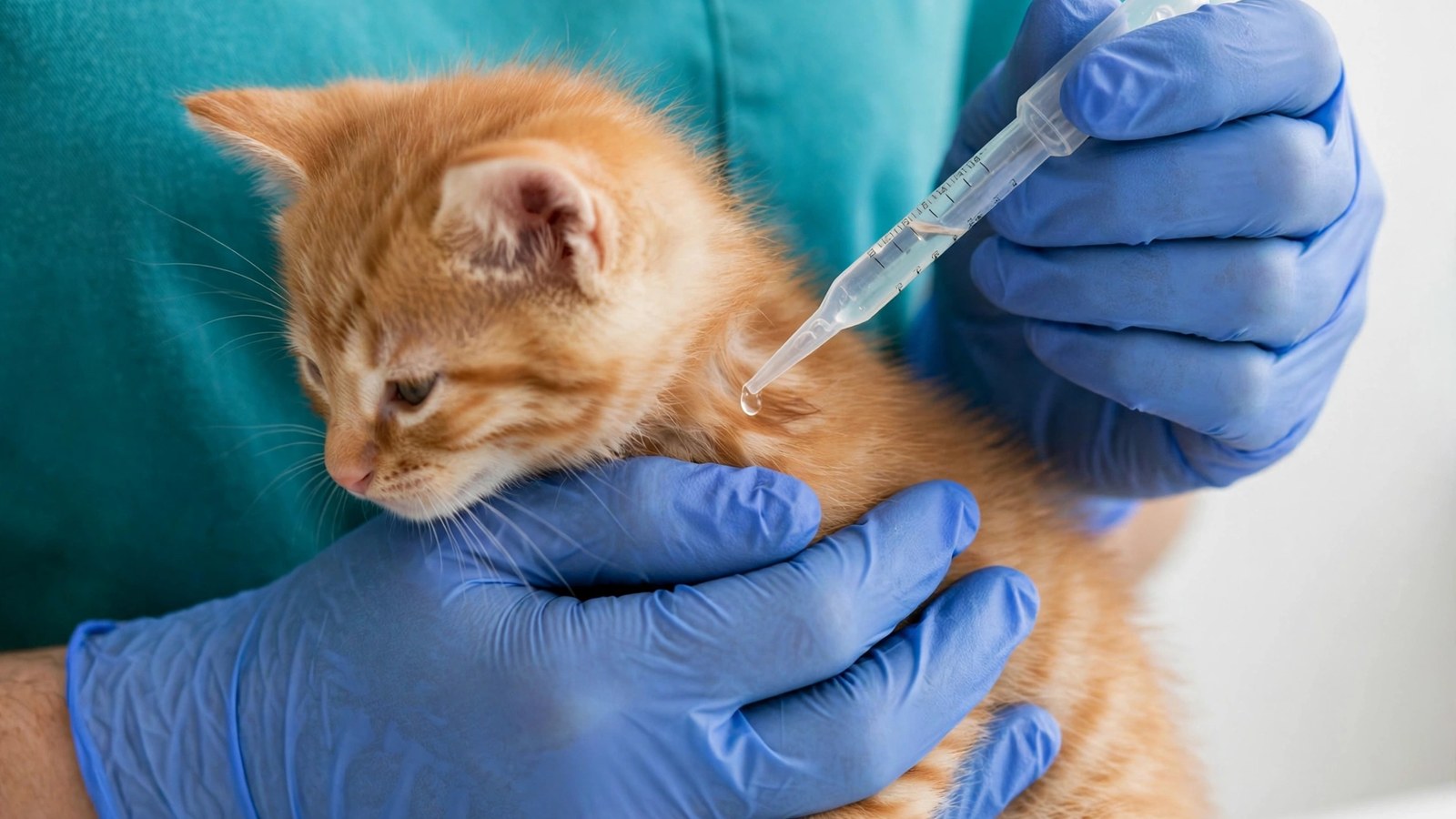
Topical spot on products are applied to the skin, usually at the back of the neck, most often once a month. Prescription options that cover more parasites can help in tick heavy areas. Choosing among them comes down to weight, lifestyle, health history and local parasites. A veterinarian can match the product to your kitten instead of leaving you to guess from a box.
Flea and Tick Treatment for Adult Cats
Adult cats can use monthly topical products, oral products and, in some cases, collars, as long as the product is labeled for cats and matched to weight and health. The single most important rule is species. Never use a dog flea product on a cat.
Many dog products contain permethrin. Cats cannot process permethrin the way dogs can, and exposure can cause tremors, seizures and death. Treat this as a hard rule with no exceptions and no dose adjustment that makes it safe. The risk also applies in mixed homes. A cat can be exposed by grooming a recently treated dog or sharing bedding with one, so keep cats away from a treated dog for as long as the label requires, and ask your veterinarian whether a permethrin product is sensible at all in a home with cats.
For indoor cats, prevention still matters, because fleas arrive on clothing, shoes and other pets. A monthly product labeled for cats is the usual starting point to discuss with your veterinarian. An outdoor cat may need tick cover too, so check the label.
One drug class needs extra care. The FDA has alerted owners and veterinarians that isoxazoline class products have been associated with neurologic adverse events, including muscle tremors, ataxia and seizures, in some dogs and cats. The class includes fluralaner, afoxolaner, sarolaner and lotilaner, in products such as Bravecto, NexGard, Simparica, Credelio and Revolution Plus. The FDA considers products in this class safe and effective for dogs and cats, and most animals have not had neurologic reactions, but seizures may occur in animals with no prior history. If your pet has a seizure history, raise it with your veterinarian before an isoxazoline product is chosen.
Flea and Tick Treatment for Dogs and Puppies
Dogs have the widest range of options, including oral chewable tablets, topical spot on solutions and longer lasting collars. Oral products work from inside the body and kill fleas and ticks after they bite. Most are given monthly, and a small number are labeled to last longer per dose. Some topical dog products containing permethrin also repel ticks and mosquitoes, which is one reason they must be kept away from cats. Collars release active ingredients slowly and can suit owners who prefer less frequent handling, but only when labeled for the dog’s age and size.
Active ingredients on labels include fipronil, imidacloprid, permethrin in dog only products, and the isoxazolines named above. Some products add an insect growth regulator such as methoprene or pyriproxyfen, which targets eggs and larvae. That matters, because a product that only kills adult fleas leaves the next generation to hatch.
Puppies follow the same label logic as kittens. Do not use a product on a puppy unless the label allows it for that age and weight, and use a flea comb for a puppy too young for any product. Senior, pregnant, nursing, medicated and seizure history dogs all need veterinary input first.
Tick Prevention Specifically
Tick prevention overlaps with flea prevention but is not identical. Some flea only products do not cover ticks, and tick cover can differ by species, so read the label for the species listed. After walks or play in grass, wooded areas or brush, check your pet, focusing on the ears, under the collar, between the toes, along the belly and around the tail.
Remove an attached tick promptly with fine tipped tweezers, grasping close to the skin and pulling upward with steady pressure. Clean the bite area and note the date. Watch for redness, fever, tiredness, reduced appetite, joint pain or shifting leg lameness. If those signs appear, contact your veterinarian and mention the tick, because testing for a tick borne infection may be needed. Prevention should continue year round in many regions, because ticks can stay active in mild winter weather.
Natural Options, and What They Can and Cannot Do
Regular combing, washing bedding in hot water, vacuuming and yard care genuinely reduce flea numbers and support any product based plan. Beyond those steps, be cautious. Essential oils are a poor substitute for a labeled product and can be dangerous, especially for cats. Concentrated oils, including tea tree oil, can poison a cat that licks them from its fur, and there is no solid evidence that homemade sprays reliably control an infestation. A product marketed as natural is not automatically safe or effective.
Do not use human insect repellent on a pet. EPA guidance is that no product should be used on pets or other animals unless the label clearly states that it is for animals.
Treating Your Home and Preventing Reinfestation
Treating the pet is only half the job, because most of a flea population lives in the environment as eggs, larvae and pupae, not on the pet. The Merck Veterinary Manual advises washing pet bedding and vacuuming areas where pets sleep, and notes that control commonly takes 6 weeks to 3 months, because new adults keep emerging from pupae already in the home.
- Wash all pet bedding in hot water and dry it thoroughly. Repeat weekly while fleas are active.
- Vacuum carpets, floors and furniture often, then empty the canister or bag outside right away.
- Treat every pet in the home at the same time, each with a product labeled for its own species, age and weight.
- Stay on prevention as your veterinarian advises, including through winter. Stopping in fall is a common reason infestations return.
- Keep the yard trimmed, and remove shaded debris where fleas and ticks thrive.
Repeat pet treatment on the product schedule. One treatment is rarely enough. If an infestation is severe or persistent, ask your veterinarian to review the plan.
Mosquitoes and Heartworm: A Related but Separate Risk
Mosquitoes transmit heartworm to dogs and cats. Cats can also be infected, and even a small number of worms can cause serious illness in a cat. Heartworm prevention is a separate product from flea and tick prevention, although some prescription products combine the two. A flea and tick product alone should never be assumed to prevent heartworm. Talk to your veterinarian about heartworm prevention and testing, and remove standing water around the home to reduce mosquito exposure.
Flea Treatments to Avoid for Kittens and Cats
- Dog flea products of any kind, and above all any product containing permethrin.
- Essential oils such as tea tree oil applied to the skin or fur. They are toxic to cats and unreliable for flea control.
- Products used below their labeled minimum age or weight, including adult cat products divided down for a kitten. Never guess or split a dose.
- Household sprays, yard products or human insect repellents applied to a pet.
- Several parasite products combined at once without veterinary guidance.
- Old or unlabeled products, and any product whose species, age and weight limits you cannot confirm from its packaging.
If a dog product was applied to a cat or kitten by mistake, contact a veterinarian immediately. Keep the package, or photograph the label, so the veterinarian can see the exact product. Do not wait for symptoms before you call.
When to See a Veterinarian
See a veterinarian right away if a kitten with fleas is weak, has pale gums, is not eating or is very young. Seek urgent care for any pet that shows tremors, seizures, collapse, trouble breathing or facial swelling after a product is applied, and for any cat that may have been exposed to a dog product containing permethrin.
Book a visit promptly if an infestation persists despite correct treatment, if skin infection develops, if ticks are found and illness follows, or if you are unsure which product is safe. Ask for advice before choosing a product for an animal that is young, pregnant, senior, sick, on medication, or has a seizure history.
This article is general information, not a prescription for your pet. Labels change, and the right product depends on species, age, weight, health and household.
Frequently Asked Questions
How do you get rid of fleas on a kitten fast?
For a kitten under 4 weeks, a flea comb and a short, warm bath with plain mild dish soap remove the fleas present that day. From 4 weeks and at least 2 pounds, a veterinarian may advise a short acting oral knockdown labeled for that age and weight. At about 8 weeks and the labeled weight, monthly preventives begin. Speed matters less than safety.
How do you get fleas off kittens without harming them?
Comb with a fine toothed flea comb over a white towel, drop live fleas into soapy water, and bathe only with plain mild dish soap or a product your veterinarian approves, keeping the kitten warm and the bath short. Never use dog products, essential oils or adult cat products on a young kitten, and never guess a dose. Clean the bedding at the same time.
What is the best flea treatment for indoor cats?
For most indoor cats, a monthly product labeled for cats, matched to weight and health, is a solid starting point to discuss with your veterinarian. Indoor cats still need prevention, because fleas arrive on people, shoes and other pets. If your cat goes outdoors, ask about tick cover too.
What is the safest flea treatment for cats?
The safest product is one labeled for cats, matched to age, weight and health, used exactly as directed, and chosen with veterinary input where there is a seizure history or a household with dogs. No product is risk free. The most dangerous choice is a dog product used on a cat, especially one containing permethrin.
How old do kittens need to be for flea treatment?
Manual removal can be used at any age. A short acting oral knockdown is generally labeled from 4 weeks and 2 pounds. Most monthly preventives are labeled from about 8 weeks with product specific weight minimums, and one common oral chewable for cats is labeled from 14 weeks. Confirm the label for the exact product.
Can fleas kill kittens?
Yes. A heavy infestation can cause anemia from blood loss, which is life threatening in small kittens. Pale gums, weakness and fast breathing need urgent veterinary care, which is why fleas on a very young kitten are treated as urgent rather than watched.
Do flea collars work for kittens?
A collar is only an option when its own label allows use on a kitten of that age and weight, and many products are not labeled for young kittens. Never put a collar made for an adult cat or a dog on a kitten. For most kittens, a veterinarian advised topical or oral product, once the kitten is old and heavy enough, gives more complete cover.
How do you control ticks on pets?
Use a product labeled for ticks as well as fleas, check your pet after outdoor activity, remove attached ticks promptly, keep grass trimmed, and stay on prevention as your veterinarian advises. If illness follows tick exposure, tell your veterinarian about the ticks.
Sources & references
- US Environmental Protection Agency, Controlling Fleas and Ticks on Your Pet: https://www.epa.gov/pets/controlling-fleas-and-ticks-your-pet
- US Food and Drug Administration, Fact Sheet for Pet Owners and Veterinarians about Potential Adverse Events Associated with Isoxazoline Flea and Tick Products: https://www.fda.gov/animal-veterinary/animal-health-literacy/fact-sheet-pet-owners-and-veterinarians-about-potential-adverse-events-associated-isoxazoline-flea
- Merck Veterinary Manual, Fleas of Dogs (pet owner version): https://www.merckvetmanual.com/dog-owners/skin-disorders-of-dogs/fleas-of-dogs?query=fleas,%20dogs


