Short answer
- A butterfly garden design plan starts with the site and the season, not with a shopping list of flowers. Choose a sunny, wind sheltered spot you can see and reach easily. Plan for two plant jobs: host plants that feed caterpillars, and nectar plants that feed adult butterflies. Arrange plants in generous groups, in layers of different heights, so something useful is in flower from spring through fall. Add flat rocks for warming in the sun, nearby shrubs or trees for shelter, and a shallow damp spot for water. Keep insecticide and herbicide use out of the bed. No plan can promise particular species or a set number of visits. A good plan gives butterflies already in your area food, shelter, and a reason to stay longer. Check every plant choice against local extension or native plant guidance for your soil, rainfall, and climate before you buy.
Why a Plan Matters More Than a Plant List
Many butterfly garden failures are planning failures. A bed of bright flowers in deep shade, a single plant of each kind scattered across a yard, or a garden that blooms for three weeks and then goes quiet will disappoint, even if every label mentions butterflies. A plan forces four decisions in the right order: where the garden sits and how much sun and shelter it gets; which host plants local caterpillars need; how nectar will be kept available across the season; and how the garden will be watered, weeded, and left alone in the right places. A measured sketch with sun notes, a wind note, a water note, and a rough bloom calendar is enough to work from, and it is far more useful than a plant list copied from another region. This article is a companion to general butterfly life cycle material, not a repeat of it. Its job is narrower: how to lay out ground, plants, and features so each life stage has a better chance of finding what it needs in one place.
Read the Site: Sunlight, Shelter, Drainage, and Access
Sunlight is the first filter. Most plants that attract butterflies need full sun, and butterflies themselves need sun to warm their bodies before they can fly well. Watch the candidate spot through the day before you commit, because morning sun matters for warming and activity. Six or more hours of direct sun a day is a useful working target, and the University of Missouri Extension guide for a home butterfly garden uses six to eight hours as its benchmark. Treat that figure as a target, not a guarantee. Shade from trees, fences, and buildings changes through the season, so a spot that looks sunny in early spring may be shaded by midsummer. If no spot reaches the target, use the sunniest ground you have, or split the garden into sunny groupings. Wisconsin Extension notes that butterflies have been found to prefer scattered groupings of butterfly plants rather than one single large butterfly garden, so several sunny pockets close together can be a sound design.
Shelter needs balance. Butterflies are light, and strong wind makes feeding and egg laying hard work. Illinois Department of Natural Resources guidance recommends a flat or slightly sloped location protected from wind and suitable for native plant growth. A fence, hedge, wall, or row of shrubs on the windward side can act as a windbreak, and the United States Botanic Garden recommends shrubs and trees nearby for hiding and wind shelter. Leave open approaches from at least one side, keep the center sunny, and put the tallest shelter planting where it blocks the prevailing wind rather than the morning sun. For winter, Illinois guidance lists log piles, tree crevices, and shelter under tree bark as winter habitat for non migrating butterflies. Leaving a quiet corner and some standing stems through winter, where safe and practical, serves the garden better than a tidy but empty winter bed.
Drainage and access shape plant choice and maintenance. Note where water pools, where it runs off, and where soil stays damp longest over a few rainy days. Choose ground you can reach with a hose or watering can, and leave a path or stepping stones so you can weed and inspect plants without stepping on caterpillars, eggs, or low host plants. Put the garden where you will see it, since a garden seen daily is watered and weeded on time.
Host Plants and Nectar Plants: The Distinction That Shapes the Design
Host plants feed caterpillars. An adult lays eggs on or near a host plant, and the caterpillars that hatch eat its leaves. The relationship is often specific: each butterfly species needs a particular type of food plant for its caterpillars, as Wisconsin Extension stresses. Milkweed is the best known example, because monarch caterpillars feed on milkweed leaves, and the University of Missouri Extension guide lists milkweed for monarch caterpillars and parsley for black swallowtail caterpillars. Other extension examples include dill, hollyhock, willow, cherry, and viburnum, depending on species and region. The exact list for your garden must come from local guidance, because a host plant that supports one species in one region may be absent, unsuitable, or invasive in another.
Nectar plants feed adult butterflies, which drink nectar for energy and need flowers they can land on. Wisconsin Extension notes that butterflies must land to feed, so they prefer clusters of short tubular flowers or flowers with large, flat petals. Illinois guidance adds that adults tend to prefer flowers that are flattened, forming a landing platform. A tall, showy flower with no landing place or no reachable nectar may impress a human and offer little to a butterfly. A complete plan includes both jobs. The United States Botanic Garden states that a garden including plants for the entire life cycle will attract a variety of native butterflies, because larvae need host plants for food and pupation while adults need nectar and egg laying plants. Nectar only may attract visitors that then leave. Host plants only may raise caterpillars but give adults little reason to linger. Accept chewed leaves on host plants as evidence the design is working, and place host plants where chewed foliage will not dominate the display. Spraying host plants to protect their appearance defeats their purpose.
Three Layout Models You Can Adapt
There is no single correct shape. What matters is that the shape fits the site, keeps plants in useful groups, and leaves room for sun, shelter, water, and access. Adapt every model below to your ground, and do not copy a plan from another climate without checking it locally.
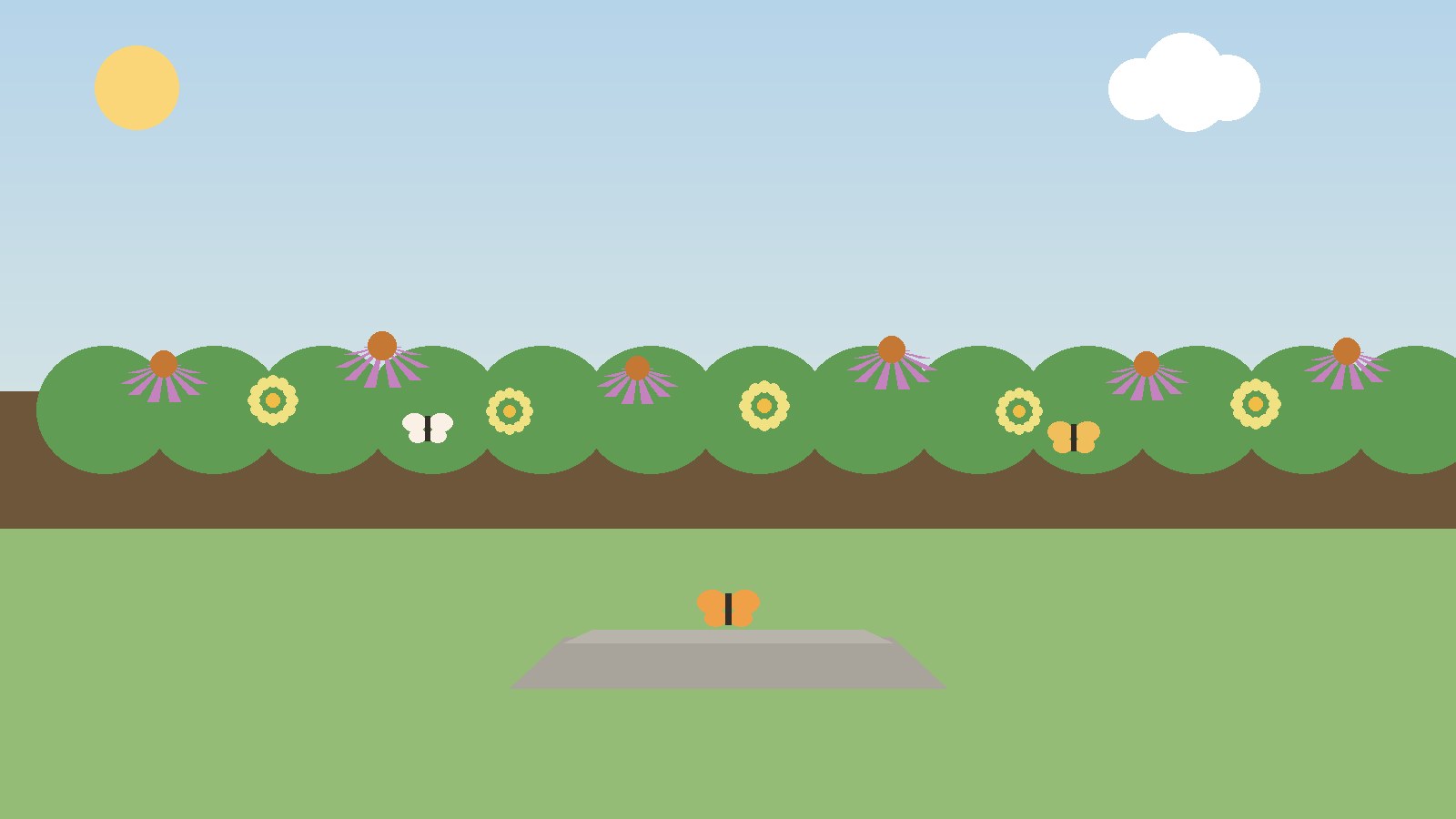
A sunny border along a fence, wall, or path is the easiest model for most gardeners. Put tall plants at the back, medium plants in the middle, and low plants at the front, so flowers stay visible and the bed does not shade itself out. Use the fence or wall as a windbreak on the windward side, but keep the front open to sun and flight. Keep the bed narrow enough to weed from the edge, or add stepping stones through a deeper border.
An island bed is a freestanding bed you can walk around, often oval or round, with tall plants in the center and lower plants toward the edges. The University of Missouri Extension guide shows a round garden about nine feet in diameter and a rectangular garden about four feet by twenty feet, showing how flexible the footprint can be once the principles are kept. Plan a path to the center before planting, or the middle plants will become hard to reach once the bed fills in.
Scattered groupings suit small yards and sunny containers. Wisconsin Extension notes that a butterfly garden can be any size, from a few potted plants in a sunny spot to a small bed or a large open field. Place two or three sunny groupings close together, each with nectar and host plants suited to its soil or container, and keep water and basking features within easy reach. Wisconsin Extension notes that water is not needed for each grouping but should be in the immediate area of all groupings. A 10 feet by 10 feet area, about 100 square feet, is a useful first dedicated size, following the Missouri example, which also notes that several smaller areas close together can add up to the same area. That figure is a planning aid, not a minimum. One sunny grouping done well is worth more than a large bed planted thinly and neglected.
Plan for Continuous Bloom, Season by Season
A garden that blooms only in midsummer misses the early and late season, when adults still need nectar and late caterpillars still need host foliage. Wisconsin Extension advises planting several plants with different flowering times to make nectar available throughout spring, summer, and fall. Build a simple bloom calendar before you buy, with one column for each season, and check that each column has at least two or three useful nectar groups.
Think in plant groups, not single specimens. Extension guidance recommends planting nectar and host plants in masses or clumps rather than in rows or at random, because butterflies are drawn by color and scent, and a mass of one color is easier to find than a single flower lost in a mixed border. The United States Botanic Garden makes the same point: group plants to create a mass of color. The Missouri guide suggests, for its youth garden model, at least 10 plants of two different species to increase butterfly numbers. You need not follow that exact number at home, but the principle is sound: repeat a plant in a group large enough to notice, rather than buying one of everything.
Use the groups below as a framework, and replace every entry with a locally suited equivalent. They come from extension lists, not a prescription for every region. For spring, plan early nectar plus host foliage already available for egg laying. For summer, plan the main display: coneflower, black-eyed Susan, blazing star, phlox, and milkweed types appear repeatedly in extension nectar lists, with annuals such as zinnia, lantana, and verbena types adding long summer color where climate suits them. For fall, plan late nectar: aster and goldenrod types are named for this role, with sedum types also listed. Within each season, mix heights and colors, but keep each mass one strong color. Wisconsin Extension notes that most butterflies prefer pink, purple, orange, yellow, or red flowers, and that large masses of a single color are more attractive than many colors mixed together. Tall plants at the back or center, medium plants in the middle, and low plants at the edge also keep flowers at different heights and stop tall plants shading short ones out of flower. Trees and shrubs that serve as host plants, such as willow, pawpaw, river birch, redbud, dogwood, spicebush, and oak types listed by the United States Botanic Garden for the Mid-Atlantic region, belong in the plan even when not in bloom. Check regional suitability and mature size before planting any tree.
Water, Basking Spots, and Shelter Features
Three small features complete the design: water, basking surfaces, and shelter. For water, think shallow and damp, not deep. Butterflies extract water and minerals from damp soil, as the United States Botanic Garden notes, and Illinois guidance describes adults, especially young males, seeking muddy low spots, a behavior called puddling, where they obtain moisture and minerals. A container of wet sand may also be used, with sticks or rocks for perching. The Missouri guide suggests a small clay saucer or birdbath with sand or small pebbles and shallow water. Keep water very shallow, keep pebbles or sand above the water level so butterflies can land without wetting their wings, refresh the water regularly, and place the feature in sun near the plantings.
For basking, provide flat rocks or open ground in full sun. The United States Botanic Garden advises rocks for basking, because butterflies are sun lovers and cannot fly until the sun’s warmth heats their bodies. Wisconsin Extension adds that butterflies rest on rocks, exposed soil, or grasses to capture the sun’s rays, and Illinois guidance recommends large rocks, preferably dark in color for heat absorption. Place one or two basking rocks where morning sun falls first, and leave open soil nearby for resting and warming. For shelter, keep nearby shrubs and trees in the plan for hiding and wind protection, and do not let shelter planting shade the nectar bed. Put dense shelter on the windward side and keep the sunny center open. Do not overbuild: shallow water, flat sun warmed stone, and living shelter planting are the features extension guides recommend.
Soil and Watering Basics
Illinois guidance states that loose, well drained loam soil is preferred for this garden, but that native butterfly plants will grow in almost any soil and moisture levels. Aim for loose, well drained soil, but choose plants that suit the soil you actually have. Before planting, clear weeds, loosen compacted soil, and mix in well rotted organic matter to improve structure. Organic matter helps sandy soil hold moisture and helps heavy soil drain, but it is not a cure for a site that stays waterlogged. If a spot holds standing water for days after rain, choose plants suited to wet ground or choose a different spot.
Watering needs change as the garden establishes. New transplants need regular water until roots establish. Once established, native plants suited to the site may need little extra water, and Illinois guidance states that once established, no additional watering is needed if native plants are used. Treat that as conditional: it assumes suitable plants, normal rainfall, and established roots. In a dry spell, on sandy soil, or in a container, even established plants need water, and containers always need more frequent watering than beds because their soil volume is small. Keep mulch light around host plants, leave bare soil patches for basking and puddling, and avoid piling mulch against stems. Water at soil level in the morning where possible. A soil test through local extension, where available, tells you more about pH and nutrients than a guess. Do not add lime or fertilizer in large amounts without a reason.
A Worked Example: A First 10 Feet by 10 Feet Plan
This example shows how the principles combine in a small first garden. It is an example layout, not a guaranteed planting list, and every group must be checked locally before use. Start with the back edge, on the windward side, for shelter. If space allows, place one or two shrubs that can shelter and, where locally suitable, host caterpillars, far enough from the bed not to shade nectar plants at midday. If space does not allow shrubs, use an existing fence or hedge as the windbreak.
Divide the bed into three masses. In one mass, place a tall summer nectar group, such as coneflower and blazing star types, in a block large enough to read as one color from a distance. In the second, place a medium group bridging summer into fall, such as phlox and aster types. In the third, place a low front group, such as black-eyed Susan and blanket flower types, with annual zinnias where climate suits them. Tuck host plants through the bed rather than isolating them: milkweed types where monarch caterpillars can use them, if locally suitable, and parsley and dill types where swallowtail caterpillars can use them, again only where they suit the site. Finish with a flat basking rock where morning sun falls first, a shallow dish of wet sand with pebbles where you can refill it easily, and stepping stones to the middle. Then check the bloom calendar and the feature list: nectar in spring, summer, and fall; a host group; sun, shelter, water, and basking within a short flight. If any answer is no, adjust the sketch before you buy. Scale up by repeating masses, not by adding one of everything.
Avoiding Harm: Pesticides, Tidiness, and Well Meaning Mistakes
The most important habit change concerns pesticides, stated here in general terms with no product recommendations. The United States Botanic Garden advises avoiding pesticides, because they kill butterflies and caterpillars. Illinois guidance advises avoiding insecticides and herbicides in or near the garden. Wisconsin Extension warns that products killing undesirable insects will also kill butterflies, and that a natural or organic label does not mean a product is non toxic to caterpillars. Always read and follow label directions for any product you consider, and ask whether treatment is truly needed or whether chewed leaves on a host plant simply show the garden working. Spray drift matters too, so allow buffer space where possible and avoid spraying on windy days or while butterflies are active. For a serious pest problem, seek local extension advice for that pest and plant.
Tidiness is the second habit to adjust. Do not cut the garden to the ground at the first sign of autumn untidiness, because stems, leaf litter, and shelter spots may hold overwintering stages. Remove diseased material, keep paths clear, and cut back selectively for safety or access, but leave some standing stems and quiet corners through winter where practical and safe, checking local guidance first. A third mistake is planting for appearance alone. Cultivars bred for color or size at the expense of nectar may offer little food, so check cultivar performance locally. Finally, check plant origin: a plant well behaved in one region may be invasive in yours, so use local extension and native plant lists first.
Seasonal Maintenance
In spring, inspect the bed as growth resumes. Clear paths and water features, refresh basking rocks, reset the water dish with clean sand and pebbles, replace winter losses with locally suited plants rather than repeating a plant that failed twice in the same spot, and fill any gap in the bloom calendar before it arrives. In summer, water new plants as needed, deadhead nectar flowers where that extends bloom, weed before weeds set seed, and leave caterpillars on host plants alone. Do not deadhead host plants in a way that removes eggs or caterpillars. Keep the water dish filled and clean, and keep basking rocks clear so morning sun reaches them. In fall, let the garden wind down gradually, leave seed heads and standing stems where safe, and note which fall nectar groups performed best and which changes to sketch for next year. In winter, do little in the bed itself beyond keeping paths safe, and use the quiet months to check next year’s plant choices. Year by year, thin overcrowded masses and replace plants that outgrow their space.
What a Garden Can and Cannot Guarantee
A well planned garden can offer food, shelter, water, and basking places. It cannot guarantee that particular species will arrive, arrive in a particular year, or stay. Species present nearby, weather, surrounding habitat, and neighboring land all affect visits, and no single garden controls those factors. It also cannot guarantee numbers. Extension guides speak of increasing the number and variety of visitors, but they do not promise counts, and neither does this article. A garden supporting a few species well is a success, even if a garden elsewhere supports different species or more individuals. Compare your garden with its own previous season, not with a photograph from another region. A single bed also cannot replace larger habitat such as meadows, woodlands, wetlands, and corridors. It can add one useful patch and connect, in a small way, with patches nearby. Finally, it cannot guarantee every plant will thrive. Treat losses as information about the spot, replace the plant with one suited to actual conditions, and keep the bloom calendar filled. Give the garden at least a full growing season, preferably two, before judging it.
FAQ
How much sun does a butterfly garden need?
Plan for six or more hours of direct sun a day, with morning sun especially valuable because butterflies need warmth to fly well. The Missouri guide uses six to eight hours, and Illinois guidance uses six or more hours, while noting some butterflies will visit shade or partial shade plants. If your sunniest ground falls short, use the sunniest ground you have, split the garden into sunny groupings, and choose plants suited to the light you actually get.
Do I need both host plants and nectar plants?
Yes, for the full design in this article. Host plants feed caterpillars, and nectar plants feed adults. Nectar only may attract visitors that then leave, with nothing for the next generation to eat. Host plants only may raise caterpillars but give adults little reason to linger. Include both jobs, and check locally which host plants suit species in your area.
How large should a butterfly garden be?
It can be any size, from a few sunny containers to a large bed. A 10 feet by 10 feet bed, about 100 square feet, is a useful first size, following the Missouri example, and several smaller sunny areas close together can add up to the same effect. Start with one sunny grouping done well, with a basking rock and a shallow water dish, and grow by repeating masses.
Which plants should I choose first?
Start with plant groups, not single plants, and start locally. Choose a host group and a nectar group for each season from local extension or native plant guidance. Extension lists commonly name coneflower, aster, black-eyed Susan, blazing star, phlox, milkweed types, and annuals such as zinnia where climate suits them, but those are examples from Midwestern and Mid-Atlantic lists, not a national prescription. Replace any example that does not suit your region with a locally recommended equivalent filling the same season, height, and flower shape role.
How do I provide water for butterflies?
Provide shallow, damp places, not deep water. A small clay saucer or shallow dish filled with sand or pebbles, with water at or just below the sand level, lets butterflies land and drink without wetting their wings. Damp soil and muddy low spots serve the same purpose. Place the feature in sun near the plantings, refresh it regularly, and keep pebbles or sticks above the water level for perching.
Should I avoid pesticides in a butterfly garden?
Yes, as a general rule, avoid insecticides and herbicides in or near the garden, because they can kill butterflies and caterpillars. Wisconsin Extension warns that products killing undesirable insects will also kill butterflies, and that a natural or organic label does not mean a product is non toxic to caterpillars. For a pest problem, seek local extension advice, consider whether treatment is truly needed, and always read and follow label directions. No specific product is recommended in this article.
Why are caterpillars eating my host plants?
Because the host plants are doing their job. Chewed leaves show eggs were laid and caterpillars are feeding, not that the plant is failing. Place host plants where chewed foliage will not dominate the display, mix them with nectar plants, and resist spraying them to protect their appearance. If damage seems extreme, check with local extension whether the combination is expected rather than assuming a pest outbreak.
When will butterflies start visiting?
There is no reliable date to promise for a whole country. Visits depend on species living nearby, weather, surrounding habitat, and whether the garden offers nectar and host plants at the right times. Give the garden at least a full growing season, preferably two, before judging it, and judge it by sun, shelter, water, nectar masses across the seasons, and host foliage, rather than by a single week’s visitor count.
Keep reading: Life Cycle of a Butterfly
Sources & references
- United States Botanic Garden, Butterflies in the Garden. https://www.usbg.gov/butterflies-garden-0
- University of Wisconsin Madison Extension, Create a Butterfly Garden, revised May 2026. https://hort.extension.wisc.edu/articles/create-a-butterfly-garden/
- University of Missouri Extension, Designing a Butterfly Garden, publication YM101. https://extension.missouri.edu/publications/ym101
- Illinois Department of Natural Resources, Butterfly Garden Requirements and Plant Lists. https://dnr.Illinois.gov/education/plantlists/plantlistbutterfly.html
- University of Maine Cooperative Extension, Landscaping for Butterflies in Maine, Bulletin #7151. https://extension.umaine.edu/publications/7151e/


