Short answer
- Home care may soothe mild itching from dog skin allergies, but it does not treat or cure an allergy and it cannot diagnose the cause. For mild itching on intact skin, the measures with the clearest support are a bath with a dog safe oatmeal product in lukewarm water, wiping paws and coat after time outdoors, washing bedding with a fragrance free detergent, and keeping flea prevention current. Omega 3 fatty acid supplements are something to ask a veterinarian about, because essential fatty acids are used alongside other therapies rather than on their own. Avoid essential oils, fresh aloe from a houseplant, undiluted vinegar, and human medicines or creams unless a veterinarian has approved the exact product for your dog. See a veterinarian promptly for hair loss, hot spots, sores, discharge, a strong skin odor, ear problems, facial swelling, or itching that keeps getting worse.
What Dog Skin Allergies Look Like
Allergic skin disease in dogs usually shows up as itching, redness, and licking or chewing, rather than as sneezing. The Merck Veterinary Manual describes canine atopic dermatitis, the main environmental allergy of dogs, as a hereditary, typically itchy, inflammatory skin disease involving skin barrier abnormalities, allergen sensitization, and an imbalance of skin microbes. Cornell University College of Veterinary Medicine notes that atopic dermatitis may affect as much as 10 to 15 percent of the dog population, that it is a lifelong condition, and that there is no cure, although treatment can help a dog maintain a good quality of life.
The paws, face, ears, front legs, armpits, and belly are the areas most often affected, because those areas contact allergens directly or are easy for a dog to lick. Signs may be seasonal, year round, or year round with seasonal flares, and onset is often between 6 months and 3 years of age.
Common patterns include:
- Licking or chewing the paws, especially after walks or during pollen season
- Rubbing the face on furniture or carpet
- Scratching behind the elbows, scooting, and redness on the belly or inner thighs
- Brown discoloration of the hair where saliva has stained it from repeated licking
- Recurring ear redness, head shaking, or ear infections
- Patches of hair loss, scabs, or thickened and darkened skin where scratching has gone on for a long time
- Hives, which are raised bumps that appear suddenly, sometimes with facial swelling
Itching alone does not identify the cause. Flea allergy, environmental allergy, food allergy, mites, bacterial infection, and yeast infection can look alike, and a dog can have more than one problem at once. The Merck Veterinary Manual notes that secondary skin and ear infections with bacteria and yeast are common in atopic dogs and often worsen the signs. Scratching damages the skin barrier, damaged skin invites infection, and infection makes the itching worse. That cycle is why persistent itching deserves a diagnosis rather than endless home treatment.
The Main Causes of Itchy Skin in Dogs
Environmental allergies
Dogs can react to pollens from trees, grasses, and weeds, to mold spores, and to indoor allergens such as dust mites and dander. Cornell explains that the skin of atopic dogs has a defective outer layer, so allergens that contact the skin trigger an inflammatory response. Environmental allergy tends to flare when pollen counts rise, while dust mite allergy can itch all year.
Flea allergy
Flea allergy dermatitis is an allergic reaction to proteins in flea saliva. When a flea feeds, it injects saliva into the skin, and a sensitive dog can itch intensely after very few bites, so you may see no live fleas at all. Merck notes that extremely sensitive dogs are often nearly free of visible fleas because of excessive self grooming, which can make the cause hard to spot. Itching and crusted skin often center on the hips, the base of the tail, and the thighs, and long running cases can progress to scabs, hair loss, thickened skin, and darkening of the skin. Consistent flea prevention matters more here than any soothing bath, and long term control also involves treating other household pets and the home environment, because flea eggs and larvae live in bedding and carpets rather than on the dog.
Food allergy
Food allergy in dogs usually causes persistent itching that does not follow the seasons, sometimes with recurring ear infections, vomiting, or loose stools. Cornell notes that dogs with atopy may also have allergies to fleas and to certain foods, and that a food allergy may be considered when itching continues after flea and atopy treatments have been tried. A food allergy is diagnosed with a strict elimination diet followed by a controlled food challenge, in which the previous food is fed again to see whether signs return. Merck pet owner guidance is clear that blood and skin tests are not reliable for diagnosing food allergy. If your dog itches all year, ask your veterinarian about a supervised food trial rather than rotating foods at random, because a trial only works if the dog eats nothing outside the trial diet, including treats and flavored medications.
Skin infection, mites, contact irritation, and other problems
Bacteria and yeast often take hold in skin already damaged by scratching. Signs include greasy skin, odor, discharge, crusts, moist sores called hot spots, and hair loss. Mites such as scabies mites cause intense itching and need veterinary treatment. Hormonal disease, and contact irritation from a new shampoo, laundry product, or lawn treatment, can also make a dog itch. None of these problems improves with allergy home remedies alone, which is why a dog that does not improve quickly at home should be examined.
When Home Care Is Reasonable, and When It Is Not
Home care may be reasonable when all of the following are true:
- The itching is mild and affects a small area
- Your dog is eating, sleeping, playing, and behaving normally
- The skin is dry or slightly red, with no open sores, discharge, swelling, or foul odor
- The irritation started recently and is not getting worse
- You suspect a temporary trigger, such as pollen after a walk or a new shampoo
- The itching improves within a day or two instead of spreading
Seek veterinary care promptly when any of the following appear:
- Constant or increasing scratching, or licking that breaks the skin
- Hair loss, bald areas, or thickened and darkened skin
- Hot spots, moist sores, discharge, or a strong skin odor
- Ear involvement, including recurring ear infections, head shaking, or a sore or smelly ear
- Itching that returns every season or does not improve with basic home care
- Hives together with facial swelling, vomiting, trouble breathing, or collapse, which is an emergency
Try one measure at a time and watch the skin for a few days before adding another. That way you can tell whether something is helping or making things worse, and you can give your veterinarian a clear account of what you tried and what happened.
Home Remedies That May Soothe Mild Itching
These measures reduce allergen exposure and support the skin barrier. They are comfort measures only. They do not treat the underlying allergy, an infection, or parasites, and they are not a substitute for a diagnosis.
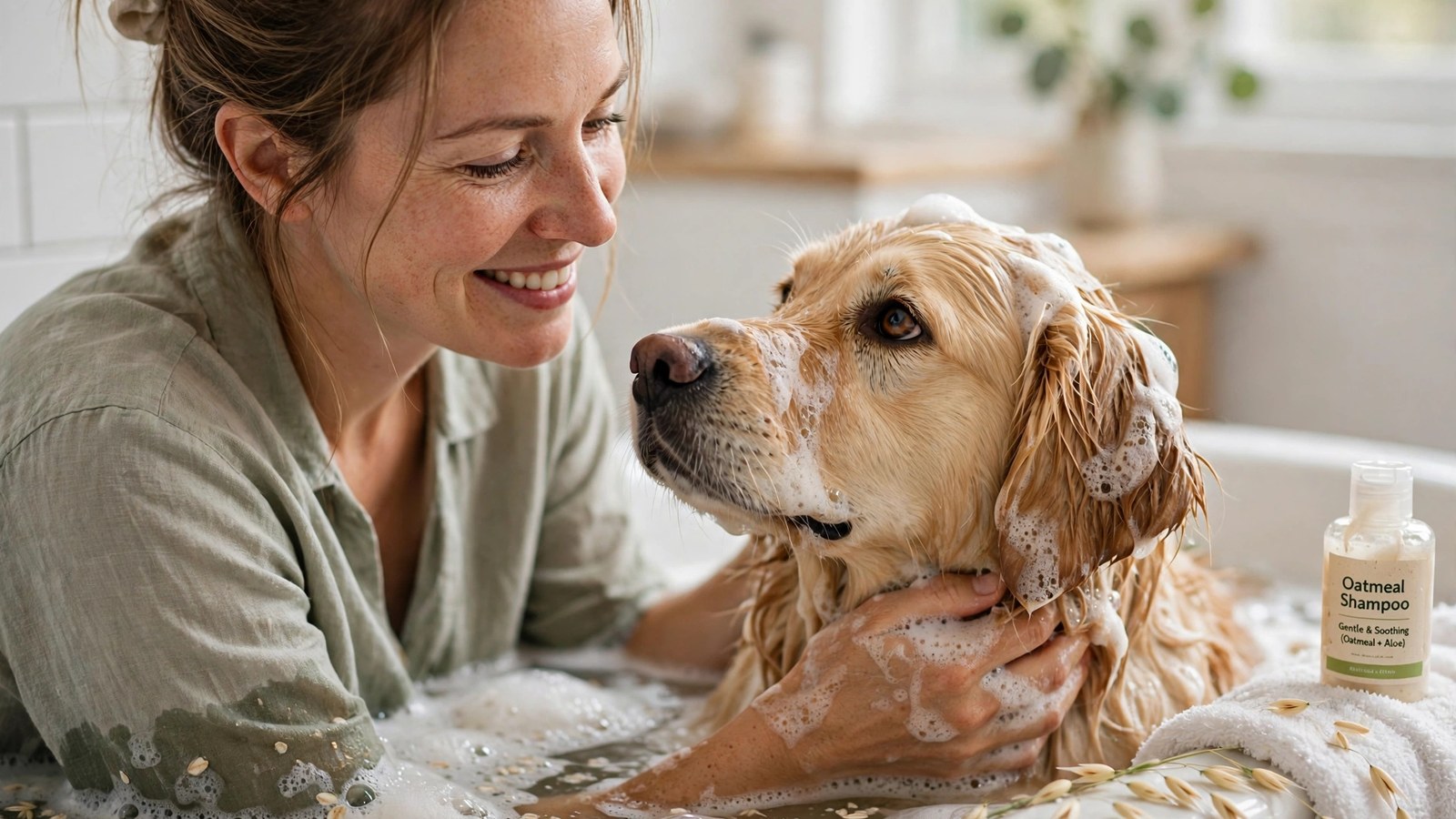
Bathe with a dog safe oatmeal product
Bathing itself does useful work. The Merck Veterinary Manual notes that bathing can decrease allergen load and is often the most effective way to put allergen avoidance into practice, and it recommends weekly to biweekly baths for many atopic dogs. An oatmeal bath can also calm mildly irritated skin. Colloidal oatmeal is the finely ground form used in dog shampoos, and a fragrance free product made for dogs gives clearer instructions and more consistent ingredients than a homemade mix.
Use cool or lukewarm water, never hot water, keep the product away from the eyes and inner ears, follow the contact time on the label, rinse thoroughly, and pat the coat dry. Check first for wounds, swelling, discharge, or severe inflammation, and do not bathe broken or infected skin at home. If flares are linked to microbial overgrowth, ask your veterinarian whether a medicated shampoo fits better, because the right shampoo depends on the cause.
If you wonder what to wash a dog with when skin allergies are present, a fragrance free shampoo made for dogs is the safer default. Human shampoo is formulated for people and can disturb a dog’s skin barrier and worsen irritation.
Wipe paws and coat after time outdoors
After walks or play, wipe your dog’s paws, legs, belly, and other areas that touched grass or dirt with a clean damp cloth or a fragrance free pet wipe. Dry the paws well, including between the toes. This simple step removes pollen and other allergens before your dog licks them off, and it is one of the most useful habits during pollen season.
Wash bedding and resting areas
Wash beds and blankets regularly with a mild fragrance free detergent and rinse them well. Vacuum where your dog sleeps, clean washable toys, and keep the coat brushed and free of mats, because matted fur traps moisture and irritants against the skin. These steps support healthy skin, but they cannot cure an allergy or treat an infection.
Keep flea prevention current
Flea prevention reduces the risk of flea allergy flare ups. Give each dose on schedule and use a product selected for your dog’s species, age, size, and health. Never use a cat product on a dog or a dog product on a cat, and do not combine parasite products unless your veterinarian directs you to. If itching stays severe despite regular prevention, an examination can check for fleas, mites, and other causes. Note that many natural flea products are based on essential oils and have not had to prove safety or efficacy, so a natural label is not a reason to choose one.
Ask your veterinarian about omega 3 fatty acids
Omega 3 fatty acids from fish oil are an adjunct, not a stand alone remedy. Cornell includes essential fatty acid supplements among the options that can be used in conjunction with other therapies for atopic dogs. Merck adds two practical cautions: essential fatty acids are not useful for acute flares, because they can take up to 2 months to take effect, and their best supported role is alongside other treatment. Supplement strength varies by brand, and too much fish oil may cause digestive upset or add unwanted calories, so ask your veterinarian whether a supplement fits your dog and what product and amount to use. Never estimate a dose from a human supplement label.
Soothe dry skin with moisture, not with kitchen experiments
For a dog with dry, flaky skin and no sores, a gentle dog safe moisturizing shampoo and regular brushing may help. If the skin is red and itchy rather than simply dry, moisture alone will not solve the problem, and the cause still needs attention.
What to Do for a Dog’s Itchy Skin, Step by Step
- Look at the whole dog in good light, including between the toes, under the belly, around the tail base, and near the ears.
- Note when the itching started, whether it follows walks or seasons, and whether any food, shampoo, or product changed recently.
- Remove the obvious triggers you can control: wipe paws after walks, wash bedding, and check that flea prevention is current.
- Try one soothing measure, such as a dog safe oatmeal bath, and watch for a day or two.
- Stop any product that makes redness or itching worse, and do not apply anything to open, wet, painful, or infected skin.
- Prevent licking of an irritated area where you can, since repeated licking stains the hair, breaks the skin, and invites infection.
- If the itching persists, spreads, or comes with sores, odor, discharge, or ear problems, book a veterinary examination.
Home Remedies to Avoid, and Why
Natural does not mean safe, and several popular remedies can harm dogs or delay real treatment.
- Essential oils: avoid applying them to your dog. The ASPCA Animal Poison Control Center warns that essential oils in concentrated form can absolutely be a danger for pets, that dogs who walk through oils or get them on their coat can develop health concerns, and that ingested concentrated oils may cause vomiting, diarrhea, and depression. Concentrated tea tree oil may cause problems with only seven or eight drops. Because concentration, formulation, and quality vary so much, the ASPCA advises avoiding direct application to a pet entirely and keeping oils out of reach. Dogs lick treated areas, which turns a skin application into something swallowed.
- Fresh aloe vera gel from a houseplant: the ASPCA lists aloe as toxic to dogs. Its plant listing gives the toxic principles as saponins and anthraquinones, with clinical signs that include vomiting, lethargy, and diarrhea, while the gel itself is considered edible in the listing. That distinction is exactly why the fresh plant is a poor home remedy: gel scraped from a home leaf can carry the latex layer that holds those compounds, and a dog will lick whatever you apply. Use only a veterinarian approved, pet formulated product if aloe is involved at all, and ask first.
- Undiluted apple cider vinegar: there is no strong veterinary evidence that it helps allergic itching, and an acidic liquid can sting inflamed or broken skin. Never apply it to open sores.
- Coconut oil: it may soften a small patch of dry skin, but it is not a proven treatment for allergies, it encourages licking, and it may upset digestion. Ask your veterinarian before using it.
- Human anti itch creams and shampoos: human creams may contain steroids, anesthetics, or zinc that can harm a dog that licks them, and human shampoos can disturb the skin barrier. A product that is safe on your skin is not automatically safe on a dog that grooms itself.
- Herbal tea soaks, including green tea and chamomile: strength varies from cup to cup, some dogs develop further irritation, and a cooled tea is not automatically safe or useful. Skip kitchen soaks and use products made and labeled for dogs instead.
Do not give your dog human medicine unless a veterinarian approves the product and the dose for that dog. Cornell notes that antihistamines such as hydroxyzine, diphenhydramine, and cetirizine can be useful to prevent mild itchiness, but are less effective when excessive itchiness is already present. The Merck Veterinary Manual agrees that antihistamines have very little efficacy for acute flares and work best given before a flare as part of a wider plan. Some human products also contain decongestants or pain relievers that are unsafe for dogs, and combination cold and allergy products are a particular risk. If you ask what you can give a dog for allergies and itching, the honest answer is that the safe choice depends on the dog, the cause, and veterinary guidance, not on a medicine cabinet staple.
Probiotics also attract attention for gut and immune health, but their role in canine allergic skin disease is not established well enough to present them as a remedy, and any supplement is worth clearing with your veterinarian first.
How a Veterinarian Diagnoses Skin Allergies
A veterinarian starts with a physical examination and a history: when the itching started, where it appears, whether it is seasonal, what the dog eats, and what flea prevention is used. Cornell is direct that there is no specific test for atopy, so a presumptive diagnosis rests on the classic signs, the examination findings, the response to treatment, and the exclusion of similar conditions, including fleas, other parasites, and bacterial and fungal infections of the skin and ears. Merck says the same: diagnosis is based on clinical signs, history, and exclusion of other itchy skin diseases, not on laboratory tests.
Next steps may include skin cytology to look for bacteria or yeast, skin scrapings to check for mites, ear swabs, blood work, a food trial, or environmental allergy testing, depending on the signs. Your notes on timing, seasons, foods, and products make this stage faster and more accurate.
Allergy testing is not the first step for every itchy dog. Veterinarians usually rule out fleas, mites, and infection first. Merck notes that allergy testing alone is not diagnostic and rather reflects exposure; its primary use is to identify the offending allergens in an individual dog and to formulate allergen specific immunotherapy, given by injection under the skin or under the tongue.
Veterinary treatment options, chosen according to the diagnosis, may include prescription medicines that control itching and inflammation, treatment for infection or parasites, a therapeutic diet, and immunotherapy. Merck notes that immunotherapy is the only treatment that can change a dog’s immune response to allergens, that it can take months to show its effect, and that atopic dermatitis cannot be cured but can usually be managed with lifelong care and regular progress checks. Home care then supports that plan instead of substituting for it.
Frequently Asked Questions
How can I soothe my dog’s irritated skin at home?
For mild irritation with intact skin, wipe paws after walks, use a dog safe oatmeal bath with lukewarm water, wash bedding with a fragrance free detergent, and keep flea prevention current. Try one measure at a time, watch for a day or two, and stop anything that worsens redness or itching. If the skin is broken, infected, or the itching persists, see a veterinarian instead of adding more home measures.
What is the best home remedy for severe itching in dogs?
There is no home remedy that reliably stops severe itching, because severe itching usually means an allergy flare, infection, mites, or flea allergy that needs diagnosis and prescription treatment. A lukewarm oatmeal bath may soothe mild irritation for a short time, but severe or constant itching needs a veterinary examination, and delaying that visit lets infection and skin damage progress.
What can I give my dog for allergies without going to the vet?
Do not give oral medicine or supplements without veterinary guidance. The safe home steps are external and simple: paw wiping, a dog safe oatmeal product, clean bedding, and current flea prevention. These may ease mild itching for a short time but cannot treat mites, skin infection, or chronic allergy, and antihistamines on their own give little relief once intense itching has started.
Why is my dog itching if there are no fleas?
Environmental allergy, food allergy, mites, dry skin, contact irritation, and bacterial or yeast infection can all cause itching without visible fleas. Fleas can also be hard to find when only a few are present, and a sensitive dog may groom so thoroughly that almost no fleas remain to be found, even though a few bites triggered a strong reaction. The pattern of affected areas gives clues, but only an examination can identify the likely cause.
How long can an allergic reaction last in a dog?
It depends on the trigger and the cause. Hives from a sudden allergic reaction may fade within hours, while environmental or food allergy itching can last weeks or months until the trigger is controlled and the skin barrier recovers. Cornell notes that atopic dermatitis is a lifelong condition, so the goal is management rather than a one time cure. A reaction that keeps returning, spreads, or comes with swelling or breathing trouble needs veterinary care, urgently in the case of facial swelling or breathing difficulty.
What do vets recommend for dogs with itchy skin?
Vets recommend finding the cause first, then treating it: flea control for flea allergy, an elimination diet for suspected food allergy, infection treatment where infection is present, and prescription itch control or immunotherapy for atopic dermatitis, with home care such as oatmeal baths, paw wiping, and clean bedding supporting the plan. The recommendation is individual, because the same itch can come from different causes, and more challenging cases may be referred to a veterinary dermatologist.
How do I care for a dog rash at home?
Keep the area clean and dry, prevent licking and scratching where you can, avoid applying human creams, oils, or vinegar, and watch for spreading redness, sores, discharge, or odor. A mild, small rash that improves in a day or two with gentle care may be monitored, but a rash that spreads, breaks open, smells, or comes with ear problems or hair loss needs a veterinary visit.
Sources & references
- Merck Veterinary Manual, Atopic Dermatitis in Dogs: https://www.merckvetmanual.com/integumentary-system/atopic-skin-conditions-in-dogs-and-cats/atopic-dermatitis-in-dogs
- Cornell University College of Veterinary Medicine, Atopic Dermatitis (Atopy): https://www.vet.cornell.edu/departments-centers-and-institutes/riney-canine-health-center/canine-health-topics/atopic-dermatitis-atopy
- ASPCA Animal Poison Control Center, The Essentials of Essential Oils Around Pets: https://www.aspca.org/news/essentials-essential-oils-around-pets
- ASPCA Animal Poison Control Center, Toxic and Non Toxic Plants: Aloe: https://www.aspca.org/pet-care/aspca-poison-control/toxic-and-non-toxic-plants/aloe
- ASPCA Animal Poison Control Center, Should You Fear the Flea?: https://www.aspca.org/news/should-you-fear-flea


