Short answer
- You can remove soft plaque from your teeth at home, and doing it every day is the single most useful thing you can do for your teeth and gums. Plaque is a soft, sticky film of bacteria that forms on teeth within hours of brushing. The American Dental Association (ADA) advises brushing twice a day for two minutes with a soft bristled brush and fluoride toothpaste, and cleaning between your teeth once a day with floss or another interdental cleaner, because a toothbrush cannot reach the surfaces where teeth touch. Hard plaque is a different problem. Once plaque has hardened into tartar, also called calculus, no toothbrush, floss, mouthwash, or home remedy will remove it. The ADA states the position plainly: once tartar forms, only your dentist can remove it. Tartar cannot be removed safely at home, and trying to scrape it off with a dental scaler bought online, a metal pick, or any improvised tool is a genuine harm risk. A slip can cut the gum, scratch enamel, damage the root surface, and drive bacteria into tissue that then becomes infected. If you can feel a rough, hard deposit that brushing does not shift, book a professional cleaning rather than reaching for a tool. This article is general information only, not a diagnosis or a treatment plan for your mouth. If you have pain, swelling, or bleeding that does not settle, see your own dentist.
What Plaque Is and How It Forms
Plaque is a biofilm, an organized community of bacteria living in a sticky matrix they produce themselves, which clings to the tooth surface. It is not simply leftover food, although food debris feeds it. The ADA describes plaque as the sticky film that can lead to cavities and gum disease, and explains that its bacteria feed on sugary substances left in the mouth and produce acids that attack enamel, the hard protective surface of the tooth.
The film builds on a predictable timeline, which is why daily removal matters so much:
- Minutes after cleaning. A thin, bacteria free coating called the pellicle forms on clean enamel from proteins in saliva. It is normal and unavoidable, and bacteria soon use it as an anchor.
- Within hours. The first bacteria attach and multiply. This young plaque is soft, colorless or pale, and easy to disrupt with a toothbrush.
- Over one to three days. Left undisturbed, the biofilm thickens and matures as more bacterial species join, and it becomes harder to shift. Mature plaque at the gum line irritates the gum and starts gingivitis, the earliest and reversible stage of gum disease.
- Over days to weeks. Minerals in saliva, mainly calcium and phosphate, harden the deposit. Mineralization can start surprisingly early in people who form tartar quickly, and a firm layer builds up, especially on the inner surfaces of the lower front teeth and the outer surfaces of the upper molars, close to where saliva glands open into the mouth.
The lesson of that timeline is simple. Plaque control is a race you win by disruption, not by force. A film broken up every day never gets the undisturbed time it needs to mature and harden. A film missed in the same places, day after day, becomes tartar. Plaque collects most where cleaning is weakest: along the gum line, between teeth, behind the lower front teeth, around the back molars, and around bridges, braces, implants, and the edges of fillings and crowns.
Soft Plaque vs Hard Tartar
The two deposits look related, and tartar starts life as plaque, but they behave completely differently and need completely different responses.
| Feature | Soft plaque | Hard tartar (calculus) |
|---|---|---|
| What it is | Living biofilm of bacteria in a sticky matrix | Mineralized, hardened plaque |
| How it feels | Soft, fuzzy film, often felt with the tongue after a night’s sleep | Rough, gritty, or crusty deposit that does not move |
| Color | Colorless to pale yellow, often nearly invisible | Yellow, tan, or brown, darker with tea, coffee, or tobacco staining |
| Where it forms | Every tooth surface, heaviest at the gum line and between teeth | Most often behind lower front teeth and on upper molars, above and below the gum line |
| Removed by brushing and flossing | Yes, if done thoroughly every day | No |
| Removed by mouthwash or home remedies | No, although fluoride products help protect enamel | No |
| Who can remove it | You, daily | A dentist or dental hygienist only |
One more difference matters. Tartar is rough, and that roughness shelters new plaque and gives it a protected surface to grow on. Tartar therefore makes the plaque problem around it worse, which is why gum inflammation can keep returning in the same places even when brushing is otherwise good.
Why Tartar Cannot Be Removed Safely at Home
This point is worth stating without any softening. Tartar cannot be removed safely at home.
Tartar is bonded to the tooth and, below the gum line, to the root surface. Removing it takes sharp, purpose shaped instruments, a trained hand, good light, and the ability to reach the deposit at the right angle. Dental professionals work with magnification, suction, and a clear view. At home, in a mirror, working backward on your own teeth, none of those conditions exist.
The risks of do it yourself scaling are concrete, not theoretical:
- Cut and torn gums. A scaler that slips drives a sharp point into soft tissue. Gum cuts bleed heavily, hurt, and can become infected.
- Scratched and gouged enamel. Enamel does not grow back. Grooves cut into it collect plaque faster afterwards, so the tooth can end up worse than before.
- Damaged root surfaces. Below the gum line the tooth surface is softer than enamel and far easier to damage.
- Bacteria pushed deeper. Scraping at a deposit at or below the gum line can push bacteria into the tissue and the pocket around the tooth.
- A false sense of completion. Home scraping typically removes the visible tip of a deposit and leaves the part below the gum line, which is the part doing the harm, untouched.
Home remedies do no better. Baking soda, vinegar, lemon, peroxide mixtures, and abrasive powders do not dissolve tartar. At best they clean surface stain. At worst, acids soften enamel and abrasives wear it, and neither touches the mineralized deposit. If a product or a video promises to melt, dissolve, or lift tartar off at home, treat that promise as a warning sign.
The safe division of labor is simple. You remove soft plaque every day so that less tartar forms. A dentist or hygienist removes the tartar that does form. Neither half substitutes for the other.
How to Remove Soft Plaque by Brushing, Step by Step
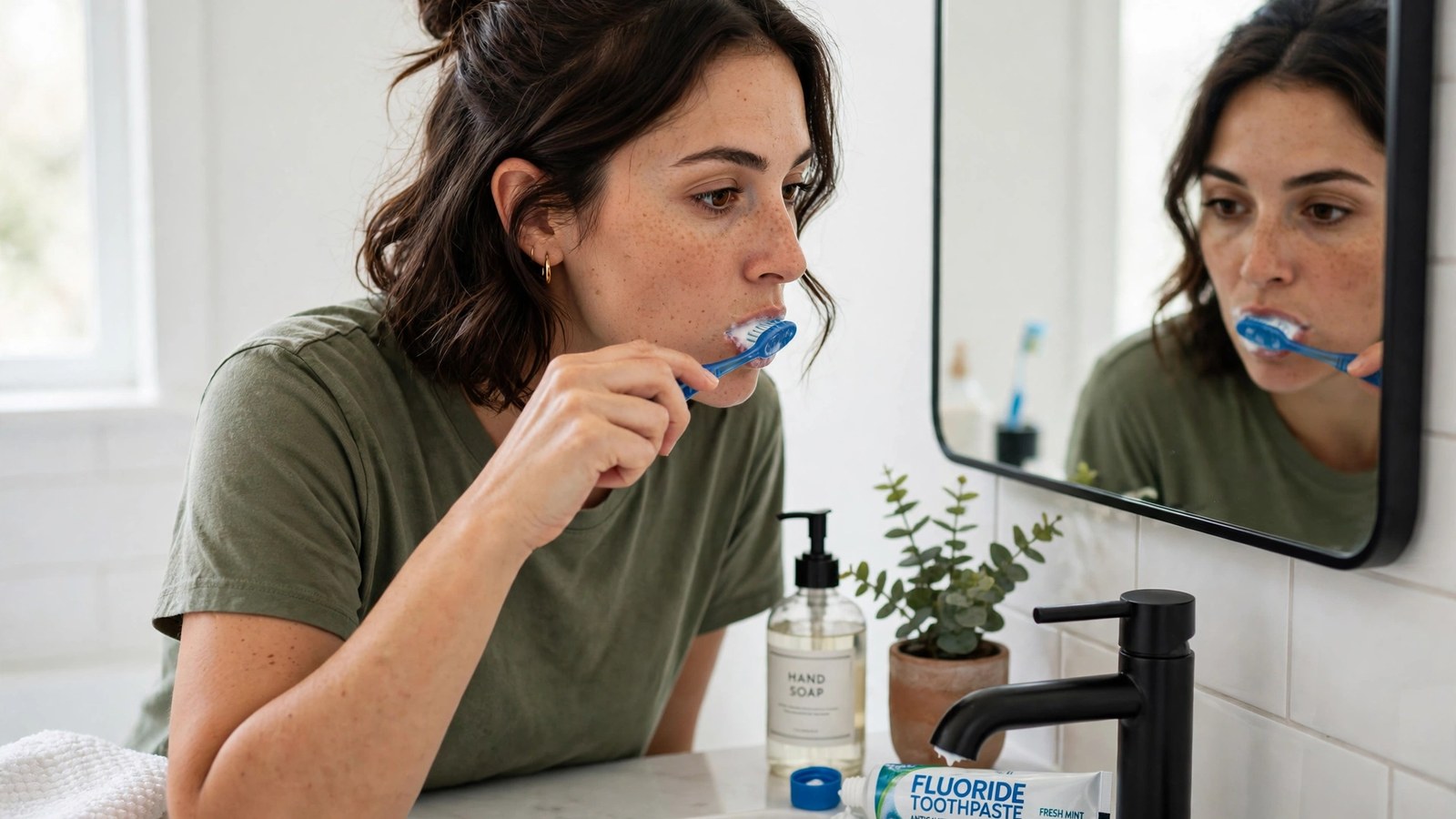
Brushing is the foundation, and technique matters more than effort. The ADA’s guidance is specific: brush twice a day, use a soft bristled brush that fits your mouth, use fluoride toothpaste, and replace the brush every three or four months, or sooner if the bristles are frayed, because a worn brush does not clean well.
The NHS adds two timing points many people miss. Brush last thing before bed, when the night time clean matters most because saliva flow falls during sleep, and on one other occasion. After brushing, spit out the excess toothpaste but do not rinse with water, because rinsing washes away the concentrated fluoride left on the teeth.
Work through these steps:
- Set up. Put a pea sized amount of fluoride toothpaste on a soft bristled brush. Adults should use a toothpaste with at least 1,350 parts per million fluoride, per NHS guidance. A small headed brush reaches the back teeth more easily.
- Angle the brush. Place the brush at a 45 degree angle to the gums, so the bristle tips meet the point where tooth and gum join. That junction is where plaque does its damage, and it is the area a flat, hurried scrub misses.
- Use short, gentle strokes. The ADA advises moving the brush back and forth gently in short, tooth wide strokes. Small circular movements work equally well. What matters is light pressure and full coverage, not scrubbing force. Pressing harder bends the bristles away from the gum line, wears enamel, and irritates the gum.
- Cover every surface in a fixed order. Brush the outer surfaces, then the inner surfaces, then the chewing surfaces, working around the mouth in the same sequence every time so nothing depends on memory. For the inside surfaces of the front teeth, tilt the brush vertically and use several up and down strokes.
- Take the full two minutes. Divide the mouth into four sections and give each about thirty seconds. Most people who guess the time brush for well under a minute. A timer, an electric brush with a built in timer, or a song of the right length fixes this.
- Brush the tongue. The ADA recommends brushing the tongue to remove bacteria and freshen breath. A few gentle strokes from back to front are enough.
- Spit, do not rinse. Spit out the foam and leave the fluoride film to keep working. If you use a fluoride mouthwash, use it at a different time of day, such as after lunch, for the same reason.
Manual and electric brushes are both effective. The NHS is explicit that it does not matter which type you use, as long as you clean all surfaces of all teeth with fluoride toothpaste, although some people find an electric brush makes thorough cleaning easier. If your gums bleed when you brush, the usual cause is inflamed gum tissue reacting to plaque, not the brush itself. Keep cleaning the area gently and thoroughly, because removing the plaque is what allows the inflammation to settle. Bleeding that continues for more than a week or two of careful cleaning is a reason to book a dental visit, not to stop brushing.
How to Clean Between Your Teeth
Brushing alone leaves the contact surfaces between teeth and the plaque just under the gum line untouched, and those are exactly the surfaces where cavities and gum disease often start. The ADA recommends cleaning between your teeth once a day, and notes that decay causing bacteria linger between teeth where toothbrush bristles cannot reach. Whether you clean before or after brushing matters far less than doing it daily and thoroughly. The ADA makes the same point about flossing order: as long as you do it thoroughly, the timing is your choice, so pick the moment you will actually keep.
String floss, step by step
The ADA’s five step method is the standard technique:
- Break off about 18 inches of floss and wind most of it around one middle finger, and the rest around the same finger of the other hand, which takes up the used floss as you go.
- Hold the floss tightly between your thumbs and forefingers, with a short length taut.
- Guide the floss between the teeth with a gentle rubbing motion. Never snap it down into the gum, which cuts and bruises the tissue.
- When the floss reaches the gum line, curve it into a C shape against one tooth and slide it gently into the space between gum and tooth.
- Hold the floss against the tooth and rub the side of the tooth with up and down movements, following its shape. Repeat against the neighboring tooth, then move on, unwinding a clean section for each new space. Do not forget the back surface of the last tooth at the very back of each side.
Interdental brushes
Tiny brushes that fit between the teeth are an excellent alternative, and often the better tool where gaps are larger, around bridges, or once gums have receded a little. The NHS notes that interdental brushes can be used instead of flossing, especially where there are gaps, and that the brush should fit snugly. Push it gently in and out a few times in each space. Sizes vary, and one mouth often needs two sizes. Your hygienist can size them for you at a cleaning visit.
Water flossers and floss picks
A water flosser uses a stream of water to rinse away food debris and plaque. The ADA notes that it can be useful if you find other tools hard to work with, and that people with braces, bridges, and other dental work often find it helps them reach awkward areas. It is also a good option when hand dexterity makes string floss genuinely difficult. Treat it as a strong supporting tool rather than a guaranteed replacement for a mechanical clean between tight contacts, and ask your dentist which combination suits your mouth. Pre threaded floss holders and picks make flossing easier for many people and are far better than skipping the step. What the ADA does caution against is improvised tools. In a survey it cites, people admitted to using fingernails, folded paper, forks, safety pins, and even strands of hair between their teeth, and more than 40 percent of them reported pain. Use tools made for the job.
New flossers often notice soreness or a little bleeding in the first days. That usually reflects gum inflammation that was already there, and it settles as plaque is removed and the tissue recovers. Cleaning between teeth should not cause real pain. If it still hurts after a week of gentle, correct technique, or bleeding does not stop, talk to your dentist, as the ADA advises.
Mouthwash, Disclosing Tablets, and Other Extras
Extras support the core routine. None of them replace it.
Mouthwash. A fluoride mouthwash can help prevent tooth decay, per NHS guidance, and antiseptic rinses can reduce bacteria for a time. But mouthwash cannot remove plaque in any meaningful mechanical sense, and it cannot remove tartar at all. Plaque is a structured biofilm that has to be physically broken up. Timing matters too: the NHS advises against using mouthwash, even a fluoride one, straight after brushing, because it washes away the concentrated fluoride toothpaste left on the teeth. Use it at a separate time, such as after lunch. Our companion guide to mouthwash before or after brushing works through the ordering question in full.
Disclosing tablets. These chewable tablets contain a dye that stains plaque left behind after brushing, turning missed areas pink, red, or blue so you can see them. Some products use two tones, staining older, more mature plaque a different color from newer plaque. They are one of the most honest feedback tools in home dental care, because plaque is otherwise nearly invisible and most people overestimate how well they brush. Use one occasionally while you are improving your technique: brush as normal, chew the tablet, rinse, then check the mirror. The usual repeat offenders are the gum line of the lower front teeth, the back molars, and the inner surfaces. Brush those areas again. Disclosing tablets are a training aid, not a treatment, and they show children exactly what brushing is for.
Tongue cleaning, gum, and water. Brushing the tongue reduces the bacteria that contribute to bad breath. Chewing sugar free gum after a meal stimulates saliva, which helps wash away food and neutralize acid, although it supplements cleaning rather than replacing it. Rinsing with plain water after eating also helps when brushing is not possible.
Food, Drink, and the Timing of Brushing
Plaque bacteria do their damage when they are fed. Each time you eat or drink something sugary or starchy, the bacteria produce acid, and the enamel surface softens slightly for a period afterwards. Frequency is the key variable. The ADA pairs daily cleaning with a balanced diet that limits sugary beverages and snacks, and our article on sugar and teeth explains how the number of sugar exposures across a day matters more than the total amount alone.
Practical points:
- Keep sugar to mealtimes where you can. Snacking between meals restarts the acid cycle again and again. Our guide to hydration and healthy snack swaps for workdays covers realistic between meal alternatives.
- Choose water as the default drink. It rinses the mouth and carries no sugar or acid.
- Wait after acidic food and drink. After citrus, soda, wine, or vinegar based foods, enamel is temporarily softened. Wait about thirty minutes before brushing so you are not scrubbing a softened surface, and rinse with water in the meantime.
- Do not skip the night time brush. The last brush before bed removes the day’s plaque before the long, low saliva hours of sleep, when the mouth defends itself least well.
Plaque and Children’s Teeth
Children’s plaque control follows the same principles, with adult hands doing the work at first. The CDC advises wiping a baby’s gums twice a day with a soft, clean cloth before teeth arrive, starting brushing as soon as the first tooth appears, and visiting the dentist by the child’s first birthday. Its toothpaste amounts are a smear no bigger than a grain of rice before age three, and a pea sized amount for ages three to six, with children taught to spit out rather than swallow. The NHS sets fluoride concentration at 1,000 parts per million or more for the youngest children and 1,350 to 1,500 in family toothpaste, and says children need help or supervision with brushing until at least age seven.
Flossing starts when two teeth touch. Parents do it first; the ADA notes that children usually have the hand coordination to take over around age ten or eleven. Disclosing tablets can turn the routine into a visible game for an older child, which is often worth more than another lecture. Sugary snacks and drinks deserve the same frequency thinking as for adults, and our guide to healthy Halloween snacks and treats for kids shows how celebration food can be handled without a constant sugar drip.
What a Professional Cleaning Does
A professional cleaning, sometimes called a scale and polish, is the only way tartar is removed. At a typical appointment the dentist or hygienist:
- Examines the mouth first, checking the teeth, gums, and soft tissues, and measuring the gum pockets around the teeth where needed.
- Removes tartar and plaque with hand instruments, ultrasonic instruments, or both. Ultrasonic tips vibrate the deposit loose with water cooling; hand scalers refine the result, including below the gum line.
- Polishes the teeth, removing surface stain and leaving a smoother surface that plaque reattaches to more slowly.
- Applies or advises on fluoride where appropriate. The CDC describes how fluoride rebuilds the outer enamel layer and makes it harder for acid to dissolve, and a clinician can judge whether a varnish or a higher strength product suits your risk level.
- Shows you your plaque pattern. This may be the most valuable part of the visit. A hygienist can point to the exact surfaces your brush and floss are missing, and size interdental brushes for your gaps.
Where gum disease has already formed pockets below the gum line, a routine cleaning may not be enough, and a deeper cleaning of the root surfaces may be recommended instead. Our guide to deep cleaning for teeth explains how that differs from a regular clean and when it is used.
How often should you go? No single interval is right for everyone. The CDC advises seeing a dentist at least once a year, many people are placed on a six to twelve month cycle, and people who form tartar quickly, smoke, have diabetes, or have gum disease are often seen more frequently. Your clinician sets the interval from your examination, your tartar rate, and your risk factors, which is why our overview of how often you should go to the dentist treats the schedule as a personal clinical judgment rather than a fixed rule.
Signs You Should Book a Dental Visit Sooner
Do not wait for the routine interval if you notice any of the following:
- A rough, hard, yellow or brown deposit that brushing and flossing do not shift. That is tartar, and it is a booking cue, not a home project.
- Gums that bleed regularly when you brush or floss, or that look red, puffy, or shiny instead of firm and matte.
- Bad breath or a bad taste that persists despite thorough cleaning.
- Gums that are tender, receding, or pulling away from a tooth, or teeth that look longer than they used to.
- Tooth pain, sensitivity that is new or worsening, a loose tooth, or a change in how your teeth meet.
- A sore, ulcer, or lump in the mouth that does not heal within about two weeks.
Our guide to healthy gums vs unhealthy gums sets out the comparison in detail. Hormonal changes can also make gums react more strongly to plaque, which is why bleeding gums are common in pregnancy even when cleaning habits have not changed; our article on pregnancy gingivitis separates the myths from the facts for expecting parents. None of these signs is a diagnosis on its own. Each is a reason to let a professional look and tell you what is actually happening.
Frequently Asked Questions
Can hard plaque or tartar be removed at home?
No. Hardened tartar cannot be removed safely at home. Brushing, flossing, mouthwash, and home remedies remove soft plaque and help prevent new tartar, but they do not remove tartar that has already hardened, and scraping tools sold for home use risk cutting gums, scratching enamel, damaging root surfaces, and pushing bacteria deeper. A professional cleaning is the safe and effective way to remove tartar.
How long does plaque take to turn into tartar?
Minerals from saliva can start hardening undisturbed plaque within days in people who form tartar quickly, and a firm deposit typically builds over days to weeks. The speed varies with saliva chemistry, diet, and how thoroughly each surface is cleaned, which is why some people form tartar behind their lower front teeth even with a good routine.
Does mouthwash remove plaque or tartar?
Not in any meaningful way. A fluoride mouthwash can help protect enamel against decay, and antiseptic rinses can reduce bacteria temporarily, but plaque is a biofilm that has to be physically disrupted by brushing and interdental cleaning, and tartar can only be removed professionally. Mouthwash is an extra, not a substitute.
Is an electric toothbrush better for plaque removal?
Both manual and electric brushes work when used well. The NHS states that it does not matter which type you use, as long as all surfaces of all teeth are cleaned with fluoride toothpaste. Some people find an electric brush, especially one with a timer and a pressure sensor, makes it easier to brush for the full two minutes without pressing too hard.
My gums bleed when I floss. Should I stop?
Usually, no. Bleeding in the first days of cleaning between teeth more often reflects gum inflammation caused by the plaque itself, and it typically settles as cleaning improves and the tissue recovers. Keep going gently and consistently. If bleeding continues beyond a week or two, if it is heavy, or if pain develops, see your dentist, because persistent bleeding is one of the signs of gum disease.
What are disclosing tablets and should I use them?
Disclosing tablets are chewable tablets that stain the plaque left on your teeth after brushing, making missed areas visible in the mirror. They are a useful occasional check on technique for adults and an excellent teaching tool for children. They treat nothing by themselves; their value is showing you where to brush again.
How often should I have my teeth professionally cleaned?
As often as your dentist or hygienist recommends for your mouth. The CDC advises at least an annual dental visit, many people attend every six to twelve months, and people with gum disease or heavy tartar formation may need shorter intervals. The interval should come from your examination, not from a general rule.
Sources & references
- American Dental Association, MouthHealthy, Brushing Your Teeth. https://mouthhealthy.org/en/az-topics/b/brushing-your-teeth
- American Dental Association, MouthHealthy, Flossing. https://www.mouthhealthy.org/all-topics-a-z/flossing
- NHS, How to Keep Your Teeth Clean. https://www.nhs.uk/live-well/healthy-teeth-and-gums/how-to-keep-your-teeth-clean/
- Centers for Disease Control and Prevention, About Fluoride. https://www.cdc.gov/oral-health/prevention/about-fluoride.html
- Centers for Disease Control and Prevention, Caring For Your Mouth When You Live in an Area Without Fluoridated Water. https://www.cdc.gov/oral-health/prevention/caring-for-your-mouth-when-you-live-in-an-area-without-fluoridated-water.html


