Short answer
- Meal prep for busy weeknights means planning three or four dinners, not seven, and prepping building blocks instead of identical finished meals: one or two cooked proteins, a grain or starchy base, washed and chopped vegetables, and one or two sauces. Do the prep in one session of about 60 to 90 minutes, starting the longest cooking first. Store perishable food in the refrigerator at 40°F or below within two hours of cooking, or within one hour if the surrounding temperature is above 90°F, and use refrigerated leftovers within three to four days or freeze them for later. Reheat leftovers to 165°F, measured with a food thermometer. On the night itself, assemble a template meal, such as a grain bowl, pasta, wraps, a sheet pan dinner, or soup, so dinner takes minutes of active work instead of starting from scratch.
Introduction
The hardest part of a weeknight dinner is rarely the cooking itself. It is the early evening question: what are we eating, do we have the ingredients, and how long will it take? Meal prep answers that question in advance. By moving a focused session of planning, shopping, and cooking to a calmer moment once or twice a week, you turn weeknights from a daily scramble into simple assembly.
This guide covers meal prep for beginners: how to plan a week without overcomplicating it, what to cook ahead, how to store food safely, and how to build flexible templates you can reuse all year. One safety fact shapes the whole system, so it is worth learning before the first prep session. Most cooked leftovers keep in the refrigerator for only three to four days, so a good plan eats refrigerated food early in the week and uses the freezer for later nights, rather than expecting a Sunday batch to stay in the refrigerator until Friday.
This article offers general food and nutrition information only, not personalized dietary or medical advice. If you have allergies, a medical condition, or specific dietary needs, talk with a qualified professional, such as a registered dietitian nutritionist, about what suits you. Food storage times and temperatures below were checked against United States government and Academy of Nutrition and Dietetics guidance on 30 October 2026.
What Meal Prep Actually Means
Meal prep is often pictured as a wall of identical containers, each holding the same dinner for five days. That version works for some people, but for many households it is a fast route to boredom and waste. A more flexible approach is to prep ingredients and components, not just finished meals. The ingredients repeat across the week; the dinners do not have to look like repeats.
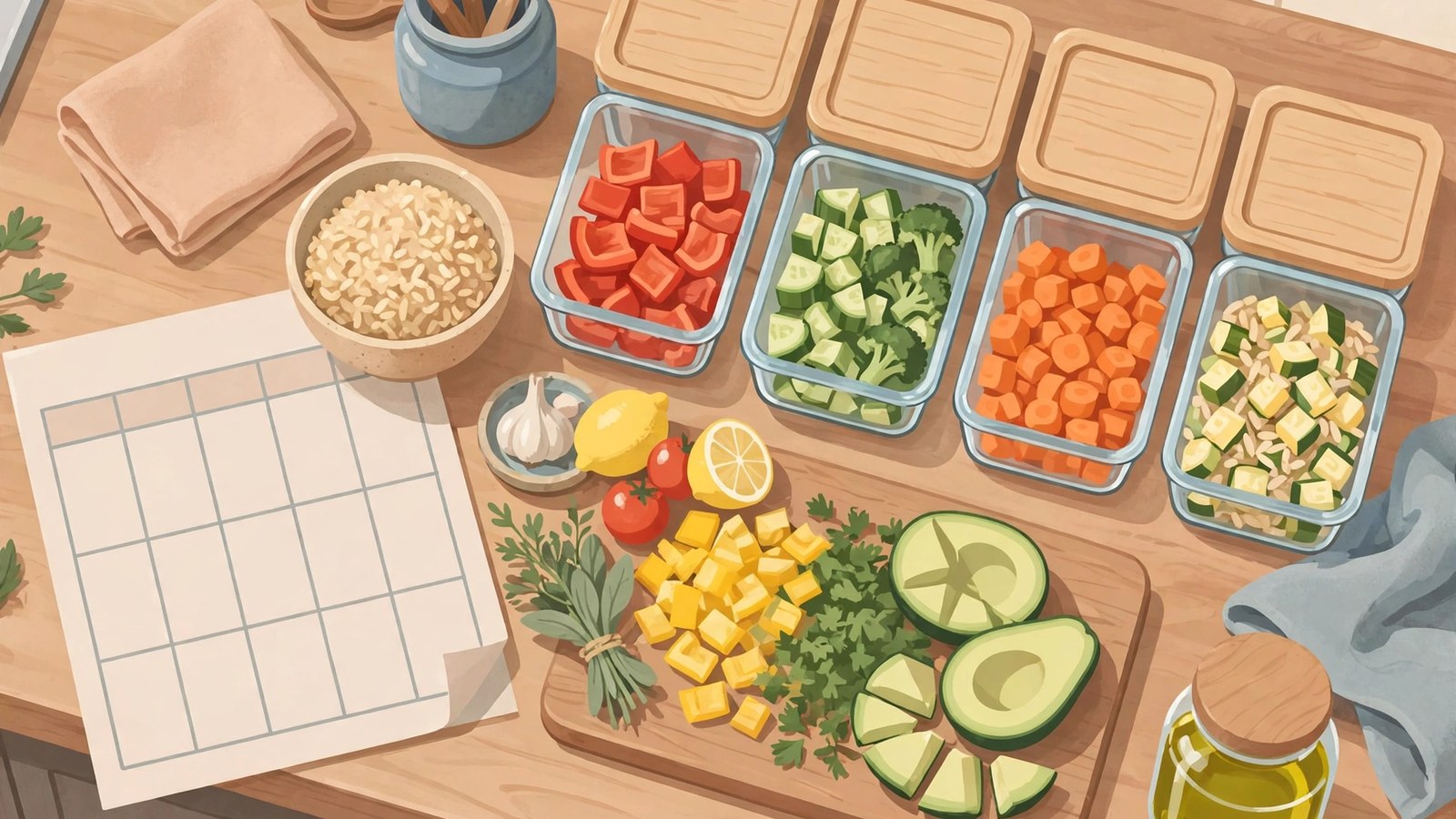
Think in building blocks:
- A grain or starchy base cooked in bulk, such as rice, quinoa, pasta, or roasted potatoes.
- One or two proteins cooked ahead, such as roasted chicken, baked tofu, hard boiled eggs, or cooked beans or lentils.
- Vegetables washed, chopped, or roasted and ready to use.
- A sauce or dressing that can change the flavor of the same ingredients from one night to the next.
- Toppings and extras such as herbs, nuts, seeds, cheese, or pickled vegetables that add texture and variety.
With those blocks ready, a weeknight meal becomes a combination task: reheat a base, add a protein and vegetables, spoon over a sauce, and finish with a topping. The Academy of Nutrition and Dietetics makes a related point for bulk cooking: reheat only the portion for that night’s meal, not the entire dish. Changing the sauce, topping, or style between nights is what stops the system from feeling like the same dinner four times.
Cooked components are leftovers once stored, and the three to four day refrigerator window applies to them just as it applies to a finished casserole. That is why this plan works in two waves: food for the first half of the week stays in the refrigerator, and food for later nights is frozen on prep day and thawed in the refrigerator the night before it is needed.
Step 1: Plan Before You Shop
Weekly meal planning takes about fifteen minutes and saves far more time than it costs. Pick a regular slot, for example a weekend morning, and work through these steps.
1. Check what you already have. Look in the refrigerator, freezer, and pantry before writing a list. Build at least one meal around ingredients that need using up first, such as vegetables that are starting to soften or an open bag of grain. The Academy of Nutrition and Dietetics encourages planning meals around food you already have at home to reduce waste, and the same habit avoids buying a second version of something already in the cupboard.
2. Choose three or four dinners, not seven. Most households repeat a favorite, eat leftovers, or eat out at least once a week. Planning three or four distinct dinners, with leftovers or a freezer portion covering other nights, is realistic and reduces waste. Add one emergency meal that uses only pantry staples, such as pasta with canned tomatoes and beans, for nights when the plan falls apart.
3. Assign each dinner to a day, with safety in mind. Put meals using freshly cooked perishable components early in the week. Put freezer based meals, pantry meals, and freshly cooked meals later in the week. This ordering is what makes a Sunday prep session safe for Friday: the Friday meal is not five day old refrigerated chicken, it is a portion frozen on Sunday and thawed overnight, or a quick meal cooked that evening.
4. Pick one theme per night if decisions slow you down. Themes remove the blank page problem: Monday pasta, Tuesday tacos or bowls, Wednesday soup or stir fry, Thursday sheet pan dinner. Themes can stay the same for months while the ingredients rotate with the seasons and with what is on sale.
5. Write the list by store section. Group items under produce, protein, dairy, pantry, and freezer. A grouped list means fewer forgotten items, fewer extra trips, and less impulse buying. Keep raw meat, poultry, and seafood separate from other foods in the cart as well, a separation habit that continues at home.
6. Note what can be prepped ahead. Next to each meal, jot down one prep task: chop onions and peppers, cook rice, portion chicken for the freezer. Those notes become your prep session checklist.
A simple paper plan on the refrigerator works as well as any app, as long as everyone in the household can see it.
Step 2: Run the Weekly Prep Session in a Sensible Order
Set aside 60 to 90 minutes, ideally when you are already in the kitchen for another reason. If that block feels impossible, start with the 30 minute starter version described later in this article. Order matters more than speed.
First, start what takes longest. Put grains on to cook and a tray of vegetables or a protein in the oven. While those cook, do the hands on work. This overlap is where most of the time saving comes from.
Wash and prepare vegetables. Rinse fresh fruits and vegetables under running water, without soap or produce washes. Wash leafy greens and store them with a dry paper towel in a covered container. Chop onions, peppers, carrots, and celery and store them in separate containers so each meal starts faster. Hardy vegetables keep well chopped; delicate herbs and salad leaves are best washed, dried, and left whole until use.
Cook one or two proteins, and check the temperature. Roast a tray of chicken thighs, bake tofu, or simmer a pot of lentils or beans. Season simply, with salt, pepper, garlic, and a neutral oil, so the same protein can go into different meals; add stronger flavors, such as curry paste, when you assemble each meal. Color and texture do not reliably show that food is safely cooked. Use a food thermometer in the thickest part, away from bone, fat, or gristle, and use the temperatures in the table below.
| Food | Safe minimum internal temperature |
|---|---|
| All poultry, whole, parts, or ground | 165°F |
| Ground beef, pork, veal, and lamb | 160°F |
| Beef, pork, veal, and lamb steaks, chops, and roasts | 145°F, then rest 3 minutes |
| Fish | 145°F, or until flesh is opaque and separates easily with a fork |
| Egg dishes | 160°F |
| Casseroles | 165°F |
| Leftovers, any type, when reheated | 165°F |
Make one sauce and one dressing. A simple vinaigrette of oil, vinegar or citrus juice, mustard, salt, and pepper, and a creamy sauce such as yogurt with herbs and lemon, or tahini thinned with water and lemon juice, can transform the same bowl ingredients into two different dinners. Store sauces in small jars, and refrigerate perishable sauces promptly with the early week meals.
Portion snacks and breakfasts only if that helps. Washing fruit, portioning nuts, or preparing overnight oats for the next two mornings can smooth out the day, but do not try to prep everything at once. Start with dinners, and add breakfasts or lunches only when the dinner routine feels easy.
Cool, pack, label, and date everything. Divide large amounts of food into shallow containers so they cool rapidly, cover them or seal them in airtight packaging, and refrigerate or freeze them promptly. Hot food can go directly into the refrigerator in small, shallow portions; you do not need to leave it on the counter until it is completely cold. Masking tape with the contents and the date takes seconds and prevents the mystery container problem. Put food to be eaten first at the front, and put freezer portions into the freezer on prep day, not after several days in the refrigerator.
Food Safety Basics That Make Meal Prep Work
Meal prep storage safety is part of meal prep, not an afterthought, because the system depends on food cooked days earlier still being safe to eat. Federal food safety guidance organizes home food safety into four steps: clean, separate, cook, and chill. Applied to a prep session, each step has a concrete job.
Clean. Wash your hands with soap and water for at least 20 seconds before, during, and after preparing food and before eating, and after handling raw meat, poultry, seafood, flour, or eggs. Wash utensils, boards, and countertops with hot, soapy water after each food item.
Separate. Raw meat, poultry, seafood, and eggs can spread germs to ready to eat food. Use one cutting board or plate for raw meat, poultry, and seafood, and a separate one for produce, bread, and other foods that will not be cooked. In the refrigerator, keep raw or marinating items separate from other foods, in containers or sealed, leak proof bags, and store eggs in their original carton in the main compartment, not in the door. Do not wash raw meat or poultry; washing can spread germs to the sink and counters, and cooking to the right temperature is the step that makes it safe.
Cook. Cook to the temperatures in the table above, using a thermometer rather than guessing. Keep hot food hot at 140°F or above if you are holding it before serving, because bacteria multiply rapidly in the temperature danger zone between 40°F and 140°F.
Chill. Keep your refrigerator at 40°F or below and your freezer at 0°F or below, checking with an appliance thermometer if unsure. Refrigerate perishable food within two hours, or within one hour if the temperature is above 90°F. Never thaw or marinate food on the counter; thaw in the refrigerator, in cold water in a leak proof package, or in the microwave, and marinate in the refrigerator.
Storage times to plan around
| Storage question | Verified guidance |
|---|---|
| Refrigerated cooked leftovers | Use within 3 to 4 days |
| Frozen cooked leftovers | Best quality for 3 to 4 months; food kept frozen at 0°F stays safe longer, but loses moisture and flavor over time |
| Refrigerator temperature | 40°F or below |
| Freezer temperature | 0°F or below |
| Time out at room temperature | No more than 2 hours; no more than 1 hour above 90°F |
| Reheating leftovers | 165°F, measured with a food thermometer; bring sauces, soups, and gravies to a rolling boil |
| After thawing in the refrigerator | Use within 3 to 4 days, or refreeze |
A few further rules follow from that guidance. Use the oldest food first, and check leftovers daily. Reheat only the portion you are about to eat, cover it so it heats all the way through, and stir or rotate microwaved food because microwaves leave cold spots; check the temperature in several places. When in doubt, throw it out: food can make you sick even when it does not look, smell, or taste spoiled, because the bacteria that cause foodborne illness are different from spoilage bacteria, so smell and taste are not safety tests. Discard moldy food, and never taste food to check whether it is safe.
Take extra care when cooking for someone who is pregnant, very young, older, or has a weakened immune system. Use ready to eat refrigerated foods as soon as possible, because Listeria can grow during refrigerated storage, especially if the refrigerator is above 40°F. If power goes out, the Food and Drug Administration advises keeping doors closed: an unopened refrigerator keeps food cold for about four hours, and a full, unopened freezer holds temperature for about 48 hours. Afterward, discard refrigerated perishable food that has been above 40°F for four hours or more.
Five Flexible Weeknight Templates
Easy weeknight dinner templates are more useful than rigid recipes because they survive missing ingredients and changing tastes. Each template below assumes you have prepped building blocks ready, and each one respects the same storage rule: use refrigerated components early in the week, and use thawed freezer portions or pantry ingredients later.
1. Grain bowl. Base of rice or quinoa, a protein, roasted or raw vegetables, a sauce, and a crunchy topping such as toasted seeds or chopped nuts. Swap the sauce to change the meal: a tahini and lemon sauce one night, a soy and ginger style dressing the next.
2. Pasta night. Cooked pasta tossed with vegetables, beans or another protein, olive oil or tomato sauce, and herbs. A can of tomatoes, garlic, and a pinch of chili can be ready in the time the pasta cooks. Cook pasta fresh on the night if you prefer its texture; the prepped vegetables and sauce save the time.
3. Taco or wrap night. Warm tortillas or flatbreads, a protein, shredded cabbage or lettuce, chopped tomato and onion, and a yogurt based sauce or salsa. This template uses up small amounts of several leftovers at once, and lets each person build their own plate.
4. Sheet pan dinner. Toss chopped vegetables and a protein with oil and seasoning, spread on a lined tray, and roast until cooked through, checking proteins against the temperature table. It needs little active attention, and because it is cooked fresh, it is an especially good later in the week template.
5. Soup or stew night. Combine a cooked grain or beans, vegetables, and broth or canned tomatoes in a pot and simmer. Soup accepts almost any leftover vegetable, and freezes well in portions. Make the use up soup while its refrigerated ingredients are still within their three to four day window, then freeze the soup itself if saving it for later.
Rotate two or three of these templates each week, changing the protein, vegetables, and sauce. The structure stays familiar while the meals stay varied.
A Sample Prep Week That Respects the Storage Clock
Here is how a week might come together with one Sunday prep session, arranged so no refrigerated leftover is asked to last beyond four days.
- Sunday prep: Cook a pot of rice and a pot of lentils. Roast a tray of mixed vegetables and a tray of chicken. Make a vinaigrette and a yogurt and herb sauce. Wash greens and chop onions and peppers. Pack two nights of chicken and rice for the refrigerator, and freeze the remaining chicken portions and part of the lentils in labeled portions.
- Monday: Grain bowls with rice, lentils, roasted vegetables, and vinaigrette.
- Tuesday: Wraps with sliced chicken, greens, chopped peppers, and yogurt and herb sauce.
- Wednesday: Pasta with vegetables, beans from the pantry, and tomato sauce, cooked fresh that night. Move Thursday’s frozen chicken portion into the refrigerator to thaw overnight.
- Thursday: Soup made from the thawed portion and remaining vegetables and broth, served with bread, or wraps using the thawed chicken.
- Friday: Sheet pan dinner with any remaining fresh vegetables and a fresh protein, or the pantry emergency meal if the week ran long.
No meal required starting from scratch, and no refrigerated cooked food was stretched to a fifth day. The longest weeknight tasks were cooking pasta, warming soup, or roasting a tray.
Shopping and Budget Tips
Meal prep can save money, but only if it reduces waste and impulse buying. A few habits help.
- Buy versatile ingredients. Chicken, eggs, beans, lentils, rice, oats, canned tomatoes, onions, carrots, and frozen vegetables can appear in many meals. A long list of single use ingredients usually means waste.
- Use frozen vegetables without guilt. They are convenient, reduce spoilage at home, and work well in soups, stir fries, and sheet pan meals, as a backup when fresh produce runs out midweek.
- Cook once, eat twice on purpose. Make enough for two meals and plan the second meal immediately, rather than hoping leftovers get used. The Academy of Nutrition and Dietetics notes that bulk cooking also lets you portion and freeze meals for later; decide before you cook which portion is a refrigerator meal and which is a freezer meal.
- Freeze what freezes well. Soups, casseroles, breads, and some vegetables freeze well. Eggs in the shell, lettuce, cottage cheese, and mayonnaise do not freeze well, according to the Academy, so use those fresh and early.
- Keep a running pantry list. Note when a staple runs low, so you are not caught without rice, oil, or broth on a busy night.
- Shop the sales, but plan around them loosely. If a protein or vegetable is on sale, swap it into a template rather than inventing a new recipe. The storage plan does not change: early week refrigerator, later week freezer or fresh.
Containers and Kitchen Setup
You do not need a matching set of expensive containers. What matters is that containers are clean, dry, seal well, and stack in your refrigerator.
- Glass containers are good for reheating and for foods with strong smells, but heavier. Plastic containers are lighter and fine for cold storage; check they suit the use you intend, and use microwave safe glass or ceramic with a vented cover when reheating in the microwave.
- Small jars are ideal for sauces. Shallow containers are a food safety tool, because food in them cools faster and reaches a safe refrigerator temperature sooner.
- Freezer bags laid flat save space for soups and grains, and flat portions thaw faster. Use leak proof packaging for cold water thawing.
- One shelf or zone for eat first food helps everyone see what needs using soonest. Keep foods covered, do not crowd the refrigerator so tightly that air cannot circulate, and wipe spills immediately, which helps reduce Listeria growth.
Keep masking tape and a marker near the refrigerator for labels showing contents and date cooked, and wash containers promptly so a clean set is ready for the next session. A food thermometer and an appliance thermometer are the two small tools this system depends on most.
Start Smaller: The 30 Minute Starter Version
If a full session sounds like too much, shrink it. A 30 minute session that cooks one grain, chops vegetables for two dinners, and makes one sauce is enough to change the first half of the week. Cook one protein to its safe temperature, refrigerate it promptly in shallow containers, and eat it within three to four days. Add a freezer habit, a second sauce, or breakfast prep only after the small version has worked for two or three weeks. Splitting the work also counts: chop vegetables one evening, cook grains the next, or do a midweek 20 minute reset for the remaining nights.
Troubleshooting Common Problems
I get bored by Thursday. Prep components, not identical meals, and change the sauce, topping, or style between nights. A grain bowl with tahini sauce tastes different from the same bowl with spicy tomato salsa. A meal thawed from a Sunday freezer portion or cooked fresh in a sheet pan will also taste better than a fifth day refrigerated meal, which you should not be eating in any case.
Food goes bad before I eat it. You may be prepping too much for the refrigerator. Start with three dinners worth of refrigerated food, freeze the rest of any large batch on prep day, eat the oldest food first, and plan a use up night while ingredients are still within their window.
My family will not eat the same thing twice. Serve components buffet style so each person builds their own plate, or turn leftovers into a visibly different meal: roast chicken becomes tacos, then soup.
I do not have time on Sunday. Prep on any day that works, and let the storage clock start on that day instead. The rules that matter are the two hour chill limit and the three to four day refrigerator window, and both follow the day you actually cook.
I am not sure whether something is still safe. Do not taste it to check. If you did not label it, do not know when it was cooked, know it sat out for more than two hours, or know it has been refrigerated for more than four days, discard it. That decision is the guidance, not a failure of the system.
The Bottom Line
Meal prep is not about perfection or identical containers. It is about moving a small amount of decision making and cooking to a calmer moment, so weeknights run on assembly rather than invention. Plan three or four meals, assign them to days with the storage clock in mind, prep building blocks instead of finished dishes, store food safely, and let flexible templates do the rest. After two or three weeks, the routine starts to feel less like a project and more like the way dinner simply happens.
Frequently Asked Questions
How long can meal prepped food stay in the refrigerator?
Most cooked leftovers, including cooked meat and poultry, soups, casseroles, and cooked vegetables, should be used within three to four days in a refrigerator kept at 40°F or below. That is why this guide plans refrigerator meals for the first half of the week and freezer portions, pantry meals, or freshly cooked meals for later nights. If you will not eat a portion within three to four days, freeze it on the day you cook it.
Can I meal prep on Sunday for Friday?
Yes, but not as a refrigerated leftover. Freeze Friday’s portion on Sunday, move it to the refrigerator to thaw the night before, and use it within three to four days after thawing. Frozen leftovers keep their best quality for about three to four months. A Friday sheet pan dinner or pantry pasta cooked fresh that night is another safe option.
Do I need to let hot food cool completely before refrigerating it?
No. Divide large amounts into shallow containers so food cools rapidly, and refrigerate promptly within two hours. Hot food can be placed directly in the refrigerator. Leaving food out for hours to cool is the habit to avoid, because bacteria multiply rapidly between 40°F and 140°F.
How do I reheat meal prep safely?
Reheat leftovers to 165°F as measured with a food thermometer, and reheat only the portion you are about to eat. Bring sauces, soups, and gravies to a rolling boil. Cover food while reheating, and stir or rotate microwaved food and check the temperature in several places, because microwaves leave cold spots.
What are the safest ways to thaw a frozen prep portion?
Thaw in the refrigerator, in cold water in a leak proof package, or in the microwave. Refrigerator thawing takes the longest but keeps food safe the whole time. Food thawed in cold water should be cooked before refreezing, and food thawed in the microwave should be heated until it reaches 165°F. Never thaw food on the counter.
Is meal prep suitable for everyone in the household?
The system is flexible, but food safety care should be stricter for people at higher risk of serious foodborne illness, including people who are pregnant, very young children, older adults, and people with weakened immune systems. Use ready to eat refrigerated foods as soon as possible, be strict about temperatures and dates, and follow current official guidance for those groups. For personal dietary needs, allergies, or medical conditions, consult a qualified professional.
Keep reading: How to Design a Printable Weekly Meal Planner That You Will Actually Use
Keep reading: Kitchen Pantry Organization by Zone: A System You Can Actually Keep Up
Keep reading: Cheap Grocery Items That Actually Stretch: A Practical Guide to Filling, Flexible Staples
Keep reading: Slow-Cooker Vegetarian Chili: Set It in the Morning, Serve It at Night
Sources & references
- U.S. Department of Agriculture, Food Safety and Inspection Service, Leftovers and Food Safety. Used for cooking food safely with a thermometer, the danger zone between 40°F and 140°F, keeping hot food at 140°F or warmer, refrigerating leftovers within 2 hours and within 1 hour above 90°F, cooling rapidly in shallow containers, cutting large items into smaller portions, placing hot food directly in the refrigerator, wrapping leftovers in airtight packaging, keeping leftovers 3 to 4 days in the refrigerator or 3 to 4 months frozen while noting frozen food stays safe indefinitely but loses moisture and flavor, thawing in the refrigerator, cold water, or microwave, using thawed food within 3 to 4 days, reheating frozen leftovers without thawing, reheating leftovers to 165°F, bringing sauces, soups, and gravies to a rolling boil, covering and rotating microwaved food and checking temperature in several places, refreezing rules, and washing hands for at least 20 seconds.
- U.S. Department of Agriculture, Ask USDA, How do I handle leftovers safely? Used for refrigerating leftovers at 40°F or below or freezing at 0°F, never leaving food out more than 2 hours or 1 hour above 90°F, dividing leftovers into shallow containers for rapid, even cooling, covering with airtight lids, and using refrigerated leftovers within 3 to 4 days or freezing for longer storage.
- FoodSafety.gov, 4 Steps to Food Safety. Used for the four steps clean, separate, cook, and chill, washing hands for at least 20 seconds before, during, and after preparing food and after handling raw meat, poultry, seafood, or eggs, washing surfaces and utensils with hot, soapy water, rinsing fruits and vegetables under running water without soap and not washing meat, poultry, eggs, or seafood, using separate cutting boards and plates, keeping eggs in their carton in the main refrigerator compartment, using a food thermometer in the thickest part, keeping food hot at 140°F or above, microwaving thoroughly to 165°F or above, refrigerating perishable foods within 2 hours and within 1 hour above 90°F, refrigerator at 40°F or below and freezer at 0°F or below, placing leftovers in shallow containers, and never thawing or marinating foods on the counter.
- FoodSafety.gov, Cook to a Safe Minimum Internal Temperature. Used for the temperature table: beef, bison, veal, goat, and lamb steaks, roasts, and chops at 145°F with a 3 minute rest, ground meat and sausage at 160°F, casseroles at 165°F, all poultry at 165°F, egg dishes at 160°F, leftovers of any type at 165°F, pork steaks, roasts, and chops at 145°F with a 3 minute rest, and fish at 145°F or until flesh is opaque and separates easily with a fork, and for using a food thermometer and observing rest times.
- Centers for Disease Control and Prevention, Preventing Food Poisoning. Used for the four steps to food safety, washing hands for at least 20 seconds and washing utensils, boards, and countertops with hot, soapy water, rinsing fresh fruits and vegetables under running water, keeping raw meat, poultry, seafood, and eggs separate from ready to eat food, not washing raw chicken, cooking being judged by a food thermometer rather than color and texture, reheating microwaved food to 165°F, bacteria multiplying rapidly between 40°F and 140°F, never leaving perishable food out for more than 2 hours or 1 hour above 90°F, refrigerator at 40°F or below and freezer at 0°F or below, packaging hot food into several clean, shallow containers, and thawing safely in the refrigerator, in cold water, or in the microwave and never on the counter.
- U.S. Food and Drug Administration, Are You Storing Food Safely? Used for refrigerating or freezing perishables right away and the two hour rule, refrigerator at or below 40°F and freezer at 0°F, checking temperatures with appliance thermometers, using ready to eat foods as soon as possible because Listeria can grow in refrigerated storage, discarding moldy or suspicious food, food being able to make you sick even when it does not look, smell, or taste spoiled, marinating in the refrigerator and never reusing marinating liquid as a sauce unless it is brought to a rapid boil, cleaning the refrigerator regularly and wiping spills immediately to reduce Listeria growth, keeping foods covered and not crowding the refrigerator, frozen food at 0°F remaining safe indefinitely while quality decreases, and power outage guidance that an unopened refrigerator keeps food cold for about 4 hours, a full unopened freezer holds temperature for about 48 hours, and refrigerated perishable food above 40°F for 4 hours or more should be discarded.
- Academy of Nutrition and Dietetics, EatRight.org, Cook Once, Eat Safely throughout the Week. Used for preparing meals on the weekend and reheating during the week, most leftovers including cooked beef, pork, seafood, and chicken, chili, soups, pizza, casseroles, and stew keeping 3 to 4 days, cooked vegetables keeping 3 to 4 days, portioning food immediately into smaller containers and refrigerating rather than cooling in large containers on the counter, reheating only the portion for that meal, checking reheated leftovers reach 165°F with a thermometer, portioning extra food into meals and freezing for later, foods that do not freeze well including eggs in the shell, lettuce, cottage cheese, and mayonnaise, foods that freeze well including soups, casseroles, breads, and some vegetables, and harmful bacteria not being visible or smellable so leftovers should be eaten or frozen before the 3 to 4 day window ends.
- Academy of Nutrition and Dietetics, EatRight.org, Leftover Safety. Used for sealing leftovers in a clean, airtight container, putting large amounts of soups or stews in shallow or smaller containers to cool faster, keeping leftovers at 40°F or lower and refrigerating within 2 hours or within 1 hour above 90°F, reheating to a minimum internal temperature of 165°F with a food thermometer, mold and odors not being reliable indicators, many leftovers lasting 3 to 4 days in the refrigerator or 2 to 3 months in the freezer, and labeling leftovers to track when they were made.


