Short answer
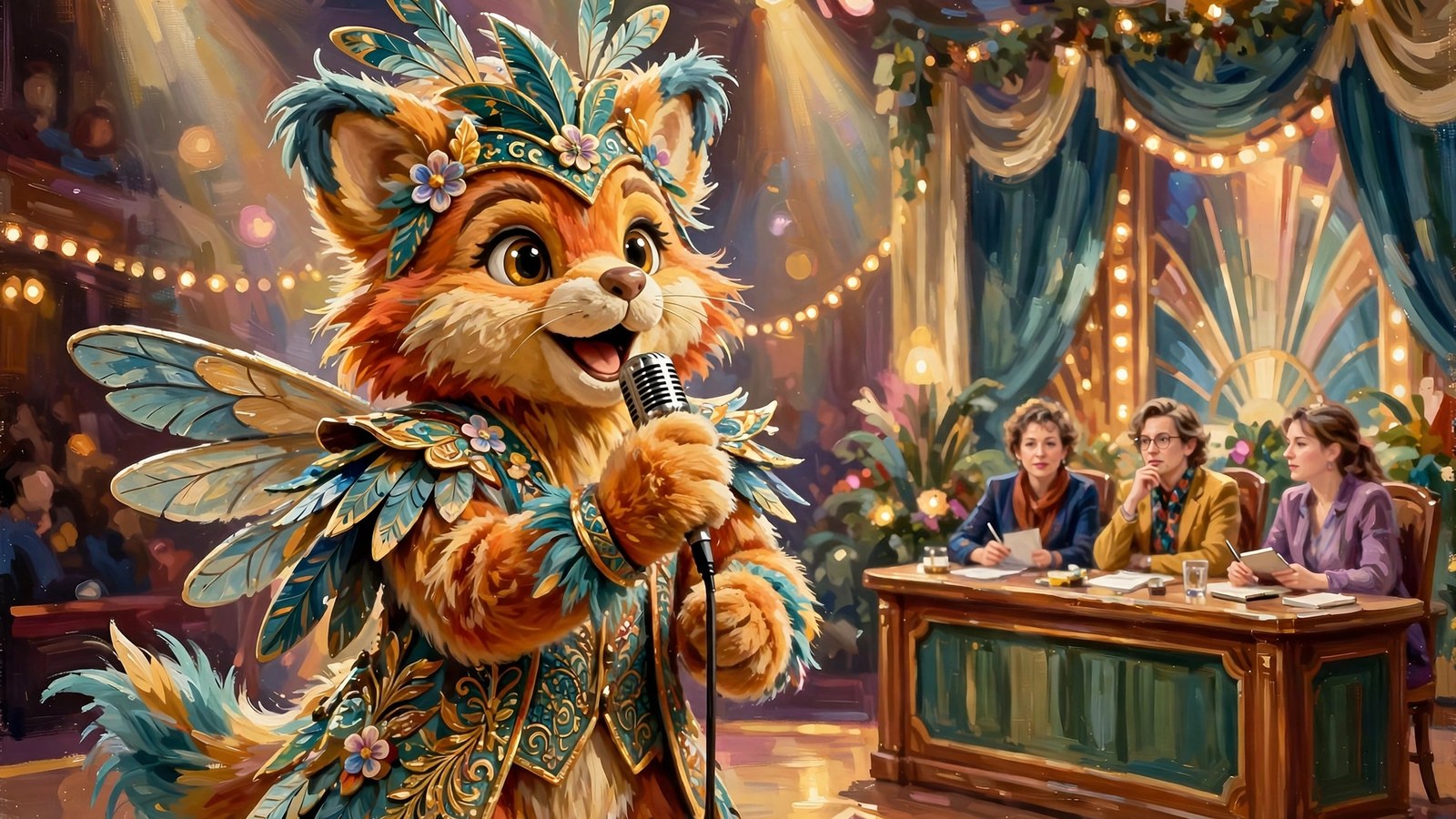
- The Masked Singer began in South Korea as King of Mask Singer, first aired as a regular MBC series in 2015, where singers competed in paired rounds over a two episode tournament and the winner challenged the reigning Mask King. For the United States, producers replaced that tournament with a season long cast, one elimination in a typical episode, filmed clue packages, and costumes reused across weeks so each singer built a story arc. The studio audience and the panel voted together, each side weighted at 50 percent in the standard format, and the least popular singer was unmasked. Later changes layered onto that base. Contestants were divided into subgroups from season two. Seasons four and five used a virtual audience during the COVID-19 pandemic, and a Golden Ear contest for the panel ran in seasons four through six. Wildcards arrived in season five. Themed nights began in season eight, which also used a Battle Royale and an episode champion format. The Ding Dong Keep It On bell arrived in season nine. Marina Toybina designed the costumes for the first six seasons, and Tim Chappel took over beginning with season seven. Nicole Scherzinger was a panelist for seasons one through ten, and Rita Ora replaced her from season eleven. Season fourteen aired from January 7 to April 1, 2026, added an America's Insider twist revealing Kylie Cantrall as Cat Witch to viewers in advance, and was won by Ashlee Simpson as Galaxy Girl.
Introduction
The Masked Singer should not have worked on paper. Celebrities hide inside large costumes, sing cover songs, drop coded clues, and wait while a panel guesses their names out loud. Instead of fading as a novelty, the American version that premiered on Fox on January 2, 2019 completed fourteen seasons by spring 2026.
This is a format history, not gossip. It discusses public figures only in their professional roles as host, panelists, designers and contestants. The focus is the United States version, but the story starts in South Korea, because the biggest change happened before the first American episode aired: producers took a Korean tournament built around a reigning champion and rebuilt it as a weekly mystery built around one unmasking in a typical episode. Later groups, wildcards, themed nights, a save bell, a virtual audience, new designers and a panel change changed the game, but not the core bargain: a voice, a costume, clues and a reveal.
The Korean Origin: King of Mask Singer
King of Mask Singer was developed by Munhwa Broadcasting Corporation in South Korea. The regular series began on MBC on April 5, 2015, after a pilot earlier that year. Singers wore elaborate masks to conceal identity so that fame, age and career history would not drive the vote. Only the voice was supposed to count.
The Korean structure was a rolling tournament, not a closed season. Each competition lasted two episodes, with singers competing one on one across three rounds. In the first round a pair sang the same song together. In the second and third rounds they sang solos. The audience and a celebrity panel voted for each pairing winner, and an identity was revealed only on elimination. The winner of the third round challenged the previous Mask King, either losing and unmasking or winning and becoming the new Mask King.
That rolling champion is the key difference. The Korean show asked how long one singer could hold a title, not how a fixed cast survived a long season. The format spread internationally, including a Thai version, which executive producer Craig Plestis saw in a Los Angeles restaurant in October 2017 before researching it and securing the American rights from MBC.
The American Rewrite
In January 2018, executive producer and showrunner Izzie Pick Ibarra became involved to help cast celebrities and adapt the format. Fox ordered the series on August 2, 2018. The team kept the masks, concealed identities, clue based guessing and live singing. It changed the engine in four ways.
First, the tournament became a season. A fixed cast returned in the same costumes across episodes, so viewers learned a character and tracked clues over time. Second, the reigning champion disappeared. In a typical episode four to six singers performed a short cover, the panel guessed, the audience and panel voted, and the least popular singer unmasked. The season winner received the Golden Mask trophy. Third, the clue package became a central filmed segment: a taped package in which the celebrity, with an electronically disguised voice, narrated a video of visual and verbal allusions to a career or life detail, while panelists speculated and wrote guesses in note binders. Fourth, secrecy became a production system of code names, disguises, nondisclosure agreements and security escorts. The mystery only works if panel, audience and most of the crew do not know who is singing.
Season One: The Basic Format
Fox stated the format plainly in its premiere release: the show would premiere on Wednesday, January 2, 2019 on Fox, hosted by Nick Cannon, with panelists Ken Jeong, Jenny McCarthy, Nicole Scherzinger and Robin Thicke; singers would be shrouded head to toe in elaborate costumes; tiny clues would be buried throughout the show; and one singer would be eliminated by the audience and judges each week and then reveal an identity. Fox confirmed the series was based on the South Korean format created by Munhwa Broadcasting Corporation and was developed and executive produced by Craig Plestis, with Izzie Pick Ibarra also as executive producer.
The first season had 12 contestants and ran from January 2 to February 27, 2019. T-Pain as Monster won, ahead of Donny Osmond as Peacock, a result that proved the format point: the costume let the audience hear a performance before it judged a reputation.
The panel mix set a lasting tone. Jeong brought comedy and familiarity with the Korean format, McCarthy Wahlberg brought enthusiastic fan style guessing, and Thicke and Scherzinger brought professional singing experience. Panelists vote, but they are not formal scoring judges. They guess, react and entertain. The first five seasons received the highest Nielsen ratings for a non sports program in adults 18 to 49, which explains the quick variations and spin offs that followed.
Costumes: Craft, Spectacle and a Designer Change
Inspired by haute couture, the costumes in the first six American seasons were designed by Marina Toybina. She combined her own ideas with requests from the celebrity and the producers, researched references, sketched concepts, and revised designs with producers before a final choice. Each costume was meant to differ from costumes in previous seasons and in other versions of the franchise. Costumes were custom made over two to three months, with weeks spent on a single mask and a single body, built to be wearable and to let a singer breathe, see, move and sing. A costume that photographed well but failed on those tests was a failed design.
Toybina won a Costume Designers Guild Award and two Creative Arts Emmy Awards for this work, including the Television Academy award for Outstanding Costumes for a Variety, Nonfiction or Reality Program in 2020. Season four showed the technical direction, with the first use of 3D printing in the build and the first two person costume, animatronic costume and puppet costume in the American series.
One common summary needs correction. Toybina did not hand over the show in season eight. She left after season six, and Tim Chappel, who had designed for the Australian version, took over beginning with season seven. Parade season eight coverage states that Chappel designed the season eight costumes and had taken over from Toybina in season seven. Season eight was his second American season, not his first. The visual language refreshed, but the job stayed the same: conceal identity, read instantly on screen and in a photograph, and let a performer sing under hot lights.
The Panel and the Host
For ten seasons the permanent panel did not change: Ken Jeong, Jenny McCarthy Wahlberg, Nicole Scherzinger and Robin Thicke, with guest panelists for individual episodes. Nick Cannon hosted throughout the fourteen completed seasons, handling introductions, clues, the vote announcement and the unmasking ceremony built around the chant to take the mask off and the theme Who Are You by The Who. The one sustained interruption came in season five, when Cannon tested positive for COVID-19 before production and Niecy Nash guest hosted the first five episodes. TheWrap reported the fill in and noted Cannon would return after he recovered.
The lasting change arrived in season eleven, premiered March 6, 2024. Rita Ora joined, replacing Scherzinger, who was performing in Sunset Boulevard in the West End of London while the season filmed. Ora had been a panelist on the British version since that version began. Parade called it the first shake up at the American panel, and TV Insider confirms Ora took over in season eleven and that Jeong, McCarthy Wahlberg, Thicke and Ora then stayed together through season fourteen.
Groups, Smackdowns and Wildcards
From season two onward, contestants were divided into subgroups and competed first inside a group. Viewers followed a smaller set of singers for a block of episodes, learned their clues, and then saw group survivors meet other groups later. Recent seasons usually used three groups. Season thirteen sent two singers from each group into a Lucky 6 round rather than only one, keeping more familiar costumes alive deeper into the season.
A smackdown round appeared in select episodes in most seasons, with exceptions including seasons one, five and six. The two least popular singers performed again and a second vote eliminated one, giving a singer at risk a final directly comparable performance. Seasons four through six added a Golden Ear contest: after a first performance each panelist sealed a first impression guess, scored when that singer unmasked, and the panelist with the most correct guesses won the trophy.
Wildcard rounds arrived for the first time in season five. Fox set out ten scheduled competitors in two groups of five, and new masked singers arrived at the end of selected episodes to try to unseat a group singer and join the race for the Golden Mask, as TheWrap reported in February 2021. A wildcard had to impress at once, with fewer performances and clues, or leave immediately.
Themed Nights, Battle Royale and the Save Bell
Season eight, in fall 2022 with 22 masks, introduced themed nights, in which songs and staging followed a genre, decade or tribute subject. Themed nights varied the music without changing the voting rules. Season nine coverage describes themed nights as a gimmick introduced in the previous season and returned, fixing their start at season eight.
Season eight also used the most Korean structure since the premiere. As Parade described it, several masks performed in an episode, more than one singer could unmask, and the final two faced a Battle Royale. The loser unmasked, and the winner was named King or Queen of The Masked Singer for that episode and moved on to face a new group. A weekly champion had briefly returned, inside a closed season.
Season nine added the Ding Dong Keep It On bell in 2023. A panelist who believed an eliminated singer deserved to stay could ring the bell to save that singer from unmasking. In season nine it could be used once per group, and saved singers later competed for a place back in the main competition. The season winner, Bishop Briggs as Medusa, had been saved by the bell, proving it could change a result. Later seasons used a narrower save. Season six had used the opposite impulse, a Take It Off buzzer pressing for an immediate reveal. The bell reversed it: keep the mask on.
The Pandemic Seasons
After season three ended in May 2020, Fox created The Masked Singer: After the Mask, a remote aftershow Cannon hosted for four weeks, with guests by video and a closing performance by the eliminated singer. For season four, aired September 23 to December 16, 2020, production moved from Television City to Red Studios Hollywood, tapings used a virtual audience that also voted, the panel sat spaced apart, and, with live action clue filming restricted, producers used animated clue packages made with Bento Box Entertainment. Season five kept a virtual audience. The taped format gave producers editing flexibility, but the pandemic version had to create crowd energy and a credible vote without a room reacting together.
Secrecy also had to survive viewers who paused packages frame by frame and shared theories between episodes, so producers built clues with two readings: one obvious after the reveal, one misleading before it.
Spin Offs and the Wider Franchise
After the Mask applied the talk show part of the format. The Masked Dancer applied the mystery to dance. It premiered on Fox on December 27, 2020, hosted by Craig Robinson, with panelists Ken Jeong, Paula Abdul, Brian Austin Green and Ashley Tisdale, and ran for one season, ending February 17, 2021. The mystery transferred to dance, but the voice clue, the one evidence a home viewer can test by listening alone, did not transfer as strongly.
Internationally the franchise circulated people and ideas, from Ora moving from the British to the American panel to Chappel moving from the Australian to the American costume department. The national versions form one format family with local rules.
Seasons Thirteen and Fourteen
Season thirteen aired from February 12 to May 7, 2025, with 15 contestants, Cannon hosting, and the panel of Jeong, McCarthy Wahlberg, Thicke and Ora. Its new character was Detective Lucky Duck, a costumed non contestant who gave the panel extra clues. Later coverage reported Lucky Duck was unmasked in the semifinals as filmmaker Taika Waititi and used the save bell to send both singers in a semifinal pairing through to a four singer finale: a non contestant had altered the competition, because the clue system itself had become a cast role.
No fall season aired in 2025, the first year without two American seasons in one calendar year. Season fourteen premiered with a two hour episode on Wednesday, January 7, 2026 on Fox and concluded April 1, 2026, with 18 contestants. TV Insider announced the date, the returning host and panel, and theme nights including Star Trek, Clueless, Teenage Mutant Ninja Turtles, The Twilight Saga, Spice Girls and Care Bears, plus an episode honoring Ozzy Osbourne.
Its headline twist reversed the secrecy rule for one singer. For the first time, a contestant identity was revealed to viewers before the panel knew it. Kylie Cantrall competed as Cat Witch as America’s Insider, giving viewers behind the scenes information while the panel still guessed. She placed third. Ashlee Simpson as Galaxy Girl won, with Phillip Phillips as Pugcasso second and Normani as Crane fourth. Those are broadcast results, not a preview: any older preview calling season fourteen scheduled or unconfirmed is out of date. In May 2026 the series was renewed for a fifteenth season, and this article makes no claim about that future season rules, cast or dates beyond the renewal.
Why the Format Endures
The format joins pleasures that are usually separate. A viewer can watch for singing, for panel comedy, or for the clue puzzle, and move between them in one episode. Casting breadth is built into the costume: singers, actors, athletes and comedians enter the same contest because the audience hears a performance before it sees a name or a career summary, which delays judgment long enough for surprises to form. The format is also forgiving. A singer eliminated early still gets a reveal and an interview, a finalist gets a season long arc, a new viewer can enjoy one episode with its own unmasking, and a loyal viewer is rewarded for remembering an early clue. Finally, a costume still, a short clip and a reveal make sense at a glance, which helped the show circulate online without giving away the answer.
How to Watch as a New Viewer
Start with a recent complete season, which shows the current groups, panel with Rita Ora, costumes under Tim Chappel, and modern themed nights and save bell. Choose season thirteen first if you want panel and audience to start from the same information, because season fourteen tells viewers one identity in advance. Watch clue packages twice: first for voice alone, then for objects, numbers and wordplay, which mislead as well as inform. Avoid results pages if the mystery matters, because one headline can remove weeks of guessing.
Frequently Asked Questions
Where did The Masked Singer come from?
It originated in South Korea as King of Mask Singer, developed by Munhwa Broadcasting Corporation and first aired as a regular MBC series in 2015. Singers competed in paired rounds across a two episode tournament, and the winner challenged the reigning Mask King.
When did the American version premiere?
On Fox on January 2, 2019, hosted by Nick Cannon, with panelists Ken Jeong, Jenny McCarthy, Nicole Scherzinger and Robin Thicke, as Fox confirmed in its premiere release.
How does voting work?
In the standard format, after the performances the studio audience and the panelists vote for a favorite singer, each side weighted at 50 percent of the combined score. The least popular singer is eliminated and unmasked. Seasons varied the route to that vote with groups, smackdowns, face offs and Battle Royale rounds.
Who designed the costumes?
Marina Toybina designed the first six seasons and won a Costume Designers Guild Award and two Creative Arts Emmy Awards. Tim Chappel, formerly of the Australian version, took over beginning with season seven, not season eight.
When did Rita Ora join the panel?
In season eleven, premiered March 6, 2024, replacing Nicole Scherzinger while Scherzinger performed in Sunset Boulevard in London. Scherzinger was a panelist for seasons one through ten, and Ora had been a panelist on the British version.
What is a wildcard?
A singer who enters after a season has begun and tries to take a place in the competition. Wildcard rounds were introduced in season five, when newcomers arrived at the end of selected episodes to try to unseat a group singer.
What is the Ding Dong Keep It On bell?
A save device introduced in season nine. A panelist could ring it to save an eliminated singer from unmasking. In season nine the saved singers later competed to return, and the eventual winner had been saved by the bell. Later seasons used a narrower save.
What changed in season fourteen?
It aired January 7 to April 1, 2026, after no fall season in 2025, kept Cannon and the panel of Jeong, McCarthy Wahlberg, Thicke and Ora, used theme nights, and introduced America’s Insider, revealing Kylie Cantrall as Cat Witch to viewers in advance. Ashlee Simpson as Galaxy Girl won.
Is The Masked Dancer the same show?
No. It was a spin off in which costumed celebrities competed as dancers rather than singers. Hosted by Craig Robinson, it premiered December 27, 2020 and ran for one season on Fox.
What to Notice in the Next Season You Watch
Notice group size first: fewer singers means more performances per singer and clues that build in layers. Notice panel balance second: careful listening lets viewers solve singers early, while a comedy leaning panel makes a wild guess the pleasure. Notice costumes third, by use, not only by photograph: can the singer move, breathe and deliver a lyric clearly? Comparing Toybina era and Chappel era costumes is the fastest way to see the format evolving.
The Format in One Sentence
The Masked Singer began as a Korean tournament about holding a title, became an American weekly mystery about earning a reveal, and lasted by keeping a voice, a costume and a guess while changing its groups, twists, costumes, panel and schedule around that core.
Sources & references
- Fox, via FOXFLASH, Celebrity Singing Competition The Masked Singer to Premiere Wednesday, January 2 on Fox. Used for the January 2, 2019 premiere, host and panel lineup, costumed singers, weekly elimination and reveal, and the South Korean format origin.
- Parade, The Masked Singer Season 8. Used for the Battle Royale format in which the final two singers faced off and the winner was named King or Queen of The Masked Singer and moved on, the Korean original in which the winning mask faced the reigning King, and Tim Chappel designing season eight costumes after taking over from Marina Toybina in season seven.
- Parade, The Masked Singer Season 11. Used for the March 6, 2024 premiere, Rita Ora replacing Nicole Scherzinger while Scherzinger starred in Sunset Boulevard in London, Ora as a panelist on the United Kingdom version since its inception, and the Ding Dong Keep It On bell as a save for one eliminated contestant.
- TheWrap, Surprise Wildcard Contestants to Compete With Regulars on Season 5. Used for wildcards introduced for the first time in season five, ten competitors in two groups of five, wildcards arriving at the end of episodes to unseat a contestant and join the race for the Golden Mask, and Niecy Nash guest hosting while Nick Cannon recovered after testing positive for the coronavirus.
- TV Insider, The Masked Singer Season 14. Used for the two hour January 7, 2026 premiere, returning host and panel, Ora taking over in season eleven, and the announced theme nights.
- Television Academy, 2020 Creative Arts Emmys coverage. Used for the Outstanding Costumes award presentation to Candice Rainwater, Marina Toybina, Grainne O'Sullivan and Gabrielle Letamendi for The Masked Singer.
- Saint Louis University news announcement on Marina Toybina, reporting her official biography. Used for Toybina designing the first six seasons and receiving two Emmy Awards and a Costume Designers Guild Award for that work.


